Employee Login

Enter your login information to access the intranet

Enter your credentials to access your email

Reset employee password

Article

Live From New York: It’s the New Front Door To Care

October 28, 2026
By Sarah DaVanzo

How Creators, Search and AI Are Changing the Patient Journey

At the American Diabetes Association’s State of Diabetes: NYC, FleishmanHillard hosted a Featured Perspective, “The New Front Door to Care: How Creators, Search and AI Are Changing the Patient Journey.” Moderated by Maura Bergen, the conversation with Sarah DaVanzo, Leslie Godlewski and Mary Kosinski explored how healthcare organizations can help patients find trusted information in an evolving digital world.

A patient might recognize their own experience in a creator’s story, search for treatment information and ask an AI tool what to discuss with a doctor. After the appointment, that patient may return to those same sources with questions about cost, coverage or daily life.

Care’s new front door is wherever people begin seeking answers.
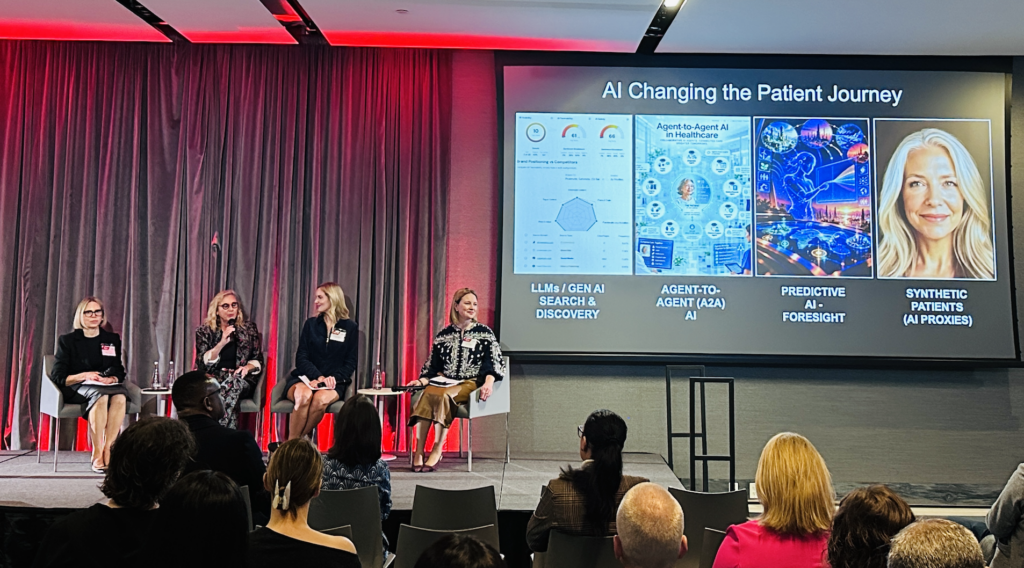
From Left to Right: Maura Bergen, Sarah DaVanzo, Leslie Godlewski and Mary Kosinski at the American Diabetes Association State of Diabetes NYC.

For health and life sciences marketing and communications leaders, the opportunity is to connect those moments so discovery leads to understanding and understanding supports an appropriate next step.

This requires planning for the questions people carry between channels and the answers they encounter throughout their journey. Communications should help patients, healthcare professionals and caregivers make sense of information across touchpoints.

Follow the Questions Through the Whole Journey

Maura Bergen, Global Managing Director, Health & Life Sciences, makes the communications challenge clear: “Understanding the information journey is only the beginning. We also have to translate what we learn into stories and messages people can understand, trust and act on.”

That translation starts with listening to the questions people actually bring.

A patient may be trying to afford a prescription. A healthcare professional may need to address a misconception. An employer may need to explain benefits. Payers and buyers have their own questions about evidence and coverage. Advocates can help identify whose needs and experiences are missing.

These audiences need a shared foundation of accurate information, expressed through messages and channels suited to their roles. Consistency should preserve the evidence and reinforce the narrative while making room for different questions.

Mary Kosinski, Global Managing Director, Health & Life Sciences, asks: “Are we taking into consideration not just the whole patient, but the whole environment that they’re operating in?” Her question connects communications to the conditions that shape the patient journey, including coverage, affordability, policy and care delivery. Clear information can help people navigate those conditions, but communications alone cannot remove the barriers.

Consider GLP-1 medicines. Someone may understand a treatment’s purpose yet struggle to find out whom to contact about access or what to ask their clinician. Map those moments of uncertainty, including what happens after a prescription. Identify the questions patients are likely to ask in their own words.

Bring access teams and patient voices into communications planning, including the development of FAQs, at each stage of the journey.

Healthcare professionals can also ask patients, “What have you learned or seen?” Acknowledging concerns and questions can help clinicians direct patients to appropriate, accurate resources.

Communications teams can support those conversations with clear explanations in natural language, visual aids and patient FAQs.

The information journey sits on both sides of the exam table.

Make Creator Credibility Part of the Journey

Creators can give health information a human context: what an experience feels like, which questions someone hesitated to ask and how daily life intersects with care. Their communities can also reveal concerns that formal messaging has overlooked.

“You cannot separate reputation from influence,” says Leslie Godlewski, Senior Vice President, Influencer Engagement. That principle should shape how organizations choose partners and define their contribution.

Look for relevance to the audience, transparency about relationships and care in distinguishing personal experience from clinical guidance. A clinician creator and a patient advocate bring different perspectives. Both can help people prepare for informed conversations with healthcare professionals.

Build partnerships around useful questions:

  • What might someone misunderstand?
  • Which information needs a source or qualification?
  • Where should the content direct someone for individual guidance?

Give creators clear evidence and boundaries while preserving the voice that makes their contribution meaningful.

For communications leaders, this means connecting creator strategy with patient education, earned media and access information. A compelling story should offer a path to reliable resources. Follow that path yourself: can someone move from recognizing an experience to finding an answer they understand, then to appropriate help?

Listen for feedback after publication, too. Audience questions should inform the next explanation, partnership or story.
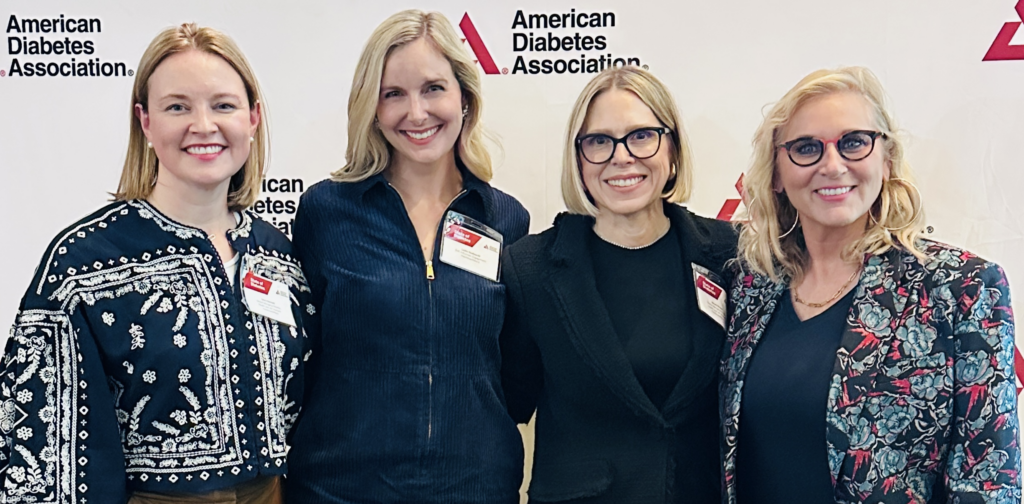
FleishmanHillard American DIabetes Association
From Left to Right: Mary Kosinski, Leslie Godlewski, Maura Bergen and Sarah DaVanzo

Connect Search and AI with Trusted Sources

Search connects a person’s question with sources they can explore. AI features within search can also synthesize responses and link to supporting material. Communications teams should examine both the information people find and how it is represented in an answer.

AI is not only a front door. It can also act as a gatekeeper.

In January 2026, OpenAI reported that more than 230 million people globally were asking ChatGPT health and wellness questions each week. That scale underscores the importance of reliable information across the digital environment. Earned media can be part of that information infrastructure, alongside clinical evidence and organizational content.

Clinical evidence anchors the story. Independent reporting adds scrutiny and context. Responsible creators make information relatable.

Organizational content should provide clear explanations, data and visual aids across paid, owned, earned and shared channels. These channels have different roles, so planning should connect them.

Google’s guidance says established search practices, including helpful, reliable content, remain relevant to its AI features. For healthcare organizations, a practical starting point is accessible, clinically reviewed information that answers real questions, identifies its evidence and shows when it was updated.

Assess linked pages as carefully as search results. Does a promising link lead to useful information? Can someone find the answer to a practical question? Someone looking for coverage help should be able to identify the right service without interpreting an organization chart. The strategic task is to make credible information easier to discover and use. Give search, social, earned media and medical colleagues shared audience priorities, with clear responsibility for maintaining the information people depend on.

Measure What People Can Do Next

To audit your front door to care, start with 50 anonymized questions gathered from patient services, healthcare professionals and community listening. Examine search results and responses from tools such as ChatGPT, Gemini, Claude and Perplexity. Record the date, sources cited, missing context, misleading claims and unclear next steps. Repeat the exercise to assess consistency.

I recommend establishing an AI Answer Stewardship team or task force that brings together communications, medical, regulatory, access and digital expertise. Its role is to improve the accuracy and accessibility of information within the organization’s control, not to govern third-party AI outputs. Assign owners to material information gaps, update source content and recheck it after significant changes to evidence or coverage.

Measure understanding alongside visibility. Can patients prepare better questions? Can employees locate benefits information? Can healthcare professionals find useful resources to support a conversation? Test these outcomes with the intended audiences.

Share of answer can help measure visibility, but it is not enough on its own. In healthcare, the quality, credibility and usefulness of an answer matter more. The more meaningful measure is whether people can understand the information and act on it appropriately.

An emerging challenge for communications leaders is designing for an Agent-to-Agent landscape, in which AI agents authorized to help patients navigate care may seek and use information on their behalf. Preparation starts with Maura’s essential question: what should someone be able to find, understand or do more easily?

That is the standard we should apply to every new front door we create.

Cameron Shields width= Sarah DaVanzo is a global integrated marketing communications leader and head of FleishmanHillard’s Culture Foresight and Innovation capabilities, Sarah writes for Rolling Stone and Fast Co. and is the author of Exotic Thinking: A Code to Innovating in the Age of AI (Wiley, April 2027).

 

Article

Notes From the Road: RSA Conference 2026 Edition

April 1, 2026
By Scott Radcliffe

While at this year’s RSA Conference I overheard a very senior security executive at a well-known security company remark that he “came to RSA expecting a security conference and instead seemed to arrive at an AI conference.” Like many things said in jest, there was more than a little truth buried inside.

Walking through the exhibitor halls, you’re immediately struck by the nearly comprehensive inclusion of AI in nearly every offering on display—from threat detection to incident response to risk management. It seemed every vendor had either retrofitted their solution with AI or built one from scratch.

It would be easy to dismiss it all as hype, another technology cycle where marketing teams latch onto a buzzword without a lot of substance to offer under the surface. Surely at least a little is snake oil, but to dismiss everything as vaporware would be miss the dramatic and evolutionary step AI represents for the cybersecurity space.

In the short twelve months since last year’s RSA conference, we’ve witnessed countless AI experiments, implementations and innovations, and even the most experienced security minds in the world are grappling with uncertainty about what’s coming next.

The Great Shift: From “Humans in the Loop” to Autonomous Operations

At last year’s conference, most discussions around AI in security were grounded at some level on keeping “humans in the loop” of the decision-making and execution process. AI could augment, assist and accelerate actions taken by human admins and users, but the final call had to rest with a human who understood context, nuance and consequences.

That narrative has fundamentally shifted in a single year. As Wall Street Journal reporter James Rundell pointed out from his first impression of this year’s conference, the industry has undergone a philosophical change over the course of the last year. Security teams are no longer asking whether AI should act independently—they’re asking how to best, and hopefully safely, architect systems where AI must act independently and, quite often, in real-time.

This isn’t a subtle distinction. It represents a wholesale reimagining of how we defend our networks and systems. The efficiency gains of this headlong leap into AI are real, but so are the risks, and that tension is what keeps many security leaders up at night.

Identity as the New Perimeter

If autonomous AI is the emerging challenge, then identity has become an even more critical battleground. Anyone who’s paid attention to the security space recently is familiar with the popularity and continued growth of identity-based attacks that use known, often re-used credentials like usernames, email addresses, and passwords to gain access to systems. With AI systems now being granted expanding autonomy and access to sensitive data, the question of whom, or more accurately, what—should be able to access particular systems, networks, or information has taken on even greater urgency.

Early implementations of AI agents have already demonstrated the dangers of unchecked permissions. Give these systems too much access or too broad an ability to act, and they can quickly spiral into trouble. A key message that echoed through many of the talks at RSA this year make clear that guardrails aren’t optional, they’re foundational. As organizations deploy AI more widely, the ability to establish firm, granular controls around identity and access will be absolutely critical. In a world of autonomous intelligent agents, identity becomes the ultimate arbiter of what’s possible.

AI’s Dual-Use Dilemma for Security: Offensive Operators Will Have a Huge Head Start

Perhaps the most sobering insight I took away from RSA this year is how far behind defenders will be, and for how long, in the AI race. AI certainly represents an immediate force multiplier for attackers, and it will take a significant amount of time for defenders to catch up. Kevin Mandia, a veteran cybersecurity executive with decades of experience founding some of the industry’s most iconic companies, put some sobering specifics to this sentiment. In his view, AI will provide a clear advantage to offensive operations for the next two years before the defense can accumulate enough data and operational experience to train systems that keep pace.

The advantage goes beyond speed, though that’s certainly part of it. AI enables attackers to operate with precision and personalization previously unattainable at scale. Rather than deploying generic attack tactics across broad targets, AI allows threat actors to generate bespoke attack plans tailored to individual organizations—understanding their specific vulnerabilities, mimicking their communication patterns, and timing operations to maximize success. For defenders, holding the line while playing catch-up will be a daunting but necessary challenge.

The Sovereignty Conversation: A Quiet but Consequential Shift

Away from the AI spotlight, Microsoft’s CISO for AI and Technology Data, Igor Tsyganskiy, brought up a fascinating nuance to the data sovereignty trend many cloud providers are facing during a fireside chat. As organizations continue to adopt cloud architectures, where data lives—physically and jurisdictionally—has moved from a compliance checkbox to a strategic security consideration.

Different regions, regulatory frameworks and threat landscapes all create scenarios where the location and control of data become material to security architecture. This trend will likely only intensify as companies navigate an increasingly fragmented geopolitical environment. Data sovereignty has been a growing trend for a number of months at this point. The interesting point Tsyganskiy raised at the conference last week, however, was the urgent need for organizations to consider operational contingencies as well in their plans to satisfy data sovereignty requirements.  A recent airstrike that destroyed Amazon’s data center in Bahrain underscores the point: it doesn’t take a missile to disrupt operations, so organizations should be prepared as the answer may not be as easy as flipping the switch to another data center in a desired location.

For security and communications leaders, this means the conversation with the business can’t remain purely technical. It has to account for regulatory, geopolitical and strategic business considerations.

The Fundamentals Still Matter (Maybe More Than Ever)

Rob Joyce, the former director of cybersecurity at the NSA, emphasized a reality that can sometimes get lost amid the AI hype: the fundamentals of cybersecurity still remain a powerful and largely effective defense. His point is worth emphasizing, especially at a conference filled with vendors pitching the latest solutions the security industry has to offer.

Attackers, Joyce argued, continue to disproportionately target organizations that don’t execute the basics well. Though those attacks will only grow as bad actors begin to use AI as a force multiplier, organizations that prepare by adhering closely to good security fundamentals will be in a much better position to weather the coming storm. This means companies that lag in patching systems, haven’t broadly deployed multi-factor authentication, maintain inadequate logging practices, or generally fail to stay prepared are putting their systems at much greater risk.

I would argue the same applies to communications and marketing teams. Ensuring you’re prepared, properly integrated with the rest of the organization and generally ready to help your organization stay ahead of a threat environment evolving at exponential speed is more important than ever. Furthermore, I’d add that the time has come for marketing and communications teams to do their part and partner with technical teams to ensure the security conversation organizations have with their boards and business leaders isn’t dominated by buzzwords but is instead grounded in ensuring the foundational elements of security are strong enough to build upon.

It’s certainly easy to walk away from RSA 2026 with a sense of dread. But the deeper message embedded throughout the conference would be missing.

Yes, AI represents a significant challenge. Yes, attackers have a near-term advantage. Yes, data sovereignty is becoming a more complex puzzle to solve. But it’s a challenge I think we’re all up for if we’re ready.

Scott Radcliffe is FleishmanHillard’s global director of cybersecurity, leading the firm’s Cybersecurity Center of Excellence and advising clients on rising cyber risks. He recently rejoined FH from Apple, where he led cybersecurity communications and previously served as the agency’s senior global data privacy and security expert.