Evolve. Grow. Lead. Key Lessons from ColorComm 2026
Earlier this month, three of us from FleishmanHillard and Porter Novelli returned to ColorComm 2026 in New York. We came expecting world-class speakers, meaningful conversations, and new connections. What we left with was a call to action.
This year’s theme — “Evolve. Grow. Lead.” — cut through the daily noise. From Linda Clemons’ opening on nonverbal communication to Bevy Smith’s raw reflection on identity and reinvention, one truth crystallized: the professional breakthrough we’re often seeking requires us to dismantle the version of success we’ve been building.
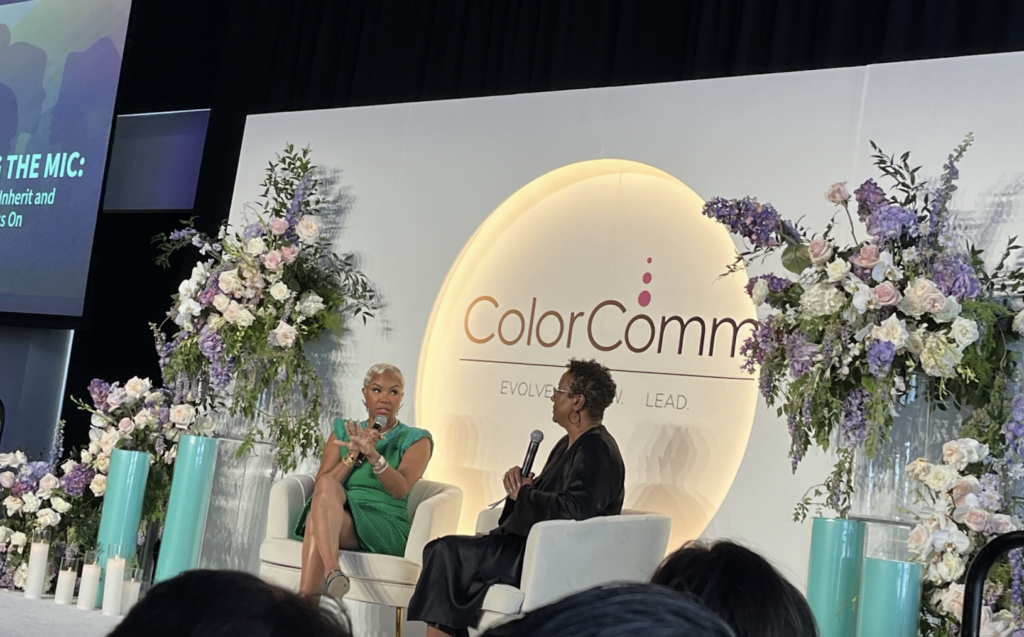
For those of us in communications, this lands differently. We architect narratives for brands every day, shaping personas and managing perception. But the conference pushed a harder question: How often do we apply that same rigor to the story we’re living?
Three lessons changed how we think about leadership, and what we’re taking back to our teams.
Who Are You When No One’s Watching?
Bevy Smith asked a deceptively simple question: “Who are you at your core?”
The question shouldn’t have felt radical, but it did. We instinctively reach for our resumes, listing roles, titles, and accomplishments. But Bevy pushed past that and asked us to examine something we rarely do: the critical difference between who you are and what you do.
She was brutally honest about her own turning point. At 38, standing in a Milan hotel room surrounded by professional success, she felt completely unfulfilled. She had designed her career around someone else’s definition of achievement. It wasn’t until she stepped away that she found herself.
The clarity from answering this question changes everything: the opportunities you pursue, the decisions you make, the boundaries you set, and the way you show up. For leaders building authentic narratives for their organizations, this clarity becomes the foundation. You cannot ask others to be genuine if you haven’t done the work yourself.
Growth Lives in the Nonlinear Path
Leslie Wims Morris, CEO of Chase Auto at JPMorgan Chase, presented a career that was familiar to our own paths: 16 roles, six companies, unconventional and unmapped but unquestionably intentional. She didn’t bounce around. She strategically pivoted, flexible about how and when, but uncompromising about the what.
Each role deepened her understanding of leadership, relationships, and organizational dynamics. Through each opportunity, she expanded her value. Credibility and trust compound over time.
In a communications landscape where algorithms shift weekly and expectations evolve overnight, rigidity isn’t prudence. Adaptability is a differentiator. Morris’ career proves that the winding road isn’t a detour. It’s often where transformation happens.
This matters for how we counsel clients. In an era of constant disruption, the leaders who thrive aren’t those who cling to a single playbook. They’re the ones who evolve their approach while staying rooted in their core mission.
Your Presence Is Your Most Powerful Message
Linda Clemons returned as a ColorComm staple with a statement that landed like a challenge: “I cannot hear what you’re saying because who you are being is getting in the way.”
As communicators, we obsess over language. We align messaging. We polish delivery. We perfect the words. But presence is the multiplier that makes words matter.
When your tone, body language, and energy aren’t aligned with your message, people feel the disconnect and it erodes trust faster than silence ever could. The work is operational. It shows up in how you enter a room, how you hold eye contact, how you listen, and how you respond under pressure.
For leaders we advise, this is everything. What people experience from you either reinforces or undermines what you’re trying to communicate. People don’t just hear your message. They read you. And that reading is the one they believe.
What This Means for Leadership Communication
Evolving, growing, and leading isn’t just about strategic planning and external positioning. It’s about doing the internal work first.
Clarity about who you are and who you hope to become. Flexibility in how you navigate. Consistency in how you show up. When those elements align, you stop performing. You stop pretending. You stop chasing someone else’s definition of success.
That’s when your message becomes credible. That’s when leadership becomes real.
