Four Takeaways from Sustainable Brands SB’26: What Leaders Need to Know
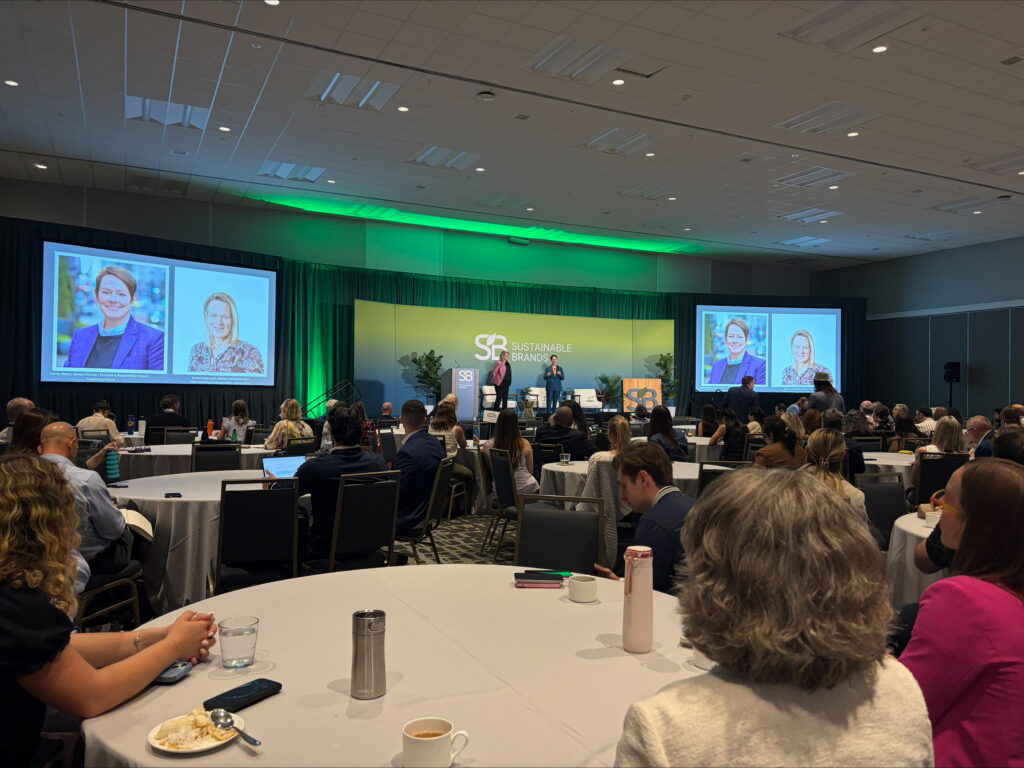
Last week, I had the opportunity to experience the energy of Sustainable Brands SB’26 as part of the FleishmanHillard delegation. Against the backdrop of a political environment that can be tough on sustainability, the conference brought together brand innovators and sustainability experts addressing climate change, social impact, community development and how AI can be a force for good.
I left with one clear conviction: the intersection of sustainability and strategic communications has never been more critical to business success. Here are five takeaways that should shape how we approach sustainability communications in 2026 and beyond.
Sustainability Must Align with Business Goals—Not Exist Alongside Them
The most important message from SB’26 was this: sustainability initiatives disconnected from core business objectives feel disposable and performative—and stakeholders know it.
The most compelling presentations came from companies that had fundamentally reimagined their business through a sustainability lens rather than bolting sustainability onto existing brands. One executive described transforming sustainability into a core business capability that spurs innovation and drives growth. When you shift how your organization thinks about sustainability—moving it from the periphery to the center—the business case becomes undeniable.
For communications teams, our role is helping organizations articulate sustainability as integral to innovation, competitive advantage, cost reduction, risk mitigation, and revenue growth. When we anchor sustainability to business success, we unlock stronger leadership buy-in, authentic external communications grounded in genuine conviction rather than obligation, and the ability to continue work in a tough political environment.
Communications Is the Essential Infrastructure for Sustainability
Communications isn’t a supporting function in sustainability strategy—it’s foundational infrastructure.
A food retailer executive captured it perfectly: “The business case for sustainability is there. Language helps you get there faster.” No matter how sophisticated your initiatives, their value remains unrealized until your stakeholders understand what you’re doing, why it matters, what it means for them, and how they participate in the effort.
In a landscape saturated with sustainability claims, audiences are skeptical for good reason. They’ve experienced empty commitments and performative gestures. Organizations winning today aren’t those with the most ambitious programs—they’re those with communications strategies rigorous, credible, and specific enough to prove their claims are real.
This reality aligns with FleishmanHillard’s recent research, License to Lead: Escaping the Pendulum – Building a Durable Strategy in Turbulent Times, which shows that expectations of leadership behavior have risen significantly.

Food and Agriculture: The Unexpected Sustainability Vanguard
Food and agriculture companies dominated SB’26, underscoring a sobering reality: 33% of global greenhouse gas emissions come from food systems. Rather than treating this as intractable, these organizations outlined concrete strategies—regenerative agriculture practices, supply chain transparency initiatives—that demonstrate measurable environmental and social impact while driving cost savings and promoting resilience.
Communicators in this sector have cracked a critical code: they ground sustainability messages in tangible business solutions. They’re not asking consumers to accept abstract environmental claims; they’re connecting sustainability to real food on real tables.
The Food-Health Connection Is Finally Getting Its Due
At SB’26, the intersection of human health and environmental sustainability moved from niche concern to mainstream business imperative. Executives addressed converging consumer trends—backlash against ultra-processed foods, GLP-1 adoption, rising focus on protein and fiber—fundamentally reshaping food choices. An animal protein sector executive emphasized that nutrition and sustainability must be part of the same conversation.
For communicators, this alignment is more than messaging—it’s a competitive differentiation strategy. Companies positioning environmental sustainability with personal health outcomes hold significant advantage. We move sustainability from the abstract (“saving the planet”) to the immediate (“food choices that protect your family’s health today while preserving the world they’ll inherit tomorrow”), expanding both audience and urgency.
Practical implication: Communicators in food and health sectors must partner closely with legal and regulatory teams to navigate authentic nutrition-sustainability claims.
Organizations that will lead in coming years are those that reimagine competitive advantage through environmental responsibility, human health, and stakeholder value—then invest in communications that make that integration visible and credible to key audiences.
If your organization is ready to tell your sustainability story with greater impact, FleishmanHillard is here to help. Let’s talk about what’s possible.
 Judith Rowland is a senior vice president in the Public Affairs and Engagement group and also serves as global sustainability lead for the food, agriculture and beverage (FAB) sector. She helps clients establish strategies for advancing community reputation and social impact, set measurable goals and communicate their progress with the stakeholders that matter most.
