Stop Watching the Labubu. Watch What It’s Hiding.
Culture is squealing and Advertising Week was listening.
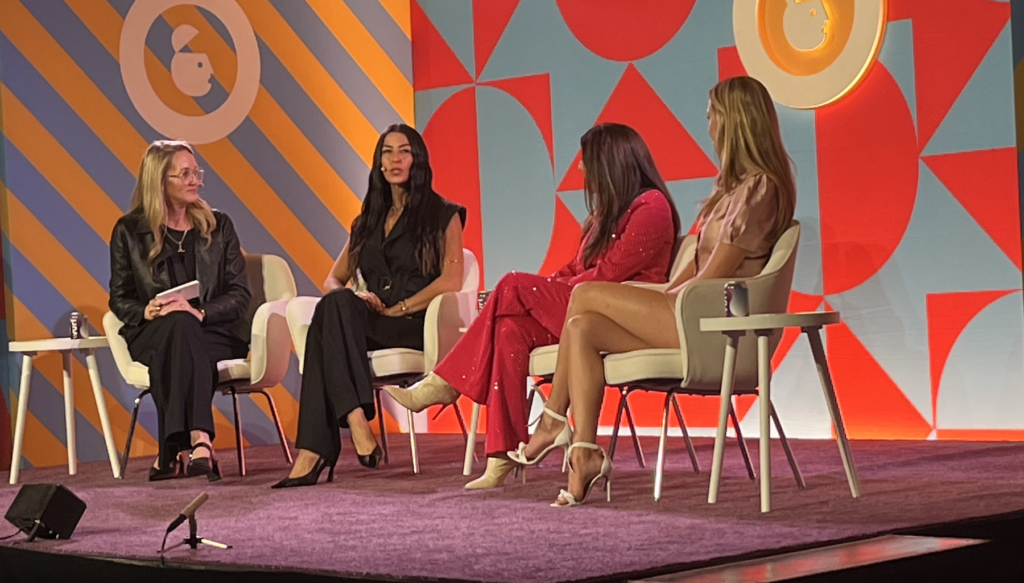
Last week, I spent the entire day locked in on Advertising Week’s Insights Stage. It was a marathon of back-to-back talks and the topics were all over the map: Labubu and cultural timing, ROAS (Return on Ad Spend) and the CFO, trade-press editors and AI detectors, breast cancer research funded at the beauty counter, livestreams and founders who overshare on purpose. The speakers ran from Canvas8 strategists and Analytic Partners modelers to Ad Age and ADWEEK editors and Rebecca Minkoff.
None of these sessions should have had anything to do with each other. Yet they kept circling the same few ideas.
The Common Threads
Five themes surfaced in almost every session:
- Receipts beat persuasion. Finance wants incrementality but editors want proof, numbers and real access.
- Participation beats portrayal. Ulta associates told their own stories.
- A story needs a next step. One billboard linked a QR code straight to mammogram booking. Representation only counts if people can actually get the product.
- The org chart gets in the way. Social budgets sit apart from retail budgets and marketing apart from finance. Management layers keep leaders away from the customers they serve.
- Human authorship is getting scarcer, and worth more. Editors are rejecting AI-written bylines and asking for “expert writes first.”
Those are the obvious threads. As a futurist, I look to find the ones that aren’t obvious.
The Non-Obvious Threads (aka the foresight layer)
- The need outlives the object. Labubu, flights with no entertainment, GLP-1 chatter: each is a container for a deeper shift. Foresight tracks the tension underneath, not the toy on top.
- Time is the hidden variable. ROAS rewards the click while brand pays off over years. Editors need hours for some stories and weeks for others. Whoever controls the time horizon controls the strategy.
- Drift is a leadership disease. BlackBerry didn’t fail at forecasting. It fell in love with the assumptions behind their last win and historical data. Foresight is a management habit.
- The future arrives from the edges. It came through rural communities, young survivors and founders willing to say the quiet part out loud. Signals are found on the periphery.
- Vulnerability can be an early-warning system. One overshare showed why followers were putting off mammograms. A briefing that ends with “no story” is still data. Discomfort is often a signal arriving early.
Why bold, why now
As the leader of FleishmanHillard’s Culture Foresight capability, I see that last point every week. Most organizations notice the signal and then flinch…too…late. Case in point, in chaos, most of us rely on four reflexes:
- Fight
- Flight
- Freeze
- Fawn
The Chaos Advantage, our new study with Contagious, argues for a fifth move:
- Flipping the script!
That means changing the situation so completely that your competitors lose the advantage they were counting on.
The best moves in chaotic times are bold moves, because caution turns out not to be safe. In our research, safe brands and bold brands faced public backlash at identical rates. Fifty-eight percent of leaders said missing an opportunity through caution happens more often than paying for a bold move. Playing it safe doesn’t lower the risk. It just guarantees you lose the upside.

The stage was full of script-flippers.
- Estee Lauder and Ulta turned the beauty counter into a public health announcement for breast cancer awareness.
- Amazon made livestreaming a source of both social clips and paid ads, giving siloed social and paid media teams a reason to plan together and share content.
- Analytic Partners didn’t fight finance for more budget. It started speaking finance’s language.
- Rebecca Minkoff overshared her struggles building her business, which drew female founders out of the woodwork and into the Female Founder Collective.
- A diagnosis became a billboard, and the billboard became a booking, and the bookings became a community: Million Mammograms.
In each case, the move changed the terrain – flipped the script – instead of trying to win on it. Think: when they zig, you zag…or leapfrog. Chaotic times require different tactics: not chaotic tactics, but strategically bold.
What this means for us
For those of us in agencies and in-house teams, the job is changing. We can’t keep spotting trends and filing them away. Foresight has to become a decision system: watch, test, act, with an owner and a review date. Additionally, Foresight can no longer be grounded in historical precedent and linear, predictive algorithmic forecasting because a chaotic future is not a straight line. Culture now moves faster than our approval chains, AI is accelerating culture, and chaos is the hallmark of cultural context. The brands that win will be the ones that build systems favoring agility, paradigm shifts and boldness.
I left the Advertising Week Insights Stage convinced of one thing. The future isn’t hiding. It’s in plain sight, sitting on a stage in midtown NYC, waiting for someone brave enough to act on it.
In chaotic times, the riskiest move is the one everyone agrees is safe. The Insights Stage told the same story again and again: the marketers that win the future will flip the script before chaos flips it for them.
 Sarah DaVanzo is a global integrated marketing communications leader and head of FleishmanHillard’s Culture Foresight and Innovation capabilities, Sarah writes for Rolling Stone and Fast Co. and is the author of Exotic Thinking: A Code to Innovating in the Age of AI (Wiley, April 2027).
