Employee Login

Enter your login information to access the intranet

Enter your credentials to access your email

Reset employee password

Article

Bay Area Host Committee Names FleishmanHillard as Official Strategic Communications Consultancy for 2026

November 5, 2025

The Bay Area Host Committee (BAHC) today announced a partnership with FleishmanHillard, naming the global communications firm as its Official Strategic Communications Consultancy for 2026. FleishmanHillard will serve as the communications division of BAHC, overseeing all facets of communications including strategy, sponsorship communications, executive communications, media relations, and issues management for what is set to be a historic year in the Bay Area.

“Next year will be unlike any year before it—not just for the Bay Area, but for the world of sports,” said BAHC President & CEO Zaileen Janmohamed. “It’s the first time a host committee will oversee both the Super Bowl and the World Cup in the same calendar year. For a moment that big, we need a global communications firm with experience navigating the biggest moments on the biggest stages. FleishmanHillard’s unparalleled experience and proven leadership make them the perfect partner for this historic journey.”

As part of the collaboration, FleishmanHillard Chief Business Development & Brand Officer Mitch Germann will serve as Head of Communications for BAHC, leading all communications efforts for the Committee. Additionally, FH President & CEO J.J. Carter will join the BAHC Advisory Board, bringing decades of global sports communications, brand leadership, and issues management expertise to the organization.

Serving as BAHC’s primary media contact and communications lead, Germann brings more than 25 years of experience in sports communications, marketing, and brand strategy, including in-house leadership roles with the University of Kansas Athletics Department, the NBA’s Sacramento Kings, and Nike’s Jordan Brand. He has led communications programs on the ground for marquee events such as the Olympic & Paralympic Games, the NFL Super Bowl, the NCAA Final Four, and the NBA All-Star Game, and has worked directly with two Hall of Fame coaches, three NCAA All-Americans, an NBA MVP, and an NBA Rookie of the Year—alongside high-profile C-suite executives from across the retail, sports and lifestyle industry. Germann will be supported by members of the core FH Sports team in the agency’s San Francisco office and beyond.

An active counselor with nearly three decades of experience, Carter has managed global communications programs on six continents, including numerous Olympic Games, NFL Super Bowls and FIFA World Cup activations for global sponsors, governing bodies of sport and host organizations. Prior to his executive role leading FleishmanHillard, Carter co-founded the agency’s global sports practice in 2007 which has grown to include nearly 200 counselors worldwide, who support clients across virtually every major sporting milestone and global event. Before joining FH, Carter led communications for the Dallas Mavericks, Detroit Pistons and the Association of Tennis Professionals.

“We’re honored to join forces at such a pivotal moment for the Bay Area and for sports history,” Carter said. “Zaileen has assembled a world-class team and marshalled unparalleled business and civic partnerships that have come together for this once-in-lifetime moment for our region. We are honored to join this coalition, and to provide a seasoned team to help deliver an unforgettable year.”
Article

Five Ways to Build Community Reputation and Trust 

October 29, 2025
By Judith Rowland and Bob Miller

Across boardrooms and communications teams, one word keeps coming up: “whiplash.” It’s how leaders describe the constant upheaval caused by today’s shifting geopolitical and policy landscape. But who really feels the sting at the end of this whip?

Often, it’s local communities. These are the places where products are made, where factories stand and where families depend on steady work. Companies might have reserves or pricing power to weather storms, but for many communities, the options are limited. The challenges facing local economies in 2025 are just the latest round in a long struggle—one shaped by changing populations, economic swings and shifting industries that can erode tax bases, schools and a community’s ability to attract talent and investment.

Moving beyond the old playbook 

Given this intensity, the old playbook for community relations—writing checks to nonprofits, sponsoring little league teams, hiring locally—just isn’t enough anymore. Communities need more from their corporate neighbors.

This is a real opportunity. Companies can build true “community reputation” by investing in local relationships, creating value for both the business and the community. When companies focus on community reputation, they go beyond just earning a license to operate. They earn a license to grow. Strong partnerships between companies and the communities where they operate fuel mutual success. Communities thrive when companies show up and invest meaningfully. 

Why reputation and trust matter 

In today’s competitive environment, companies race to show their commitment to U.S. jobs and supply chains. But earning trust at the local level takes more than promises of big investments or massive new facilities. It takes consistent, long-term and clearly visible action. 

Reputation and trust are the keys that open doors. They help companies navigate politics, overcome barriers and tell a compelling “Made-in-America” story about their facilities, their people and the future they’re building with their communities. 

In fact, as we approach the end of Manufacturing Month in the U.S., it shouldn’t also mean an end to a focus on supporting and celebrating the impact manufacturing has on local communities. A strong community reputation is an on-going, strategic business differentiator helping companies:    

  • Retain and attract top local talent 
  • Turn neighbors into lifelong customers 
  • Protect the business when controversy strikes 
  • Build a base of authentic advocates who will amplify your story far beyond your own channels 

A blueprint for building community reputation and trust 

  1. Listen first to build relationships.
    Listening is the foundation of strong relationships. It helps you find ways to contribute that genuinely strengthen your reputation and support the community’s long-term health.
  1. Craft bespoke plans for each community. There is no one-size-fits-all model for building community reputation. Rather, the partnership must be driven by the needs of the community. A small, rural town may have vastly different needs than a large city with many well-known employers. Companies must recognize a community as a system and understand where they are best placed to offer support.
  1. Be present and consistent.
    Trust is built by showing up—again and again. Do not wait until you’re in the midst of a challenging labor negotiations cycle or other business threat to start thinking about building reputation. Attend town halls, fundraisers, council meetings and economic summits. Consistent presence demonstrates real commitment. Miss these moments, and you risk losing momentum that’s hard to regain – or worse, making your actions appear self-serving and transactional.
  1. Commit enterprise-wide.
    Building a strong reputation takes buy-in from the whole company. Align your communications, philanthropy, public affairs, workforce programs and government partnerships around a shared mission that advances business goals and benefits residents. Start by mapping stakeholders, aligning priorities and standardizing programs for mutual success.
  1. Communicate transparently
    Listening is only the beginning. Authentic, regular communication is the payoff that matters. People don’t trust the company they never hear from, or the one that refuses to comment. Leverage a wide range of drumbeat tactics, potentially including newsletters, community meetings and local media to highlight your impact. And don’t go silent when things get tough. Sharing both successes and challenges—like job cuts or construction delays—shows transparency and builds trust. When stakeholders know the context and your plans, they’re more likely to become advocates, even during hard times.

A lasting commitment to communities 

Building or expanding in a new community isn’t just about jobs or ribbon cuttings. It’s a vote of confidence in American workers and communities, a promise in our shared future and the first step in creating local reputations that pay dividends for companies, communities and the country. 

FleishmanHillard has helped Fortune 1000 companies build community reputation strategies that deliver proven results. To learn more, contact [email protected]. 

“Judith Judith Rowland is a senior vice president in the Public Affairs and Engagement group and also serves as global sustainability lead for the food, agriculture and beverage (FAB) sector. She helps clients establish strategies for advancing community reputation and social impact, set measurable goals and communicate their progress with the stakeholders that matter most.

Bob Miller is a managing supervisor in FleishmanHillard’s Detroit office, where he supports clients across manufacturing, energy, finance, healthcare, and higher education. He’s committed to developing programs and stories that build trust and strengthen connections between companies and their employees, customers, and communities.

 
Article

Super Bowl LX: The Ultimate Pressure Test

By Steve Hickok and Rebecca Rausch

The Super Bowl has always been more than a game. It’s the most-watched cultural moment in America and one of the most valuable sponsorship platforms in the world. But heading into Super Bowl LX, the playbook for brands must adapt to today’s reality.

Case in point — the NFL’s selection of Bad Bunny for the halftime show has already sparked cultural and political debate and even led to an “alternative halftime” event to counter it. For the NFL, NBC and major advertisers, this creates a highly polarized, high-visibility environment where every decision and creative choice will be interpreted through a political lens.

This year’s game underscores what our teams across FleishmanHillard Sports and Crisis, Issues & Risk already know: Brand activations and storytelling live in a 360° risk environment — one where culture, politics, fandom and identity collide in real time.

Why This Matters and What it Means for Advertisers, Sponsors and Opportunistic Brands

For advertisers, sponsors and even those brands looking to jump into the Super Bowl conversation, this isn’t just about managing risk — it’s about navigating a cultural flashpoint skillfully, strategically and confidently.

That’s because Super Bowl LX is more than just a marketing showcase — it is a real-time reputational stress test for every brand involved. Audiences are more polarized than ever, athletes and artists are cultural flashpoints and sponsors and advertisers are under heavy scrutiny to demonstrate value to stakeholders, as every moment will be instantly amplified.

Anticipate, Adapt and Lead Under Pressure

For decades, FleishmanHillard has helped guide brands on the biggest stages – from the Olympic Games to FIFA World Cup and Super Bowl. We bring together event-tested expertise and relationships across sports sponsorship, issues navigation, and brand reputation to help clients anticipate risks, prepare for what’s ahead, and play to win.

Brands should consider the following elements from our ever-evolving Playbook as they work through their “Big Game” communications plans:

  • Always on situational awareness. Understand that the environment surrounding the game is more complex than ever — a fragmented, emotional and politicized audience where every move is scrutinized in real-time.
  • Act with clarity and purpose. Brands should be grounded in who they are and what they stand for. Decisions and scenario planning should be anchored in brand identity and long-term objectives — not reactions to political noise or short-term controversy. Purposeful action signals confidence and consistency, even in a polarized environment.
  • Pressure-test everything. Great creative ideas are only as strong as their ability to withstand the cultural moment. The best brands pressure-test their ideas before launch — understanding how different audiences might interpret tone, imagery or associations. Use research and audience intelligence tools, including Sage Synthetic Audiences, to preview how different segments — from fans to policymakers to Gen Z — might react. FleishmanHillard’s Risk Radar, a forward-looking telemetry system that helps organizations spot reputational issues before they break, can be used to evaluate risks tied to creative, activations, partnerships and messaging.
  • Plan for the “what ifs.” When the moment comes, speed matters — but so does discipline. The most effective brands build Super Bowl–specific playbooks that define who acts, who approves and how decisions are made when the pressure hits. From monitoring protocols to escalation matrices and stakeholder communications, these should be tested well before game day — not written during it. The FleishmanHillard Crisis Simulation Lab can be leveraged to rehearse these scenarios in a realistic, dynamic environment that mirrors real-world pressures — social chatter spiking, a sponsor calling or a halftime controversy trending. Practicing the response, not just writing it, helps teams move faster, stay aligned and communicate with confidence when a 15-second moment becomes a headline and days’ worth of conversation.

Super Bowl LX is the ultimate pressure test. The best brands won’t avoid risk; they’ll embrace it strategically, purposefully, and be prepared to win on the world’s biggest stage.

Steve Hickok is the Global Lead of FleishmanHillard’s Sports practice. He’s led award-winning and business building campaigns for more than 20 years surrounding the Super Bowl for brands including Visa, State Farm, Buffalo Wild Wings, Amazon, Little Caesars and Lindt.

Rebecca Rausch, FleishmanHillard’s Americas Crisis Lead, is a trusted expert in reputation management and crisis communications, advising sports organizations, leagues, athletes, and brands through high-stakes issues and reputational challenges. She’s led crisis and issues planning and management for global sporting events including the FIFA World Cup, Olympic Games, Super Bowl, major international tennis and golf tournaments and more.

Article

Understanding the GLP-1 Consumer: Pairing AI and Consumer Behavior Research to Map Potential Impact on Food, Nutrition and Innovation 

By Allison Koch

Obesity medications have created a new type of consumer with unique needs. These consumers are not only spending their money differently but also spending less on groceries while still figuring out how to integrate their new diet into their homes and social lives.  

Food companies, as well as health professionals and dietitians like me, are seeking to better understand the GLP-1 user and how best to support them, especially as the medications become more affordable and accessible.  

Consumer research is already showing us where there are opportunities to support GLP-1 users. For example: 

GLP-1 users are tech-savvy, diverse and often rely on online communities – underscoring a shift in how Americans get health advice.

Moving beyond the numbers with AI 

But how do we really get behind the statistics and inside the mind of a GLP-1 user?  

We created a synthetic audience—an AI-driven amalgamation of many users based on all of the research we could put into the tool—to explore their thoughts and use them as a springboard for discussion and inspiration. Our proprietary tool unveiled potentially unintended consequences medication users’ decisions may have, including how their dietary habits and behaviors could influence how and what their family eats. More broadly, their habits and decisions will drive how product innovation happens and how the food supply chain is impacted.

And our synthetic audience showed us clearly that:  

  1. One size fits none: the most effective engagement – whether clinical or product – starts with understanding and targeting micro-segments.  
  1. Rethink education with reach: health care professionals (HCPs) – preferably led by registered dietitians (RDNs) who are experts in connecting the food and healthcare sectors – as well as the broader healthcare and food industries need to embed in GLP-1 users’ ecosystems as most build health knowledge outside traditional channels (on YouTube, Reddit, TikTok and with peer groups). 
  1. Anticipate ripple effects: HCPs (and the industry where appropriate) need to help patients navigate this cascade with empathy, flexibility and real-world solutions beyond just nutrition effects.  

What industry leaders are saying 

With these insights in hand, earlier this month I challenged three industry professionals to apply our findings to their work in front of a crowded room at the recent Academy of Nutrition and Dietetics annual Food and Nutrition Conference & Expo (FNCE). Each panelist brought a unique perspective to the table, discussing how they work with and reach GLP-1 medication users as well as key considerations and implications for practice and the broader healthcare, food and beverage community. 

How far does the GLP-1 impact reach? My colleague and Audience Strategy and Data Innovation expert Amanda Patterson said, “The rise in GLP-1 medications is fundamentally reshaping not just how people eat, but what and how much they buy at the grocery store. Beyond the individual, these changes ripple out to families and social circles. Many users say their household food routines (grocery lists, meal prep, holiday or social meals) are being reworked to accommodate their new eating patterns.” 

How should the food industry respond? For long term implications if this trend continues, community nutrition dietitian and GLP-1 user Summer Kessel shared, “I’m hopeful we are course correcting from the days of massive portion sizes and novelty products over nutrition. However, I’m a little worried that if people rely too heavily on ‘low-calorie’ processed foods instead of balanced meals, they risk missing out on essential nutrients.” 

Can the right nutrition messages get through the marketing hype? Founder of the Better Nutrition Program and RDN Ashley Koff shared, “We can use awareness of GLP-1 medications to introduce the public to weight-health hormones and how they regulate numerous functions in the body known collectively as ‘weight health.’ In doing this, dietitians can expand the reach of GLP-1, GIP beyond medications and help people learn to assess and as indicated, optimize their own hormones – whether they ever use a medication or not.” 

Rethinking food and health communications 

As GLP-1s continue to change daily routines and expectations, helping consumers make the right decisions to stay healthy but also being present with family and friends at meals and other food-based activities will test how we communicate about food and health.  

Combining insights from AI, research and lived experience allows us to reach solutions faster and understand not just what works, but why.  

For more information on these insights and other key learnings from FNCE, contact Allison at [email protected]

Allison koch width= Allison Koch MS, RD, CSSD, LDN is a vice president in FleishmanHillard’s Chicago office, where she provides nutrition communications counsel for clients. A registered dietitian with more than 20 years of experience, she’s passionate about helping brands connect science and storytelling to inspire healthier choices and stronger consumer trust.
 
Article

Breaking Stigma: From Avoidance to Permission 

October 27, 2025
By Mike Sacks

In the world of reputation strategy, there’s an itch we’re all tempted to ignore, a scratchy tag inside the corporate sweater. Eventually, it demands our attention. 

Meet: Stigma. 

As corporate affairs counselors, we spend a lot of time on ‘Big R’ Reputation strategy. Reputations are based on distinctiveness from other organizations, and we work towards establishing that distance from competitors. Stigmatization, though, tends more to broad negative categorizations of sameness across a category.  

It’s a different beast—persistent and pervasive—requiring a deliberate approach often within an integrated communications strategy.  

The Four Horsemen of Category Stigma 

Before you throw up your hands (or reach for a rebrand), let’s diagnose the beast. There are obvious, and more extreme, examples of stigmatized industries: think tobacco or firearms. And there are more subtle forms that many organizations experience. 

Stigma clusters into four archetypes: 

  • Dated/Uncool: Brands seen as stuck in the past, with legacy formats or aesthetics that signal irrelevance. Coolness just doesn’t last the way it used to. It’s fickle, and today’s tapped in brand is tomorrow’s also-ran.
  • Low Status/Quality: Products or services assumed to be cheap or unreliable, imposing a “social cost” on their users. Customers expect regret. 
  • Declining/Irrelevant: Industries viewed as shrinking or obsolete, even when their offerings remain strong. They leave stakeholders, investors in particular, yawning. You’ve lost attention. 
  • Harmful/Unethical: Organizations perceived to exploit, mislead, or harm people or the planet. Of course, the most likely to trigger boycotts or regulatory scrutiny. What is considered harmful or unethical isn’t static either. Social norms have been recently fluid enough that the definition for this is broader than ever. 

These stigmas overlap or evolve from one to another over time, compounding the job to be done.  

The CCO’s Playbook 

Here’s the upside: stigma isn’t forever. Know your audience and root causes, then move fast and smart. The playbook is simple, but the execution requires creativity and discipline. Change the context, show your value and prove it again (and again). 

Our framework distills the process of mitigating and then overcoming stigma into two clear phases with five moves to make. 

Phase 1: Stabilize & Normalize 

1. Stabilize & Normalize. The first step is to reduce stigma’s visibility and reclaim credibility. Depending on the type of stigma, and context around your industry, it may require: 

  • Recoding: Update design, language and user experiences to reflect modern standards, for instance.  
  • Separating Misperceptions from New Realities: Marginalize bad-faith narratives by providing transparent, factual information and correcting errors swiftly. 
  • Proving Usefulness: Demonstrate real value to high-impact groups through case studies and endorsements. 

2. Build Endorsement & Embed Value. Once credibility is stabilized, the goal shifts to turning skeptics into advocates: 

  • Engage Skeptics: Invite scrutiny, share data openly, and provide regular updates. Transparency transforms critics into fair commentators. 
  • Anchor to Shared Public Goals: Show how the organization advances broader values like safety, access or affordability, supported by independent audits or partnerships. 
     

Stigma isn’t a permanent sentence.  

Breaking stigma isn’t easy, but it is possible. With the right framework—one grounded in collective action, transparency, a commitment to collective value, and maybe a bit of swagger—organizations can not only overcome negative labels but also unlock new pathways for impact and reputation. 

We’ll explore this concept more fully in the coming months and continue to unpack how stigma forms and hardens, the characteristics of stigma and its impact on stakeholders, and more ways to counteract or prevent it. 

Mike Sacks width= Mike Sacks leads FleishmanHillard’s corporate affairs practice in Chicago.

 
Article

Communications Is an ROI Multiplier for Global Sports Sponsorships

October 22, 2025

Few things unite the world in real time like sport. The Super Bowl, Olympic and Paralympic Games, and FIFA World Cup don’t just crown champions: they define reputations. For brands, these global moments are high-stakes arenas where trust, attention, and billions in sponsorship dollars are on the line.

The brands that truly win know that communications is the multiplier. They connect event moments to human stories — for employees, customers, partners, and communities — while protecting reputation under the brightest spotlight.

So what does putting communications at the center really mean? It starts with leadership alignment across the C-suite to operate in lockstep, from strategy and storytelling to scenario planning and real-time response. The most effective teams turn visibility into value and pressure into performance investors can measure.

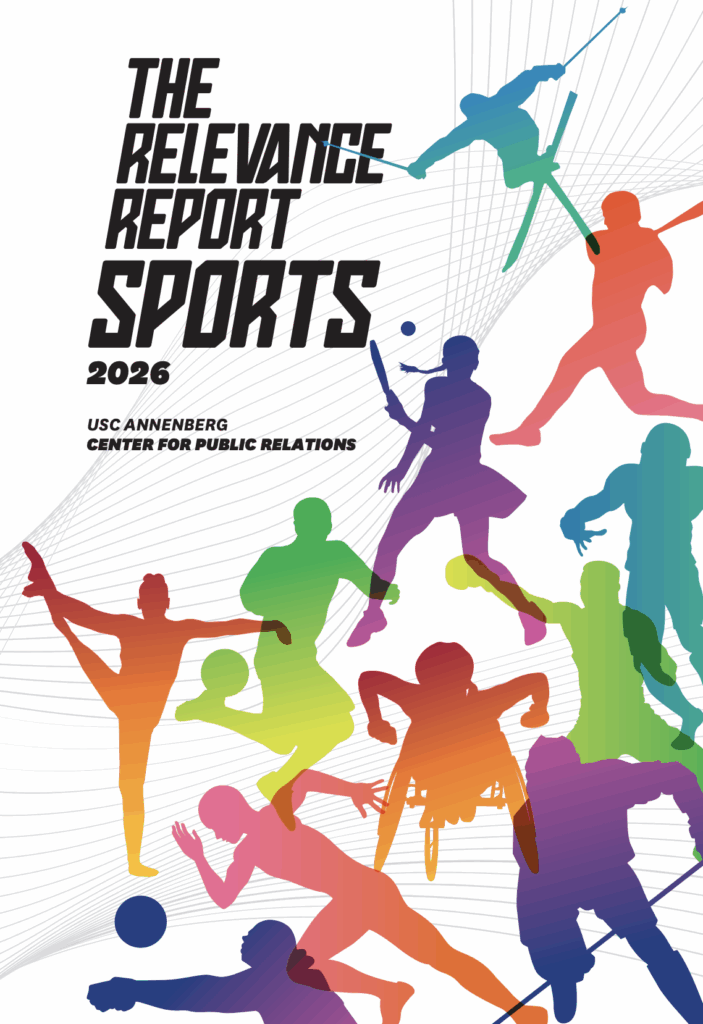
In the latest USC Annenberg Sports Relevance Report, FleishmanHillard President and CEO J.J. Carter and Chief Client Officer Emily Frager explore how the new sports communications playbook must include:

  • A gameplay to help brands operate at “event speed” on the ground.
  • The blueprint for integrated, measurable, reputation-safe activations.
  • How to prepare for the upcoming calendar of record-breaking global tournaments

Click the image below to read the full USC Sports Report to see how brands are turning attention into trust, and participation into performance or visit USC Annenberg’s site here.

Article

Don’t Blame Users, Equip Them: A Smarter Approach to Cybersecurity

October 21, 2025
By Scott Radcliffe

There has never been a more challenging time to be a user on a corporate network. Ransomware and extortion gangs are now billion-dollar businesses built in part by targeting individuals—sometimes even highly privileged users—to steal corporate data. Now, with a big assist from AI, barriers to entry have flattened and cybercriminals have gotten even better at targeting and tricking people into giving them sensitive data.

Why cybersecurity employee awareness matters

It can be easy for organizations to feel like the answer is bigger, better and more agile technical defensive solutions. While those are essential and have adapted at a staggering rate, they are not enough due in part to the defender’s use of AI. Almost as important is recognizing that technical solutions alone are insufficient. Engaging corporate users (employees) more effectively may require not just new tools, but a change in outlook as well as approach.

As attackers seek more effective and creative ways to bypass technical defenses, often by tricking users, we need to update our approach to helping organizations fight back.

Limitations of periodic cybersecurity trainings

Study after study shows pretty clearly that the old approach to employee cybersecurity education and training just isn’t working. Worse, a healthy dose of fatalism can creep into the mindset of security teams. This thinking resigns them to the notion that user mistakes are generally unavoidable. Collectively throwing up our hands and giving up isn’t an option. It’s time to think more creatively about employee cybersecurity education and training. While the substance of training is important, organizations often focus so much on what information needs to be shared that they neglect to consider how to effectively engage their intended audience.

Making users click through a cybersecurity awareness training session once a year, then testing them at the end or with simulated phishing exercises, isn’t good enough. We should view cybersecurity training and education for employees not as a singular task, but as a communications campaign that requires design and delivery to maximize stakeholder retention of its key messages. That means more frequent, concise and engaging initiatives, rooted in insights specific to your organization, tailored to unique audiences and delivered across multiple platforms.

Empowering employees for better cybersecurity outcomes

Designing your security with the understanding that compromised user accounts are frequently the way threat actors breach corporate environments isn’t the same as treating user security risk like it’s a hopeless problem. This issue is too important, especially now, to view any other way. It’s a collective responsibility, one that leverages the skills and expertise from across the organization to help mitigate a core source of organizational risk.

Bottom line: Humans aren’t perfect, and they’ll continue to make mistakes. Bad actors will continue to be creative, tricking a platform provider’s helpdesk to give them access to customer data or offering corporate users a cut of any ransom to extort from the user’s employer, or in any number of other ways.

It’s time to find better ways to arm users with the knowledge they’ll need to fight back.

Opportunities exist to help organizations plan and execute a strategic approach to cybersecurity education so that employees cannot only access but also retain the right information.

To learn more, contact [email protected] or [email protected]

Scott Radcliffe width= Scott Radcliffe is FleishmanHillard’s global director of cybersecurity, leading the firm’s Cybersecurity Center of Excellence and advising clients on rising cyber risks. He recently rejoined FH from Apple, where he led cybersecurity communications and previously served as the agency’s senior global data privacy and security expert.
 
Article

Augmented Judgment, Accelerated Execution: AI’s Role in Crisis, Issues and Risk Management

October 14, 2025
By Matt Rose and Alexander Lyall

Everyone’s talking about the promise of artificial intelligence. For crisis, issues and risk managers, that promise isn’t theoretical anymore. It’s already changing the game. The speed, scale and complexity of today’s challenges demand more than human effort alone. We need tools that sharpen judgment, spot risks sooner, simulate outcomes and move faster than we ever could on our own.

At FleishmanHillard, we call this Augmented Judgment, Accelerated Execution. It’s the balance of seasoned, human counsel with the foresight, scale and speed of AI. When used well, AI doesn’t replace human judgment, it strengthens it. AI compresses timelines, expands context, flags risks earlier and gives leaders the clarity they need under pressure.

Here’s how we’re putting this advantage into practice at FleishmanHillard, using trusted frameworks and strong data governance to help clients address crises, issues and risk with confidence.

AI for Early Warning

AI is becoming an essential early warning system. It examines global news, regulatory updates, and social activity to detect emerging topics and weak signals before they escalate. By analyzing conversations across markets, languages, and, it connects jurisdictions patterns that siloed teams might miss, with speed and breadth that today’s lean human teams cannot match.

It can also track how issues are likely to evolve and flag pressure points like upcoming regulations, activist campaigns, or viral moments. In addition, it can be pointed to anticipate when separate concerns may converge, adding complexity to timing, messaging, audience response and stakeholder engagement. This kind of foresight helps leaders act early, communicate clearly and stay ahead before critical moments hit.

AI for Stakeholder Simulation

Spotting a potential issue is one thing. Understanding how different audiences might respond is the next. Employees may question values. Regulators may focus on compliance. Investors may worry about financial impact. Customers may be concerned about reliability.

AI helps make this analysis possible through FleishmanHillard’s SAGE Synthetic Audiences. These simulations, built on polling data, demographics, and behavioral insights, let teams pressure-test messaging in real time.

AI can also model how a story might spread. Coverage could draw regulatory attention, spark activism, or open the door for competitors. With this foresight, teams can weigh options early, decide how to respond, and plan outreach in the right order.

AI for Story Forecasting

Reporters rarely work in isolation. Their previous stories, tone, and interview style often foreshadow how a new piece might unfold. AI can analyze this public data to forecast likely narratives, giving teams time to scenario-plan and prepare fact-based responses.

In one recent case, the FleishmanHillard team leveraged AI to generate a full-length draft of a potential investigative article based on a reporter’s in-depth inquiry, their past work, and facts they were likely to uncover. The projection closely matched the final story, serving as a clear model for the client and FH counselors to work against and affording weeks to prepare. Together, they aligned messaging, cleared responses and rehearsed scenarios. When the article ran, the team responded with focus and confidence, avoiding both unwanted attention and business disruption.

Click Above for More From the FleishmanHillard Crisis Team

AI for Crisis Content Management

Crisis response is rarely just one statement. It quickly becomes a growing stack of analytics and materials: standby statements, employee letters, investor scripts, customer updates, government briefings, media talking points, FAQs and social posts. Managing it all can become chaotic, especially with lengthy approval chains.

AI tools like FH Crisis Navigator help bring order. Acting as a virtual program manager, it adapts approved language for different audiences with speed and consistency. Using this tool, a crisis counselor can generate drafts, maintain version control, and keep updates aligned across every document. This reduces drift, speeds up approvals, embeds expert counsel, and keeps teams focused. So, when leadership needs to respond – whether to investors, regulators, customers, or the public – everything is already in place and ready for review.

AI for Scenario-Based Training

Preparation has always been essential to crisis readiness. But traditional tabletop exercises often fall short of real-world complexity. AI-powered platforms like the FleishmanHillard Crisis Simulation Lab raise the bar. Run by experienced facilitators, these simulations evolve in real time based on participant decisions. They introduce realistic challenges like media calls, stakeholder emails and viral posts, all tailored to the organization’s sector and geography.

Simulations can launch in hours instead of weeks, making them useful for both training and real-time strategy support. Structured feedback focuses on fact management, stakeholder engagement, and adaptability – building the muscle memory teams need when reputations are on the line.

AI for Campaign Risk Screening

Crises don’t always come from the outside. Sometimes a product launch, influencer partnership, or purpose-driven campaign can spark backlash, trigger scrutiny, or misfire in a volatile moment.

FH Risk Radar helps teams assess these risks before campaigns go live. It reviews concepts against regulatory guidance, cultural signals, public sentiment, and platform-specific challenges. The system scores ideas across dimensions like reputational exposure, influencer fit, message durability, and cultural sensitivity. Instead of a simple go-or-no-go call, teams get a full risk profile and clear mitigation strategies. This shifts review from a late-stage checkpoint to a strategic advantage.

From Promise to Practice

For communicators, risk leaders, and executives, AI is no longer a future promise. It’s a working tool, a strategic coach, and a force multiplier available to improve outcomes now. It surfaces early warning signs, simulates reactions, forecasts narratives, manages complex content, powers training, and screens campaigns. It delivers sharper, faster options for decision makers when every move counts.

AI’s role in crisis and risk management will only grow more sophisticated. But the message today is simple: the technology is here and can be applied to create immediate value. The leaders who use it will be better prepared to protect reputation in high-stakes moments.

At FleishmanHillard, we’re applying these tools every day to help clients anticipate challenges, navigate uncertainty, and emerge stronger. At the heart of it is Augmented Judgment, Accelerated Execution – the combination of trusted human counsel and the structured speed of AI. Together, they help organizations make better decisions, faster.

Crisis Team width=

Matt Rose (top) – Americas Lead for Crisis, Issues & Risk Management: Matt is an SVP & Senior Partner in New York with more than 30 years’ experience in advising organizations on crisis and issues management, risk mitigation, and reputation recovery. He has guided companies through reputational crises, labor issues, regulatory challenges, ESG controversies, and high-profile litigation.
Alex Lyall – Lead, Risk Management, AI & Innovation: Alex is an SVP & Partner in New York with more than 15 years of experience in crisis communications, issues management, preparedness, and risk management, working across industries. As part of the leadership team, Alex will help define best practices, shape go-to-market strategies, and scales solutions, with a focus on AI integration and talent development.
 

FH Guidelines for AI in Crisis, Issues, and Risk Management Applications

At FleishmanHillard, we apply artificial intelligence with purpose, not hype. In crisis, issues, and risk management, that means combining human expertise and experience with proven frameworks, proprietary technology, necessary confidentiality, and responsible guardrails to help organizations respond with speed, confidence, and control.
During a crisis, there is no substitute for seasoned judgment. AI can surface information, suggest language, or model scenarios, but it cannot navigate the nuance of legal implications, stakeholder dynamics, or reputational risk in real time. That takes seasoned counselors who have sat in the room, weighed the tradeoffs, and led under pressure. When the stakes are high, experience is not just helpful, it is essential.
That is why each FleishmanHillard application of AI in the Crisis, Issues and Risk Management Practice is anchored in three principles:
  • Experienced crisis counselors remain at the center of each use case, ensuring that technology enhances but never replaces human judgment.
  • Our systems are designed in secure, quality-assured environments that safeguard client information and uphold rigorous ethical standards.
  • AI is embedded within tested frameworks and workflows, allowing teams to move faster without sacrificing accuracy, accountability, or trust.
This disciplined approach ensures AI strengthens decision-making rather than creating new risks. With FleishmanHillard, organizations embrace innovation in crisis, issues, and risk management with confidence, knowing that innovation never comes at the expense of accuracy, ethics, or trust.


Article

Full Speed Ahead: An Executive’s Guide to Change Management for Regulated Reporting 

October 7, 2025
By Bob Axelrod

As the deadline for complying with the EU Corporate Sustainability Reporting Directive (CSRD) approaches, company leaders will soon need to evolve their reporting process. The CSRD and its underlying disclosure standards, the European Sustainability Reporting Standards (ESRS), usher in a new era of reporting, requiring companies operating in the EU to provide detailed, standardized responsible business and sustainability disclosures that are audit-grade.  

The temptation to pause and await further clarifications — such as outcomes from the “Omnibus Simplification Package” — may seem prudent, but that’s a risky calculation. The direction of travel is clear, and operational readiness is a multiyear endeavor that cannot wait. 

Change Management: The Deciding Factor 

CSRD compliance is far more than a reporting exercise. It requires a transformation in how your company operates, collaborates and delivers information — with audit-ready precision and cross-functional accountability.  

If your company has experience with voluntary responsible business reporting, you’re somewhat ahead of the curve. But regulated, externally assured reporting is a different game altogether, comparable to the shifts required when financial reporting became regulated. The scale of change necessitates active executive sponsorship, clear ownership and a culture that embraces transparency and due diligence. 

Acting Now Is Essential 

Waiting for absolute certainty from regulatory bodies creates a dangerous illusion. The core requirements of the CSRD are already defined.  

Delaying action can leave your organization scrambling to catch up, leading to higher implementation costs, operational disruptions and potentially subpar reporting that may expose your organization to fines and reputational risks. Early movers can pilot new processes, identify data gaps and course-correct before mandatory disclosures are enforced, therefore gaining an advantage in data quality, audit readiness and stakeholder credibility. 

Key Steps for Success 

1. Expand Cross-Functional Collaboration: Sustainability, finance, legal, risk, HR, IT, audit, procurement and other key functions must all be fluent in responsible business principles and actively engaged in reporting processes. 

2. Upskill and Train: Teams require targeted training in data governance, due diligence and audit-level documentation — going beyond simple awareness. 

3. Resource for Rigor: Subject matter experts need greater support, including additional staff, time and specialized expertise. Empowering them is critical for accurate, timely and complete disclosures. 

4. Embed Accountability: Define clear roles, set ownership and align performance incentives. Make CSRD compliance a shared objective, visibly sponsored by both the C-suite and the board of directors. 

5. Invest in Technology: Manual data collection is no longer viable. Integrated systems for data management and workflow are non-negotiable to meet the demands of CSRD. 

Executive Leadership: Setting the Pace 

Leaders must model the mindset shift that CSRD requires. Treat compliance as a transformation, not a checkbox exercise. Champion resource allocation and insist on regular progress updates.  

Building a Resilient, Future-Ready Organization 

CSRD compliance is ultimately a change management effort — one that will be won or lost at the executive level. By setting new expectations, providing the necessary resources and embedding accountability, you can transform compliance from a regulatory burden into a strategic advantage.  

The upcoming Omnibus Simplification Package may clarify technical nuances, but the urgency to act is now. Operational readiness takes time, and the cost of playing catch-up is high. Is your organization equipped to meet not just the letter of mandatory reporting, but to thrive in this new era of transparency and due diligence? 

FleishmanHillard is here to help your organization navigate this evolving landscape. Connect with us today to propel you forward, no matter where you are on the winding road to CSRD readiness.  

Bob Axelrod width= Bob Axelrod is a member of FleishmanHillard’s global Responsible Business and Impact leadership team. He has 30+ years’ experience advising corporations on Responsible Business strategy and reporting and is spearheading a multi-agency effort to help clients effectively comply with mandatory reporting requirements, including the EU’s Corporate Sustainability Reporting Directive

 
Article

From Transaction to Trust: Moving Beyond DTC in Health Communications

October 6, 2025
By Barry Sudbeck and Laura Musgrave

In the strategic evolution of health communications, patient advocacy and engagement are emerging as the essential successor to legacy promotional efforts, such as marketing, advertising and sales-focused communications. This shift is driven by new regulatory pressures on direct-to-consumer (DTC) promotion in the United States and a broader global movement toward patient-centered care.

As the FDA signals aggressive enforcement against imbalanced or misleading promotion, the limitations of one-way mass media campaigns have become apparent. The industry now faces a critical mandate: to develop communication strategies that are not only compliant and transparent but also define a powerful new paradigm for connecting with customers. Building genuine, authentic patient relationships is emerging as the most powerful way for the industry to realize this goal.

This new approach fundamentally reframes patient outreach as a driver of long-term corporate reputation and trust, not merely as an alternative marketing channel. And the solution lies within an asset most companies already possess: their patient engagement teams. With an approach that is rooted in listening, two-way exchange, and building credible relationships, these teams are uniquely positioned to lead this change. Their work moves beyond the conventional one-way flow of information; it is about establishing a sustained presence within patient communities, understanding their real-world needs and co-creating resources that provide tangible value. This is how enduring trust – the most valuable asset of all – is built.

Successfully navigating this path requires adherence to core principles that separate authentic engagement from promotion. To ensure credibility, full transparency in all communications, sponsorships, and partnerships is required to protect the integrity of both the company and its patient partners. Furthermore, all information must be rigorously evidence-based and balanced, presenting both benefits and risks with equal clarity. Finally, every interaction must honor patient autonomy by equipping them with knowledge for shared decision-making, rather than steering them toward a commercial objective.

Our current body of research is being augmented by fresh evidence and real-world examples. A white paper summarizing these findings will follow soon.

This evolution from transactional promotion to long-term engagement is not a passing trend. For companies willing to lead, it is a profound strategic opportunity to redefine their role from a vendor of products to a true partner in patient health. Patient engagement is becoming the defining standard for credible health communication, now and in the future.