How Can the EU Promote Reuse in the Circular Economy?
June 11, 2020
Share
The most efficient way to limit the impact of waste on the environment, is to prevent it. After prevention, the second best option, saving energy and resources is the reuse of products. […]
During a global pandemic and a nation-wide lockdown, consumers have been forced to change their daily routines. Not only are they spending more time indoors, but they’re also spending 50% more time online. As a result, shopper behaviour has changed and businesses are seeing the impact of this. […]
FleishmanHillard Vanguard and Orta Communications have Won 9 In2 SABRE Awards
June 1, 2020
Share
For the first time in the history of this major international award for innovations in communications a communications group from Russia celebrates that many wins. The international jury praised the projects of FleishmanHillard Vanguard and Orta Communications for LUKOIL, Norilsk Nickel, P&G and Viber together with WWF. […]
FleishmanHillard Celebrates 2020 PRovoke North America SABRE Awards Wins
May 29, 2020
Share
ST. LOUIS, May 29, 2020 — FleishmanHillard earned recognition for impactful agency and client work at the PRovoke MediaSABRE Awards North America 2020. The global award-winning public relations agency won in the PR Agency Employee Program category for FH Perspectives, the firm-wide diversity, equity and inclusion (DE&I) program. The agency also won in the Industry Sector, Technology: Hardware category for work on behalf of client, Cisco.
The SABRE Awards program recognizes campaigns that achieve notable brand credibility, relationship building and engagement success.
FH Perspectives — FleishmanHillard’s all-in DE&I push designed to attract and nurture diverse leaders, cultivate a culture of inclusion, create purposeful client work and positively impact communities — also won “Most Innovative Diversity & Inclusion Initiative” at this year’s North America Innovation SABRE Awards.
Returning to the U.S. Workplace in the COVID-19 Landscape
May 28, 2020
Share
Effectively managing the return of employees to the workplace is not a new topic for any of us, as we’ve all been planning for it since the beginning of the COVID-19 crisis, but it is entirely unprecedented. There never has been a situation – not a health event, terrorist attack or natural disaster – that has resulted in such widespread and significant disruption or change to our businesses.
It is important to remember that many employees are not returning to work, because work for them never stopped. Instead, we’re talking about returning to the workplace. There is no playbook for the complexities we are facing, and there is certainly no one-size-fits-all approach that will apply to every organization’s entire workforce or geographic footprint. This transition represents a complicated intersection of politics, public health, individual health, personal privacy and financial security.
We offer some insights and guiding principles below to help weigh these complex and often competing interests as employees begin returning to the workplace.
Take an Employee-Centric Approach
Returning to the workplace is the top priority for many organizations at this moment, as it should be. But managing this process can’t be done at the expense of keeping employees informed, engaged and aligned while navigating other COVID-19-related issues – such as pay cuts, furloughs and layoffs – or other “business as usual” internal communications and employee engagement challenges. That’s because missteps with your people can translate to big problems for retention, productivity, not to mention brand reputation issues and negative impacts on consumer and investor sentiment. These checklists will help you examine important considerations that will keep your people at the center of your return-to-the-workplace plans and mitigate some of those risks.
Mind the Evolving Privacy Landscape
Any kind of crisis demands a swift and decisive response, and often that response involves some type of change. Rarely has a crisis rolled across the globe as quickly or comprehensively as the COVID-19 pandemic. Some of the changes that come in its wake will be temporary, some may be permanent. But a number of them, if not approached thoughtfully, carry considerable reputational risk.
That’s true of any major changes in the way organizations gather or use sensitive personal data – but it’s especially true of changes in the use of health‑related data. Even asking for basic symptoms for each employee every day to allow access to the building will require a different standard of care, both in terms of how it’s stored and the expectations the individual and others will have of keeping it secure and private. How those changes are navigated will depend not only on the organization, but on the audiences that need to be engaged. And the reputational stakes are high. Public sentiment is likely to be volatile for the foreseeable future, as people weigh their willingness to surrender some measure of privacy against their desire for more freedom of movement or the ability to return to work.
The choices organizations will have to make carry a range of risks, from operational to legal and regulatory, and it’s critical to be fully prepared for the level of scrutiny under which new privacy-related measures may come. That’s why your communications team needs to be at the table as high-level decisions are made, playing an active role in thinking through how or where reputational risk may emerge. Just as important, they can help ensure that the organization communicates clearly and transparently with critical audiences about what changes they should expect and how long those changes will endure. This kind of straightforward communication can not only limit risk but has potential to grow trust with key stakeholders.
Expect Public Affairs Challenges and Opportunities
The COVID-19 crisis has created a tricky landscape for organizations because every move toward returning to the workplace is being scrutinized closely in a very fluid environment. At the same time, businesses are getting conflicting advice and requirements from the federal government, states and even local governments within the same state. Despite all the harm from the coronavirus, there is opportunity for companies that proactively solve societal challenges.
As always, companies need to monitor the situation, think steps ahead and plan for possible scenarios. Being prepared is more critical now for organizations to be able to adjust plans when the landscape shifts. This is a minimum.
To be positioned to navigate the current terrain successfully, our advice to companies is . . .
Know who you trust. Who and what guides your decisions about returning to the workplace? Pick the authority that you trust.
Stay above the political fray. It’s an election year and with government’s heavy role in the response, reopening has created yet more political fissures.
Keep audiences informed. Explain what you are doing, and why, in way that is true to your mission.
Look ahead and help solve what government cannot. What can you do that helps solve issues society will face? We will need partnerships to address the many issues that COVID-19 has exposed.
Anticipate the Next Crisis — Your Stakeholders Expect Preparedness
Some of the answers to the most critical questions surrounding return to the workplace are being hotly debated. Amidst this uncertainty and conflict-prone environment, it is on businesses to develop their own plans for reopening, including outfitting employees with personal protective equipment, enforcing social distancing between employees and customers, instituting testing in the workplace and navigating any ensuing hurdles.
We were all caught off guard to some degree by COVID-19 and some organizations’ stakeholders temporarily allowed for some leeway in terms of responding to issues or crises. Now, stakeholders universally have been impacted to varying degrees, from home-schooling to managing grief, and will have little tolerance for incidences in the future. While this is certainly not the “age of perfection,” stakeholders expect that companies have taken the time to prepare for a return and have the necessary mechanisms in place to handle potential crises.
Organizations must rise to the occasion and prepare accordingly. This requires that they build the necessary crisis response architecture, rank their vulnerabilities based on likelihood of potential damage or disruption, and proactively conduct scenario planning to prevent small incidents from becoming bigger crises.
As organizations embark on this uncharted territory, it is important to remember that history will remember how they behaved in this moment. Being proactive and intentional with communications planning will be essential in how businesses and their reputations emerge in the new normal.
See what else is happening
You might also like
Expertise
Why Trust is the Real Competitive Advantage in Ag Tech
April 2, 2026
Expertise
Notes From the Road: RSA Conference 2026 Edition
April 1, 2026
Expertise
Why Your AI Rollout Is Stalling (And What Actually Moves the Needle)
March 25, 2026
Expertise
Get the Report: Inside China’s 2026 Two Sessions
March 24, 2026
Expertise
The New Culture Gap Report: How Brands Stay Relevant for 100 Years
March 24, 2026
Expertise
The Tech Industry’s License to Lead Problem: How Tech Companies Made Themselves Vulnerable to the AI and SaaS Apocalypse Doubt
March 4, 2026
Expertise
The Five Principles of Decision-Ready Intelligence: A Framework for Making Hard Calls in an AI-driven Environment
March 3, 2026
Expertise
The Patient Engagement Gap Your Competitors Are Closing
February 26, 2026
Expertise
AI is Reshaping Communications: Inside FleishmanHillard’s Enterprise-Wide Approach
The impact of COVID-19 has accelerated the future of work and the need for flexible working, increased diversity, inclusion and collaboration, and the digital transformation of the communications industry. Many communicators find themselves looking for resources to prepare for this ambiguous ‘new normal.’
Join The Drum and Deltek’s webinar to learn tactics, strategies and opportunities for communications agencies and their employees to brace for and thrive in the future of work. FleishmanHillard Fishburn‘s Christopher Onderstall will join Chris Sutcliffe of The Drum Network, Sera Holland of The Fawnbrake Collective and René Praestholm of Deltek Agency Solutions in this virtual discussion.
See what else is happening
You might also like
Expertise
The New Culture Gap Report: How Brands Stay Relevant for 100 Years
March 24, 2026
News
FleishmanHillard Named Among PRovoke Media’s Best Public Relations Agencies in the World
March 10, 2026
News
FleishmanHillard Integrates Porter Novelli to Form a Stronger, More Specialized Global Communications Consultancy
February 9, 2026
News
From Ragan: Elizabeth Cook on Rethinking Preparedness in Crisis Response
January 21, 2026
Global Executive Advisory
Insights From Davos: Building Credibility Through Storytelling
January 20, 2026
News
FleishmanHillard Unveils ‘License to Lead’ Research, Revealing a Growing Confidence Gap Between Executives and Stakeholders
January 13, 2026
News
FleishmanHillard Wins 2026 Innovation Awards for Data-Driven Strategy
January 12, 2026
Expertise
When the World Gets Noisy, Great Storytelling Breaks Through
December 3, 2025
News
Ellie Tuck Appointed Chief Creative Officer of the Americas
FleishmanHillard Wins Six Telly Awards — Including Gold for Meet the Monsters
May 27, 2020
Share
FleishmanHillard earned six Telly Awards in 2020 for their video work across several clients. This included one Gold Telly for Meet the Monsters, a scary-sweet take on Krispy Kreme’s 2019 Halloween campaign and a Silver Telly for Great Clips and its partnership with the NHL. The impressive haul also included four Bronze Telly’s for AT&T, Rawlings and other Krispy Kreme campaigns.
The Telly Awards, which “honor excellence in video and television across all screens,” celebrated their 41st annual awards program in May of this year, with the theme “Telly Award Winners Tell Great Stories.” Each year, they receive over 12,000 entries from across 50 U.S. states and five continents. Telly Award winners are chosen amongst some of the top advertising agencies, television stations, production companies and publishers from around the world and are judged by members of the Telly Awards Judging council, a group of over 200+ working industry professionals.
The winning work from FleishmanHillard included:
Krispy Kreme Doughnuts
Krispy Kreme tapped FleishmanHillard to conceive, create and implement marketing campaigns to drive brand and product awareness and sales while touching and enhancing lives through the joy that is Krispy Kreme. Halloween 2019 through January 2020, animation, motion graphics and video executions anchored three campaigns that netted Telly awards:
For Halloween, the agency created “The Monster Batch,” a new collection of deliciously mischievous treats brought to life via fun Halloween themed photography and animation. This campaign and asset won a Gold Telly.
For the Holidays, FleishmanHillard created the best doughnut spokesman – a gingerbread man! Through animated gingerbread people, mouthwatering product photography and a little holiday cheer, it celebrated the Gingerbread Glazed and all-new Gingerbread Filled doughnuts with a fun cast of gingerbread characters (and a special cameo by the big man himself). This campaign and asset won a Bronze Telly.
In January 2020, FleishmanHillard turned Shaquille O’Neal into America’s “New Year’s Resolution Coach” to introduce Krispy Kreme’s new Minis doughnuts, garnering a Bronze Telly.
Great Clips
Great Clips, the Official Hair Salon of the NHL, teamed up with FleishmanHillard to bring their partnership and first All-Star Game activation to life. During the 2020 NHL All-Star Weekend, the agency sat down with three NHL All-Star players to capture a series of videos highlighting how having a great haircut leads to confidence on the ice and their favorite hockey hair styles throughout NHL history. The video content enabled Great Clips to authentically insert the brand into All-Star Game and weekend conversations, and engage with fans around a hotly debated topic among NHL circles – #HockeyHair.
Rawlings
The Rawlings Gold Glove awards ceremony recognizes the best defenders in the game – The Finest in the Field. The award itself is considered one of the most recognizable and prestigious awards in not only Major League Baseball, but all professional sports. FleishmanHillard partnered with Rawlings to develop the opening event video to showcase the significance of the award and provide a dramatic and emotional charge to the opening of the award ceremony.
AT&T
To strengthen its overall disability inclusion message, AT&T partnered with FleishmanHillard to create a new Accessibility website and accompanying foundational video to educate, inform and illustrate the many ways AT&T helps provide access for all. The “Let’s Connect” video introduced a point-of-view shared through the lens of a few of its executive champions, and communicates AT&T’s corporate mission, passion and commitment to inclusionary efforts.
See what else is happening
You might also like
Expertise
The New Culture Gap Report: How Brands Stay Relevant for 100 Years
March 24, 2026
News
FleishmanHillard Named Among PRovoke Media’s Best Public Relations Agencies in the World
March 10, 2026
News
FleishmanHillard Integrates Porter Novelli to Form a Stronger, More Specialized Global Communications Consultancy
February 9, 2026
News
From Ragan: Elizabeth Cook on Rethinking Preparedness in Crisis Response
January 21, 2026
Global Executive Advisory
Insights From Davos: Building Credibility Through Storytelling
January 20, 2026
News
FleishmanHillard Unveils ‘License to Lead’ Research, Revealing a Growing Confidence Gap Between Executives and Stakeholders
January 13, 2026
News
FleishmanHillard Wins 2026 Innovation Awards for Data-Driven Strategy
January 12, 2026
Expertise
When the World Gets Noisy, Great Storytelling Breaks Through
December 3, 2025
News
Ellie Tuck Appointed Chief Creative Officer of the Americas
After the Lockdown: Health Data Privacy and Reputational Risk
May 26, 2020
Share
Any kind of crisis demands a swift and decisive response, and often that response involves some type of change. Rarely has a crisis rolled across the globe as quickly or comprehensively as the COVID-19 pandemic. Some of the changes that come in its wake will be temporary, some may be permanent. But a number of them, if not approached thoughtfully, carry considerable reputational risk.
That’s true of any major changes in the way organizations gather or use sensitive personal data – but it’s especially true of changes in the use of health‑related data. How those changes are navigated will depend a great deal not only on the organization, but also on the audiences that need to be engaged. And the reputational stakes will be high. Public sentiment is likely to be volatile for the foreseeable future, as people weigh their willingness to surrender some measure of privacy against their desire for more freedom of movement or the ability to return to work.
The choices organizations across the board will have to make carry a range of risks, from operational to legal and regulatory, and it’s critical to be fully prepared for the level of scrutiny new privacy-related measures may come under. That’s why your communications team needs to be at the table as high-level decisions are made, playing an active role in thinking through how or where reputational risk may emerge. Just as important, they can help ensure that the organization communicates clearly and transparently with critical audiences about what changes they should expect and how long those changes will endure. This kind of straightforward communication can not only limit risk but has potential to grow trust with key stakeholders.
Further, making sure any new measures are communicated in a way that aligns with your organization’s values and that focuses broadly on health and safety will make the difference in whether the days ahead enhance or undermine that stakeholder trust.
Based on our experience, we see the path forward on COVID-19-related data privacy issues as a four-step process:
Make sure a reputational lens is placed on decisions about how personal data will be collected and where it will be shared.
Think through and prepare for reputational risks these new measures and policies may present.
Maintain as much transparency about any new data collection methods and data sharing policies as possible; that includes setting expectations about how long they may be in place.
Have a clear plan for communicating changes and expectations to employees and other audiences that frequently interact with your organization.
As part of that communications planning, the following are some of the most critical questions to anticipate from key stakeholder groups.
Employees
Key Question: What’s going to be different and what will it mean for me?
In the end, employees will be your most critical audience to engage with and the most important to get right. They will likely be the ones who experience the most change and who will probably be volunteering the most personal data. The most important considerations will be to make sure you maintain as much transparency as you can regarding any changes in the way their data will be shared and collected, and that you also make clear any and all steps being taken to maximize employee health and safety. Transparency can be tricky in some instances. But being as open as you can initially, while also being open to and prepared for questions, will go a long way to earning both near- and long-term trust.
Customers and Clients
Key Question: Can I trust this organization to do the right things to keep me and others safe?
This will obviously depend on how your organization interacts with your customers and clients, but it should be relatively straightforward, as well. If you implement extra measures that involve gathering or using more customer or client data – and particularly if those measures aren’t readily apparent – you’ll need to set very clear expectations with your clients or customers. If data is being collected or shared in ways that might surprise them, they should be proactively informed. In some cases that might be as simple as a sign at an entrance. The primary goal is to ensure that they get this critical information from your organization and not someone else.
Regulators and Lawmakers
Key Question: How much do we define for our constituents and how much do we leave for them to decide in terms of what data is collected for public health purposes and how?
In some cases, the dynamics with this audience will be very different. With a few exceptions, most interactions organizations have had with regulators and lawmakers regarding the use and collection of personal data have either been either by law or have been in reaction to an inquiry of some kind. Given the scope of the COVID-19 response, there may be many instances that require more engagement with this audience, but there are opportunities for collaboration, as well. There’s no playbook for how to respond to a public health crisis of this size and scope, so this collaboration will be key – not in the sense of agreeing to everything regulators or officials ask for, as much just having an idea of where the limits of cooperation might be for your organization.
Interest Groups
Key Question: How far is “too far” in allowing access to personal data?
The response to this question may differ significantly depending on an individual group’s agenda. Labor groups, for example, will require active, collaborative and, ideally, transparent engagement. But the key point is this: The rules of engagement with many of these groups will largely be set by how your organization manages these changes with employees and customers in the first place. Engaging effectively with those core audiences will help mitigate any potentially contentious issues interest groups may raise. Absent that, these groups may be more primed than usual to push back directly and, potentially, in more public ways.
Data Privacy Activists and Reporters
Key Question: Who is getting it wrong in terms of the use and collection of personal data?
Just as with interest groups, how you handle your other core audiences will help to shape the dynamics of your interactions with journalists. So far, many activists have been willing to cede the fact that public health needs demand significant changes to how personal data is used and shared. However, that may not hold for long, and there’s no doubt they will be looking for examples they can portray as “bad actors” in their use or collection of personal data. Journalists, even many in the security and privacy space, have largely been focused on COVID-19. But as they return to their normal beats, they too will be looking for similar examples. To handle any contentious engagement with either of these audiences, it’s critical to ensure that your communications team has a clear view into the roll-out of your changes, a well as a sound plan for communicating those changes and staying ahead of potential issues.
See what else is happening
You might also like
Expertise
Why Trust is the Real Competitive Advantage in Ag Tech
April 2, 2026
Expertise
Notes From the Road: RSA Conference 2026 Edition
April 1, 2026
Expertise
Why Your AI Rollout Is Stalling (And What Actually Moves the Needle)
March 25, 2026
Expertise
Get the Report: Inside China’s 2026 Two Sessions
March 24, 2026
Expertise
The New Culture Gap Report: How Brands Stay Relevant for 100 Years
March 24, 2026
Expertise
The Tech Industry’s License to Lead Problem: How Tech Companies Made Themselves Vulnerable to the AI and SaaS Apocalypse Doubt
March 4, 2026
Expertise
The Five Principles of Decision-Ready Intelligence: A Framework for Making Hard Calls in an AI-driven Environment
March 3, 2026
Expertise
The Patient Engagement Gap Your Competitors Are Closing
February 26, 2026
Expertise
AI is Reshaping Communications: Inside FleishmanHillard’s Enterprise-Wide Approach
Roche Supports the Marie Keating Foundation to Help Raise Vital Funds in ‘COVID-19 Appeal’
Share
Due to the Covid-19 pandemic, the Marie Keating Foundation were forced to cancel or postpone all of their fundraising events – a critical blow to the cancer support organisation. The Foundation does not receive any government funding and relies heavily on the money that is raised through its own fundraising activity, and through events organised by other individuals and organisations. […]
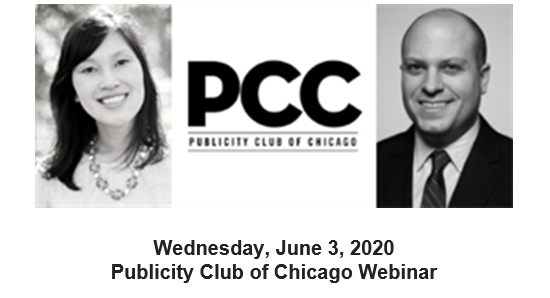
Join FleishmanHillard in Chicago’s Whaewon Choi-Wiles and Mike Sacks for a Publicity Club of Chicago webinar discussion on brand marketing best practices during and after the COVID-19 pandemic. Choi-Wiles and Sacks will discuss saturated topics to avoid, trending topics to pursue and the opportunities for brands to make a purposeful impact. Attendees will gain insight into what tactics and approaches will leave a lasting imprint on consumers and culture.
See what else is happening
You might also like
Expertise
The New Culture Gap Report: How Brands Stay Relevant for 100 Years
March 24, 2026
News
FleishmanHillard Named Among PRovoke Media’s Best Public Relations Agencies in the World
March 10, 2026
News
FleishmanHillard Integrates Porter Novelli to Form a Stronger, More Specialized Global Communications Consultancy
February 9, 2026
News
From Ragan: Elizabeth Cook on Rethinking Preparedness in Crisis Response
January 21, 2026
Global Executive Advisory
Insights From Davos: Building Credibility Through Storytelling
January 20, 2026
News
FleishmanHillard Unveils ‘License to Lead’ Research, Revealing a Growing Confidence Gap Between Executives and Stakeholders
January 13, 2026
News
FleishmanHillard Wins 2026 Innovation Awards for Data-Driven Strategy
January 12, 2026
Expertise
When the World Gets Noisy, Great Storytelling Breaks Through
December 3, 2025
News
Ellie Tuck Appointed Chief Creative Officer of the Americas