Honoring Veterans: A Moment in Time with Scott Radcliffe
November 10, 2019
By FH Perspectives
Share
On Veterans Day we celebrate and honor the people who have given their time, energy and commitment to serving their country. Our FH Perspectives team sat down with an outstanding member of our team and U.S. Army Veteran, Scott Radcliffe to learn more about his experience as a veteran and FleishmanHillard employee. After earning a Bachelor of Science in Business Management from the United States Military Academy at West Point, Scott served in the U.S. Army. Scott joined FleishmanHillard in 2015, and now as senior vice president, leads the firm’s Global Data Security and Privacy efforts.
Tell us about yourself and your background.
I grew up in Ohio but moved to Texas once I was assigned to Ft. Hood after graduating from West Point. Met my wife [Mandie], who graduated from the University of Texas, and I have been here ever since. I played football and rugby in college and now spend my time playing zone defense against my three girls who are 7, 5 and 1.
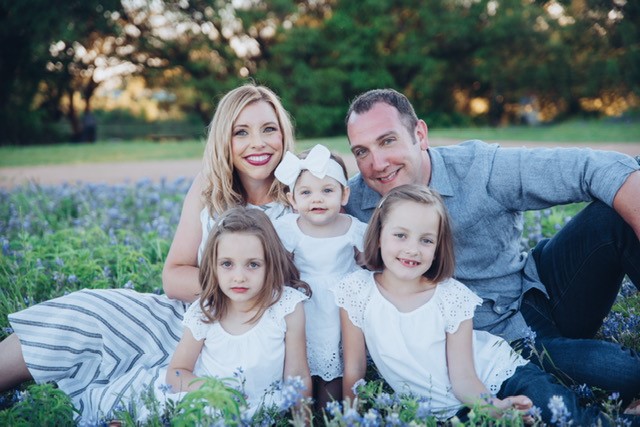
Scott Radcliffe and his girls – Mandie, his wife, and daughters Kiera (7), Camryn (5) and Willa (1).
In which military branch did you serve? What was your rank? Where did you serve? What was your job?
I was in the Army and ended up leaving the service as a captain. I was stationed at Ft. Knox and Ft. Hood but was deployed to Iraq twice and New Orleans once to help with response and recovery efforts after Hurricane Katrina.
While I was in the military, I was a tank platoon leader, scout platoon leader, scout troop executive officer and then finally speechwriter to the Multi-National Corps-Iraq Commanding General.
What’s your favorite memory of serving in the military?
My favorite memory is probably after we found a soup kitchen still functioning about a week after Hurricane Katrina hit New Orleans, I was able to convince our squadron commander to allow me to set-up my troop headquarters at the kitchen to make sure the pastor running the kitchen didn’t have his supplies taken. It was great to get to know him and even better to help Americans who were in need after spending 15 months deployed across Iraq.
How did your military career prepare you for the work you do today?
For one – I was first exposed to the concept of cybersecurity while on the Commanding General’s staff. I would say throughout it helped me learn how to manage and deal with pressure, and work through problems and challenges.
Radcliffe during his time as Speechwriter traveling via Black Hawk helicopter from Baghdad to Mosul, Iraq during Operation Iraqi Freedom 06-08.
Tell us about your decision to begin a career in communications after your military career.
Some of it was driven out of necessity. I was looking for a job in the middle of the economic downturn and many in HR didn’t know quite what to make of my experience, so I had to focus on the experience that stood out the most clearly in my resume. Secondly, I enjoyed the challenge after finding my footing as a speechwriter. It wasn’t realistic experience in the sense that it was more about identifying which high-level opportunities the general would participate in, but it really gave me a taste for the critical need to tell stories at a high-level. The opportunity to work with a variety of organizations at an agency was also very appealing as well.
How has your experience as a veteran impacted your life? Your work at FleishmanHillard?
The different perspective the experience gave me has been useful. It can be challenging, and it certainly was early on as I was having to learn skills most in the industry were able to in college or internships on the fly, but I generally enjoy having a perspective that is informed by a slightly different experience than most of my colleagues.
What advice would you give to veterans who are looking to transition from a military career to communications?
I think my advice would be the same regardless of the field – network. I have yet to get a job by applying online. Some of that has to do with the fact that our experience in the military isn’t easy for many recruiters to translate, but much of it is because it’s the most effective way to do what aligns with your passions. The best way to get there is by meeting people and eventually getting in front of the right person at the right time who’s aware of the right opportunity.
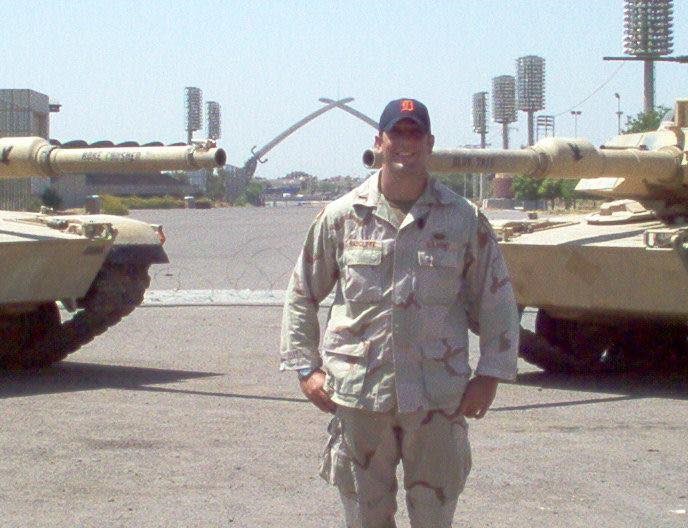
Radcliffe during his time as a Tank Platoon leader during Operation Iraqi Freedom II in front of the Parade Grounds outside of Saddam Hussein’s main palace in Baghdad.
Why is celebrating unique perspectives and diversity important to you? To FleishmanHillard?
The reason I think my military experience has been beneficial is a pretty good example of why diversity is important. Our clients demand creativity and work they can’t do on their own. It certainly takes a team of very smart and capable people, but it also takes people who bring their different perspectives to the problem we’re trying to solve for them. It could be direct experience with a certain audience or even a nuanced way to execute something – but having homogenous teams leads to groupthink and stale ideas, which is a good way to lose clients.
How does FleishmanHillard allow you to be your authentic self?
The beauty of this firm is the latitude it gives you to chase after what you want to do. I’ve been able to do some fascinating work that may not be possible at other firms because I wouldn’t be in the right office or have the right title. Finding that work and even the potential to find that work is really what makes me excited to go to work every day – and I hope everyone at FleishmanHillard appreciates that because it’s simply not the reality everywhere in the industry.
See what else is happening
You might also like
ESG
Navigating Conflicting Demands to Advance Climate Action
January 20, 2025
Opinions
Supporting St. Louis Institutions Dedicated to Empowering Youth Through FH4Inclusion
January 15, 2025
Opinions
Revitalizing the San Francisco Community with the Downtown Volunteer Coalition
December 23, 2024
Opinions
FleishmanHillard and FH4Inclusion Teams Shine at the Cannes Lions International Festival of Creativity
August 28, 2024
Opinions
Bridging the Generational Divide with Generative AI
August 27, 2024
Inclusion
Success on Repeat: Alumni of the Alfred Fleishman Diversity Fellowship Discuss Promotions and How to Get Them
May 29, 2024
News
EU climate policy: The new borderlines?
May 27, 2024
News
Achieving the Evolving Duality of Loyalty and Loyalty Programs
April 1, 2024
Expertise
TickTockTech: Mobile World Congress 2024 — What’s the Verdict?
How to Communicate Effectively with China’s Investors: Three Striking Findings from a New FleishmanHillard Survey
November 6, 2019
Share
China is an attractive proposition for global asset management firms. The market is set to have the world’s second-largest asset management industry by 2023, with continuing liberalizations offering the promise of more direct access for overseas firms in the coming years.
This possibility makes setting up shop in China and earning the attention of Chinese investors a matter of great urgency for global firms. The challenge is that this market – largely inaccessible to overseas players until very recently – is complex, unique and fast-changing.
A new FleishmanHillard report, “The Future of Asset Management in China,” explores this through the lens of investor expectations. Drawing on insights from 250 Chinese investment professionals, the report suggests that well-orchestrated strategic communications and reputation management are now as necessary to success in China’s financial services sector as the right licenses, resources and infrastructure. Three findings, in particular, may change the way foreign firms approach this market:
1. Credibility counts for more than performance
While investment returns are a priority for 64% of Chinese investors, brand credibility is cited by 74% as critical to asset manager selection. Furthermore, this far outweighed considerations about the nationality of origin of the investment services provider. Only 33% of investors said it was very important to them to choose an asset manager from China, nearly matching the percentage who said the same for a foreign asset manager (32%).
A further positive indicator for foreign fund managers is that 91% of respondents said they already invest in private fund products from wholly foreign-owned enterprises (WFOEs), despite these products having higher fees than local alternatives and being relatively new to the market. What’s more, 69% admitted that their trust in global brands was a factor in their decision to purchase an investment product from a WFOE or foreign-local joint venture instead of a local asset manager. These investors also saw foreign brands as offering better performance (72%) and unique strategies (68%).
This all suggests that foreign fund managers are facing a more level playing field in China than they may expect and that investors will choose a credible brand over one offering better returns. This highlights the importance of reputation equity for firms operating in mainland China.
2. Sustainable investing is coming to the fore
In line with global expectations, Chinese investors identified the most important traits in a fund manager as transparency in communications (60%), sophisticated risk management (60%) and transparent fee disclosure (58%). More surprisingly, environmental, social and governance (ESG) expertise was next on the list. It displaced commitment to investor education and local expansion, with 52% considering strong ESG product offerings very important and a total of 94% citing this as very or somewhat important.
As China’s leadership positions the nation as a global environmental champion for the future, this enthusiasm for ESG investing gives sophisticated international firms the opportunity to lead the conversation in this space based on their global expertise.
3. Multiple channels of communication matter
China’s professional investors and investment professionals favor a variety of information channels, with similar numbers preferring independent financial advisors (74%), financial media (68%), social media (67%) and websites (66%). This confirms that digital strategies need to be a core component of any communications effort in China, while also underscoring the enduring importance of person-to-person relationships and the support of trusted financial advisors.
This variety presents a challenge for foreign firms, which will need to master multiple and often unfamiliar channels to reach their intended audiences in mainland China.
With the announcement that China is removing foreign ownership limits on securities, futures and fund management firms in early 2020 – and the possibility that investment management WFOEs could obtain licenses to directly target the retail market – financial institutions with ambitions in China would be wise to do the work now to boost their brand recognition and reputation.
[vimeo id=”371397195″ aspect=”56.25″]
To learn more, please download FleishmanHillard’s “The Future of Asset Management in China” report here.
See what else is happening
You might also like
Expertise
Why Trust is the Real Competitive Advantage in Ag Tech
April 2, 2026
Expertise
Notes From the Road: RSA Conference 2026 Edition
April 1, 2026
Expertise
Why Your AI Rollout Is Stalling (And What Actually Moves the Needle)
March 25, 2026
Expertise
Get the Report: Inside China’s 2026 Two Sessions
March 24, 2026
Expertise
The New Culture Gap Report: How Brands Stay Relevant for 100 Years
March 24, 2026
Expertise
The Tech Industry’s License to Lead Problem: How Tech Companies Made Themselves Vulnerable to the AI and SaaS Apocalypse Doubt
March 4, 2026
Expertise
The Five Principles of Decision-Ready Intelligence: A Framework for Making Hard Calls in an AI-driven Environment
March 3, 2026
Expertise
The Patient Engagement Gap Your Competitors Are Closing
February 26, 2026
Expertise
AI is Reshaping Communications: Inside FleishmanHillard’s Enterprise-Wide Approach
The inaugural CREATIVE COLLISION event will discuss how businesses can align purpose and profit to create shared value. Featuring seven interactive sessions, two parallel tracks and additional sessions, this unique conference will bring together visionaries in creating shared value. During the event, Hong Kong business, social innovation and public sector leaders will address the challenges of activating shared value and share empowering insight for attendees to incite action.
Rachel Catanach, president and senior partner, FleishmanHillard Greater China, will moderate a stakeholder simulation session outlining communications challenges. During the panel, speakers will discuss best practices for communicating corporate purpose to diverse stakeholder groups and provide tips for companies taking bold stances on divisive issues, while managing reputational risks.
FleishmanHillard’s Anne de Schweinitz Named to 2019 Health Influencer List
November 4, 2019
Share
ST. LOUIS, November 4, 2019 — Anne de Schweinitz, global managing director, healthcare, FleishmanHillard has been named to the Health Influencer 50 2019 list. Presented by PRWeek and MM&M, the annual list recognizes professionals who transform the healthcare communications and marketing industry with their storytelling, creativity and counsel.
Anne de Schweinitz
This marks de Schweinitz’s fourth consecutive selection to the Health Influencer 50 list. Beginning her healthcare career in an autopsy lab as a teenager, de Schweinitz is now an expert in biotechnology, patient advocacy and other health issues. She navigates the highly-regulated U.S. and European healthcare markets while providing expert counsel to clients.
This year, the list reflects the rise of celebrity health influencers and features many notable actors and athletes who have utilized social media platforms to discuss the importance of health and wellness.
Honoring Native American Heritage Month – Q and A with Kaitlyn Red Wing
November 1, 2019
By FH Perspectives
Share
In honor of Native American Heritage Month, we wanted to take this opportunity to spotlight and celebrate one of our stellar employees in New York City – Kaitlyn Red Wing. A descendant of the Oglala Sioux Tribe (Lakota), Red Wing is an assistant account executive on our Media Relations team and graduated from Grand Valley State University with a Bachelor of Arts in writing and a minor in public relations and advertising in 2018. Kaitlyn joined FleishmanHillard in February 2019 after a successful internship with our firm.
Q: Why is celebrating unique perspectives and diversity important to you? To FleishmanHillard?
Kaitlyn Red Wing, assistant account executive in FleishmanHillard’s New York office.
A: I believe the sharing and celebrating of perspectives and diversity leads individuals to be more understanding about the world we live in, helping to dispel the many stereotypes that are alive today. No matter where you grow up or how you’re raised, we’re all uniquely human and there’s so much we can learn from one another. FleishmanHillard is a successful global company, and when we work together and understand one another, we’re all better off.
Q: Why is it important to represent diverse and contemporary Native American voices, experiences and perspectives?
A: Native Americans are ultimately a very underrepresented group in America today and have one of the highest unemployment rates among all races and ethnic groups. These statistics alone are why it is important to engage with and represent this community. While Native American history is something that everyone should learn about, there are still millions of Native Americans – many who live in cities – with very powerful and unique stories to share. They can provide a lot of insight into what it means to be Native American today.
Q: How has maintaining your Native American heritage enriched your personal and/or professional life?
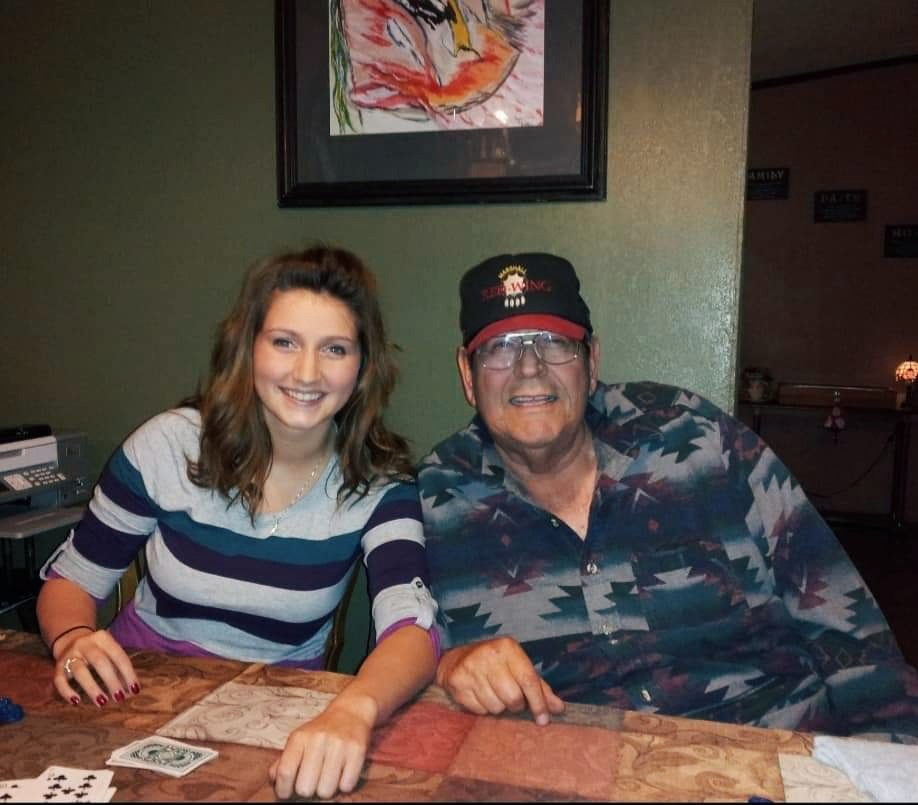
Red Wing (left) and grandfather Jerry Dean Red Wing (right).
A: I didn’t grow up on a reservation; I grew up in a typical midwestern town with very little diversity and I could have ended up a lot different had it not been for my heritage and upbringing. Some of my greatest memories are ones spent with my grandfather, listening to his stories about growing up on the reservation and learning all about the Sioux Native Americans and my heritage. Our family reunions in Nebraska will always be some of my fondest memories. I’m lucky that I was able to grow up where I did but still have the opportunity to learn and experience Native American culture. These experiences, along with doing my best to continue to immerse myself in Native American culture, have made me a better, more empathetic and understanding person.
Q: How does FleishmanHillard allow you to be your authentic self?
A: The company’s commitment to diversity and inclusion (D&I), along with the wonderful people I work with allow me to be myself. The D&I and OPEN Pride committees are two that make me feel especially welcomed and seen. I’ve never felt like I had to pretend to be someone I’m not.
Q: What made you decide you wanted to work in communications?
A: I’ve always loved meeting and talking with new people. Every job I’ve had has allowed me to speak with and learn from others; it’s one of the reasons I knew I wanted to work in communications. That, along with my understanding of others, is why I felt PR especially was the route for me.
Q: What would you say is your proudest professional achievement?
A: Honestly, this job is my proudest achievement. I took a chance moving here from Michigan and I’m so glad to say it’s worked out and that I love it here. My experiences at FleishmanHillard are ones I never dreamed I’d be able to have and have helped fuel my aspirations moving forward.
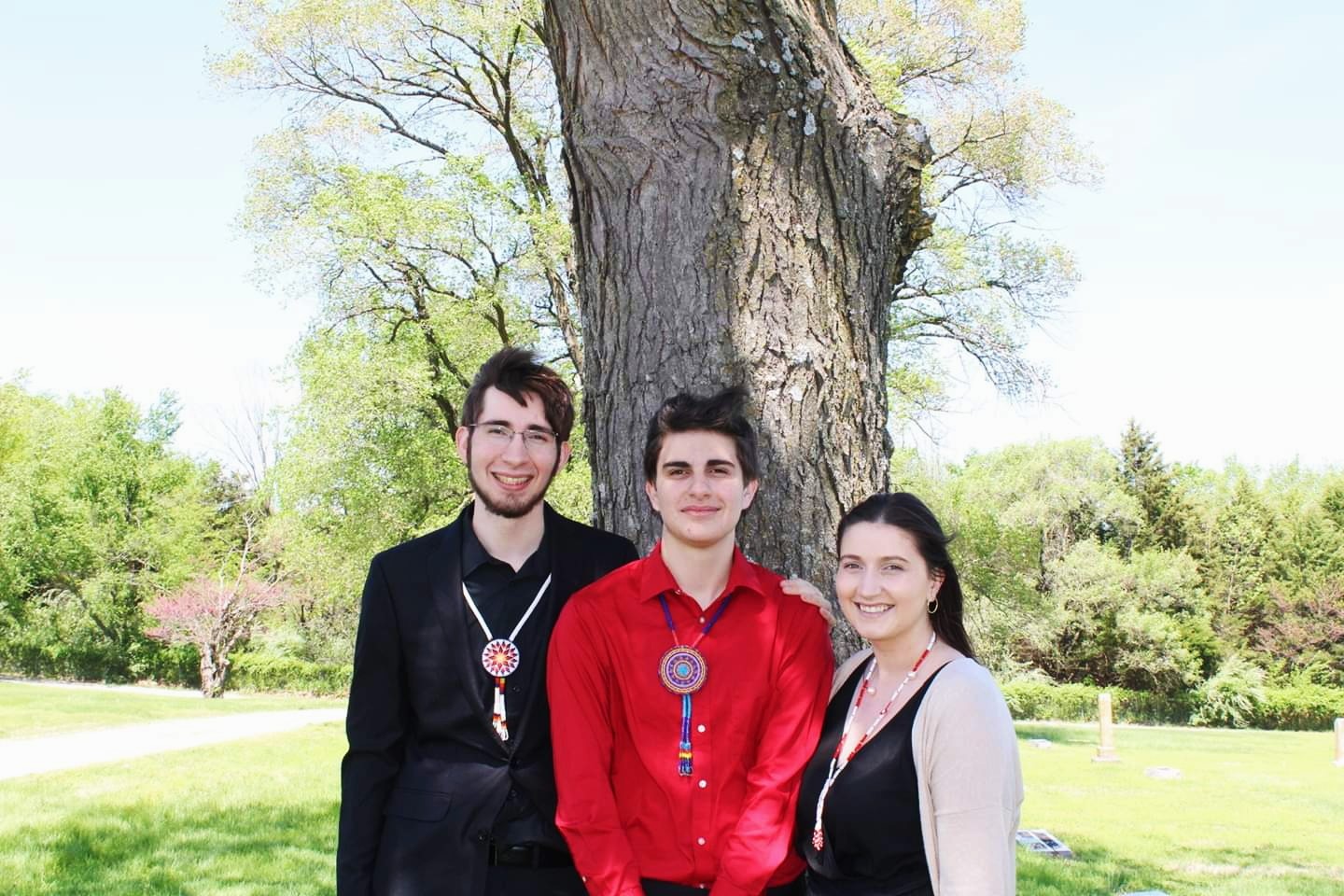
Red Wing (right) and brothers, Austin (left) and Alex (middle).
Q: What is one piece of advice you would give to other members of the Native American community looking to pursue a career in communications?
A: My advice would be to not sell yourself short and be proud of who you are. You have unique perspectives and experiences that are valuable in the workplace – you should promote them.
Q: Who inspires you the most and why?
A: I have many people in my life who inspire me in many ways. But when it comes to my professional life, my grandfather is one of my biggest inspirations. He left the reservation at a young age to find better work and ended up owning multiple businesses. His drive to build a better life and take risks has inspired me over the years to work hard and not be afraid to take risks. I’m thankful I had him in my life to guide me throughout the years both personally and professionally.
See what else is happening
You might also like
ESG
Navigating Conflicting Demands to Advance Climate Action
January 20, 2025
Opinions
Supporting St. Louis Institutions Dedicated to Empowering Youth Through FH4Inclusion
January 15, 2025
Opinions
Revitalizing the San Francisco Community with the Downtown Volunteer Coalition
December 23, 2024
Opinions
FleishmanHillard and FH4Inclusion Teams Shine at the Cannes Lions International Festival of Creativity
August 28, 2024
Opinions
Bridging the Generational Divide with Generative AI
August 27, 2024
Inclusion
Success on Repeat: Alumni of the Alfred Fleishman Diversity Fellowship Discuss Promotions and How to Get Them
May 29, 2024
News
EU climate policy: The new borderlines?
May 27, 2024
News
Achieving the Evolving Duality of Loyalty and Loyalty Programs
April 1, 2024
Expertise
TickTockTech: Mobile World Congress 2024 — What’s the Verdict?
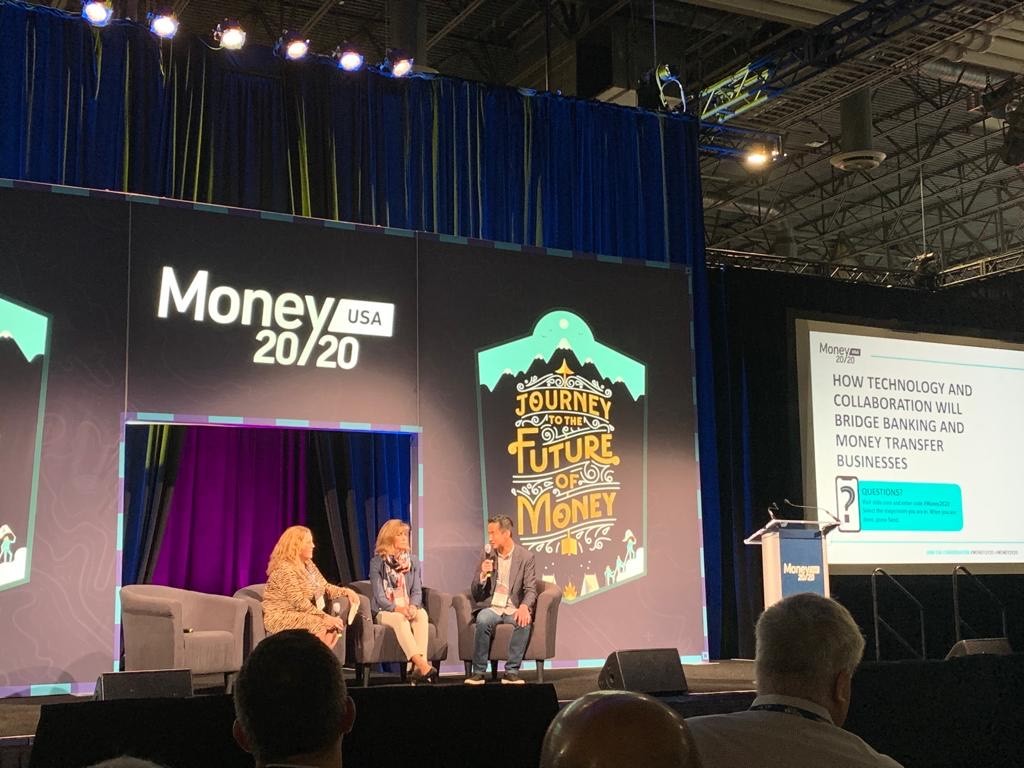
Over the course of four days, Money20/20 USA (client) brought together C-level executives, thought leaders, innovators and disruptors from around the world to have conversations about the future of money. Wednesday, the final day of the conference, drew a record number of attendees who were eager to learn and network. During the final hours of the event, attendees heard from more C-suite executives and entrepreneurs about topics like cybersecurity and predictions for the payments landscape.
Day Four
Fighting Cyber Crime
If there’s one thing we’ve learned this week, it’s that the future of money will be shaped by data and technology. Cybersecurity is a focus for all industries, but as fintechs and incumbents alike are finding ways to make their products readily available across digital interfaces, more concerns have been raised about mobile devices’ vulnerability to cyberattacks. And with good reason. During a fireside chat, Chris Reid, executive vice president of data and cyber and intelligence services for North America at Mastercard, said, “Every minute of every day, there are 127 new devices being connected – all posing their own vulnerabilities. In this year alone, 3.2 billion records have been breached.”
According to Reid, Mastercard is going the extra mile to prevent these occurrences through AI technology, investment in cyber talent and pursuing partnerships to protect the commercial ecosystem. In addition to bolstering Mastercard’s products on the back-end, the transparency around what the company is doing to protect its consumers’ data in an age of digital uncertainty builds on the corporation’s most valuable asset – customer trust.
Payments of the Future
Executives from PayPal, Citibank and Square sat down with Deloitte to discuss the future of payments. The panelists began by looking back on what the industry saw in 2019, including new technologies and the rise of disrupters. They agreed that these are driving opportunities for all companies in the space, including banks, fintechs and incumbents.
However, they also identified some of the key challenges that come with a changing industry, such as system integration, meeting the constantly evolving expectations of customers and issues with the underlying infrastructure. Citibank shared that the U.S. is still an emerging market for payments. Looking ahead to 2020, panelists expressed skepticism around cryptocurrency and expect a larger push to real-time payments and a rise in social currency.
To learn more about the themes and sessions at Money20/20 USA, visit @Money2020 or explore their website.
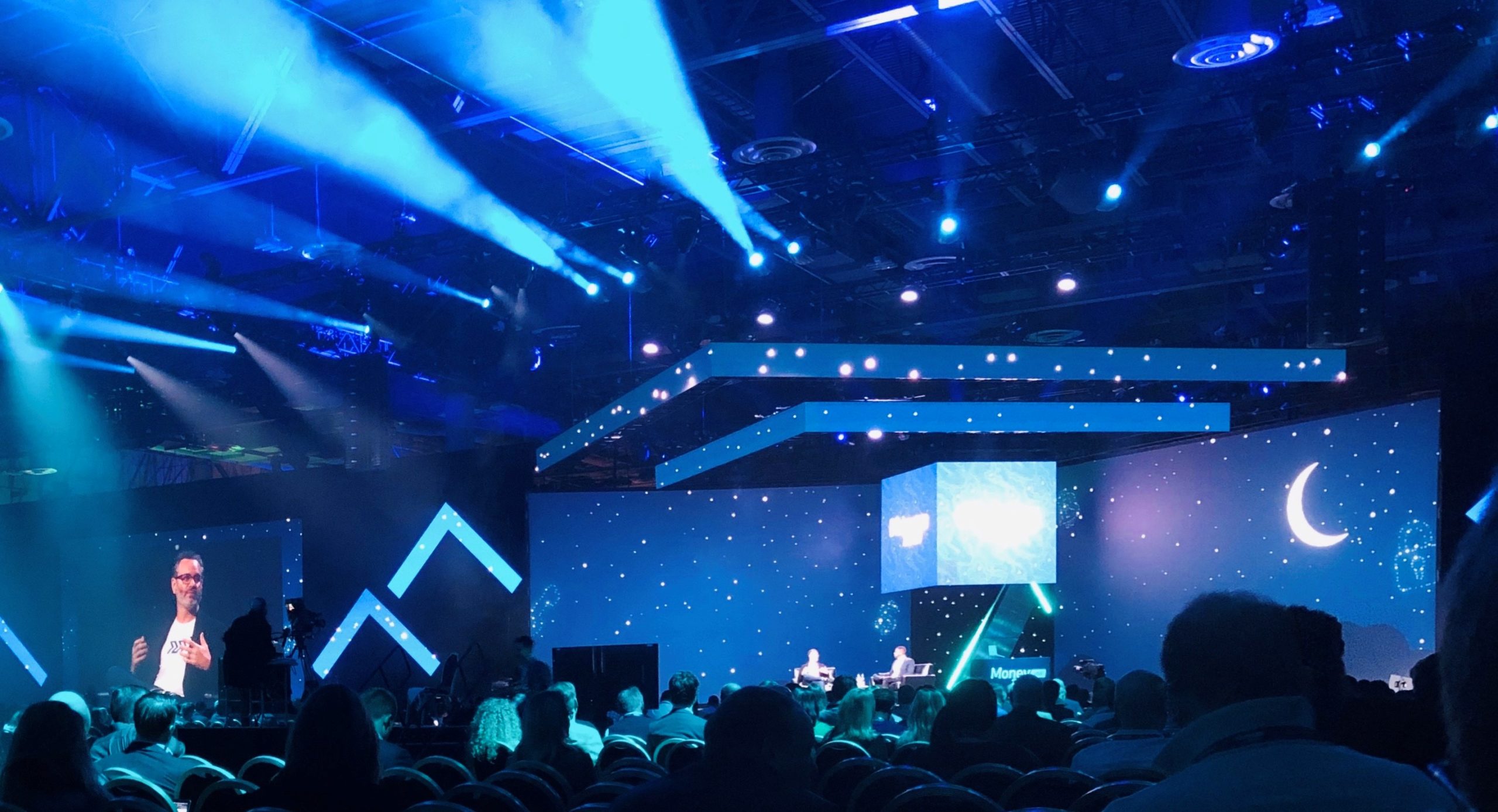
Money20/20 USA wrapped up with conversations around cybersecurity and the future of payments.
See what else is happening
You might also like
Expertise
Why Trust is the Real Competitive Advantage in Ag Tech
April 2, 2026
Expertise
Notes From the Road: RSA Conference 2026 Edition
April 1, 2026
Expertise
Why Your AI Rollout Is Stalling (And What Actually Moves the Needle)
March 25, 2026
Expertise
Get the Report: Inside China’s 2026 Two Sessions
March 24, 2026
Expertise
The New Culture Gap Report: How Brands Stay Relevant for 100 Years
March 24, 2026
Expertise
The Tech Industry’s License to Lead Problem: How Tech Companies Made Themselves Vulnerable to the AI and SaaS Apocalypse Doubt
March 4, 2026
Expertise
The Five Principles of Decision-Ready Intelligence: A Framework for Making Hard Calls in an AI-driven Environment
March 3, 2026
Expertise
The Patient Engagement Gap Your Competitors Are Closing
February 26, 2026
Expertise
AI is Reshaping Communications: Inside FleishmanHillard’s Enterprise-Wide Approach
Money20/20 USA Day Three: Championing the Customer Experience
Share
On day three of Money20/20 USA (client), attendees heard about the emerging technologies that are revolutionizing how consumers interact with financial services companies.
FleishmanHillard also moderated a panel with leading CMOs and co-hosted an impactful conversation about the gender pay gap.
Day Three
The AI Opportunity
“AI is fundamentally rewriting how financial services will be delivered,” said Tammy Petro, executive director of wholesale payments at J.P. Morgan (client).
Petro was joined by Zor Gorelov, CEO and co-founder of Kasisto, for a fireside chat about how AI is changing the customer experience for business banking. Together, they discussed the benefits of AI, including implementing virtual assistants, like Kasisto’s KAI, to improve customer interactions. They also deliberated the importance of AI adoption for the broader financial services industry, especially as consumer expectations for this type of technology grows. However, both speakers agreed that although there is a use case for digitized support in financial services, humans aren’t going anywhere. Petro noted that J.P. Morgan will always have customer service agents, and Gorelov believes we’re still decades away from general AI that can mimic humans in every way.
A Digital Shift in the Banking Landscape
One of Tuesday’s most interesting keynote sessions was a panel featuring the founders of Chime, Varo and Grasshopper – all companies that provide various digital banking services to consumers, businesses and entrepreneurs. The panelists engaged in an animated discussion about the need for alternative banking options, especially for consumers with limited financial assets, and why now is the right time for new, disruptive digital models to enter the banking space.
All three companies are focused on innovation and technology that help deliver a better customer experience. The speakers also stressed the importance of understanding consumers’ complex financial needs and addressing their challenges by offering services they can’t always get at larger, more traditional banks. For example, Judith Erwin, founding CEO of Grasshopper Bank, highlighted that wire transactions at Grasshopper cost $1.13, while most big banks charge anywhere from $25 to $50 for the same service.
A meaningful quote from Colin Walsh, CEO and co-founder of Varo Money, illustrates why digital banking leaders say it’s time for a change, “There are too many consumers underserved and overcharged by existing banks.”
The Power of Marketing and Communications
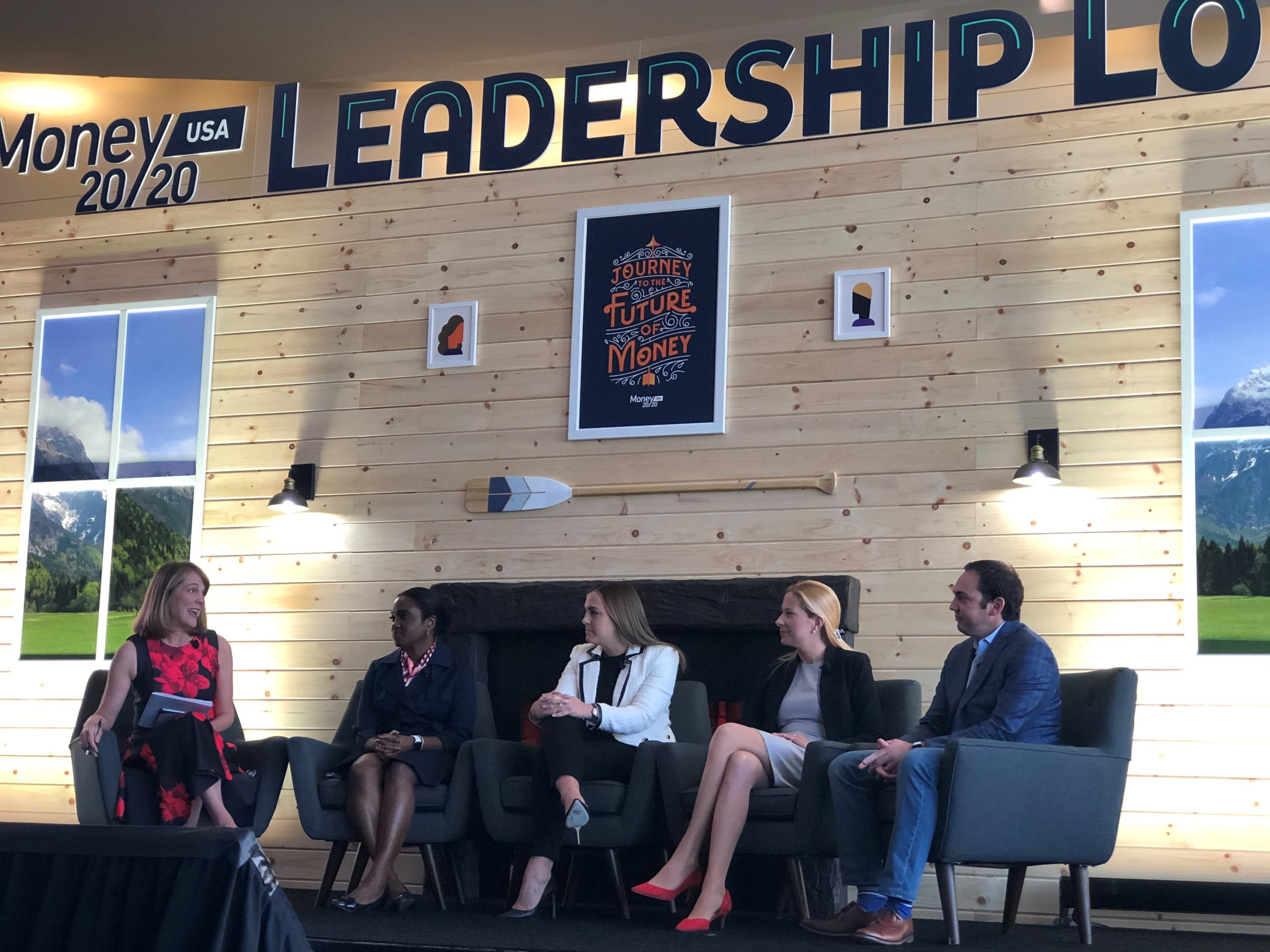
The CMO Power Lunch featured marketing and communications leaders from Marketo/Adobe, Refinitiv (client), Synchrony and Western Union (client) for a conversation about the opportunities and challenges executives in the financial services industry face. The panel was moderated by Marjorie Benzkofer, FleishmanHillard’s chief strategy officer.
Panelists discussed the importance of putting the customer at the center and identifying new ways to meet their needs through initiatives like experimenting with digital innovations, sharing compelling content and leveraging data to offer more personalized experiences. The role of trust, transparency and accountability was another key theme.
“You want your love tank to be totally full with love from your customers,” said Sarah Kennedy, chief marketing officer at Marketo and vice president of global marketing at Adobe.
The conversation also took on the impact of societal issues, and how brands should address them in marketing and communications strategies. Nicole Vogrin’s, chief corporate affairs and communications officer at Western Union, advice to executives who speak out about social issues was, “stick to the facts” and approach it as an opportunity to educate.
The Future is Female
The day culminated with dinner and conversation at an event hosted by Money20/20 and FleishmanHillard. Thought leaders in the financial services and fintech space came together for a discussion about closing the gender pay gap in the industry. The attendees explored who is ultimately responsible for inspiring change on this topic, with many agreeing that championing this issue starts at the top, but noting that grassroots efforts are needed to bring it to life and ensure accountability.
The group also debated where the fight for more women in leadership fits into the equal pay discussion, and shared thoughts on which one will come first. Women’s roles as caretakers, and how it is often a barrier to gender parity, was also a key theme of the night.
As the show comes to a close, catch highlights from the last few days at @Money2020 and @Fleishman, and stay tuned for one final update from our team on the ground.
FleishmanHillard’s Marjorie Benzkofer moderated a Money20/20 panel discussion on the power of marketing communications.
See what else is happening
You might also like
Expertise
Why Trust is the Real Competitive Advantage in Ag Tech
April 2, 2026
Expertise
Notes From the Road: RSA Conference 2026 Edition
April 1, 2026
Expertise
Why Your AI Rollout Is Stalling (And What Actually Moves the Needle)
March 25, 2026
Expertise
Get the Report: Inside China’s 2026 Two Sessions
March 24, 2026
Expertise
The New Culture Gap Report: How Brands Stay Relevant for 100 Years
March 24, 2026
Expertise
The Tech Industry’s License to Lead Problem: How Tech Companies Made Themselves Vulnerable to the AI and SaaS Apocalypse Doubt
March 4, 2026
Expertise
The Five Principles of Decision-Ready Intelligence: A Framework for Making Hard Calls in an AI-driven Environment
March 3, 2026
Expertise
The Patient Engagement Gap Your Competitors Are Closing
February 26, 2026
Expertise
AI is Reshaping Communications: Inside FleishmanHillard’s Enterprise-Wide Approach
FleishmanHillard Earns Six Shortlist Nods at ICCO Global Awards 2019
October 30, 2019
Share
ST. LOUIS, October 30, 2019 — FleishmanHillard has been named a six-time finalist in two agency and four campaign categories at the ICCO Global Awards 2019.
The global public relations and marketing firm earned Regional Network of the Year shortlist nods in both the Americas and EMEA regions. The agency was also recognized in four campaign categories for work on behalf of clients, Samsung and Thomson Reuters Foundation.
The annual awards program recognizes excellence and effectiveness in global public relations work. Winners will be announced at a ceremony in London on December 3, 2019.
FleishmanHillard (Regional Network of Year Award, Americas)
Promoting and Improving Financial Health on Day Two of Money20/20 USA
October 29, 2019
Share
Audience members during day two of Money20/20 USA (client) learned how the industry is championing a more financially-secure world. Through initiatives like creating digital wallets, targeting Gen Z and placing a greater emphasis on education, leading companies are aiming to make the financial system more accessible across the board.
Day Two
Digital Wallets
David Marcus, head of Calibra, took the stage to discuss Calibra’s future and address recent headlines about the company. Marcus remains confident and positive about Calibra’s success, highlighting its goal to build new payment rails and be the most secure way of moving money. He expects to see banks joining the Libra Association, the independent governing body that oversees Libra, once they have further clarity on regulation.
“They [consumers] will trust us because we will provide a lot of value, we’ll make strong commitments and we’ll be very good at sticking to these commitments for long periods of time,” Marcus said.
Personal Finance Apps
Attendees also heard from Jason Wilk, CEO and co-founder of Dave, the number one personal finance app in the United States. With more than 2 million Gen Z users, Wilk spoke to how the app was designed specifically with this generation in mind. By analyzing customer data, which revealed Gen Z’s demand for simplicity, the team created what Wilks describes as a “picture book” for managing finances. The app also includes features geared toward this audience, like AI to predict user spending habits and a spinoff product that aggregates local opportunities for users to make extra money on the side – a nod to the entrepreneurial/gig behaviors of Gen Z.
Wilk’s advice when targeting Gen Z: create a streamlined and personalized customer experience and be open to shifting communications channels to better reach this audience.
Financial Literacy
The show’s major keynote this year was Charles Schwab, founder and chairman of The Charles Schwab Corporation. In addition to sharing personal anecdotes about his career, Schwab discussed the lack of financial literacy in the U.S. and shared insights on how the industry can help solve these challenges by offering more education and providing easier and better access to services. This, along with staying one step ahead of consumer needs and being more affordable than competitors.
Additionally, some of the big news of the day was Peter Hazlehurst, head of payments at Uber, announcing the launch of Uber Money, which will include a digital wallet and upgraded debit and credit cards. The move signals Uber’s continued push into financial services and addresses the challenges of Uber’s gig workers.
Looking Ahead
Tonight, we’re excited to be hosting an important discussion with Money20/20 about the gender pay gap. Attendees will have a chance to dissect the issue, its impact in the financial services space and explore how the industry can come together to combat it.
Be sure to keep following @Money2020 and @Fleishman for more exciting updates and powerful conversations!
Day Two of Money 20/20 USA featured discussions around practices for building a more financially-secure world.
See what else is happening
You might also like
Expertise
Why Trust is the Real Competitive Advantage in Ag Tech
April 2, 2026
Expertise
Notes From the Road: RSA Conference 2026 Edition
April 1, 2026
Expertise
Why Your AI Rollout Is Stalling (And What Actually Moves the Needle)
March 25, 2026
Expertise
Get the Report: Inside China’s 2026 Two Sessions
March 24, 2026
Expertise
The New Culture Gap Report: How Brands Stay Relevant for 100 Years
March 24, 2026
Expertise
The Tech Industry’s License to Lead Problem: How Tech Companies Made Themselves Vulnerable to the AI and SaaS Apocalypse Doubt
March 4, 2026
Expertise
The Five Principles of Decision-Ready Intelligence: A Framework for Making Hard Calls in an AI-driven Environment
March 3, 2026
Expertise
The Patient Engagement Gap Your Competitors Are Closing
February 26, 2026
Expertise
AI is Reshaping Communications: Inside FleishmanHillard’s Enterprise-Wide Approach
Pumpkins might still be on shelves, but holiday deals are already dropping for many of the nation’s top retailers. Compared to 2018, this year brings six fewer days between Thanksgiving and Christmas. A shorter shopping season, combined with always-on online retail and year-round deal days, means consumers are holiday shopping NOW, and brands are getting on board.
For retail marketers that means more competition and higher consumer expectations, as the next two months are bound to be a cluttered, noisy space.
Here are a few new rules to help brands connect with consumers this holiday season:
Help consumers escape in-store – Americans spend 11+ hours each day looking at screens and, cross-generationally, we are craving deeper connections. Many may be surprised to learn that even 58% of Gen Z prefer to shop in stores as a form of retail therapy. Help consumers disconnect from the online world at your brick-and-mortar location this holiday season by making the in-store shopping experience personable and convenient: create a warm, comfortable atmosphere (couches, anyone?) that’s easy to navigate, showcase top products out-of-box for consumers to play with, host unique store events and decorate. Make the browsing experience fun.
Give authentically, not just because it’s the holidays – The next two months will be ripe with charitable giving, and in a consumer environment where 69% of consumers say it’s more important for brands to talk about their societal and environmental impact versus product benefits, companies may be tempted to grab a megaphone and go all in. Retailers: take caution and be mindful that giving MUST connect authentically to your overall brand. Otherwise, consumers will see right through it. Don’t create a responsibility platform to get credit; instead, commit to creating shared value that’s meaningful to your brand year-round and look for unique ways to amplify that value during the holidays.
Take care of their cares – Promotions are a great way to showcase products this holiday season, but be sure to take care of something even more personal to consumers – their data. Put plans in place now that will give customers complete trust in your ability to protect data. It will save your brand’s reputation and integrity and earn you loyal customers.
Don’t forget the fundamentals – Nearly 1 in 3 Americans will experience holiday burnout before Christmas. Serving as a resource that makes holiday moments (including shopping) easy and enjoyable is one of the best approaches you can take to help lower your audiences’ stress levels. Offer buy online pick-up in-store (BOPIS) and competitive deals. Ensure websites can handle the influx of traffic. Make sure stores are adequately staffed with friendly, knowledgeable associates. Create frictionless experiences between all purchase channels. Make customers excited to shop with you.
The National Retail Federation expects holiday retail sales during November and December to increase between 3.8% and 4.2% over 2018 – strap in for this exciting (sleigh) ride!
See what else is happening
You might also like
Expertise
Why Trust is the Real Competitive Advantage in Ag Tech
April 2, 2026
Expertise
Notes From the Road: RSA Conference 2026 Edition
April 1, 2026
Expertise
Why Your AI Rollout Is Stalling (And What Actually Moves the Needle)
March 25, 2026
Expertise
Get the Report: Inside China’s 2026 Two Sessions
March 24, 2026
Expertise
The New Culture Gap Report: How Brands Stay Relevant for 100 Years
March 24, 2026
Expertise
The Tech Industry’s License to Lead Problem: How Tech Companies Made Themselves Vulnerable to the AI and SaaS Apocalypse Doubt
March 4, 2026
Expertise
The Five Principles of Decision-Ready Intelligence: A Framework for Making Hard Calls in an AI-driven Environment
March 3, 2026
Expertise
The Patient Engagement Gap Your Competitors Are Closing
February 26, 2026
Expertise
AI is Reshaping Communications: Inside FleishmanHillard’s Enterprise-Wide Approach