New FleishmanHillard Report Shows Credibility, Performance, ESG and Multi-Channel Communications are Key for China Investors
October 29, 2019
Share
“The Future of Asset Management in China” Provides Financial Institutions Insights on the Ever-changing Asset Management Industry
ST. LOUIS, Oct. 28, 2019 – FleishmanHillard today released a new report, “The Future of Asset Management in China,” offering insights to global asset managers assessing opportunities in China. The report features analysis drawn from a survey of mainland Chinese investors’ attitudes and behavior, plus an overview of the latest industry trends.
The key findings of the report show that when selecting a fund manager, mainland Chinese investors put particular emphasis on brand credibility, performance and multi-channel communications. Environmental, social and governance (ESG) capabilities also are a requirement for the majority.
“By examining mainland investor behavior together with liberalization trends in China, we’ve been able to derive insights on the future of asset management in China. These insights can help industry players understand investor expectations and plan their communications programs more effectively,” said Patrick Yu, Asia Pacific lead for FleishmanHillard’s Financial and Professional Services practice. “Asset management is just one component of China’s reform agenda. For a world where the fluidity of fund flows enables Chinese and global investors alike to create borderless investment strategies, all parties need to work together. For that to happen and for everyone to benefit, the need for effective communications is essential.”
The report includes the following findings from mainland investors:
Credibility and performance are key. Investors emphasized that asset manager brand credibility (74%) and investment performance (64%) are critical. It’s not surprising that Chinese investors (like those elsewhere in the world) make investment returns a priority, and the fact that they will invest in a credible global brand over one offering better returns is notable. This clearly demonstrates the importance of reputation equity for firms operating in China. In particular, 69% chose products from wholly foreign-owned enterprises (WFOEs) and joint ventures (JVs) over the local asset managers because they place higher trust in global brands.
Strategy and performance of WFOE private fund products attract the vast majority of respondents. In a competitive and crowded marketplace, a very positive indicator for foreign fund managers is that 91% of respondents said they already invest in WFOE private fund products, despite these products only recently becoming available in China. Respondents said they liked these funds’ strategies above all (93%), with a slightly smaller, but still dominant, proportion citing their performance (87%) as a key factor. This is despite their fees being higher than comparable products by Chinese asset managers.
Environmental, social and governance (ESG) themes are on the rise for mainland investors. While the most important capabilities of a fund manager are transparency in communications, sophisticated risk management and transparent fee disclosure, 52% of respondents said ESG expertise is a very important requirement for fund managers, with 94% overall considering it either very or somewhat important. While not top of the list of key qualities, the interest in ESG was far higher than expected. It points to the immense potential for sophisticated global firms to conquer thought leadership in this space based on their global expertise.
Multi-channel communications critical to engage mainland investors. Respondents’ preferred choice of information channel varied, with similar numbers favoring independent financial advisors (IFAs), financial media, social media and websites. In a market that is considered far ahead in its adoption of digital strategies, online patronage for funds was rated the second most popular channel (76%), trailing IFAs and intermediaries (88%). The findings show that digital strategies need to be a core component of any sales and marketing effort in China, while the popularity of IFAs shows the ongoing importance of people-to-people relationships and the need for trusted figures when it comes to important investment decisions.
FleishmanHillard’s “The Future of Asset Management in China” report includes qualitative and quantitative data. FleishmanHillard TRUE Global Intelligence™ fielded an online survey of 250 Chinese investment professionals between Aug. 10 and Aug. 20, 2019. All respondents to the survey self-identified as working in investment, finance or banking, and had traded or invested in at least one of the following: equities fund (87%), fixed income (73%), ETF and alternatives (82%), balanced funds (65%) or PE funds (66%).
About FleishmanHillard FleishmanHillard specializes in public relations, reputation management, public affairs, brand marketing, digital strategy, social engagement and content strategy. FleishmanHillard was named Agency of the Year at the 2017 and 2018 North American Excellence Awards; 2017 and 2018 ICCO Network of the Year for the Americas; 2019 PRWeek U.S. Outstanding Large Agency; 2019 Holmes Report North America Large Agency of the Year; 2018 Large Consultancy of the Year by PRWeek UK; PR News’ Best Places to Work in PR 2016-2018; Human Rights Campaign Best Places to Work for LGBTQ Equality for 2018 and 2019; PR Awards Asia 2017 Greater China Agency of the Year; and NAFE’s “Top Companies for Executive Women” for 2010-2019. The firm’s award-winning work is widely heralded, including at the Cannes International Festival of Creativity. FleishmanHillard is part of Omnicom Public Relations Group, and has more than 80 offices in 30 countries, plus affiliates in 43 countries.
About Omnicom Public Relations Group Omnicom Public Relations Group is a global collective of three of the top global public relations agencies worldwide and specialist agencies in areas including public affairs, marketing to women, global health strategy and corporate social responsibility. It encompasses more than 6,300 public relations professionals in more than 370 offices worldwide who provide their expertise to companies, government agencies, NGOs and non-profits across a wide range of industries. Omnicom Public Relations Group delivers for clients through a relentless focus on talent, continuous pursuit of innovation and a culture steeped in collaboration. Omnicom Public Relations Group is part of the DAS Group of Companies, a division of Omnicom Group Inc. (NYSE: OMC) that includes more than 200 companies in a wide range of marketing disciplines including advertising, public relations, healthcare, customer relationship management, events, promotional marketing, branding and research.
See what else is happening
You might also like
Expertise
The New Culture Gap Report: How Brands Stay Relevant for 100 Years
March 24, 2026
News
FleishmanHillard Named Among PRovoke Media’s Best Public Relations Agencies in the World
March 10, 2026
News
FleishmanHillard Integrates Porter Novelli to Form a Stronger, More Specialized Global Communications Consultancy
February 9, 2026
News
From Ragan: Elizabeth Cook on Rethinking Preparedness in Crisis Response
January 21, 2026
Global Executive Advisory
Insights From Davos: Building Credibility Through Storytelling
January 20, 2026
News
FleishmanHillard Unveils ‘License to Lead’ Research, Revealing a Growing Confidence Gap Between Executives and Stakeholders
January 13, 2026
News
FleishmanHillard Wins 2026 Innovation Awards for Data-Driven Strategy
January 12, 2026
Expertise
When the World Gets Noisy, Great Storytelling Breaks Through
December 3, 2025
News
Ellie Tuck Appointed Chief Creative Officer of the Americas
This week, the FleishmanHillard team is again on the ground in Las Vegas as agency of record for Money20/20 USA, an annual conference that brings together thousands of leading companies and innovators in the payments, fintech and financial services space.
More than 400 speakers across 200 sessions will discuss where the industry is headed, how we’ll get there and the opportunities and challenges that will come along the way. Included in the line-up is a FleishmanHillard-moderated panel led by our chief strategy officer, Marjorie Benzkofer. We’ll provide recaps of key takeaways and themes covered during the conference, so check back here throughout the week and follow @Money2020 and @Fleishman for ongoing updates.
Day One
The conference kicked off Sunday with trending topics like blockchain, government regulation and cannabis banking. Below are a few takeaways from the first day.
Digital Currencies
Digital currency is one of the most popular trends in the financial services industry. Three separate panels focused on the topic, examining how digital currency can lead to enhanced customer experience and increased tracking capabilities. Another common theme looked at how technology could support underserved communities and promote financial inclusion.
Cannabis
The cannabis industry continues to evolve, and as more states legalize recreational use, banks and other financial institutions are exploring how to address it. In a cannabis banking workshop, panelists discussed the unique opportunities and problems with cannabis banking. This included the risk involved, both in terms of reputation as well as managing large amounts of cash. Experts noted that compliance is one of the key solutions to mitigating that risk, as well as access to more information and technology, like AI, and collaboration with regulators and industry leaders. Discussion also included whether the federal government will ever approve and regulate cannabis, with some predicting that they will leave it up to the states to manage regulations and oversight. Also highlighted were the regulations that are turning cannabis banking into one of the most transparent industries.
Fintech for Good
Money doesn’t grow on trees, but according to Douglas Feagin, president of International Business at Ant Financial, money can grow trees. During his session, Feagin discussed Alipay Ant Forest, the world’s largest environmental conservation platform for individuals. Through the program, Ant Financial rewards its users for making environmentally conscious purchasing decisions, giving them ‘green energy’ points that ladder up to the growth of a virtual tree in their personal app. Taking things one step further, after reaching a certain number of points, Ant Financial will plant a real tree in the deserts of Northwestern China. This is just one of the many sessions during this year’s conference that will focus on initiatives that are using fintech for good.
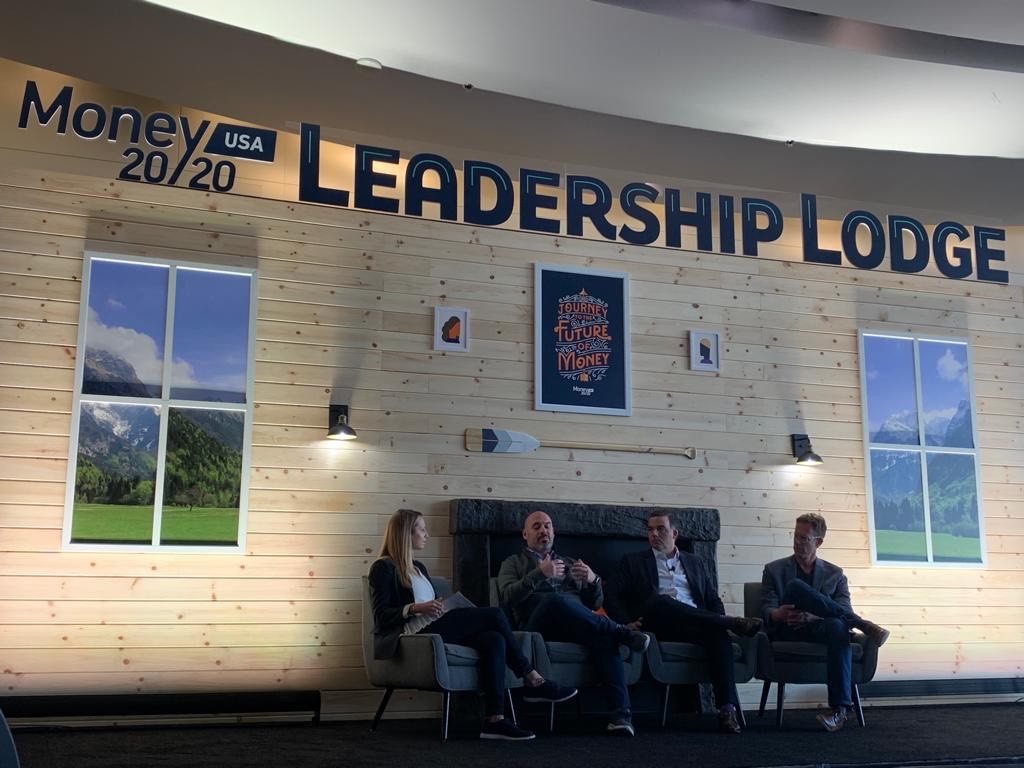
Money 20/20 USA began Sunday with panels on trending fintech topics such as blockchain, government regulation and cannabis banking.
See what else is happening
You might also like
Expertise
Why Trust is the Real Competitive Advantage in Ag Tech
April 2, 2026
Expertise
Notes From the Road: RSA Conference 2026 Edition
April 1, 2026
Expertise
Why Your AI Rollout Is Stalling (And What Actually Moves the Needle)
March 25, 2026
Expertise
Get the Report: Inside China’s 2026 Two Sessions
March 24, 2026
Expertise
The New Culture Gap Report: How Brands Stay Relevant for 100 Years
March 24, 2026
Expertise
The Tech Industry’s License to Lead Problem: How Tech Companies Made Themselves Vulnerable to the AI and SaaS Apocalypse Doubt
March 4, 2026
Expertise
The Five Principles of Decision-Ready Intelligence: A Framework for Making Hard Calls in an AI-driven Environment
March 3, 2026
Expertise
The Patient Engagement Gap Your Competitors Are Closing
February 26, 2026
Expertise
AI is Reshaping Communications: Inside FleishmanHillard’s Enterprise-Wide Approach
What Makes a Company a Great Place to Work Might Not Be What You Think
October 22, 2019
Share
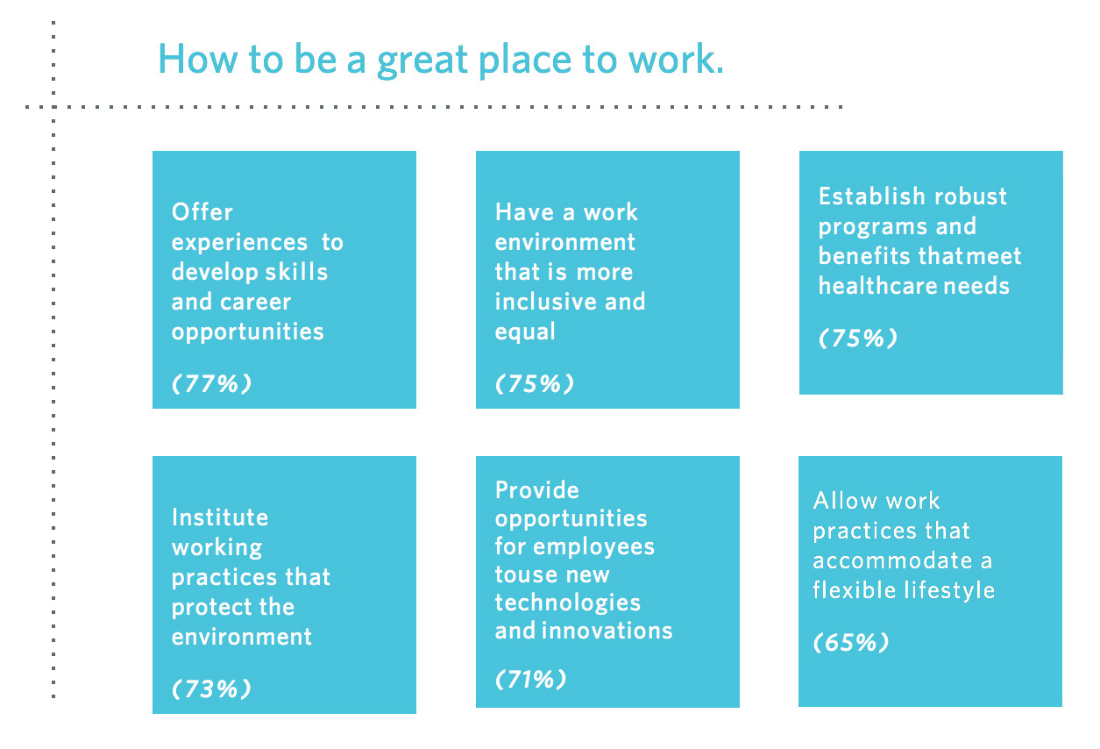
It wasn’t long ago when employers faced a barrage of feedback from employees — and potential employees — about the critical importance of flexibility in the workplace. Interestingly, of the issues we asked about in this year’s “Authenticity in Action” study, that topic now registers dead last in importance with workers. It’s not because employees have changed their minds. It’s because flexibility today is considered table stakes.
Aided by a sturdy economy, booming job growth and the emergence of technologies that have made it possible for nearly everyone to do at least some part of their job remotely, workers made it abundantly clear that an organization’s ability to recruit and retain top talent hinged upon its willingness to let employees have more control balancing their professional and personal lives. Employers got the message quickly, finding ways to better accommodate today’s empowered workforce, which since has pivoted to new imperatives.
According to our Authenticity Gap findings, 75 percent of respondents rank skill and career development experiences as a top priority. This shift may be fueled by waning interest in the pursuit of academic degrees due to the prohibitively steep cost of higher education. Company-provided professional development opportunities also are an attractive path toward security and stability for younger workers who witnessed their parents struggle through the economic downturn of the previous decade. Either way, to remain competitive, companies need to take a close look at whether they’re putting enough energy into their learning-and-development and career-journey programs — not to mention the energy they’re putting into promoting these programs as part of their employer brand — so that both current and potential employees understand the organization’s employee value proposition and want to build careers there.
These efforts, just like the other top priorities for employees in this year’s study — fostering an equal and inclusive environment and delivering a comprehensive benefits package that addresses employees’ healthcare needs (a matching 75 percent of respondents believe these actions make a workplace great) — require close alignment between the company’s communications and HR teams, both of whom merit a seat at the table when the company’s next strategic plan is developed.
PRSSA International Conference: The Difference in Agency and Corporate Life
October 18, 2019
Share
When: October 19, 2019, 2:45 – 3:45 p.m. PST
Where: Marriott Marquis San Diego Marina, 333 W. Harbor Drive, San Diego, CA 92101 (San Diego Ballroom B)
John Sorano
The annual PRSSA International Conference provides student attendees with exposure to public relations, leading industry professionals and networking experiences. This year’s conference in San Diego will highlight the intersection of technology and media, supplying students with the necessary information, strategies and tools for professional success.
John Soriano, a member of FleishmanHillard’s Southern California team, will participate in “The 9 to 5s of PR: The Difference in Agency and Corporate Life” discussion, explaining the contrast between agency and corporate PR with Hannah Riffle from VOX Global.
Soriano supports corporate and consumer-focused clients with his national media relations, celebrity endorsement, event production and executive visibility expertise. He also helps lead FleishmanHillard’s global diversity and inclusion program, FH Perspectives.
Learn more about the PRSSA International Conference program here.
See what else is happening
You might also like
Expertise
The New Culture Gap Report: How Brands Stay Relevant for 100 Years
March 24, 2026
News
FleishmanHillard Named Among PRovoke Media’s Best Public Relations Agencies in the World
March 10, 2026
News
FleishmanHillard Integrates Porter Novelli to Form a Stronger, More Specialized Global Communications Consultancy
February 9, 2026
News
From Ragan: Elizabeth Cook on Rethinking Preparedness in Crisis Response
January 21, 2026
Global Executive Advisory
Insights From Davos: Building Credibility Through Storytelling
January 20, 2026
News
FleishmanHillard Unveils ‘License to Lead’ Research, Revealing a Growing Confidence Gap Between Executives and Stakeholders
January 13, 2026
News
FleishmanHillard Wins 2026 Innovation Awards for Data-Driven Strategy
January 12, 2026
Expertise
When the World Gets Noisy, Great Storytelling Breaks Through
December 3, 2025
News
Ellie Tuck Appointed Chief Creative Officer of the Americas
Food and Beverage Companies – Are We Doing It Wrong?
October 15, 2019
Share
In the food and beverage industry, it’s no surprise that better valueis theNo. 1 consumer expectation and makes up almost one quarter of all expectations within the industry. But as companies have been chasing new ways to deliver more for less, have they missed a critical opportunity to authentically engage today’s customer?
New findings reveal an increased opportunity for food and beverage industry leaders to take a stand. According to FleishmanHillard’s 2019 Authenticity Gap study, engaged consumers are scrutinizing food and beverage companies for their commitment to doing the right thing, ranking “doing right” as the third highest expectation of the industry, and the single largest gap in expectation vs. perceived experience. Conversely, food and beverage brands are overperforming consumer expectations in innovation by more than 12 points – greater overperformance of any authenticity driver in any industry. Are food and beverage companies overinvesting in innovation and undervaluing the potential gains to be made from doing the right thing?
Engaged global consumers say that only half (47%) of their perceptions and beliefs about a company are shaped by attributes related to companies’ products and services. The other half (53%) is shaped by information regarding how management behaves and how the company is having an impact on society. So, when companies fail to talk about these two areas with as much force and conviction as they do their products, they are creating a vacuum — and consumers are going elsewhere to fill it.
When it comes to “doing it right,” brands can look to global consumer expectations for what matters most. The latest Authenticity Gap report reveals the top 10 issues most important for companies to take a stand on range from data security and data privacy to jobs, income wage gaps and minimum wage, gender discrimination and more. The most important consideration is aligning these expectations to a company’s core values, purpose and business. Those who close the gaps and create true relationships with audiences — authentic engagement — will drive progress and opportunity.
So, calling all food and beverage brands: it’s time to look inward. I predict that many of the breakout category leaders in 2020 will be those who use their marketing communications to do the right thing.
But these videos, called deepfakes, represent something much deeper, darker and potentially catastrophic for organizations.
Fueled by artificial intelligence, targeted misinformation and reputational chaos are on the rise. Machine-learning algorithms combined with facial-mapping software have enabled cheap and easy fabrication of content that hijacks one’s identity – voice, face, body. In essence, deepfakes insert an individual’s face into videos without their permission. The result is believable videos of people doing and saying things they never did.
The technology can even synthesize a completely new model of a person using the source’s facial gestures and images or video of the subject they wish to impersonate. Other examples include voice cloning, deep video portraits and face-swapping.
Deepfakes represent one component in the rise of “synthetic reality” or “synthetic media”, the fluid integration of the digital and physical spaces. But they’re at the heart of a looming disinformation problem. Any brand, politician or celebrity is susceptible to deepfake-caused mayhem, chaos and reputational risk.
In January, the government of Gabon released a possible deepfake of its president, meant to assure citizens that he was in good health. One week after its release, the military attempted an unsuccessful coup.
So, what’s being done to combat deepfakes?
Researchers, companies and governments are working hard to develop technology and systems that will find and identify deepfakes more effectively.
Legislative bodies around the world are discussing the topics of ‘online harm’ and ‘misinformation and disinformation’ as public pressure grows on them to act. China already has a draft law in place to ban deepfakes.
Organizations need to not only be aware of this looming threat but actively prepare for the day they’re impacted. We’ve outlined six steps you can take:
1. Prepare a robust response plan
Deepfakes present new and rapidly changing scenarios for reputation management teams to address. Ensure your team has mapped out a wide range of scenarios and that key decision-makers have thought about how they’ll act to resolve a deepfake situation.
2. Monitor threats and keep records
Stay ahead of threats with a targeted monitoring plan that covers social and digital media. Capture public appearances by key executives and brand ambassadors so that if/when a deepfake is released, original footage is available to debunk or provide context.
3. Understand the digital landscape
Know how the algorithms of key platforms work so that you can judge how potentially negative content might spread. Build relationships with key representatives from video-hosting platforms ahead of any incidents.
4. Know when and how to use the law
Refresh connections with internal or external legal counsel and discuss potential legal responses to different scenarios ahead of time. Sometimes the best way to combat the threat is to utilize legal tools to target the deepfake at its origin.
5. Build relationships for credibility and support
In a climate of increasing skepticism about official sources of information, third-party endorsements can be highly effective sources of support. Ensure you have developed networks to draw on when support is needed and an outside voice will cut through the noise.
6. Be authentic and true to your brand
Organizations with a reputation for ‘spin’ will find it very hard to respond, even when attacks are fraudulent. Continue to act on your core brand values, building trust with your consumers and audiences so that in the case of a deepfake crisis, you’re given the benefit of the doubt.
You’re likely to see more deepfakes come across your feed going forward. But behind the humor is potential mayhem, chaos and risk to your organization. Now’s the time to get prepared.
See what else is happening
You might also like
Expertise
Why Trust is the Real Competitive Advantage in Ag Tech
April 2, 2026
Expertise
Notes From the Road: RSA Conference 2026 Edition
April 1, 2026
Expertise
Why Your AI Rollout Is Stalling (And What Actually Moves the Needle)
March 25, 2026
Expertise
Get the Report: Inside China’s 2026 Two Sessions
March 24, 2026
Expertise
The New Culture Gap Report: How Brands Stay Relevant for 100 Years
March 24, 2026
Expertise
The Tech Industry’s License to Lead Problem: How Tech Companies Made Themselves Vulnerable to the AI and SaaS Apocalypse Doubt
March 4, 2026
Expertise
The Five Principles of Decision-Ready Intelligence: A Framework for Making Hard Calls in an AI-driven Environment
March 3, 2026
Expertise
The Patient Engagement Gap Your Competitors Are Closing
February 26, 2026
Expertise
AI is Reshaping Communications: Inside FleishmanHillard’s Enterprise-Wide Approach
The third annual Mobile World Congress 2019 will showcase the latest innovations in technology, including intelligent connectivity, and highlight the thought-leadership that will impact digital experiences, society and the world.
Ryan Brack
Ryan Brack, a leader in FleishmanHillard’s Technology sector in New York City, will moderate the AI & The Future of Work: Is Your Business Ready for Change? session. Brack, and panelists from many industry-leading technology companies, will explain how brands can implement AI to level up the workforce.
Brack advises emerging technology clients on communications and public affairs practices and has extensive experience in immersive media, tech ecosystem activation and cybersecurity.
See what else is happening
You might also like
Expertise
The New Culture Gap Report: How Brands Stay Relevant for 100 Years
March 24, 2026
News
FleishmanHillard Named Among PRovoke Media’s Best Public Relations Agencies in the World
March 10, 2026
News
FleishmanHillard Integrates Porter Novelli to Form a Stronger, More Specialized Global Communications Consultancy
February 9, 2026
News
From Ragan: Elizabeth Cook on Rethinking Preparedness in Crisis Response
January 21, 2026
Global Executive Advisory
Insights From Davos: Building Credibility Through Storytelling
January 20, 2026
News
FleishmanHillard Unveils ‘License to Lead’ Research, Revealing a Growing Confidence Gap Between Executives and Stakeholders
January 13, 2026
News
FleishmanHillard Wins 2026 Innovation Awards for Data-Driven Strategy
January 12, 2026
Expertise
When the World Gets Noisy, Great Storytelling Breaks Through
December 3, 2025
News
Ellie Tuck Appointed Chief Creative Officer of the Americas
How Do Brands Win the Hearts and Minds of Consumers in a New Space?
Share
For a brand to enter a new space, it needs to set itself apart from the competition. Historically, this might have meant a pizza company with faster delivery. Or, a new brand of gum with flavor that lasts five times longer. Seems simple enough, right? But, what happens when the attributes today’s consumers really care about are less about pure product benefits and instead take on a more altruistic form? Do these traditional differentiation methods get thrown out the window? We don’t think so. In fact, they become even more important for a brand wanting to stand apart from the competition.
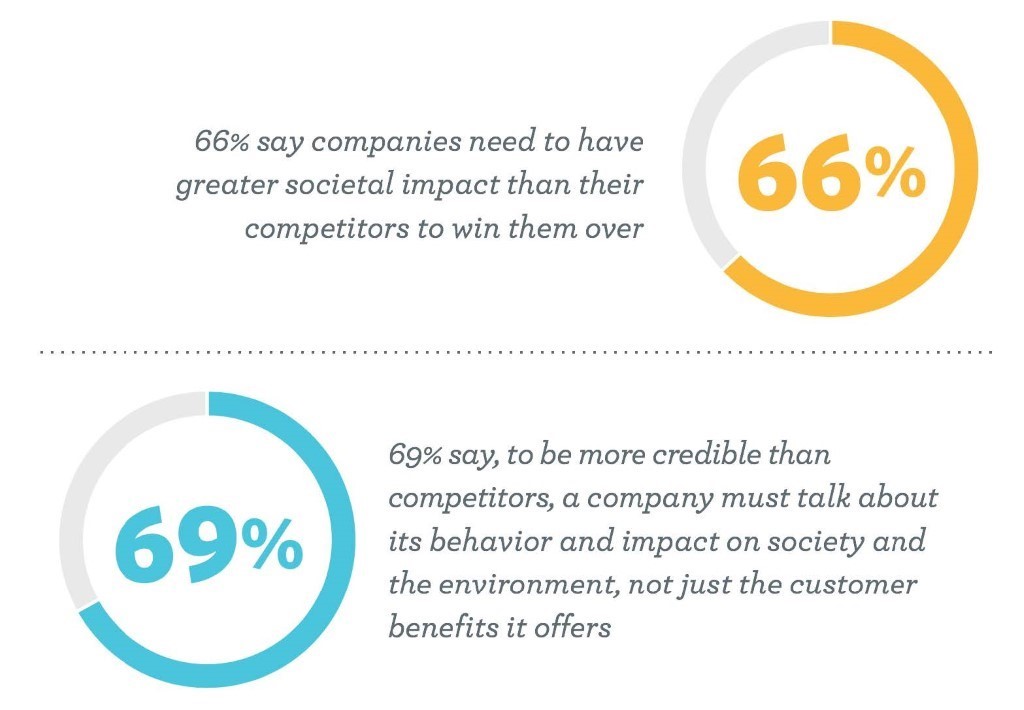
Why is that? In a world where 69% of consumers say it’s more important for brands to talk about their society and environmental impact versus product benefits, it’s tempting for brands to immediately shift messaging to check that box. But, without connecting this messaging to a brand’s business priorities and values, there’s a risk of undifferentiated messaging that doesn’t pull away from the pack in a meaningful way.
And what happens when 66% of consumers say companies need to have greater societal impact than their competitors to win them over? We’ve seen it hundreds of times. Pink-washing. Pride-painting. Woke-washing. It can be very tempting for brands to borrow culture only to drum up confused, undifferentiated messaging. To win hearts and minds in a new space, brands need to have a deep understanding of audiences and their shared experiences. When a brand does its homework, it becomes easier to find ways to link culture back to their positioning in an authentic way and truly pull away from the pack.
So how do brands avoid these common traps? The answer is at once simple and challenging: know who you are, what you stand for and why you’re different. Having a solid understanding of who you are as a brand, what you stand for and why you’re different allows your brand’s actions to remain aligned with your company’s core values. When you do, it becomes easy to link your brand’s societal and environmental impact with your business priorities and audiences in a way that resonates with consumers in an authentic way and differentiates you from the competition.
Going Public? Here are Seven Questions You Should be Asking
October 1, 2019
Share
Making the transition from private to public company is an incredibly exciting moment for everyone from top management to front line employees. But, it also brings with it significant change that can be jarring for any organization. As communicators, we’re often relied on to not only create the right messages and engagement strategies, but also to smooth out the process externally and internally. CEOs look to their communications team to answer questions such as “Do employees understand our strategy?,” “Why aren’t they more engaged?,”“Why don’t investors get it?” or “Why are the media focused on X?” By asking yourself these seven questions before the IPO process begins, you can be better prepared to communicate throughout the process and beyond.
1. Do we have a value story? What is it? Your value story is critical. Your management team will tell it to everyone from bankers to potential investors, and your company will be judged on it not only throughout the IPO process, but also quarter after quarter following. Even after listing day, your story and strategy will be front and center in your quarterly earnings reports. To ensure those outside the company understand your strategy, make sure your value story is strong, straightforward and transparent.
2. How well does my management team tell the story? Are they credible? Credibility is king on Wall Street. If investors have confidence in the management team and company strategy, then you’ll get more space to grow without investors breathing down your neck for results. From very early in the IPO process, carefully evaluate your management team’s presentation style and ability to deliver your value story. Refining their delivery through practice and coaching will secure that all-important strong first impression with Wall Street.
3. How prepared are we to meet the financial goals and strategy executives have outlined? As a communicator for a public company, understanding the company’s financial performance will allow you to shape the company’s narrative and make quarterly earnings reports more than just a read-out of results. To engage investors, earnings reports should include progress on strategy, what drove (or didn’t drive) growth in the quarter, previews of the rest of the year and how your company is meeting its commitments.
4. Do we know the rules and regulations around communicating as a public company? Once a stock ticker is attached to your company, there’s a shift in communications that occurs. From quiet period requirements to what information you can share with employees, communications are subject to specific regulations early in the IPO process and the consequences for breaking those rules can be significant. For example, once you start down the IPO road, you must take care to not “condition the market” with press releases, statements or media interviews designed to sway the investment community about your company. The same rule holds true for employees. If you have a large enough employee base, things you tell them aren’t necessarily just considered internal communications – it’s communicating to a large population that could impact your future stock price. To communicate successfully, stay tightly connected with your legal team and make a concerted effort to understand the rules of the road early in the process to avoid any missteps.
5. What are the hidden issues? Looking around corners is one of the hardest things to do, but in an IPO, it will save you pain and anguish later. Working closely with your management team, functional heads and others, seek to develop a deeper understanding of what challenges the company faces today and is expected to face post-IPO. Like in crisis communications, be ready with a plan for addressing those scenarios.
6. What is our governance structure?Are we ready to communicate about it? Communicating governance can be difficult. To communicate the “why” behind your governance structure, you need to develop a strong understanding of the principles that management and the board have put in place (especially if there are some less-than-shareholder-friendly stances in there). You’ll also need to be ready to help the media and employees understand your structure, as well as any changes to your structure.
7. Are our CSR efforts where they need to be? What about diversity and inclusion? In today’s world, investors are drawing tighter connections between values, business practices through programs like CSR and D&I and corporate performance. Being ready to communicate your efforts in these areas will demonstrate transparency and dedication to socially responsible initiatives, all of which are important to investors in the IPO process and beyond. But, to the earlier point regarding credibility and trust, be mindful that these actions need to be authentic and baked into your business – not just surface-level programs designed to check a box for investors.
IPOs can seem like a daunting process, but if you take the time to prepare early on, you can successfully help your company navigate the journey to Wall Street.
See what else is happening
You might also like
Expertise
Why Trust is the Real Competitive Advantage in Ag Tech
April 2, 2026
Expertise
Notes From the Road: RSA Conference 2026 Edition
April 1, 2026
Expertise
Why Your AI Rollout Is Stalling (And What Actually Moves the Needle)
March 25, 2026
Expertise
Get the Report: Inside China’s 2026 Two Sessions
March 24, 2026
Expertise
The New Culture Gap Report: How Brands Stay Relevant for 100 Years
March 24, 2026
Expertise
The Tech Industry’s License to Lead Problem: How Tech Companies Made Themselves Vulnerable to the AI and SaaS Apocalypse Doubt
March 4, 2026
Expertise
The Five Principles of Decision-Ready Intelligence: A Framework for Making Hard Calls in an AI-driven Environment
March 3, 2026
Expertise
The Patient Engagement Gap Your Competitors Are Closing
February 26, 2026
Expertise
AI is Reshaping Communications: Inside FleishmanHillard’s Enterprise-Wide Approach
Authenticity, Action and the Age of Employee Activism
Share
Climate change dominated conversations last week during the UN General Assembly in New York, with Greta Thunberg’s speech demanding leaders do better capturing headlines all over the world. Also capturing headlines with increasing regularity are employees publicly challenging their employers to act decisively on issues that matter to them. Last week it was climate change, but we’ve seen it happen around gun rights, gender equality, immigration and other issues as well.
This is a new age of employee activism, where employers are held accountable for their values and how they come to life in business decisions. In the case of climate change, the 2019 Authenticity Gap study, “Authenticity in Action,” reveals that 73% of those surveyed think it is important for companies to institute working practices that protect the environment. Yet how many companies are taking substantive action to meet and exceed their public commitments?
The stakeholder group closest to the realities are employees. The larger the gap between their expectations and experiences, the higher the likelihood that they will protest with public-facing action, whether it’s leaking an internal memo, ranting on social media or staging a large-scale walkout. The potential fallout for the company can impact everything from recruitment and retention to productivity, sales and investor confidence.
Much of this changing dynamic is due to the evolution of the traditional employer-employee relationship. It’s no longer based exclusively on what the company does for the individual employee – although that is incredibly important – but now also includes what the organization does for society at large, particularly in the areas of equality, inclusivity and the environment. Equally, the definition of “the company” has expanded to include supply chain, business partners, so-called passive investors and more. In other words, businesses are being evaluated, and sometimes taken to task, for the company they keep.
It’s easy to understand why this would cause trepidation among business leaders, particularly those that believe neutrality is the best way to avoid causing offense. However, in this pressurized environment, neutrality poses an equal or greater risk than a well-articulated point of view, regardless of which “side” of the issue it supports. “Authenticity in Action” shows that three out of four consumers globally expect CEOs in particular to take a stand on issues that have an impact on the company’s customers (74%), products and services (72%) and employees (71%).
Companies may choose to accept the risk associated with not taking a stand on an issue, but it should be a thoughtful and informed decision, not one made by default. Here are five actions to consider so you’re prepared to let your employees know you’ve heard them, show you understand their position, respond to their concerns and still maintain business continuity:
Ask an honest question – who cares? It’s important to know what issues matter to your employees and which of those they expect you to act on. Data privacy and security, the environment and income inequality topped the list in “Authenticity in Action” but there may be others specific to your business. If you don’t already know what they are, ask.
Establish the rules of the game. Employees and company leaders should be clear on the established channels for dialogue, how they are used and what results they can be expected to deliver. When everyone understands the rules going in, more authentic engagement comes out.
Prioritize conversation now to avoid controversy later. Take stock of employee resource groups or committees aligned to issues that may generate activism and be open to proactive dialogue so you can consider their points of view. If employees feel that you’re willing to hear them, they’re more likely to choose internal resolution over public activism.
Don’t be shy. There is more attention than ever on the behavior of individual company leaders, but instead of shying away from the scrutiny, C-suite leaders should seize the opportunity to be more relatable to employees and engage them in a meaningful exchange of perspectives. This creates a stronger foundation from which to consider when and how to support your employees on issues that matter to them.
Be ready to handle the heat. Have a plan for how you will approach the situation if your employees challenge you on an issue or a particular decision. Investing time now to think through the difficult actions you may need to take – reversing a position, dropping a valued customer and the criteria for doing so – will make those decisions easier when the situation is near a tipping point.
See what else is happening
You might also like
Expertise
Why Trust is the Real Competitive Advantage in Ag Tech
April 2, 2026
Expertise
Notes From the Road: RSA Conference 2026 Edition
April 1, 2026
Expertise
Why Your AI Rollout Is Stalling (And What Actually Moves the Needle)
March 25, 2026
Expertise
Get the Report: Inside China’s 2026 Two Sessions
March 24, 2026
Expertise
The New Culture Gap Report: How Brands Stay Relevant for 100 Years
March 24, 2026
Expertise
The Tech Industry’s License to Lead Problem: How Tech Companies Made Themselves Vulnerable to the AI and SaaS Apocalypse Doubt
March 4, 2026
Expertise
The Five Principles of Decision-Ready Intelligence: A Framework for Making Hard Calls in an AI-driven Environment
March 3, 2026
Expertise
The Patient Engagement Gap Your Competitors Are Closing
February 26, 2026
Expertise
AI is Reshaping Communications: Inside FleishmanHillard’s Enterprise-Wide Approach