Employee Login

Enter your login information to access the intranet

Enter your credentials to access your email

Reset employee password

Article

Perfecting the Art of Listening (and Then Responding): Three Thought Starters for People Leaders

September 11, 2024

As a people leader, your relationships with team members and across your organization always are critical to fostering workplace culture, overcoming challenges, supporting employees and driving business continuity. More so during times of division.

And to do those things in what has been and will continue to be a disruptive 2024, you will benefit from not only taking a thoughtful and nuanced approach to sharing information but also listening.

As employees look to you for guidance, here are three recommendations to help ensure you harness the power of listening to navigate potential workplace division and maintain business continuity.

Also, check out our full guidance for people leaders, including actionable tips and real-life scenarios you may encounter, to help you effectively manage your teams throughout this divisive year.

#1: Sharpen Your Active Listening Skills

Right now, it’s essential that you work to understand what and how your team members are thinking and feeling by proactively checking in with them and asking what support they need.

Also, as a people leader, a worse offense than failing to check in with employees is failing to pay attention when you do, so be sure you show your people you care and are actively supporting them.  

#2: Be Prepared and Be Agile

While it’s important that you better understand how your team is thinking and feeling, it’s equally important you understand how to maintain control of conversations.

To help navigate difficult conversations, savvy communicators do the following:

  • Address the negative
  • Redirect the sensitive
  • Halt the inappropriate

While off-limits topics will depend on the organization’s policies, team culture, personal relationships and other factors, it’s generally safe to say people leaders should not engage in combative conversations about contentious political topics or allow those discussions to continue when observed.

#3: Look for the Best   

Being able to thoughtfully and appropriately respond to the situations described in our full guidance can drive business continuity and team cohesion throughout rocky periods. But you must not forget to also actively listen and search for opportunities to reinforce the things that are going well and the need for continued collaboration, respect and support among your team.

Most importantly, if you want to drive positive change among your team: walk the talk, lead by example and model the behaviors you want to see in others. View our guidance on how to best lead your team through a turbulent year, here.

FleishmanHillard’s Talent + Transformation team delivers business outcomes at the intersection of business and communications strategy. For more than three decades, we have helped industry-leading organizations align their employees behind their most essential business needs, including strategy, culture, transformation, and critical business and functional initiatives.
Article

Making Sense of the Math: A look at evolving influencer monetization models and climbing rates

September 10, 2024
By Allie Wilmes

As the influencer marketing industry has more than doubled since 2019, influencer rates are increasing too, and new ways of monetizing influence continue to make it a lucrative business. While the influencer marketing industry is not immune to inflation, we must ask ourselves what value are we getting in return for higher rates? If demand is driving influencer rates up, is the investment proportionally driving higher business impact?

Here are three ways to determine an appropriate investment in influencer marketing. Start with data. Do the math. Incentivize performance.

1. Always start with the data

Utilize audience data and historical performance insights to evaluate the potential impact of an influencer partnership, rather than starting from vanity metrics or media kits.

There is no universal model for calculating influencer rates, which means rates shared in media kits are often based on what an influencer thinks a brand will pay. We know what one brand constitutes as value may differ to another. Therefore, there is no one-size-fits-all to sponsored rates.

What is most valuable to you? Is it the influencer’s reach or their audience’s propensity to hear your message? Is it the influencer’s likeness or their connection to their audience?

Think about your objective and evaluate potential impact based on universal KPIs. If your objective is consideration, utilize engagement rate and view-thru-rate KPIs to evaluate which influencers will provide the most value. Is their engagement rate above or below average? Do their Reel video views surpass their follow count? If an influencer exceeds your benchmarks, they will provide more value, which warrants a higher rate than those who do not. Conversely, if an influencer’s performance metrics are below benchmark, consider that when determining what rate is appropriate.

2) Do the math.

There is no single measure of impact. To fully assess the tangible return on your influencer investment, you must look at the full funnel and consider your objectives.

That means in addition to performance metrics like reach rate, view-thru-rate and engagement rate, evaluate impact by incorporating cost-pers (cost per thousand impressions, cost per video view and cost per engagement). When you pair performance metrics like engagement rate with impact metrics like cost-per-engagement it helps contextualize the campaign performance and tell a story that maps back to the business objective. Cost-pers help stakeholders understand the impact of influence within the full marketing mix.

However, influencer cost-per metrics shouldn’t be evaluated alone or compared directly to paid advertising cost-pers. The influencer’s reach is more valuable based on their trust and credibility with followers, so create unique influencer benchmarks rather than forcing their analysis against advertising cost-pers.

Beyond measuring campaign impact, these metrics are also helpful in identifying optimizations and opportunities to adjust your influencer marketing approach to drive impact effectively and efficiently.

3) Incentivize performance.

Don’t rely on sponsored rates alone to compensate your influencer partners. Affiliate marketing is a great way for brands to track and ensure ROI, while also ensuring influencer compensation is aligned with the business impact the influencer drives, not just their deliverables. However, affiliate is not the only answer.

Just as influencer rates are not one-size-fits-all, neither are compensation models. Each campaign and influencer partnership deserves a unique value exchange.

  • Paid Amplification Pay Out: Make compensation for paid usage rights dependent on content performance and use. In lieu of paying upfront for paid usage, wait until the content is live to determine if it should be leveraged in paid or not based on organic performance and content quality. Only if the content is utilized in paid will the influencer be paid the incremental usage fee.
  • Earned Media Pay Out: Similar to above, in lieu of paying the influencer upfront for name and likeness use, negotiate an incremental dollar amount the influencer will receive based on the number of interviews completed to support earned media.
  • Product Collaboration: When working with a brand ambassador on a product collaboration, ensure the compensation model is hybrid and partially dependent on the collaboration’s success. A partial amount of the influencer’s payment can be determined based on sales or conversion.
  • KPI Affiliate Model: Don’t limit affiliate to e-commerce. Consider using an affiliate model to pay influencers based on a range of KPIs including, but not limited to, website visitors, lead generation or other measurable actions.

The influencer landscape will continue to evolve, and rates will likely continue to increase. While industry growth provides more opportunities for brands and influencers alike, it also requires brands to be more intentional with their investments. Ensure your investment generates impact with audience-first, data-driven strategy and intelligence. Always start with data. Do the math. Incentivize performance.

Article

FleishmanHillard Korea Partners with 1MILLION for 1MILLION Brand Licensing and IP Development

September 8, 2024

The strategic partnership will leverage 1MILLION’s brand and artist IP in initiating collaborations on a global scale

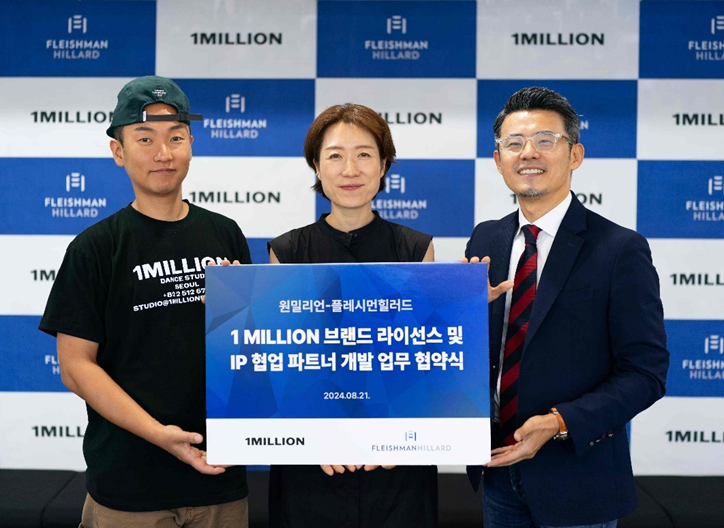
(From left to right) Yeowook Yoon and Minja Kim, co-CEOs of 1MILLION, and James Choi, Senior Vice President and Partner of FleishmanHillard Korea

FleishmanHillard Korea, a leading global communications consulting firm, announced today it has signed a partnership with 1MILLION, a global lifestyle dance company, to collaborate on 1MILLION’s brand licensing and intellectual property (IP) initiatives.

1MILLION operates the largest dance YouTube channel in Korea, boasting over 26 million subscribers, and is beloved by dancers and K-pop fans worldwide. Its significant influence over Gen Z and millennials has led many global brands to seek out creative collaborations with 1MILLION over the years.

Combined with FleishmanHillard Korea’s strategic expertise and business network, this partnership aims to bolster 1MILLION’s global expansion as FleishmanHillard seeks out innovative business opportunities for its network clients and partners leveraging 1MILLION’s brand and artist IP.

Minja Kim, co-CEO of 1MILLION, said, “FleishmanHillard is an ideal partner with a deep understanding of our brand vision, values and artists, which helps us preserve our unique identity. Their expertise and strategic approach were key factors in forming this partnership.”

James Choi, Senior Vice President and Partner of FleishmanHillard Korea, added, “1MILLION embodies a compelling brand philosophy centered on spreading positive energy through dance. We are excited to support the global dissemination of their ‘INSPIRE MILLIONS’ mission to reach an even wider audience through this collaboration.”

FleishmanHillard currently provides brand and communication consulting services for 1MILLION and has successfully completed “Next Concept” artist branding project for its artists, including Lia Kim, Amy, Dohee, Debby, Redy and Harimu.

Article

The 4 x 20 Strategy: A New Paradigm in Crisis Response

September 5, 2024
By James Choi

In today’s fast-paced business environment, crises are no longer exceptional events but a constant reality that organizations must prepare to face. As a strategic communication expert with over 25 years of experience, I developed a comprehensive framework for crisis response alongside my colleagues at FleishmanHillard Korea: the 4 x 20 Strategy. This approach categorizes crises into four main types and offers 20 specific response strategies for each type.

Understanding the Four Types of Crises

Legal Responsibility: These situations likely involve the organization bearing legal responsibility for the incident in question, such as accidents caused by employee negligence, product defects or secondary incidents occurring while addressing the initial problem.

Moral Responsibility: Here, although there may not be legal responsibilities, there is a moral obligation to respond, influenced by cultural values or local business customs. This is particularly important in many Asian cultures, where the social responsibility of a business is highly valued.

Internal Mistakes: These crises stem from internal errors that do not necessarily lead to legal or moral responsibilities but can result in financial losses and damage to the organization’s reputation. Examples include failed investments, production delays due to mismanagement or loss of competitiveness due to outdated technology.

External Threat Crises: These situations arise where the organization bears no legal or moral responsibility and there are no significant internal mistakes. Examples include malicious rumors, fake news or unjustified regulatory actions that threaten the organization’s normal economic activities.

Key Principles of the 4 x 20 Strategy

Rapid Identification: The strategy provides a framework for quickly identifying the type of crisis, enabling quicker responses.

Stakeholder Perspective: Effective communication and engagement with relevant stakeholders are crucial, along with understanding multi-stakeholder dynamics.

Tailored Response: With 20 specific strategies for each crisis type, organizations can select the most appropriate response based on the specific situation.

Flexibility: The 4 x 20 Strategy is not a rigid set of rules but a flexible framework that can be adapted to various industries and organizational structures.

Proactive Preparation: While we cannot predict every crisis, we can always prepare in advance for various crisis scenarios. The 4 x 20 Strategy emphasizes the importance of having response plans ready for each crisis type.

Precision Communication: Data-driven precision communication can guide organizations more effectively, with the right timing and tone.

Continuous Learning: Each crisis provides an opportunity to refine and enhance the strategy. The 4 x 20 approach encourages post-crisis analysis and strategy updates, as needed.

Implementing the 4 x20 Strategy

Implementing the 4 x 20 Strategy requires a shift in how organizations view crisis management. Here are some key steps to take:

Crisis as a Constant: Recognize that crises are not isolated events but rather a regular aspect of business operations.

Cultural Shift: Cultivate a culture where every employee understands their role in crisis prevention and response.

Training and Simulation: Conduct regular crisis simulations based on the four crisis types to familiarize teams with the 20 response strategies.

Integration with Daily Operations: Incorporate crisis management principles into daily business activities rather than treating it as a separate function.

Leadership Commitment: Ensure that top leadership is committed to, and involved in, crisis preparedness and response.

The Future of Crisis Management: Integrating Enterprise Risk Management and the 4 x 20 Strategy

In today’s complex and interconnected business environment, the importance of effective crisis management is increasingly recognized. While Enterprise Risk Management (ERM) focuses on identifying and mitigating potential risks, the 4 x 20 strategy provides action plans for crises that have actually occurred.

By combining ERM’s preventive approach with the 4 x 20 strategy’s responsive approach, organizations can more effectively deal with crises across the board. This integrated approach allows organizations to prevent crises, respond quickly to those that do occur, and ultimately transform crises into opportunities.

For organizations facing new and evolving challenges in today’s fast-changing business environment, the combination of ERM and the 4 x 20 strategy can be an essential tool in building a resilient and future-oriented crisis management framework.

James Choi is a svp and partner at FleishmanHillard in Korea and wrote “The Principles of Crisis Response,” published in Korean on August 30, 2024.

Article

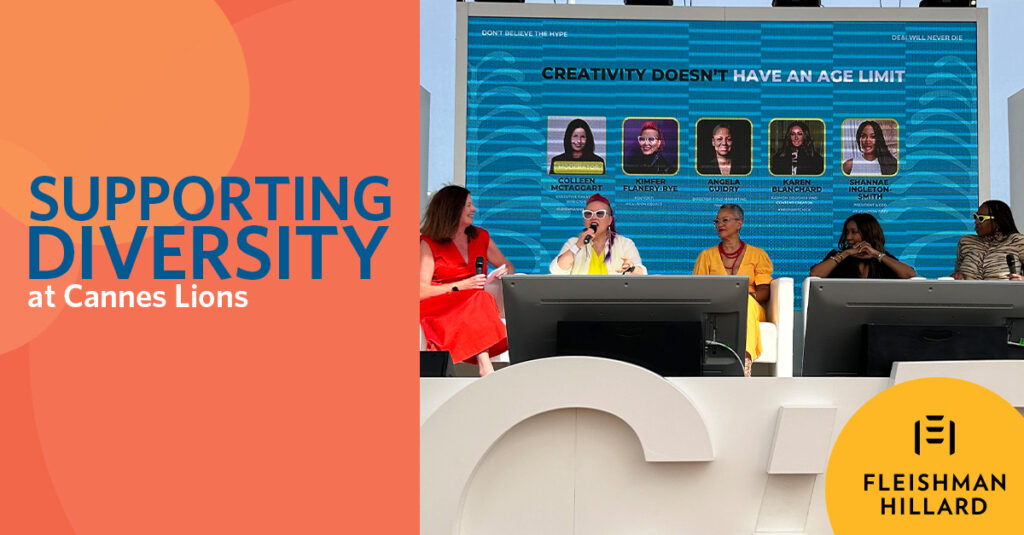
FleishmanHillard and FH4Inclusion Teams Shine at the Cannes Lions International Festival of Creativity

August 28, 2024

The Cannes Lions International Festival of Creativity draws the best and brightest from the worlds of advertising, media and communications. Amongst all the awards and global brands, one initiative stands out for its impactful mission and transformative vision: the Cannes Can: Diversity Collective (CC:DC). Created in 2018 due to the lack of diversity in the advertising, marketing, communications and creative industries, CC:DC has taken the initiative to increase the representation of talented people of color at some of the largest marketing events in the world. FleishmanHillard is in its second year of partnership with CC:DC through its global pro bono and volunteer initiative, FH4Inclusion.

A highlight of the festival is its captivating panels. FleishmanHillard helped bring diversity to the CC:DC stage this year with two thought-provoking sessions. Our “Creativity Doesn’t Have an Age Limit” panel tackled the issue of ageism in the creative field, a topic especially pertinent as five generations collaborate in the workplace for the first time in history. It was moderated by our Colleen McTaggart, global executive creative director, and featured an inspiring lineup of powerful women — Angela Guidry, Karen Blanchard (KarenBritChick™), Kimfer Flanery-Rye and Shannae Ingleton-Smith. Adding to the excitement, Jacob Porpossian, global executive creative director in Health and Life Sciences for FleishmanHillard, moderated “Creativity for Health: Why Harnessing the Power of Creativity is Critical to Engaging Multicultural Communities” featuring our client, Yvonne Bryant, executive director, U.S. Marketing, Novo Nordisk, and the phenomenal Queen Latifah.

“Getting to moderate a panel and then watching our Novo Nordisk client and the iconic Queen Latifah speak about the FH and Novo Nordisk ‘It’s Bigger Than Me’ campaign on the main stage of the festival was a dream come true. It made me extremely proud to be an FH-er and was a wonderful way to recognize the incredible amount of work that was strategically led and creatively executed by the Novo Nordisk team and our agency,” shared Porpossian.

FleishmanHillard also made an appearance on the main stage, where Adrianne C. Smith, our chief diversity and inclusion officer, discussed the topic “DE&I Will Never DIE.” Smith shared her thoughts on the state of DE&I and addressed the myth that DE&I efforts are obsolete, explaining why they’re more vital than ever.

This year was also historic for media coverage of CC:DC, with the FH4Inclusion team securing more than 20 media placements highlighting stories of legacy and growth within the organization. Leading up to the Cannes Lions International Festival of Creativity, media outlets such as Time, Ad Age and PRWeek shared the amazing work CC:DC brought to the Palais. Being on the ground at the Cannes Lions International Festival of Creativity also provided Chelsie Kumar, CC:DC Ambassador and a vice president at FleishmanHillard, with the opportunity to build relationships with journalists.

“Attending Cannes Lions Festival of Creativity was a great opportunity to secure face time with journalists from top-tier publications. Events hosted by news outlets (such as AXIOS, Business Insider, Wall Street Journal, Bloomberg) were particularly helpful for these networking opportunities, and the sessions tended to have a more communications and earned media focus,” said Kumar.

CC:DC’s annual AYA Inclusion Awards were another point of inspiration at the festival. These awards were the first diversity-based awards on the ground at the festival and in the spirit of inclusion are made free to enter. This year’s submissions demonstrated that DE&I will endure despite challenges, with agencies across the globe submitting inspiring work challenging the status quo.

“Working on the AYA Inclusion Awards was an honor. And I believe every year, they will keep growing. I thought last year’s submissions were amazing, but this year, every single submission deserved an award. The jury did an amazing job picking a winner, and in my eyes, any of the submissions could have won,” shared Mirella Lopez, FleishmanHillard assistant account executive and CC:DC Ambassador.

“It’s incredibly refreshing to see work that genuinely celebrates cultural identity and is rooted in unique behaviors and authentic insights. This is the true essence of diversity. We’ve come a long way from the tokenism of the past, rooted in diverse cast and call-it-a-day. While there’s still work to be done, I’m optimistic about the direction we’re heading,” commented Geraldine Szabo, FleishmanHillard senior vice president – strategy and AYA Inclusion Awards judge.

As CC:DC continues to expand, so does FleishmanHillard’s commitment to DE&I, providing a wealth of opportunities for creatives and industry leaders. This dedication to fostering growth and development within the industry is a source of optimism for the future of diversity and inclusion in the communications and advertising fields.

Article

Bridging the Generational Divide with Generative AI

August 27, 2024
By Bob Beasley and Lauren Baker

Evolving from Storytellers to Strategic Storytelling Engineers

By Bob Beasley and Lauren Baker

As of 2020, Generation X and Millennials make up 73% of today’s U.S. workforce. These two generations fuel much of the strategy, execution and innovation across industries, but approach it from vastly different perspectives. Each generation has had a variety of lived experiences and has used various technologies to deliver on their workplace goals.

When it comes to Generative AI (Gen AI), viewpoints and feelings on if, when and how to implement and foster the technology can differ greatly. Bob, a Gen Xer born in 1970, and Lauren, a Millennial in her late 20s, discuss how they are approaching the rise of Gen AI in the public relations industry.

What do you think of Gen AI at this moment in your career?  

Bob:

One of the advantages of age and experience is the ability to expect – and accept – the fact that things will change. As a communications professional for the past 30-plus years, I’ve seen many changes in the media landscape – the convergence of broadcast, print and digital media, the birth of social media and the rise of mobile communications … to name a few.

When I started my career as a reporter for a weekly community newspaper in the early 1990s, we had a whole department of production employees whose job it was to “paste up” stories and ads on layout boards that were used to create printing plates for the pages that would eventually make up the newspaper. As desktop publishing took hold, that work shifted from cardboard canvases to digital pages. Those workers traded in their scissors, knives, wax rollers, cardboard and paper for mouse clicks and keystrokes. Of course, not all were willing or able to make the transition. But those who did learned new skills and increased their efficiency in the process.

Over the years, many communicators have adapted to new technologies, platforms and audiences and learned how to create engaging and effective content for different purposes and contexts. Now comes this thing called Gen AI, which some view as the biggest-ever threat to writers and other creative types like us. I don’t see it that way. Instead, I see it as the next pivot point in a career filled with pivots. I like to think of Gen AI as a tool for leveling up my game once again. As I become more comfortable with it, I expect it to help me evolve from a writer/editor to more of a storytelling engineer.

Lauren:

My professors and mentors always taught me that change is inevitable and that’s something I’ve taken to heart. While members of my generation now hold many different roles and responsibilities in the workforce, we must expect change in how we work, and at an even faster and more disruptive pace than previous generations.

At the younger end of the Millennial generation, I am approaching double-digit years of experience and have seen the rise of platforms growing up – from Twitter (now X) to TikTok and the rapid rise of jobs such as platform influencers and social media managers, even the “death” and resurgence of QR codes.

Gen AI is not a passing trend. I have no doubt it’s a big technological evolution that we all need to embrace. Some may say it is the first momentous change to the communication industry for the millennial generation that can significantly impact how we do our work, akin to how production roles changed during Bob’s career. Not only do we need to be storytelling engineers, but strategic experts and consultants as well, because the outputs are only as good as the inputs.

How can we use Gen AI to be better writers?

Bob:

So, strategic storytelling engineers? I like the sound of that, Lauren.

Before we dive into the art and science of what it means to be a strategic storytelling engineer, let’s ground ourselves in the facts of what Gen AI does in the context of writing. After all, Gen AI has a lot of different applications. In my work as a writer, I define Gen AI as a natural language-generation system that can help me produce high-quality content faster and easier. It’s not a replacement for my creativity or expertise, but a complement that can enhance and amplify those traits.

Gen AI works by taking your input, such as a topic, a prompt, a key word or a sentence and generating relevant and coherent text that matches your intent and style. Gen AI can also suggest ideas, facts, sources and formats that can enrich your content and make it more appealing and persuasive. I know this to be true because I just used it to help me articulate this!

Do you think Gen AI is going to help you, or hurt you?

Lauren:

Efficiency is going to be the most immediate outcome of Gen AI adoption. But, as Bob outlined, the person using the tool must input prompts to get an outcome. The outcome is going to be tied to how good we are at providing and even coaching with the inputs.

Gen AI is going to put an even greater emphasis on strategy. How are we going to get the greatest, best and most unique outputs out of a tool that anyone can access? And how are we approaching data inputs – either public or confidential – and using that data effectively to get smarter and arrive at our desired outcome.

Gen AI has been great to experiment with in its early stages, but as we continue to evolve, we are going to become methodic prompters with strong targets on strategy to get the most out of it.  

Bob:

A strategic storytelling engineer is someone who can use data, analytics and artificial intelligence to design, build and optimize compelling content for various channels and audiences. A strategic storytelling engineer is not just a writer, but a problem-solver and an innovator. While all people can leverage Gen AI to create content, seasoned communicators can refine that content and make it their own.

Overall, Gen AI can:

  • Boost your productivity and efficiency. Gen AI can help you generate content faster and with less effort, saving you time and energy for other tasks. Gen AI can also help you edit and revise your content, checking for grammar, spelling, tone and readability.
  • Improve your creativity and quality. Gen AI can help you generate more diverse and original content, avoiding clichés and repetition. It can also help you improve your content’s structure, logic and clarity, making it more engaging and convincing.
  • Expand your knowledge and skills. Gen AI can help you learn new facts, concepts and perspectives, broadening your horizons and enriching your content. It can also help you explore new formats, styles and genres, challenging you to experiment and grow as a writer. I’ve been writing professionally for three decades, and I still struggle at times – from creating that first draft to producing a pithy quote or writing a catchy headline. Gen AI is the perfect aid for helping you erase the time spent staring at a blank page. 

What’s on the horizon?

Lauren:

We’re going to get smarter faster, and pivot even faster. The technology is rapidly changing, as are companies’ approaches to Gen AI. We can access this technology wherever we go – it’s on our computers, phones and even in applications we use every day.

The increasing accessibility, accuracy and speed is going to bring about even more change. So, let’s dig in and experiment and find new ways to use it. The possibilities are endless and, every week, I see use cases that make me think “I didn’t realize I could use Gen AI for that.”

Good to Great

Bob and Lauren:

Gen AI is the perfect tool for helping people who are already good at what they do become great. It’s a tool for helping writers become strategic storytelling engineers who can leverage the power of artificial intelligence to create better content for their audiences and clients.

The two of us have been dabbling with Gen AI for several months now but are just starting to groove with it. Not only are we excited about how it’s going to help us better serve our clients, but we’re anxious to see how it’s going to help us develop personal content, ranging from song writing, drafting short stories and maybe even penning a novel or screenplay (something we never thought we’d have time to do!). We encourage you to try it for yourself. You just might be amazed – and less intimidated – by what you can achieve with it.

How are you approaching Gen AI? Do you see it as an opportunity or a threat to your career?

Article

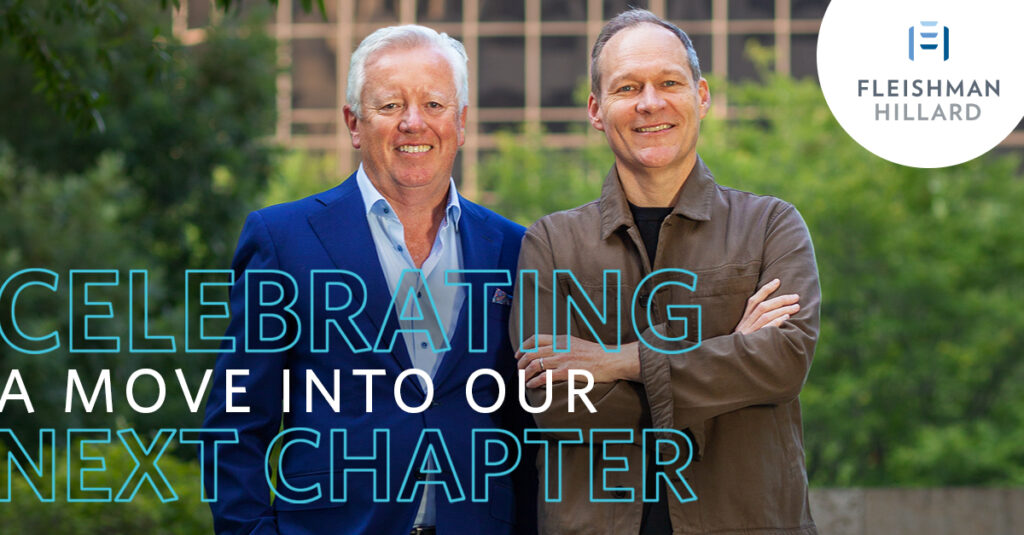
FleishmanHillard’s J.J. Carter Named President and CEO; John Saunders to Become Chairman

August 20, 2024

Leadership Transition Will Take Effect on Oct. 1, 2024

FleishmanHillard Inc., an Omnicom PR Group (OPRG) agency, today announced that its current Global Chief Operating Officer and President, Americas J.J. Carter will become President and Chief Executive Officer, effective Oct. 1, 2024. He succeeds John Saunders, who will take on the role of Chairman of FleishmanHillard.

Carter, 49, was named the agency’s global chief operating officer and Americas president in 2016. Saunders, 66, was named president and CEO in 2015 after leading FleishmanHillard’s Europe, Middle East and Africa region.

“J.J. has the experience, skills and vision to rapidly expand on the legacy of FleishmanHillard. I am confident in his ability to drive innovation, teamwork and growth that will accelerate FleishmanHillard’s excellence and expand relationships with clients around the world,” stated Chris Foster, CEO of OPRG. “We are grateful for John’s decades of commitment and leadership and look forward to his ongoing guidance as chairman of FleishmanHillard.”

Saunders’ relationship with FleishmanHillard began more than 37 years ago, when the agency he founded in Ireland became an affiliate. Later, John joined with FleishmanHillard to form what was then known as FleishmanHillard Saunders in Ireland. In 2023, he became the first individual in the communications industry to be conferred with an honorary Doctor of Philosophy degree from Dublin City University.

“I look back on more than three decades at FleishmanHillard with pride and gratitude for the support of so many colleagues around the world and the trust that some of the world’s leading companies have placed in us. However, it’s now time for me to step back and spend more time with my family both in Dublin and in London and with my six young grandchildren whom I miss being so far away from.

“I have full confidence in J.J. as president and CEO. I have seen him in action over many years and respect his strengths, and his ability to lead no matter the pace and complexity of change. J.J. is a person of outstanding personal integrity and I wholeheartedly endorse his selection,” Saunders said.

Carter has been with FleishmanHillard since 2005 and has held a variety of key leadership roles. He previously oversaw the agency’s East and West regions in the United States along with Canada and Mexico, was general manager of one of the firm’s largest offices in San Francisco, was global client relationship manager for one of the agency’s biggest multinational accounts, and he built on the firm’s existing experience to launch the agency’s global sports marketing practice. During his time at FleishmanHillard, he has also recruited transformative leaders across key markets, global accounts and practice areas. 

“It’s an enormous privilege to follow John and lead the organization into the future during one of the most complex and consequential moments in our history,” Carter said. “To accelerate our growth, deliver transformative work for clients and create a best-in-class experience for our people, we will embrace our strengths as a trusted client partner, while also expanding our capabilities and exploring new tools and ways of working together. We will always deliver intelligent, creative, audience-first solutions that drive impact for our clients.”

Regarded as a trusted advisor to iconic brands in their biggest moments and on the largest global stages, Carter has counseled clients through IPOs, CEO transitions, groundbreaking product launches, complex mergers and global sponsorship activations. He excels at connecting brand, business strategy, technology and leadership into cohesive narratives that resonate with employees, customers, investors, business partners and media alike.

Carter will report to Foster and will be a member of OPRG’s global leadership team.

Article

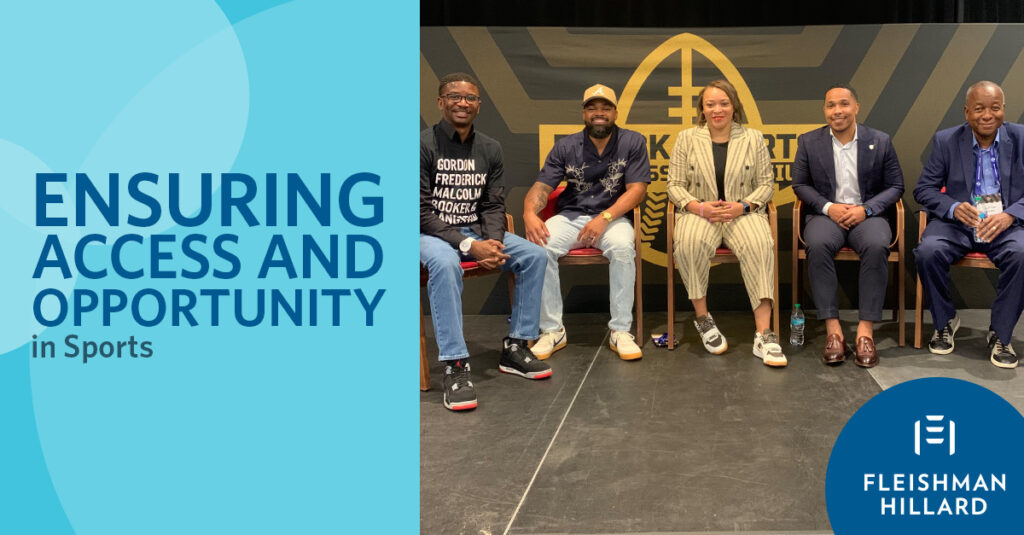
How to ensure access and opportunity for Black and diverse students and professionals interested in working in sports

August 7, 2024
By Thomas Bennett

It’s important to provide opportunities and access for Black and diverse students and professionals who have an interest in working in the sports industry. The Black Sports Business Symposium was created in 2022 with the fundamental idea to make the sports industry more diverse, inclusive and equitable. This year’s symposium brought more than 2,000 people to the Mercedes-Benz Stadium in Atlanta focused on creating opportunities and increasing representation among Black and diverse students and professionals in the sports industry. I had the opportunity to be on ground – here are just some of my key takeaways:

Representation in sports, it matters.

In one session during the Black Sports Business Symposium, a speaker spoke about the importance of representation in the sports industry saying, “It’s hard to become something that you rarely if ever see.” This holds very true as many sports leagues at the collegiate and professional level struggle with diversity at all job levels, particularly at the executive level.  

Some of this year’s symposium speakers included: Sandra Douglas Morgan, President of the Las Vegas Raiders (the first Black female NFL team president), Cari Champion, former host of ESPN First Take, and Kosha Irby, Chief Operating Officer, All Elite Wrestling (client). Having successful executives of this caliber speak at the symposium further reinforced to attendees, myself included, that being successful within the sports industry is absolutely possible, regardless of an individual’s race, culture or ethnicity.

The rise of women in sports.

Simone Biles, Caitlin Clark, Angel Reese, Katie Ledecky and many other women have brought more attention to, and raised the bar for, women’s sport. According to Deloitte financial analysts, “Elite women’s sports will generate revenue of $1.28 billion in 2024.” Women athletes are finally receiving more of their due thanks to the efforts of past and present trailblazing women athletes.

During the symposium, a panel of speakers tackled the topic of the rise of women in sports. Swin Cash, former WNBA player and current Senior Vice President of New Orleans Pelicans Basketball, talked during this session about factors contributing to the increase in popularity in women’s sports spanning viewership and revenue. According to a Deloitte article, “interest from fans, broadcasters, and commercial partners is driving rapid growth in the revenues of women’s elite sport.” Panelists during this session also emphasized the importance of providing more opportunities for women who work on the business side of sports.

Leveling the playing field in sports is imperative.

To level the playing field and diversify the pipeline of students interested in working in sports, it’s critically important for teams, leagues and sports brands to develop strategic partnerships with local colleges and universities, specifically historically Black colleges and universities (HBCUs), community colleges and Hispanic-serving institutions (HSIs). Shannon Joyner, Vice President, Marketing at the Atlanta Falcons, and her fellow panelists, spoke to their efforts around strategic partnerships with HBCUs. Joyner shared insights about the Atlanta Falcons’ HBCU Fellows Program that focuses on “leveling the playing field for HBCU students who are interested in careers in sports and entertainment.” Through this program, students have the opportunity to learn more about “how brands collaborate in the areas of sponsorship and brand engagement.”

Importance of having diverse voices share stories in sports.

Those who have never encountered or experienced racism or discrimination may find it hard to recognize and understand the challenges faced by people of color and other people from under-represented and under-resourced backgrounds. Since the tragic murder of George Floyd, it’s important to have diverse voices to share these types of stories, particularly in the world of sports given its intersection with culture. This topic was also discussed during the symposium from a diverse panel of speakers who write stories, produce films, represent sports leagues and work on the agency side. Collectively, the panelists concluded that having diverse voices share stories that happen in their communities brings more authenticity.

Sports bring together fans of all races, cultures, ethnicities, backgrounds, ages and beliefs. It’s critically important that individuals working in sports resemble the diversity of our society, communities we live in and fans attending games. In its third annual year, the Black Sports Business Symposium not only created awareness of an issue, but also offered solutions, connections and opportunities for Black and diverse students and professionals who are passionate about working in the sports industry. As a first-time attendee, the symposium overall was empowering, and I look forward to attending again next year.

Article

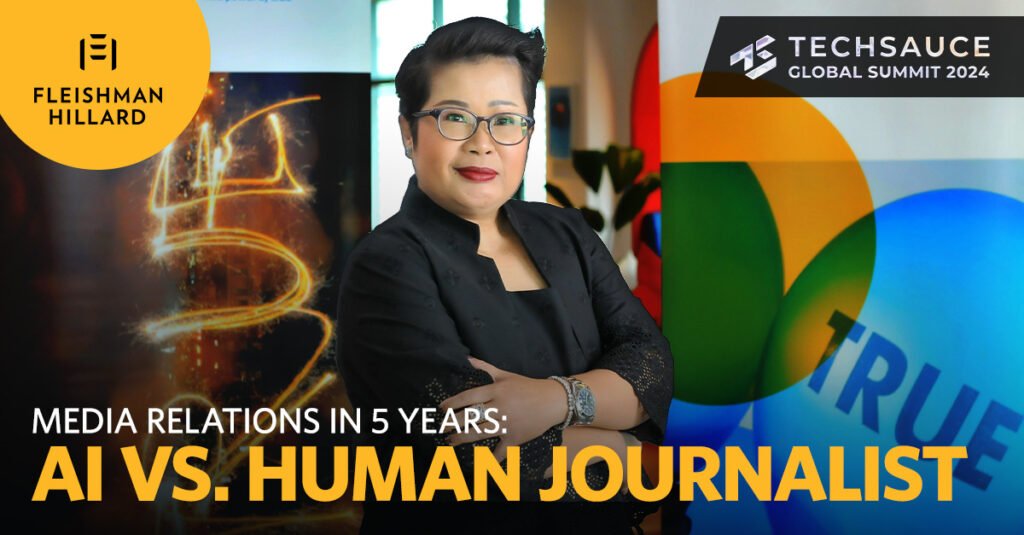
FleishmanHillard’s Sophis Kasemsahasin to speak at Techsauce Global Summit 2024

August 6, 2024

What: “What Will Media Relations Look Like in 5 Years: AI vs Human Journalist?” at Techsauce Global Summit 2024  

When: Friday, August 9, 10:30-11:30 a.m. ICT

Where: Queen Sirikit National Convention Center in Bangkok

This Friday at the Techsauce Global Summit 2024, FleishmanHillard’s Sophis Kasemsahasin will take a deep dive into critical developments affecting the tech industry over the next five years including automation, crowdsourcing, programmatic media relations and more. Kasemsahasin’s presentation is part of a three-day global summit featuring more than 130 live sessions, engaging workshops, 350 exhibitors and invaluable opportunities for business matching and networking.

Register here and use code SOPHIS078 for a special discount!  

Article

FleishmanHillard’s Leela Stake and Francesca Weems to Join Paradigm’s Joelle Emerson on Inclusive Communication Webinar

August 1, 2024

What: “The Evolving DEI Landscape: Navigating Inclusion and Communications” webinar

When:  Thursday, Aug. 22, 9 a.m. PT/Noon ET

FleishmanHillard’s Leela Stake, FH4Inclusion and True MOSAIC lead, and Francesca Weems, director of DE&I and global lead of the Race & Culture Media + Platforms team, will join Joelle Emerson, co-founder and CEO of Paradigm, for “The Evolving DEI Landscape: Navigating Inclusion and Communications.” The virtual webinar will delve into how organizations can adapt to the shifting language around diversity, equity and inclusion, as well as strategies for responding to backlash effectively. Join us to discover best practices for communicating with employees about world events and gain actionable strategies to more effectively support clients.

To register for the webinar, click here.