Employee Login

Enter your login information to access the intranet

Enter your credentials to access your email

Reset employee password

Article

FleishmanHillard Announces Wave of New Global Leadership Appointments

November 21, 2024

FleishmanHillard today announced several key roles as a part of its global leadership team under recently appointed President and CEO J.J. Carter. These individuals will be responsible for defining critical growth areas and operational priorities as the firm continues its evolution.

 “As we accelerate the modernization of our firm, these appointments are vital to our future,” said Carter. “By fortifying our operations with proven agency leaders and elevating new voices, we will fuel our growth and the transformation of our work. This first phase of appointments strengthens accountability for client operations, business development, industry expertise, data and digital, and preparing our workforce for change. On this foundation we will expand our use of intelligence and technology, while becoming a more dynamic, modern consultancy.”

The following leadership roles will join previously appointed leaders Patti Portnoy (chief financial officer), Della Sweetman (president, Americas and chief strategy officer) and Adrianne Smith (chief diversity and inclusion officer), forming the senior functional and operational leaders in the agency:

  • Lisa Moehlenkamp to chief operating officer. In this role she will drive operational excellence, urgency and impact worldwide, working closely with Carter and Omnicom partners. Previously chief of staff and chief talent officer for the agency, Moehlenkamp has been with FleishmanHillard for more than 25 years following her time at SBC (now AT&T).
  • Emily Frager to chief client officer. In this role she will lead commercial excellence for the firm’s largest clients, supporting top client leaders committed to delivering the highest standards of modern communications. Currently general manager of the agency’s Southern California operations, Frager began her career at FleishmanHillard Chicago before joining Lennar Ventures as their chief marketing officer, boomeranging back to the agency in 2016.
  • Mitch Germann to chief business development and brand officer. In this role, he will lead the agency’s business development operation and will oversee FleishmanHillard’s brand and marketing efforts. Formerly the agency’s global managing director of Retail, Sports and Lifestyle sector. Germann served in senior leadership roles at Nike and Jordan Brand, previously was general manager of FleishmanHillard Southern California, a global client leader and veteran of three FleishmanHillard offices (Kansas City, Los Angeles and San Francisco).
  • Ephraim Cohen to global head of data and digital. In this role, he will drive enterprise-adoption of intelligence, media and digital solutions, including generative AI and other new platforms. Cohen is currently global managing director of Media & Platforms (media relations, influencer and social and paid), and was previously general manager of FleishmanHillard New York. Cohen also held positions with Edelman and MikeWorldWide.
  • Faith Howe to chief of staff. In this role, she will lead the evolution of global talent, focusing on leadership development and organizational excellence, while preparing the agency’s talent and systems for the future. Formerly the agency’s UK managing director of talent development and one of our leading consultants in the Talent and Transformation practice, Howe has worked for FleishmanHillard for 11 years. She began her career at Taylor Bennett Ltd.
  • Mark Mortell to global head of practices and sectors. Previously the chief global client leadership officer, he will focus on elevating the firm’s specialist expertise across industry sectors working closely with leaders of Health, Technology, Retail, Sports & Lifestyle, Financial and Professional Services, Manufacturing and Energy, Government and Public Sector, Food, Agriculture and Beverage and key capabilities. Mortell joined the agency in 2002, following executive leadership roles at Aer Lingus, the Irish Tourist Board and the Bank of Ireland.

In due course, Carter intends to make additional appointments that will strengthen the agency’s vertical expertise, capabilities and key geographies that serve the agency’s largest clients.  
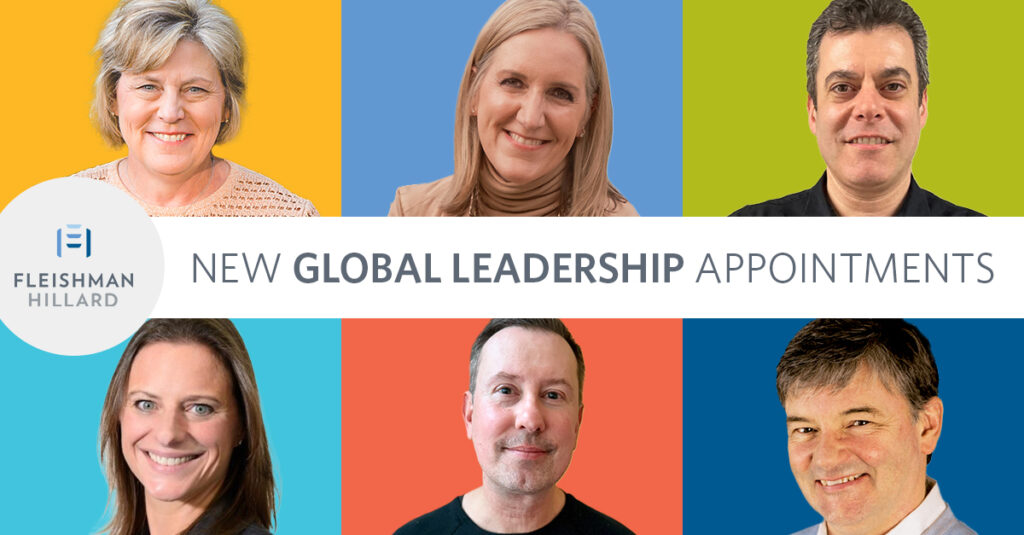
From top left: Moehlenkamp, Frager, Cohen, Howe, Germann and Mortell.
Article

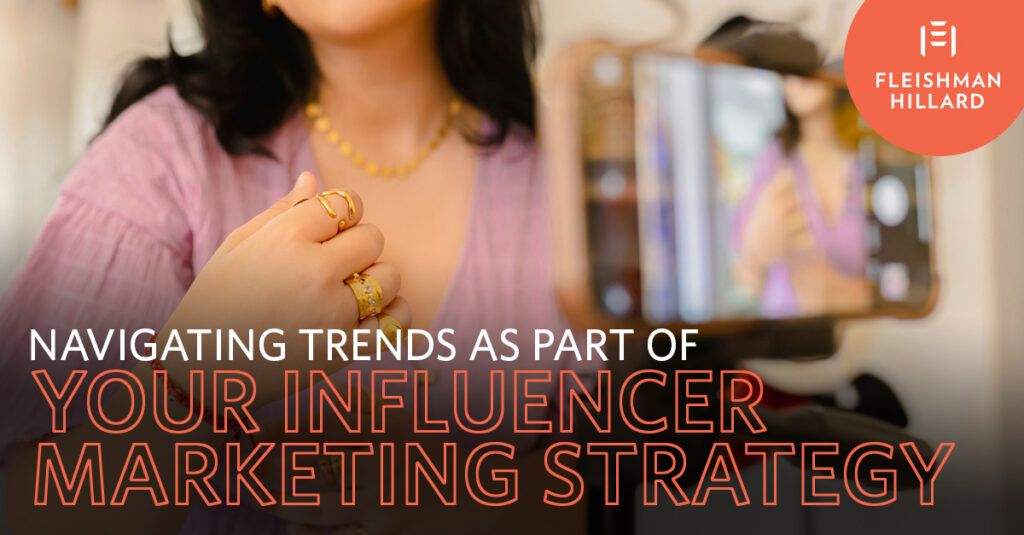
How to Navigate Trends as Part of Your Influencer Marketing Strategy 

November 14, 2024

“Get ready with me to…”, “Unpopular opinion:…”, “POV: you…” Consumers are sure to encounter a few of these phrases as they scroll their social feeds. Influencers have adopted a vernacular for speaking to audiences as part of the development of social trends, but with that vernacular may come high saturation and trend fatigue.

In the sea of sameness, how can a brand’s influencer content stand out? How does a brand know whether a trend is worthy of entering via its influencer partners, or if doing so will backfire?

Brands must know how to ride the trend wave without losing authenticity or instigating fatigue, especially within verticals like beauty, skincare, apparel and retail where this trend vernacular is the most prevalent. So how can brands capture their audience without prompting them to scroll? At FleishmanHillard we help brands break through the noise with creativity and precision.

Timing is everything

There is a sweet spot for hitting the right trends for your brand at the right time. Activate a trend too early and audiences aren’t ready and engaged but activate too late and it can come off as just another play with the trend already cycling its way out of the social conversation. It’s about moving at the speed of culture and activating the right trends to ensure brand relevance with the target audience.

It’s also important to note the difference between macro culture signals, which are larger movements based in cultural truths, and micro “of the moment” social trends, which are manifestations of the macro culture signals that cycle in and out of social conversation. Using tools to understand what your audience cares about from a macro level will help to uncover which related social trends are most relevant to jump into, at the right time.

Ground social-first programming in user behavior and audience data

Combining culture-forward content and engagement strategies with search and creator trends is key, but this is made more impactful with data. Ground your influencer programming in user behavior and leverage the precision of audience data to drive the most impact. FleishmanHillard uses a proprietary methodology to ensure an influencer’s audience aligns with the target audience we’re looking to reach.

Keep creativity at the center

Brief for authenticity. Brief your partners to not fall into the trap of worrying about keeping up with what’s trending and instead have them focus on what’s authentic to them, their content and their audience. In doing so, brands should insert themselves seamlessly into an influencer’s creative without contributing to a trend that’s perpetuating product or vernacular fatigue.

If brands encounter a social trend that is related to a piece of IP that is owned by an influencer or creator, such as a dance, sound or phrase, it’s important to be sure not to capitalize on or exploit their creativity. Instead, provided the source’s audiences align with the brand’s, consider going directly to them for a partnership.

FleishmanHillard operates at the intersection of culture, behavior and platform capabilities, marrying cultural trends, audience insights and influencer best practices to drive impact. By keeping creativity at the forefront with the precision on how, where and when to activate social trends within influencer content, brands can successfully navigate how to authentically activate trends and beat the scroll.

Article

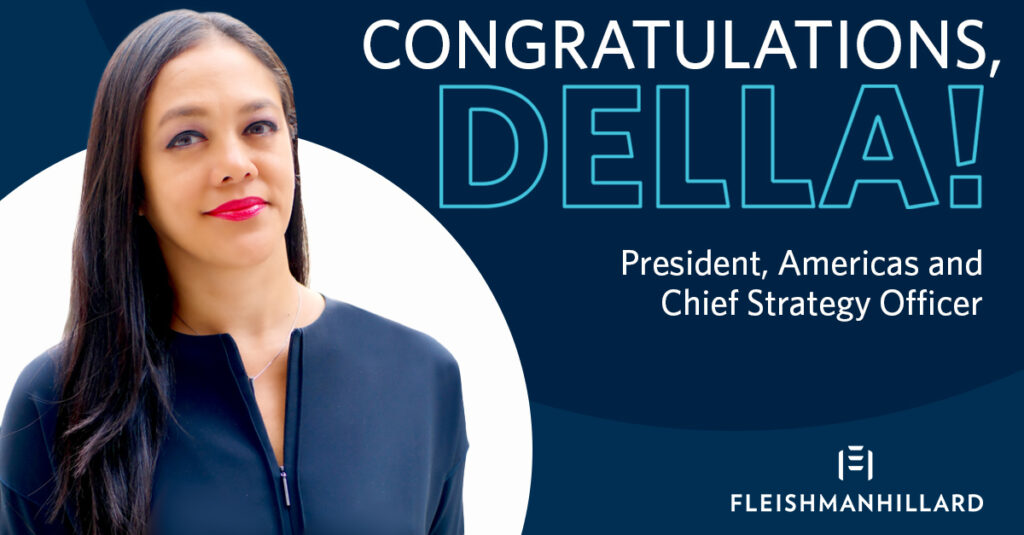
FleishmanHillard Appoints Della Sweetman President, Americas and Chief Strategy Officer

November 6, 2024

FleishmanHillard today announced the appointment of Della Sweetman to the role of president, Americas and chief strategy officer, effective immediately. In this position Sweetman will be responsible for the performance of the agency’s largest region and for driving enterprise-wide business transformation. She will report to J.J. Carter, who was promoted to FleishmanHillard president and chief executive officer on October 1.

“Della is the right person to step into this critical role leading our largest region, from which she will help drive our transformation,” said Carter. “She understands our agency’s unique strengths and brings operational rigor and growth experience. Della has proven effective in executing change within our organization, which has elevated our work and improved our competitiveness. We have the personal trust that comes from many years working together and will challenge each other to push the agency forward.”

The position is part of the firm’s core leadership team charged with the strategic direction and operational management of the agency. Sweetman will work closely with market leaders in the Americas to align strategies, investments and resourcing to support the needs of its clients and the transformative changes for the agency.  

“We have a foundation of excellent talent and expertise from which to grow and we have an enviable roster of clients,” Sweetman said. “I’m very much looking forward to partnering with our leadership and teams across the Americas to together strengthen our position in the region, while fostering a culture of agility, high performance and constant innovation across the globe.”

Sweetman added, “We’ve entered a time of great disruption for our clients and industry, and we aspire to evolve our solutions, service delivery model, the impact of our work and the experiences of our people. This is an energizing time to be at FleishmanHillard and to take on this role.”

Sweetman has been in the role of chief business development officer for the agency since 2016, when she helped shape a vision for a dedicated growth unit. She has also led the agency’s global Creative, Strategy and Planning practice. Prior to that, she was head of business development for the Americas, served as global client leader for one of the agency’s largest accounts, and was also the former general manager for FleishmanHillard in Southern California.

Article

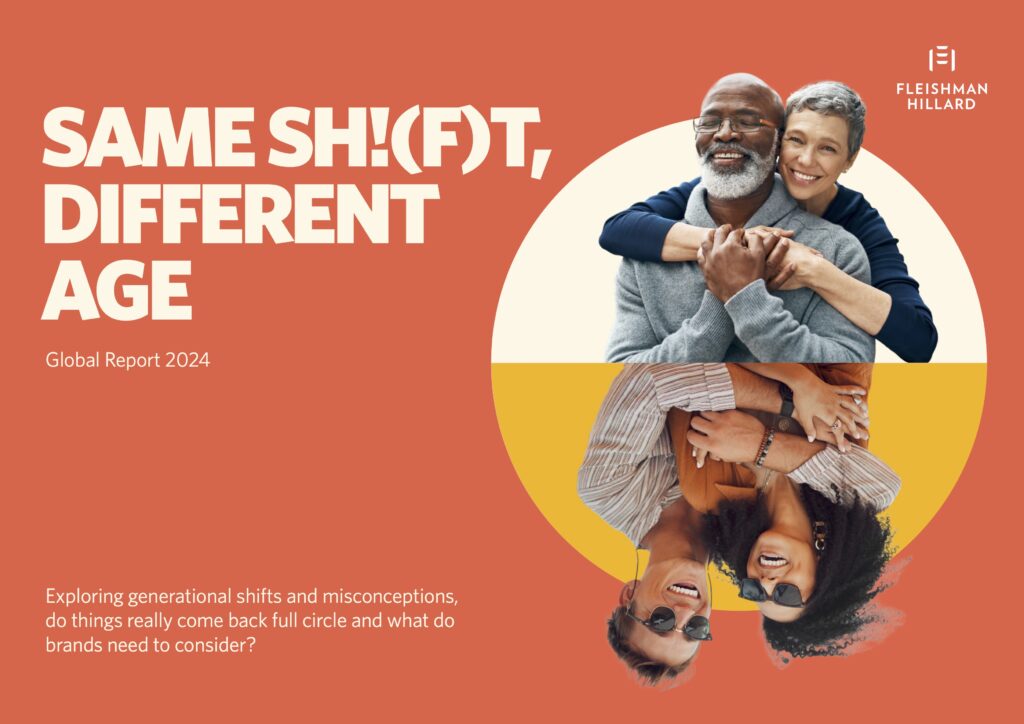
Same Shi(f)t, Different Age: new report on generational shifts  

October 24, 2024

FleishmanHillard’s Retail, Sports and Lifestyle’s Culture Unit has released “Same Shi(f)t, Different Age,” a new report that explores the evolving dynamics between generations and what brands need to know. 

In a landscape often marked by generational discord – highlighted by terms like “OK Boomer” – the report reveals that Gen Z, Millennials and older generations share more common ground than often assumed. As workplace stereotypes and age-related myths shift, the report details the shared values and interests that bridge these generational gaps.  

“Same Shi(f)t, Different Age” challenges outdated narratives and stereotypes, and offers actionable insights for brands to connect meaningfully with these diverse groups.  

Download the full report here.

Article

Responsible Business: Navigating Today’s Challenges and Opportunities

October 22, 2024

The role of business has evolved dramatically. In an era marked by wars in Europe and the Middle East, the rapid rise of generative AI, escalating natural disasters from climate change and shifting regulatory landscapes, the challenges facing companies today are unprecedented. As businesses strive to derisk global supply chains and adapt to evolving political and social sentiments, the need for responsible business practices is more critical than ever.

The question is: How do companies develop strategies that are responsive, compassionate and inclusive in this period of radical transformation?

Our new Responsible Business Leadership series tackles this question, and no one better to begin with than Alan Murray, the founding president of the Dow Jones Leadership Institute, which includes The Wall Street Journal CEO Council, as well as the CFO, CMO and CIO Networks.

In this interview we explored a wide range of responsible business topics including:

  • How businesses are defining what it means to be “responsible” in today’s environment and why leaders should aspire to lead in a responsible manner
  • Exploring the contrast between short-term earnings and long-term value creation
  • Balancing environmental and social responsibility against the demands on short-term growth
  • The impact of the upcoming U.S. election on business, geopolitics, supply chains and global trade 
  • How business leaders can stay out of political crossfires
  • The impact of Generative AI on the workforce 
  • How to manage risk from climate change and prepare for the regulatory environment
  • How business leaders can rebuild trust and reputation in a disruptive age, where corporate reputation is scrutinized by social media

Throughout our series, we’ll be exploring all aspects of responsible business, including:

The New Age of Stakeholder Capitalism

Business leaders today operate in a multi-stakeholder environment where the influence of customers, employees, communities and activists has expanded. More than ever before, stakeholders – not just shareholders – have an outsized ability to influence business outcomes, from brand boycotts to the backlash against environmental, social and governance (ESG) initiatives. In this new era of stakeholder economics, companies must adopt a more agile, multidisciplinary approach to leadership.

Leaders need to balance customers’ evolving preferences, employment trends, geopolitical shocks and regulatory uncertainty, all while maintaining profitability for shareholders. The rise of populism, global conflicts, climate pressures and economic volatility has made it clear: businesses that prioritize long-term value creation, rooted in a strong sense of responsibility, will not only survive but thrive.

How to communicate Responsibly in a Time of Transformation

With today’s challenges, business leaders’ communications must be both compassionate and strategic. Developing a communications strategy that is responsive to these shifts is no longer optional – it is a necessity. Responsible businesses must ensure their messaging is inclusive, values-driven and attuned to stakeholder sensitivities. In an age of social media, where missteps are magnified, authentic and thoughtful communication is key to preserving corporate reputation and trust.

Sustainability as a Core Pillar of Responsible Business

The climate crisis continues to intensify, with more frequent natural disasters, political headwinds and rising societal expectations pushing businesses toward greater accountability. Regulatory pressure is also mounting, with frameworks such as Scope 1, 2 and 3 emissions reporting demanding transparency around carbon, pollution, water use and power consumption. As companies adapt, there is a growing need to measure and mitigate the true costs of negative externalities, particularly those tied to environmental degradation.

Moreover, as generative AI becomes integral to business operations, the energy demands of this technology will challenge companies’ climate goals. AI requires immense computing power, which may increase emissions and complicate sustainability strategies. To remain responsible, businesses must innovate around these challenges, ensuring that technology adoption does not come at the expense of climate progress.

Employees as the Heart of a Responsible Business

Talent management is more challenging than ever. The workforce of today – and tomorrow – is deeply attuned to the values of their employers. In a world where hiring, upskilling and replacing talent are costly, developing a corporate culture that reflects responsibility and inclusivity is essential for attracting and retaining the best talent.

Leaders must also recognize that a one-size-fits-all approach is inadequate. Different generations and demographics within the workforce have varying expectations, and leadership must navigate these complexities to create an environment where all employees feel represented and empowered.

Supply Chain Resilience in a Fragmented World

Globalization has delivered significant benefits, but it has also exposed companies to risks. Today, geopolitical tensions, natural disasters and labor abuses – such as forced labor and child labor – are creating significant vulnerabilities within supply chains. As these issues become more visible through social media and investigative journalism, businesses must be proactive in ensuring their supply chains are ethical, sustainable and resilient to shocks.

A responsible approach to supply chains means prioritizing transparency, human rights and environmental sustainability across all operations. This may involve diversifying suppliers, localizing production or adopting more sustainable sourcing practices.

Navigating Regulatory Uncertainty and Emerging Geopolitical Shifts

With half of the world’s population going to the polls in 2024, the political landscape is poised for transformation. The outcome of the U.S. election, in particular, will shape global responses to climate change, trade and economic growth. Businesses must be prepared to navigate new regulations, anticipate changes in trade policies and engage with emerging political actors.

We are also witnessing the rise of private sector companies – such as Starlink – playing increasingly prominent roles in geopolitical tensions, alongside the declining influence of traditional institutions like the United Nations and the World Bank. This trend underscores the growing importance of the private sector in shaping global governance, and responsible businesses must embrace this role while safeguarding their license to operate.

Responsible Leadership in a Disruptive Age

In this time of radical transformation, business leaders must double down on their core values to ensure long-term success, profitability and growth. A values-driven approach will help create a protective “moat” that can fend off activist investors, proxy fights and rapid CEO turnovers. By embedding responsibility into every facet of their operations, businesses can protect their long-term viability, while remaining agile in the face of short-term challenges.

Leaders must navigate the contrast between short-term earnings pressures and the need for long-term value creation. As the scrutiny on ESG increases and the regulatory environment grows more complex, businesses must not only comply with new mandates but also push beyond them to foster genuine, impactful change.

Conclusion

In this age of transformation, responsible business is not just about mitigating risks – it’s about seizing opportunities to lead with purpose. From the rise of generative AI to the growing impact of climate change, companies that stay grounded in their values, while embracing innovation and agility, will be best positioned to succeed. Responsible leadership, rooted in sustainability, inclusion and long-term value creation, will define the next generation of business success.

Article

Recognizing the power of the LGBTQ Community in Advertising & Media with GLAAD

October 11, 2024

During Advertising Week in New York, FleishmanHillard hosted GLAAD’s Corporate Summit that discussed LGBTQ Representation in Advertising and Media. GLAAD is the world’s largest LGBTQ media advocacy organization, bringing together over 150 industry executives to share findings from its soon-to-be-released “Visibility Perception in Advertising” study.

The LGBTQ Community represents $1.4 trillion dollars in purchasing power in the United States ($4.7T globally). However, representation of the community remains disproportionately less in advertising and marketing campaigns. 

Study findings show that executives from the agency and advertiser side understand how important LGBTQ inclusion is for business.

Highlights include: 

  • Ninety percent of the industry says it’s very important to feature the LGBTQ community in advertising 
  • There has been a more than 80% increase since 2021 in the industry saying the LGBTQ community is very important to their business
  • Companies that have faced backlash are more than 18% more likely to recommend including LGBTQ people and scenarios in their/their client’s advertising compared to companies that have not faced backlash 

Key Speakers: Shameek Bose, partner and global lead for Responsible Business and Impact (FleishmanHillard); Tiffany R. Warren, EVP, chief diversity & inclusion officer (Sony Music Group); Brent Miller, senior director of global LGBTQ + engagement (Procter & Gamble); Mike Doyle, president and CEO (Ketchum); Ross Mathews, Emmy-winning host and pop culture expert (Drew Barrymore Show and RuPaul’s Drag Race)

Article

Communications Tips to Ensure Your Cybersecurity Awareness Month Training and Education Program is Making a Difference

October 9, 2024

When the calendars turn to October, most people in the U.S. start to think about Halloween. For many of us in the cybersecurity space, however, we think Cybersecurity Awareness Month! Though it has become a veritable “all you can eat buffet” of cybersecurity content, the U.S. government established Cybersecurity Awareness Month in 2004 as a collaborative effort between government and industry designed to ensure every American had the resources they need to stay safer and more secure online. As communicators, we can, and should, play a critical role in improving the overall security of our organizations by mitigating one of the most significant risks to any network – its users.

The need for education has never been greater. Consumer Reports found that almost 46% of American adults say they’ve encountered an online scam or cyber attack. Last year alone there were over 2.6 billion personal records compromised and trends point to this year being even worse with the number of compromises increasing by 14% already in the first half of the year. Nearly two thirds of all incidents that result in those compromised personal records are caused by human error, so doing what we can to reduce the risk around one of the most common causes of data breaches is imperative.

According to the data, education and training is having a tangible and positive impact on reducing the risk of data breaches. Studies show that the reporting rate of phishing has dramatically increased over the past few years with 20% of users reporting phishing emails in exercises studied in 2023 compared to 5% in 2016. A separate study found that 80% of U.S. adults have signed up for some form of two factor authentication, up from 76% the year prior, partially due to greater awareness of how they can combat common threats to their data. Making more users aware of the threats and what to do if they encounter suspicious activity equals safer networks and more secure data for everyone.

Cybersecurity threats have undoubtedly become more mainstream over the years with more people broadly aware of what they should be looking out for, but effective education and training clearly plays an important role as well – and there is no better time than Cybersecurity Awareness Month to focus on it. As they say – knowing you need something is only half the battle. Making sure what you’re doing to meet that need is impactful is the next step, a fact that was illustrated in a recent study that found while over 80% of people felt staying secure online was important, only 60% felt it was worth the effort.

Key considerations for communicators when planning cybersecurity training and education:

  • Campaigns should be multi-disciplinary and coordinated between communications, legal, technical and other key organizational security stakeholders.
  • Training shouldn’t stop and start with an annual, mandatory session but instead should be re-enforced and supported over time with incremental reminders and coaching.
  • Learning through failure can sometimes be the best teacher, whether that’s through test phishing emails or other tactics.
  • It’s important to strike the right balance between planning and executing a challenging exercise that helps participants learn, and designing an exercise that is overly punitive that ultimately frustrates participants.
  • Quality, engaging content that presents the most current and relevant information to users about the threats they should be on alert for is the foundation of any cybersecurity-focused training and education campaign.

An effective employee education and training program won’t reduce your cybersecurity risk to zero, but it’s absolutely essential to mitigating that risk given the growing and ever evolving threats users face today.

Article

The Evolving Role of CIOs & Its Impact on PR: Key Learnings from the GDS Group CIO North America Summit    

September 23, 2024
By Caitlin Teahan

In today’s fast-paced digital era, the role of the CIO has transformed dramatically. No longer limited to managing IT infrastructure, CIOs are now strategic leaders shaping the future of business through digital transformation, AI and innovation. At the GDS Group CIO North America Summit in September 2024, top leaders like Eric Firer, CIO North America for Kellanova, and Jean Olive, CIO for John Hancock, gathered to discuss this seismic shift and its implications for business strategy. Understanding this evolution offers PR professionals a significant opportunity to enhance how we communicate and create value for tech-forward clients. As PR professionals, our role is to not only understand this evolution but also to effectively communicate it to our clients and help them navigate the changing landscape.  

Here are the key takeaways from the summit that PR professionals should keep in mind when working with CIOs or in the innovation space:  

CIOs Are No Longer Confined to IT: They’re Strategic Business Leaders  

One of the summit’s dominant themes was CIOs’ evolving role in shaping overall business strategy. Today’s CIOs are not just tech managers, but central decision-makers involved in digital transformation, cybersecurity, data governance and customer experience. PR professionals must reflect this evolution in messaging, positioning CIOs as thought leaders who influence both their companies’ operational and innovation-driven goals. When crafting narratives, consider how technology initiatives align with business outcomes. For instance, when discussing a cybersecurity initiative, focus on how it protects the company’s reputation and customer trust. When talking about a data governance project, highlight how it improves decision-making and operational efficiency.  When crafting narratives, ensure that technology initiatives are tied to business outcomes—helping to drive ROI, efficiency and growth.  

Innovation Is About Problem-Solving, Not Technology  

CIOs at the summit emphasized that innovation is no longer just about adopting the latest technologies—it’s about solving real-world business challenges. PR teams should focus on this shift in messaging. When discussing a company’s tech solutions, concentrate on how CIOs leverage innovation to streamline operations, improve customer experiences and mitigate risks. Stories illustrating real-world problem-solving will resonate more with target audiences than generic tech updates.  

CIOs Seek Partners, Not Vendors  

The summit also highlighted that CIOs seek strategic partners, not just vendors. This presents an opportunity for PR professionals to position clients as collaborators who help CIOs achieve long-term success. Emphasize shared goals, partnerships and value-driven relationships, particularly when discussing transformative initiatives such as cloud migrations, AI integrations or cybersecurity improvements. Messaging should reflect the mutual benefits and long-term impact of these collaborations.  

CIOs Are the New Go-To Voices in Media  

With technology driving the future of business, CIOs are increasingly becoming the media’s go-to experts for commentary on innovation, cybersecurity and the digital landscape. As companies rely more heavily on technology to remain competitive, journalists turn to CIOs for their insights on how these shifts play out in real time across industries. This trend presents an invaluable opportunity for PR professionals to position CIOs as thought leaders. Whether it’s contributing to an industry publication or offering expert commentary on emerging trends, CIOs are now a voice the media wants to hear from. PR teams should actively seek out opportunities to get their clients’ voices into the conversation, positioning them as authoritative sources on technology’s role in shaping the future of business.  

Data-Driven Storytelling: A Must for CIOs  

CIOs make data-based decisions, and PR professionals must do the same when crafting stories. Data-driven storytelling is the practice of using data to inform and shape the narrative. Incorporating metrics, case studies and real-world results into your messaging will help to build credibility. Whether discussing the ROI of a new technology or showcasing the impact of a digital transformation project, always back up your narrative with concrete data that demonstrates value. This approach not only makes your story more compelling but also resonates with CIOs who are accustomed to making decisions based on data.  

Final Thoughts: Evolving PR Strategies for the Modern CIO  

The GDS Group CIO North America Summit 2024 underscored CIOs taking on more strategic roles in shaping business outcomes. For PR professionals, the lessons are clear: we need to adapt our approaches to align with how CIOs think, operate and innovate. By emphasizing partnership, leveraging data-driven storytelling and understanding the business impact of innovation, we can become trusted allies in the CIO’s journey.  

Moreover, with CIOs becoming the new front-runners in conversations around technology and business transformation, they need to be part of media discussions. PR teams have a pivotal role in amplifying these voices, ensuring that CIOs drive internal business decisions and lead public discourse on the future of business.  

This isn’t just about telling better stories—it’s about positioning clients as key players in the future of business transformation. As CIOs continue to take charge of innovation, PR professionals must be there to amplify their vision, articulate their strategy and demonstrate how they are driving real change across industries. 

Article

Football is Back – The Opportunities Ahead for Brands to be in the Culture Zeitgeist

September 17, 2024
By Maya Savino

With the NFL season underway, we’re set to see a continuation of where we left off last season – women in football shining just as bright as the athletes on the field. That expanded audience is not just tuning into games and learning what a touchback is, but is engaging with, and participating in, the spectacles that surround the games. From the pre-game fashion to the in-game viral moments, the sport has seen a transformation over the past year that’s also bringing new opportunities for brands to connect with a growing audience in new and meaningful ways.

We’ve already seen the largest above-the-line marketing campaigns go live to celebrate the start of the season, but the best is yet to come with both endemic and non-endemic brands alike vying for earned media attention, virality on TikTok and, of course, a coveted industry award or two. Here are a few trends we’re keeping an eye on while on the road to the Big Game this season, and how brands can connect with new fans in authentic ways:

Opportunistic Storytelling: The undertone to everything we’re watching this season will be the impactful use of quick-turn, creative-earned storytelling – brands capitalizing on a trending moment before it reaches virality and inserting themselves into the conversation. We saw this executed well last season when KidSuper immediately renamed the jacket Travis Kelce wore to “1989” an Easter egg for the Swifties, as Travis and Taylor confirmed they were dating. Another masterclass was the Heinz Ketchup and Seemingly Ranch execution, when Heinz quickly released a limited edition sauce after a fan account spotted Taylor Swift eating chicken tenders and “seemingly ranch” at a Chiefs game.

  • Takeaway: Earned-focused creatives can continue to help brands make immediate impacts – if brands are ready to capitalize when the moment presents itself.

Thinking Beyond the Tunnel Walk: First, we saw athletes turn a quick walk from their car to the locker room into a runway, spotlighting their own individualism via fashion. Then, we quickly saw brands take it over to launch new products and limited-edition merch, turning the photos into coveted social impressions with high-followed social accounts like BlitzFits, ProTrending and LeagueFits.

  • Takeaway: While the brand takeover of the tunnel walk will continue to grow in popularity, we’ll see more and more brands tapping into other football traditions – from the tailgate to the touchdown celebration.

Tapping New Talent: With a broader audience tuning into football on TV and across social, there’s an opportunity to expand brand partnerships beyond NFL (and college) athletes. Sure, Tom Brady will always drive clicks, but the women of the league – like Kristin Juszczyk, Claire Kittle and Olivia Culpo – can more authentically connect with the broadening audience that has football-adjacent interests.

  • Takeaway: If the start of the season is any indication, we’ll continue to see brands partner authentically with women in/around football to reach new audiences.

All Eyes on Flag: With Flag Football scheduled to make its debut at the 2028 summer games in Los Angeles, brands are well underway prepping for what’s slated to be the next big sport globally. While a healthy dialogue is already happening around whether NFL stars will be tapped for the 2028 summer roster, teams, leagues and brands are helping to grow the game’s visibility, from grants and equipment donations to working with Flag athletes like Diana Flores and Darrell Doucette.

  • Takeaway: Non-endemic sports brands should evaluate Flag Football as a strong potential avenue for authentic storytelling as the sport gains popularity rapidly in the U.S. and globally.

Wherever this season takes us, we know that more fans will be tuning in and ready to engage with brands that are creatively and authentically inserting themselves into the football cultural zeitgeist.

Article

Perfecting the Art of Listening (and Then Responding): Three Thought Starters for People Leaders

September 11, 2024

As a people leader, your relationships with team members and across your organization always are critical to fostering workplace culture, overcoming challenges, supporting employees and driving business continuity. More so during times of division.

And to do those things in what has been and will continue to be a disruptive 2024, you will benefit from not only taking a thoughtful and nuanced approach to sharing information but also listening.

As employees look to you for guidance, here are three recommendations to help ensure you harness the power of listening to navigate potential workplace division and maintain business continuity.

Also, check out our full guidance for people leaders, including actionable tips and real-life scenarios you may encounter, to help you effectively manage your teams throughout this divisive year.

#1: Sharpen Your Active Listening Skills

Right now, it’s essential that you work to understand what and how your team members are thinking and feeling by proactively checking in with them and asking what support they need.

Also, as a people leader, a worse offense than failing to check in with employees is failing to pay attention when you do, so be sure you show your people you care and are actively supporting them.  

#2: Be Prepared and Be Agile

While it’s important that you better understand how your team is thinking and feeling, it’s equally important you understand how to maintain control of conversations.

To help navigate difficult conversations, savvy communicators do the following:

  • Address the negative
  • Redirect the sensitive
  • Halt the inappropriate

While off-limits topics will depend on the organization’s policies, team culture, personal relationships and other factors, it’s generally safe to say people leaders should not engage in combative conversations about contentious political topics or allow those discussions to continue when observed.

#3: Look for the Best   

Being able to thoughtfully and appropriately respond to the situations described in our full guidance can drive business continuity and team cohesion throughout rocky periods. But you must not forget to also actively listen and search for opportunities to reinforce the things that are going well and the need for continued collaboration, respect and support among your team.

Most importantly, if you want to drive positive change among your team: walk the talk, lead by example and model the behaviors you want to see in others. View our guidance on how to best lead your team through a turbulent year, here.

FleishmanHillard’s Talent + Transformation team delivers business outcomes at the intersection of business and communications strategy. For more than three decades, we have helped industry-leading organizations align their employees behind their most essential business needs, including strategy, culture, transformation, and critical business and functional initiatives.