Employee Login

Enter your login information to access the intranet

Enter your credentials to access your email

Reset employee password

Article

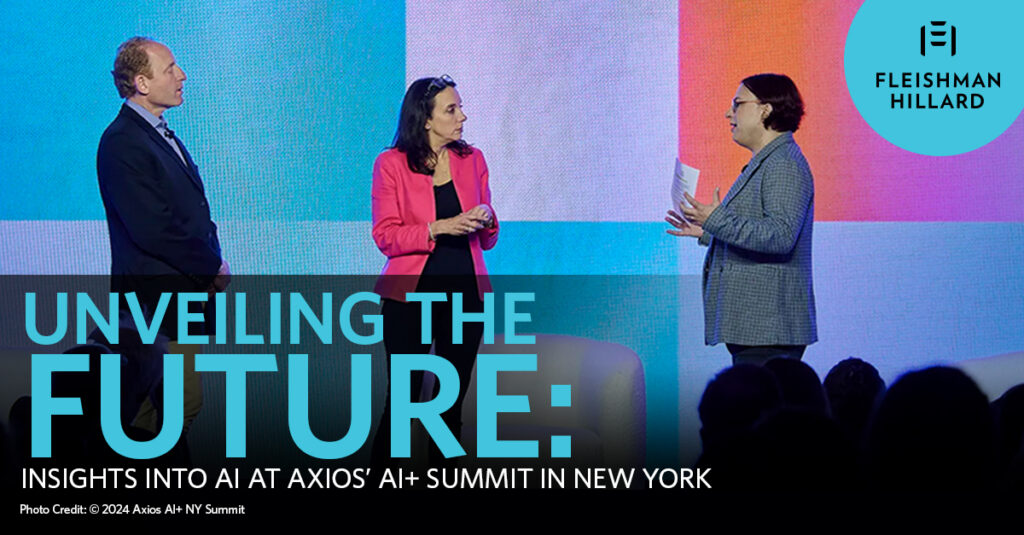
Unveiling the Future: Insights into AI at Axios’ AI+ Summit in New York

June 11, 2024
By Caitlin Teahan

This year’s New York Tech Week was abuzz with innovation and anticipation, with the Axios AI+ Summit event standing out as a pinnacle of cutting-edge advancements and thought-provoking discussions. Held in the vibrant heart of New York City, the event brought together industry leaders, pioneering researchers and eager enthusiasts to explore the latest trends and breakthroughs in artificial intelligence. From groundbreaking keynote addresses to interactive networking, the event was a testament to the relentless march of AI technology and its profound impact on various sectors.

Onsite at the event

The event lineup was rife with industry leaders from IBM, the Allen Institute for AI, Spotify, the NFL, celebrity partners such as Maria Sharapova, notable Axios reporters and numerous others in both the public and private spaces. Attendees had the opportunity to engage with Axios’ own cutting-edge AI software, delve into sessions focused on AI in creative industries such as influencer marketing and learn how AI takes harnessing the power of data analytics to the next level. Overall, the Axios AI+ Summit was a compelling and informative event, providing valuable insights into the current state and future potential of AI. It highlighted the vast opportunities AI presents while also addressing the critical challenges that need to be managed to ensure its benefits are widely and equitably realized.

Unanimous considerations

Across the board, speakers set an inspiring tone for the event, all of which leant into the transformative power of AI, emphasizing its potential to revolutionize industries. In addition to the broadly shared positives, speakers were in agreement on a few points of consideration, regardless of industry as their merits are universal:

  • Regulation is needed: AI systems require regulatory frameworks to ensure they operate within ethical and legal boundaries, which necessitates human oversight and governance. This topic was particularly pertinent when addressing creative content. The creation and dissemination of AI-generated media needs careful monitoring to prevent misuse and to uphold intellectual property rights.
  • The human element is irreplaceable: The unique qualities of human intuition, empathy and ethical judgment are essential and cannot be fully replicated by AI. Making human involvement crucial in the deployment of GenAI in areas where nuanced understanding and moral considerations are paramount, will pave the pathway for strong standards.
  • Efficiency is one of the clearest use cases: While AI can enhance efficiency in various tasks, the strategic application and integration of AI systems still depend on human decision-making and insight. This has the potential to maximize organizational goals.

Final note

The consensus was clear: While AI presents significant challenges, it also offers unparalleled opportunities for innovation and growth. As the curtains fell, it was evident that the future of AI is bright, and its journey is just beginning. New York Tech Week once again proved to be a fertile ground for fostering innovation and forging connections that will drive the next wave of technological advancement.

Article

TikTokTech: At RSA Conference, AI Dominates the Security Conversation

June 4, 2024
By Phoebe Bowe

The annual RSA Conference is one of the biggest events in the cybersecurity industry. Tens of thousands of security professionals, business leaders, academics and government leaders from around the world attended the show in San Franisco to discuss the latest trends and developments in security.

Unsurprisingly, AI dominated the show for the second year in a row. According to Deloitte, the AI cybersecurity market is expected to hit $102.78 billion by 2032. Based on the number of AI solutions and integrations announced at RSA, the sector is certainly growing quickly, spurred on by an increasingly complex cybersecurity landscape. According to Cisco data, more than half of organizations have experienced a cybersecurity incident in the past year and 73% believe they are likely to experience a security incident in the next two years. The security industry is betting big that AI will help them mitigate this risk and three AI trends stood out.

1. Leveraging AI for Enhanced Prevention and Advanced Security

At the show, many security companies released AI-powered solutions and capabilities designed to augment cybersecurity workers and traditional security measures. Some AI solutions can now detect software vulnerabilities before they are exploited, for example, or detect and respond to suspicious network activity before any data is compromised. These capabilities enable companies to respond to incidents and remediate vulnerabilities faster, mitigating cyber threats more efficiently.  

AI is unlocking a new level of proactive security. Companies can more easily predict and prevent threats, versus responding to attacks. In an evolving threat landscape, detection, response and patch time is critical to preventing a headline-generating data breach.

2. Securing AI Deployments in the Race for Adoption and Innovation

Companies are incorporating AI across their businesses and tools as we enter a new phase of digital transformation. Business leaders are in a hurry to deploy AI so they can find efficiencies, make employees more productive, get more value from their data and innovate faster. If they don’t implement AI effectively, they risk falling behind competitors.

There is also a risk to moving too quickly, however, as AI tools could introduce new security and data protection risks. Organizations need comprehensive data governance to avoid sensitive or protected data from being fed into AI models, which could violate data privacy laws or other industry regulations. Too lax use of third-party AI tools could also increase risk of a data breach. On the other hand, if companies place too stringent restrictions on their employees’ AI use, they could miss out on key insights and opportunities for innovation. Data and security teams have the challenge of keeping data secure while also enabling experimentation and fostering innovation within their organizations.

3. AI is Supercharging Security Threats

Security professionals aren’t the only ones using AI to their advantage. Cyber experts warn that AI will make threat actors more efficient and better at perpetrating attacks —– exacerbating the threats security professionals are already racing to outrun. Supercharged by AI, the industry will see more sophisticated phishing attacks that involve voice cloning, deepfakes that can be used for blackmail and a generation of cyber attackers that can use AI bots to help them execute better attacks.   

Amidst these evolving threats, the stakes have never been higher for companies. The average cost of a data breach increases every year and reputational damage of a breach can threaten brand credibility. Compounding these challenges, according to the World Economic Forum, the global cybersecurity talent shortage could reach 85 million workers by 2030. AI can help fill gaps and address the issue of burnout among short-staffed security teams. Industry leaders agree that AI will never replace human security workers, but it can help support them and enhance their capabilities.

AI-augmented solutions can’t come soon enough. As security professionals continue to integrate AI into solutions, we’ll be keeping an eye out for where this technology goes next.

Article

Generative AI in the Newsroom: Friend or Foe?: A Panel Discussion Hosted by FleishmanHillard

June 3, 2024

FleishmanHillard recently hosted a timely and deeply illuminating panel discussion on the impact of Generative AI (GenAI) in modern journalism. Held at the Axel Springer Haus in downtown New York City, the event brought together senior newsroom leadership from leading publications, including AdWeek, Axios, Business Insider, Harvard Business Review and POLITICO. Moderated by Ephraim Cohen, FleishmanHillard’s global managing director of Media, Platforms and Storytelling, the panel addressed the challenges, fears and opportunities GenAI presents for newsrooms worldwide. The event attracted an audience of more than 40 attendees, including senior communications professionals from top-tier companies and clients like Novo Nordisk, Meta and Samsung, among others.

To accompany the panel discussion, FleishmanHillard also published a study on the current state of GenAI in the newsroom – from the early adopters and the critics to the initial successes as well as the emerging cautionary tales.

Panel Highlights

The discussion featured a stellar lineup of panelists who provided deep insights into GenAI’s evolving role in journalism including:

Aja emphasized the importance of distinguishing between commoditized content and unique reporting delivered by expert journalists. She highlighted how GenAI can streamline workflows but stressed the necessity of maintaining trust and community:

Trust is at the center of what we do. We are reorienting our newsroom and business around subject matter experts that can deliver something specific to them, their experience, and their skillsets. If we orient around trust and expertise, we are confident we can weather the technological storm that is coming.”

Cadie shared how Business Insider is leveraging GenAI to enhance productivity, such as using AI to digest meeting notes or news reports to decide on story depth. She also highlighted AI’s role in transcribing podcasts and shows, freeing journalists to focus on more critical tasks. Cadie’s approach reflects a balance between innovation and journalistic integrity:

“No one likes change, and the integration of Generative AI is a big change. One of the blessings of working with journalists is that they are naturally skeptical of everything, so we trust them to be careful with new tools. As the executive editor, I try to show them the possibilities of how gen AI tools can make their lives easier and allow them to focus on the things they want to be doing.”

Ryan highlighted the need for journalists to understand the craft of journalism before integrating AI tools into their work. He cautioned against giving AI tools to junior reporters without proper training. Ryan also pointed out practical uses of AI in generating drafts for complex advertising content. His thoughts reflected a careful and measured approach to AI adoption:

“Retaining readers’ trust is fully in our control, regardless of Generative AI. AI used to be a dirty word in the ad industry. But now, even if we tried, we couldn’t not cover it.”

Francesca focused on the importance of transparency in AI integration. She discussed how Politico is using AI to do things like generate bill summaries and enhance storytelling while maintaining transparency with their readers. Francesca’s emphasis was on building and maintaining trust through open communication:

“When we think about building trust and protecting against erosion of that trust and accuracy, we have to be self-aware that we are not the single voice. The integration of Generative AI into our storytelling strategies brings about questions. How did we get the reporting? Who was involved? So the more we can focus on transparency, the better.”

Adi shared Harvard Business Review’s investment in developing a proprietary AI model to ensure accuracy and reliability. He highlighted the duality of AI as both a powerful tool and a source of concern. Adi’s insights captured the cautious optimism surrounding AI’s future in journalism:

“Part of the reason we’re investing in generative AI internally is because it’s going to be table-stakes. Another part is because existing LLMs (Large Language Models) are error prone. If we can build a model that doesn’t hallucinate and is based on our own content, then we have a clear alternative to big tech platforms. But obviously, trust is everything.”

Key Learnings

  1. Trust and Expertise Are Crucial: Emphasize the irreplaceable value of experienced journalists to maintain reader confidence amid GenAI integration.
  2. Transparency Enhances Credibility: Ensure clear communication with readers about GenAI’s role in reporting processes to build and maintain trust.
  3. Balanced Integration of AI: Utilize GenAI to enhance productivity while maintaining human oversight to ensure accuracy and quality.
  4. Guardrails and Ethical Considerations: Implement strict measures to prevent GenAI errors and prioritize ethical considerations, including privacy and misinformation.
  5. AI as a Tool, not a Replacement: View GenAI as a supportive tool that enhances, rather than replaces, the core human elements of journalism.
Article

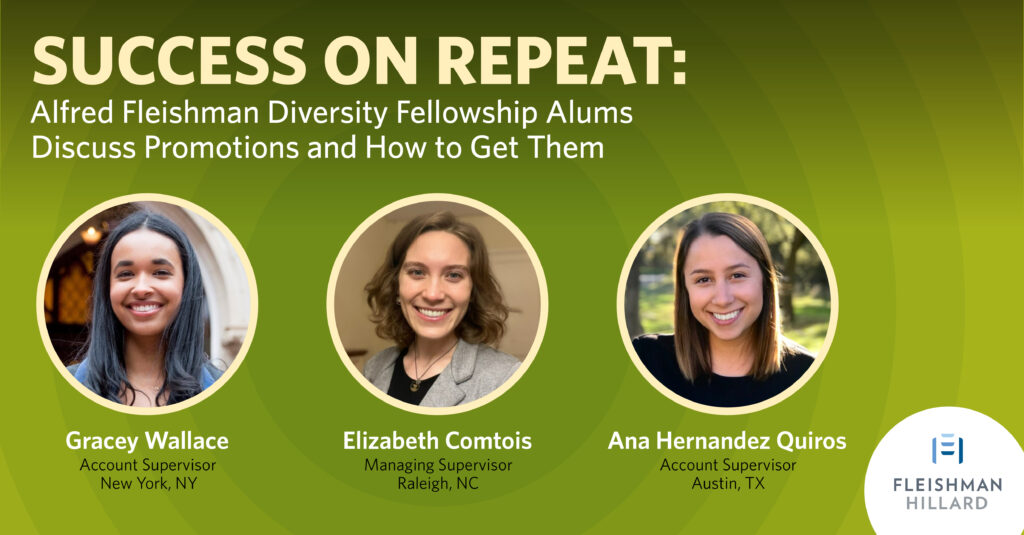
Success on Repeat: Alumni of the Alfred Fleishman Diversity Fellowship Discuss Promotions and How to Get Them

May 29, 2024
By Jessica Millett

“How do I get promoted?” is a question that most people ask themselves at least once throughout their careers. For participants of the Alfred Fleishman Diversity Fellowship, the answer is not far away. The Fellowship Alumni class is a beacon of success, with numerous talented PR and communications leaders from diverse backgrounds and lived experiences flourishing today. They’re at the forefront of client work, spearheading innovative campaigns and consistently making it to the firm’s promotion list year after year. We spoke to some of our recently promoted former Fellows to learn more about their path at FleishmanHillard and the factors that lead to their continued success.

“Do good work and let the work shine.”

How Gracey Wallace connected the right dots.

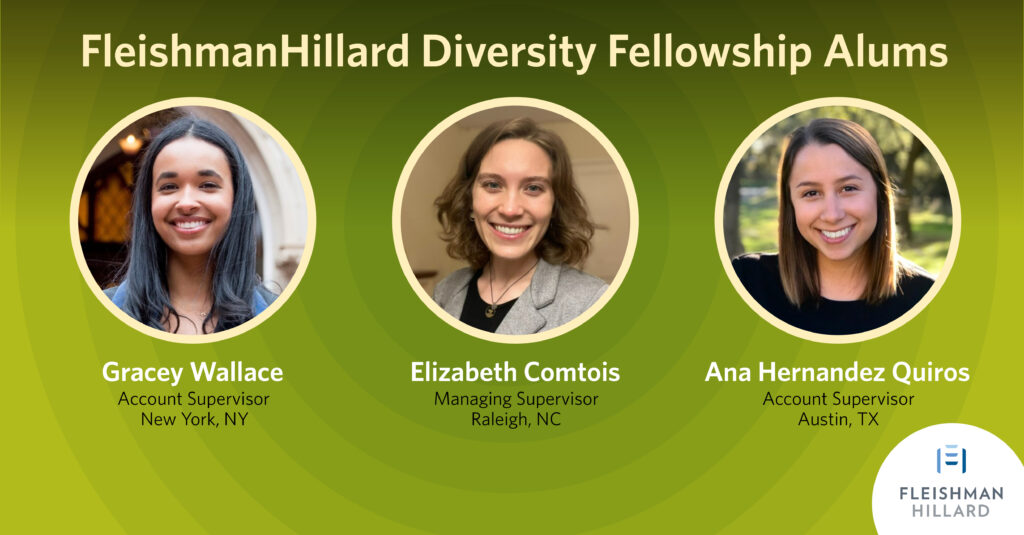
Beginning her Fellowship in 2020, Gracey Wallace, an account supervisor, has earned three promotions and now helps hire and manage the same Fellowship class she once belonged to. Her journey has been a testament to the power of continuous learning and personal growth. Although she previously studied liberal arts, she now leads campaigns for some of the biggest names in the healthcare and pharmaceutical industries. From managing patient recruitment and video shoots for one client to creating and broadening awareness of stigmatized conditions for another, her work shines bright.

As a Fellow, she remembers learning a lot and was initially discouraged by the number of edits she received on first drafts.  Still, she persisted. She learned how to take feedback and learn from it without taking it personally. She stayed curious and open – always looking for the broader context that would help her connect the dots. She credits these traits, along with being responsive, communicative and visible, for helping her to stand apart as she earned her first promotion. For her subsequent promotions, she credits relationship building and forming connections with people who are in the rooms she’s not in. “I’ve been collecting a group of people that are my cheerleaders. Communicating what I want and where I want to grow.” 

“See growth as a ramp, rather than a series of steps.”

For Elizabeth Comtois, asking the right questions is a must.

Elizabeth began her Fellowship in 2018 and has since earned four promotions. As a managing supervisor, she balances a variety of clients from the healthcare, technology and consumer goods industries and philanthropic and social impact foundations. In college, Elizabeth was always passionate about diversity, equity and inclusion but worried that she wouldn’t be able to integrate it with her desire to work at a large agency. At FleishmanHillard, she found a way to do both. As a Fellow, she strengthened her ability to lead discussions on vulnerable topics while growing her responsibilities on key accounts. Her first promotion was a “blur,” as she calls it, but some of her memories have stuck. Starting with the system she created to help manage her tasks and communicate with her team. Another core memory she shared was all about the messages she told herself. “I can do this. I can insert my perspective.” These words helped boost her confidence and made her less reactive and more proactive. In time, her team took notice of her contributions, and her first promotion was in the bag.

For promotions two, three and four, she used similar tactics. Each step along the way, she took on more responsibilities and ownership of her work. She asked questions about each project: “What are the client’s business goals? Why does the work matter? And how can I deliver impact for my client?” As she learned to think broadly about her work, her confidence grew, and soon, she began to ask a new set of questions. “Who can I support? What are the team’s skills, and how can I leverage them? What are my strengths and passions, and how can I align my work to meet them? Little by little, question by question, this ramp led her forward.

“Openly voice your goals, opportunities and challenges.”

Ana Hernandez Quiros sends a message with her words — and actions.

Ana joined the Fellowship program in 2020. By 2023, she’d moved into an account supervisor role, her third promotion. She found that what she enjoys most is telling the bigger story and helping the brands she supports live up to it. She’s supported clients across multiple industries and areas of expertise, and today focuses on the public, financial and professional services sectors. Soon after she began, she found a role on the FleishmanHillard Hispania team. As she put her multicultural marketing skills to work, she embraced the opportunity for ownership, partnering with accounts outside of her local office and helping lead client relations even as a Fellow. “My first promotion felt natural because I was already playing a higher role.”

Like Gracey, Ana found the power in letting her work speak for itself and used her voice as well. Ana regularly communicated with her manager and informed her of her progress and challenges. This gave her manager the tools they needed to advocate for her promotion. She shared, “It was less about seeking the role but excelling in the role I was in. I embraced the work to help find opportunities for organic growth and build trust with clients.  Meanwhile, I had ongoing conversations with my manager and account leads about my short and long-term goals.”

Gracey’s, Elizabeth’s and Ana’s stories are powerful, but they represent just 15% of the total number of former Fellows who received a promotion in 2023. We have more of these stories. Their success and the success of the Fellows who follow them is more than an incident—it is a pattern that we want to keep repeating.

The Alfred Fleishman Diversity Fellowship Program is a North America-based internship where talent from diverse backgrounds can combine their PR, Communications and Media talents with their passion for diversity and inclusion. Our teams across the United States and Canada hire, mentor and prepare Fellows for entry-level roles at FleishmanHillard. If you want to start your career with us, you can learn more about openings by visiting our Join Us page.  

Article

EU climate policy: The new borderlines?

May 27, 2024
By Maximo Miccinilli

The race to net-zero by 2050 has fundamentally shifted. What was once a distant goal is now a pressing mandate, and the landscape of climate change policy is being redrawn as we speak.

The post EU climate policy: The new borderlines? appeared first on European Union.

Article

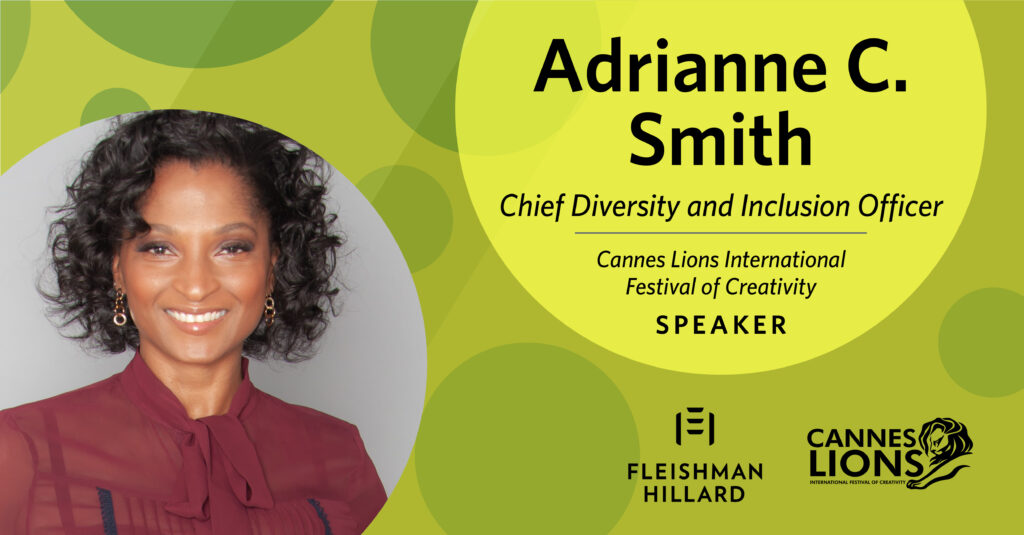
FleishmanHillard’s Adrianne C. Smith to Speak on “Don’t Believe the Hype — DEI Will Never DIE” at 2024 Cannes Lions International Festival of Creativity

May 21, 2024

What: “Don’t Believe the Hype — DEI Will Never DIE” session

When: Tuesday, June 18, 2024, 2:15 to 2:45 p.m. CET

Where: 2024 Cannes Lions International Festival of Creativity main stage

FleishmanHillard’s Adrianne C. Smith, chief diversity and inclusion officer, will take to the main stage of the 2024 Cannes Lions International Festival of Creativity on June 18, 2024 at 2:15 p.m. CET to share her thoughts on the state of DE&I. Smith’s keynote speech will discuss the myth that DE&I efforts are obsolete and explain why they’re more vital than ever.

The festival takes place in Cannes, France from June 17 to June 21 and invites industry professionals from all over the world to celebrate groundbreaking and meaningful creativity.

More information here.

Article

How to Mitigate Brand Safety Risk and Contract Influencers with Confidence

May 17, 2024
By Liz Hawks

“Texas AG sues Instagram influencer for giving ‘bad health advice’”

“Unpacking the child abuse case against YouTube influencer”

“Influencer axed by [sponsor] for violent comments about children”

“Racist Tweets resurface after TikTok influencer’s wedding”

Ripped from the headlines, these are just a few real-world examples of the inherent risk that comes with putting your brand in the hands of human beings to promote it. Sometimes they make mistakes. Sometimes those mistakes are years old and are unforgiveable but weren’t surfaced before the contract was executed. Sometimes headlines like these scare marketers from working with influencers altogether. But in 2024, turning away from influencers isn’t the answer. It’s where your audience is looking for inspiration and information. They are simply too powerful a channel and promotion partner. Rather, brands need to develop plans to help them continue to confidently contract the right influencers and mitigate risk.

In 2024, brand safety influencer vetting must evolve to additional layers. Brands need to ask themselves:

  • Are you comfortable working with an influencer who has posted about global or domestic political issues? Or about their personal religious beliefs?
  • What if they have posted favorably (or unfavorably) about Trump? About Biden? Kennedy (RFK Jr.)? Or other politicians and/or their platforms? How will your audience view those posts?
  • Does an influencer’s personal stance on vaccines or other health issues give you (or your audience) pause?
  • If an influencer lives in a state where marijuana is legal, and has posted about personal use, do you consider them brand safe?

World issues, political campaigns and government policies are permeating discussions among influencers and creators who have platforms and audiences looking to them for their authentic opinions on current affairs. The pendulum of audience expectation can swing with followers sometimes looking to influencers to use their clout to voice support for or against an issue, and at other times wanting influencers to “stay in their lane” and keep their social content focused on their niche or vertical, not interjecting a personal point of view about world matters.

Regardless, brand safety vetting has only expanded as sponsors scrutinize just how neutral they want to keep their partnerships, and wrestle with identifying exactly where their thresholds lie. Influencer selection and activation without rigorous brand safety vetting in these expanded territories can lead to a reputation problem for a brand if a sponsored influencer’s personal leanings incite the brand’s base or acquisition target.

This begs three key questions of marketers looking to engage influencers:

  1. How can our brand build appropriate and bespoke evolved safety vetting guidelines to ensure reputation protection while continuing to meet audience expectations, and without censoring the authentic voice of the creator?
  2. How do our publicly stated values align with how the safety guidelines are written?
  3. How can we mitigate risk after beginning a partnership with an influencer who may use his/her/their platform to share personal opinions that inadvertently reflect negatively on us as the brand sponsor?   

Data plays a, if not the, critical role. At FleishmanHillard, we review an influencer’s historical content to understand how it does, or doesn’t, align with a brand’s safety standards. We also use audience data to ensure alignment in areas like politics, social issues or policy leanings and make certain the brand’s customers or social followers and the influencer’s followers are in sync. Data science can’t eliminate the need for human analysis for context and tone. And tools alone can’t judge whether an influencer’s personal leanings jibe with a brand’s values. But as with most things influencer related, this equation blends art and science.

And remember safety vetting isn’t just for influencer discovery. It’s important to work to mitigate risks to ensure a continuity of brand safety pre-, during- and post- partnership. At FleishmanHillard, we work with clients to build custom playbooks for how to handle various levels of potential influencer-created issues from breaching a contract to breaking a law.

Risk doesn’t stop at the conclusion of a campaign. After a contract term is complete and the influencer is no longer in a live partnership with the brand, there may still be an association between influencer and brand in the mind of the audience. If the influencer creates an issue at this stage, the brand has little control. But consumers may start a conversation about the affiliation between the two parties, or even reach out to customer service to complain about the brand having worked with an influencer.

Influencers are human beings who sometimes make mistakes or have previously demonstrated unsavory behavior. Today’s hyper-polarized world presents additional inherent risk. But influencer marketing is also business critical. Brands who are not prepared with proactive and reactive plans for mitigating inherent risk are leaving themselves exposed to become the next “ripped from the headlines” mention.

Article

Unveiling the Ascendance of Private Markets: A Gateway for Asset Managers to Attract High Net Worth Investors

May 15, 2024
By Mokka Mok

In recent years, the private markets landscape has experienced a remarkable surge, capturing the attention of asset managers around the world. This flourishing trend has paved the way for the financial industry to explore new avenues for growth, with private markets becoming an enticing domain for high net worth investors seeking investment opportunities with relatively low market correlation.

In our recent report “The Future of Asset Management in Asia”, the majority of investors (42%) are most concerned about slow global economic growth or even a downturn. In response to these uncertainties, nearly one-third of respondents (29%) plan to shift their investments towards lower-risk options, and there is a growing interest in diversifying portfolios. Investors are now showing enthusiasm for private market investments, particularly in private equity funds (15%) and private credit funds (15%). Respondents believe that these alternative investments can enhance and diversify their returns and helping mitigate overall portfolio risks associated with economic downturns.

The shift towards private markets

1. Enhanced returns and diversification

Amidst a volatile and uncertain global economy, investors are increasingly drawn to private markets due to the potential for enhanced returns. Private markets and alternative investments tend to outperform traditional asset classes over the long term, providing investors with a chance to optimize their portfolio performance. Additionally, private markets offer diversification benefits by reducing exposure to public market fluctuations, making them an attractive proposition for high net worth individuals seeking to protect and grow their wealth.

2. Access to exclusive investment opportunities

Private markets grant access to unique investment opportunities that are not readily available in public markets. This exclusivity is a major allure for high net worth investors, as it enables them to invest in promising startups, venture capital funds, real estate projects, and private companies with significant growth potential. By participating in these early-stage investments, individuals can capitalize on the success of innovative enterprises and potentially realize substantial returns.

3. Long-term investment horizon

Unlike public markets, which are often driven by short-term speculations and market volatility, private markets facilitate long-term investment strategies. High net worth investors are attracted to the private market’s ability to generate value over an extended period. The relatively illiquid nature of private investments encourages disciplined, long-term thinking, aligning with the goals of many high-net-worth individuals who prioritize wealth preservation and sustained growth.

Reaching out to high net worth investors

1. Establishing strategic partnerships

Asset managers can leverage their existing networks and forge strategic partnerships with wealth management firms, family offices, and other financial intermediaries. Collaborating with these entities enables access to their pool of high net worth clients and facilitates the promotion of private market investment opportunities. By providing comprehensive education and tailored investment solutions, asset managers can position themselves as trusted advisors capable of meeting the unique needs of affluent investors.

2. Thought leadership and education

Educational initiatives play a crucial role in attracting high net worth investors to private markets. Asset managers should invest in thought leadership content to demonstrate their expertise and provide valuable insights into the advantages and intricacies of private market investing. Webinars, whitepapers, seminars, and conferences can be utilized to educate investors about the potential benefits, risks, and strategies associated with private market investments, ultimately building confidence and fostering engagement.

3. Technology and digital platforms

Harnessing the power of technology and digital platforms can significantly enhance the outreach efforts of asset managers. Online portals, mobile applications, and user-friendly interfaces can streamline the investment process, improve transparency, and provide real-time updates to investors. Leveraging digital tools also allows for efficient communication, data analysis, and reporting, enabling high net worth investors to monitor their investments effectively and make informed decisions.

As private markets continue to ascend, asset managers have a unique opportunity to tap into the growing appetite of high net worth investors. By highlighting the benefits of private market investments, establishing strategic partnerships, providing education and thought leadership content, asset managers can position themselves as trusted advisors capable of meeting the sophisticated needs of affluent individuals. By embracing technological advancements and digital platforms, firms can further streamline the investment experience, ultimately fostering long-term relationships with high net worth investors in this thriving landscape.

Article

Educate, Don’t Advocate: The Why and How of Civic Engagement at Work

May 14, 2024

U.S. Version: May 2024

The Takeaway

As the United States faces one of the most politically polarizing presidential elections in recent years, organizations can benefit from shoring up a healthy internal climate and prioritizing business continuity now ‒ ahead of potentially divisive events that might fracture cultures and teams or disrupt business operations.

A Healthy Outlet for Civic Engagement Can Make a Difference

Help employees stay focused on shared goals at work through civic engagement programs that aim to educate (not advocate). Keep in mind:

  • Non-partisan support for democratic processes can help organizations and their employees navigate a challenging political climate more positively and constructively.
  • To weather potential disruption and division in the workplace most effectively, organizations should plan ahead and take steps to promote positive civic engagement ahead of potentially disruptive events.

Three Ways to Support Democratic Processes

Organizations can — and many already do — support employees’ civic duty by offering time off, providing information/resources and encouraging them to engage in democratic processes. Here’s how to activate:

1. Time. Organizations can support the process by ensuring employees have the time they need to vote. Federal laws don’t require that employers grant time off to vote, state and local ordinances vary, and time-off offerings depend on business needs. But organizations can offer time to vote by:

  • Encouraging employees to talk to their managers to ensure they can participate in the election process
  • Offering PTO hours, closing for the day or dismissing employees early to allow time to vote. (Organizations that operate in multiple states should be mindful of state and local variances to ensure consistent access, e.g., consider whether employees in states with mail-in voting have access to the same amount of time off as those without it.)

2. Information and resources. Organizations can encourage employees to seek out authoritative, verified sources of information, especially those that have been through editorial reviews. By providing access to resources detailing voting procedures by state as well as information about which items appear on the ballot, an employer can be seen as a trusted source of accurate and impartial information.

Other measures include:

  • Helping employees register to vote and educating them on smart voter practices and preparation leading up to elections.
    • Posting signage with information on how to register and vote
    • Making registration forms available in common areas
    • Hosting a voter registration drive
  • Launching an internal website or educational campaign aimed at getting out the vote
  • Curating a list of third-party, independent resources and making it available to employees, for example:
    • Secretary of State websites
    • County Board of Elections websites
  • Aligning with non-partisan voter advocacy groups that offer insight and guidance.

3. Encouragement. Organizations have an opportunity to reiterate to employees that, as U.S. citizens and regardless of political positions, voting is their civic duty. Senior leaders can set the tone by underscoring the importance of voting and instilling a sense of confidence in its power. Consider:

  • Sending a note highlighting the importance of education, registration and voting
  • Aligning voting and civic engagement to company values
  • Sharing a leader’s personal voting plan — and inviting others to do the same
  • Timing outreach around ongoing civic events such as conventions, debates and National Voter Registration Day on Sept. 17.

Whatever level of encouragement you provide, proactively communicate — across a variety of channels and methods — all the measures your organization is offering to help employees exercise their right to vote by:

  • Helping them register to vote
  •  Prompting ballot reviews  in advance of the election
  • Making a plan to get to the polls and vote

Be Aware of the Potential for Disruption

As you empower employees to engage in democratic processes, it’s likely that politics may enter workplace. Equip your organization to weather this period and maintain business continuity by embracing a preparedness mindset. Monitor the following dates for the 2024 U.S. election cycle events, which present added potential for impact on employees or your business.

  • July 15-18: Republican National Convention (Milwaukee, WI)
  • Aug. 19-21: Democratic National Convention (Chicago, IL)
  • Sept. 16: First Presidential Debate (San Marcos, TX)
  • Sept. 25: Vice Presidential Debate (Easton, PA)
  • Oct. 1: Second Presidential Debate (Petersburg, VA)
  • Oct. 9: Third Presidential Debate (Salt Lake City, UT)
  • Nov. 5: Election Day

What’s Next

Provide a positive outlet for action and participation by evaluating, enhancing and proactively communicating your organization’s current and potential measures to promote healthy civic engagement now.

For more guidance, check out these resources on leading teams through a turbulent time:

The political landscape and related employee sentiments are changing daily and could impact your company culture and reputation, internally and externally. While these recommendations are tailored for the United States, democracy is on the ballot worldwide this year, so your organization may be called on to support democratic processes globally. Our Public Affairs and Talent + Transformation experts remain available to discuss these emerging issues.

Article

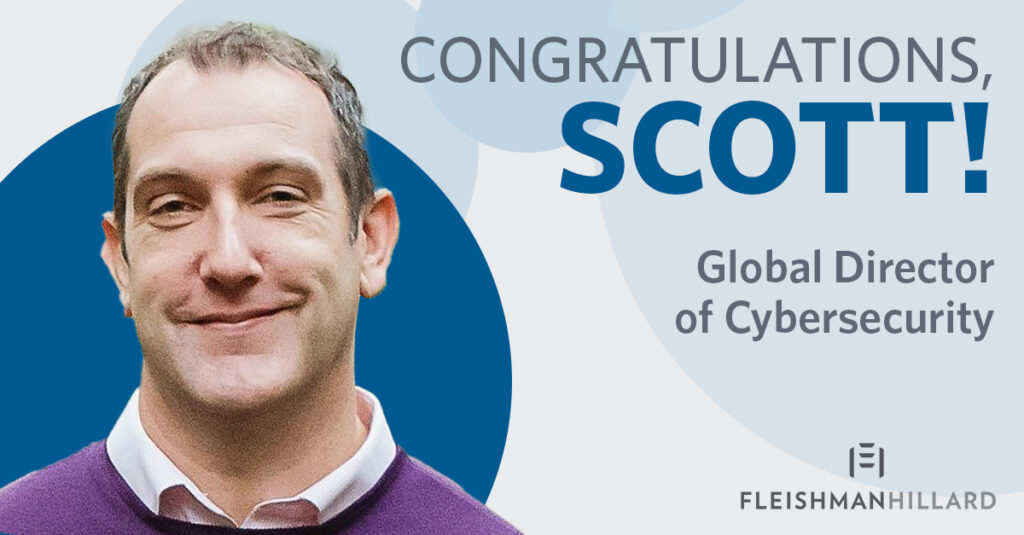
FleishmanHillard Hires Apple PR’s Scott Radcliffe to Lead the Firm’s Global Cybersecurity Center of Excellence

ST. LOUISFleishmanHillard has named Scott Radcliffe as the agency’s global director of cybersecurity. In this new position he will be responsible for overseeing the agency’s global Cybersecurity Center of Excellence, which brings together communications expertise from across the firm to advise clients who are facing ever-increasing cyber risk. FleishmanHillard’s Cybersecurity Center of Excellence sits at the intersection where crisis and preparedness, policy and issues, and product and innovation come together. The role will report to Tim O’Keeffe, FleishmanHillard’s global managing director of Technology.

“FleishmanHillard partners with global businesses to help them understand and navigate the role cybersecurity plays in this accelerated wave of digital transformation,” said O’Keeffe. “Right now, company leaders are under immense pressure to fully understand the new dynamics of U.S. disclosure policies when preparing for a potential cyber incident. Today, it’s more than just being prepared for a data breach, business leaders must now navigate changing policy and governance issues to remain compliant. FleishmanHillard, with Scott’s leadership, is uniquely positioned to help company leaders navigate through these changing dynamics.”

Radcliffe returns to FleishmanHillard from Apple, where he led cybersecurity communications. He previously served as the agency’s senior global data privacy and security expert from 2016 to 2020. He began his career in the U.S. Army after graduating from West Point, where he was first exposed to cybersecurity while working under the Multi-National Corps-Iraq Commanding General.

“Personal and corporate data have become some of the most valuable resources any organization has, and the threat to that resource is only growing as its value to bad actors continues to rise,” said Radcliffe. “It’s critical for every business to be as prepared as possible for a cyberattack and to understand how to navigate through that moment should an incident occur. In addition to making sure that business leaders thoroughly understand the increasing number of policies and regulations, it’s critical for businesses to better educate their customers and employees about how they can more securely interact with an organization’s network and protect their data. I’m thrilled to be back at FleishmanHillard and bringing our firm’s expertise forward to help company leaders that have cybersecurity at the top of their business agenda.”

Radcliffe has worked across sectors with experience in technology, healthcare, energy, manufacturing, food and agriculture, government, gaming and financial services. In addition to cybersecurity, he has expertise in corporate crisis and reputation, executive communications, employee and internal communications and product and innovation storytelling.