Employee Login

Enter your login information to access the intranet

Enter your credentials to access your email

Reset employee password

Article

Takeaways from Today’s SEC Vote Requiring Climate Disclosure

March 6, 2024

The U.S. Securities and Exchange Commission (SEC) voted today to adopt a long-awaited rule mandating that public companies listed in the U.S. disclose financial risks related to climate change.

The decision came two years later than expected – a period that has seen investor and corporate support for ESG grow and more recently ease amid a political backlash that labeled efforts “woke capitalism.”

The new regulation, effective on May 5, will become a requirement for publicly traded companies.

The SEC rolled back what was perceived as the most onerous part of the rule it proposed: the requirement that companies disclose Scope 3 emissions – those produced by their suppliers and customers.

The new rule requires measurement and disclosure of carbon emissions, as well as reporting about factors like extreme weather events and the clean energy transition that are increasingly impacting public companies’ bottom lines – information the SEC wants investors to have to make investment decisions.

Specifically, the final rule requires companies to disclose:

· Scope 1 and/or Scope 2 greenhouse gas emissions

· Material climate-related risks and activities to mitigate or adapt to such risks

· Information about the company’s board of directors’ oversight of climate-related risks

· Information about management’s role in managing material climate-related risks

· Information on any climate-related targets or goals that are material to the registrant’s business

· Disclosure of the financial statement effects (costs and losses) of severe weather events

Since the SEC proposed the rule in March 2022, it received more than 24,000 public comments – the most in the Commission’s 95-year history.

A lawsuit challenging the rule was filed by 10 states just hours after the vote. Industry groups have threatened to sue to stop the rule from taking effect. The rule will also face challenges from congressional Republicans; it would be unlikely to survive if former President Trump prevails in his bid to return to the White House.

FleishmanHillard’s Public Affairs and global ESG specialists are here to help clients navigate the fractured regulatory landscape and stakeholder expectations in a way that allows them to manage risk and reputation.
Article

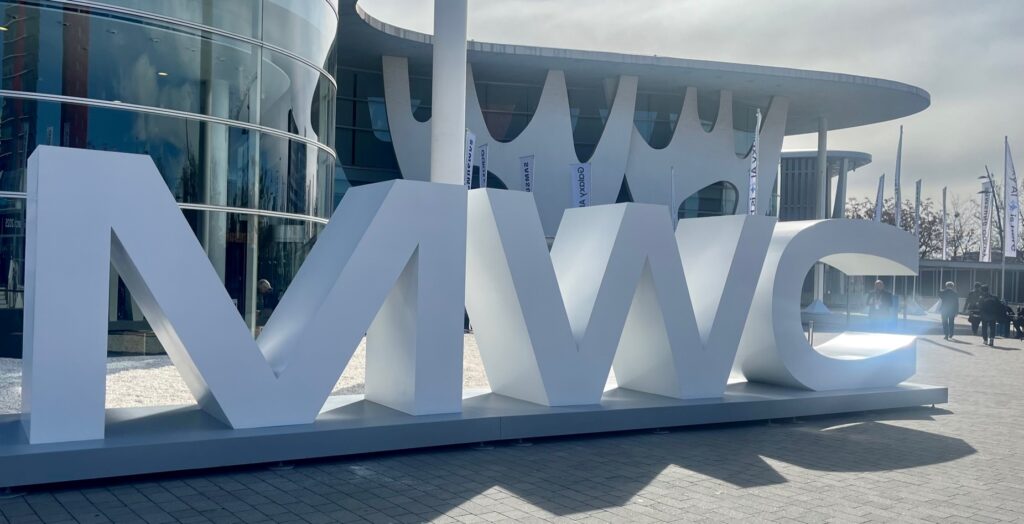
TickTockTech: Mobile World Congress 2024 — What’s the Verdict?

March 1, 2024
By Claire Jones

Last week I posted in prelude to attending one of the world’s biggest mobile conferences, Mobile World Congress 2024 (MWC24), anticipating how the event will have changed since I last attended in the noughties.

It turns out the communications landscape may have shifted significantly, but many things have reassuringly stayed the same. Ironically, the Wi-Fi is still shocking, you can’t find a charging point for love nor money, the food remains just below average, transport is chaos and your daily steps will always exceed 20,000.

But that didn’t deter attendance. The show was quite literally heaving, with nearly 100,000 attendees jostling through the halls. And although the media list still looked a little thin last week, there was a host of late additions, spanning UK national and business media.

One analyst, who has attended most years over the last two decades, reliably informed me that this year’s Congress was the best yet — back to pre-Covid popularity, with the most interesting tech she’s ever seen on display.

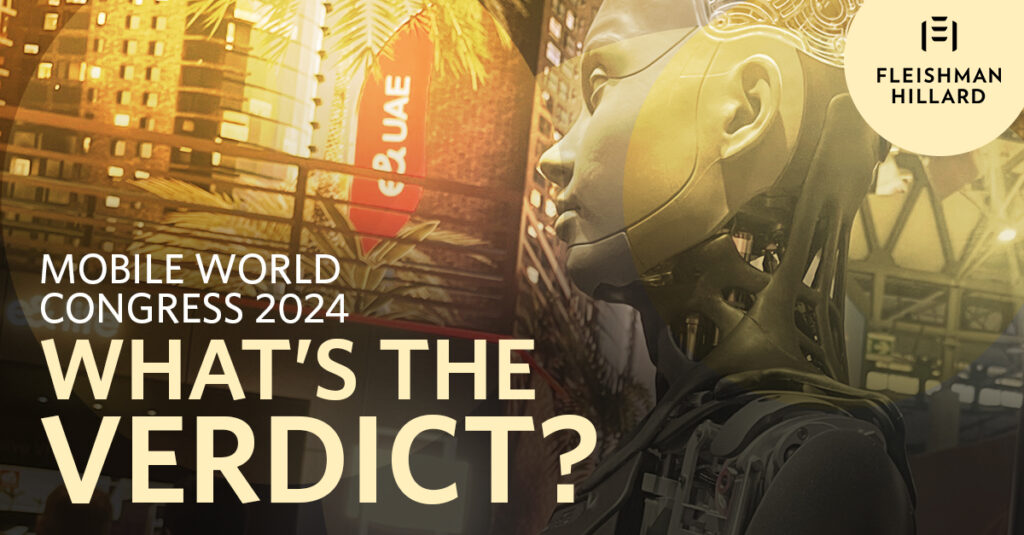
I can’t disagree. From flying taxis, robot dogs and cats, to 3D advertising walls, the visual display of futuristic tech was incredibly impressive. I had chills when I saw the most realistic female android conversing effortlessly with the crowds. Imagine how gutted you’d feel if that was on the stand next to yours?

What did the media think?

As a comms professional, I felt this Congress had enough meat on the bones for media to feel it was worth attending to get a pipeline of stories and inspiration for what is coming down the line. But I wanted to test my views with a selection of seasoned journalists who were on the ground, whose experiences range from the novice attendee to returners like me.

Jess Jones, TMT reporter at City A.M., a MWC24 first-timer, attended primarily to moderate a GSMA Foundry Innovation panel, but was not disappointed and felt the show more than met up to expectations. In her words:

My first time at MWC definitely lived up to the madness I was pre-warned about. From a media perspective, it was useful to see first-hand what telcos are up to beyond the day-to-day business activities; for example, SK Telecoms’ AI aircraft simulator and Vodafone’s XR glasses. It was also a good opportunity to catch up with old and new contacts.”

Mike Moore, Deputy Editor at TechRadar Pro, was also impressed with what this year had to offer and the key themes consistent across many of the exhibiting companies. He explained:

“MWC 2024 was my first for five years, and while a lot of the big exhibitors and big themes have stayed the same, it was no surprise to see that AI dominated pretty much every conversation. It was really interesting to hear just how companies from all different sectors and all different sizes want to use AI, and how it can affect not just businesses, but consumers as well. It was also quite telling to see how many large companies were calling for greater co-operation and collaboration with their peers — hopefully this is a sign of things to come.”

Ryan Browne, Tech Correspondent at CNBC echoes Mike’s views on how AI was clearly the dominant theme of the show, explaining:

“The most attention-grabbing products from the show were, unsurprisingly, focused on the realm of AI. And you saw major smartphone makers and device manufacturers talking up the inclusion of artificial intelligence in their gadgets this year. Separately from this, there was a plethora of smaller tech companies, including Chinese smartphone maker Honor, U.S. startup Humane, and even German mobile network operator Deutsche Telekom, which showed off ways the future “phone” experience might look a lot different with the integration of AI as more of an everyday personal assistant.”

Ryan also explained the role of MWC24 in the wider ecosystem of global shows and its role in setting the scene for the key topics across the tech sector:

“This Mobile World Congress was one of the biggest and boldest shows I’ve been to in years. The show, which has the knack for focusing on some of the most critical stories and trends in the technology, media, and telecom space, had a packed event programme filled with interesting insights into the way that artificial intelligence is impacting and disrupting telecoms companies. And the opportunities that the technology can bring with networks making major investments into proprietary AI, as well as partnering with hyperscalers such as Amazon Web Services and Microsoft Azure for a helping hand with the cloud and software expertise they don’t have as much access to.”

My take: Did it live up to the hype?

In one word, yes. Absolutely. It’s clear that MWC is back with gusto, and the GSMA should be thrilled at this year’s success. From a comms perspective, visually standing out is always going to be a challenge when we have hit the Star Trek android era and Back to the Future flying taxis.

However, many of the coverage winners were companies whose CEOs and senior execs took time to meet with media and understand they need a relevant and interesting point of view. With such a strong and engaged media turnout, it’s crucial that brands start considering their comms strategy for next year sooner rather than later. And while not all exhibitors can drive footfall to their stand with robot animals, perhaps all they need is a charging booth and free water to draw the crowds!

Article

The Confidence to Take the Right Risk

February 28, 2024
By Lauren Winter

The power of the collective.

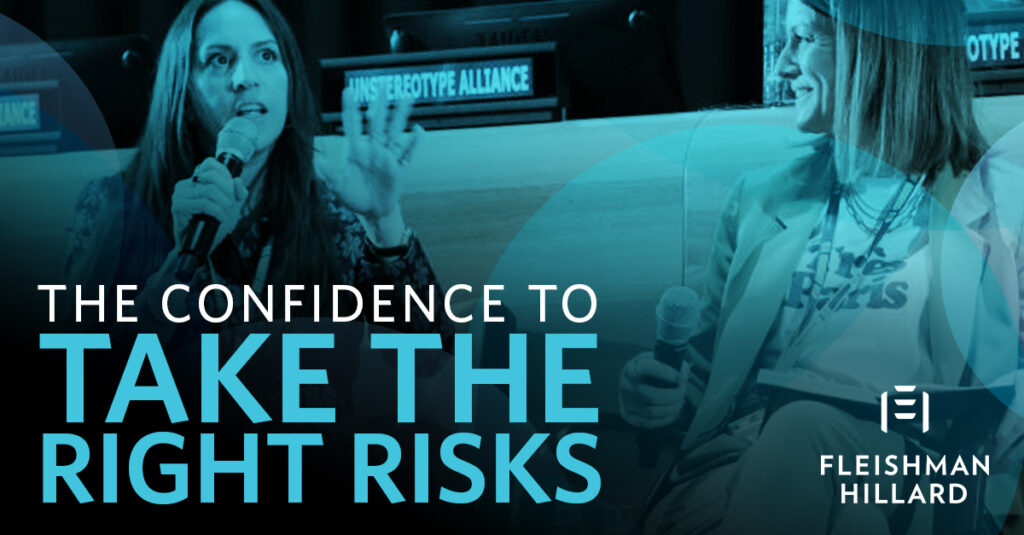
For too long, agencies have been pitted against each other and tension in communications to capture attention has been taught, but as I listened to people from all walks of life at the recent Unstereotype Alliance Global Member Summit, the message was clear: let’s do this together.

I was honoured to be provided with the opportunity to talk amongst such esteemed company at the annual event. The Unstereotype Alliance is an initiative convened by the UN to unite advertising industry leaders, decision makers and creatives to end harmful stereotypes in advertising. My panel discussed the perils of saying and doing nothing for the communities who brands wish to speak to and how brands can be brave and shift out of arrested development. The following is a summary of my key points.

Examine and act on your core values. Often, brands look to avoid reputational loss —  but they miss the reputational gain also. A lot of the time we need to look at our core values; for most humans that’s a challenge, let alone brands with multiple layers of approvals.  Reflective change can feel nearly impossible, but for people to buy into you, they need to know where you’re coming from, which might mean you need to stop thinking about being right for the moment and evolve for the longer term.

Bring everyone to the table. Creating that internal culture of change will allow you to start to feel brave when talking to the outside world and when you’re being brave, you’re taking an element of risk, and that’s OK — you just want to have confidence to take the right risk and that’s where you need to add the EQ to the IQ. Adding that emotionally intelligent person to the table, the person who is culturally connected and who’s a part of the communities you wish to speak to, or curious about them, will give you the confidence to be bold.

That emotional intelligence has layers and is intuitive, and unlike AI, is better at predicting the unpredictability of humans. These people can assess campaigns through what we coin here at FleishmanHillard as our cultural mapping approach — the three E’s: Empathy, Earnestness and Empowerment. It’s a powerful lens for your brand and bottom line. 

Think about the long game. Marketing professions are familiar with the concept of pace. When piggy-backing, news-hijacking and jumping on trend bandwagons, the need to have sincerity when dealing with communities is often unconsidered. Culture has roots and longevity. A brand’s integrity when mapping to culture is more important than the speed. As June Ambrose, renowned creative director, said at the summit — impact takes intention.

Be brave. There’s a rising amongst the youth that feel there’s a lack of originality out there — as famed record producer Mark Ronson suggested, part of originality is just evolving the story for the next generation. Does the current state of affairs and the frozen position many brands find themselves in attribute to the bland over the bold? By brands shifting their mindsets from talking about their own benefits to being an activist for others, they can have the full force of youth on their side.

In closing, keep in mind that to have a platform is a privilege. Sima Bahous, United Nations Under-Secretary-General and executive director of UN Women, made the following suggestions:

  1. Invest in gender equality and you accelerate progress
  2. Highlight the youthful voices
  3. Commit to accountability

It sounds simple but too often forgotten and with the power of our communications, we can be bold and push the agenda for others and our clients – a win-win!

Article

TickTockTech: The Evolving Retail Tech Landscape

February 27, 2024
By April Osburn

Every January the largest retailers and most innovative retail tech providers descend on the Javits Center in New York for NRF: Retail’s Big Show. This year was no exception, with hundreds making their stand on the expo floor to share what’s next for retail in 2024 and beyond.

About a month post-event, here are my thoughts on what will show up for retailers throughout the year and what is likely to stay on the show floor for future implementation.

AI is the big guy at the Big Show

Like almost all recent events across the Tech sector, AI stole the show at NRF this year. In fact, according to Salesforce data, only 3% of commerce organizations currently have no AI plans. And consumers are open to the implementation of AI to improve their buying journey.

Apart from the AI use cases that have been commonplace amongst large brands, like personalized customer service and product recommendations, generative AI has widened the horizons for what the technology can do for retailers.

It can enable retail marketing teams to build and manage attention grabbing campaigns, draft effective product descriptions for an ecommerce site, manage loss prevention and even optimize physical store layouts based on traffic. And as brands realize the cost and time savings AI implementation brings to their business, innovation in the space will only continue to grow.

Customer experience and employee experience are top of mind

Another key theme at NRF, and in the retail industry for years, is how businesses can improve the customer experience. In what seems like a lightbulb moment, retailers are now starting to realize that improving customer experience and improving employee experience go hand in hand.

Accelerated by the pandemic, the role of the store associate has changed drastically. Positions that previously only involved working the register have transformed to fulfillment experts for buy-online-pickup-in-store offerings, content creators and live streamers for social media engagement and more. Removing friction and providing employees with the tools they need to succeed is a necessity.

Retail decision makers know that reliable technology has the power to enable employees to excel at their jobs. From training to product search to transaction history and, of course, completing transactions, giving store associates access to easy-to-use technology in the workplace will not only improve their experience, but that of the customer as well.

Supply chain

Supply chain management has been the white whale for retailers for years and optimizing the journey from beginning to end was a headline theme at NRF this year, including a special one-day Supply Chain 360 Summit.

Automation and robotics technologies were prevalent among brands that help to connect end-to-end supply chain operations, enhancing efficiency and meeting customer expectations with transparency into the entire journey. The eruption of retail returns has also pushed brands to streamline the returns segment of the supply chain, to improve customer experience of course, but also to ensure inventory is back on the shelf quickly and efficiently.

The retail tech landscape will only continue to innovate across AI, employee and customer experience, supply chain and more. And no one business is going to take the cake across every area of advancement. While more emerging technologies like augmented reality “fitting rooms” keep retail tech momentum going, decision makers will continue to focus on what will make the biggest impact on their businesses now — and ultimately whatever will serve their bottom line.

As retailers look to the future and prioritize operational efficiency without compromising consumer satisfaction, our ears will continue to be on the ground looking for the next big thing in commerce.

Article

Bringing Joy and Nutritious Food to Families in San Francisco

February 22, 2024
By Mandy McAnally

Food insecurity is a critical issue in San Francisco and Marin County today. Before the pandemic, one in five people was at risk of hunger in the area and the need has only increased. So, for the San Francisco team’s FH4Inclusion initiative we chose to partner with the San Francisco-Marin Food Bank  — a long-standing nonprofit with one mission: to end hunger in San Francisco and Marin. The food bank has been tackling food insecurity in the Bay Area since 1987 through its food pantry network and home-delivered groceries food assistance enrollment. Every week, more than 55,000 households count on the organization for food assistance.

The organization operates 27 Pop-Up Pantries throughout the city, and our volunteers participated in one of the final pantry events of the year. These events were first organized in response to the pandemic as traditional food banks had to close due to health risks. They continue to be critical connection points for communities to receive needed groceries. 

With these events, staff and volunteers take over an outdoor space, setting up and taking down a fully operational food distribution center within a matter of hours. Food recipients sign up ahead of the event and receive an allotment of fresh vegetables and fruits depending on their household size. On a windy day in December, our colleagues spent the morning distributing that food to local residents, working with other volunteers and getting to know each other in the process.

“It was a great opportunity to get out of the office and directly impact our community. In our one session, we served more than 150 community members in need of food assistance. I’m grateful for the support of our leadership to organize these activities, and I’m looking forward to more events that allow us to give back while strengthening our FH team” said Chelsie Lui, TRUE Global Intelligence research analysist, who helped coordinate the volunteering activities.

In the spirit of FH4Inclusion and the holidays, our team also wanted to make sure that we offered our remote employees an opportunity to participate, so we partnered with the SF Firefighters Toy Program. This is the largest and, nationally, the oldest program of its kind — distributing over 200,000 toys to more than 40,000 under-resourced children and families. We set up a barrel in the office for donation drop-offs in person and created an Amazon Wishlist for FleishmanHillard employees to donate directly. Very quickly, the barrel filled with books and toys for kids and families to enjoy a happy holiday season. It was a meaningful way to round out the year!

Article

TickTockTech: AI has reached escape velocity — and there’s no going back.

February 21, 2024
By Seth Bloom

As communications professionals, we are universally obsessed with global news consumption and the big trends driving it. Sure, we often follow them at the behest of our clients — to identify opportunities to react intelligently to breaking stories or white space where they can enter a new or different conversation and even pinpoint reporters and outlets with the most influence on a topic that matters to them.

But we are also inherently curious. We want to know what reporters are covering and why because we want to know how we can be a part of the most important conversations of the day. And to that, it seems that every day there is a new topic driving the agenda — and captivating audiences around the world across myriad platforms and outlets. This is abundantly true when it comes to the dynamic world of technology.

But what of these trends and topics actually has staying power? In partnership with TRUE Global Intelligence (FleishmanHillard’s global research, analytics and measurement practice), our tech team decided to take a quick historic look at big trends in tech innovation and the new consumption around them. 

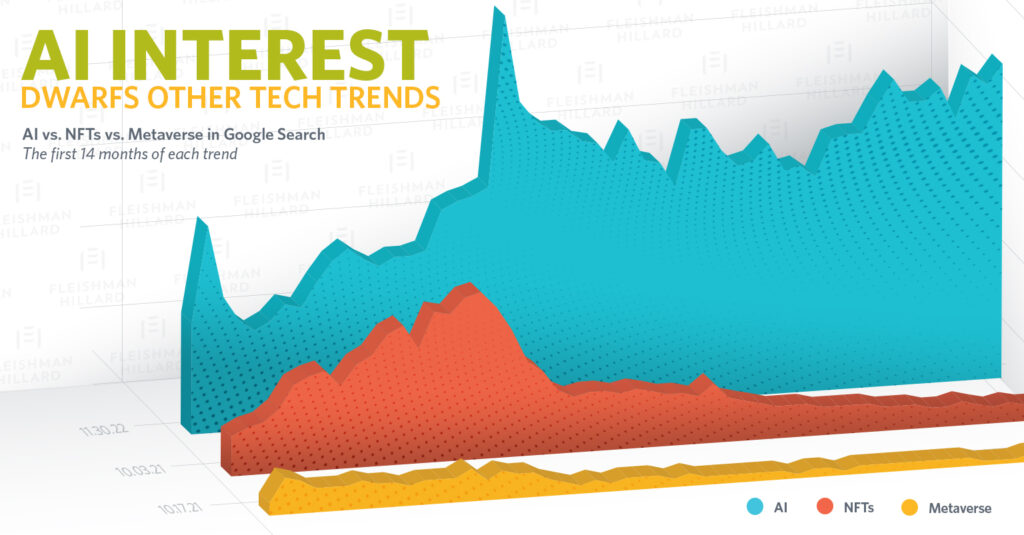
This stunning image shows search traffic around the term “AI,” which continues to go up, up, up 14 months after the launch of ChatGPT (which gave consumers their first taste of the power of artificial intelligence they could harness directly). 

We see the stratospheric rise of AI best when it is compared to two other terms that felt like they were on everyone’s tongue in the tech world for a hot minute: NFTs and the Metaverse. But looking at the numbers, those trends had a brief burst of attention before being quickly pulled down by gravity.

And while it’s tempting to throw shade at the uncomfortable oddness of NFTs or the lofty promises of anything called a “metaverse”, we think the actual story is simply the fact that as soon as people could start ordering around AI chatbots, they saw the future unfold one answer at a time. AI felt real immediately….and consumers and businesses alike were instantly smitten by the promise of what’s on the horizon. Their interest, as evidenced by this image, rocketed upwards quickly and consistently. And the interest continues to grow.

Beyond the lessons this graphic holds around the rise of AI, it serves as a reminder to us that a sure-fire way to get people talking about a new product or service is to get it in the hands of actual people and let them do things with it that are actually cool.

We are living in a period of unprecedented and incredibly fast change. The adoption of new technologies has never been more dramatic. Of course, the global pandemic did its part to speed digital transformation across geographic, political, economic and social divides. It altered industries from retail to logistics to manufacturing and even entertainment. As a result, technology innovation had an amazing moment that led to this incredible AI story arc.

We can only wonder what will come next…

(Rita Herbstman of our TRUE Global Intelligence practice contributed to this article, as well as designers Sara Cooper and Josh Kirk.)

Article

Changing Communications Tack at Mobile World Congress  

February 20, 2024
By Claire Jones

The last time I attended Mobile World Congress, it was before the iPhone had been launched in Europe. The world of telecoms – and PR – was very different. Pretty much every publication in the region sent a host of tech reporters, and the job of the PR was hosting 30+ briefings on stands where booth babes were still a standard accessory. 

Fast forward to 2024, and comms at MWC is a very different story. Analysts’ attendance looks set to outweigh journalists by a ratio of 2:1; many national journalists who attended last year aren’t planning to return this year, and one of the world’s largest news agencies doesn’t intend to send any reporters for the first time, as editorially they cannot justify the cost.  

For the tech trade journalists who are on the ground, many of them have been sponsored to attend by one vendor, which pretty much monopolises their whole diary. With this limited pool of journalists, alongside an increasing list of exhibitors all vying for attention, it puts comms professionals in somewhat of a quandary.  

How communicators can make the most out of MWC 

  1. Consider timings on news: There are two schools of thought on issuing news at mega conferences like MWC – the pro argument dictates that having a strong product/personnel/business announcement is key to demonstrating relevancy among industry peers and to driving inclusion in coverage from on-site journalists. The flip argument, which I increasingly support, is that unless you have something at the level of a revolutionary new handset, the news gets lost. You’ll get a much bigger ROI going out before or after the event.  
     
  2. Briefing objectives: With a limited number of journalists on site, the key is to be very strategic about which ones to approach and what you offer. With horrifically packed schedules, the offer needs to be solid. A spokesperson needs to give them something that makes the time investment worthwhile – in almost every scenario, a punchy viewpoint is much more interesting than a monologue on a company widget getting its umpteenth upgrade… 
     
  3. Beyond earned: Virtual networking is just as important; so much of what happens at MWC will be seen through a digital lens of LinkedIn updates and connecting via the MWC app. It is imperative that senior stakeholders are supported with guidance on content that is maximised for industry engagement and shareability. 
     
  4. Be in the know: There’s a host of wider MWC comms opportunities if you take the time to get in the know, before the show. Opportunities range from annual traditions like Swedish Beers, to executive dinners being run in conjunction with top tier publications (no PRs allowed!), vendor press networking events and drinks receptions with the likes of the Department for Business and Trade. Spending time to understand and prioritise activities can open a range of future opportunities.  

In this new era of comms, I am excited to get back to Barcelona to see first-hand just how much MWC has changed in 15 years. Crucially, as we all embrace the shift to working with colleagues and clients ‘IRL’ I am looking forward to having some facetime and networking with some old (and new) faces – if you are also making the trip it would be great to hear from you so we can swap stories on MWC past and present, and the impact of comms technologies and strategies changing tack! 

Article

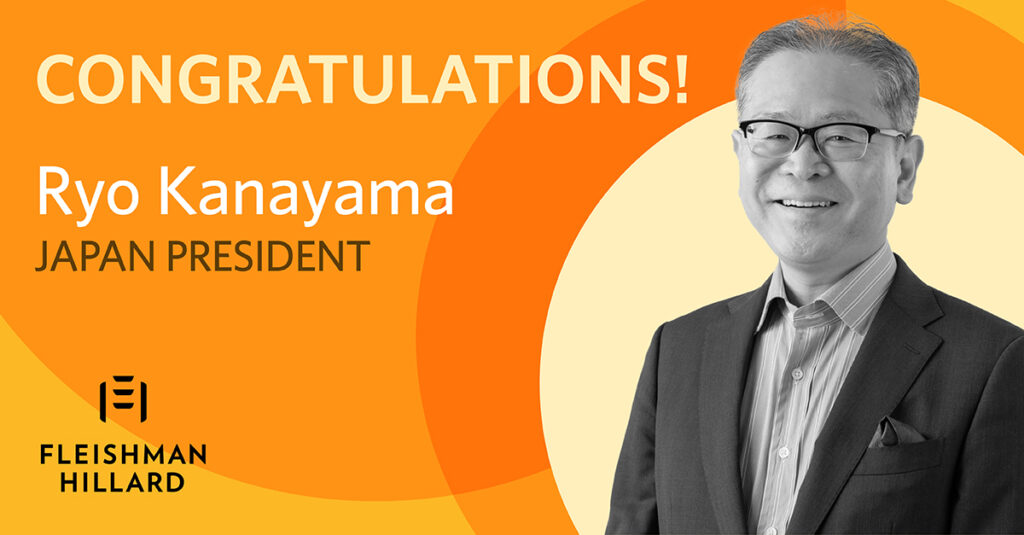
Ryo Kanayama Appointed President of FleishmanHillard’s Japan Group

January 30, 2024

ST. LOUIS, MOFleishmanHillard today announced the appointment of Ryo Kanayama to president of FleishmanHillard’s Japan Group of companies, including FleishmanHillard Japan and VOX Global Japan.

“We’re thrilled to have Ryo return to FleishmanHillard in this role and help grow the agencies,” said Joanne Wong, FleishmanHillard APAC president. “Ryo has extensive experience driving transformation and societal change working with businesses, non-profits, governmental entities and local communities. With his experience both in-house and within consultancies, Ryo can effectively lead and coach our own team, as well as our clients, to advance the use of communications as a strategic and effective business problem-solving tool to drive desired outcomes. Ryo recognizes how such outcome-oriented, value-focused communications offerings enable us a competitive and distinct proposition to capture evolving market opportunities in Japan.” 

Kanayama returns to FleishmanHillard after serving as a partner at Deloitte Japan (also known as Deloitte Tohmatsu Group) for its Clients & Industries and Brand Marketing groups. He originally joined the agency in 1999 and was a key leader in conceptualizing and advocating for a strategic communications model in Japan. During his eight-year tenure, he also led the Corporate Reputation and Issues Management practice before moving to the corporate world to lead the Corporate Affairs function at Walmart Japan and Seiyu.

“I look forward to collaborating with our team to take the business to its next stage of growth,” said Kanayama. “Japan continues to play a critical role on the world’s stage and the evolving business and market environments require both local insights and connectivity to global offerings. FleishmanHillard and VOX Japan are well-positioned to respond to growing outbound and inbound client needs in corporate reputation, public affairs, financial communications and special situations.”

Continuing to support the agencies will be managing directors Atsuko Kamegaya and Ryoji Tanabe, who will report to Kanayama and form the operations’ core leadership team. Shin Tanaka, founding president of FleishmanHillard Japan, will act as a senior advisor to offer senior counsel and advice to clients.

The appointment takes place as FleishmanHillard Japan embarks on a new chapter of growth, helping clients navigate post-pandemic transformations. Connecting clients with FleishmanHillard’s global and regional network, the agency will deliver data-driven communications expertise to clients across borders and help them identify and effectively engage their stakeholders.

Kanayama received a Bachelor of Arts, Law, from The University of Tokyo and a Master of Business Administration degree from the University of Virginia Darden School of Business. He will begin the position on April 1, with his departure from Deloitte at the end of March.

Article

What we learned from our panel discussion on sustainability regulation and communications in 2024

By Rima Sacre

It’s difficult to do justice in just one blog, to a one-hour conversation with four experts that covered the highs and lows of sustainability communications, but in the following words we certainly try!

Article

Four Key Trends Shaping Sustainable and Responsible Business in 2024

By Mandy McAnally

The world is bracing for a 2024 that brings the unpredictability of unprecedented global elections, disruptive AI technology and an onslaught of environmental, social and governance disclosure rules. All of this will shape how companies operate sustainably and responsibly now and in the years to come. Below are some of the top trends that communicators will need to navigate in 2024. 

Climate disclosure requirements will become a reality, and companies must be prepared. 

New disclosure rules have serious implications for corporate reputation, company culture and operations, and legal and financial matters. The throng of disclosure requirements hitting thousands of companies will significantly change the approach to communications for many of the world’s largest brands. Companies operating in California, whether headquartered there or not, will be impacted by three climate reporting bills, requiring certain organizations to back up their public sustainability claims with third-party verified data. For many companies subject to the EU’s Corporate Sustainability Reporting Directive (CSRD), FY24 starts the clock ticking as the basis for comprehensive disclosures that go well beyond climate and will need to be included in their 2025 reporting.  

Compliance is a massive undertaking and will demand new models of internal communications, culture change and collaboration just to navigate the process, along with skilled communication professionals who must plan now for the impending era of unparalleled transparency. Learn more in FleishmanHillard’s brief on EU and U.S. Sustainability Disclosure Requirements

Climate action commitments and challenges loom large as countries look to COP29. 

COP28 marked progress in addressing the climate crisis, including creation of a loss and damage fund and first-ever reference to transitioning away from fossil fuel, but reinforced the formidable challenges to reaching a lower and then zero-carbon future. We also saw an elevated focus on biodiversity and health equity as climate change increasingly impacts public health. The implications of COP28 will be significant for companies addressing disparate legal and regulatory frameworks, managing political expectations and communicating with stakeholders and the public about climate action.  

Expectations for COP29 in Azerbaijan will be equally high, and eyes will be on the need to increase public and private sector financial commitments. Companies should prepare to communicate tangible and forward-looking climate action and manage questions or challenges related to the direction and pace of change.  

2024 elections will profoundly influence future action on sustainability and social responsibility. 

Elections are scheduled in 70 countries in 2024, which means voters will make their voice heard on major issues like climate, human rights, societal inclusion and more. Companies operating in the U.S. will need to navigate the politicization of ESG, as a term and construct, even as other countries push ahead, and public interest remains strong. National climate agendas and efforts to advance diversity, equity and inclusion have already undergone significant changes in the past year, but the elections could profoundly influence future action on these issues. Communications teams need to work cross-functionally to provide expert counsel to companies navigating political headwinds, decide when and how to engage with the media and stakeholders, and to maintain a clear and authentic message as the landscape shifts. 

Companies will increasingly leverage AI as a core solution to advance their ESG objectives. Regulators will try to keep up. 

More companies will make AI a core solution to accelerate and track their progress toward their decarbonization objectives. Bringing the worlds of technology and climate change together is not a new phenomenon. Yet the speed at which AI is catalyzing technological innovation and driving change is focusing minds on how to effectively leverage AI in an accountable and transparent way. While some of the largest cloud providers claim carbon-neutral operations, there are scores of data centers and providers that can’t. Looking ahead, we’re sure to see more headlines decrying the environmental impacts of resource-intensive AI. FleishmanHillard’s global advisory approach can help companies navigate emerging policy discussions and different stakeholder expectations as the business, regulatory and international environments explore and implement AI solutions. 

This year, businesses, governments and consumers are entering uncharted territory. What companies need now, more than ever, is a business strategy that unifies all corporate functions globally to not only successfully adhere to new ESG regulations but also communicate authentically and transparently. An approach that is siloed at the country, function and even agency level must evolve to a connected outlook. FleishmanHillard’s unique global advisory approach helps companies anticipate the shifting sands in a coherent and connected way across policy, legal, brand, communications and reputation. Connect with us at [email protected] to learn more. 

Bob Axelrod, Michael Hartt and Jane Gimber contributed to this article.