Employee Login

Enter your login information to access the intranet

Enter your credentials to access your email

Reset employee password

Article

DE&I Communications and the Anti-Woke Wave

October 5, 2023

The US regional banking crisis unearthed deep-rooted sentiment about DE&I practices in the financial services industry. However, the industry has consistently said that DE&I is important to business, clients/customers, partners, and society in general. FleishmanHillard leaders discuss this trend from their financial services, DE&I and employee communications perspectives – and what communications opportunities and challenges exist for firms as they engage their external and internal audiences.

In this discussion:

  • Kirsten Plonner, global managing director, Financial and Professional Services
  • Thomas Bennett, senior vice president, True MOSAIC
  • Elizabeth Bushelow, senior vice president, Employee Communications
  • Chelsie Kumar, vice president, Corporate Communications
Article

FleishmanHillard Receives Shortlist Nod for PRovoke Media 2023 Global Agencies of the Year Award

October 3, 2023

ST. LOUIS, MO — FleishmanHillard earned a spot on the PRovoke Media 2023 Global Agencies of the Year shortlist. The global agency was praised for its continued growth, inclusive workplace culture, thought leadership and innovation. The finalists were determined after an extensive process involving more than 500 submissions and meetings with the top PR firms across North America, EMEA, Asia-Pacific and Latin America. The winners will be announced at the 2023 Global SABRE Awards, which take place during the 2023 PRovoke Global Summit on November 8. More details are available here.

Article

Festival of Workplace Inclusion 2023

October 2, 2023

When: Oct. 25 & 26, 2023

What: Festival of Workplace Inclusion 2023

Where: Virtual

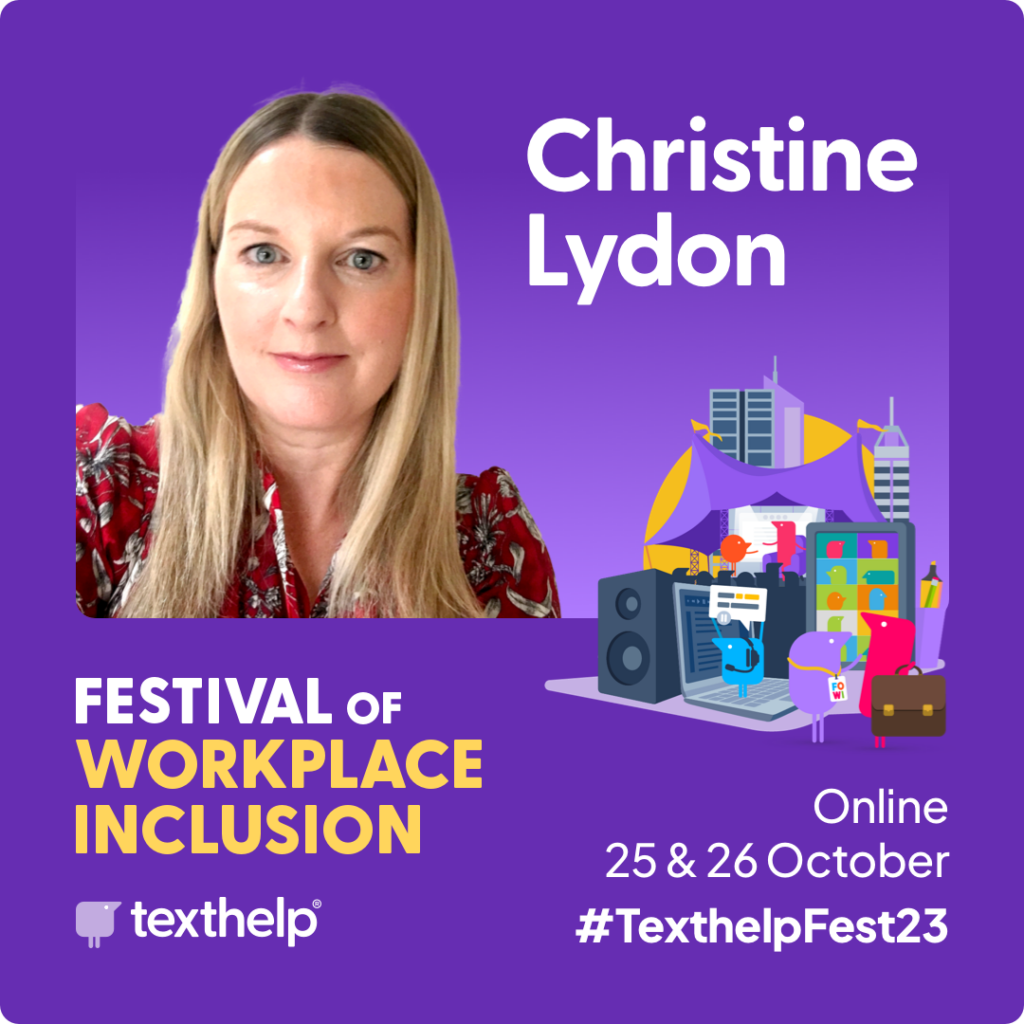
Christine Lydon, director, FleishmanHillard UK, will lend her expertise at Texthelp’s annual Festival of Workplace Inclusion 2023. The two-day virtual event explores inclusion across the full employee journey for neurodivergent, disabled and multilingual employees.

The festival will offer live sessions, panel discussions, access to free resources and the ability to take part in a scavenger hunt to win daily prizes and network with peers.

Additional speakers include:

  • Caroline Casey, founder, The Valuable 500
  • Hamza Yassin, wildlife cameraman, presenter and author
  • Hiren Shukla, global neurodiversity leader, EY
  • Natalia Lyckowski, global neurodiversity advancement leader, IBM
  • Bhushan Sethi, partner strategy PwC
  • Diane Lightfoot, CEO, Business Disability Forum
  • Jill Houghton, president & CEO, Disability:IN

Sessions will uncover new and trending strategies that’ll help professionals make big strides towards a more inclusive future for today’s working population and the next generation to come. 

Register to join live or catch on demand: https://text.help/dRN7dP 

Article

With Transatlantic Sustainability Disclosure Regulations on the Horizon, Companies Will Need a Unified Global Strategy Across Policy, Legal, Brand and Reputation

September 27, 2023
By Jane Gimber, Michelle Mulkey and Bob Axelrod

Setting climate targets without a consistent way to keep companies accountable will not work. This has been the main conclusion that both the EU and U.S. have drawn in recent years, leading to a slew of changes in corporate reporting. In the EU, policymakers have drawn up a new sustainability reporting framework called the Corporate Sustainability Reporting Directive (CSRD) with corresponding sustainability reporting requirements. In the U.S., the Securities and Exchange Commission (SEC) is expected to imminently strengthen its climate disclosure rule, while the California Assembly has recently passed legislation requiring all large companies to disclose scope 1, 2 and 3 greenhouse gas emissions.

This push for increased sustainability disclosures is putting ESG even higher on the priority list for executives. While in the EU, corporates have engaged with the specific requirements that will apply to their sector, several U.S. companies plan to outright sue the SEC for any changes made. More generally, many EU and U.S. companies have made low or zero-carbon pledges, but many don’t yet necessarily have a fully developed plan for how they will get there, making reporting much more complex. A situation that is exacerbated by the nascent state of ESG data collection.

Regardless of the political reception, companies must be aware of the specific changes underway and how the increased disclosures will open a much larger window into their sustainability communication, risk management, marketing and business strategy.

How companies meet this moment matters. Some may enter only into compliance mode and miss the opportunity to communicate effectively. Others may continue boldly without the right substance and step into a different kind of peril. But these do not harness the long-term value of ESG. What companies need now more than ever is the right ESG strategy, which includes a deliberate and unified trajectory for where the company wants to be and how it will get there. The fragmented and parochial approach at the country, function and even agency level has to evolve to a cohesive and connected outlook.

What does the Corporate Sustainability Reporting Directive mean for businesses?

The new CSRD will require all large and EU-listed companies to disclose detailed sustainability-related information. Corporates will have to report against comprehensive and sector-specific ESG impacts, risks and opportunities. This can include revenue linked to certain sectors (e.g., fossil fuels and chemical production) and remuneration policies linked to sustainability matters for board members.

Companies that have their headquarters outside of the EU, but with operations above a certain size in the EU (see thresholds below), will also be required to disclose against the EU’s standards. This could significantly alter the reporting practices of many U.S. companies, given the expected differences in level of detail required between the EU’s standards and the anticipated SEC rule.

The proposed SEC rule will require additional reporting on the governance and oversight processes of climate-related risks by the company board. It is also expected to require companies to disclose whether they have a climate transition plan, and if so, how they intend to reach the specific goals and targets.

How do the Corporate Sustainability Reporting Directive and U.S. climate disclosure frameworks compare?

While both disclosure frameworks will lead to an increased reporting burden for companies operating across the Atlantic, in comparing, it becomes evident that the global impact of the EU framework is much larger.

Even though the U.S. climate disclosure risk framework does apply to foreign registrants, the number of foreign companies that are registered with the SEC is rather small. In contrast, the new CSRD will apply to all third-country undertakings with a net turnover of €150 million in the EU, and either a “large” subsidiary or a branch that generates €40 million net turnover. This means that parent companies with a sufficiently large branch in the EU will be due to report under the CSRD in 2029, a significant extraterritorial reach of EU legislation.

Additionally, while the EU is actively coordinating with the International Sustainability Standards Board (ISSB) to ensure alignment between the EU’s extensive reporting framework and the International Financial Reporting Standards (IFRS) that are used in many other parts of the world, this seems to be less of a concern for the United States.

How can companies navigate the new sustainability and climate disclosures?

There is no doubt that the new reporting rules, especially those entering into force in the EU, will require many global corporates to significantly increase their data collection and disclose more details on their sustainability journey than ever before. This will open up corporates to significantly more scrutiny and judgment than before.

Yet this is only the beginning. The step change in disclosure requirements is opening a window onto what corporates can expect in the coming years on ESG.

FleishmanHillard’s global ESG advisory approach helps corporates to anticipate the shifting ESG sands in a coherent and connected way across policy, legal, brand, communications and reputation:

  • Preparation: helping organizations understand what is coming up and how to position themselves
    • Global horizon scanner: identifying relevant sustainability policy trends and their legal implications.
    • Green authenticity gap: analyzing the alignment between corporate positioning and stakeholder expectations.
    • Corporate narrative development: advising on globally resonant and locally relevant messages for corporates in any sector to help manage their reputation and positioning.
  • Execution: helping clients walk the walk
    • Bringing ESG reports to life: assisting with the production of sustainability reports from concept to conclusion, underpinned by expert knowledge of different global rules and regulations.
    • Strategic partnership building: advising on external profiles (civil society, ESG board representatives) to help boost corporate presence and positioning.
    • International event participation: identifying impactful speaking opportunities and advising on a corporate narrative that resonates with the latest ESG developments.
  • Strategic advisory: ongoing advice and support
    • Across PA, PR, reputation management and crisis communications based on in-depth expertise of global sustainability trends.

Ensuring a 360-degree approach to sustainability across all corporate functions is essential to a successful business strategy. The sustainability window is being cast wide open, and we can help provide organizations with the clearest perspective.  

Article

The European Union and the era of hard choices

By Maximo Miccinilli

The European Union, born out of a vision for peace, unity, and prosperity, is now at a pivotal juncture. This transformative phase, marked by environmental, political, and geopolitical challenges, calls for decisive action.

The post The European Union and the era of hard choices appeared first on European Union.

Article

Unveiling the Future: Key Takeaways from GAI World – A Dive into the Rise of Generative AI

September 26, 2023

The lowest point on the Dunning-Kruger scale is where a person has acquired only a small amount of knowledge on a subject and consequently feels the least confident in their understanding of it. It was at precisely this point that I stepped into Generative AI World last week, the inaugural conference from analyst firm GAI Insights. I was there to represent FleishmanHillard as a principal sponsor [disclaimer], but also to learn about how this fast developing technology is affecting virtually every client we have, as well as the effect GenAI is going to potentially have on the entire communications industry. And I was in rich company, as the conference brought together a unique collection of the most senior leaders from world-class institutions such as Harvard University, Mayo Clinic, PwC, Ensemble Health Partners, Microsoft, Coffee Labs, Tomorrow.io, Jerry, Mass General and more, to share real-life lessons on project and technology selection, ROI calculation, team organization structure, data and IP approach and lessons learned.

Here’s what I took away from two days immersed in all things GenAI.

Common GenAI Terms

There is a lot of new language (mostly acronyms) associated with GenAI. Here are the terms I heard used most often and what they mean:

  • AI (Artificial Intelligence): Computers that can think and learn like humans.
  • GenAI (Generative Artificial Intelligence): AI that produces media (e.g., text, video, images, audio)
  • GAN (Generative Adversarial Network): A type of computer program where two parts compete to create realistic-looking things, like images or text.
  • LLM (Large Language Model): A smart computer that understands and writes human-like text.
  • NLP (Natural Language Processing): Teaching computers to understand and talk like people.
  • WGAN (Wasserstein GAN): A special type of program for making realistic images.
  • VAE (Variational Autoencoder): A program that learns how things work and can make new things that look like the ones it learned from.
  • RL (Reinforcement Learning): Teaching computers to make good decisions by trying different things and getting rewards.
  • SD (Synthetic Data): Refers to artificially generated data that mimics real-world data but is created by computer programs or algorithms rather than being collected from actual observations or measurements.
  • MU (Machine Unlearning): Teaching a computer to forget something it learned before, often used to remove biases or outdated information from AI systems.

Predicting the Impact of GenAI

So, what does this mean for the industry and business leaders of today who are approaching GenAI with a mixture of excitement and fear? Here’s what stood out:

  • Cutting Through the Noise: Everyone feels like they now must have an AI story.
  • Hitting the New LLM Gold Rush: There is currently a rush for companies and organizations to build their own LLMs, most with little understanding of the risks associated or their own ability to scale.
  • Democratizing GenAI Integration with Synthetic Data: Synthetic data may help level the playing field for some by providing researchers and developers without access to large data sets with the ability to create diverse and privacy-preserving training datasets in LLMs. It can also improve the model’s performance and mitigate concerns related to privacy and data scarcity, as it avoids using real, potentially sensitive or limited data directly.
  • Selling GenAI into the C-Suite: There is a level of accessibility with GenAI that did not exist with Web 2.0 and the Cloud, so selling it into the C-Suite is already proving easier. “The FOMO is very real with GenAI,” said one Health Data & AI advisor.
  • Predicting Industry Regulation: There is unlikely to be sweeping regulatory legislation in the U.S. for the foreseeable future. The EU is passing laws this year that do not go into effect until at least 2025 and the U.S. is significantly behind in its own prioritization of AI regulation.
  • Recognizing Security and Compliance Risks: What is the potential for generating misleading or harmful information and the risk of infringing on copyright or privacy when generating content based on existing data? Several high-profile companies have seen recent cases of confidential and proprietary information being leaked due to employee GenAI misuse.
  • Impacting Global Labor Markets: GenAI may lead to increased productivity but also job displacement, shifting labor markets towards AI-related roles, potentially exacerbating economic inequality, and impacting global competitiveness.

Overall, one thing came through loud and clear – GenAI should NOT be considered by industry, organization and business leaders as a plug-n-play addition to their tool stack, it must be set at the strategic level. While it offers the promise of automation and efficiency, its strategic integration allows leaders to align it with broader business objectives, such as innovation, stakeholder engagement and long-term growth.

GenAI and the Communications Industry

There is no question that GenAI has the potential to significantly impact the communications industry. It can streamline and automate tasks like media monitoring, data analysis and content creation. This could enhance the efficiency of PR professionals, allowing us to focus on more strategic aspects of our work, like building relationships and crafting compelling narratives. GenAI can also help identify trends and sentiment in real-time, enabling quicker responses to crises and opportunities. However, there are concerns about AI-generated content’s authenticity and ethical implications. It may be challenging to maintain transparency and trust when using AI for PR, and there’s the risk of misinformation or biased messaging. Striking a balance between harnessing AI’s potential and upholding ethical standards will be a key challenge for the industry as it adapts to this evolving technology.

I leave you with perhaps the most compelling quote from the conference. It came from Harvard Business School professor, Shikhar Ghosh, shedding light on “The View from the C-Suite and the Boardroom” regarding AI’s impact on businesses. He said “AI should be likened to termites, not tornadoes. Its influence will not be a sudden disruptive force like a tornado but rather a gradual transformation affecting business models like termites weakening the structure of a house.” While this might sound a bit apocalyptic, it should be noted that termites, like all good technology disruptors, are actually agents of growth and renewal.

This communication is offered as general background and insight as of the date of publication, but is not intended to be and should not be taken as legal advice. Each organization should confer with its own legal counsel and its own business and strategic advisors for guidance that is specific to and considers the organization’s status, structure, needs and strategies.

Article

FleishmanHillard Texas Writes Cards, Donates Goods and Volunteers to Support the LGBTQIA+ Community in North Texas

September 25, 2023
By Krystal Morris

FleishmanHillard’s pro bono and volunteer initiative, FH4Inclusion, supports nonprofit organizations that are creating an inclusive society — one where all people feel valued, their differences are respected and their basic needs are met, so they can live in dignity.

Like many parts of the United States, Texas has seen an increase in threats of violence toward the LGBTQIA+ community this year, as well as legislation targeting this group specifically. According to the Human Rights Campaign, legislators in Texas have introduced more than 100 anti-LGTBQIA+ bills this year – more than 20% of all the anti-LGTBQIA+ bills introduced in the U.S.

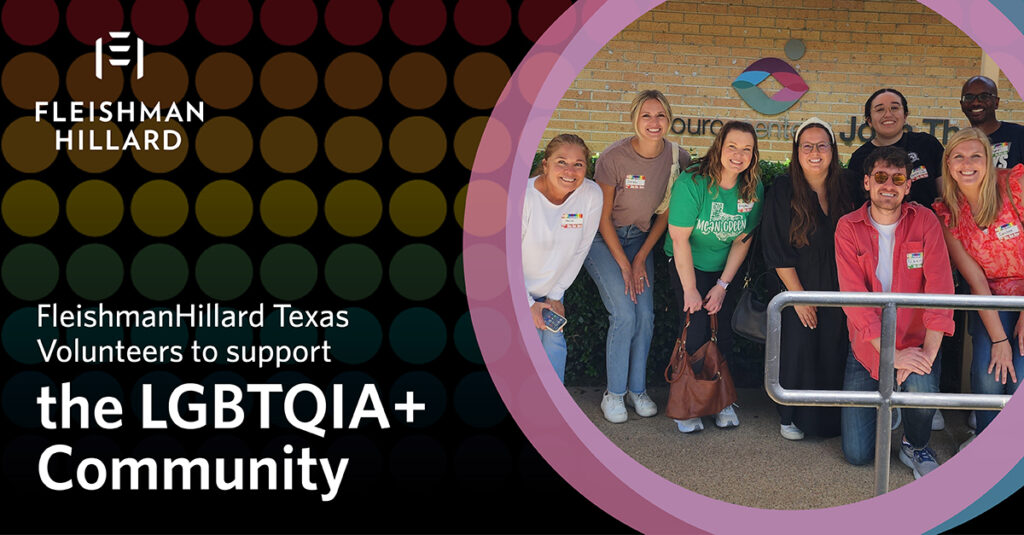
Our Texas team members felt compelled to find a way to support this community through our FH4Inclusion initiative and, over the summer, partnered with the Resource Center, which operates one of the largest LGBTQIA+ community centers in the U.S. and is a primary HIV/AIDS service organization in North Texas. With a staff of nearly 100 people supported by over 1,200 volunteers, the Resource Center serves more than 62,000 people each year through programs that address the needs of the LGBTQIA+ community and services that provide critical assistance to people living with and affected by HIV/AIDS – including a food pantry and hot meal program that serves 800 people each week. They have grown into a trusted provider of LGBTQIA+ services in a safe, affirming environment with the goal of achieving recognition and equal rights for all LGBTQIA+ people. (To learn more about the Resource Center and the multitude of ways they support the LGBTQIA+ community, visit myresourcecenter.org.)

To ensure that all our Texas team members could participate, we worked with the Resource Center to find multiple ways for folks to contribute –including on-site, in-office and remote options. Our support kicked off in June for Pride Month with a letter-writing initiative and food/supply drive where colleagues wrote letters or shared cards with words of encouragement and/or donated much-needed food/supplies to support the LGBTQIA+ community. In July, eight FleishmanHillard team members delivered the donations of cards and goods to the Resource Center and spent the morning assisting clients in the food pantry and serving hot meals.

In all, our colleagues donated 166 pounds of food and goods and spent 44 hours planning, writing cards and volunteering to support the Resource Center.

The efforts by our Texas office helped bring our cumulative contributions through FH4Inclusion to more than 37,000 hours of service to more than 130 nonprofit organizations globally.

Article

The New World of ESG Compliance and Communications in Asia Pacific

September 19, 2023

Patrick Yu, GM, SVP and Senior Partner, FleishmanHillard Hong Kong

The global landscape for environmental, social and governance (ESG) reporting is in the midst of rapid transformation, driven by new standards and evolving regulations while pressed by broad-based demand for greater transparency and accountability, and all set against a backdrop of a growing number of investment decisions being shaped by ESG considerations.

Investors of all stripes (institutional, pension, private equity etc.) plus other stakeholders want clarity and consistency in the ESG audit process so they can make the correct investment decisions. Many already undergo due diligence on ESG credentials before putting money into funds, M&As or other company financings, but they want to use standardized measures as a foundation.

In our new report, The New World of ESG Compliance and Communications in Asia Pacific, we look at the new standards benchmarks for ESG Reporting from the International Sustainability Standards Board (ISSB). We also take a look at the readiness of companies and different jurisdictions to adopt them.

The stakes are high. Bloomberg Intelligence reports that ESG investable assets surpassed $35 trillion in 2020 and could reach $50 trillion by 2025 – that’s about one-third of projected assets under management globally. For fund managers and investors to be absolutely confident in the integrity of the ESG products they sell or buy is paramount.

In our Future of Asset Management in Asia report released earlier this year, we found that 80% of investors place a high value on strong ESG product offerings, especially those in mainland China (90%) and Hong Kong (80%).

Why effective ESG communication is essential

In June, the ISSB issued its first two standards that set a new global benchmark for such reporting. In parallel, regulators in the U.S., EU and Asia Pacific are moving ESG disclosures from voluntary to mandatory. The moves add up to rapid change and genuine progress in ESG reporting.

Essential to this are effective ESG-related communications – a true business imperative. Besides meeting compliance requirements, companies must craft compelling ESG narratives that satisfy diverse stakeholder expectations.

Many companies are in fact well underway in upgrading their ESG reporting processes. Almost all (99%) of S&P 500 companies voluntarily publish ESG reports in some form, while 85% of Hong Kong-listed companies disclose details of climate-related risks and mitigation measures. That said, disclosure is not uniform across jurisdictions, of which few require independent auditing of claims.

The two new ISSB standards cover general sustainability-related risks and opportunities, and climate-related disclosures. Both are voluntary and apply after Jan. 1, 2024, with implementation by jurisdictions in Asia Pacific and the EU likely by 2025.

In Asia, Hong Kong Exchanges and Clearing (HKEx) became one of the first in the world to announce plans to align with the new ISSB standards, which include new mandatory climate-related disclosures that supersede the current “comply or explain” system. In Singapore, the stock exchange is taking a phased approach to mandatory climate reporting, applying these rules in stages across different industry sectors.

ESG implications and next steps

It’s clear that investors increasingly seek sustainable investments in response to greater awareness of climate change, energy security and ethical finance. Fortuitously for them, higher ESG performance is also seen to correlate with lower risk and better long-term profitability.

So, what are the implications for business leaders in the Asia Pacific?

  1. Regulatory changes and investor demand for new reporting standards mean sustainability information is rising to an equal footing with financial information.
  2. Stricter reporting guidelines and investor scrutiny mean ESG is more integral to corporate communications strategies, so it is vital to develop a strong narrative.
  3. Regulatory trickle-down will hit businesses caught up in the supply chain of companies that need to be ESG compliant, with the key sticking point being Scope 3 emissions.
  4. Regulators worldwide are committed to interoperability and seek an alignment of ESG standards to ease the reporting burden for companies and aide investor decision making.
  5. Companies doing business in Asia Pacific are rightly focused on compliance with ESG reporting standards and regulations as disclosure moves from voluntary to mandatory.

We recommend eight steps to prepare for ESG-driven transformation:

  1. Begin now: ESG reporting is more and more urgent; companies have limited time to comply.
  2. Explore sentiment: perception studies help identify investor sentiment and views on corporate ESG performance.
  3. Build trust: assess your data for alignment with applicable mandatory and voluntary frameworks and identify gaps and actions.
  4. Talk to investors: integrate ESG messaging for more active investor relations.
  5. Tell compelling stories: refresh and update narratives and communications materials around ESG.
  6. Inspire collaboration: use internal communications to improve staff knowledge of relevant ESG standards.
  7. Plan for the worst: prepare for ESG-related risks such as a greenwashing accusation, non-compliance or action by consumer or shareholder activists.
  8. Stay on track: monitor the development of global and local ESG standards.

Asia’s multiple jurisdictions create opportunities and challenges in ESG compliance and communications. Having a trusted advisor will help you navigate the complexity of the ESG landscape in the future.

Article

FleishmanHillard’s Patrick Yu to Lead Discussion on Navigating the New World of ESG

September 18, 2023

 When: Sept. 27, 2023 

What: PRovoke Asia-Pacific Summit 

Where: The Westin Singapore, Singapore 

Patrick Yu, general manager of FleishmanHillard in Hong Kong, will lead a conversation on “Navigating the New World of ESG” at the PRovoke Asia-Pacific Summit on Sept. 27. The event takes place at the Westin Singapore.  

The panel will discuss upcoming opportunities and challenges in sustainability related communications for global multinational corporations in Asia from regulatory and communications perspectives. 

 Yu will be joined on stage by: 

  • Joachim Goh, Head, Industry Development and Strategy, National Volunteer and Philanthropy Centre 
  • Sammie Leung, Partner, Regional ESG Services, PwC Asia Pacific 
  • Angela Ling, Director of Marketing and Communications, Asia-Pacific, LaSalle Investment Management 
  • Shweta Shukla, Head of Strategy, Communications & Corporate Affairs, Unilever International 

The PRovoke Asia-Pacific Summit will feature PR industry leaders exploring the profession’s ability to address critical challenges across the APAC region.  

Get more information about the PRovoke Asia-Pacific Summit

Article

FleishmanHillard Partners with Cannes Can: Diversity Collective to Bring Positive Impact to the Industry with New Voices

September 14, 2023

FleishmanHillard and Cannes Can: Diversity Collective (CC:DC) joined forces this summer to bring fresh perspectives to key creative gatherings, leveraging the power of FH4Inclusion, FleishmanHillard’s pro-bono and volunteer initiative that has provided more than 37,000 hours of service to more than 130 global nonprofit organizations advancing inclusion.

It all started when Adrianne C. Smith, FleishmanHillard Chief Diversity & Inclusion Officer and CC:DC founder, attended her first Cannes Lions Festival and witnessed a significant lack of representation. She created CC:DC in 2017 to continue the conversation about the lack of diversity in the communications industry and to bring previously underrepresented groups to the table. In 2018, the organization brought its first group of ambassadors to the Cannes Lions International Festival of Creativity, where storytellers, creatives and other industry professionals gather annually. From there it took off, bringing more ambassadors each year and creating bespoke programming.

Fast-forward to 2023, we locked arms with CC:DC and supported social media management, media relations, thought leadership, activation planning and on the ground logistics at CC:DC’s two annual activations: the Cannes Lions International Festival of Creativity and Inkwell Beach at Martha’s Vineyard. At the events, our colleagues helped connect Grammy award-winning producers, well-known activists, artists and Fortune 500 sponsors to facilitate thoughtful and impactful conversations surrounding the intersection of inclusion, creativity and the need for continued investment into both within our industry.

Our global creative team also got in on the action, working with CC:DC to reinvent its AYA Inclusion Awards program hosted in Cannes. This included developing the graphic design and overall aesthetic of the awards, along with creating the award categories and judging standards, and having a hand evaluating the entries. In the spirit of inclusion, the AYA awards are free to enter.

“The goals of FleishmanHillard and CC:DC align in many ways to create a more inclusive communications and marketing industry. We were able to uplevel the already impactful work that CC:DC has been doing by enhancing the AYA Inclusion Awards with our world-bending creative leaders, managing the flow of events flawlessly, and increasing social and traditional media awareness, which garnered great feedback and engagement online while landing over 20 pieces of coverage in publications such as PRWeek, PRovoke, the Lions Daily News, Campaign, Fast Company, Human Resources Director Magazine and more,” said Francesca Weems, Director of DEI, FleishmanHillard.

The reinvigorated awards were also a hit.

“It was inspiring to see so many amazing pieces of work that center various aspects of diversity – be it race and ethnicity, accessibility or gender equality. With work entered from China, Brazil, France and the U.S., the AYA Inclusion Award is a great showcase that across the world diverse agency teams are using creativity to make an impact for marginalized communities,” said Anne Beutel, FleishmanHillard vice president.