Employee Login

Enter your login information to access the intranet

Enter your credentials to access your email

Reset employee password

Article

Infusing the Human Role in AI – A paradox for communications success in an era of digital transformation

November 14, 2023

Nearly every organization – regardless of industry – is facing an existential question right now: How will AI change the way we do business? For some, the technology brings optimism in the shape of streamlining cumbersome processes or eliminating the mundane. For others, there’s a real question of relevance, the role individuals will continue to have in shaping the business, and concerns around misuse or misappropriation of their IP and other sensitive information. For most, there seems to be an expectation that more AI means less human involvement, for better or worse.

Regardless of where any singular business is in its AI trajectory, one thing is true for all: AI – and generative AI in particular, is precipitating mass-scale business transformation faster than any technology before it.

In rapid succession, the questions that tend to follow the first are:

  • How can this technology help us and what are the risks for our organization?
  • How are we managing the process within our organization?
  • Who is responsible for dictating when and how we’re communicating forthcoming changes to our business?
  • How will our business roll out the technology to balance speed with safety and deliver industry-leading tech solutions while ensuring compliance and mitigating risk?

In a recent client salon about the role of gen AI in communications, senior FleishmanHillard counselors discussed and debated the merits of the technology, the AI transformation that is upon us all, and the value of thoughtful and deliberate communications as the most effective tool to ensuring the success of the transformation.

While questions about guardrails and best practices abounded – and responses led to more questions with seemingly endless grey areas – one reality became clear in every part of the discussion: at this still-early stage, the success of AI implementation has more to do with the humans who wield it than it does with the technology itself. In essence, successful adoption and implementation of generative AI will be the result of uniquely human applications of the technology if we know how to navigate it and communicate about its potential.

As organizations embrace AI-driven technologies to stay competitive and relevant, the corporate communications function plays a critical role. Communications will not only engage employees in the evolution of the technology, but will also ask critical questions about the use of AI on behalf of other audiences. Communications teams will develop, and help their organization’s leaders anticipate responses to AI risk scenarios, and will help pressure test the organization’s AI transformation strategy and how it is rolled out across the enterprise and to key stakeholders. Of the many topics, the conversation highlighted three key principles for communicators to consider as their organizations embark on this change:

Earn trust, don’t ask for it | Transparency is accountability

  • In the age of misinformation and disinformation, it is the leaders and the employees who are the ultimate arbiters of an organization’s credibility and reputation. The time to build trust is not when you’re in the middle of a crisis but well before a crisis unfolds. Businesses build credibility, an inherently human quality, and demonstrate accountability through transparency, communication and ownership of outcomes. Working backwards from a hypothetical breach of trust and implementing the checks and balances that cultivate it can minimize an organization’s level of exposure and serve as an insurance policy for your reputation, particularly with a relatively new technology like generative AI.

Understand your threshold for risk | Compliance over defiance

  • Any AI communications strategy that is not aligned to specific business imperatives will fall short and risk exposure to the business. It is essential for any organization’s AI transformation to begin with the business objective. If the point of guardrails is to allow a business to move faster and engage employees, the board, investors and other stakeholders, guardrails must then be based on business priorities and the level of risk the organization is willing to tolerate – not the fear of what organizational breakage might happen. Understanding how to communicate that internally through a lens of measured optimism is – notably – another uniquely human characteristic. Simply focusing on the risks of generative AI, without the counterbalance of defining opportunities and organizing safe experimentation leads to prohibition and creates pathways to defiance versus compliance. This is especially likely when curious, energetic employees are ready to move faster than the organization. Leading with the promise of the technology, balanced with the measured understanding of what level of risk the organization can tolerate, is the path to fostering dialogue and engagement.

Resist normalization | Overcome a sea of sameness in communications

  • While generative AI can expedite our understanding and synthesis of topics, historical events and the like, it is also rapidly accelerating the normalization of how those very topics/events are reported, documented and reflected. Ultimately, by referencing and assimilating a wide range of existing content, generative AI without appropriate oversight could increase the risk of a sea of sameness – communications that increasingly looks more alike across organizations and brands, and appears less distinctive to audiences. Communications teams are at particular risk when using the tools to break down complex and highly nuanced topics. In our role as communicators, it is incumbent upon us to introduce critical examination into the communications process so that our content is not simply a modified representation of the homogenized whole, but rather delivers a nuanced perspective that reflects the culture, values and integrity of our organizations. The introduction of an old-fashioned, familiar media tool like an editorial board within an organization can ensure that internal and external communications created through generative AI are credible, bespoke for the audiences they’re intended to reach, truly reflective of the organization’s values, purpose and brand, and uniquely expressed, without letting go of benefits of AI for faster content generation.

Credibility. Optimism. Integrity. Reflecting on all that was discussed, it’s clear that a humanistic approach to AI adoption and rollout is perhaps one of the strongest risk management and mitigation strategies for leadership to implement today. Ironically, it is likely to be the Generative AI implementations with the most qualitative, editorial-style human oversight that are most effective, rather than the “low- to no-humans” version that concerns many organizations.

So, how long is the runway for generative AI adoption? It’s both right now and at least three years out. A recent Gartner report predicted that by 2026, “over 80% of enterprises will have used GenAI APIs and models and/or deployed GenAI-enabled applications in production environments, up from less than 5% early 2023.” Though it may feel as though there’s time, getting it right means organizations must start planning now if they intend to reap the benefits of the technology. Effective communication will be essential to ensuring key stakeholders see the value and the opportunity versus the challenge and risk inherent in the adoption of any new technology; and that means prioritizing those audiences at every stage and phase of the process with meaningful updates and intentional checkpoints and resources. It’s about creating a shared vision of the future where AI augments human capabilities, leading to better, more meaningful work.

We know that AI holds tremendous promise – in business and in our lives personally. And, despite undeniable perils and the potential for misuse or unintended consequences, guiding principles rooted in integrity can minimize those risks. Personally, I see something optimistic about the opportunity and ripple effects generative AI technology will have within and across industries – so long as we stay focused on the very real human impact that is at the heart of the technology. AI’s promise is within reach, and a responsible, people-centered approach is the bridge to a brighter future.

This communication is offered as general background and insight as of the date of publication, but is not intended to be and should not be taken as legal advice. Each organization should confer with its own legal counsel and its own business and strategic advisors for guidance that is specific to and considers the organization’s status, structure, needs, and strategies.
Article

FleishmanHillard’s Kathryn Chappell to Share Culture Best Practices at Ragan’s Future of Communications Conference

November 7, 2023

What: “Engaging Every Employee: Building Better Multigenerational Comms” discussion

When: Wednesday, Nov. 8, 10:15 a.m.

Where: Ragan’s Future of Communications Conference in Austin, Texas

Join FleishmanHillard’s Kathryn Chappell, senior vice president and partner, and IMF’s Karla Chaman, deputy division chief of internal communications, for the “Engaging Every Employee: Building Better Multigenerational Comms” session at Ragan’s Future of Communications Conference in Austin, Texas on Wednesday, Nov. 8 at 10:15 a.m. The session will share comms techniques and strategies to bridge the generational gap, regardless of preferred communications styles. Discover how to encourage younger employees with purposeful mentorship programs, how to prevent ageism in your comms and much more.

For more information and to register for the conference, click here.

Article

FleishmanHillard Nominated in Three Categories as 2023 ICCO Global Awards Shortlist is Revealed

November 2, 2023

ST. LOUIS, MOFleishmanHillard received nominations in three categories, including Agency of the Year (Large), on the 2023 ICCO Global Awards shortlist, which was released this week. The global agency was also recognized in two other categories on behalf of client work.

The International Communications Consultancy Organisation (ICCO) Global Awards spotlight excellent professional achievement in public relations and communications campaigns. They are recognized by 40 PR associations around the world, representing 82 countries. Winners will be announced at a ceremony in London on November 29th. For a full list of nominees, click here.

Article

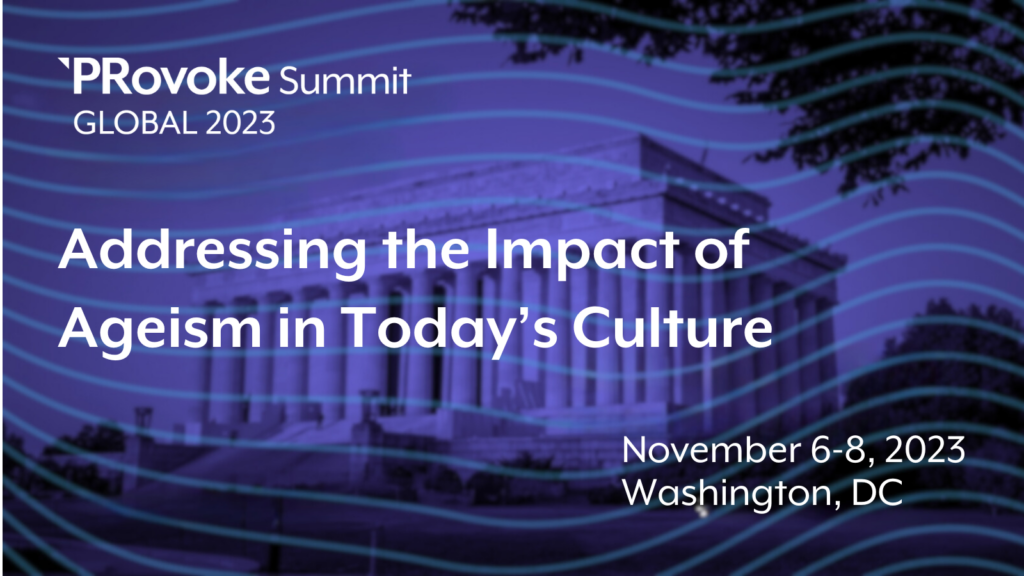
Addressing the Impact of Ageism in Today’s Culture 

November 1, 2023

When:  Nov. 8, 2023 

What: PRovoke Global Summit  

Where: Hotel Washington (515 15th St NW, Washington, DC, 20004) 

FleishmanHillard CEO John Saunders will lead a conversation about the impact of ageism in today’s culture alongside AARP’s CMO, Martha Boudreau, at the PRovoke Global Summit. The event will take place at Hotel Washington on Nov. 8.  

The pair will tackle important conversations surrounding the broader topic of aging, such as the impact seniors have in our society and what brands can do to reach them.  

The PRovoke Global Summit is a three-day conference that will invite a diverse group of PR industry leaders to address the critical issues facing the profession.  

Get more information about the PRovoke Global Summit 2023.


Article

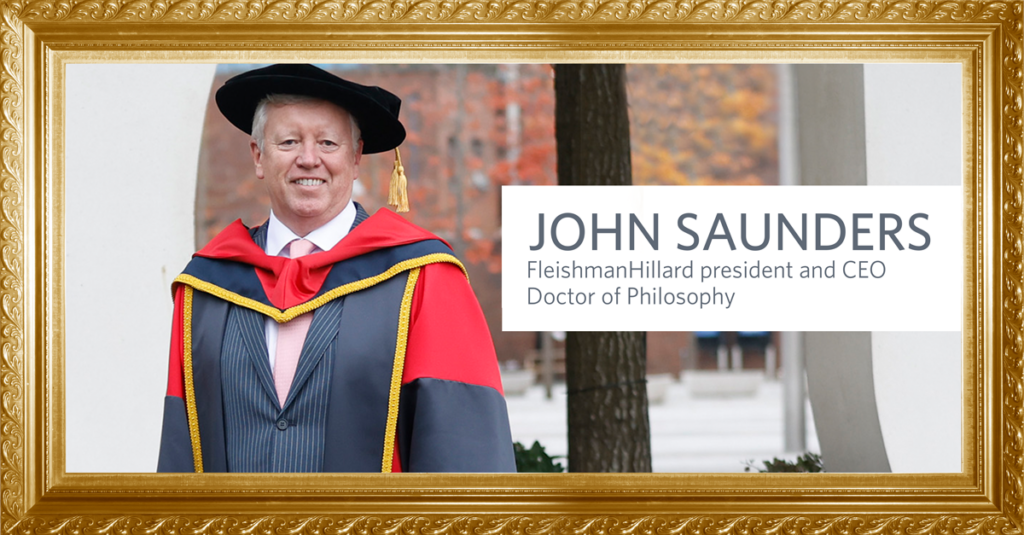
FleishmanHillard CEO John Saunders Awarded the Degree of Doctor of Philosophy

October 26, 2023

John Saunders, FleishmanHillard president and CEO, was today conferred with the degree of Doctor of Philosophy (Honoris Causa) from Dublin City University (DCU) in Dublin, Ireland. He is the first public relations communicator to receive this recognition from the University. The convocation was a part of DCU’s Autumn Graduation Ceremony for students from the Faculty of Humanities and Social Sciences.

In remarks at the ceremony, John was recognized as one of Ireland’s Communications pioneers, a global leader in the public relations field and a noted supporter of equality, diversity and inclusion in the workplace. He joins an esteemed group who have received the recognition, including Mother Teresa and former U.S. President Bill Clinton.

John is only the fourth CEO in the history of the 77-year-old global agency. From 2011, he was Regional President for Europe, Middle East and Africa. He was previously Regional President for Continental Europe and Eurasia, having been named as Regional Director for Europe in 2004. Before assuming his regional leadership positions, John was Managing Director at FleishmanHillard Saunders. He founded that business in 1990 and grew it into Ireland’s largest public relations consultancy and one of FleishmanHillard’s most successful international offices before selling it to Omnicom in 2001. He began his career as a sports presenter with RTE – Ireland’s national state broadcaster.

DCU is a global leader – ranking No. 1 for Communications and Media Studies in Ireland and in the Top 200 of almost 4,500 universities worldwide. More on John’s honorary degree and the ceremony is available on the University’s website.

Article

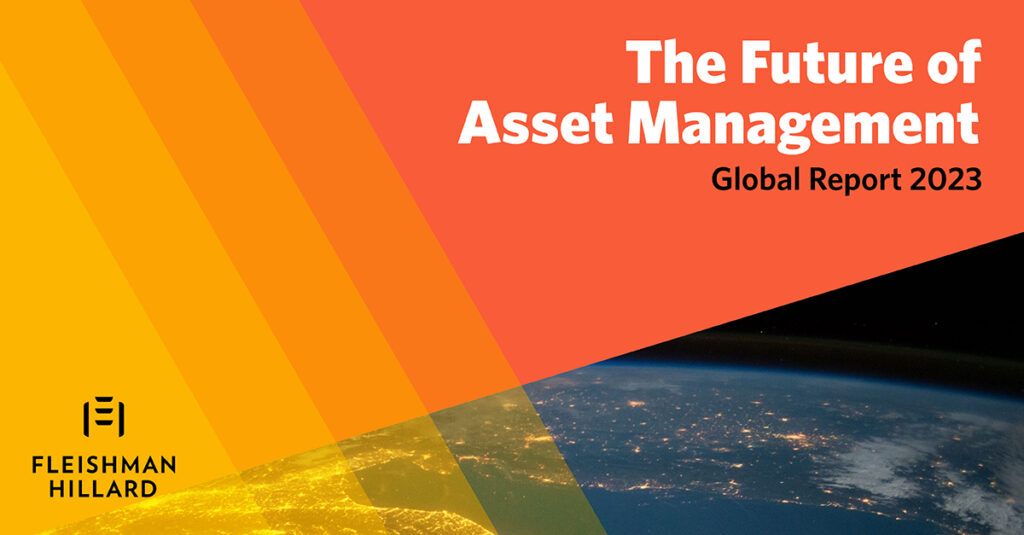
FleishmanHillard’s Future of Asset Management: Global Report 2023 Finds that Three-Fourths of Retail Investors Around the World Value ESG Commitments When Choosing an Asset Manager

AI, ESG and DE&I Among Top Investor Considerations

ST. LOUISFleishmanHillard today launched The Future of Asset Management: Global Report 2023. The new report examines the communications trends shaping retail investor perceptions, along with the expectations of the global asset management industry amid market volatility and the rapidly changing landscape of how and from whom investors get investment information and advice.

Based on a survey of more than 2,000 retail investors in the United States, Europe and Asia Pacific, the report finds that artificial intelligence (AI), environment, social and governance (ESG), diversity, equity and inclusion (DE&I) and transparency are among the top considerations for investors.

“The asset management industry has been going through a period of unprecedented change,” said Thomas J. Laughran, senior vice president and partner, Financial and Professional Services practice lead. “Markets have been buffeted by first the pandemic and then rising interest rate shocks. Cultural and regulatory shifts have focused greater attention on ESG, DE&I and how investments are marketed and deployed. Information sources and investment management options have proliferated as a result of technology and social media.

“Around the world, investor expectations of how, when, where and why they engage with investment and financial services’ providers are continuously evolving in this dynamic environment. Amid the uncertainty, investors across the globe are increasingly seeking transparency, authenticity and accessibility in how the industry engages, informs and communicates with them.”

Among the key findings by region:

United States

  • Despite a contentious political climate, more than three quarters (78%) of U.S. investors cite DE&I policies and commitment as important considerations in selecting a financial advisor. More than two thirds (73%) expect clear and transparent ESG policies, goals and commitments to be public and accessible.
  • Though the use of ChatGPT/AI may still be in its infancy for retail investors, some 60% of U.S. investors say they have already used ChatGPT or AI tools for investment-related decisions.
  • More than 90% of U.S. investors select performance and credibility as driving factors in selecting a financial advisor, on par with transparency in communication and fees.
  • For U.S. investors, news and financial media are the most common sources for information on investment funds and products, outweighing even financial advisors and asset managers.

Europe

  • In Germany, France and the UK, investor appetite in the AI sector is high, attracting more interest than all other sectors. However, use of AI tools in investing lags, especially in the UK where just 28% of investors have used AI tools, lowest among all the markets surveyed.
  • European investors place great importance in ESG considerations and are particularly wary of false claims or promises. Approximately three-quarters of European investors say they won’t invest in companies alleged to be engaged in greenwashing.
  • Although over half of respondents in the UK say they manage their own investments, just 7% say that they are “very knowledgeable.”
  • In contrast to their U.S. counterparts, European investors are more likely to turn to financial advisors to inform their investment strategy, with brand/reputation and performance scoring as the most important factors in their choice of an asset manager.

Asia Pacific

  • Inflation/stagflation and geopolitical tensions are the biggest concerns among investors across the four Asia Pacific markets (China, Hong Kong, Singapore and South Korea) surveyed. Investors in South Korea and China are less likely than their Hong Kong and Singapore counterparts to reduce their risk appetite in response to business activities resuming after the COVID-19 pandemic.
  • Nearly half of respondents across the Asia Pacific market turn to social media as a trusted source of financial information, higher than U.S. or European investors, while online platforms slightly edged out financial advisors and banks in most markets for sources for investment management.
  • ESG considerations are on the rise across Asia Pacific with large majorities of investors in each market eschewing investment in companies that engage in greenwashing, are accused of violating human rights or fail to live up to their ESG commitments.

FleishmanHillard’s The Future of Asset Management: Global Report 2023 includes qualitative and quantitative data. FleishmanHillard TRUE Global Intelligence fielded an online survey of 2,000 investment professionals in mainland China, the Hong Kong SAR, Singapore, South Korea, France, Germany, UK and United States between April 27 and June 6, 2023.

Article

Accessible communications: Why it matters

October 25, 2023

You may have heard the term ‘accessibility’ recently, but what does it really mean? In a broader sense, accessibility is the means to ensure that individuals are not excluded from using a product or service effectively. Meaning that anyone can do what they want with a similar amount of effort, within a similar amount of time.

The post Accessible communications: Why it matters appeared first on United Kingdom.

Article

Will gen AI change the game? Understanding the hopes, fears and ambitions of communications and marketing decision-makers

October 23, 2023
By James de Mellow

It’s almost a year since generative AI exploded into our newsfeeds and onto the agendas of organisations from all sectors. Since then, we’ve been told that these tools could affect up to 300 million jobs, and even that AI technology could one day pose an existential threat to humanity.  The news cycle is moving so […]

The post Will gen AI change the game? Understanding the hopes, fears and ambitions of communications and marketing decision-makers appeared first on United Kingdom.

Article

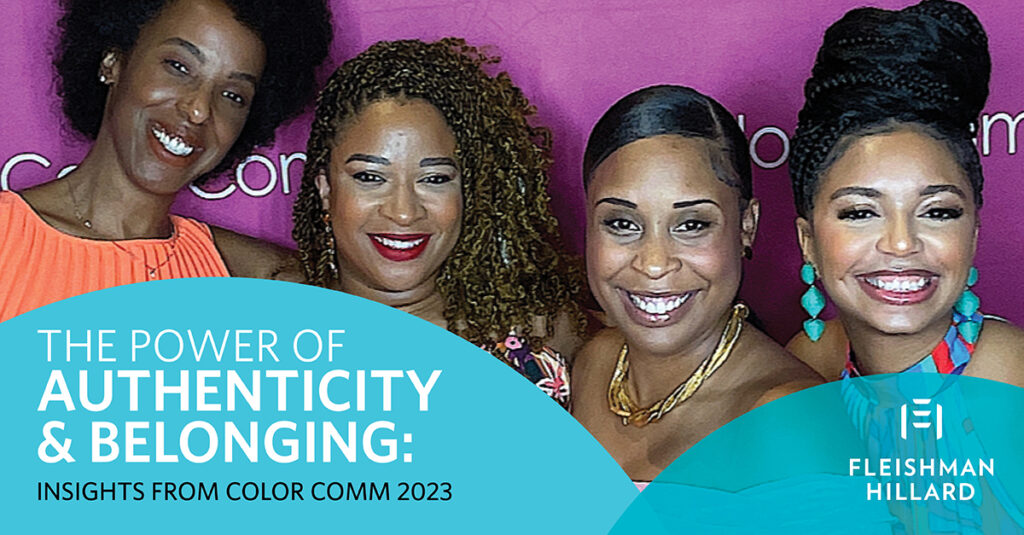
The Power of Authenticity & Belonging: Insights from ColorComm 2023

October 10, 2023
By Aisha Hudson

ColorComm’s origin story is of a luncheon bringing together Black and brown women in media and communications that became a community, spawning annual conferences, a global network of chapters and a business. It has a way of seeping into your soul – an incredibly energizing experience in the moment, but also something that sticks with you and leaves a lasting impact on how you move through your day. Reflecting back on this year’s conference, here’s a recap of some of those “sticky” moments from the C2 ColorComm Conference in Miami.

“You can fake ‘till you make it – but eventually the ‘fake’ will fade.”

One of the most compelling sessions was that by renowned body language expert Linda Clemons who has dedicated her career to helping people unlock their full potential and reclaim their power through nonverbal communication. Not only did she offer insights into the nuances of posture, facial expression and even eye movement for conveying a message, but also a valuable lesson on authenticity – that even if you stand in a certain way and say all the right things, in the end, your true self will always show through.

To me, this spoke to the power and necessity of authenticity on a personal level – being true to myself, my beliefs and my values and bringing them forward in my own body language, voice and actions. Authenticity can’t be faked when it is rooted in honesty and genuine emotion.

But what, exactly, do you do to show up more authentically? What is it that shows people that you are true to your own personality, spirit or character? Where’s the proof for that?

At FleishmanHillard, these are the same questions we challenge our clients to answer in order to understand how they show up for employees, customers and other stakeholders, and the impact of authenticity on their reputations.

Being authentic is not based on a single action. To be perceived as authentic, we need to be courageous and take consistent action driven from our innermost and most authentic selves. That we are showing our unfiltered behaviors and that we are speaking or writing with honesty.

Faking it is easy but doing the hard work it takes to live authentically is far more rewarding.  

– Aisha L. Hudson, vice president, New York

“The difference between resilience and struggle are perspective.”

ColorComm was an empowering experience especially as a first-time attendee. In corporate rooms often it is common to be one of few Black faces in the room and there I was surrounded by 400 fierce, dynamic and compelling women (in chic, fabulous attire no less)! It was inspirational to heed advice from the likes Kim Goodwin, president of ABC News and Rashida Jones, president of MSNBC (to name a couple) and the various women who have created impactful work in the world we see today.

Through the dozens of panels, each had a takeaway that resonated and has shaped my my career intentions since, but there was a through line in each story that sits with me the most: resilience.

Without resilience and risk, we wouldn’t have beautiful work such as Colors of the World skin tone crayons. I was enlightened by the background story and journey that led to a product that ultimately fosters a greater sense of belonging and acceptance. Because of Mimi Dixon, senior director, Brand Activation and Content at Crayola, the brand was directed to revisit their approach and partner with experts. Now, my children can make art that reflects what they see in the mirror and be recognized – a far cry from the orange color I used during my youth. It took courage for her to speak up and guide them on the right path.

As client counselors, we are not the final decision makers and sometimes it can feel like a struggle especially when impassioned about a topic that resonates with our life experiences. Ultimately, it falls on each person to make sure we persevere as the work we do is equitable and necessary. We must all lead with courage.

Faith Golden, account supervisor, Chicago  

“To tell courageous stories, you must be courageous yourself.”

It takes bold communicators to tell bold stories. During a session about authentic storytelling, one panelist shared this statistic about the influence of a company’s values and brand identity on Gen Z’s purchasing behavior:

Another panelist shared an insight on how to respond to this stat – “To tell courageous stories, you must be courageous yourself. Speak up in the room and challenge things. Encourage disagreement with your teams.”

While this advice can seem tough, it’s key to position us as strategic voices on our teams and uplift diverse and equitable perspectives. It’s equally important for our teams to foster environments where disagreements are welcomed and bold ideas are encouraged to develop authentic communications.

Embracing courageous storytelling and personal courage is not just about keeping up with Gen Z – it’s about shaping our direction to where they’re evolving and ensuring we’re developing our teams with a value for breaking the norm.

– Dasia Jones, senior account executive, Atlanta

“Pressure produces two things; you want more diamonds than farts.”

While the quote I chose is comical, the pressure business leaders are facing is real and increasing. And as counselors who pride ourselves on being able and willing to get into the trenches with our clients and leaders, we’re facing the same challenges, translated for the realities of our industry.

Among the nearly 400 other leaders in attendance at ColorComm, I was reminded that the collective wisdom we have is meant to be shared. Throughout the conference, you could see the bent heads of women coming together, collaborating and commiserating, one-on-one and in small groups. And during sessions, these same faces were openly expressing agreement as panelists and keynote speakers spoke about resilience, ingenuity and steadfastness in the face of difficulty. We needed this event to create a release for that pressure and to strategize on how to make diamonds.

After the conference, I sat in the hotel lobby, decompressing and reading my notes before heading to the airport. The same women who dazzled on stage were accessible in that lobby, taking pictures and exchanging contact information with attendees. The intimacy of ColorComm and the reminder that we create diamonds made the experience all the more powerful for me. I’m grateful.

– Veleisa Patton Burrell, senior vice president, Dallas

Article

AARP and FleishmanHillard Take Home Win for Top Public Affairs Campaign at the Ragan PR Daily 2023 Nonprofit Awards

October 6, 2023

AARP and FleishmanHillard received the award for Top Public Affairs Campaign at the Ragan PR Daily 2023 Nonprofit Awards in New York City.  The winning “The Fight for Fair Rx Prices” campaign with our client AARP advocated to make prescription medication more affordable for senior citizens.

The PR Daily Nonprofit Awards are presented by Ragan Communications, an industry leader in providing professional development, training and intelligence to communicators, marketers, HR professionals and business leaders worldwide. The annual awards celebrate the industry’s commitment to bringing awareness and driving results for important causes. Attendees gathered to recognize the storytelling strategies that amplified client’s efforts to make a meaningful impact.

Find out more about the Ragan PR Daily Nonprofit Awards and 2023 winners here: https://fh.pr/ierzl