Employee Login

Enter your login information to access the intranet

Enter your credentials to access your email

Reset employee password

Article

Cybersecurity and Reputation in 2026: Surfing into the Wave 

January 29, 2026
By Scott Radcliffe

While we’re well past Larry David’s threshold to wish “Happy New Year,” 2026 is still fresh and there will be some trends communications leaders should be very prepared for as cybersecurity and corporate reputation continues to be more firmly intertwined. What’s more, these trends are evolving quickly and in a way that should make most PR leaders question assumptions they’ve made for cybersecurity-related communications even just a few years ago.  

We’ll likely find the organizations that emerge with their reputations intact—or even enhanced in some cases—are those that recognize a simple truth. Specifically, that in the age of growing and ever-present cybersecurity threats, your communication strategy is nearly as important as your firewall configuration. 

The Trends

Show Your Work, Not Just Your Confidence: Soon it will no longer be enough to simply say your products or services are “secure,” you need to demonstrate it with specificity and honesty. This means highlighting the good with the bad and providing meaningful detail about your offerings. Companies like Anthropic are leading the way by openly discussing safety concerns with their AI models, while Amazon has been transparent about potentially malicious activity it has detected and mitigated in its network. The market is rewarding this kind of candor because it builds credibility and ultimately trust. Security is a journey, not a destination, so no one expects their security vendor to have a perfect record. They do expect them to quickly and effectively address vulnerabilities. 

Supply Chain Security as a Diplomatic Balancing Act: Supply chain security is already a fundamental area of corporate risk, but it is likely to continue to grow as cybercriminals become more creative and effective in exploiting vendors across corporate supply chains. Because these types of issues have only grown in frequency and impact, the way in which organizations communicate to core stakeholders about them will also need to change in 2026. The line between accountability and “throwing suppliers under the bus” is beginning to grow very blurry and will depend even more on the facts on the ground in the coming year. Moving forward, organizations should approach communications related to these situations with considerable nuances. Letting the facts of the matter drive the narrative rather than reflexive blame-shifting that could backfire with partners and customers alike if pre-packaged approaches are applied. 

The Race to Disclosure Amidst a Sea of Data Extortion Attacks: Bad actors are doubling down on data theft and extortion rather than deploying traditional ransomware. In this environment, companies need to realize they aren’t alone—and many who are targeted actually stand out in a positive way if they choose not to pay and instead disclose the issue before the bad actors. Speed and a degree of transparency can transform a potential reputation crisis into a demonstration of organizational integrity. This trend also extends beyond data extortion attacks. In recent years, many companies received positive feedback for proactively disclosing security issues early when they pose an immediate threat or have immediate impacts on users, even when not legally required to do so. 

Reputation in the Age of Hacking Back: In the geopolitical West, and particularly in the U.S. of late, state-backed offensive cyber action and overall aggressiveness—including “hacking back” and hawkish, nationalistic perspectives—is gaining momentum. Brands operating in this sphere directly or tangentially face complex decisions. Specifically, how do you want to position your organization in this increasingly militarized cyber domain while protecting your reputation? Also, how that decision will need to be framed and communicated in a way that aligns with their existing brand reputation or the trajectory they want their reputation to take. 

It’s Past Time to Stop Saying, “We take security seriously:” Using that phrase increasingly carries with it a subtext that suggests you’re simply cutting and pasting what everyone else says and in fact do not take security “seriously.” Furthermore, for a while it has also underscored a lack of authentic engagement with the issue for press, but increasingly with other important stakeholders, which can undermine trust with your key audiences as opposed to building trust. 

The Bottom Line 

The companies that will thrive in 2026’s cybersecurity landscape won’t necessarily be those that never experience incidents. They’ll be the ones that communicate about them with honesty, speed and strategic clarity. Reputation is no longer built on projecting invulnerability; it’s earned through demonstrating resilience, accountability and respect for those who trust you with their data. 

Your security posture and communication strategy are now inseparable. Make sure they’re both ready. 

Scott Radcliffe width= Scott Radcliffe is FleishmanHillard’s global director of cybersecurity, leading the firm’s Cybersecurity Center of Excellence and advising clients on rising cyber risks. He recently rejoined FH from Apple, where he led cybersecurity communications and previously served as the agency’s senior global data privacy and security expert.
 
Article

Social Media in 2026 Is About Where Your Proof Lives: A POV

January 27, 2026
By Martha Kalman

This Year Promises to Be About How Other Voices Validate It, and What AI Aggregates About You

A few weeks into the year and we’ve unsurprisingly seen tons of 2026 social media trends and predictions; like these from Sprout Social, and this report from Meltwater or these from Forbes.

Did you bookmark them? Have you shared anything with your team? If so, I hate to break it to you, but most of them seem to be missing the bigger picture.

It’s not about algorithm changes, new channel features or the latest platform launch. It’s about something more foundational.

How trust forms have shifted, where decisions are made has changed, and the role of proof inside the social and digital ecosystem has completely inverted. The brands who understand the new rules will thrive. Those who don’t will keep wondering why their social metrics look good while their business results don’t.

My 2026 analysis reveals the high impact shifts your brand must master to outpace the competition and turn social presence into profit.

Over the past few years, the social media landscape didn’t just fracture; it reorganized into three distinct layers, each governed by a different logic. Understanding which layer(s) matter for your business and where proof needs to form is now the central question in social strategy.

Layer One: The Dying Town Square. These are the legacy social platforms: Instagram, X, Facebook, and YouTube’s open feeds. These layers still drive scale, and they’re still where cultural moments bubble up, but noise is overwhelming intimacy. Status is more about exclusivity to access and being somewhere only a few people are allowed to see, not about number of likes.

Yes, this layer still matters for discovery, mainly as a top-of-funnel awareness play, but fair warning: while platform metrics may report activity, your average person is socializing or participating less. On TikTok, for example, the platform saw a 24% decrease in users actively jumping into comment threads, according to Social Insider’s 2026 benchmarks. What they are doing is searching, lurking, reading the comments and watching creators solve problems.

For brands still optimizing the town square in a traditional sense, you’re competing in a layer that’s becoming less relevant every day, with metrics of success (impressions, engagement, followers) that are no longer delivering the value they once did.

Layer Two: The Algorithmic Engine. This is the most unstable layer, but it’s where the eyeballs are. It’s also where most brands are pouring energy they don’t fully understand.

The Algorithmic Engine doesn’t care about your message or your community. It cares about one thing: what keeps each user scrolling the longest. The algorithm predicts what will trigger engagement and hold attention for each person. Then it serves it up, repeatedly. This includes TikTok’s FYP, Instagram Reels, YouTube’s recommendations, Snapchat Spotlight, synthetic creators and AI-fueled parasocial relationships. These are all optimized for engagement loops, not authenticity.

People know this is happening. They stay anyway because the experience is too perfectly calibrated. There’s awareness and acceptance happening simultaneously, but users continue to opt-in seeking a quick hit of dopamine.

What’s emerging here is the blurring of what’s real and what’s not. The algorithm doesn’t distinguish. Increasingly, neither do audiences. The brands winning in this layer are the ones pairing synthetic efficiency + human validators + transparency around provenance.

Layer Three: The Niche Villages. This is where trust, decisions and culture now dwell. Discord servers. Niche podcast comment sections. Subscription newsletters. Group chats. Invite-only, gatekept spaces. This layer has been referred to as “social dark forests“—private sanctuaries where users retreat from the performative, often toxic public internet for more authentic, likeminded and trustworthy interactions.

The 53% of people who say online communities should max out at 200 aren’t looking for less connection. They’re saying they want:

  • Connection that doesn’t perform
  • Spaces where discovery happens through recommendation, not algorithms

These communities create compounding credibility loops through trust that scales because it’s rooted in problem-solving, not reach. Think about it this way: someone asks a question in a Discord server, another answers with specifics; a third adds nuance. Over weeks, this group becomes more trustworthy than any public brand channel because the information is peer-validated.

In this layer, brands must make themselves worthy of integration into the rooms where conviction is arrived at. Broadcast messaging isn’t just unwelcome here; it’s explicitly rejected. Your only option is to show up as useful, contribute genuine expertise and let proof form through validation that emerges from within the community itself.

Where Proof Actually Forms Now

This is where the old model breaks down completely, and it’s the crux of why most brand strategies are no longer working.

Before, proof meant control. If you said something about your brand and showed evidence, you expected people to believe you because you said it with authority, celebrity, or scale. Testimonial videos. Case studies. Thought leadership posts. All brand-developed, brand-selected and brand-distributed.

Most brands are still operating inside this model, waiting for proof to convert into trust and sales.

The hard truth is that proof no longer forms when brands distribute it. For example:

  • In the Dying Town Square, your branded proof competes against millions of other messages vying for attention in the same feeds. It reads as noise. Just another brand claiming another thing.
  • In the Algorithmic Engine, you can drive impressions and engagement metrics, but AI is increasingly discounting brand claims in favor of community discussion and creator commentary. In other words, AI is optimizing for clicks, not credibility.
  • In the Niche Villages, where actual trust lives and decisions form, your branded proof isn’t exactly welcomed. Your only lever is to show up without a sales agenda and let proof form through validation.

Then there’s AI aggregation. A few domains tend to dominate what AI systems pull from when generating answers, and they differ from the domains marketers traditionally view as SEO drivers. In late 2025, Semrush reported that Reddit, LinkedIn and Wikipedia topped the list. So, while it may not be your press release or promotional content that gets cited, the Reddit thread where engineers discuss your product in technical terms? Yeah, it’s probably popping up in AI-generated answers. That YouTube video where creators breakdown how it actually works in real life? Same. And those citations become the proof.

The brands doing it right aren’t just distributing their own proof across the three layers. They’re architecting coordinated conditions where proof emerges independently, gets amplified through creators and communities, and gets aggregated by AI as evidence.

It’s worth nothing that as rapidly as LLMs are advancing, so too are their citation models. Since Semrush published their initial report, ChatGPT has shown a significant reduction in citations to Reddit, for example. We continue to see a rebalancing of citation models and this is why we’re deploying our AI Optix search solution more and more. It allows us to audit, inform and influence how brands show up in LLM responses, so we can keep you out in front.

One. Map where proof needs to form for your category. You need to know which social spaces matter for your industry and brand. Which communities congregate to discuss solutions. Which creators investigate your space with rigor. Which long-form content AI can surface and cite. Which conversations are driving purchase decisions. That’s where proof of formation needs to happen. It’s not where you’re comfortable. It’s where your audience is congregating and deciding.

Two. Build authentic relationships with gatekeepers and stewards. As a longstanding fundamental practice in the communications business, building relationships is now on steroids. Not as a brand account pushing messaging. As a collaborator who belongs to the conversation. Give creators early access to your product and creative freedom. Don’t script them. Answer questions in communities with real expertise, not promotional language. Show up because you have something genuine to contribute, not to generate impressions or citations. This is slow. It requires real interest in space, not just marketing opportunism. But it compounds. Communities notice stewardship. They reference it. They tell their networks.

Three. Create information and experiences that invite investigation and citation. The proof that scales now is proof creators reference, communities discuss, and AI aggregates. Long-form deep dives about your product features and how they benefit different audiences. Raw data that invites analysis. Clear documentation that becomes the reference material creators speak to in their videos. Live moments worth clipping and sharing. Experiences are genuinely worth documenting authentically because they’re interesting, not because they’re designed for social. Content that’s so useful, communities can’t help but reference it.

Four. Ensure your proof is discoverable by AI. If your proof is locked in press releases or behind website walls, AI can’t find it. AI engines pull from social platforms (plus Substack, traditional news sources, public documentation, etc.) into single, source-cited responses. This means your content should span all three layers mentioned and be nuanced for each. When these citations accumulate, your share-of-answer scales. People see your brand referenced as a credible source, and that becomes proof itself.

It’s not just where you’re discoverable; it’s what you’re saying and how machine-readable it is. Content subject matter must consider what people are searching for and how questions are being asked to ensure your brand is providing specific, evidence-rich answers.

Five. Anchor proof in real experience. This is where online and offline converge. Create genuine moments of connection, not designed for recording, but real moments people want to share. Not every brand needs physical activations, but the most legible brands create moments that feel authentic precisely because they’re not designed (primarily) for social content extraction. These moments compound into proof far more powerfully than content created specifically for social distribution. They create memories and real human engagement that can’t be faked or algorithmically optimized.

Understanding the framework is one thing. Seeing it in action is another. Here are two brands executing proof architecture in fundamentally different ways.

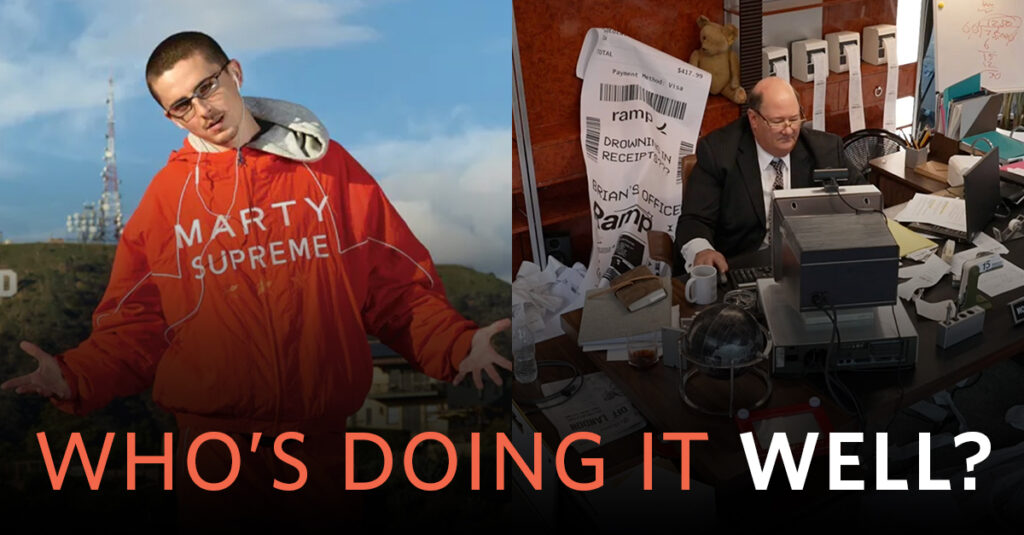
A24: Building Legibility Through Cultural Participation. A24 demonstrates how to make a brand legible to Gen Z through self-aware cultural credibility. They make moments that feel culturally intelligent. Ironic, but sincere. And they use a surround sound approach—showing up equally in small corners of social media, with big out of home stunts architected for digital capture and using celebrities and creators as validators—making it seem like they’re everywhere, all at once.

Their Marty Supreme campaign looks like chaos on the surface:18-minute marketing meeting videos, Timothée teaming up with rapper EsDeeKid, jackets reselling for thousands on StockX. But it’s not really about the stunts or viral moments. What A24 did was architect the exact conditions where proof emerges independently across all three layers. The satirical marketing meeting wasn’t trying to convince you the film was good; it was creating something communities could deconstruct and validate themselves. By making Timothée deliberately arrogant and self-aware about it, by embedding product references into underground rap videos, by handing exclusive jackets to unexpected celebrities, A24 forced proof to form through creator participation and cultural legitimacy rather than distributed brand messaging. The audience wasn’t being sold to. They were being invited into the construction of something that felt genuine because it acknowledged its own artifice.

What makes this a masterclass in proof architecture is that none of this lived primarily in the Dying Town Square. The real validation happened in the Niche Villages: Reddit threads and TikTok comment sections where communities were genuinely debating whether Timothée was serious, whether EsDeeKid was real, what the jacket actually meant. That collective uncertainty and investigation became the proof. When AI now aggregates Marty Supreme marketing, it’s not citing A24’s press releases. It’s citing the memes, the creator commentary, the community theories. The brand never had to prove the film was worth seeing. The audience proved it to them.

Ramp: When B2B Stops Preaching and Starts Belonging. Ramp, a finance operations platform, livestreamed Brian Baumgartner filing expenses in a glass box outside their NYC office. The six-hour visual gag was simple: his office slowly filled with paper as he processed claims manually, creating a stark contrast to how the same work looks inside Ramp’s platform. Guests, including David Wallace from The Office, Ramp leadership and other characters. The livestream was structured like a creator stream with segments, surprise bits, and cameos. This format made the content inherently clippable and discussable. Ramp connected the online to offline with OOH ads and appearances on US news and weather shows.

What makes this relevant to how B2B proof legitimately forms is the content spine Ramp builds behind their activations—like the livestream—and ongoing digital marketing. They sponsor business podcasts where decision-makers congregate. They publish a monthly AI Index (derived from their product telemetry) as thought leadership content that spreads on social. They maintain a Ramp Economics Lab Substack newsletter that comments on spending data not as promotional content but as genuine cultural commentary backed by data.

This infrastructure means proof about Ramp isn’t forming through stunt-like moments alone. It’s forming because Ramp shows up consistently in the spaces where finance pros and business decision-makers get their information. This makes the brand someone/thing who belongs in the conversation about how modern finance operations work rather than just another vendor. And that is far more sustainable than any single moment could ever be.

What This Looks Like Across Categories

B2B: Enterprise software companies are running private Slack communities where customers share use cases and questions. They’re seeding product with devs in Discord servers. The community is where the selling happens, not the cold outreach.

Healthcare: Health systems are building private groups for patients managing specific conditions. Peer support + expert answers + real evidence. They’re identifying subreddits where customers are researching solutions and showing up with valuable expertise. They’re creating the infrastructure for support and decision-making.

Consumer: Luxury brands are creating invite-only WhatsApp groups where customers co-create, and limited drops happen. Beauty brands are launching Substacks that people willingly subscribe to. They’re investing in micro-communities where shoppers are already discussing similar products. The brands winning aren’t chasing followers; they’re nurturing community.

Common threads? Stewardship beats stunts. Consistency beats virality. Utility beats reach.

Social fatigue is no longer anecdotal. Data now proves its existence. People are logging off. Users are spending more time scrolling but engaging less. There’s a quiet malaise about a performative social presence.

Yet the reality is most brands are still pushing content to feeds, measuring reach, hoping engagement converts to loyalty. In 2026, the brands who will end up on top are the ones intentionally architecting proof in the right social layers, where creators and communities are validating it, and where AI aggregates it as credible evidence. Put simply, they’re showing up in private spaces not to sell but to steward. That distinction is everything.

Article

Decisiveness Is No Longer the Constraint, Credibility Is: Observations From Davos

January 23, 2026

Davos revealed the communications imperative in volatile times.

Shared concerns surfaced among corporate leaders and policymakers during conversations at this year’s World Economic Forum. What came through was a noticeable gap between the speed of strategic decision-making and stakeholders’ ability to understand and trust the decisions that need to match the rapid cadence of change.

As PR Week UK described, what was usually a week of diplomatic discussion of issues affecting the globe aimed at consensus this year “adopted a more pronounced sense of geopolitical reckoning.” FleishmanHillard Global President and CEO J.J. Carter spoke with PR Week UK about that shift in tone.

“A consistent tension has emerged here across conversations with CEOs, policymakers and corporate affairs chiefs,” Carter said from Davos. “Leaders are under pressure to act decisively in an environment defined by volatility, but stakeholder tolerance for poorly explained change is wearing thin. Strategies are evolving much faster than understanding, and that gap creates a real drag on execution.”

J.J. Carter
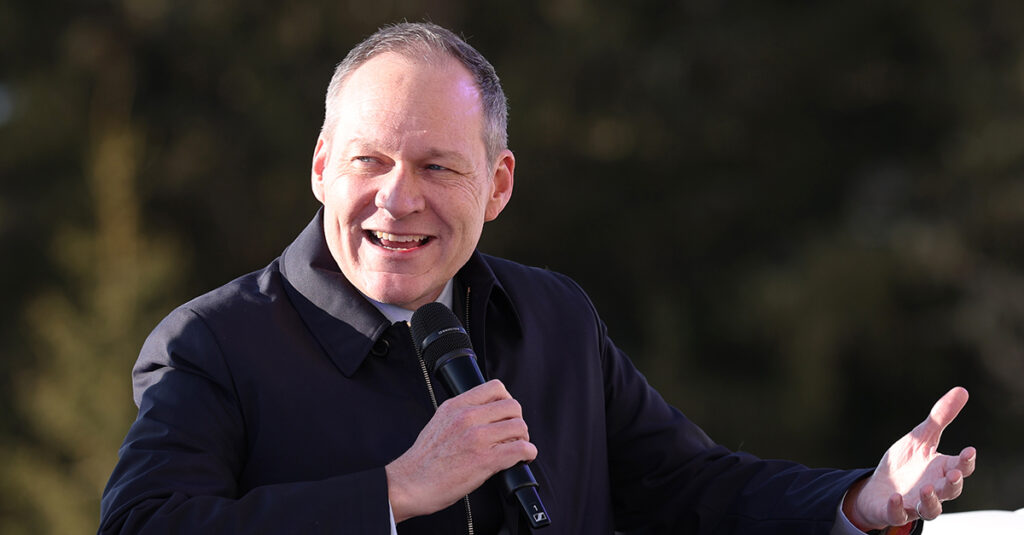
Carter participated in the ‘License to Lead: Reclaiming the Art of Storytelling’ panel from Davos.

Carter noted that even in this challenging environment, a new way of approaching communications created a great opportunity to impact business. “What stood out this week is how central corporate affairs has become to leadership itself. The strongest organisations are not treating communications as a polishing exercise, but rather as an accelerant to business transformation.”

Carter continued that discussion with PR Week’s Steve Barrett, reflecting on how “decisiveness is no longer the constraint, credibility is.”

“With trade conflicts and wars thundering on, there is a palpable sense of urgency this year,” Carter told Barrett. “But also a refreshing openness to the idea that business and government are not destined for a zero-sum future. Big problems demand big tents. Even as political and trade winds tilt toward nationalism, there remains broad acknowledgment that industry and government must function together if society is to move forward.”

“Leaders know they need to move faster, pivot more often, and make bolder bets,” he added. “What’s holding many organizations back isn’t strategy — it’s whether the audiences that matter most understand the context for change, trust the rationale behind it, and know what to do next.” Read more of Barrett’s conversations with communications leaders in Davos.

The conversations follow the release of FleishmanHillard’s proprietary ‘License to Lead’ survey of 5,500 global leaders and stakeholders that paved the way for a playbook for leaders in a volatile era. Executive and communications teams from across global industries and markets showed through their responses that the central challenge facing organizations is often not determining the right strategy, but securing the permission to communicate effectively when bold or evolving strategies test the limits of stakeholder confidence. Dive into ‘License to Lead’ below.

Click above to download our Leadership Playbook ‘License To Lead’

Article

From Ragan: Elizabeth Cook on Rethinking Preparedness in Crisis Response

January 21, 2026

As a leader of FleishmanHillard’s corporate affairs team, Elizabeth Cook has shaped executive visibility strategies and the firm’s point of view across media, events and digital platforms.

Now she speaks to Ragan’s Isis Simpson-Mersha for their latest How I Got Here spotlight. Here’s an excerpt:

Ragan: AI-driven misinformation and deepfakes have raised the stakes for crisis response. How should executives rethink preparedness in a world where credibility can be undermined in seconds?

Cook: In a word, vigilance. And it’s not one team’s responsibility — every tool and team has blind spots, so it takes organization and coordination across social media managers, community managers, social care teams and issues and crisis monitoring, with everyone bringing a “see something, say something” mindset. From there, it’s about making sure you can move fast through the playbook — verify the facts, work with the platforms, push your statement and don’t neglect the human stakeholders involved.

Read Cook’s full interview including how two decades of advising Fortune 100 companies, government agencies and NGOs through high-stakes moments shaped her approach to crisis leadership today.

Click above to download our Leadership Playbook ‘License To Lead’
Article

Insights From Davos: Building Credibility Through Storytelling

January 20, 2026

FleishmanHillard Global President and CEO J.J. Carter participated in ‘License to Lead: Reclaiming the Art of Storytelling’ at the World Economic Forum, a panel discussion exploring how organizations can earn stakeholder trust in an era of constant volatility.

The panel took place at Inkwell Beach and centered on a fundamental question: in this era of uncertainty, who gets to tell the story and who benefits when those stories shift?

Carter joined FleishmanHillard Chief Inclusion and Impact Officer Adrianne C. Smith, Forbes contributor Doug Melville and marketing leader Peter Sloterdyk to discuss this fundamental crisis facing leaders today: the widening gap between what organizations say and what they actually do.

The conversation drew directly from FleishmanHillard’s proprietary License to Lead research, conducted with 5,550 leaders and stakeholders across the globe to understand what actually earns trust in uncertain operating environments. The findings reveal a stark shift in stakeholder expectations and immediate commercial consequences.

While 90% of engaged consumers now expect volatility, they’re no longer willing to accept storytelling disconnected from operational truth. According to the research, stakeholders understand that strategic adaptation is necessary as leaders face pervasive uncertainty. What they say they won’t tolerate is silence or polished narratives that don’t match their lived reality. Those surveyed say that storytelling without operational truth is just noise.

The panel emphasized that authenticity equals accountability with leaders owning their missteps, explaining strategic shifts and demonstrating that they grasp the impact of their decisions on stakeholders before asking for buy-in. Leaders who fail to bring stakeholders along lose credibility faster than any communications misstep.

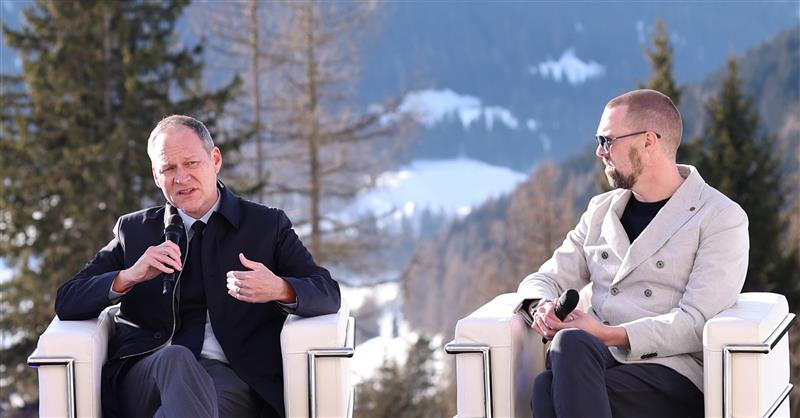
J.J. Carter and Peter Sloterdyk at Inkwell Beach

The research also surfaced a hopeful finding: people are willing to pivot and evolve if they believe in leadership. The challenge is earning and maintaining that license to lead every single day through consistent, authentic communication rooted in truth.

FleishmanHillard has developed a comprehensive playbook based on these global responses to help leaders navigate this new reality. Organizations looking to close the gap between narrative and operations can access the full License to Lead report below:

Click above to download ‘License To Lead’

Article

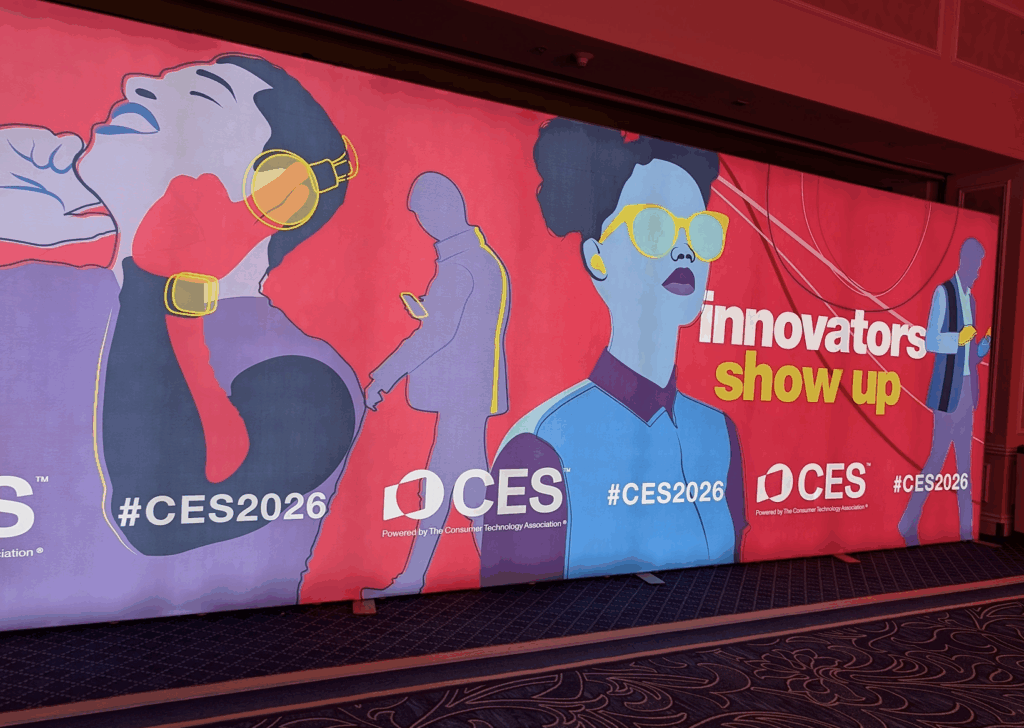
CES 2026 Shows Why Discipline Is Becoming a Competitive Advantage in Tech 

January 16, 2026
By Josh McConnell

This year felt less like a science fair and more like a shipping roadmap, revealing an industry increasingly focused on discipline, practicality, and trust. 

CES has long been a Rorschach test for the technology industry. In some years, it’s a stage for ambitious moonshots and far-off visions of the future. In others, it’s a noisy inventory of incremental upgrades. This year felt like something else entirely. 

Despite once again being held in Las Vegas, CES 2026 reflected an industry recalibrating. One that’s less interested in spectacle for spectacle’s sake and more focused on what’s viable, valuable, and ready to meet people where they are right now. 

Across the show floor, the strongest signals weren’t about what might exist someday, but what companies are confident enough to ship soon, support responsibly, and stand behind long term. 

Here are the themes that stood out most after walking the show floor. 

1. CES felt unusually short-term, and that’s not a bad thing. 

For years, CES has been a playground for moonshots and “maybe someday” concepts. This year felt different. A lot of what was on the floor looked like things you’ll actually be able to buy in the next 6–18 months. Lawn mowers, monitors, keyboards, smart lighting, pool cleaners, wearables, bird feeders, speakers — they’re all practical items solving real problems. It felt less risky and more grounded. Companies seemed focused on shipping rather than speculating. 

2. AI is now the default setting, even when it doesn’t belong. 

AI was everywhere. Sometimes meaningfully, sometimes gratuitous. In health and med tech, it often made sense, with AI used to support decision-making, reduce friction, or help people navigate complexity. Elsewhere, it felt like AI had replaced Bluetooth or Wi-Fi as the checkbox feature that needs to be in everything. One company’s booth tagline was simply, “AI in everything we build.” 

But some products and services were simply built on top of LLMs the companies don’t actually own or control, like ChatGPT or Claude. When your entire business depends on access to someone else’s foundation model, it’s hard to see a long-term future. There were also moments — music creation tools especially — where AI crossed into creative territory, raising questions about authorship, art, and intrusion rather than augmentation. 

3. Health, med tech, and life sciences felt like the right focus for this moment. 

Given where AI and hardware actually are today, health tech just made sense at CES this year. Wearables, exoskeletons, mental health tools, or brain interfaces were all practical applications addressing real needs on the show floor. It felt less speculative and more responsible. 

Pet tech followed a similar logic. Products like smart bird feeders and AI-powered cameras were emotionally resonant, clearly useful, and easier to justify than some broader “smart everything” narratives. 

4. Chinese manufacturing is astonishing but software is the bottleneck. 

The speed and quality coming out of Chinese manufacturers were impossible to ignore. Beautifully designed and well-built hardware could be seen everywhere, with many often based on ideas conceived just 6–12 months ago. That level of speed and execution is incredibly difficult to replicate in North America right now. 

But the gap showed up quickly in software. Robots that looked like they belonged in a Boston Dynamics demo would freeze, fall over, or fail basic tasks. The hardware is ready but the software often isn’t there yet, and that’s becoming the new race for many of these companies. The result is a growing gap between what hardware can promise and what software can reliably deliver. 

5. Purpose-built tech quietly won the show. 

Amid all the noise, the products people kept talking about after they got home were the ones that did one thing well. Devices with a clear reason to exist. Phones with keyboards designed for communication. Digital clocks designed to be clocks with an artistic flair. Dartboards designed to help you play better.  LEGO’s smart bricks. TVs and monitors with focused new capabilities. Smart lights that don’t try to be platforms.  

There was a noticeable skepticism toward bloated, do-everything tech and genuine enthusiasm for tools that respected attention and intent. That signal showed up again and again, including in mainstream CES coverage. 

Final Thoughts

At CES this year, restraint wasn’t a limitation. It was the differentiator. 

CES 2026 suggested a tech industry in the middle of a quiet self-correction. Less chasing hype and over-promising. More focus on usefulness, credibility, and follow-through in the near term. 

What stood out wasn’t who had the boldest vision of the future, but who showed discipline in how technology showed up in people’s lives. The products that resonated most didn’t try to do everything. They did one thing clearly, reliably, and with an obvious reason to exist. 

For brands, that’s the signal worth paying attention to. Audiences are no longer impressed by intelligence for intelligence’s sake. They’re looking for clarity, accountability, and proof that technology is being applied with purpose. 

Josh McConnell  Josh McConnell is a VP of Technology based in New York where he helps companies navigate complex narratives at the intersection of innovation, reputation and culture. He brings over 15 years of experience across journalism and corporate comms, with leadership roles at Uber and Xero. As a journalist, he regularly interviewed tech leaders including Tim Cook, Satya Nadella and Jack Dorsey.

 
Article

FleishmanHillard Unveils ‘License to Lead’ Research, Revealing a Growing Confidence Gap Between Executives and Stakeholders 

January 13, 2026

New global survey finds stakeholder confidence and leadership credibility increasingly shape how much latitude companies have to drive strategy. 

WASHINGTON, D.C. — January 13, 2026 — As geopolitical volatility, technological disruption, and social scrutiny reshape the business landscape, new global research from FleishmanHillard finds that the central leadership challenge is no longer simply setting strategy. It is maintaining the confidence and permission needed to execute when strategies must evolve. 

“Uncertainty is no longer episodic. It is the operating environment,” said Rachel Catanach, Senior Partner and Global Managing Director, Corporate Affairs, at FleishmanHillard. “What this research shows is that stakeholders understand why companies need to adapt. But they are also raising the bar on how leaders communicate, align, and explain those decisions.” 

The research, titled ‘License to Lead,’ is based on a global survey of 5,550 respondents, including 1,550 business and political leaders and 4,000 engaged consumers, executed by FleishmanHillard’s TRUE Global Intelligence. The findings reveal a growing gap between how leaders assess their own performance and how stakeholders experience corporate leadership during periods of change.  

“Trust is dead. When change is constant, stakeholder support is built through how leaders explain decisions, align internally, and show accountability in real time,” said Michael Moroney, Senior Partner and Managing Director, Corporate Affairs, The Americas.

Key findings include: 

  • Unpredictability is now the norm, and adaptability is viewed as a defining leadership skill. Eighty-four percent of engaged consumers and 82 percent of policymakers agree that the business environment is more unpredictable and disruptive than it was three years ago. More than half of engaged consumers (51 percent) say the ability to adapt quickly will matter most for business leaders’ success over the next decade. 
  • Stakeholders accept strategic change, but expectations of leadership behavior have risen. Compared to a few years ago, about half of engaged consumers report higher expectations for companies to act with customers in mind (52 percent), do the right thing (50 percent), and balance the needs of multiple stakeholders (47 percent). More than 90 percent say confidence in leadership depends on clear strategy communication, consistent messaging, transparency around difficult decisions, genuine engagement, and accountability.
  • Executives and stakeholders view corporate readiness very differently. Nearly half of business and policy leaders express high optimism in large companies’ ability to address major challenges. By contrast, only 20 percent of engaged consumers are very optimistic about companies’ ability to do so. Fewer than one in five believe corporate leaders will act in society’s best interests or are well prepared for future disruption.
  • Erosion of confidence has direct commercial consequences.  Almost all engaged consumers (98 percent) say they are paying close attention to whether companies follow through on commitments. When confidence is lost, 58 percent report stopping or significantly reducing spending, 50 percent switch to a competitor, and 40 percent privately advise others against the company. 
  • Integrity and accountability now outweigh competence alone. When asked what gives a company the “right to lead” during periods of change, engaged consumers rank demonstrated ethical behavior (24 percent) and clear, consistent communication (21 percent) highest. While executives believe leaders frequently display integrity and accountability, engaged consumers rate performance roughly half as high, revealing a meaningful perception gap. 

A New Executive Playbook 

The findings point to a leadership model that is both urgently needed and largely within organizations’ control. Companies that retain the confidence to move through uncertainty simplify their strategic narrative, enforce leadership alignment, communicate consistently, explain the rationale behind difficult decisions, and engage stakeholders without relying on broad or aspirational shortcuts. 

“When these conditions are met, reputation becomes an enabling force rather than a constraint,” said Catanach. “Stakeholders are more willing to grant leaders the latitude to adapt, absorb uncertainty, and continue moving forward even when outcomes are not fully known.” 

The research also underscores the evolving role of corporate affairs as an integrated leadership infrastructure. High-performing organizations rely on corporate affairs to translate complexity into clarity, anticipate friction, and understand where stakeholders will grant flexibility and where limits remain. 

As disruption becomes an enduring condition rather than a temporary shock, the study concludes that leadership success will depend less on minimizing change and more on sustaining legitimacy while managing it. 

About the Research 
TheLicense to Lead study was conducted by FleishmanHillard’s Global Executive Advisory and True Global Intelligence teams. The global survey includes 5,550 respondents across multiple markets, comparing the perspectives of 1,550 business and political leaders and 4,000 engaged consumers.

    Get the Full Report

    Article

    From Survival Mode to License to Lead: A Corporate Affairs Playbook for an Uncertain Era

    License To Lead Report

    New calendar years often come with a fresh perspective and a commitment to a fresh start. And though there’s been no shortage of reflection on the current era of unprecedented and pervasive uncertainty, many organizations are still struggling to shift from reactivity to recapturing strategic agency and advantage.  

    The compounded experience of widespread corporate shifts on social and political stances, sustainability and product development and the pervasive fear of what AI might mean for work, security and safety have played into a new paradigm of what it takes to build confidence in a company’s leadership. 

    It’s past time that every executive leadership team and corporate affairs organization develop a durable playbook for success under these conditions. Our experience counseling C-Suites and communications teams from across global industries and markets have shown us that the central challenge facing organizations is often not determining the right strategy. It is securing the permission to execute when bold or evolving strategies test the limits of stakeholder confidence. That’s what we call having License to Lead.   

    Organizations and executives with a License to Lead do not avoid volatility or always manage to walk a straight line from strategy to execution. Instead, they move and adapt with less friction. Why? They start from a position of strength and confidence with their stakeholders. They can pivot earlier and with less reputation clean up, enabling them to recover faster and sustain legitimacy. All while their competitors stall under resistance and skepticism.  

    A new survey from our Global Executive Advisory and True Global Intelligence identifies what it takes to earn the License to Lead and where executive teams are falling short. The comprehensive global study includes and compares the opinions of 1,550 business and political leaders and 4,000 engaged consumers—a new, modern definition that identifies proactive individuals who have recently taken multiple tangible actions tied to a company’s values and reputation. Together, the findings paint a clear picture of shifting corporate expectations and reputation. Jump Straight To The Full Report

    1. Data from engaged consumers and policymakers show they aren’t blind to the challenging dynamics that business leaders face, leading to a new belief that a top leadership skill is the ability to adapt quickly to change. 

    • 84% of engaged consumers and 82% of policy stakeholders agree the current business environment is more unpredictable and disruptive than it was three years ago. 
    • 51% of engaged consumers believe the ability to adapt quickly to change will matter most for business leaders to succeed over the next decade.   

    2. While engaged consumers understand changing circumstances must be met with strategic shifts, there are clear expectations of what must be true to have permission to pivot without losing stakeholders along the way.

    Compared to a few years ago, around half of engaged consumers report higher expectations of companies to:

    • Act with their customers in mind (52%)
    • Do the right thing (50%)
    • Act with a balanced stakeholder approach (47%)

    Over 90% of engaged consumers report the following actions are key to building confidence in a company’s leadership:

    • Communicating their strategy and direction in clear, straightforward terms (93%)
    • Ensuring a consistent message about the company’s goals (93%)
    • Being transparent about the reasons behind difficult decisions (93%)
    • Genuinely engaging with and listening to their stakeholders (94%)

    The top three factors to building long-term loyalty include:

    • Product the company offers (42%)
    • Company’s mission and purpose (38%)
    • How the company treats employees and stakeholders (38%)  

    The benefits of meeting these expectations are striking: 92% say a company with a strong, positive reputation has more permission to undertake a major business transformation and 85% of engaged consumers being likely to give a company they respect the benefit of the doubt if there is a crisis or mistake. 

    3. However, there’s a major gap between how leaders think they’re doing, and how stakeholders grade them – and that gap reveals a major erosion of confidence in business.    

    • Business and policy stakeholders express great confidence in large companies despite today’s volatility. 49% of executives and 44% of policy stakeholders are very optimistic in corporate leaders’ ability to address challenges; 51% and 41% respectively have a lot of confidence that business leaders will act in the best interest of society, and 44% and 36% believe large companies are very prepared to lead effectively during future disruption.   
    • However, engaged consumers don’t score business nearly as high. Just 20% of global engaged consumers are very optimistic about large companies’ ability to address major challenges. Only 19% have a lot of confidence that corporate leaders will act in the best interests of society, and only 15% believe companies are very prepared to navigate uncertainty and disruption.    

    4. The consequences of failing to bring stakeholders along as a company drives the strategy forward go well beyond an abstract benchmark on reputation. 

    • Corporate credibility has become highly fragile: 98% of engaged consumers say they are paying attention to corporate follow-through, and nearly half (48%) say that inconsistent or conflicting messages from company leadership greatly decrease their confidence.   
    • That loss of confidence comes with a loss of spending. In the past 12 months, engaged consumers reported that after a company’s actions caused them to lose confidence they stopped buying or significantly reduced spending (58%), switched to a competitor’s products or services (50%), or privately advised friends or family against the company (40%).  

    5. Engaged consumers are over grand purpose and vision statements. Today’s priorities are about rebuilding the table stakes of corporate behavior, communication and stakeholder respect – and to earn License to Lead, executives must take a hard look at whether they’re measuring up.  

    • When asked what gives a company the “right to lead” during periods of change, engaged consumers ranked demonstrated ethical behavior (24%) and clear and consistent communication (21%) the highest. When it comes to confidence-building behaviors from leaders, an overwhelming 76% of global engaged consumers say displaying integrity is very important and 74% say the same of accountability. These values rank higher than even raw competence (66%). 
    • A major perception gap must be addressed by business leaders about the success of their current efforts. While executives say they often see business leaders displaying integrity and honesty (44%) and accountability (40%), engaged consumers rank their performance much lower at 23% and 22%, respectively.   

    A New Executive Playbook to Create the License to Lead 

    What emerges from the data validates that a new playbook for leadership is both urgently needed and also completely within a company’s control – built through a consultative partnership between the C-Suite and corporate communications, corporate affairs, public affairs and other critical functions. In other words, while so much of the world feels out of a company’s control, successfully winning and retaining license to lead isn’t. 

    Becoming a high performing, aligned organization that can move quickly to fast-track opportunities and adapt without the drag of residual “reputation pollution” isn’t accidental. It is the result of cultivated conditions.  

    • Simplification as an Antidote to Complexity: High-performing leaders focus relentlessly on answering three fundamental questions: Where are we going? Why now? What principles guide us? If your stakeholders can’t repeat the direction back to you, you haven’t simplified enough. 
    • Ruthless Leadership Alignment: Misalignment erodes permission faster than bad news. In organizations with a License to Lead, alignment is a discipline, not a communications exercise. Visible alignment signals strategic confidence and pivots feel coordinated rather than chaotic. 
    • Campaign the Strategy: Too many companies assume everyone is following the breadcrumbs. Recently, one of our clients had an analyst who attended the company’s Investor Day where the strategy was launched act surprised when he heard about it again six months later. The strategy for the future should anchor every communication to drive to a consistent audience takeaway.  
    • Owning the “Why”: Our data proves that stakeholders are savvy to the big picture – and they don’t want to feel gaslit by leaders about decision reasons or implications. Radical honesty about rationale and tradeoffs behind strategic shifts protects credibility and keeps leaders in control of the narrative. 
    • Stakeholder Relevance Without Shortcuts: Permission is earned through engagement, not declaration. Broad, aspirational purpose statements are insufficient during real change. Stakeholders grant permission when can see their concerns reflected in how decisions were made and how the human impacts are handled.  

    When these conditions are met, reputation becomes an enabling force. Stakeholders grant leaders the permission to change course, absorb uncertainty, and continue moving forward even when the path is not yet fully visible. That permission is what allows ambition and adaption without breaking execution. 

    Corporate Affairs as Leadership’s Operating System 

    Meeting these conditions cannot be improvised. It requires a system. To build License to Lead, corporate affairs must operate as an integrated leadership infrastructure—one that continuously converts complexity into clarity and builds reputational capital through stakeholder buy-in to sustain legitimacy as leaders make decision that move the strategy forward.  

    This shift is subtle but profound. Leaders increasingly rely on corporate affairs to answer fundamental questions: 

    • What do stakeholders have confidence in us to do?  
    • What do they need to understand to stick with us through change?  
    • Where will friction emerge and how can we smooth it? 
    • How much latitude do we have to move—and where are the limits? 

    High-performing corporate affairs functions integrate three capabilities—Insight, Influence, and Adaptability—not as separate activities, but as a continuous operating loop. We look forward to expanding on those throughout 2026.  

    The Leadership Test Ahead 

    What’s clear from the data and trends is that in 2026, disruption is expected. It will no longer be an excuse for inertia, poor performance and self-inflicted stalls. In fact, adapting fast enough to succeed despite chaotic conditions is the new benchmark for leadership. Taken together, these implications redefine what it means to lead through uncertainty to get to the competitive advantage. Leadership is no longer about minimizing change. It is about managing it without losing legitimacy. 

    Strategy will evolve. Assumptions will break. External realities will continue to intrude. The leaders who succeed will be those who recognize that permission is as critical as direction—and who build the reputational and organizational capacity to sustain it over time. 

    That is the essence of a License to Lead. 

      Get the Full Report

      Article

      FleishmanHillard Wins 2026 Innovation Awards for Data-Driven Strategy

      January 12, 2026

      FleishmanHillard has won two North America 2026 SABRE Awards: Data-Driven Agency of the Year for “Democratizing Data” and Data Professional of the Year for Ines Schumacher and SAGE Synthetic Audiences.

      SAGE Synthetic Audiences, built on Omnicom’s industry-leading data stack and FleishmanHillard’s audience profiling expertise, was officially introduced last spring.

      The wins underscore FleishmanHillard’s operational mindset of embedding intelligence and analytics at the center of communications strategy.

      The recognition follows last fall’s news of 13 AMEC Measurement and Evaluation Awards including seven Gold, four Silver and two Bronze across FleishmanHillard TRUE Global Intelligence, Methods+Mastery and Omnicom Public Relations. Those accolades included Innovation Award for New Measurement Methodologies, Best Use of New Technology in Communications Measurement and Best Use of Measurement for a Single Event or Campaign.

      The wins reflect what FleishmanHillard describes as an “integrated intelligence model,” where rigorous analysis and critical thinking are baked into strategy development and execution from the start rather than applying data after the fact. The news follows the rollout of the agency’s counselor-led AI solutions suite FH Fusion last summer.

      The SABRE recognition validates the investments made in building proprietary methodologies, scaling analytics capabilities across regions and training advisors agency-wide to lead with insight.

      Article

      License To Lead: A Corporate Leadership Global Study

      January 7, 2026

      In an era of unprecedented disruption, executives face a paradox: while they understand the strategic direction their organizations need to pursue, they often lack the stakeholder capital required to execute bold change. This is the central insight of a new global study on corporate leadership, and it helps explain why so many well-conceived strategies stall before gaining traction.

      The research identifies what top-performing companies are doing differently. They possess what we call a License to Lead, the stakeholder confidence that allows them to innovate and adapt without losing legitimacy or reputation.

      Disruption is no longer an excuse for poor performance. It is simply the operating environment. The organizations that will thrive are those that treat corporate affairs not as a discrete function, but as an integrated leadership operating system—one that continuously converts complexity into clarity and builds the reputational capital needed to sustain confidence through inevitable change.

      Download the full License to Lead report below to explore the data, insights, and leadership behaviors that enable organizations to adapt, move decisively and sustain stakeholder confidence in uncertain times. You can see some of the top findings here.

        Get the Full Report