Communicating through a Tsunami of Pandemic-Induced Bankruptcies
August 3, 2020
Share
Among everything else, COVID-19 has had a profound impact on consumer spending. Recent research from FleishmanHillard TRUE Global Intelligence shows 64% of consumers have stopped purchasing non-essential items and plan to continue to do so post-pandemic, and 81% expect their financial situation to stay the same or get worse over the next six months.
The U.S. economy is consumer-driven and once spending fades, the economy is significantly impacted. This reduced spending is currently amplified by a number of factors including record unemployment, businesses and individuals not paying rent, the potential for high numbers of loan defaults following record requests for hardship deferments and consumers hoarding cash. Despite the economy partially reopening since the pandemic’s peak, businesses will encounter a swell of delayed symptoms.
Following the drop in consumer spending, economists predict a cascade of bankruptcies. This pattern has already proved true in the retail industry. Companies across all sectors are taking on new debt to raise capital and stave off possible bankruptcy. Although necessary in dire economic circumstances, this debt may come back to bite businesses if they are unable to recover fast enough, leaving them at greater risk of bankruptcy in the future.
No company is immune to risk in this fragile economic state. Whether your company is in bankruptcy or managing the second-hand effects, as a communicator, you need to be prepared to address the impacts.
How Bankruptcy Works
Filing for bankruptcy provides a company protection from its creditors and current debts while it undertakes a reorganization. Reorganization efforts are focused on returning the company to profitability, usually by unburdening the firm from current financial obligations while reorienting its employment structure, labor contracts, go-to-market strategy and everything in between.
It’s important to remember, in most cases, a company continues to operate during bankruptcy. In fact, courts can mandate the company continue to operate, retain essential employees and force suppliers to continue doing business with them, despite the potential of not being paid.
So how can you prepare for this likely wave of bankruptcies? Moving forward, you’ll want to understand your company’s financial health, specifically the considerations around filing for bankruptcy. To start, ask your leadership the following questions to take inventory of your current situation.
How exposed is the business to the recovering economy?
How long can we continue to operate at current levels (even with layoffs, cost cutting, furloughs, etc.) before we must consider more drastic financial moves?
If partners in our supply chain start to seek the protection of Chapter 11, what does that mean for our long-term prospects?
Do we have a need to restructure? Have we thought about how to communicate this or maintain our reputation throughout the process?
Does our current financial status make us an acquisition target? Would we consider making acquisitions or divestitures to maintain our current level of operations?
How to Communicate During Bankruptcy Proceedings
For those considering bankruptcy, it’s crucial you regularly communicate with your key stakeholders to build trust and loyalty through the long, complicated path ahead. As you progress through this difficult transformation, the number of stakeholders requiring information and updates from the company grows exponentially – as does emotion – and you’ll be responsible for managing both.
Through each stage – reorganization, exit and reintroduction – employees, customers, business partners, investors and other stakeholders ride an emotional roller coaster fueled by uncertainty and operated by you. Consistent and transparent communications will help stakeholders understand management’s plan for reorganization, instilling confidence in the people critical to driving the transformation forward.
During a bankruptcy, the stakes are higher than ever before, and stakeholders will never forget if you misled or wronged them during this time. Prioritize communications even more than normal, because it will be the glue that holds your company together.
How to Prepare
Despite the constant uncertainty COVID-19 has already exposed us to, the forthcoming deluge of bankruptcies should not come as a surprise. It’s inevitable – inevitable companies will continue to file for bankruptcy, and inevitable your business and industry will be affected, directly or indirectly.
Most people have never experienced a corporate bankruptcy directly – and hopefully you never will. However, as bankruptcy cases continue to rise and uproot what were once reliable and stable markets, it’s crucial you assess what this could mean for your business and stakeholders.
Whether filing for bankruptcy or simply trying to navigate the potential flood of industry changes, the FleishmanHillard financial communications team is here to provide guidance, best practices and strategic insights to help keep your stakeholders engaged and your company prepared for the challenges ahead.
See what else is happening
You might also like
Expertise
Black Hat 2026: A Conference and Industry Transformed
August 10, 2026
Expertise
When Food Safety Crises Test Trust: A Guide for Communicators
July 24, 2026
Expertise
We Went to Cannes Lions: Where the Industry Is Trending
July 1, 2026
Expertise
Healthcare’s Moment Has Arrived. The Question Now Is: Will Your Organization Move Fast Enough?
July 1, 2026
Expertise
The Visible CEO: How Leadership Can Serve as a Strategic Asset
July 1, 2026
Expertise
How to Win the GLP-1 Food Industry Wake-Up Call
June 30, 2026
Expertise
Cannes Lions Exposed an Industry’s Transition of Power: Takeaways From Winning Work
June 26, 2026
Expertise
Lessons From Cannes: Don’t Let Speed Fail Storytelling
June 25, 2026
Expertise
Get Bold Work Out Into the World: How to Seize the Chaos Advantage
As video-conferencing has fast become our new norm across work and social life, we whipped up a couple hard ‘n fast protocols to make it a better experience for everyone. Welcome to the new-age netiquette of everything gone virtual. […]
Hidden Depths — The Impact of COVID-19 on the Pharmaceutical, Biotech and Devices Industries
July 27, 2020
By Mark Senak
Share
The COVID-19 pandemic is shifting gears and with it, the ways in which we cope and respond. We are moving from an initial state of surprise, fear, consternation and a general lack of knowledge to an evolving understanding of consequences of the pandemic in our lives —that we are going to have to adapt to several unpleasant realities both as a society and as individuals and that the stakes are long-term. From this developing understanding, there are some clear implications for the pharmaceutical, biotech and device sectors as the COVID-19 pandemic continues. In the most recent survey conducted by FleishmanHillard TRUE Global Intelligence — COVID-19 Mindset: The Collision of Issues —there are glimpses into the changes that people are experiencing in their consumption of healthcare services, and the impact that has on medicines and ultimately the pharmaceutical, biotech and device industries:
1. People Are Settling into a Lower Level of Access to Healthcare — In the beginning of the pandemic, FDA announced that it was “postponing” meetings. There was a clear implication of a “wait-and-see” approach to ascertain if circumstances might allow for in-person meetings later in the year. But under current circumstances and high transmission rates in the U.S., people are understanding they are in this for the long haul. That means that the initial downward spiral that was seen in the consumption of healthcare services will likely continue. In fact, the survey seems to confirm that. U.S. respondents are now estimating that a return to normal would take at least 29 weeks. Moreover, nearly half (48 percent) thought it would take from five months to more than one year. That perception will likely inform their behavior and healthcare access approach with nearly half (47 percent) saying that they will likely postpone routine doctor visits or elective procedures in the next 12 months. That may be good news for insurers, but not for healthcare systems of manufacturers of medicine.
2. Ongoing Financial Impacts Are Likely to Affect Care — As the July report from Families USA affirmed, over 5 million Americans have so far lost their insurance due to their loss of employment. With the current increase in cases, the economy will continue to be hindered, thereby making it likely that this number will not get better and may even worsen. In addition, there were impacts in specific regions and states where the rate of loss was much greater than others which would likely inform the future consumption of healthcare services and prescription medicines. The FleishmanHillard TRUE Global Intelligence Survey found that 58 percent of U.S. respondents stated that they either do not have enough money or have just enough money to pay monthly expenses and half stated that they have cut back on expenses – a behavior that they see continuing in a post-pandemic world. These financial realities inform pharmaceutical sales as well as the scope and presence of emerging need for patient assistance programs that may be needed to help patients get access to prescription medications. It is noteworthy that in the survey when asked why they were postponing doctor visits most people indicated concerns about safety, but nearly 1 in 5 said that they could not afford it and 14 percent said they no longer have insurance due to unemployment.
3. Expectations of Industry is High; Confidence Not So Much — The TRUE Global Intelligence Survey sought to ascertain how institutions are performing with respect to COVID-19 and perceptions about how committed these institutions are in doing the right thing. In the first round of the COVID-19 survey questions published in May 2020, 64 percent of U.S. respondents thought the pharmaceutical industry was doing excellent/great/good in their response to the pandemic, a number that increased to 69 percent in this second round survey and ahead of corporations more generally. It is possible the increase in regard for the industry is a result of the highly publicized efforts involved in vaccine development. However, when asked how committed the pharmaceutical industry is to do the right thing, only 29 percent of respondents gave high marks. How the industry executes on the vaccine promise may in turn influence the perception of commitment. Companies will be pressed to show they are committed to the right thing through the regulatory process and in issues related to access to any vaccine developed.
4. A Vaccine Will Help, But Not Solve the COVID-19 Issues — As companies race to develop, test and get regulatory blessing for a vaccine, consumers do not perceive it as a singular solution. While just over half (57 percent) of U.S. respondents said that a vaccine will end the threat, over one-third of respondents said that the end comes when there are either no more infections or there are medications that can effectively address symptoms. In short, while vitally important, it may be equally important to put the spotlight on what companies are doing to shore up testing and treatments for COVID-19 in addition to vaccine development. This may be particularly true given recent reporting from The New York Times citing a growing number of polls that report a high level of distrust respecting a vaccine casting doubt on a willingness to accept any new vaccine for COVID-19.
In short, there is a lot being demanded of industry both in terms of action (finding a safe and effective vaccine) — and expectation (that once found, access will not be an issue). This is happening at a time when it is likely that sales of existing medicines and the launch of new ones will be less financially rewarding in the past as people put off care either because of safety or financial concerns. Last year, prior to the emergence of the pandemic, a Gallup poll found the pharmaceutical industry held in record low regard at the bottom of U.S. industry rankings. In the midst of the pandemic and in between the demands and expectations of industry, there is opportunity for change.
See what else is happening
You might also like
Expertise
Black Hat 2026: A Conference and Industry Transformed
August 10, 2026
Expertise
When Food Safety Crises Test Trust: A Guide for Communicators
July 24, 2026
Expertise
We Went to Cannes Lions: Where the Industry Is Trending
July 1, 2026
Expertise
Healthcare’s Moment Has Arrived. The Question Now Is: Will Your Organization Move Fast Enough?
July 1, 2026
Expertise
The Visible CEO: How Leadership Can Serve as a Strategic Asset
July 1, 2026
Expertise
How to Win the GLP-1 Food Industry Wake-Up Call
June 30, 2026
Expertise
Cannes Lions Exposed an Industry’s Transition of Power: Takeaways From Winning Work
June 26, 2026
Expertise
Lessons From Cannes: Don’t Let Speed Fail Storytelling
June 25, 2026
Expertise
Get Bold Work Out Into the World: How to Seize the Chaos Advantage
The current combination of severe uncertainty and unrest around health, economic, social and political issues present the most complex communication environment we have ever experienced. Companies, brands and institutions of all kinds face unprecedented operating pressure, organizational uncertainty and relationship destabilization, all leading to serious reputation and brand risk. New surges of COVID-19 infection in the U.S. and other countries, actions related to racial equity, the ongoing global economic shock and investment market volatility, and the crisis-atmosphere around the upcoming U.S. presidential election create more variables to consider than before. And those variables span local dynamics, diverse perspectives, “cancel culture” rampant in social media and bias of traditional media sources.
Amid the doom and gloom, the lines of communication are open and information from companies, brands and influencers is in high demand, so reaching your audiences the right way at the right time is critical to navigating the next 90 days. The biggest challenge is that the decisions on whether and how to communicate also must be made faster and more accurately than in the past.
Communication success during this time requires:
Staying closer than ever to news events and anticipating the impact on employees, partners and customers/consumers
Tapping data to look back in order to anticipate what comes next
Scenario planning with the goal of moving quickly when the opportunity/need arises
Reevaluate Now
If there’s a time to reevaluate, it’s now. Plans developed several months ago lack the context and learnings of recent weeks. They need to be revisited. The environment and expectations of core audiences have changed. New information is being made available constantly. The pandemic is an evolution, and communications programs and responses need to evolve accordingly. Anticipated organizational events and even public holidays present new challenges and take on new meaning now. As you consider plans for the next 90 days, here are some key dates to keep in mind:
Upcoming Points in Time
July 31: Employment/furlough relief expiration (“Income Cliff”)
Aug. 8: PPP expiration
Mid-Aug.: Back to School begins
DNC (Aug. 17-20) and GOP (Aug. 24-27) conventions
Aug. 28: March on Washington
Labor Day: Election season kickoff; labor actions
Sept. 30: Federal budget expiration
While this isn’t an exhaustive list and your respective industry may have other events that could be of similar importance to your organization, it’s best to take some time to evaluate how you should prepare for any events that could put you in a situation where you need to respond.
Outside of planning for the next 90 days, it’s also a good time to ensure that your current communications plans account for the latest issues and considerations of your stakeholders. Check out our Top 10 Considerations of things to be thinking about.
Consumers Uncertain about Their Safety as Health, Financial and Discrimination Issues Compound the COVID-19 Crisis, According to FleishmanHillard Study
July 22, 2020
Share
71% of Consumers are Afraid That Restrictions in Their Communities are Being Lifted too Quickly; 82% Say the World now Seems Like a Riskier Place
ST. LOUIS, July 22, 2020 – FleishmanHillard’sTRUE Global Intelligence practice today released the results of a new study, COVID-19 Mindset: The Collision of Issues. The report analyzes the inflection points taking place around the world as consumers’ thoughts and approaches to their health and finances shift, and expectations for their government, community, employers and each other change.
“Our April 2020 study, COVID-19 Mindset: How Pandemic Times Are Shaping Global Consumers, suggested that it’s crucial in the eyes of the consumer for employers to take good care of their employees,” said Natasha Kennedy, senior partner and global managing director of FleishmanHillard’s TRUE Global Intelligence practice. “The Collision of Issues study goes one step further, examining consumer perceptions not only of COVID-19, but a myriad of issues facing consumers around the world today. We must understand what we expect of institutions and of each other and how these issues are reshaping our perceptions, behaviors and values to move forward. There’s a universal expectation right now that institutions will commit themselves to doing the right thing.”
The enduring presence of COVID-19 and its economic shocks, along with systemic racism, social injustice and other issues have put the world on edge; the study aims to unwrap the issues of today and examine consumers’ current views.
“The collision of issues has increased scrutiny of companies, brands and leaders. Going forward it is absolutely vital for organizations to not only commit to doing the right thing, and do so with compassion and empathy, but to act on that commitment in alignment with clearly defined values,” said Peter Verrengia, senior partner and head of FleishmanHillard’s Recovery and Resurgence practice. “Consumers and employees are surrounded by uncertainty and want to know that their employer and the brands they love share their values.”
With recent data from seven major countries, the study shows:
The pandemic has continued much longer than many anticipated and is leaving a significant impact on almost every area of our lives. Trust is eroding in our sources of critical safety information, and consumers are questioning everything.
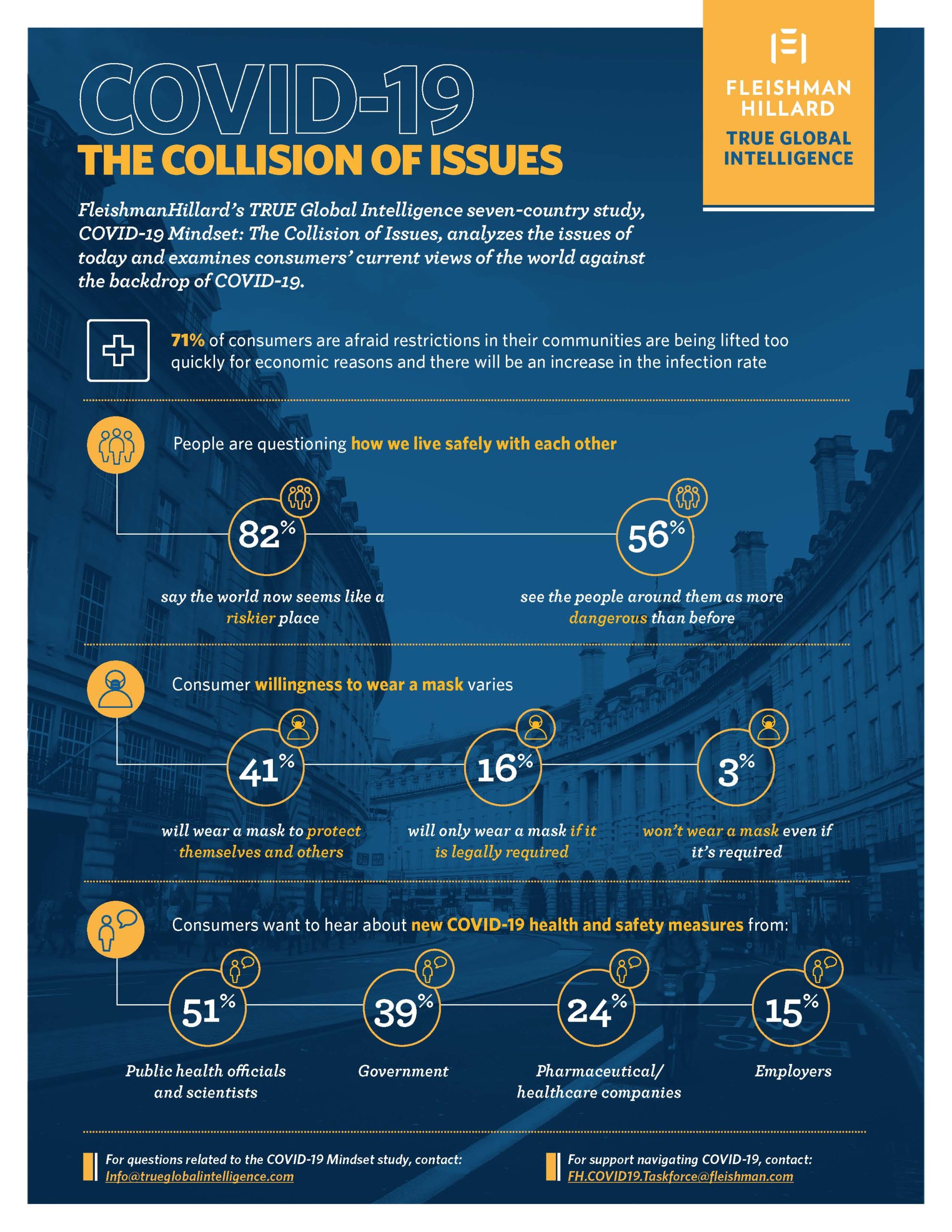
71% are afraid that restrictions in their communities are being lifted too quickly for economic reasons and there will be an increase in the infection rate.
People are questioning how we live safely with each other, with 82% saying the world now seems like a riskier place and 56% seeing the people around them as more dangerous than before.
Trust in the organizations responsible for providing critical information on safety and testing has deteriorated over the course of the pandemic. Consumers want to hear from public health officials and scientists the most (51%) for this guidance, while only 39% of consumers want to hear from the government, pharmaceutical/healthcare companies (24%) and their employers (15%).
There is no absolute fix or solution to feeling safe, and 80% say the pandemic has changed their view of the world.
The end of the pandemic is not clear-cut – only 60% say a vaccine against the virus will mark the end of the COVID-19 threat; 42% won’t feel safe until there are zero infections in their community.
While mask mandates are debated by national and local governments, compliance varies – 41% will wear a mask to protect themselves and others, 16% will only wear a mask if it is legally required, and 3% won’t wear a mask even if it’s required.
Accessibility to personal protection equipment would help some feel safer, with 49% saying dispensers of free face masks and hand sanitizers in public spaces and high-traffic locations should be developed to safeguard public health in the future.
The pandemic has shifted consumers’ outlook and how they live. Half of consumers predict it will take anywhere from five months to more than a year to return to normal.
Consumers report that finances are tight, with 70% saying they don’t have enough money or have “just enough” to pay monthly expenses now. Spending is being evaluated carefully; 64% say they’ve stopped purchasing non-essential items.
Even as we learn to live in our new reality, many are predicting a decline in areas of their life over the next six months – 34% believe their financial situation will get worse; 30% believe the overall quality of life will go down; and 28% believe their safety will decrease.
Nearly half of consumers will postpone routine doctor visits or elective procedures.
Consumers will seek the outdoors locally but are split in terms of who will be venturing into indoor public places in the next 12 months. 75% expect to go to public outdoor spaces like parks, playgrounds and pools, while 55% expect to go into the office and only 33% expect to go to school.
While COVID-19 is at the forefront of how people are living their lives, the world is also addressing systemic racism. Corporations need to take action on the issues, as employees and customers expect organizations to be values-led.
The issues most important to consumers are inter-connected by systemic discrimination and inequities. Discrimination and equality/racism is the top issue on consumers’ lists, with 72% rating it very important and 59% expecting companies to take a stand on it. Other important issues include access to affordable, quality healthcare (69%), public health risks (65%) and violence against women (63%).
91% of consumers say it’s important for companies to show that they’re committed to doing the right thing.
Consumers expect CEOs to speak out and act on issues affecting their customers, employees and the communities where they do business. Top areas where they need to take a stand include health and safety measures that the company is taking for their employees and customers (51%); issues related to data privacy and security (44%); and showing how the company’s values support the values of their communities, customers and employees (42%).
“Consumers are carefully watching how organizations respond to today’s issues,” said Verrengia. “They expect organizations to do everything they can to support their workforce, lend their strength to their communities, and do what they can to contribute to a safer world. The organizations that put people first will be recognized by consumers as they seek to regain their own sense of control.”
FleishmanHillard’s global Recovery and Resurgence practice is using the findings from this latest study to help guide organizations as they reimagine their workplaces and operations.
TRUE Global Intelligence, the in-house research practice of FleishmanHillard, fielded an online survey of adults 18 and older in the following markets June 8 – 19, 2020: China (n=1,280); Canada (n=1,240); Germany (n=1,242); Italy (n=1,275); South Korea (n=1,227); United Kingdom (n=1,277); and United States (n=1,276). Data have been weighted by gender and age in all markets as well as region in the United States, Canada and China. In the United States, an oversample of n=200 African Americans, n= 200 Hispanic and n=100 LGB was added.
About FleishmanHillard FleishmanHillard specializes in public relations, reputation management, public affairs, brand marketing, digital strategy, social engagement and content strategy. FleishmanHillard was named 2019 PRWeek U.S. Outstanding Large Agency; 2019 Holmes Report North America Large Agency of the Year; ICCO Network of the Year – Americas 2017-2019; Agency of the Year at the 2017 and 2018 North American Excellence Awards; 2018 Large Consultancy of the Year by PRWeek UK; PR News’ Best Places to Work in PR 2016-2018; Human Rights Campaign Best Places to Work for LGBTQ Equality 2018-2020; PR Awards Asia 2017 Greater China Agency of the Year; and NAFE’s “Top Companies for Executive Women” 2010-2020. The firm’s award-winning work is widely heralded, including at the Cannes International Festival of Creativity. FleishmanHillard is part of Omnicom Public Relations Group, and has 80 offices in more than 30 countries, plus affiliates in 50 countries.
About Omnicom Public Relations Group Omnicom Public Relations Group is a global collective of three of the top global public relations agencies worldwide and specialist agencies in areas including public affairs, marketing to women, global health strategy and corporate social responsibility. It encompasses more than 6,300 public relations professionals in more than 370 offices worldwide who provide their expertise to companies, government agencies, NGOs and nonprofits across a wide range of industries. Omnicom Public Relations Group delivers for clients through a relentless focus on talent, continuous pursuit of innovation and a culture steeped in collaboration. Omnicom Public Relations Group is part of the DAS Group of Companies, a division of Omnicom Group Inc. (NYSE: OMC) that includes more than 200 companies in a wide range of marketing disciplines including advertising, public relations, healthcare, customer relationship management, events, promotional marketing, branding and research.
Events Are Dead! What to Do in a Pandemic When Your Comms Strategy Relies on Physical Events
July 20, 2020
By David Goldman
Share
“The outbreak of COVID-19 has spelled doom for the global events market, with around $135 billion of the total economic output unlikely to be generated by the end of Q2 2020. The global events industry is likely to head toward a slowdown.” – Exhibition and Events Market — Global Outlook and Forecast 2020-2025
Events are dead … at least as we once knew them.
Will we miss them? Do you know anyone who truly enjoyed events? The cab lines, the cavernous convention halls with recycled air, the parades of briefings and hospitality events. Interview-packed days and sleepless nights writing, editing and posting stories.
What we sometimes forget is, it was never about the event. The best communications campaigns are just that, campaigns. A process of communication that begins well before an announcement and continues beyond it. The fleeting moment in time that is the event is only one part of a well-executed communications strategy. Conversations, briefings, thought leadership, sponsorships, websites, blogs, announcements and reviews all will continue, and events in some form will carry on as a critical element in the communication chain.
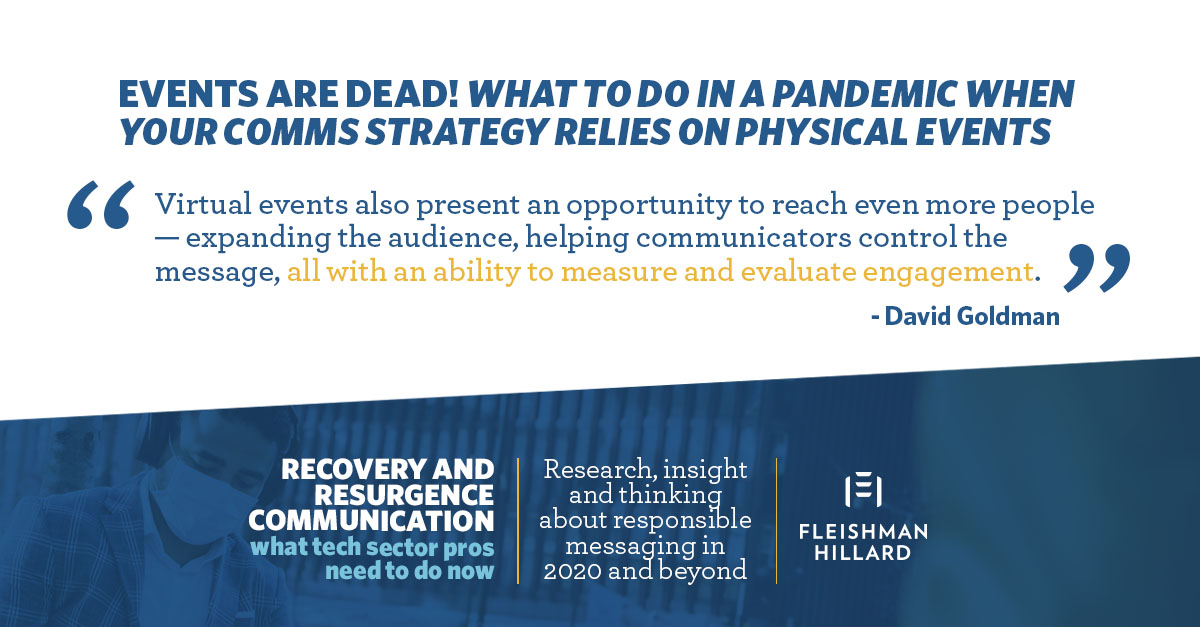
Virtualizing an event can have many benefits: you can still communicate what you planned to communicate IRL. You can own the moment without having to compete with other brands and activations IRL. You can execute the event whenever and for however long you want. You can extend the audience beyond IRL attendees. You can facilitate one-to-one interactions, deepen relationships, create memorable experiences and measure it all. Virtual events also present an opportunity to reach even more people — expanding the audience, helping communicators control the message, all with an ability to measure and evaluate engagement.
However, moving offline to online doesn’t mean events will require any less work or investment. In fact, they will be even more challenging and demand the development of new communications ‘muscle.’ When consumers, customers and journalists have been staring at their screens all day, communicators must over-rotate on creative content production and delivery strategies that really grab and hold attention.
As we pursue this new path of storytelling, we need to remember that all events are not the same. They never were, and taking them online doesn’t change that. Many consumer technology events have come to rely on the physical product demonstration or a hands-on experience with a product or service. Some are based upon the dissemination of information at scale or focused purely on relationship building. Others are intended to reach the media, designed for customers, or aimed at reaching the consumer directly. The needs of each of these audiences will still need to be satisfied to ensure the success of the event and ultimately the communications campaign and business objectives.
As we navigate our new normal and shift from offline to online, there are a number of mandates companies must consider to be successful:
The Right Partners
Experience, creativity and dependability matter just as much in this new environment. Whether you’re exploring a content partner or technology platform partner/solution, make sure they share your company values and have the right experience to amplify and deliver success.
The Right Distribution Platform
Make sure the technology solution being used caters to your needs. Does the software have a hard cap for participants, attendees and contributors? Do you need capability for surveys, live questions, chat? Do you need live editing, live graphic transitions? What kind of content do attendees need to see and/or interact with? Where do you hope for attendees to connect post-stream? Will you disseminate assets via mail or through a portal? Do you need a secondary breakaway channel for media to interact with stakeholders? Do you need to coordinate product delivery with an embargo? Not all platforms have recording functionality either. Working with the right partner to ask the right questions will help confirm the best platform for you.
Communicators should also think more broadly. You could even take it to another level and produce a documentary or film as a way to convey new information.
A Creative Approach
The best approach to events has always been through multitiered, multifaceted campaigns that build before and continue with a steady cadence after. This should not stop.
Be COVID-19 conscious. Know your audience. Some will care most about the news you have, others will care more about the pandemic and how your news impacts or disregards the public’s health and/or economic impact.
Consider themes — a talk show, news format or even a game show? Keep it engaging and appropriate.
Embrace the new normal and the informal. We’re all at home (and many of us are in sweatpants). While brands should come across professional, always, it’s time to ‘loosen the tie’ or better yet, take it off completely. Connect with the audience in a way that feels relevant, timely and approachable.
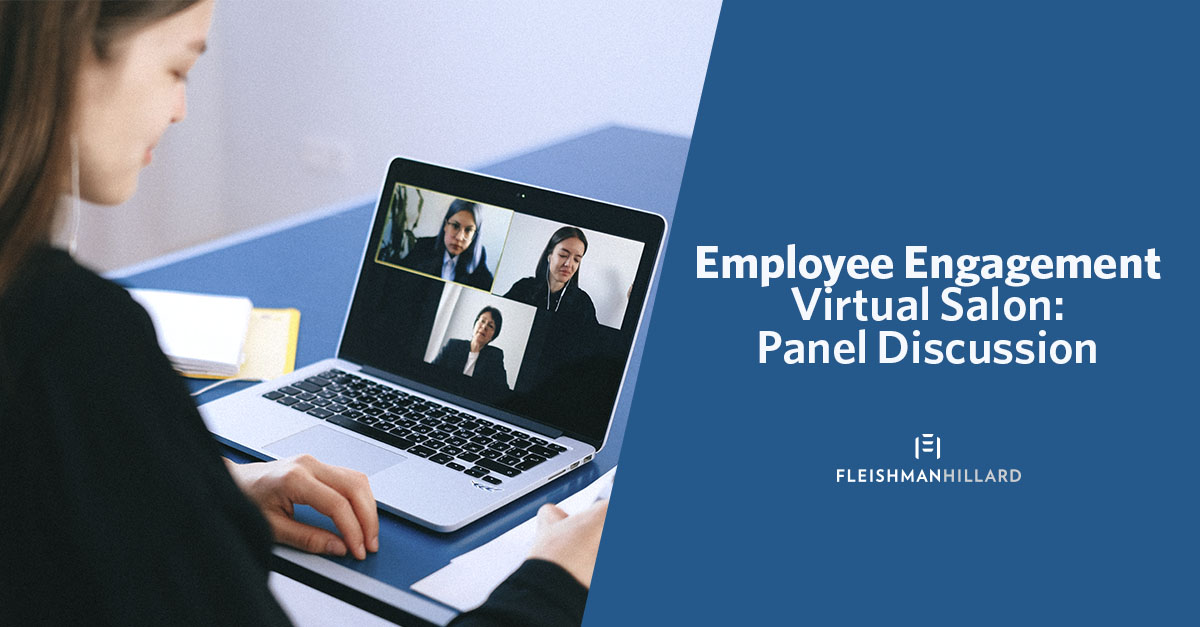
Back in March 2020, as the COVID pandemic began to significantly impact global businesses, FleishmanHillard invited a small group of internal communicators to a virtual Salon to share notes and insights on employee communications.
Held every two weeks, the Salon quickly grew into a lively forum with over 30 internal communicators hearing from and learning from their peers.
In June we moderated a panel discussion with three internal experts from AB InBev, Samsung and Western Union, who are also FleishmanHillard clients. It was a fascinating and wide-ranging discussion, with a particular focus on Leadership Communications, Culture, Employee Well-being and, of course, a Return to the Workplace.
Moderator: Paul Vosloo, SVP & Senior Partner, FleishmanHillard
Panelists:
Megan Booker: Global Director, Internal Communications, AB InBev
Claire Treacy: Head of Transformation and Internal Communications, Western Union
Tracy Calabrese: Director, Internal Communications, Samsung Electronics North America
Paul Vosloo (FH): Let me start with some of the challenges you’ve all faced coordinating global communications. Megan, as global director of internal communications for AB InBev, you’re supporting regional markets around the world, each with different health protocols and at different phases of returning to the workplace. How are you managing it?
Megan Booker (AB InBev): The relationship we have with different zones around the world is symbiotic. There is no one-size-fits all. We have six Zones around the world plus global – and each one is different.
Global communications originally supported APAC with message drafting. Of course then we didn’t realize that it would expand and impact so many markets. That experience, and the partnership with the APAC team, benefited us greatly as we pulled together scenarios and Q&As for all our markets. While doing this, it was important to create freedom for local markets within the framework as we were never going to be able to give different markets something that’s totally fleshed out because every market is unique.
What we prioritized giving to local markets is a consistent set of messages around our the return to the workplace as a company. Then, we provided them with basic assets that can be adapted easily. Simple is better because everyone is moving at lightning speed. Efficiency is key but it’s equally important to provide value. Having a strong relationship with the Zones was critical and enables us to understand what they value.
Paul: What other factors are you seeing?
Megan: As FleishmanHillard’s TGI survey highlighted, the way employees are treated right now is the number one driver of reputation. Companies have to decide what the return to workplace will really look like. We have to make people feel great about coming back to work in addition to addressing their concerns.
A second element is knowledge sharing. A year and a half ago we started putting more focus on knowledge sharing, but the crisis has really accelerated our approach. We found if one Zone faced a challenge, odds are another had faced the same challenge. Or will be facing it really soon and the teams can collaborate on a solution.
Paul: Claire. As Head of Transformation and Internal Communications, how are you managing employee communications at Western Union?
Claire Treacy (Western Union): COVID-19 forced a new normal on all of us, removing the more ‘traditional’ channels of communication many of our leaders had with their teams. Leaders and Mangers can no longer rely on open door policy – everything’s happening in a virtual environment and so more focus was needed on the most effective communication channels. Like most companies, we adapted quickly but you need to look carefully at the cadence of communications and make it a dialogue as much as possible, especially as most employees are sitting at home on a laptop.
We’ve set up a weekly video series from ET (Executive Team) members with updates, as well as site specific communications because people want to hear from their site leaders at a more local level. Empowering and helping ET direct reports and Managers cascade information is also essential. Equipping them with the right resources so they can be messengers and carriers of WU’s messaging and updates from the COVID task force, return to the workplace etc.
Paul: I know you’ve also been tracking employee sentiment.
Claire: Yes. We send out a monthly survey to all employees, with questions ranging from how they feel about their own role clarity to how confident they feel about leadership and the direction of our business, with a sliding scale and opportunity for people to add comments. Typically, we’d expect to receive around 4,000 comments, but in the last few months it’s risen to over 9,000, along with a huge increase in engagement.
There’s also been a noticeable increase in response rates to leadership comms. On engagement scores, Leadership is tracking slightly above 14 points above benchmark.
Paul: That’s impressive. How will you sustain that momentum?
Claire: Leaders are now paying a lot more attention to monthly engagement numbers from these surveys. There’s a bit of healthy competition going on. Leaders see their colleagues scores going up and they’re asking us what can they do? We’re working now with each Leader on a quarterly employee communications plan to really focus attention on maintaining this regular drumbeat of communications while the majority of teams remain in full or partial virtual mode.
Paul: Tracy, as Director of Internal Communications at Samsung in North America, have you seen Leadership styles change over the last couple of months?
Tracy Calabrese (Samsung): Absolutely. As a South Korean company, not surprisingly we have a very formal culture. But as we moved to virtual ways of working, we’ve encouraged senior management to be more informal and more empathetic, and they’ve really embraced that.
We’re seeing Leaders take on a more conversational style and tonality. In team meetings and through companywide communications, they’ve introduced their families and pets and talked about their personal experiences working from home. Communications also leads regular VP Webex calls to share timely updates and answer questions. These things help humanize Leadership. Employees have really responded positively and feel like Leadership are sharing their experiences. We plan to continue creating more dialogue between Leaders and employees – and hopefully build on this as we move start to return to the workplace.
Claire: I couldn’t agree more. At Western Union we want to sustain the humanity shown by Leadership during the crisis. What is achievable and sustainable? It may not be with the same cadence, but we’re planning to keep it going and build on it.
Megan: That’s a challenge for all of us. Leadership has relied on us to guide them through the crisis. How can we sustain that relationship? We’re already seeing Leaders hosting more Town Halls and recognizing the importance of employee engagement. And we’ve seen how powerful it is when Leaders are more humanized. When they speak with candor. We’ve got to hold onto that beyond the current crisis.
Paul: Tracy, you’re also facing a number of communications challenges with facilities and operations in different States throughout North America.
Tracy: Yes. We have over 200,000 employees in subsidiaries across the US. We’ve partnered with HR to set up protocols and templates to support subsidiaries, but recognize the situation is very different and very fluid in each State and for each type of workplace – offices, distribution centers, manufacturing facilities, retail locations, etc. We’re monitoring progress State by State to ensure we’re aligned to local health guidelines, as well as restrictions that impact employees like childcare or health concerns.
Right now, we have prepared our offices and facilities to re-open, regardless of whether they can or not. We want to have consistency in our approach, and ultimately we will decide on the right time to re-open.
Paul: I know Samsung recently had a holiday as a wellness day for employees. How important is it for the company to focus on employee mental health and well-being?
Tracy: Extremely important. The wellness day was very much needed and we’re continuing to focus on wellness as an important part of our internal communications.
For example, HR is looking at what different providers are offering, and looking into partnerships with other companies to provide more mental health and well-being support. We’re also looking at different ways to communicate with employees – we sent out two home mailers to promote wellness, something we don’t do often, but makes sense right now with people working from home. We’re also reinforcing the importance of taking time off to take care of yourself, which is so critically important.
Megan: It’s been all hands-on deck since COVID-19 started and it isn’t getting any easier! Among our Global Reputation & Communications team at AB InBEv, we’ve set up a routine where we give each member of the team a day to themselves every two weeks. One day to yourself when you’re not expected to be on and reachable.
Claire: There needs to be a balance of life and work from home, particularly so now that we’ve come to realize that many of us will be working from home for the foreseeable future. We need to encourage and remind employees to take time for themselves. It’s not always top of mind so it’s important to encourage it.
From a mental health perspective, Western Union had a mental health expert join a recent leadership meeting to talk to the team about how to recognize the signs of mental health and the best ways to engage employees who managers feel may be struggling – opening up a dialogue.
Paul: Thanks each of you for sparing the time to talk to us and sharing your insights.
The following is a precis of the discussion with key insights highlighted:
GLOBAL MANAGEMENT FOR REGIONAL COMMUNICATIONS
Relationships between different global zones and markets need to be symbiotic and combine key learnings from each location
There is no one size fits all for each location, allowing for each region to determine its own communications framework based off of key learnings that other regions are sharing
LEADERSHIP COMMUNICATIONS
Leaders need to have clear and concise key messages that they can easily and effectively convey to all members of the workforce
Efficiency in communications is a key aspect to making communications successful, but there is still the need for the communications to have value for employees
Leadership needs to show engagement and an understanding of each region for communications to be effective
COVID-19 has humanized leaders; employees enjoy seeing their leadership working from home and in “home” settings
There has been a positive response from employees about the increased informality from leadership, with companies focusing on how to sustain this “humanity” going forward
All leadership communications are now virtual and need to be more frequent (e.g., video series, town halls, regular updates and quarterly plans, etc.)
EMPLOYEE MENTAL HEALTH & WELL-BEING
Companies are placing an even larger emphasis on mental health and well-being
HR is working with Internal Comms to communicate to employees the importance of taking care of themselves; balance working from home and personal life
Companies are striving to teach employees about mental health and how to recognize mental health, or lack thereof, in employees during COVID-19
MEASURING EMPLOYEE ENGAGEMENT AND SENTIMENT
One of the most important points of employee engagement and sentiment currently revolves around the return to the workplace and the way that employees are treated in regard to this process
Companies have to decide what the return to work process is really about and whether to place the focus on employees or the work itself
Companies are using data and feedback to positively reinforce what is working for employees both during COVID-19, as well as what takeaways can be used after the COVID-19 crisis ends
MAINTING INTERNAL COMMUNICATION’S SEAT AT THE TABLE
Leadership has been reaching out to internal communications to ask what they as leaders can do to reinforce employees’ belief and trust in the company
Internal communications is especially important when looking at the return to the office and how employees are viewing the potential for this
See what else is happening
You might also like
Expertise
Black Hat 2026: A Conference and Industry Transformed
August 10, 2026
Expertise
When Food Safety Crises Test Trust: A Guide for Communicators
July 24, 2026
Expertise
We Went to Cannes Lions: Where the Industry Is Trending
July 1, 2026
Expertise
Healthcare’s Moment Has Arrived. The Question Now Is: Will Your Organization Move Fast Enough?
July 1, 2026
Expertise
The Visible CEO: How Leadership Can Serve as a Strategic Asset
July 1, 2026
Expertise
How to Win the GLP-1 Food Industry Wake-Up Call
June 30, 2026
Expertise
Cannes Lions Exposed an Industry’s Transition of Power: Takeaways From Winning Work
June 26, 2026
Expertise
Lessons From Cannes: Don’t Let Speed Fail Storytelling
June 25, 2026
Expertise
Get Bold Work Out Into the World: How to Seize the Chaos Advantage
The Future of Work: How Remote Work Has Changed Expectations of What Work Can Be
July 15, 2020
By Natasha Kennedy
Share
Over now many months of quarantine around the world, discussions on how and when to return to the physical workplace have evolved into a more fundamental question: why? As companies embraced remote work overnight, jobs we previously thought could only be done from the traditional workplace have adapted, and workers have discovered they prefer parts of their new normal over their old one. Many are not eager to return to the workplace or to the way they did their jobs and managed their lives before. How should work and life coexist moving forward?
Business leaders are grappling with these changes in real time and face logistical, legal and HR challenges. Major companies are announcing continuations of their work-from-home policies, and some have announced their workers can continue remote working permanently if that’s what they’d prefer.
None of this means that remote work is now the perfect arrangement for workers or employers. There are benefits to in-person interaction that are not easily replicated via technology, as well as value in spending time away from the pressures of home. Experts from across disciplines are telling us that finding the balance and solving for these challenges requires a more deliberate consideration of the tools we use and the culture of use we build to surround them.
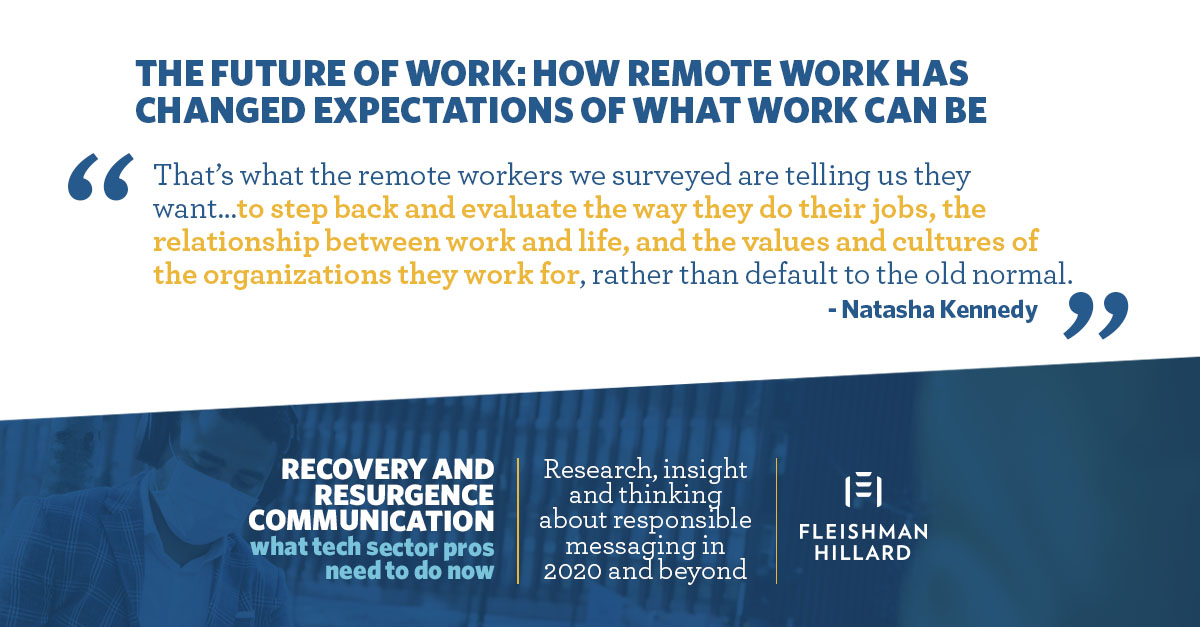
That’s what the remote workers we surveyed are telling us they want to do as well — to step back and evaluate the way they do their jobs, the relationship between work and life, and the values and cultures of the organizations they work for, rather than default to the old normal.
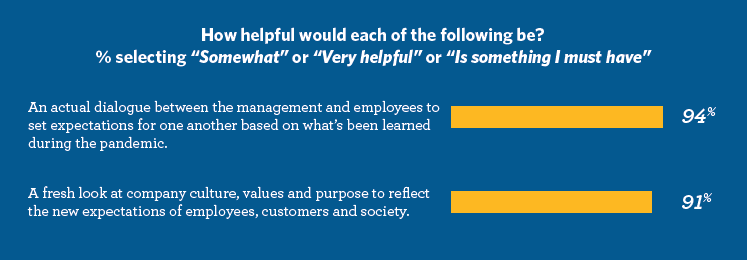
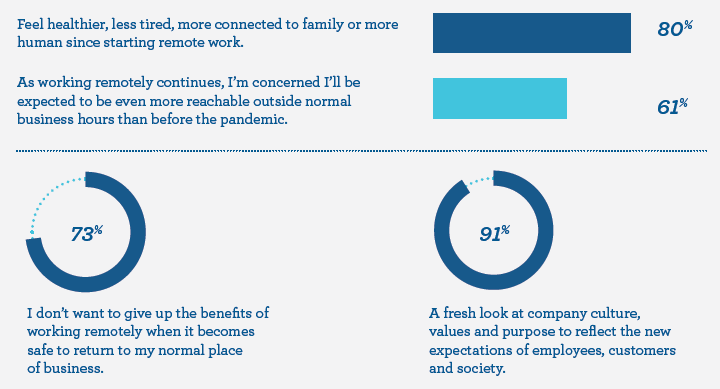
Nine out of 10 remote workers (91%) believe we should take this opportunity to have a true discussion as a society about how work and life should coexist moving forward, a sentiment again strongly felt among executives and senior managers (92%). This can begin inside companies, and many workers (91%) are eager to engage in a dialogue and take a new look at company culture, values and purpose. The COVID-19 pandemic is driving the need for revolutionary change in the way we work and live.
The Pandemic Is Redefining What It Means to Be Able to Work Remotely
The transition to remote work was an overnight revolution for businesses and workers.
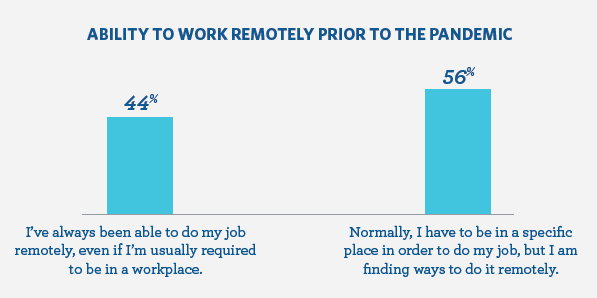
The first half of this year also proved the ability of remote work to really work. Fully 56% of remote workers needed to be in a specific place in order to do their job prior to the pandemic. The pandemic forced these workers to adapt, and one of the lasting legacies may be rethinking what jobs can be done remotely for the long term.
Technology Hasn’t Fully Solved for What’s Lost Without In-Person Communication
The core challenge of remote work is communication.
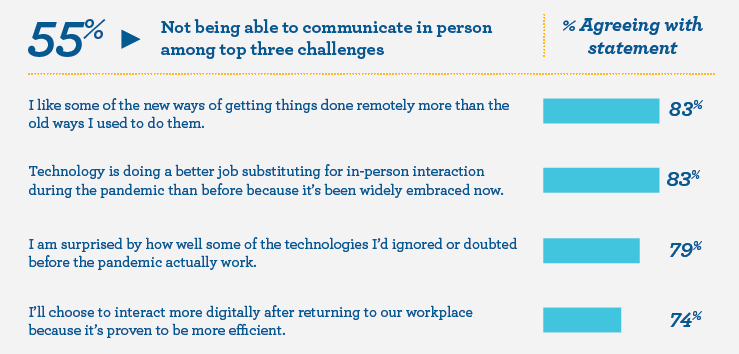
Eighty percent have experienced some disadvantage of remote work relating to communication, and 55% identified not being able to communicate in person as one of their top three challenges.
Despite these difficulties, the overall experience of technology, so much of which is designed to facilitate remote communication, has been positive.
Remote Work Has Been A Net-Benefit Despite Its Challenges, And Workers Don’t Want to Give Up What They’ve Gained
Most don’t miss their old normal.
Eighty-five percent have found advantages in remote work that make for a better work/life balance, but 41% have also found it difficult to separate work and home. Three out of five (61%) are worried as remote work continues, they’ll be expected to be even more reachable outside of normal business hours.
Despite that tension, the advantages of remote work overcome the disadvantages for many. Eighty percent of remote workers feel healthier, less tired, more human or more connected to their family since transitioning to remote work.
As workers consider returning to their workplaces, it’s not only fear of the virus making some reluctant. Seventy-three percent don’t want to give up the benefits of working remotely. This attitude is as strong among executives and senior managers (76%) as among non-managers (73%). Most don’t want to return to how they balanced their work and their life before.
Workers Want to Collaborate on a Plan For The Future Of Work
Workers see value in using the pandemic to reconsider what work should be.
If its employees can continue working remotely, 74% of remote workers believe their company shouldn’t reopen workplaces until there’s a treatment or vaccine for the virus, and 79% would rather see their employer invest in technology to improve remote work than in remodeling offices to make them safer to return to.
“Take it Offline.” Is That Even Possible Anymore?
Seventy-four percent of U.S. and U.K. employees will choose to interact more digitally after returning to their workplace because they are more efficient. What will this mean for how we acquire, engage and retain employees, customers and key stakeholders in our supply chains? Security, safety, education, sales, service, communication and wellness are all innovation opportunities, and the list goes on and on.
We sought to explore how the ability to work remotely has changed in the U.S. and U.K., to help organizations develop effective communications strategies to address the balance and safety we seek and the work we need to deliver.
The following article is an extract from the latest FleishmanHillard global report: Recovery and Resurgence Communications: what tech sector pros need to do now. […]
Recovery and resurgence communications is more than economic survival and revival. It’s now about social reckoning, emotional recovery, and the resurgence and emergence of doing what’s right — for all of society and on behalf of all stakeholders.
This Hong Kong Trade Development Council (HKTDC) webinar will focus on the importance of authentic communications — from both brands and leaders — as a critical element to rebuild trust, confidence and community during this ever-changing time caused by the COVID-19 pandemic.
Rachel Catanach, president, FleishmanHillard Greater China, will serve as a panelist along with fellow APAC industry leaders. Together, they will discuss communications strategies for business survival and stakeholder engagement amid the coronavirus crisis.