Self-Improvement Month: Marguerite, Andrea and Rachel
September 12, 2019
By FH Perspectives
Share
September is Self-Improvement Month, an observance designed to encourage people to make empowering changes to reach their goals. At FleishmanHillard, we encourage our teams to never settle. This month we’ll highlight employees across our global network who embody our bold approach and strive to grow professionally and personally. Responses will be shared in Q&A format featuring their unique perspectives.
This week, we’re featuring Marguerite Pinheiro, Andrea Myers and Rachel Coleman.
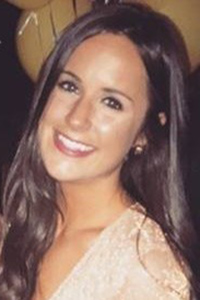
Marguerite Pinheiro, account supervisor, supporting our Technology sector in New York
Marguerite Pinheiro
Q: How do you stay up-to-date with new offerings in your industry, practice group and/or sector?
A: The best way to stay up-to-date with new offerings in the technology industry is by always being plugged into the news. My favorite way to get my news is through newsletters in the morning – like the WSJ, Quartz and Axios. Staying up-to-date across practice groups at FleishmanHillard is easy because everyone is so collaborative and we’re always sharing news with one another – from breaking stories to new analytics offerings. My favorite part about being on the technology team here is our weekly tech team meetings. It’s in those meetings that I am reminded of how intelligent my colleagues are and how lucky I am to work alongside all of them.
Q: What do you think is the best thing someone can do to advance their career?
A: The best thing someone can do to advance their career is to get out of their comfort zone. Whether that is experimenting with a new specialty or practice group, meeting new people and/or taking on projects that you wouldn’t normally do, it will only take you to the next level. Some of the most rewarding accounts or projects that I’ve worked on are the ones that weren’t the obvious choices. Having a voice in that decision and advocating for yourself for that chance is brave and will inevitably allow you to take your career to the next level.
Q: What is your proudest career moment so far and how do you aim to build on it?
A: I have proud career moments every time a coworker or client has something positive to say about me, whether it’s to me directly or to someone else. I take my career very seriously and am always trying to be the best I can be so when that is recognized, it truly means a lot and I will never stop trying to build on that, especially as I continue to evolve and grow. To master PR, it’s crucial to have excellent people and media relations skills, so as long as I never lose sight of that, I hope to keep expanding as a professional.
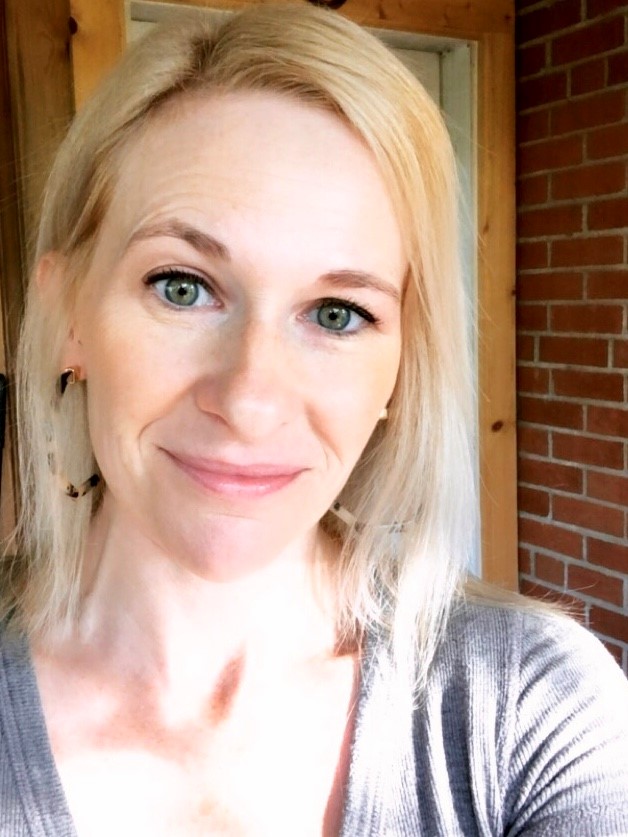
Andrea Myers, senior vice president, supporting the Talent and Transformation team in St. Louis
Andrea Myers
Q: What do you think is the best thing someone can do to advance their career?
A: Be open. The best things that have happened in my career aren’t because I set out a goal to achieve that specific thing. I had a general idea of what I wanted to do, but then stayed open to experience as much as possible. Also, say yes to the stuff you don’t want to do sometimes. When I know an opportunity is a good chance to learn, I try and say yes even if I’m scared and know I’ll dread it up until the moment I have to do it. But then it’ll be done, I will have learned something and I can say I did it.
Q: What is the best piece of advice you can give to others working on their own professional development?
A: Think outside your profession. Professional development doesn’t have to mean attending a conference specific to your line of work. Maybe it’s attending an improv class to think on your feet better during presentations. Maybe it’s chairing a nonprofit committee to get experience leading others. And, follow your curiosity. Taking on a new hobby you’re passionate about, for example, can be a surprising way to gain experience that will make you better at your day job.
Q: If you could go back five years, what is something you would tell your younger self?
A: Keep perspective. Sometimes when you’re in the middle of a project, it can be all-encompassing and you get swept up in the drama. All the sudden, a project that’s pretty innocuous can start to feel like life or death – and that’s almost never the case. Keeping things in perspective will help you stay calm, not over-react and ultimately, help you make better decisions in the moment. The bonus of that is while others are swirling, you are the voice of reason and they’ll respect you for it.
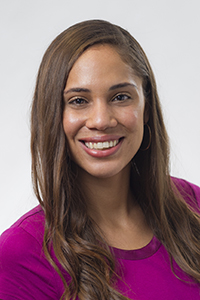
Rachel Coleman, managing supervisor, supporting our Reputation Management practice in Chicago
Rachel Coleman
Q: What’s a specific area of your career you want to develop over the next year? How do you plan to do so?
A: Over the course of my career, I’ve been lucky enough to work on a variety of accounts, which has allowed me to learn about different industries and gain experience supporting a wide range of communications initiatives. I tried to be a sponge earlier in my career, and everything I’ve had a chance to work on has not only contributed to the counselor that I am today, but also helped guide me as I continue to grow. Looking ahead, I’m starting to focus on better understanding the type of work I’m passionate about and identifying opportunities to raise my hand for more of that work.
Q: What do you do when you experience a setback? How do you overcome it?
A: I let myself privately process the emotion. Whether it’s frustration, anger, disappointment, etc., I think it’s important to take the time to understand what happened and why I feel the way I do before I reflect on what I can do better in the future. Sometimes I just need to take a walk or vent to a colleague. Other times, depending on the issue, I sit on it for a night and regroup with a fresh mind the next day. I also find it’s helpful to talk through setbacks with my supervisor and my mentors when I need another perspective or want help thinking through a solution.
Q: How do you seek and implement feedback?
A: When giving feedback, I’m a fan of sharing it in real time. I think everyone reacts to feedback differently, so my approach may differ slightly from person to person, but I focus on being direct and having a rationale. I also think feedback is best when it’s constructive and there’s a clear action item for the person on the receiving end.
See what else is happening
You might also like
ESG
Navigating Conflicting Demands to Advance Climate Action
January 20, 2025
Opinions
Supporting St. Louis Institutions Dedicated to Empowering Youth Through FH4Inclusion
January 15, 2025
Opinions
Revitalizing the San Francisco Community with the Downtown Volunteer Coalition
December 23, 2024
Opinions
FleishmanHillard and FH4Inclusion Teams Shine at the Cannes Lions International Festival of Creativity
August 28, 2024
Opinions
Bridging the Generational Divide with Generative AI
August 27, 2024
Inclusion
Success on Repeat: Alumni of the Alfred Fleishman Diversity Fellowship Discuss Promotions and How to Get Them
May 29, 2024
News
EU climate policy: The new borderlines?
May 27, 2024
News
Achieving the Evolving Duality of Loyalty and Loyalty Programs
April 1, 2024
Expertise
TickTockTech: Mobile World Congress 2024 — What’s the Verdict?
Where: Church House, Deans Yard, Westminster, London, SW1P 3NZ
The PRCA National Conference brings together more than 300 practitioners in PR and communications to cover the theme of Next Generation PR. Leading speakers will focus on how the PR industry needs to equip itself for the next 50 years of PR and communications. The conference includes a bespoke mix of training workshops to provide the skills needed to create the leaders of the future.
The conference will be chaired by Jim Donaldson, FleishmanHillard’s EMEA regional director, CEO of UK and the Middle East, and the chairman of PRCA. Donaldson will deliver the welcome address and closing speech.
September is Self-Improvement Month, an observance designed to encourage people to make empowering changes to reach their goals. At FleishmanHillard, we encourage our teams to never settle. This month we’ll highlight employees across our global network who embody our bold approach and strive to grow professionally and personally. Responses will be shared in Q&A-format featuring their unique perspectives.
We’ll kick off our series with Bia Assevero, Anne Beutel and Monica Lefton.
Bia Assevero, account supervisor, supporting our Reputation Management practice in New York
Bia Assevero
Q: What do you do when you experience a setback? How do you overcome it?
A: I think when you grow up “in transit” as I did, part of you is hard wired to be future-focused and not overthink the past. Recently though, I’ve also settled into a few mantras that have helped me do a better job of managing setbacks, disappointments or even just the small mistakes you make when you’re learning. One is to “travel light” and by that I mean recognizing that most times, that setback or disappointment is just the reality of a single moment. So while it’s important to process it and identify the things you can learn from it, ultimately, you should avoid carrying the weight of it with you forward into the next moment.
The other mantra [courtesy of my YouTube yoga guru] is “honor where you are today” and to me, that’s all about having compassion for yourself. A lot of the time, negative feelings are relative and result from comparing ourselves to other people or over-investing in how we imagine things will work out. When you focus on where you are in the present moment, you give yourself permission to celebrate all your wins, no matter how small. And on the days where you’re struggling, it’s helpful to be able to acknowledge it without beating yourself up. We all have rough days. I’ve found that being able to say, “this is where I am today and yeah, it’s hard but it’s also okay,” helps to get through it.
Q: What do you think is the best thing someone can do to advance their career?
A: One of the most important assets you have – especially in a company like FleishmanHillard – is the perspective that is unique to you. What do you see and understand that others might miss? What experience have you had that informs the insights you can share? And my recommendation for building this and refining it is to constantly challenge your opinions and assumptions. Seek out counternarratives and different points of view. Be open to new information and new ideas so that even if they don’t fundamentally change your mind, they sharpen your thinking and allow you to showcase the value that you’re bringing to the table. Opportunities to advance arise when people can align your value with the goals they are working toward.
Q: What is the best piece of advice you can give to others working on their own professional development?
A: Listen – a lot and to as many people as possible. It doesn’t mean you have to follow all the advice you’re given or agree with everything you hear but it is a crucial skill for anyone working in communications. It will inform your ability to counsel clients, to build relationships and to identify opportunities for growth. In particular, I would say you should listen to the people who are experts in the fields you want to become an expert in. We have amazing senior counselors across our network and I make it a point to listen to them, even when they’re not talking to me. There’s a lot to be learned from how they engage – with clients, with each other and with junior colleagues – as well as from how they analyze the different issues and trends that are affecting our business and our clients.
Anne Beutel, account supervisor, supporting our Social and Innovation practice in Frankfurt
Q: How do you set short- and long-term career goals?
Anne Beutel
A: For short-term goals, I always follow my interests and match them against industry developments I see to find the sweet spots that give me and the firm a competitive edge. To be honest, in such a fast-paced environment like our industry, I don’t see much value in setting traditional long-term career goals. I have a vision of what I want to do in the future – working on the intersection of creative and strategy, being an enabler for clients and colleagues, consultancy to reduce complexity. And I have an idea of which skills this requires. This is not necessarily connected to a clear career path, but rather to my personal development. I am confident that any organization will benefit from such expertise and look for these skills in their employees – though the exact roles and job descriptions do not exist yet.
Q: What is the best piece of advice you can give to others working on their own professional development?
A: Stay curious! If you have a strong interest in learning a new skill or topic, your intrinsic motivation will drive you. At the beginning of my career, I made a point to obtain experience in the fields I thought would be relevant to the company or the team, but weren’t necessarily relevant for me and my interests. But this only got me to a point where it took a lot of my energy to stay on track. Now, I concentrate on areas I want to excel at personally – and the business cases accrue almost automatically.
Q: What is your proudest career moment so far and how do you aim to build on it?
A: I was chosen as one of “#30u30 – Germany’s most promising PR talents” in 2016. This is a network of like-minded and highly skilled people I still benefit from today. The network has helped me gain visibility, speaking opportunities and inspiration. For example, at an event I met four other women who are also part of this network and we started a Working Out Loud Circle. In this 12-week program, we dedicate 2% of our time to sustainably expanding our networks tailored to an individual goal. Without being part of #30u30, I would have probably never tried Working Out Loud and would have had a much harder time improving my visualization and graphic facilitation skills. For me, this underlines that networking is not just for acquiring business, but to move faster together than I could by myself.
Monica Lefton, assistant account executive, supporting our Healthcare sector in Atlanta
Q: How do you seek and implement feedback?
Monica Lefton
A: As able, I always try to ask for feedback or suggestions when sharing my work with the team. I try to end every email with something like “Please let me know your thoughts and edits.” I also schedule regular check-in meetings with my manager, team and some office leadership to ask for feedback then, “what am I doing well and what can I do better?” Always take notes on this feedback. When starting a new project, I think back to the last, similar piece of work I did and create a mental check list of edits and improvements to include in this new project to make it better than the last.
Q: What do you do when you experience a setback? How do you overcome it?
A: I try to think about what I could have done differently in the situation, reminding myself I only have control over my own actions and reactions. After an especially hard day, I always tell myself “you only have to live through this day once.” Tomorrow may be hard too, but you’ll never have to live the same day twice.
Q: If you could go back five years, what is something you would tell your younger self?
A: You can’t always prepare yourself for work, but you can prepare yourself to be a good worker. It’s not always what you do that matters, but how you do it.
See what else is happening
You might also like
ESG
Navigating Conflicting Demands to Advance Climate Action
January 20, 2025
Opinions
Supporting St. Louis Institutions Dedicated to Empowering Youth Through FH4Inclusion
January 15, 2025
Opinions
Revitalizing the San Francisco Community with the Downtown Volunteer Coalition
December 23, 2024
Opinions
FleishmanHillard and FH4Inclusion Teams Shine at the Cannes Lions International Festival of Creativity
August 28, 2024
Opinions
Bridging the Generational Divide with Generative AI
August 27, 2024
Inclusion
Success on Repeat: Alumni of the Alfred Fleishman Diversity Fellowship Discuss Promotions and How to Get Them
May 29, 2024
News
EU climate policy: The new borderlines?
May 27, 2024
News
Achieving the Evolving Duality of Loyalty and Loyalty Programs
April 1, 2024
Expertise
TickTockTech: Mobile World Congress 2024 — What’s the Verdict?
Where: The Altis Grand Hotel, Rua Castilho 11 Lisboa 1269-072 Portugal
Jim Donaldson
The ICCO Global Summit attracts more than 300 PR and Communications leaders and specialists from around the world to hear from agency CEOs and owners, alongside experienced in-house communications directors and PR specialists from over 30 countries. The 2019 Summit will feature talks, panel discussions, workshops and debate around harnessing technology to complement traditional communication as well as adapting to a rapidly changing media environment.
FleishmanHillard’s Jim Donaldson, EMEA regional director, CEO of UK and the Middle East, will moderate “Part 1: How is AI impacting delivery of communication?” As well as “Part 2: How is AI impacting agency strategy, structure and relationships?”
Turning Up the Volume on Your Annual CSR/Sustainability Report
Share
Releasing a CSR/sustainability report has been table stakes for companies for many years. Today, 93% of the world’s 250 largest companies and 86% of S&P 500 Index® Companies issue such a report. But given the substantial time and budget they put into this annual exercise, it’s surprising how often they leave stones unturned when it comes to sharing their reports with key stakeholders and making sure that their key messages resonate with the audiences that matter most.
After all that hard work, your brand deserves to get as much mileage as possible out of your annual CSR/sustainability report. Here are a few tips that can help you do just that.
Build an amplification strategy before you begin writing
A journalist considers her objectives and approach before ever putting pen to paper. Why should a CSR/sustainability communications leader operate any differently? Some extra thought on the front end about how your report will be used can help benefit – and streamline – the writing process.
Before you craft a report outline, consider brainstorming with internal stakeholders to define your key audiences and clearly outline any significant announcements or news from the past year that could become headlines. Putting in this effort before you start writing can help your brand be more strategic about the execution and flow of your report, as well as your timeline and focus areas.
It’s been a long time since simply launching a report has been newsworthy. But, if your report contains new announcements or commitments, there may be opportunities to attract media attention to its release. Savvy companies sometimes hold back sustainability commitments so they can announce them with their sustainability reports. This, obviously, increases the odds that media will take interest in other elements of your report. Paid integrations and third-party content in support of the key messages within your report can also turn up the volume on your accomplishments.
In addition, as you plan your report consider ways to shape and present key information that will translate well beyond traditional media. For example, look for opportunities to present key content graphically to make your report more compelling for social and digital audiences, too.
Engage new audiences in meaningful ways
Don’t just share your CSR and sustainability news with sustainability media outlets. Think holistically about who your brand aims to reach and who might benefit from hearing about your commitments to people, planet and sound governance. Are there key messages in your report that can show policymakers your company’s leadership on white-hat issues? Would other messages resonate with the key communities where your operations are located? How are you leveraging your report with investors – an audience with a growing appetite for responsibly managed companies?
And don’t make the mistake of overlooking your internal audiences. Employees, from executive to junior-level, can be the best advocates for your brand. Arm them with all the great things you’re doing by making sure they are familiar with the content in your latest report. Are there key messages that can be shared with team leaders? Could your CEO discuss key report content in an upcoming town hall? Would elevator wraps or floor decals help reinforce your team members’ understanding of your company’s CSR/sustainability work? Nearly 40% of millennials have chosen a job at least in part because of a company’s dedication to sustainability; leverage this annual record of your accomplishments to build pride in your company and promote employee retention.
Leverage report content over time
While launch moments are important, much of the content in your CSR/sustainability report has a fairly long shelf life. Consider re-sharing data points in your report about diversity, equity and inclusion on such relevant occasions as International Women’s Day and Veteran’s Day. Comb your report for news and media angles that could be pitched during Climate Week (September) or on Earth Day (April).
Crafting a robust social media calendar will help ensure that you leverage your messages throughout the year and multiply your opportunities to showcase your brand’s commitment to CSR/sustainability.
It is easier to eat a steak than a whole cow
Let’s face it – very few people who aren’t intimately connected to your business are going to read your CSR/sustainability report in full. Creating an executive summary or a series of one-page infographics or issue briefs will help you tell the most compelling stories from your report year-round. These resources can be shared online as separate downloadable files, distributed to media alongside pitches and shared with policymakers or community groups to highlight the common ground you share with them on key issues. Make it easy for your most important stakeholders to sink their teeth into your successes.
These ideas are just a starting point; hopefully they’ve primed the pump for more tactics that can help increase your return on this important investment. Best of luck as you launch and amplify your next report!
See what else is happening
You might also like
Expertise
Why Trust is the Real Competitive Advantage in Ag Tech
April 2, 2026
Expertise
Notes From the Road: RSA Conference 2026 Edition
April 1, 2026
Expertise
Why Your AI Rollout Is Stalling (And What Actually Moves the Needle)
March 25, 2026
Expertise
Get the Report: Inside China’s 2026 Two Sessions
March 24, 2026
Expertise
The New Culture Gap Report: How Brands Stay Relevant for 100 Years
March 24, 2026
Expertise
The Tech Industry’s License to Lead Problem: How Tech Companies Made Themselves Vulnerable to the AI and SaaS Apocalypse Doubt
March 4, 2026
Expertise
The Five Principles of Decision-Ready Intelligence: A Framework for Making Hard Calls in an AI-driven Environment
March 3, 2026
Expertise
The Patient Engagement Gap Your Competitors Are Closing
February 26, 2026
Expertise
AI is Reshaping Communications: Inside FleishmanHillard’s Enterprise-Wide Approach
We are pleased that the results of the detailed review by Bayer’s independent legal counsel confirm FleishmanHillard and our employees have conducted our work on behalf of Bayer Crop Science and Monsanto in an ethical, principled and lawful manner. FleishmanHillard worked diligently at our client’s direction and in accordance with professional standards and established industry practices. We have been and are committed to integrity in what we do. We believe in the value of engaging in and supporting vigorous social dialogue. It is essential to any well-functioning society that diverse opinions can be expressed and discussed.
See what else is happening
You might also like
Expertise
Why Trust is the Real Competitive Advantage in Ag Tech
April 2, 2026
Expertise
Why Your AI Rollout Is Stalling (And What Actually Moves the Needle)
March 25, 2026
Expertise
Sustaining AI Adoption on Your Team: Moving from Launch to Long-Haul Momentum
December 19, 2025
When Honest Counsel Drives Growth
November 13, 2025
Expertise
Five Ways to Build Community Reputation and Trust
October 29, 2025
Expertise
Understanding the GLP-1 Consumer: Pairing AI and Consumer Behavior Research to Map Potential Impact on Food, Nutrition and Innovation
October 29, 2025
Expertise
Communications Is an ROI Multiplier for Global Sports Sponsorships
October 22, 2025
Expertise
Augmented Judgment, Accelerated Execution: AI’s Role in Crisis, Issues and Risk Management
October 14, 2025
From Risk to Resilience: How Communicators Lead in an Unforgiving Landscape
Consumers today are making purchasing decisions on more than just the customer or product benefits, also weighing aspects like what a company is doing for society and its environmental impact. Brands are increasingly aware of the expectation and supporting causes that they may not have touched 30 years ago. But taking a stand isn’t easy, and brands tend to gravitate toward issues that their peers are involved with, often sticking to the surface of those issues.
Consumers are taking notice that certain causes are trending and questioning if brands are making a difference. Terms like “pink-washing,” “pride-painting” and “woke washing” are entering our lexicon. As Alex Abad-Santos writes in Vox, LGBTQ Pride Month has become “a branded holiday,” with so many rainbows in store windows that it begs the question of what exactly brands are supporting.
With many companies focusing on these more popular issues, they may be missing out on an opportunity to differentiate themselves by addressing other topics that people also care about.
Consumers already expect companies to be out front on issues they create, impact directly or control. Data security (59%), data privacy (58%), climate change (53%), income and wage gaps (44%) and minimum wage (44%) are among the top issues that consumers expect brands to address according to FleishmanHillard’s 2019 Authenticity Gap survey.
Yet there are also topics that matter deeply to those same consumers with little expectation that brands would have an impact.
Take education. Our research shows that 79% of consumers say access to affordable, quality education is extremely important, placing it in the top five issues consumers care about. Surprisingly, only 32% of those consumers expect companies to take a stand here. As issues go, education has an intrinsic relationship to the bottom line. Companies rely on an educated workforce for their business to thrive. And brands don’t have to go too far to make a difference – education can happen in the form of on-the-job training. In fact, the ability to learn new skills tops the list of what people say makes a company a great place to work.
Engaged consumers say more than a quarter (28%) of their perception of a company is based on a company’s impact on society. That includes taking better care of employees, the community and the environment.
In a world where brands are expected to step up, there’s a greenfield for those willing to go off the beaten fund run or parade path, provided they do so in a way that rings true to their business and their values.
Imagine for a second, you look at a tag or a label on a box and it tells a different kind of story. It’s not about what’s IN the box. It’s about HOW what’s in the box was created and by who.
Imagine a story that reveals the craftsmanship behind who made the product or how the service was delivered, how the company was fair to that worker, why it’s good for health and how the product was made in a sustainable way that created minimal, perhaps even positive, environmental impact. Is it a dream? It shouldn’t be, because these are the kinds of behaviors consumers expect of companies.
WHEN PRODUCING PRODUCTS, THEY WANT TO KNOW HOW COMPANIES ARE:
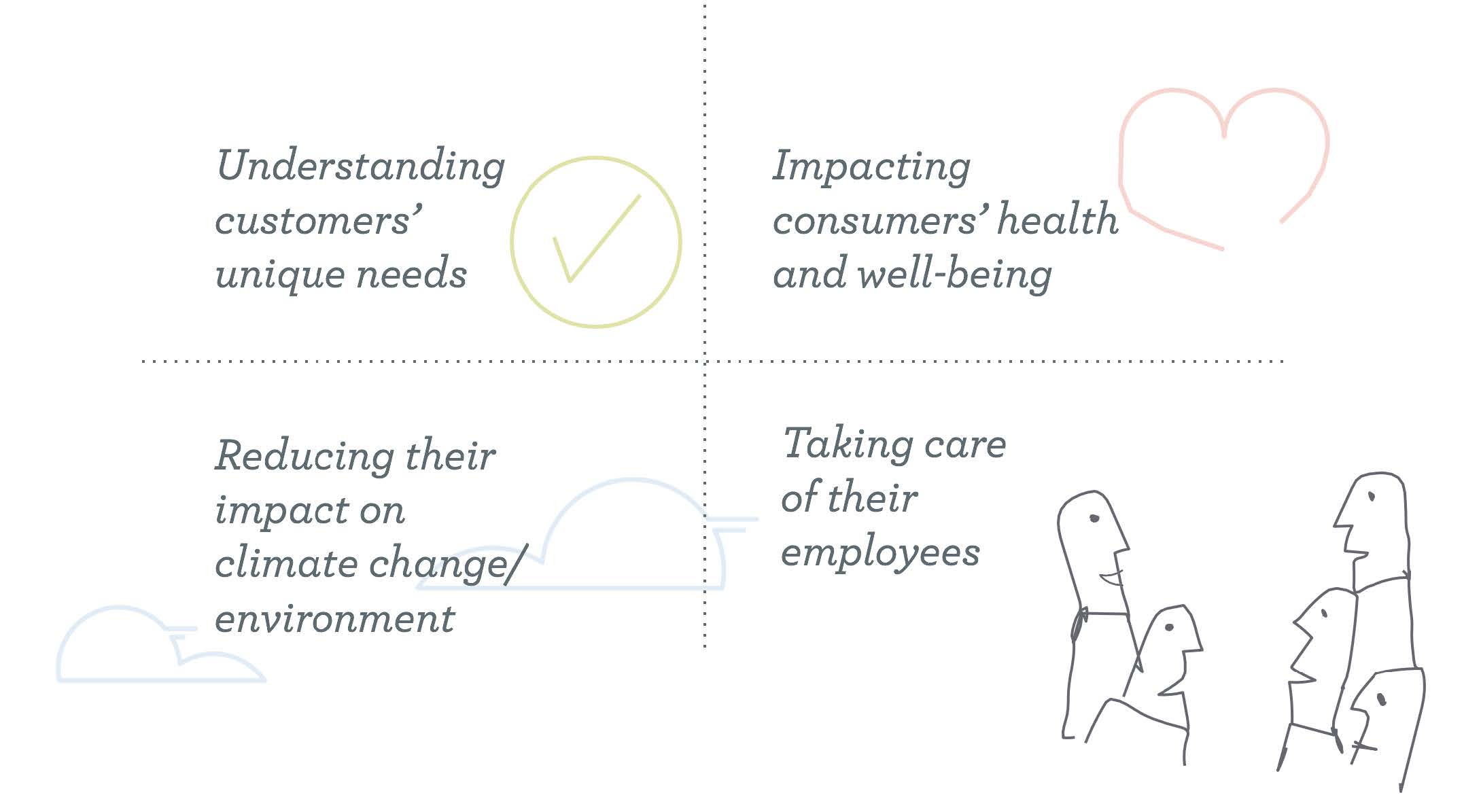
Understanding their customers’ needs (55%)
People are looking for companies to understand their needs holistically, going beyond their specific transactional needs for the product. They expect companies to connect with their values and larger sense of purpose, while also delivering the product benefits they want.
Creating solutions to reduce their impact on climate change/environment (47%)
Today’s consumers are likely concerned about the environmental impacts of their consumption habits, and yet they still want and need those products in their lives. Many are asking about and paying attention to companies that take responsibility for environmental impacts throughout their product lifecycles so that individual consumption habits are less harmful to people and the planet.
Impacting consumers’ health and well-being (42%)
Generational trends tell us that consumers are becoming more health conscious, and now our Authenticity Gap data confirms those trends as expectations for brands. People want to know companies are taking individual and population health needs into consideration when creating their products, by addressing health concerns and generating health benefits.
Taking care of their employees (42%)
Consumers have a strong expectation that companies are looking out for the employees who are creating and manufacturing their products. Active conversations about pay equity, living wages and the importance of diversity and inclusion all weigh into their holistic expectations for the purchases they make, reflecting on their own brand and values.
Today’s consumers are looking beyond the benefits of “new and improved” and toward the thoughtful creation of goods and services that delight us, add joy and take away the guilt of consuming something. (Nod to Marie Kondo.)
Let’s broaden our understanding of product communications to go beyond just meeting these changing expectations. Let’s build new narratives that highlight HOW companies are thoughtfully approaching producing new products to benefit people. As some leaders might say, let’s commit to generating (and communicating!) benefits for all stakeholders.
3 Maybe Not-So-Hidden Communications Priorities in an IPO
August 28, 2019
Share
During an initial public offering (IPO), there are bankers, lawyers, potential investors, sometimes-jittery management teams … and more bankers and lawyers to wrangle, inform and mollify. It’s a months-long process of the company and communications team navigating challenges. Leading up to key milestones, such as the IPO roadshow and list day celebrations, the lengthy to-do list causes countless companies to make a critical mistake: pushing three items aside until there is “more time” after the IPO. Don’t be tempted—the to-do list is equally long on the other side of list day. Prioritizing these items before your IPO will put your company and your communications team ahead of the game:
1. Your Environmental, Social and Governance (ESG) Platform: New public companies undergo a level of scrutiny from investors that they’ve never felt before, especially when it comes to ESG policies, programs and commitments. No longer a nice-to-have for investors, ESG considerations are now integral to corporate strategy, creating opportunities and mitigating risks. With the rise of socially responsible investing and Wall Street’s increased understanding of how ESG practices can have a material impact on your company’s bottom line, a well-defined ESG platform is now table stakes.
In FleishmanHillard’s 2019 Authenticity Gap study, we found top consumer concerns currently include access to affordable, quality healthcare (84 percent); access to affordable, quality education (79 percent); and protecting the environment (75 percent). This sentiment holds true for investors: winning the hearts and minds of the public requires knowing who you are and what you stand for.
During your IPO roadshow, investors likely will quiz the management team on your ESG platform and its impact on everything from sales to talent attraction, to carbon emissions and the long-term viability of your company. Media, too, may get in on the analysis leading up to list day. Simply paying lip service to ESG won’t stand up to scrutiny. Having a solid ESG platform and plan to communicate it before the IPO will save you from having to play catch-up defining and explaining your stance before, during and after the IPO.
2. Your Governance Structure: Independent agencies rate how shareholder-friendly public companies’ practices are, so communicators need to be prepared to explain their company’s governance structure and any potential pitfalls that may affect their rating. Governance decisions include determining which state to incorporate in (each has different rules and protections for companies), whether to have an independent board chairman, and annually elect or stagger the board.
It’s perfectly normal for IPO companies to put protections in place that enable them to get a handle on being a new public company before opening themselves up to greater outside influence — largely from activist investors and hedge funds. But the less friendly those protections are to shareholders, the more likely independent agencies are to recommend — during your first annual meeting — votes against certain company proposals.
Communicators must be ready to share the “why” behind your current governance and the path to making it more shareholder-friendly over time as you execute your growth strategy. Doing so before the IPO can save you from a scramble ahead of the first annual meeting (which will happen sooner than you think!).
3. Depth of Change: Communicators know that an IPO comes with significant change, but most underestimate the massive importance of change management after going public. Throughout this process, you will need to lean on your change management consultants in a way you never imagined. Employees will be anxious about everything from benefits to retirement, expenses to discounts for big customers, and what they can and can’t tell people about the IPO.
If you’re being spun off from a parent company, employees will ask about transition service agreements (TSAs) — or what a TSA is — and how to do business under them, whether their IT help desk is changing and whether they can still get into the parking garage if you share an office with the former parent company.
Your readiness to communicate effectively and efficiently to employees about the many changes will be a determining factor in how smooth your transition from private to public is. Starting to address the change communications needs during — not after — the IPO process is the hallmark of a communications team that is ready for the public spotlight.
See what else is happening
You might also like
Expertise
Why Trust is the Real Competitive Advantage in Ag Tech
April 2, 2026
Expertise
Notes From the Road: RSA Conference 2026 Edition
April 1, 2026
Expertise
Why Your AI Rollout Is Stalling (And What Actually Moves the Needle)
March 25, 2026
Expertise
Get the Report: Inside China’s 2026 Two Sessions
March 24, 2026
Expertise
The New Culture Gap Report: How Brands Stay Relevant for 100 Years
March 24, 2026
Expertise
The Tech Industry’s License to Lead Problem: How Tech Companies Made Themselves Vulnerable to the AI and SaaS Apocalypse Doubt
March 4, 2026
Expertise
The Five Principles of Decision-Ready Intelligence: A Framework for Making Hard Calls in an AI-driven Environment
March 3, 2026
Expertise
The Patient Engagement Gap Your Competitors Are Closing
February 26, 2026
Expertise
AI is Reshaping Communications: Inside FleishmanHillard’s Enterprise-Wide Approach
We’re never too old or too young – or too anything – to reinvent ourselves or make an impact on the world.
Since day one at FleishmanHillard, I’ve felt encouraged to treat my work – for our clients, our teams and our business – as an open invitation to make something better, and to make a difference bigger than ourselves.
As professional problem solvers and creative makers, it’s second nature to always keep our heads up. Stay alert to trends and spot contradictions, injustices, needs and gaps in society. We don’t look away. Our instinct is to get involved. Figure out new ways to smooth the world’s wrinkles.
When it comes to women’s equality, for example, there’s been encouraging progress. Yet – no matter where in the world you sit – there’s still much work to be done.
After my sons reached school age, one issue I could no longer ignore is the need for greater diversity on boards.
The gender gap remains massive. And the pace of change, glacial. In Hong Kong, representation of women on boards of its leading listed companies rose only 0.1% to a mere 13.9% last year. Even less in Japan at 5.3%. Higher in the West – 27.5% in the UK, 22% in the US and 19.4% in Canada, for example – but the global average of 17.9% is still far from equal.
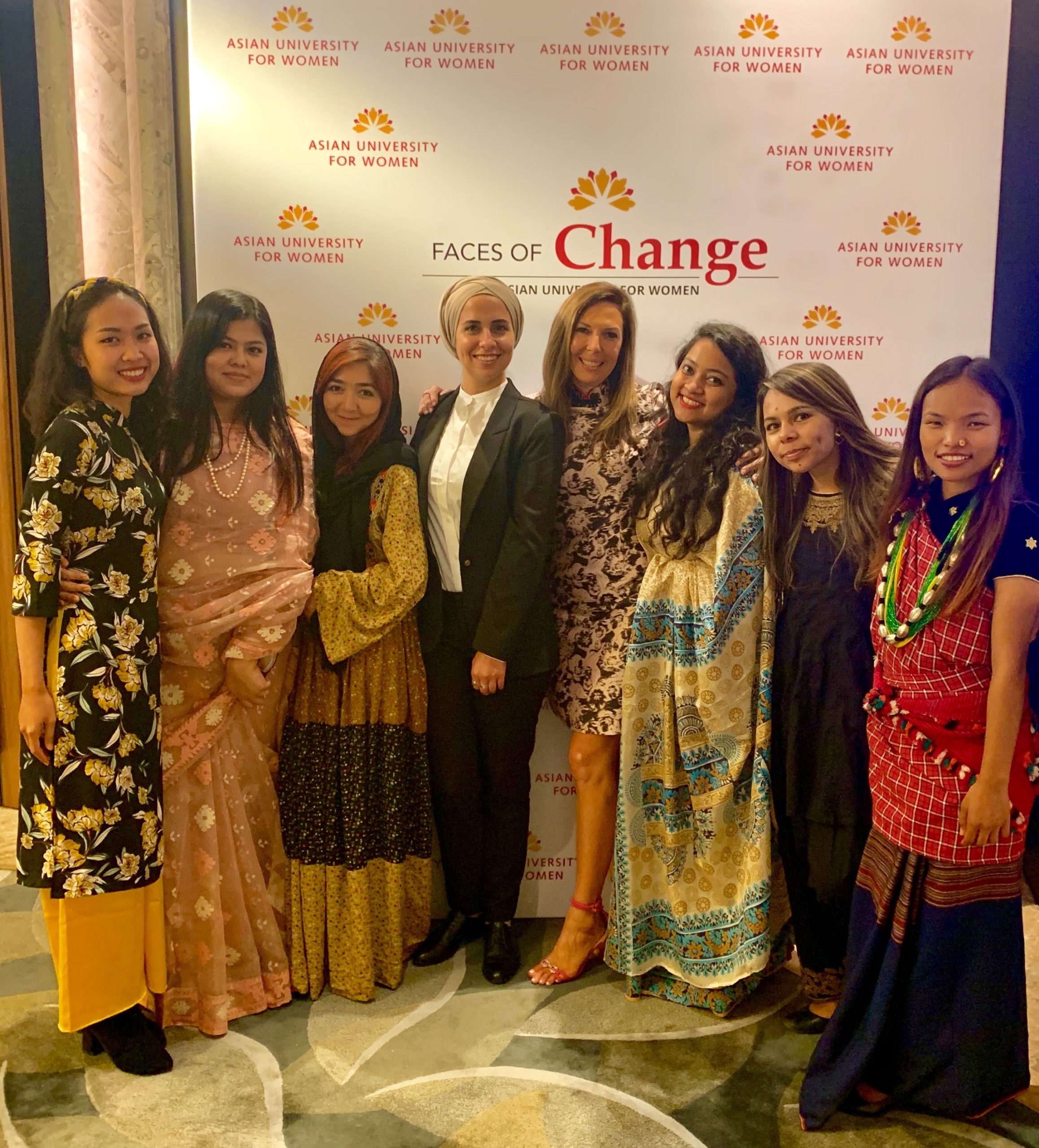
Lynne Anne Davis (center) with students at the Asian University for Women 2019 benefit.
The consequences? According to the McKinsey Global Institute’s “The Power of Parity” report, if countries in Asia worked harder to further women’s equality and raise female participation in its workforce, $4.5 trillion would be added to its annual GDP in 2025, a 12 percent increase over the business-as-usual trajectory.
My first step was completing the Financial Times’ Board Director Program to fully understand the responsibilities and skills required to uphold strict corporate governance. It opened up a path for me to help address another gap too massive to ignore: access to tertiary education for women in Asia’s most marginalized communities.
In 2015, I became a founding member and board chair of the Hong Kong Support Foundation of the Asian University for Women (AUW) based in Bangladesh. AUW is an independent, liberal arts university providing top-quality education to students from 15 different countries across Asia and the Middle East, representing 35 ethnicities and five religions.
We raise AUW scholarship funds to educate high-potential women regardless of means and prepare them to lead positive change in their communities. They include displaced women from the Rohingya community in Cox’s Bazar, the factory floors of the garment manufacturers, rural mountain villages out of reach of health and other services, as well as conflict zones such as Yemen and Syria, for example.
They overcome enormous cultural barriers to go abroad for university when a large majority are the first in their family to attend university and child marriage and other repressive customs are so well rooted. These students spend their first year learning English. Go on to master the Socratic method for critical thinking in undergrad. Some go on to pursue master’s degrees at Cambridge and Stanford. Ultimately, they prove that talent and excellence is just as prevalent in underserved communities as in any other group.
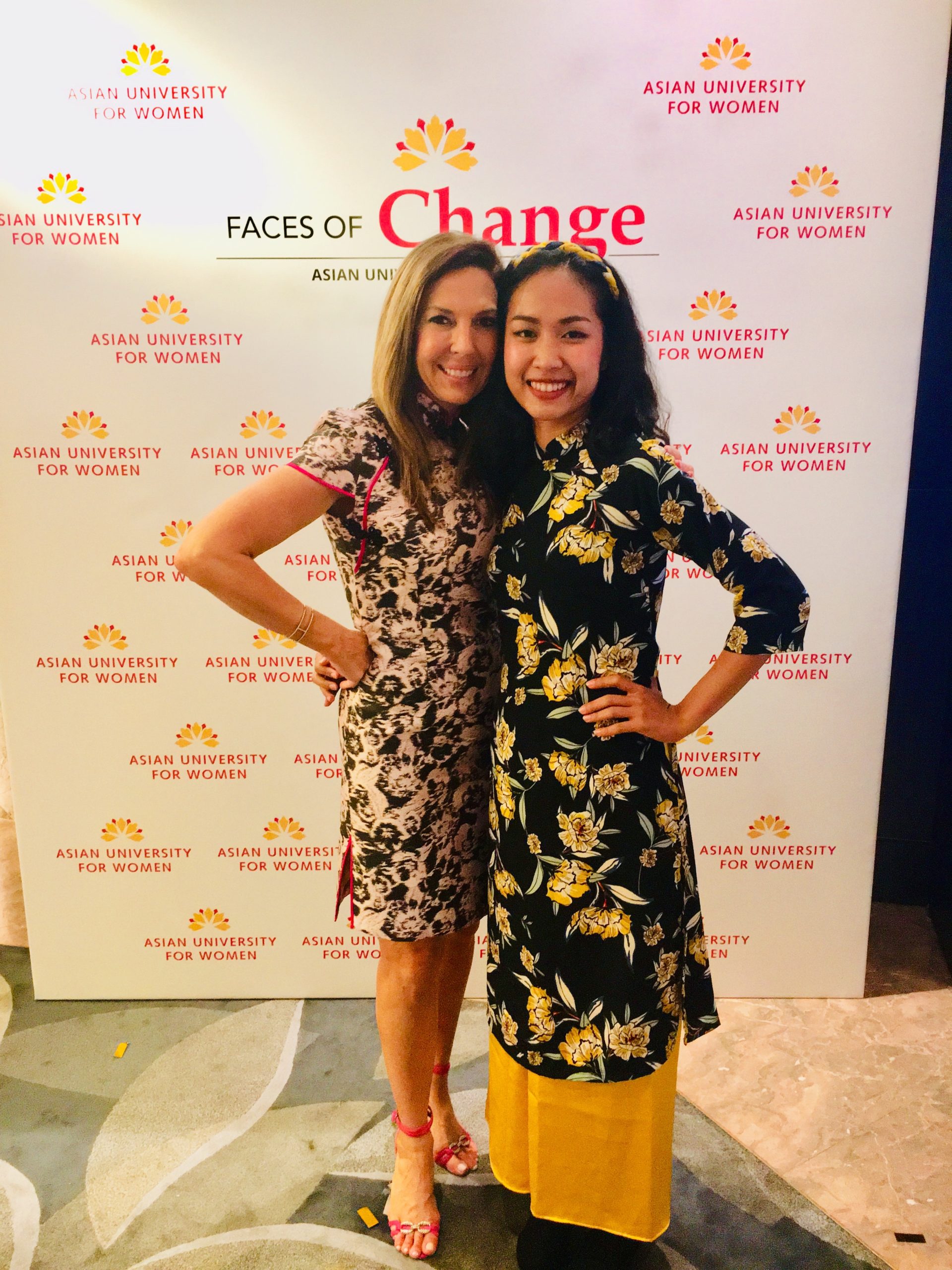
Lynne Anne Davis (left) with a student at the Asian University for Women 2019 benefit.
The transformative power of education is undeniable. I’ve seen how these AUW students emerge confident, articulate, highly capable women ready to fiercely challenge norms and lead from the front in places where they will be the first to do so. Places where women are far from considered equal. Where they do not have the same rights.
Change in these corners of our region must be hard fought. Even the smallest degrees of progress are hard won. It requires unwavering courage.
AUW graduates return home to tackle many of the toughest, most daunting social issues facing the world today, equipped to make a difference.
Albert Einstein put it best: “we can’t solve problems using the same kind of thinking we used when we created them.”
Today’s problems demand new answers and fresh points of view. Having more women in positions of authority to lead change where it is needed most will make all the difference in the world.
It makes me proud that through FH4Inclusion our firm actively advances the missions of transformative organizations like AUW by generously donating our expertise and resources to shape more tolerant, diverse communities where we operate. With our clients we’re also making great strides in improving society and creating shared value.
Too many questions need new answers. Our opportunity to do the most meaningful work of our lives is rooted in enlisting the full strength of our influence and resources to move progress faster and keep aiming as far as forever – where the future is bright.
See what else is happening
You might also like
ESG
Navigating Conflicting Demands to Advance Climate Action
January 20, 2025
Opinions
Supporting St. Louis Institutions Dedicated to Empowering Youth Through FH4Inclusion
January 15, 2025
Opinions
Revitalizing the San Francisco Community with the Downtown Volunteer Coalition
December 23, 2024
Opinions
FleishmanHillard and FH4Inclusion Teams Shine at the Cannes Lions International Festival of Creativity
August 28, 2024
Opinions
Bridging the Generational Divide with Generative AI
August 27, 2024
Inclusion
Success on Repeat: Alumni of the Alfred Fleishman Diversity Fellowship Discuss Promotions and How to Get Them
May 29, 2024
News
EU climate policy: The new borderlines?
May 27, 2024
News
Achieving the Evolving Duality of Loyalty and Loyalty Programs
April 1, 2024
Expertise
TickTockTech: Mobile World Congress 2024 — What’s the Verdict?