Employee Login

Enter your login information to access the intranet

Enter your credentials to access your email

Reset employee password

Article

Get Bold Work Out Into the World: How to Seize the Chaos Advantage

June 25, 2026
By Cameron Shields

After more than 15 years advising some of the world’s largest brands through reinventions, crises, cultural shifts and periods of profound uncertainty, I’ve learned something we’ve intuitively known all along:

The moments that feel riskiest are actually the moments that demand the most conviction. And playing it safe is the riskiest move of all.

That was the underlying theme I heard across the Croisette this week at Cannes Lions 2026.

Lou McEwan from McLaren shared a staggering statistic: 50% of McLaren’s audience is new over the last decade. That’s not an audience challenge. It’s a reminder that many of the assumptions we built brands around are quietly expiring.

On stage, Marisa Thalberg, EVP & Chief Customer and Marketing Officer of Catalyst Brands, put it even more directly: “I’ve been brave because actually I’m afraid not to be.” That sentiment surfaced repeatedly throughout Cannes.

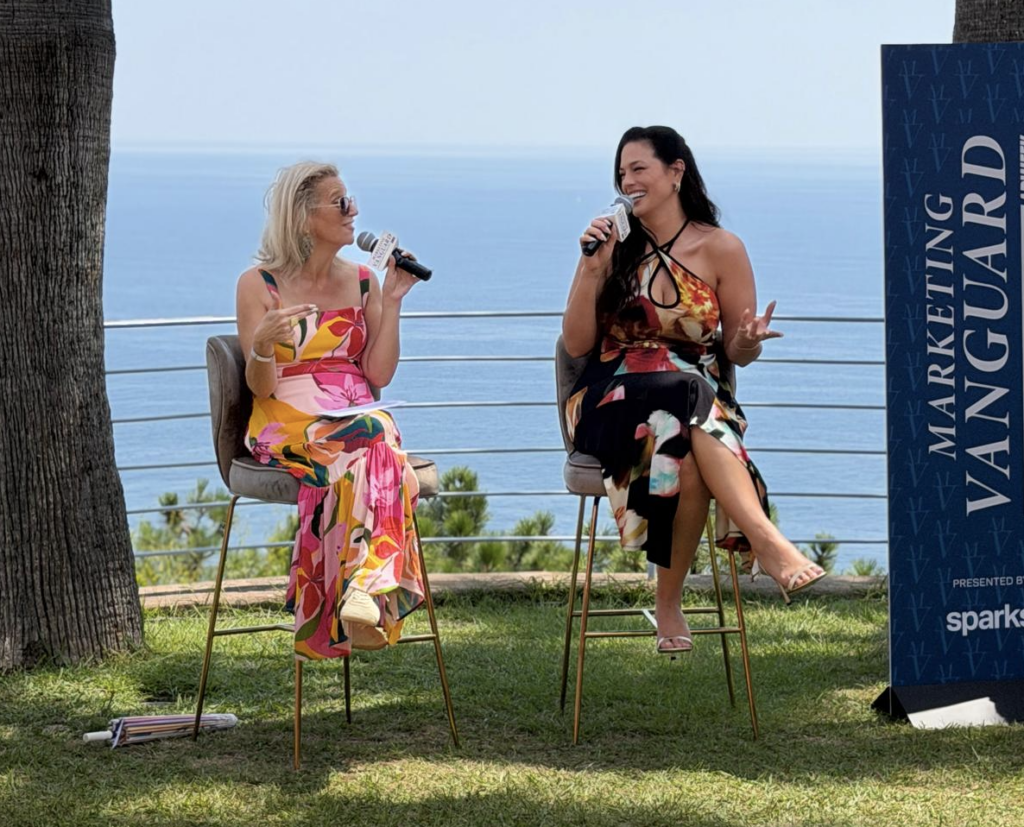
Marisa Thalberg, EVP & Chief Customer and Marketing Officer of Catalyst Brands (left) and Ashley Graham at the Marketing Vanguard Excursion at Cannes Lions 2026.

Consumers are changing. The same tricks won’t work. Culture is fragmenting. Trust is harder to earn. Attention is harder to keep. And yet so much marketing is still optimized to avoid mistakes rather than create momentum.

One deeper challenge kept following me from stage to stage: The demand for performance has become performative, forcing some of the best marketers in the world into a cycle of retreat.

Somewhere along the way, organizations became obsessed with proving value now instead of creating it.

Yet the most compelling conversations at Cannes weren’t about choosing between brand and performance, reputation and growth, or creativity and data. They were about recognizing those are false choices.

In fact, many of the CMOs drawing the biggest crowds were making the same argument: risk isn’t something to mitigate. It’s a capability to build.

Which brings me to what may be the defining challenge facing modern marketers:

How do you get bold work approved and shipped?

The challenge isn’t conviction. It’s getting bold, smart work through the system.

At Cannes, FleishmanHillard and Contagious unveiled new research: The Chaos Advantage. The findings validated a tension many marketers have felt for years.

88% of marketing leaders believe bold work is more effective. Yet 78% say their organizations produce mostly safe work. The overwhelming majority of leaders already believe bold work wins.

But what does that tension actually mean in practice?

If bold work becomes controversial, the answer is the same: better intelligence.

One of the most fascinating conversations at Cannes came from Craig Brommers, reflecting on one of the most polarizing campaigns of the past year.

At launch, the infamous Sydney Sweeney-helmed campaign had helped drive a 25% increase in stock value.

Then Brommers’ high school daughter came home and told him, “Dad, you’re getting canceled on TikTok.”

The tension was real. But instead of reacting to the loudest voices, the team went to the data.

Traffic was up. Transactions were up. New customer acquisition was up.

They quickly commissioned research to understand how actual customers—not social media commentators—felt about the campaign.

That intelligence helped guide decisions that ultimately contributed to a 180% increase in stock value.

When asked what got them over the finish line, Brommers’ answer was simple:

“Real-time data allowed us to make the right decision not just for social media and outside voices, but for the business.”

That’s the difference between reckless risk and informed confidence.

Too often, risk management has evolved from an enabling function into a veto function.

Our research found that 66% of marketers say risk management blocks more than it enables. Bold work takes an average of seven days to approve. Safe work takes three.

That delay may seem manageable in isolation. But multiplied across approval cycles, cultural moments and competitive opportunities, it becomes a growth problem.

Almost half (42%) have watched competitors capture a cultural moment simply because they moved faster.

Most telling of all, 85% agree delayed decisions cause more damage than imperfect ones.

Yet many organizations continue to operate as if the greatest threat is making the wrong move.

The greater threat is making no move at all.

That same tension surfaced throughout Cannes:

In creator marketing, the conversation is no longer whether creators matter. The question is whether brands can loosen control enough to preserve the authenticity that makes creators effective in the first place.

In women’s sports, the opportunity isn’t simply increasing investment. It’s having the conviction to build fandom, tell richer stories, and establish credibility before the rest of the market catches up.

Different categories. Same challenge.

The organizations pulling ahead aren’t taking bigger risks. They’re making better decisions faster.

That’s why I believe the most important insight from Cannes isn’t that chaos exists. It’s that chaos can be an advantage.

For years, organizations have treated uncertainty as something to defend against. The brands creating disproportionate growth are treating it as an opening to challenge category conventions before competitors do.

An opening to build relevance while others are waiting for permission.

The irony is that cautious behavior doesn’t necessarily create safer outcomes.

Our new data showed bold brands experience backlash at roughly the SAME rate as cautious brands.

The difference is whether something meaningful was created in return.

So how do we seize the Chaos Advantage?

From what we’ve seen, it isn’t bigger budgets. It isn’t louder ideas. And it certainly isn’t fearlessness. It’s confidence built through evidence.

The organizations getting bold work into the world are doing three things differently.

✅ They distinguish perceived risk from actual risk.

✅ They use predictive intelligence to understand how stakeholders are likely to respond before decisions are made.

✅ They build approval processes designed to accelerate decision-making rather than slow it down.

This is where agencies must evolve. Our role isn’t simply to generate ideas. It’s to help clients move.

To expose where risk management has become a veto function instead of an enabling one.

To distinguish perceived risk from actual risk. To bring together reputation expertise, cultural fluency, predictive intelligence and creative ambition into a single decision-making framework.

To provide the evidence, guardrails and intelligence that transform “that’s risky” into “we can stand behind this.”

The brands moving fastest aren’t ignoring risk. They’re building systems that allow them to move confidently within it. That’s how bold work gets approved. That’s how bold work gets shipped.

And increasingly, that’s how growth happens.

Cameron Shields width= Cameron Shields is FleishmanHillard’s Global Head of Consumer, Brand Impact .

 
Article

The Action Gap: Leaders Know Bold Work Wins. They’re Just Not Moving Fast Enough.

June 23, 2026
By Colleen McTaggart

88% of marketing leaders believe bold work is what drives results, yet 78% admit their organizations mostly produce safe work. That’s the action gap.

We spotted this tension in our new Chaos Advantage research, based on a survey of 1,000 senior marketing and communications leaders around the world. The study reveals just how costly the gap between knowing and doing has become.

The gap doesn’t start in the brief. It starts in the room where the brief gets approved. Leaders don’t lack conviction. They lack cover. They want the big idea, but they want it armed with evidence, guardrails, and real-time intelligence. Because a great idea without a great argument is just an expensive mistake.

That’s the tension. We know bold works. But bold without proof feels reckless. And in an environment where every dollar is scrutinized, bravery needs backup.

But what does BOLD really look like?

On day one at the Cannes Lions International Festival of Creativity, humanity showed up everywhere in the winning work. Bold, unapologetic, and perhaps hidden in plain sight.

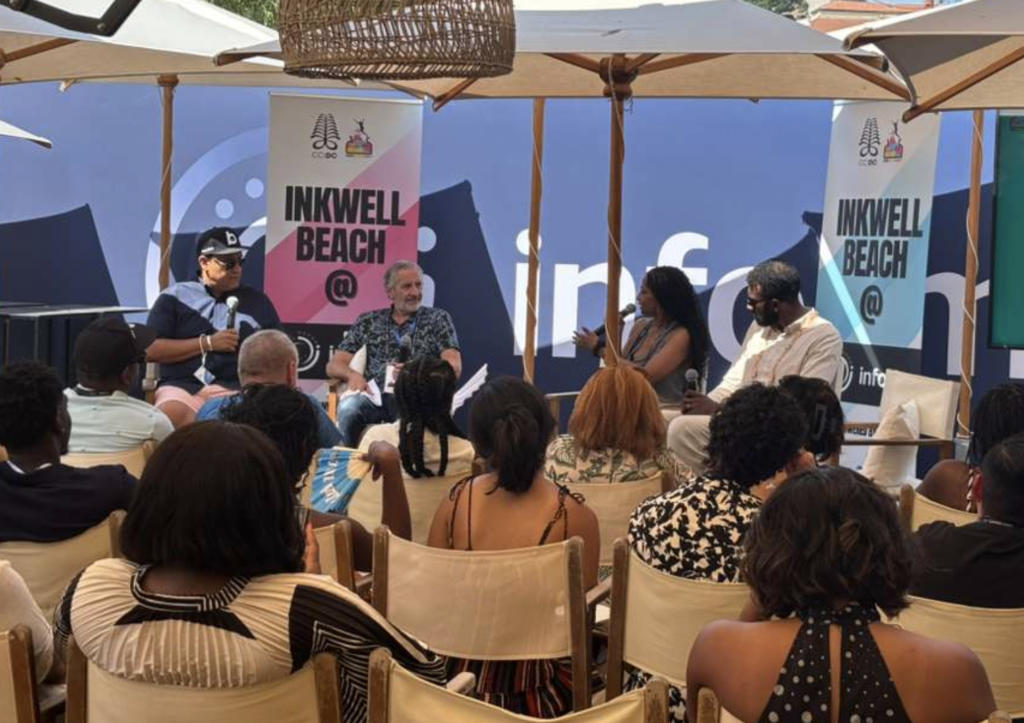
FleishmanHillard’s Global Head of Brand Impact Jim Joseph (second from left) and Chief Inclusion and Impact Officer Adrianne C. Smith appear at Inkwell Beach’s License to Lead: Reclaiming the Art of Storytelling.

Novartis’s Relax Your Tight End tapped into the very human fear of a colonoscopy, using humor to reframe an uncomfortable conversation and make it approachable.

Beat Cancer Off leaned into another undeniable human truth: people masturbate. Instead of avoiding that reality, it embraced it—boldly encouraging men to do more of it in the name of early cancer detection.

Viagra found a way around strict advertising regulations in China by creating hilariously blue branded products—sex innuendos brought to life. If we can’t talk about sex, let’s talk about sex without talking about it. A perfect example of creativity subverting the rules.

And then there was Not Manufactured Reviews – not polished copy or over-engineered messaging, but the real, messy, human words people use when they actually experience a product. Maybe the most innovative product demo of all.

The common thread? None of this work spoke to “consumers.” It spoke to people. And that’s the truth: we are humans first.

The same should be true of marketing. The best ideas don’t target consumers—they connect with humans.

But connection alone isn’t enough. To get brave work through the system, it needs both instinct and infrastructure. The human truth, backed by the right proof.

So maybe the question we should ask ourselves isn’t, “What will perform?”

It’s: What is the beautiful truth of being human here?

That’s where bravery lives. That’s where courage starts.

I’ll leave with something our client and Catalyst CMO Marisa Thalberg said on stage with Ashley Graham at The Female Quotient:

“Listen to what people are saying about your brand, look for the signals, and then blow wind onto them.”

So is the most audacious thing a marketer can do simply this: act on what we already know?

Because doing what we believe doesn’t require a secret formula. It requires something much simpler: humanity. The rest is just the proof to make others believe, too.

And maybe that’s the point. The best creative work doesn’t start with the “consumer” lens. It starts with the human lens.

Colleen McTaggart width= Colleen McTaggart is a global executive creative director based in Chicago.
 
Article

From Storytellers to Strategic Advisors: Sports Leaders Provide Valuable Lessons for Communicators

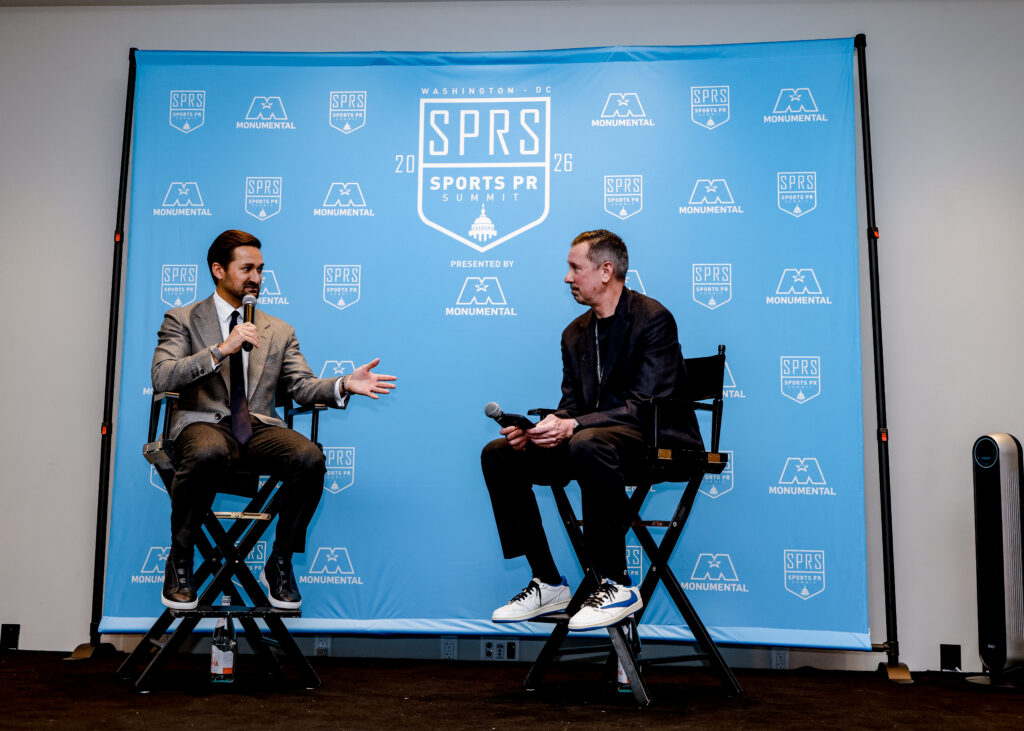
Monumental Sports & Entertainment’s Zack Leonsis (left) with FleishmanHillard’s Mitch Germann.

At this year’s Sports PR Summit, FleishmanHillard’s Chief Growth Officer Mitch Germann sat down with Monumental Sports & Entertainment (MSE) President of Media & New Enterprises Zach Leonsis for a wide-ranging conversation about multistakeholder audiences, transformation and the evolving role of communications.

The lessons extend far beyond arenas and game days. They reflect a broader reality facing communications leaders across industries and sectors: stakeholder audiences are multiplying, channels are fragmenting and the expectations placed on communicators have never been higher.

The Stakeholder Map Is More Complex Than Ever

Communicators often treat “the audience” as if they are singular.

In reality, today’s organizations operate within an ecosystem of stakeholders that may share a common interest but have very different priorities.

For sports organizations like MSE, that means communicating simultaneously with season ticket holders, casual fans, corporate partners, employees, players, league officials, elected leaders and local communities. While everyone may want the teams to succeed, their expectations of the organization differ dramatically.

The takeaway for communicators is clear: one narrative does not mean one message.

The strongest enterprise narratives are anchored by a consistent strategic story, but tailored for specific audiences, channels and moments. Communications teams increasingly must balance message consistency with audience relevance.

Narrative Ownership Has Become a Competitive Advantage

One of the most notable themes from the discussion was the growing importance of direct-to-consumer communications.

Leonsis emphasized that organizations cannot rely solely on third-party coverage and conversation to define who they are. In a world where social platforms amplify every opinion, organizations must proactively tell their own story or risk having others define it for them.

That means complementing earned media coverage with strong owned channels and a disciplined content strategy.

For communicators, the difference is in whether you are using the direct channels to your audiences strategically enough.The organizations that win attention today are often the ones that can move seamlessly between earned, owned and shared media environments.

Transformation Communications Requires More Than Announcements

Large-scale change initiatives often fail not because the strategy is flawed, but because stakeholders experience the transformation differently.

MSE’s Capital One Arena renovation provides a useful example. Different stakeholder groups care about different outcomes: players focus on facilities, corporate customers focus on experiences, fans focus on value, and civic leaders focus on economic impact.

The communications challenge lies in helping each audience understand what the transformation means for them.

Successful transformation communications requires sustained storytelling, message sequencing and audience-specific framing over months or years – not just a single launch moment.

Communications Leaders Must Operate Like Business Leaders

Perhaps the most important takeaway came in response to a simple question: What do business leaders need from communications teams today?

Leonsis’ answer wasn’t media relations. It wasn’t content creation.

It was partnership. He described communicators who understand the business, anticipate criticism, identify potential pitfalls, sharpen narratives and prepare leadership for inevitable scrutiny.

That’s a meaningful shift in expectations.

The most valuable communicators today are helping shape key decisions before they’re announced. They have a seat at the table.

In an environment defined by complexity, reputation risk and stakeholder scrutiny, communications has become a strategic operating function.

The Bottom Line

Sports has always been a pressure-tested environment for communications professionals. Every decision is scrutinized. Every stakeholder has a voice. Every narrative evolves in real time.

Today, communicators are being asked to manage more stakeholders, more channels and more scrutiny than ever before. Success depends on moving beyond traditional storytelling and embracing a broader role: strategic advisor, business partner and architect of trust.

Because in today’s environment, communications isn’t simply about telling the story.

It’s about helping shape the future of the organization behind it.

Article

The AI Readiness Gap Series: How to Build a Culture of Experimentation 

June 22, 2026
By Zack Kavanaugh

This is the third installment in a series on what it takes to close the gap between AI investment and tangible business impact.

In the first two pieces, I argued that AI adoption is fundamentally a people challenge – not a technology one. And I walked through why normalization – that initial work of building psychological safety and making AI feel less like a mandate from above – is where adoption begins.

But normalization is foundational, not sufficient for scaling and sustaining a transformation.

Listening builds trust, transparency creates permission and leaders modeling curiosity make space for people to be curious too.

Yet at a certain point, readiness must turn into action, and trust must move into experimentation – and that’s where things often stall for organizations.

What experimentation entails

Experimentation is not a single workshop or training session where people learn AI in theory and hope to apply it later.

Experimentation is the deliberate work of creating low-stakes opportunities for people to try AI with daily tasks, see what happens, share what they learn and let those discoveries shape how their team and the broader organization evolves.

Why experimentation stalls

Many organizations are making the mistake of treating experimentation like compliance.

They may schedule training, mandate it or expect it to happen in a structured, predictable way. Then they’re surprised when adoption remains stuck at the edges – concentrated among early adopters while the rest of the organization watches, wondering why this whole “AI thing” isn’t for them.

What tends to move people from curiosity to confidence is relevance. When people see how AI fits into their work, adoption stops feeling like a mandate being forced upon them and starts feeling like a tool they’re better off with than without.

Who influences experimentation

Experimentation doesn’t happen without active support – and managers’ involvement is often what determines whether it takes root or trails off.

  • Microsoft’s 2026 Work Trend Index found that when managers visibly use AI themselves – not just endorse it – employees report a 17-point lift in AI value, a 22-point lift in critical thinking and a 30-point lift in trust in AI tools.  

Manager visibility and support are the prerequisites for experimentation to become embedded in how work gets done.

And beyond that non-negotiable support, companies can deploy three strategies to accelerate experimentation:

1. Design low-stakes opportunities to try, not mandatory programs.

The difference between training and experimentation is permission to fail.

Experiments are designed to surface discovery. The expectation is learning – which includes failure. The point is to uncover insights that shape what comes next, not to prove mastery.

This changes how people engage. Instead of one-size-fits-all training, create role-specific challenges.

These don’t need to follow a single format.

  • Some organizations run week-long sprints where teams tackle a specific workflow problem with AI.  
  • Others build 15-minute “AI challenges” into team meetings – quick, low-pressure moments where teams tackle something together and debrief in real time.  
  • At FleishmanHillard, we’ve deployed “try this” email campaigns that highlight role-specific tips and best practices – paired with reinforcement in team meetings – and structured, cross-functional hackathons and competitions where groups solve real workflow problems with AI.  

Format matters, but less than the regularity with which you encourage and provide opportunities for your people to try something with their work, see what happens and reflect on it – moments where stakes stay low, the learning gets documented and momentum builds as people see peers discovering things that work.

2. Spread learning through peer voices and stories, not polished case studies.

Your AI wins will get turned into case studies – charts, metrics and messaging locked in to prove ROI. While these matter for leadership dashboards, they often read less like something a peer figured out and more like something the company or an expert achieved.

Peer stories work differently. They come from someone familiar and in a similar position. They’re messier, they show what someone was really thinking when they tried something and they make room for context – “Here’s where I am, here’s what I tried, here’s what happened and here’s what I’d do differently.”

That messiness is what makes them powerful. It signals that perfection isn’t the bar – and if someone who thinks like you and works like you figured something out – suddenly that same experiment feels possible for you too.

Those stories create permission in ways polished case studies never do – which is why leaders should find ways to share these.

This could take several forms.

  • Create internal campaigns where teams share what they tried that week and what they learned – misfires included – via Slack threads or Teams channels.  
  • Host show-and-tell sessions where someone walks through how they solved a problem, where they got stuck, what went wrong – and invites the room to help troubleshoot next steps.  
  • Or establish dedicated architect and ambassador roles – like we’ve done at FleishmanHillard – where builders and super users experiment alongside their teams, share what’s working and what isn’t, and create permission for others to do the same. 

And with peer stories, tone is everything. “I tried this and it didn’t work, but here’s what I learned” is infinitely more relatable than, “Here’s how our company is transforming productivity and driving efficiency.” One invites personal experimentation – and the other signals compliance.

3. Build informal peer-to-peer momentum instead of formal training.

Training is periodic and linear. Peer-to-peer learning is fluid, constant and evolves as your organization does.

Both are valuable, and you should deploy each as needed, but peer-to-peer learning builds adaptive capacity – the kind that compounds and grows alongside your culture.

When you create simple mechanisms for ongoing peer-to-peer learning – “What I learned this week” rituals in team meetings, Teams threads where people drop quick tips, debrief huddles where someone walks through how they applied AI to a real use case, side conversations where a peer shares a shortcut – learning stops being something that happens to people and starts being something they do together.

At FleishmanHillard, we’ve made this easier by building off-the-shelf training resources and templates that any role can use or adapt for their teams – simple scaffolding that removes friction and makes peer sharing more accessible.

We’ve witnessed firsthand that those moments compound, and they reshape how your organization thinks about discovery and experimentation.

They also serve as a continuous feedback loop. You may learn more about what people care about, what confuses them and what would help them in a few weeks of informal conversations than from your annual survey.

On top of all that, assuming you’re following through on what you hear, your people will feel like their voices shaped what comes next – because they did.

How you know experimentation is becoming part of your culture

Experimentation is a continuous, messy, non-linear process – not a single moment. Here are three signals you’re heading in the right direction:

  • AI is being applied to everyday work. Analytics and team check-ins show employees testing AI with real tasks.  
  • Learnings are being shared. Examples, wins and failures surface in meetings and peer showcases. The conversation has shifted from, “how do I use this?” to, “here’s what I tried and here’s what I learned.”  
  • Confidence is building. The tone in surveys shifts from, “I’m not sure where to start” to, “I’m figuring out where this could help.” People are getting more and more curious and taking small, concentrated risks because they feel safe doing so. 

Building the cultural conditions for experimentation

Right now, organizational culture is roughly twice as powerful as individual mindset in determining whether AI delivers value.

The organizations accelerating adoption are the ones making room for people to learn and figure out what this technology means for their work – where people feel safe trying them, failure is a learning opportunity, peer discoveries shape strategy and use becomes personal enough to stick.

So, the question for leaders right now is less about the technology itself and more about whether you’ve created the conditions for everyone to use it. And if you haven’t normalized this shift and built experimentation into how your organization operates, the answer will always be no – no matter how good the tools are.

Article

The Chaos Advantage: FleishmanHillard Research Finds Caution Has Become the Riskiest Strategy in Marketing

CANNES, June 2026 – New global research from FleishmanHillard finds that in a sustained climate of uncertainty, playing it safe is no longer a risk management strategy. For many brands, it has become a risk multiplication strategy.

The Chaos Advantage, based on a survey of 1,000 senior marketing and communications leaders across five markets in North America, EMEA and APAC, examines how volatility is reshaping the decisions brands make and the work they are able to produce. The findings reveal a significant and costly gap between what leaders know and what their organizations are doing.

Four findings stand out:

The Action Gap: The overwhelming majority of leaders believe bold work wins, yet most say their organizations produce mostly safe work. Read More on Cannes’ Boldest Work

The False Safety of Caution: Safe brands and bold brands experience public backlash at exactly the same rate, 1 in 5 for both.

The Competitor Cost: 42% of leaders have watched a competitor take market share while their own organization waited.

The Structural Problem: Over two thirds say their own risk management processes block action more than they enable it.

More on the Chaos Advantage: Why Playing It Safe Is the Riskiest Move

FleishmanHillard is sharing early findings this week at Cannes Lions. The full report, developed in partnership with Contagious, will publish in September 2026.

On Thursday, the research will be featured in the main stage keynote How to Win in a Volatile World.

About FleishmanHillard

FleishmanHillard is a global strategic communications consultancy combining corporate affairs and brand impact expertise at scale. Following the integration of Porter Novelli, FH now serves clients across health and life sciences, technology, financial services, retail and consumer, food and agriculture, manufacturing and energy and government and public sector. The firm’s competitive advantage combines deep sector expertise with proprietary intelligence (TRUE Global Intelligence), the industry’s leading data and AI infrastructure, and Global Executive Advisory, a strategic network of over 50 senior advisers who help C-suite leaders navigate complex situations and transformative change. FleishmanHillard was named PRovoke Media’s Data-Driven Agency of the Year 2026, the 2023 PRWeek U.S. Agency of the Year; 2022 and 2023 PRWeek U.S. Outstanding Extra-Large Agency of the Year; and 2023 Campaign US PR Agency of the Year. FleishmanHillard is part of Omnicom Public Relations.

Article

Introducing The Chaos Advantage: Why Playing It Safe Is the Riskiest Move 

By Ellie Tuck

Every year at Cannes Lions, a theme takes hold. Sometimes it’s official, sometimes it just makes its way through every panel and beachside conversation organically. One year it was women’s sports. Last year, you’d have been under the table by Monday if you’d done a shot for every AI mention.

This year, my money is on ‘uncertainty’.

The past 12 months have been the most volatile, unpredictable and genuinely destabilizing in many of our living memories. There’s barely a client conversation where some macroeconomic threat stands in the way of sign-off or execution planning: tariffs, AI-fueled misinformation, the culture wars. The unpredictability of our operating environment has become one of the most predictable things about working in this industry today.

But we didn’t travel to Cannes to state the obvious. We came to find out whether, somewhere in the chaos, there’s an advantage for the brave.

Over the past year, we could feel it in the briefs. Caution in the notes back from legal. In that one phrase that ends every good idea: “Can we make it a little less?” A little less provocative. A little less like it has a point of view.

We know that safe work doesn’t avoid failure, it creates another kind of failure brands are not thinking about. So we dug deeper, reaching out to 1,000 senior marketing and communications leaders across five markets in North America, EMEA and APAC to find out: what is truly safe work anymore?

We found that 78% of leaders expect to operate under moderate to high uncertainty for the next 12 months. The chaos isn’t a moment to wait out. It’s the new condition. And the data tells us what that condition is costing: 88% of leaders believe bold work works, yet the majority say their organizations are producing mostly safe work. More striking still, organizations playing it safe experience public backlash at exactly the same rate as those that don’t. 1 in 5 cautious brands. 1 in 5 bold brands. Playing it safe isn’t protecting anyone. That gap between what leaders know and what they’re able to do is exactly what we’re helping clients close.

This is The Chaos Advantage. In partnership with Contagious, we’re spending the week at Cannes previewing the findings before our full report lands in September, alongside perspectives from our brand and corporate affairs experts who are living these challenges with clients every day.

That conversation reaches the main stage later this week, culminating with Alex Jenkins, editorial director at Contagious, who will be using insights from our research in his main stage keynote: How to Win in a Volatile World (Rotonde Stage, 11.45am CEST). It feels like the right place for this week’s thinking to land with a public commitment that uncertainty is not a reason to go quiet, but instead a reason to get sharper. Because while uncertainty is inevitable, instability isn’t. Navigate it well, and it might just be your greatest competitive edge.

Ellie Tuck width= Ellie Tuck is the chief creative officer of the Americas based in New York.
 
Article

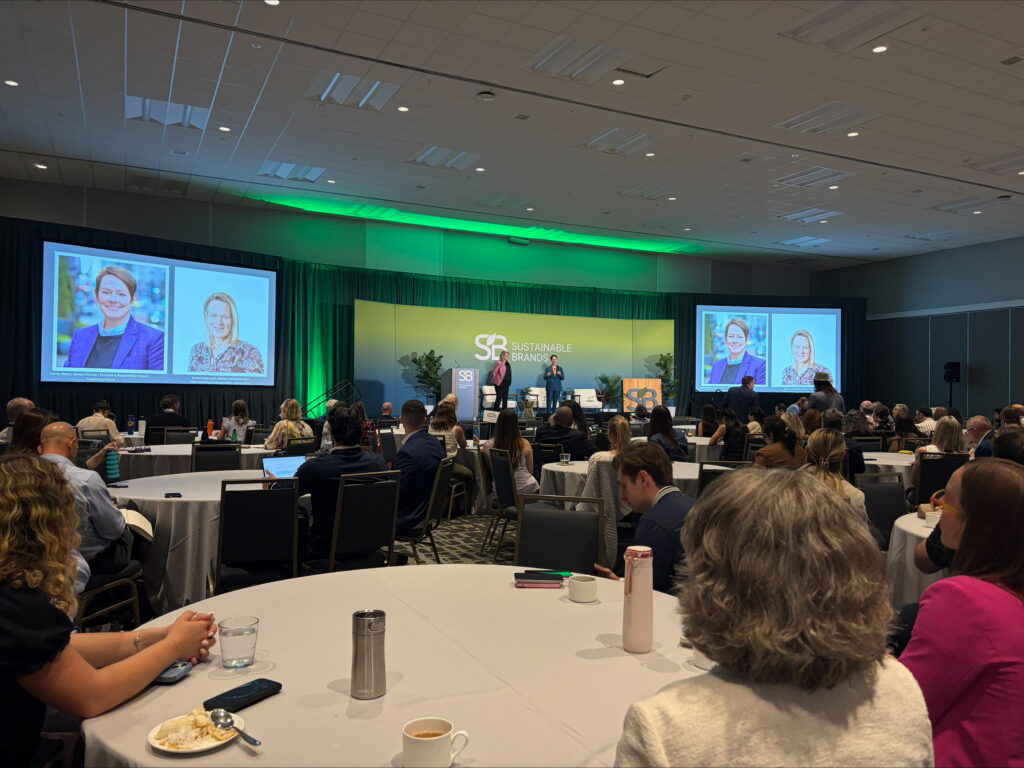
Four Takeaways from Sustainable Brands SB’26: What Leaders Need to Know 

June 17, 2026
By Judith Rowland

Last week, I had the opportunity to experience the energy of Sustainable Brands SB’26 as part of the FleishmanHillard delegation. Against the backdrop of a political environment that can be tough on sustainability, the conference brought together brand innovators and sustainability experts addressing climate change, social impact, community development and how AI can be a force for good.

I left with one clear conviction: the intersection of sustainability and strategic communications has never been more critical to business success. Here are five takeaways that should shape how we approach sustainability communications in 2026 and beyond.

Sustainable Brands 2026

Sustainability Must Align with Business Goals—Not Exist Alongside Them

The most important message from SB’26 was this: sustainability initiatives disconnected from core business objectives feel disposable and performative—and stakeholders know it.

The most compelling presentations came from companies that had fundamentally reimagined their business through a sustainability lens rather than bolting sustainability onto existing brands. One executive described transforming sustainability into a core business capability that spurs innovation and drives growth. When you shift how your organization thinks about sustainability—moving it from the periphery to the center—the business case becomes undeniable.

For communications teams, our role is helping organizations articulate sustainability as integral to innovation, competitive advantage, cost reduction, risk mitigation, and revenue growth. When we anchor sustainability to business success, we unlock stronger leadership buy-in, authentic external communications grounded in genuine conviction rather than obligation, and the ability to continue work in a tough political environment.

Communications Is the Essential Infrastructure for Sustainability

Communications isn’t a supporting function in sustainability strategy—it’s foundational infrastructure.

A food retailer executive captured it perfectly: “The business case for sustainability is there. Language helps you get there faster.” No matter how sophisticated your initiatives, their value remains unrealized until your stakeholders understand what you’re doing, why it matters, what it means for them, and how they participate in the effort.

In a landscape saturated with sustainability claims, audiences are skeptical for good reason. They’ve experienced empty commitments and performative gestures. Organizations winning today aren’t those with the most ambitious programs—they’re those with communications strategies rigorous, credible, and specific enough to prove their claims are real.

This reality aligns with FleishmanHillard’s recent research, License to Lead: Escaping the Pendulum – Building a Durable Strategy in Turbulent Times, which shows that expectations of leadership behavior have risen significantly.

Food and Agriculture: The Unexpected Sustainability Vanguard

Food and agriculture companies dominated SB’26, underscoring a sobering reality: 33% of global greenhouse gas emissions come from food systems. Rather than treating this as intractable, these organizations outlined concrete strategies—regenerative agriculture practices, supply chain transparency initiatives—that demonstrate measurable environmental and social impact while driving cost savings and promoting resilience.

Communicators in this sector have cracked a critical code: they ground sustainability messages in tangible business solutions. They’re not asking consumers to accept abstract environmental claims; they’re connecting sustainability to real food on real tables.

The Food-Health Connection Is Finally Getting Its Due

At SB’26, the intersection of human health and environmental sustainability moved from niche concern to mainstream business imperative. Executives addressed converging consumer trends—backlash against ultra-processed foods, GLP-1 adoption, rising focus on protein and fiber—fundamentally reshaping food choices. An animal protein sector executive emphasized that nutrition and sustainability must be part of the same conversation.

For communicators, this alignment is more than messaging—it’s a competitive differentiation strategy. Companies positioning environmental sustainability with personal health outcomes hold significant advantage. We move sustainability from the abstract (“saving the planet”) to the immediate (“food choices that protect your family’s health today while preserving the world they’ll inherit tomorrow”), expanding both audience and urgency.

Practical implication: Communicators in food and health sectors must partner closely with legal and regulatory teams to navigate authentic nutrition-sustainability claims.

Organizations that will lead in coming years are those that reimagine competitive advantage through environmental responsibility, human health, and stakeholder value—then invest in communications that make that integration visible and credible to key audiences.

If your organization is ready to tell your sustainability story with greater impact, FleishmanHillard is here to help. Let’s talk about what’s possible.

“Judith Judith Rowland is a senior vice president in the Public Affairs and Engagement group and also serves as global sustainability lead for the food, agriculture and beverage (FAB) sector. She helps clients establish strategies for advancing community reputation and social impact, set measurable goals and communicate their progress with the stakeholders that matter most.

 
Article

Evolve. Grow. Lead. Key Lessons from ColorComm 2026

June 16, 2026
By Valerie Mendonca and Deidra Johnson

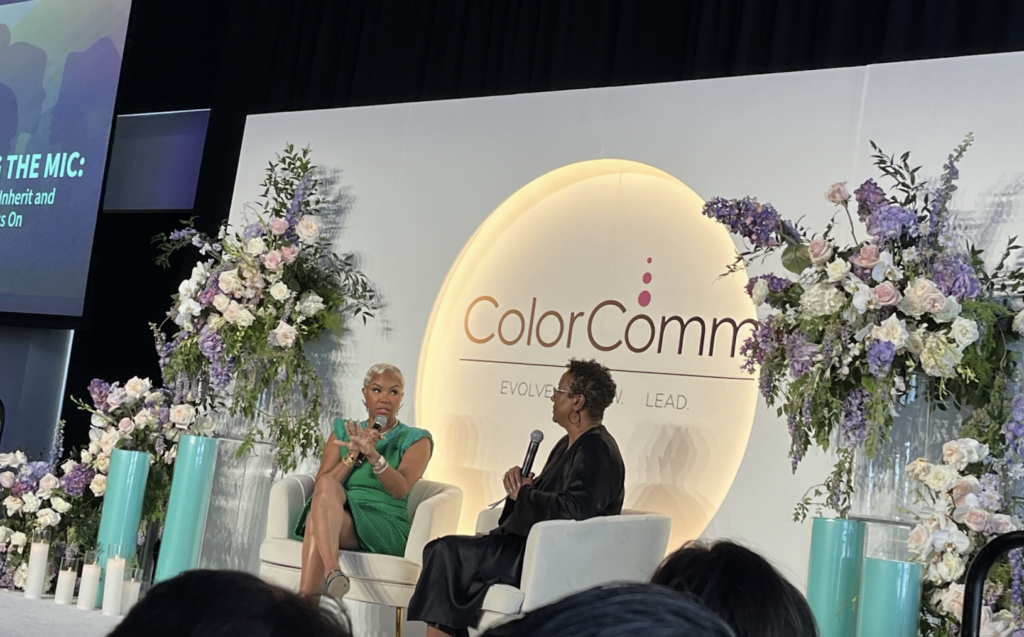
Earlier this month, three of us from FleishmanHillard and Porter Novelli returned to ColorComm 2026 in New York. We came expecting world-class speakers, meaningful conversations, and new connections. What we left with was a call to action.

This year’s theme — “Evolve. Grow. Lead.” — cut through the daily noise. From Linda Clemons’ opening on nonverbal communication to Bevy Smith’s raw reflection on identity and reinvention, one truth crystallized: the professional breakthrough we’re often seeking requires us to dismantle the version of success we’ve been building.

For those of us in communications, this lands differently. We architect narratives for brands every day, shaping personas and managing perception. But the conference pushed a harder question: How often do we apply that same rigor to the story we’re living?

Three lessons changed how we think about leadership, and what we’re taking back to our teams.

Who Are You When No One’s Watching?

Bevy Smith asked a deceptively simple question: “Who are you at your core?”

The question shouldn’t have felt radical, but it did. We instinctively reach for our resumes, listing roles, titles, and accomplishments. But Bevy pushed past that and asked us to examine something we rarely do: the critical difference between who you are and what you do.

She was brutally honest about her own turning point. At 38, standing in a Milan hotel room surrounded by professional success, she felt completely unfulfilled. She had designed her career around someone else’s definition of achievement. It wasn’t until she stepped away that she found herself.

The clarity from answering this question changes everything: the opportunities you pursue, the decisions you make, the boundaries you set, and the way you show up. For leaders building authentic narratives for their organizations, this clarity becomes the foundation. You cannot ask others to be genuine if you haven’t done the work yourself.

Growth Lives in the Nonlinear Path

Leslie Wims Morris, CEO of Chase Auto at JPMorgan Chase, presented a career that was familiar to our own paths: 16 roles, six companies, unconventional and unmapped but unquestionably intentional. She didn’t bounce around. She strategically pivoted, flexible about how and when, but uncompromising about the what.

Each role deepened her understanding of leadership, relationships, and organizational dynamics. Through each opportunity, she expanded her value. Credibility and trust compound over time.

In a communications landscape where algorithms shift weekly and expectations evolve overnight, rigidity isn’t prudence. Adaptability is a differentiator. Morris’ career proves that the winding road isn’t a detour. It’s often where transformation happens.

This matters for how we counsel clients. In an era of constant disruption, the leaders who thrive aren’t those who cling to a single playbook. They’re the ones who evolve their approach while staying rooted in their core mission.

Your Presence Is Your Most Powerful Message

Linda Clemons returned as a ColorComm staple with a statement that landed like a challenge: “I cannot hear what you’re saying because who you are being is getting in the way.”

As communicators, we obsess over language. We align messaging. We polish delivery. We perfect the words. But presence is the multiplier that makes words matter.

When your tone, body language, and energy aren’t aligned with your message, people feel the disconnect and it erodes trust faster than silence ever could. The work is operational. It shows up in how you enter a room, how you hold eye contact, how you listen, and how you respond under pressure.

For leaders we advise, this is everything. What people experience from you either reinforces or undermines what you’re trying to communicate. People don’t just hear your message. They read you. And that reading is the one they believe.

What This Means for Leadership Communication

Evolving, growing, and leading isn’t just about strategic planning and external positioning. It’s about doing the internal work first.

Clarity about who you are and who you hope to become. Flexibility in how you navigate. Consistency in how you show up. When those elements align, you stop performing. You stop pretending. You stop chasing someone else’s definition of success.

That’s when your message becomes credible. That’s when leadership becomes real.

Article

Escaping the Pendulum: Building a Durable Strategy in Turbulent Times 

June 2, 2026

Today, organizations are operating at the intersection of business, policy, politics and culture. At any given moment, one of these forces may outweigh the others, but none can be managed in isolation, and shifts in one increasingly create second- and third-order effects across the others.

The current operating environment in the United States is defined by sustained political volatility, shifting regulatory direction, technological acceleration and heightened stakeholder scrutiny. Cultural expectations are fragmenting, and economic pressure is building across sectors, with many organizations preparing for potential restructuring, cost actions and workforce disruption. This all sits on top of a burgeoning affordability crisis.

While publicly available data may paint a slightly prettier picture if you squint, the prevailing zeitgeist is a mix of anxiety and pessimism.

Earlier this year, FleishmanHillard’s Global Executive Advisory and TRUE Global Intelligence teams released License to Lead, a comprehensive global study that includes and compares the opinions of 1,550 business and political leaders and 4,000 engaged consumers — a new, modern definition that identifies proactive individuals who have recently taken multiple, tangible actions tied to a company’s values and reputation. Now, we are looking more closely at the market-by-market findings and how the results illuminate the new Modern Communications playbook required to win in today’s moment.

The results of the global survey demonstrated a clear and growing constraint on leadership: while stakeholders recognize the need for companies to adapt, they are far less willing to tolerate poorly explained or inconsistent change. In the United States, those dynamics are significantly more pronounced.

As multiple major forces converge — the 2026 midterms, AI-driven workforce realignment, intensifying geopolitical competition and economic fragmentation — the conditions for a reckoning are becoming clear, and many companies are not prepared.

What many organizations fail to recognize is that their reputational vulnerability is not simply a function of the positions they have taken, the programs they have changed or the cultural debates they have entered or avoided. It is the result of repeated, and often poorly contextualized, swings in direction that have created stakeholder confusion and eroded trust.

Over the past five years, companies have shifted positions on social issues, policy stances, sustainability commitments and political engagement — often dramatically. Some of these moves were grounded in conviction. Others were responsive to legitimate stakeholder pressure. But many were reactive to changing administrations, misread consumer sentiment or followed the political and cultural momentum of the moment.

Adaptability, of course, is now table stakes. In fact, 51% of engaged consumers say the ability to adapt quickly to change will be the most important leadership capability over the next decade. But adaptability without coherence is not seen as strength. It is seen as instability.

Companies are not being given a free pass. Increasingly, they are perceived not as leaders guided by enduring principles, but as weathervanes — chasing culture, chasing power and chasing whoever holds the microphone at any given moment.

The Pendulum Problem

When a company loudly commits to a social position, philanthropy program or workforce commitment and then quietly retreats when the political climate shifts, it does not go unnoticed. In fact, our research shows that 98% of engaged consumers say they are actively monitoring corporate follow-through, and nearly half (48%) say that inconsistent or conflicting messages from company leadership greatly decrease their confidence.

This is the reputational trap that most companies have not anticipated: stakeholders will accept a company’s need to adapt if it is properly explained. What they will not forgive is the sense that a company’s values are for sale — that leadership convictions shift with political winds rather than enduring principles.

This vulnerability is directly connected to what determines whether a company has the “License to Lead” — the stakeholder permission to execute strategy, navigate change and pivot when necessary, without losing legitimacy. The research is stark: stakeholders grant confidence based on demonstrated integrity (76%) and accountability (74%), and they rank ethical behavior (24%) and clear communication (21%) as the highest factors in determining whether a company has the “right to lead.”

A company that swings drastically from position to position or appears to chase political power rather than authentic values forfeits that permission. Here’s why: stakeholders do not trust a leader whose compass keeps spinning. If a company’s stated values and policy positions are contingent on who is in power, employees question whether to invest their loyalty. Investors worry about the stability of leadership judgment. Customers wonder whether they can rely on the company’s commitments. Policymakers lose confidence in the company as a credible partner.

And when the next political shift comes — and it will — that company will have no reservoir of stakeholder trust to draw from. Most executives are also vastly overestimating how well they are bringing stakeholders along. The consequences can be dire.

The credibility gap is already visible: just 11% of U.S. engaged consumers are very optimistic about large companies’ ability to address major challenges, and only 10% have “a lot” of confidence that large corporate leaders will act in the best interests of society. When confidence is lost, the response is not abstract. In the past 12 months, 64% of U.S. engaged consumers stopped buying or significantly reduced spending with a company, 49% switched to a competitor’s products or services and 46% privately advised friends or family against the company after a company’s action caused them to lose confidence. The upcoming 2026 midterm elections will test corporate authenticity and consistency. Companies with positions that shift significantly based on political circumstances may face questions about the credibility of their commitments. Conversely, companies that have done the harder work of building genuine stakeholder alignment around enduring principles, explaining the “why” behind their positions and engaging stakeholders in understanding the tradeoffs will have the permission to navigate the shifting landscape without reputational damage.

License to Lead Facilitates Adaptability Because It Is Built on a Durable Reputation

The companies that earn and retain their License to Lead through political and cultural volatility are those that take clear positions rooted in enduring principles. They project clarity about who they are, grounded in something deeper than the current political moment.

Many companies are struggling to navigate volatility with consistency, and the reputational risks of getting that wrong are growing. This goes directly to credibility, stakeholder trust and long-term resilience. The past several years suggest that the pendulum of corporate response has swung too widely.

At FleishmanHillard, we help organizations narrow that swing by becoming more disciplined, resilient and credible under pressure. Our findings demonstrate that stakeholder confidence – before, during and after critical moments – is entirely within a company’s control. By grounding decisions in authentic values and genuine stakeholder engagement, reputation becomes not a liability to manage, but an enabling force.

Article

FleishmanHillard Releases U.S. ‘License to Lead’ Report, Revealing Sharp Confidence Gap Between Executives and Stakeholders 

New U.S. findings show stakeholder confidence and leadership credibility increasingly shape how much latitude companies have to adapt, as engaged consumers express deeper pessimism than global peers.

As political volatility, shifting regulation, technological acceleration and economic pressure reshape the U.S. business landscape, new U.S. research from FleishmanHillard finds that the central leadership challenge is no longer simply setting strategy. It is maintaining the confidence and permission needed to execute when strategies must evolve.

While stakeholders recognize the need for companies to adapt, they are far less willing to tolerate poorly explained or inconsistent change. As multiple major forces converge — the 2026 midterms, AI-driven workforce realignment, intensifying geopolitical competition and economic fragmentation — the conditions for a reckoning are becoming clear, and many companies are not prepared.

“Uncertainty is no longer episodic. It is the operating environment,” said Rachel Catanach, Senior Partner and Global Managing Director, Corporate Affairs. “What this research shows is that stakeholders understand why companies need to adapt. But in the U.S., the bar is even higher for how leaders communicate, align and explain those decisions.”

The report, titled “License to Lead: Escaping the Pendulum — Building a Durable Strategy in Turbulent Times,” is based on U.S. findings from FleishmanHillard’s global survey of 5,550 respondents, including a U.S. sample of 800 engaged consumers, 350 executives and 40 policy stakeholders, executed by FleishmanHillard’s TRUE Global Intelligence. The findings reveal a sharper U.S. gap between how leaders assess their own performance and how stakeholders experience corporate leadership during periods of change.

Even well-founded pivots can erode confidence when they appear disconnected from a durable direction. Escaping cyclical swings requires leaders to anchor change in clear, durable principles, visible alignment and a consistent explanation of why the path is evolving.

“When change is constant, stakeholder support is built through how leaders explain decisions, align internally and show accountability in real time,” said Michael Moroney, Senior Partner and Managing Director, Corporate Affairs, The Americas. “The U.S. data shows that consumers are not rejecting change. They are rejecting whiplash, poorly explained pivots, inconsistent messages and gaps between what companies say and what they do.”

Key findings include:

  • Unpredictability is more pronounced in the U.S., and adaptability is viewed as a defining leadership skill. Eighty-seven percent of U.S. engaged consumers agree that the business environment is more unpredictable and disruptive than it was three years ago, and 45% strongly agree — outpacing the global engaged consumer average of 32% who strongly agree. Half of U.S. engaged consumers say the ability to adapt quickly will matter most for business leaders’ success over the next decade.
  • Stakeholders accept strategic change, but expectations of leadership behavior have risen. U.S. engaged consumers recognize the challenging dynamics business leaders face, but they expect change to be explained and grounded in consistent leadership behavior. Ninety-eight percent say it is important for companies to explain why a decision is made, and 49% say inconsistent or conflicting messages from company leadership greatly decrease their confidence.
  • Executives and stakeholders view corporate readiness very differently. U.S. executives and policy stakeholders are far more optimistic than engaged consumers about large companies’ ability to lead through disruption. Fifty-two percent of U.S. executives and 50% of U.S. policy stakeholders are very optimistic that leaders of large companies will address major challenges in the next decade, compared with just 11% of U.S. engaged consumers. Only 10% of U.S. engaged consumers have “a lot” of confidence that large corporate leaders will act in the best interest of society, compared with 49% of U.S. executives.
  • Erosion of confidence has direct commercial consequences. U.S. engaged consumers are more likely than the global average to react with their wallets when confidence is lost. In the past 12 months, after a company’s action caused them to lose confidence, 64% stopped buying or significantly reduced spending, 49% switched to a competitor, 46% privately advised friends or family against the company and 26% publicly criticized the company.

Integrity and accountability now outweigh competence alone. When things go wrong, U.S. engaged consumers are more likely than global consumers to prioritize integrity, honesty and accountability over competence in their business leaders. Eighty-three percent say integrity and honesty are very important for earning their confidence, while 82% emphasize the importance of accountability when things go wrong. In contrast, only 73% cite competence and decision quality as critical. Demonstrated ethical behavior is the top factor U.S. engaged consumers say gives a company the right to lead during uncertainty.

A New Executive Playbook

The findings point to a leadership model that is both urgently needed and largely within organizations’ control. Companies that retain the confidence to move through uncertainty simplify their strategic narrative, enforce leadership alignment, communicate consistently and with integrity, explain the rationale behind difficult decisions and engage stakeholders without relying on broad or aspirational shortcuts.

“When these conditions are met, reputation becomes an enabling force rather than a constraint,” said Catanach. “Stakeholders are more willing to grant leaders the latitude to adapt, absorb uncertainty and continue moving forward even when outcomes are not fully known.”

The research also underscores the evolving role of corporate affairs as an integrated leadership infrastructure. High-performing organizations rely on corporate affairs to translate complexity into clarity, anticipate friction and understand where stakeholders will grant flexibility and where limits remain.

As disruption becomes an enduring condition rather than a temporary shock, the study concludes that leadership success will depend less on minimizing change and more on sustaining legitimacy while managing it.

About the Research

The “License to Lead” study was conducted by FleishmanHillard’s Global Executive Advisory and TRUE Global Intelligence teams. The global survey includes 5,550 respondents across 15 markets, comparing the perspectives of 1,550 business and political leaders and 4,000 engaged consumers. The U.S. edition draws on responses from 800 engaged consumers, 350 executives and 40 policy stakeholders.

About FleishmanHillard

FleishmanHillard is a global strategic communications consultancy combining corporate affairs and brand impact expertise at scale. Following the integration of Porter Novelli, FH now serves clients across health and life sciences, technology, financial services, retail and consumer, food and agriculture, manufacturing and energy and government and public sector. The firm’s competitive advantage combines deep sector expertise with proprietary intelligence (TRUE Global Intelligence), the industry’s leading data and AI infrastructure, and Global Executive Advisory, a strategic network of over 50 senior advisers who help C-suite leaders navigate complex situations and transformative change. FleishmanHillard was named PRovoke Media’s Data-Driven Agency of the Year 2026, the 2023 PRWeek U.S. Agency of the Year; 2022 and 2023 PRWeek U.S. Outstanding Extra-Large Agency of the Year; and 2023 Campaign US PR Agency of the Year. FleishmanHillard is part of Omnicom Public Relations.