Humans are notoriously bad at anticipating how a catastrophe might affect them, particularly if they don’t have an existing benchmark to measure against, so lockdown has carried its own specific set of frustrations.
The speed at which our normal changed was so swift that if you blinked you might have missed it. Whilst workplaces may have supplied us with the right equipment to get us through a lockdown, socially we were much less prepared. We didn’t imagine it could happen to us or how it would impact us, and we couldn’t imagine what life would be like if we had to stay inside for a long time.
But as they say, every cloud has a silver lining and, whilst lockdown is tough, we’ve rallied and found new and inventive ways to come together and support each other from our living rooms (or bedrooms, bathrooms, gardens – wherever your housing set-up has dictated you must now spend the bulk of your days).
Phones calls are back
Who could’ve predicted it, particularly as the rise of the smartphone meant millennials and below were, frankly, afraid of the humble phone call, preferring texting to speaking. But lockdown changed all of that, and suddenly the real terror was not whether we would have enough bandwidth for video calls, it was actually whether our underused mobile networks could support us.
But support us they did (after some switched to Wi-Fi calling), and it seems that whether it’s connecting with a colleague, checking in on gran or speaking to a friend we haven’t seen for a while, we’re more ready than ever to communicate. And with video conferencing fatigue quickly becoming a thing we’ve realised that nothing is more reassuring than a human voice straight into your ear.
‘Pivoting’ is the latest buzzword
From global brands to small communities, we’ve become adept at pivoting quickly to meet each other’s needs. From luxury fashion brands switching production capabilities to make hand sanitiser in the wake of a national shortage to supermarkets changing their opening hours for medical workers and vulnerable people to small businesses finding ways to keep local communities supplied, there’s no shortage of examples of how we’ve quickly adapted what we’re capable of to meet new needs we hadn’t previously anticipated.
There’s a new hero in town
We used to hold celebrities and sports starts up as demigods and celebrate them as heroes of our time. Well, not anymore. Sorry ‘slebs but no one wants to hear from you at the moment (particularly if you’re going to serenade us with a version of ‘Imagine’ that would have John Lennon turning in his grave). Now we’re celebrating the real heroes – doctors, nurses, the people who keep our supply chains moving, cashiers in supermarkets, the delivery drivers that go out every day so we can still buy things on the internet.
Whether it’s cheering them from our balconies, making scrubs from our homes, waiving speeding tickets but supplying facemasks instead or even walking 100 laps of your garden before your 100th birthday and raising a whopping £24 million for a crippled healthcare system, we’re coming together to celebrate and support our real heroes, and let them know we appreciate them.
It’s become even cooler to be kind
And there’s been a bit of a shift in the ways we communicate kindness. Whereas before we might have put our acts of kindness on social media for the world to see, now we’re being kind for kindness sake and not for the number of likes it will get us. Whether it’s checking on a friend who’s locked in with small children, forming online community chat groups to support the most vulnerable, waiving rent for out of work tenants or taking a voluntary pay cut so your staff won’t be furloughed, we’re becoming more altruistic — and altruism is really cool.
See what else is happening
You might also like
Expertise
Why Trust is the Real Competitive Advantage in Ag Tech
April 2, 2026
Expertise
Notes From the Road: RSA Conference 2026 Edition
April 1, 2026
Expertise
Why Your AI Rollout Is Stalling (And What Actually Moves the Needle)
March 25, 2026
Expertise
Get the Report: Inside China’s 2026 Two Sessions
March 24, 2026
Expertise
The New Culture Gap Report: How Brands Stay Relevant for 100 Years
March 24, 2026
Expertise
The Tech Industry’s License to Lead Problem: How Tech Companies Made Themselves Vulnerable to the AI and SaaS Apocalypse Doubt
March 4, 2026
Expertise
The Five Principles of Decision-Ready Intelligence: A Framework for Making Hard Calls in an AI-driven Environment
March 3, 2026
Expertise
The Patient Engagement Gap Your Competitors Are Closing
February 26, 2026
Expertise
AI is Reshaping Communications: Inside FleishmanHillard’s Enterprise-Wide Approach
The scale and duration of the COVID-19 crisis has forced CEO communications into new territory, pushing the divides between professional and personal matters and looking more holistically at the needs of business and society. But, as the public lens shifts from crisis response to navigating the long-term strategy for social and economic recovery, CEOs and other leaders face a new challenge: to authentically set the tone for how we’ll emerge in a new normal.
New research from FleishmanHillard’s TRUE Global Intelligence practice shows the pandemic has drastically reshaped stakeholder expectations of our societal institutions. Recovery is not about returning to the pre-pandemic world. But, instead, uniting internal and external stakeholders – your employees, partners, regulators, customers, consumers and investors – in a new vision of success.
In the recovery period, visible and engaged leadership voices are critical to providing the meaning that creates a sense of normalcy, order and grounding that moves us forward. CEOs must convey how the crisis has created change, but also what continues to endure from the pre-crisis norms. They must strike a careful balance between pushing toward the opportunities that lie ahead, and ensuring the confidence and safety of employees, customers and communities in localized instances of COVID-19 resurgence.
Authentic internal and external communications need to be regular and relevant – a seemingly daunting task for reaching a wide array of audiences. Nevertheless, some core communication principles will prevail:
Start with empathy.
The social and economic impact of the coronavirus is complex and continuing to evolve. It’s not safe to assume all stakeholders share the same experiences and changing values. When communicating your business’ re-opening or return to work plan, consider how the messages appear to internal and external stakeholder audiences. Don’t assume that because communities are open for business, stakeholders will support profits replacing people.
Stand with customers and employees.
Reopening will come with conditions and operational inconveniences to help ensure safety. Model the safe and positive behaviors you’re asking of employees and customers. If masks are required, or working from home is encouraged, lean into opportunities where you can participate and champion change through leadership behavior.
Share what grounds you.
In times of uncertainty, it’s important CEOs remain focused on where they can have the most impact. Some stakeholders won’t know how to articulate their needs and will seek clarity. Leaders are positioned to ground their organizations for success by balancing the comfort that some things can endure, with the recognition that other structures can be transformed – sometimes for the better – because of the way our society has changed.
Bravely look forward.
No one can predict the future, but leaders will be required to provide a sense of direction, punctuated by action. How will your company, industry or region build toward success in a changed operating environment and still deliver on its purpose? Lend certainty by articulating a vision for near-term success and the characteristics, roles and tasks needed to lead out of crisis.
Provide evidence that change is tangible and impactful.
Even in an era of individual uncertainty, rapidly shifting business developments and quick news cycles, some themes will remain timeless. Look to these questions when providing evidence that supports positive progress and drives reputation in the “new normal” narrative:
Innovation: The restricted environment has given rise to new challenges and compelled change. How has this change led to new product and service innovations? What new customer challenges arose out of the COVID-19 response that your business was uniquely qualified to serve? How can these innovations contribute to economic recovery?
Workplace culture: Social distancing and technology have spurred new workplace practices but the need for employee engagement remains the same. What workplace cultural tenets have spurred new practices, better ways of problem-solving and collaboration and support for the workers?
Living legacy: In a crisis, purpose-driven organizations unite and rise to the challenge. What corporate changes are emblematic of who you are and your track record of doing good? What structural changes have you made to improve crisis management? Where have you broken down sacred silos to do what needed to be done?
Greater good: COVID-19 brought businesses, governments and NGOs together to create solutions for public health; as the response shifts to economic recovery, the greater good will remain a central point in the narrative. How has this experience formed alliances with unlikely collaborators to do good? How are you balancing community need with core business needs? How are contributing to the economic recovery?
See what else is happening
You might also like
Expertise
Why Trust is the Real Competitive Advantage in Ag Tech
April 2, 2026
Expertise
Notes From the Road: RSA Conference 2026 Edition
April 1, 2026
Expertise
Why Your AI Rollout Is Stalling (And What Actually Moves the Needle)
March 25, 2026
Expertise
Get the Report: Inside China’s 2026 Two Sessions
March 24, 2026
Expertise
The New Culture Gap Report: How Brands Stay Relevant for 100 Years
March 24, 2026
Expertise
The Tech Industry’s License to Lead Problem: How Tech Companies Made Themselves Vulnerable to the AI and SaaS Apocalypse Doubt
March 4, 2026
Expertise
The Five Principles of Decision-Ready Intelligence: A Framework for Making Hard Calls in an AI-driven Environment
March 3, 2026
Expertise
The Patient Engagement Gap Your Competitors Are Closing
February 26, 2026
Expertise
AI is Reshaping Communications: Inside FleishmanHillard’s Enterprise-Wide Approach
Work(shops) from Home: How to Make Remote Meetings and Workshops More Productive
Share
When suddenly all colleagues are working from home, the way we work together changes as weil. Collaboration and constructive exchange still work to a certain extent in well-rehearsed teams. In other constellations it becomes much more difficult. Everywhere, important workshops are currently being postponed. […]
As governments around the world begin easing restrictions, a return to the workplace is top of mind for communicators. This phase requires active management of employee expectations and providing clarity and direction when they return to work – addressing organizational, health and safety, and emotional challenges during the process.
There is no precedent or playbook for how this will look. What we do know is the process must be carefully choreographed. Returning to work will be non-linear, phased, and will vary by region, city-by-city, business sector and employee health risk profiles.
Most importantly, organizations need to start communicating now and align messaging to ensure a successful, seamless and safe return to work.
What do we need to do now?
While there is no playbook, the good news is the fundamentals of crisis communications are still effective and relevant.
Listen to and create opportunities for dialogue with employees
Clearly define what the company is doing to manage the crisis today, and set expectations for the future
Plan scenarios that anticipate employee concerns and issues at each phase of the crisis
Fully understand employee sentiment through research and follow-up with regular Pulse Surveys
Provide the right information to employees at the right time
At the beginning of the crisis, employees needed to know about new operational guidelines regarding such things as working from home, paid time off and benefits. As the situation evolved, organizations focused on employee health and wellness, and maintaining morale and productivity.
What do employees want now?
As we prepare for a return to the workplace and the reopening of facilities, many organizations will rely on the government and the media to lead the way. That’s a mistake. A recent briefing document from McKinsey revealed 63% of employees consider their employer as the most credible source of information on COVID-19, while 58% trust government, and only 51% trust the media.
Employees are looking for leaders to provide them with:
Clear, simple messages consistently communicated by all senior leaders
The facts – not sugar coating or vague “inspirational” speeches
A dialogue with leadership and subject matter experts on a regular basis and through different channels
Empathy and knowing that leadership is sharing their pain
Before communicating around a return to the workspace, it’s critical to know what employees are currently thinking. Savvy communicators have set up weekly Pulse Surveys to track employee sentiment and gauge how ready their employees are, what their concerns are and what they want to hear from employers.
And while it might seem employees are getting too much information, and may be in danger of communications fatigue, the same McKinsey briefing document showed 63% of employees want daily updates from their company with 20% wanting updates 2-3 times a day.
Employees will also want organizations to address the psychological implications. Aside from health and safety and logistical issues, employees will struggle with debilitating psychological disorders and survivor guilt – seriously impeding an organization’s ability to bounce back. According to one study, mental well-being issues can lead to a 25% drop in performance.
The need for ongoing therapy for employees will be essential and internal communicators will need to support HR and corporate to understand the need to both memorialize employees who have passed, and provide opportunities to grieve and heal.
What do employees want next?
Post crisis, employees will want leadership to help make sense of what just happened, lay out a new vision for the company, and to reconnect with employees and rebuild culture based on a new understanding of shared values, behavior and purpose.
Smart leaders will recognize the importance of involving every employee in shaping the new narrative, helping them to heal and readjust, and reimagine a new shared culture and values.
Leaders can shape a meaningful story for the organization, invoking common culture and values as touchstones for healing. In their messaging, they need to underscore a shared sense of purpose, rally the organization and chart new paths to the future.
Societal values are also radically changing as a result of the pandemic. Global research from FleishmanHillard’s TRUE Global Intelligence group, reveals 73% of consumers say the pandemic has changed how they see the world. Strategy and operations will surely continue to be a competitive advantage, but in a post-pandemic world, there is an unprecedented opportunity to reimagine the organization to reflect this shift in values and expectations.
At present those changes are being led by senior leadership. Often through necessity. The biggest challenge facing internal communicators is enabling employees to be a part of the debate on the future of the workplace and the organization itself. It will be critical to provide them with a voice in the discussion. Without this dialogue, organizations will find it difficult to implement changes without employee buy-in and ownership.
Additional Considerations
Implications for the Office Workspace
Clearly having everyone come back to the office on day one is not realistic. As with our experience in Hong Kong and China, the return will be a gradual phased process.
Businesses are implementing A and B teams working different days, so everyone doesn’t return at once. This also takes some of the pressure off the need to completely redesign office floor plans and furniture. Employees fill out daily health-check surveys online before work and enter through a single entrance. Temperature checks are becoming routine.
Most employees wear their masks when walking the floor and in public spaces, with hand sanitizers everywhere. Elevator buttons are covered in plastic and disinfected once an hour, and offices are deep disinfected once a week.
Ironically, the whole point of modern open plan offices and kinetic furniture was to bring people together. Now the emphasis is to keep people apart. The post-pandemic office will look radically different. A conference room intended for 12 might be repurposed as a meeting room for six. Desks and chairs on casters will allow people to roll a safe distance from colleagues. New technology will provide access to rooms and elevators without employees having to touch a handle or press a button. We’ll see signs everywhere reminding people to wash their hands and far more daily communications on adopting healthy habits.
The move to “hot-desking” may be put on pause – it might not be wise to have people switching desks every day. There will be understandable reluctance to use a phone used by someone else the day before. Instead we may see more lounges, cafes and other gathering spaces to make collaborative work easier as employees do more work from home and commute in for meetings. Even when people do come back to the office, meetings will be limited and large gatherings a thing of the past.
Implications for the Factory Workspace
U.S. health and safety guidelines for factory floor workers are broad and unclear, leaving many companies to set up their own internal safety procedures. Many never closed down their manufacturing facilities and introduced measures piecemeal, while others planning to reopen factories are looking to completely revamp operations.
Organizations are taking steps to reassure workers the facility is safe, including:
Highlighting regular, often daily, deep cleaning of workspaces, the restriction of visitors, nurses on site and the wide availability of hand sanitizers and protective clothing
Daily health screenings before entering the facility, requiring employees to line up single file at a single entrance. Some companies are building testing capacity so employees can test themselves before they come to work
Reducing personal interaction between shifts by either staggering shifts or using separate exits to keep departing workers away from others coming on shift
Restructuring assembly lines to find ways to ensure workers can operate at safe distances without slowing lines and maintaining productivity
Establishing workspaces to be 6 feet apart with one-way walkways to keep employees from brushing past each other
Closing cafeterias and break rooms and providing boxed lunches and vending machines, or restricting the number of employees in a cafeteria at any one time
Actively monitoring social distancing, with some companies experimenting with wearable devices that alert employees if they come within six feet of each other
Procedure changes at factories including workers no longer passing materials to each other by hand, setting them down instead
Taking actions when a worker tests positive, from shutting down an entire plant or warehouse to interviewing sick workers, identifying where they worked recently and targeting those areas for deep cleaning
See what else is happening
You might also like
Expertise
Why Trust is the Real Competitive Advantage in Ag Tech
April 2, 2026
Expertise
Notes From the Road: RSA Conference 2026 Edition
April 1, 2026
Expertise
Why Your AI Rollout Is Stalling (And What Actually Moves the Needle)
March 25, 2026
Expertise
Get the Report: Inside China’s 2026 Two Sessions
March 24, 2026
Expertise
The New Culture Gap Report: How Brands Stay Relevant for 100 Years
March 24, 2026
Expertise
The Tech Industry’s License to Lead Problem: How Tech Companies Made Themselves Vulnerable to the AI and SaaS Apocalypse Doubt
March 4, 2026
Expertise
The Five Principles of Decision-Ready Intelligence: A Framework for Making Hard Calls in an AI-driven Environment
March 3, 2026
Expertise
The Patient Engagement Gap Your Competitors Are Closing
February 26, 2026
Expertise
AI is Reshaping Communications: Inside FleishmanHillard’s Enterprise-Wide Approach
How to Approach Financial Reporting This Earnings Season
By Patrick Kane
Share
As global markets scramble to adjust to the far-reaching impacts of COVID-19, quarterly earnings season is charging forward. Many companies have already withdrawn their outlooks and moved to shore up capital, cut executive pay and bonuses, suspend share buybacks and forgo dividends. But investors want to hear more. In fact, the April 8th statement from the Chairman of the Securities and Exchange Commission and the Director of the SEC’s Division of Corporation Finance made it clear that they expect companies to be more forthcoming about the impact of COVID-19, as well as about actions taken in response and future plans. Investors are also waiting to hear updates and action plans as outcomes are announced. However, at this time management teams are being asked to provide these insights at a moment of maximum uncertainty.
Given the uncharted waters we’re in, many clients we counsel are having a hard time creating that narrative when they report their quarterly earnings. There’s no one-size-fits-all solution, but we would suggest a few key things to keep in mind as companies prepare to tell their stories to anxious investors.
Transparency is key to preserving your company’s reputation.
More than ever, transparency is critical to keeping investor trust during this difficult time. If the global pandemic has severely altered your operations, address those impacts head-on. Researchers from McKinsey cite behavioral science that suggests an increased human desire for transparency, guidance, and clarity from leadership during crises.
Clearly, investors will want to know what you’re doing with the money you’re bringing in. Is that cash going toward payroll? R&D? Working capital? They want to see a forecast that lays out exactly where the money is going and why. Even if you suspend earnings guidance, as many companies have, the discussion of protecting margins and making the best choices to maximize EPS will still be the center of the discussion. This is a real opportunity to prove to investors not only that you are responsibly navigating the business through these unprecedented times, but showing them the choices in some detail, so they understand the conflicting priorities that your team is addressing.
Investors will also want to know what decisions the company has made about human capital. This is an opportunity for management to discuss how it is living up to its purpose in the way it treats employees and other stakeholders. Did you need to layoff or furlough staff? Are you extending any compensation or health benefits, are you participating in any federal programs to provide employee assistance? A discussion of how you’re helping to protect customers, suppliers and the communities in which you operate is important as well.
Don’t spend too much time looking back at the quarter.
We’re not going back to business as usual for a while, so don’t dwell on the quarter’s performance. Frankly, that’s not investors’ top concern at the moment. Instead, talk about what you’re doing to inspire their confidence that your business will come out the other side of this stronger than before. Investors want more than ever to feel secure in their decision to keep their stake in your company. If your business went into this crisis with strong performance and solid fundamentals, by all means, remind them of that. If the two months before the pandemic struck are good indicators of the strengths you will bring forward into recovery, use the data you have from that period to make the case. But, in general, a plan of action will resonate more than numbers right now. Investors need a glimpse into what business is going to look like over the next few quarters, and insight into management’s expectations for the economic context you expect, the capabilities and the strengths you believe will matter most in the recovery, rather than a recap of your pre-pandemic performance.
Be more forward-looking than usual.
When dealing with any crisis, it’s all too easy to let a fixation on the present take control of our thinking. As hard as it may be, we suggest that you take a couple steps back and a hard look forward. Talk about the lens you’re looking at the world through today. Speak to the principles that guide your decision-making. Discuss what you’re doing to help. Describe the ways you are protecting your economic value chain and taking care of partnerships, customer relationships, and preserving the spark that will get your business under way as soon as possible. Point to the greater purpose of your operations and how you’re staying true to your mission and values. If you have refocused on government as a customer, or used the pandemic pause to redefine the focus for your return to the best portion of your future market, describe that too. All of these things can help define the unique story you can use to frame your short-term financials, and build business momentum again when that is possible.
Leave more time for Q&A with investors.
When you report your earnings, leave more time to answer questions and concerns from investors. This time around, they’re sure to have more probing and pressing questions than normal. Give them the platform to raise what’s on their minds and hear straightforward feedback from leadership about how their concerns will be addressed in the coming months. Use their pre-earnings questions, and their comments on other companies that report sooner than you, as markers for topics to emphasize and questions to prepare for. Ask others in your company who may not always participate in earnings preparation to “red team” or role play in an extended rehearsal for the question and answer period of your earnings call.
It’s OK to admit you don’t have all the answers.
Transparency is important, but it naturally leads to questions, many of which you will not be able to answer yet. As difficult as it is to say “I don’t know” when it comes to what the future of business will look like, that’s OK. You’re not alone. The pervasive theme throughout the business community right now is a significant level of uncertainty – especially about where we go from here. We’re only a couple of months into the effects of this pandemic. We don’t fully know what the fallout will be or how long it will last. If a company claims to have everything figured out right now, it’s more grounds for alarm than reassurance.
Try to remember that building sustainable shareholder value is a long-term process. Over the course of time there will be broader market events that create uncertainty. What really matters now is clearly communicating to your investors what you are doing with the resources and relationships you have – and what you plan to do – to lead your business to recovery in the months to come. And from our experience, the companies best positioned to do that successfully are those that, in good times as well as times of crisis, tell their stories with transparency and authenticity.
See what else is happening
You might also like
Expertise
Why Trust is the Real Competitive Advantage in Ag Tech
April 2, 2026
Expertise
Notes From the Road: RSA Conference 2026 Edition
April 1, 2026
Expertise
Why Your AI Rollout Is Stalling (And What Actually Moves the Needle)
March 25, 2026
Expertise
Get the Report: Inside China’s 2026 Two Sessions
March 24, 2026
Expertise
The New Culture Gap Report: How Brands Stay Relevant for 100 Years
March 24, 2026
Expertise
The Tech Industry’s License to Lead Problem: How Tech Companies Made Themselves Vulnerable to the AI and SaaS Apocalypse Doubt
March 4, 2026
Expertise
The Five Principles of Decision-Ready Intelligence: A Framework for Making Hard Calls in an AI-driven Environment
March 3, 2026
Expertise
The Patient Engagement Gap Your Competitors Are Closing
February 26, 2026
Expertise
AI is Reshaping Communications: Inside FleishmanHillard’s Enterprise-Wide Approach
PRWeek UK will host a virtual breakfast briefing focused on analyzing and examining some of the top creative campaigns from the past 12 months. Sessions will focus on fostering creativity among communications teams, discussing the different types of creativity and which should guide strategy, and rethinking the way ingenuity is viewed by the industry.
Kev O’Sullivan
FleishmanHillard Fishburn‘s Kev O’Sullivan, executive creative director, will co-lead the “Quickfire Creative Case Studies: Creativity Made Simple” session with Ottilie Ratcliffe from The Romans. Together, they will explore the progression of creative ideas from inception to execution and much more. This year, O’Sullivan was named to PRWeek UK’s Power Book and a PRWeek UK Top 10 Creative Director.
Learn more about the breakfast briefing here and view the event agenda here.
See what else is happening
You might also like
Expertise
The New Culture Gap Report: How Brands Stay Relevant for 100 Years
March 24, 2026
News
FleishmanHillard Named Among PRovoke Media’s Best Public Relations Agencies in the World
March 10, 2026
News
FleishmanHillard Integrates Porter Novelli to Form a Stronger, More Specialized Global Communications Consultancy
February 9, 2026
News
From Ragan: Elizabeth Cook on Rethinking Preparedness in Crisis Response
January 21, 2026
Global Executive Advisory
Insights From Davos: Building Credibility Through Storytelling
January 20, 2026
News
FleishmanHillard Unveils ‘License to Lead’ Research, Revealing a Growing Confidence Gap Between Executives and Stakeholders
January 13, 2026
News
FleishmanHillard Wins 2026 Innovation Awards for Data-Driven Strategy
January 12, 2026
Expertise
When the World Gets Noisy, Great Storytelling Breaks Through
December 3, 2025
News
Ellie Tuck Appointed Chief Creative Officer of the Americas
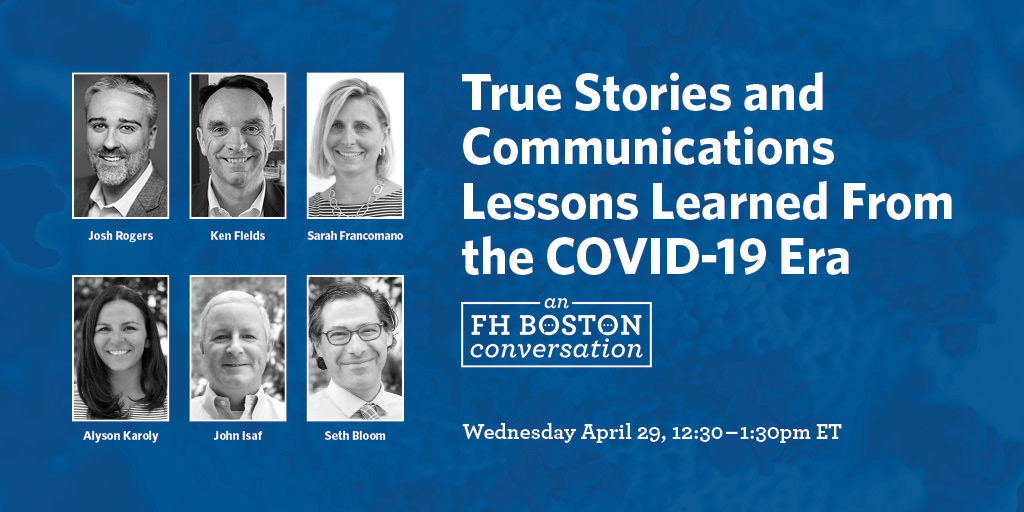
FleishmanHillard in Boston will host an hourlong virtual discussion providing communications counsel on navigating the COVID-19 pandemic and preparing for recovery. Topics will include employee communications, virtual event participation, traditional and social media behavior, and crisis preparedness — all amid the coronavirus crisis.
Senior FleishmanHillard counselors based in Boston and St. Louis will answer attendees’ questions based on the agency’s TRUE Global Intelligence consumer research, COVID-19 Taskforce and their extensive expertise.
Connect at the Intersection: Inclusivity During a Global Pandemic
April 23, 2020
By Bia Assevero
Share
COVID-19 is affecting us all – but not equally. Our experience of this pandemic depends in part on where we are in the world, what type of job we have, what our housing situation is and even how big our families are. The resilience of our healthcare systems and our ability to access care are also a determining factor as are the actions of our leaders as they work to address the public health and economic crises unfolding in tandem.
It’s often said that crisis reveals character and I find that this is as true of countries and cultures as it is of individuals. Here in the United States, it is difficult to deny that the pandemic has shone a harsh light on some of the inequalities and vulnerabilities that exist in our society.
Millions of Americans were living paycheck to paycheck before the pandemic hit to the point that, according to a study, only 29% of American households claimed to be financially healthy. We’ve seen disparities in broadband internet access impact students across the country, Asian-Americans experience greater discrimination and African-Americans die at disproportionate rates. The UN has warned that lockdown measures designed to combat the spread of the virus are also resulting in a surge of domestic violence.
None of these realities exist in a vacuum. In many ways they are the result of systemic challenges that have too often and easily been overlooked. Now that they are front and center for all to see, there is an opportunity for companies to lean into inclusivity and allow it to inform the compassionate leadership that many important stakeholders are looking for in these uncertain times.
Research from our TRUE Global Intelligence practice underscores the indelible importance of the actions taken by organizations now as well as the heightened expectations from employees and consumers that are likely to carry through once the pandemic recedes and businesses focus on recovery and resurgence.
In the global study, employers and major corporations scored at the bottom in terms of institutional response to the pandemic and 52% of those surveyed said employers taking better care of their employees is “very important” right now. A further 32% said they intend to buy from companies that took care of their employees during the crisis.
Placing diversity and inclusion at the center of strategic thinking can help meet and exceed these expectations, ensuring that organizations acknowledge the pain and challenges that might be specific to certain stakeholder groups.
Here are five ways to incorporate inclusive thinking and actions into your company’s COVID-19 recovery and resurgence efforts.
Prioritize Intersectionality — We all identify in different ways with gender, race, religion and sexual orientation being but a few. It’s the intersection of these identities that informs how we approach the world and are affected by it. A working mom may face different challenges than a stay-at-home dad; a multi-generational white family may have different concerns than a multi-generational Latino family. The key is to acknowledge the reality of these intersections while connecting back to shared experiences and common values.
Know What You Don’t Know — Don’t assume you know the full scope of your employees’ concerns without asking them for their input. If you have employee resource groups (ERGs) now is a crucial time to engage them so that employees can tell you in their own words what is top of mind and how you can be most effective in supporting them.
Act With Intent — Inclusivity requires intent; a dedicated effort to ensuring that you’ve considered all points of view. Think about the diversity of experiences across your company – for example, there may be more instances of personal loss among employees of color – and then make or tailor your decisions to be sensitive and responsive to what all of your people are going through.
Lead With Your Values — Consumers and employees are paying even more attention to the alignment between a company’s stated purpose and values and their actions. Now is the time to strengthen your commitment and show in meaningful ways that when you said diversity, equity, and inclusion (DEI) are important, you meant it.
Be Honest and Authentic — In this period of heightened uncertainty, no one has all the answers and it’s okay to say so. As much as possible, be honest about where you are in your DEI journey and how the current circumstances are impacting your priorities. If you keep it authentic, the occasional imperfection will be forgiven.
See what else is happening
You might also like
Expertise
Why Trust is the Real Competitive Advantage in Ag Tech
April 2, 2026
Expertise
Notes From the Road: RSA Conference 2026 Edition
April 1, 2026
Expertise
Why Your AI Rollout Is Stalling (And What Actually Moves the Needle)
March 25, 2026
Expertise
Get the Report: Inside China’s 2026 Two Sessions
March 24, 2026
Expertise
The New Culture Gap Report: How Brands Stay Relevant for 100 Years
March 24, 2026
Expertise
The Tech Industry’s License to Lead Problem: How Tech Companies Made Themselves Vulnerable to the AI and SaaS Apocalypse Doubt
March 4, 2026
Expertise
The Five Principles of Decision-Ready Intelligence: A Framework for Making Hard Calls in an AI-driven Environment
March 3, 2026
Expertise
The Patient Engagement Gap Your Competitors Are Closing
February 26, 2026
Expertise
AI is Reshaping Communications: Inside FleishmanHillard’s Enterprise-Wide Approach
National Volunteer Week: Growing Our FH4Inclusion Commitment
April 22, 2020
By Janel O'Brien and Alana Reinhardt
Share
In celebration of National Volunteer Week, we’re highlighting the efforts of teams across our network. More than 1,000 FleishmanHillard employees have donated their time as part of FH4Inclusion, our global pro bono initiative launched in 2016. This effort promotes inclusion in the communities where we live and work through our teams’ volunteer work with nonprofit partners.
In 2019, we exceeded our cumulative goal of the equivalent of $4 million provided in time and talent. That total represents more than 20,000 hours working with more than 100 global FH4Inclusion partners. Some of the many highlights to-date include hosting personal branding workshops for up-and-coming professionals in South Africa, providing professional development lessons to seventh-grade students from Marian Middle School in St. Louis, and raising much-needed scholarship funds for women attending the Asian University for Women in Hong Kong.
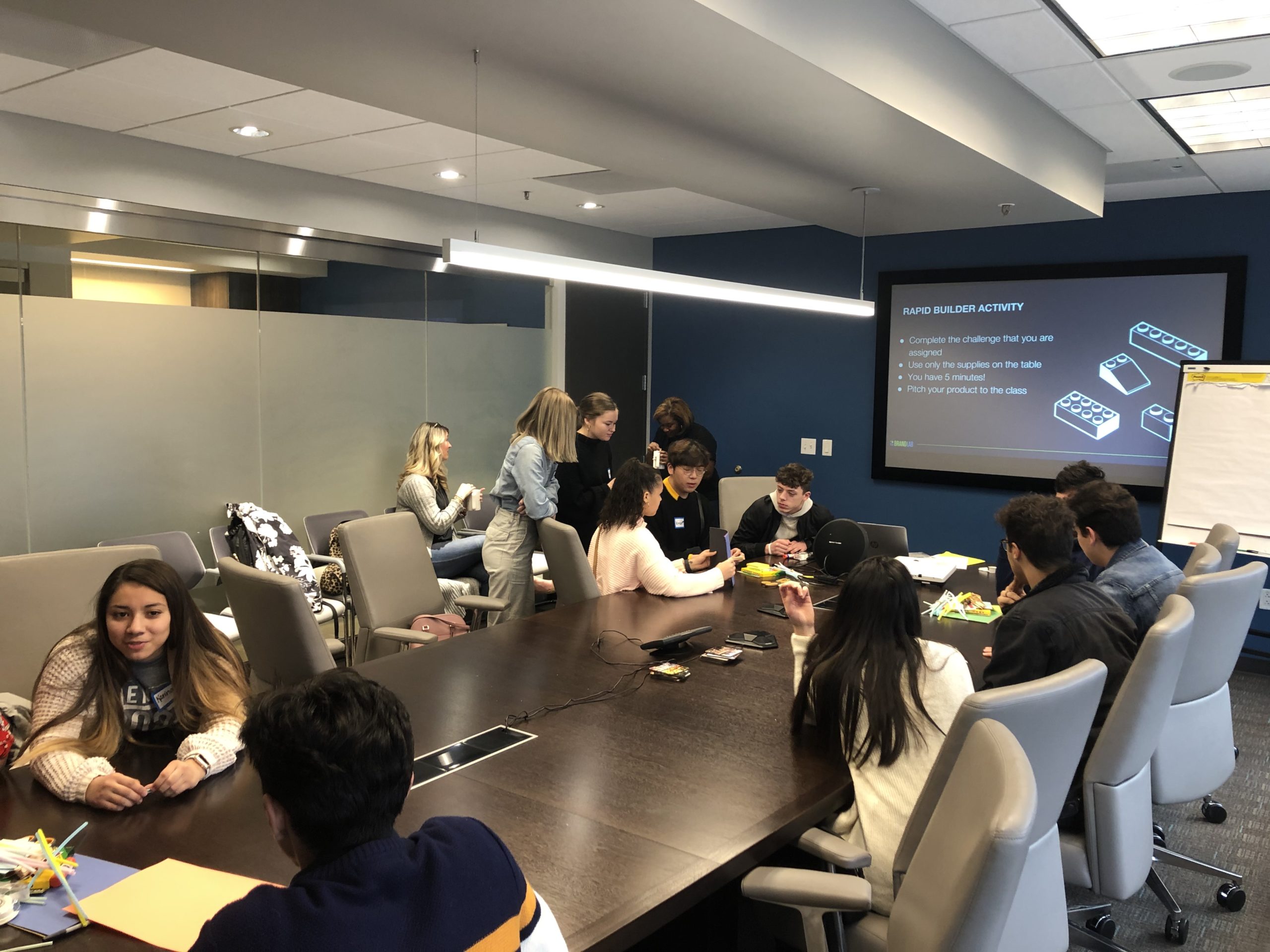
FleishmanHillard in Kansas City has partnered with The BrandLab since 2018 when Kansas City professionals came together to establish the organization in the community. FleishmanHillard’s Kansas City office was a founding partner and since then, the team has taken a hands-on-approach to grow the organization’s presence. Founded in Minneapolis in 2007 with the mission to introduce diverse high school students to creative careers, The BrandLab aims to change the face and voice of the communications and marketing industry.
The BrandLab student interns smile for a photo.
Our Kansas City team hosted junior and senior interns the past two summers, helping them understand what a communications career entails and develop professional skills. The office also hosted Spark Days, where freshman and sophomore students spend a day at our agency and are introduced to the industry. In addition, the team participates in The BrandLab’s Fearless Conversations, an annual event that brings together industry professionals for an open dialogue about race and bias.
Our Kansas City team works to challenge and educate their student partners at a Spark Day event.
This important inclusion work not only benefits the next generation of job seekers and the future of our industry, but it also pushes our teams to create an inclusive professional environment where we all can thrive.
Inspiring the Next Generation of PR Professionals in New York
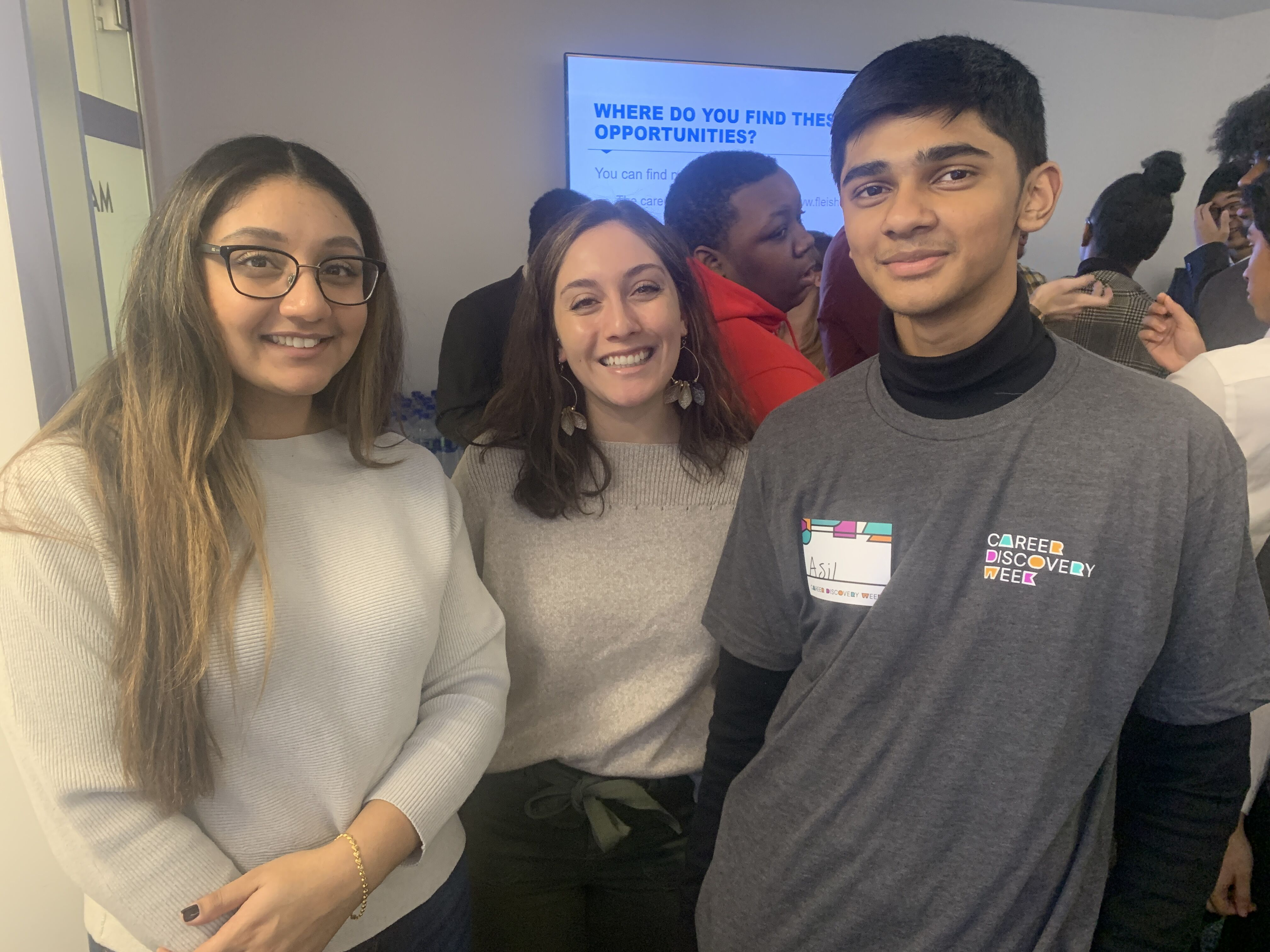
On February 11, 2020 FleishmanHillard in New York participated in the first-ever Career Discovery Week, an initiative founded by the Partnership for New York City and the New York City Department of Education.
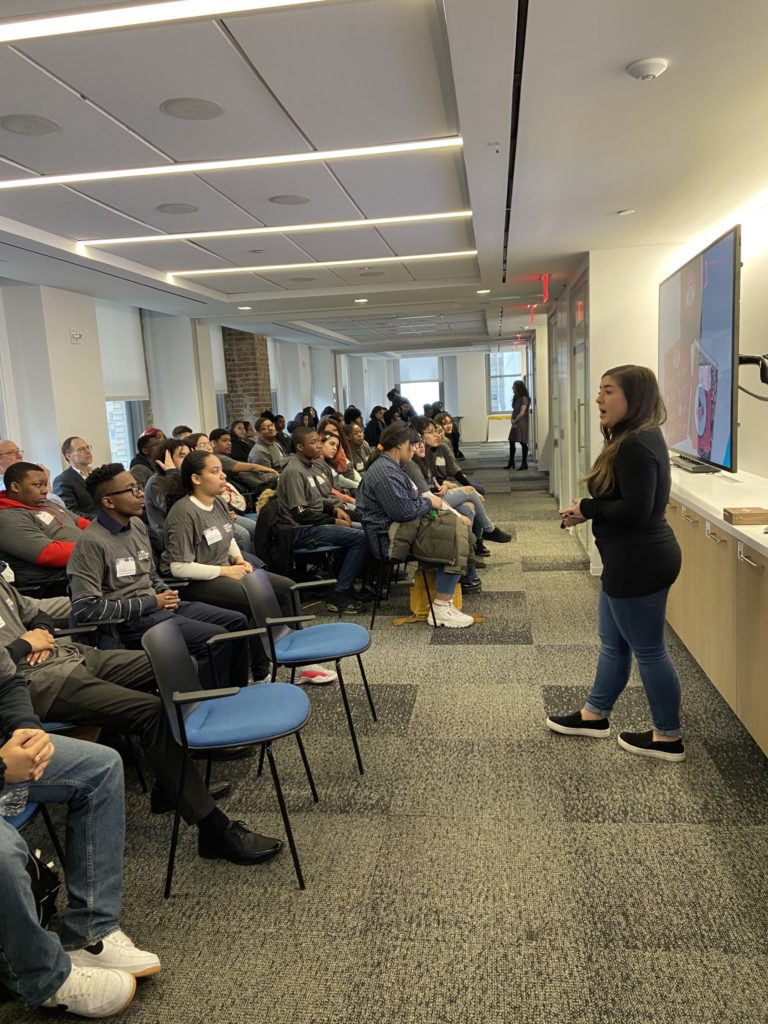
The office hosted 75 tenth-grade students from four New York City public schools with the intention to educate the students on a variety of career opportunities in public relations and marketing.
Alex Foley, a member of our Global New Business team, discussed her role with students.
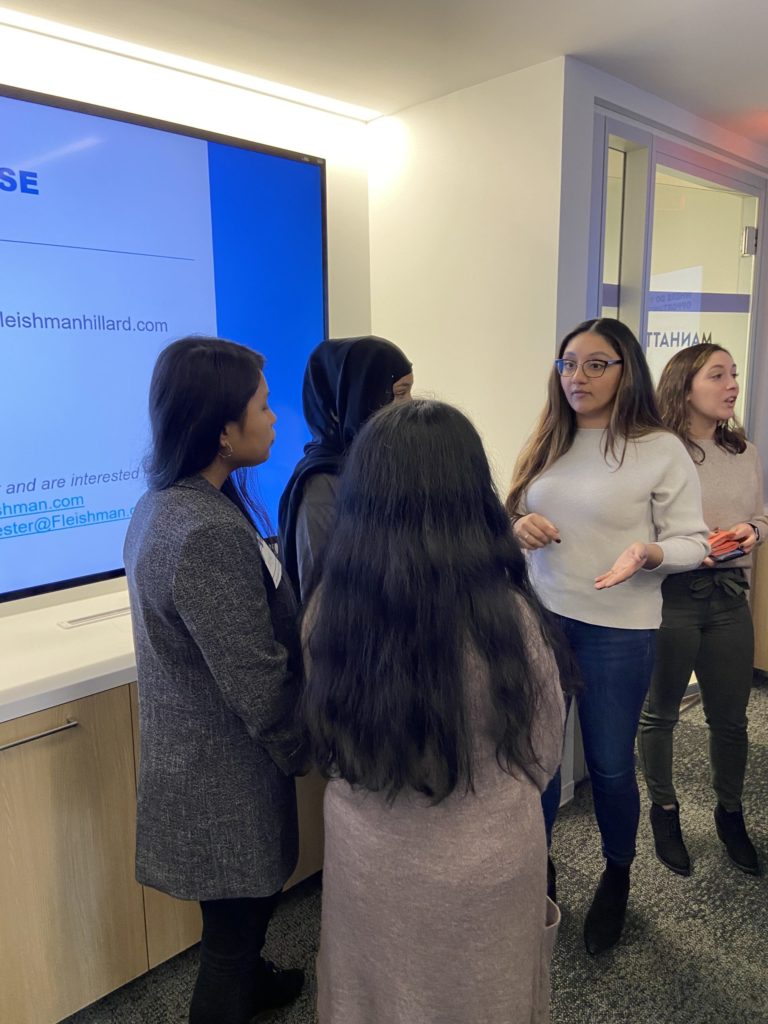
Vipan Gill, a member of the Corporate team, and Angela Anastasi of the Consumer team chat with students during the visit.
The day began with presentations by representatives from each New York team, including Technology, Social and Innovation, Corporate, Consumer, New Business Development, Media Relations and Healthcare. Each presenter shared information about their respective team and included a Q&A portion where the students asked thoughtful questions about the speakers’ roles and how their careers had progressed to where they are today.
Equally important was the networking session held after the presentations. For many students, this was the first time at a networking event. They learned more about creating professional relationships through first-hand experience, which — as we all know — is a valuable skill to have on the path to your future career.
After the networking session, FleishmanHillard’s Talent Development team provided tips and information about resume and cover letter building and editing, interviewing and future internship opportunities, and graduate and fellowship programs.
Overall, Career Discovery Day was a great opportunity for students to get a look into the professional world and for FleishmanHillard employees to share their stories and showcase the work they do every day.
Our own Vipan Gill and Angela Anastasi enjoyed networking with Career Discovery Week students.
The importance of advancing inclusion and supporting nonprofit partners is greater than ever. According to Population Reference Bureau’s U.S. 2020 census study, children are at the forefront of racial and ethnic change in the United States, creating a diversity gap among generations. With upcoming generations being more diverse than ever, inclusion efforts will need to improve accordingly. FleishmanHillard will continue to partner with organizations that address growing needs and societal changes.
Janel O’Brien, a member of our Talent Development team in our New York office, and Kristen Ingram, a member of our Healthcare team in our Kansas City, and Alana Reinhardt contributed to this article.
See what else is happening
You might also like
ESG
Navigating Conflicting Demands to Advance Climate Action
January 20, 2025
Opinions
Supporting St. Louis Institutions Dedicated to Empowering Youth Through FH4Inclusion
January 15, 2025
Awards
FleishmanHillard Earns Perfect Score on 2025 Human Rights Campaign Foundation’s Corporate Equality Index
January 7, 2025
Opinions
Revitalizing the San Francisco Community with the Downtown Volunteer Coalition
December 23, 2024
Expertise
Responsible Business: Navigating Today’s Challenges and Opportunities
October 22, 2024
Inclusion
Recognizing the power of the LGBTQ Community in Advertising & Media with GLAAD
October 11, 2024
Opinions
FleishmanHillard and FH4Inclusion Teams Shine at the Cannes Lions International Festival of Creativity
August 28, 2024
Opinions
Bridging the Generational Divide with Generative AI
August 27, 2024
Expertise
How to ensure access and opportunity for Black and diverse students and professionals interested in working in sports
A few months ago, I would have bet on Earth Day 2020 being D-day for brands to prove their sustainability creds. The consumer mindset well and truly shifted to ‘green’ in 2019, with many changing lifestyle and consumption habits to reduce their personal impact on the climate.
Businesses had been put on notice: Either step up and address consumer sustainability demands on products and operations or risk being blacklisted.
But 2020 has taken a turn none of us could have predicted, not even on the night we said goodbye to 2019. In the days, weeks and months that have followed – life as we know it, in most countries around the world, has been turned on its head.
And so, this April 22 – the 50th Earth Day – is likely to be a novel one.
The climate crisis still exists of course, as does the passion and drive many around the world hold to protect this planet and the environment. But sustainability progress from businesses, and likewise demand from consumers, have largely been put on hold – replaced, for now, by the threat of the COVID-19 pandemic.
The fears of both individuals and businesses have justly narrowed. Most corporations are focused entirely on staying afloat during this time, as operations sharply decline or reach a standstill. Some are adapting, offering new products and services that meet the evolving needs of a world on lockdown. Others, who perhaps have more wriggle room in their bottom line, are announcing steps to support those wearing an unequal burden in this pandemic.
Consumers too have pivoted, with hygiene and health now taking precedence above all else to protect loved ones and the wider community.
A journalist at one of the U.K.’s national newspapers admitted to our team that sustainability has taken a back seat on its agenda over the past month, but clarified its ongoing significance. Sustainability remains second only to COVID-19 – and he knows it will once again take top priority once this crisis eases.
So for now we may continue to take each day as it comes. Marking Earth Day this time around a little differently perhaps, united across the world as we face a common enemy. Where it’s feasible for a brand, this calendar moment can still be leveraged – so long as it’s genuinely done for the environment. It’s not the time to push sales. But reiterating sustainability commitments or achievements, making new pledges or supporting relevant causes or organisations, even on a small scale, could help cement a brands position as a driver of positive change.
Because once the health of individuals is no longer threatened on such a scale, the health of our planet will take priority again amongst consumers. Businesses must be prepared for that next hurdle. When we emerge into a post-COVID-19 world, consumers will be significantly more conscious than before. Images of the environment thriving with less human interruption still fresh in their minds. Even if the positive environmental effects of lockdowns are only short-lived, that green consumer mindset will be back. Reduced consumption will have become the norm, and so too will reduced emissions and pollution albeit largely unintentionally. Reduced spending power will be a reality too, with many suffering losses to income.
Consumerism will change, likely for good. And brands will be facing a new fight for market share. Those built upon purpose, integrity and authenticity will thrive – and sustainability has a big role to play in each of those pillars. They’ll be held to simpler and yet higher expectations; we’ll remember and reward those who do good for the communities and world around them. Those who do good, not only with their product or service, but with their power.
So businesses are still very much on notice, in fact the stakes are now higher than ever before. Another new normal to adapt to – but an opportunity for brands, and all of us in the industry, to bring things back to what really matters. Bring brands back to Earth.
See what else is happening
You might also like
Expertise
Why Trust is the Real Competitive Advantage in Ag Tech
April 2, 2026
Expertise
Notes From the Road: RSA Conference 2026 Edition
April 1, 2026
Expertise
Why Your AI Rollout Is Stalling (And What Actually Moves the Needle)
March 25, 2026
Expertise
Get the Report: Inside China’s 2026 Two Sessions
March 24, 2026
Expertise
The New Culture Gap Report: How Brands Stay Relevant for 100 Years
March 24, 2026
Expertise
The Tech Industry’s License to Lead Problem: How Tech Companies Made Themselves Vulnerable to the AI and SaaS Apocalypse Doubt
March 4, 2026
Expertise
The Five Principles of Decision-Ready Intelligence: A Framework for Making Hard Calls in an AI-driven Environment
March 3, 2026
Expertise
The Patient Engagement Gap Your Competitors Are Closing
February 26, 2026
Expertise
AI is Reshaping Communications: Inside FleishmanHillard’s Enterprise-Wide Approach