Employee Login

Enter your login information to access the intranet

Enter your credentials to access your email

Reset employee password

Article

When the World Gets Noisy, Great Storytelling Breaks Through 

December 3, 2025
By Trine Hindklev

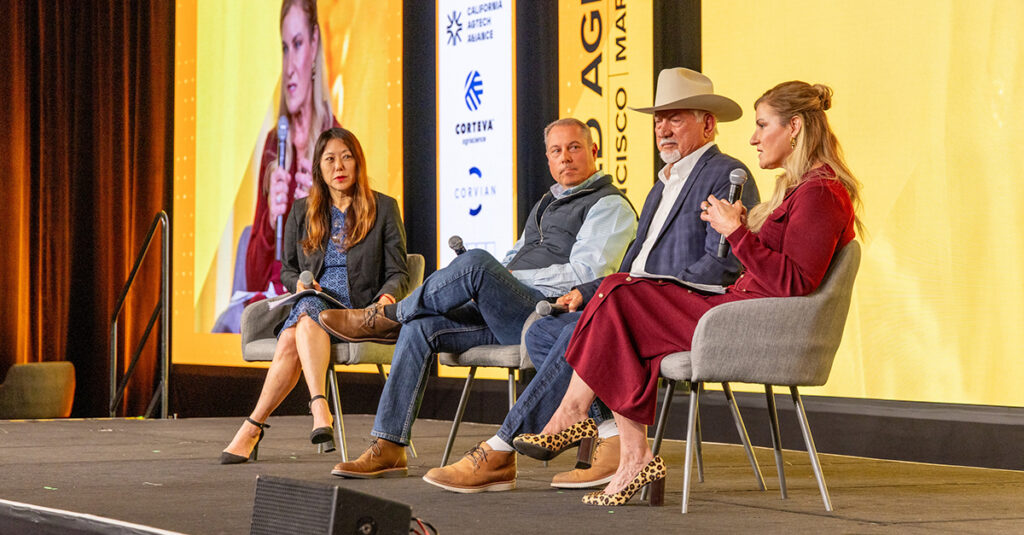
In a world where disruption feels like the norm, clarity can feel out of reach. Our President and CEO, J.J. Carter, put it well at a recent PR Decoded discussion: “Clarity often comes from chaos for those who are bold enough to seek it.” That’s the mindset driving how we approach communications today. For us, it’s our call to action for how we think about storytelling. 

That perspective came through in our recent discussion with Chrissy Farr, editor-in-chief of Second Opinion, former tech and health reporter at CNBC and author of “The Storyteller’s Advantage: How Powerful Narratives Make Businesses Thrive.” Chrissy’s research and real-world experience show that the most effective leaders strategically use compelling narratives as a springboard to craft stories that connect, persuade and inspire.  

When storytelling is left to chance, companies lose control of the narrative. And no one wants to lose their narrative. Today, there’s a genuine need for trusted counselors to help leaders put communications at the center of their business strategy, not as a last-minute fix or a siloed function cast off to the side. 

Complexity isn’t going away. It’ll likely to get, well… more complex, but the ability to cut through it with authentic, sharp, well-crafted narratives is the key to thriving. Here’s how: 

Building resilience through narrative 

Organizations that invest in their narrative build real equity. It’s more than a safety net for tough times, Chrissy said. It’s a foundation of trust, engagement, and clarity that holds up in any environment. Leaders who go beyond facts and figures, sharing vivid, relevant and relatable stories, build solid reputations and relationships that last.  

The lesson? Invest in your narrative before you need it.  

That translates to mapping out your narrative assets, finding gaps in credibility, and creating processes for authentic engagement and rapid response. Resilience isn’t just about weathering storms; it’s about being known and trusted, no matter what comes your way. 

Moving beyond spin with courage  

Let’s be honest, being clear and human isn’t easy. It feels too risky. Too vulnerable. But the bigger risk is being boring and forgettable. People crave something real. Something bold and relatable. The risk of irrelevance is greater than the risk of saying something fresh.  

This holds true whether you’re B2B or B2C. Broad, generic messaging just gets lost. Clarity and specificity cut through. Every time. That’s why it’s so important to help leaders tap into their authentic voice, not just the safe, polished version, Chrissy shared. There’s a need to coach leaders to lean into what makes them different and set up the right guardrails to navigate complex issues with confidence. This isn’t about spin. It’s about showing up as real humans and letting that drive real connection.  

Reach without the reaching 

Metrics, dashboards and percentages dominate most conversations at the top. But honestly, who remembers a stat sheet? 

It’s stories that stick. Share the right story, and suddenly your message is making the rounds in rooms you’ve never entered, and your message travels further than any paid campaign could. That’s the kind of reach every communicator dreams of. 

But too often organizations chase impressions and views, Chrissy said. Impressions don’t impress if they don’t move people, and most don’t. The real impact of storytelling shows in influence: your message shapes industry conversations, earns trust and opens doors that numbers alone never could.  

In a nutshell, it’s time to move beyond those vanity metrics. So, look for measurement models that track the full picture, from traditional reach to narrative traction and influence mapping. Build dashboards that look at what counts, such as stakeholder sentiment, leadership invitations and the conversations you’re sparking across your sector. 

Chrissy’s advice is simple: focus on quality engagement. Nurture the audiences that matter. Invest in content people value. Rethink channel strategy, prioritizing depth over breadth and building real communities.  

Move away from chasing numbers to building lasting influence, think more modular content + smart thought leadership + executive visibility all working together as part of an integrated approach.  

Be a trusted partner  

Storytelling carries risks. But so does playing it safe. As Chrissy and J.J. put it, leaders and brands who stand out are the ones willing to show up with clarity and courage, sharing the moments that matter even when they aren’t perfect. That’s how impact grows. 

As a modern communications agency and trusted partners to many of the world’s most vibrant brands, we believe crafting a narrative isn’t just a tactic, but a strategic asset that drives measurable impact. The organizations that treat storytelling as a line item or an afterthought will get left behind. The ones who invest, with purpose, will lead. 

Do you need help being human, specific and bold? Be brave. Let’s talk.  

Trine HindklevTrine Hindklev is a senior partner and FleishmanHillard’s Global Strategic Media Relations Lead. She is part cultural anthropologist, part media strategist, part creative storyteller and all-in change-maker..


 
Article

Win What Matters

November 11, 2025

How a Purposeful Award Strategy Can Strengthen Employer Brand and Attract Top Talent

In today’s dynamic talent landscape, one principle stands out: recognition matters, but only when it’s meaningful. From “Best Places to Work” lists to industry-specific accolades, employer-of-choice awards remain a powerful tool for building credibility, boosting brand perception and attracting the right talent.

But not every award is created equal … and many come with a hefty price tag (from entry fees to the time and effort spent preparing submissions).

As the hiring market cools and qualified candidate searches intensify, now is a strategic time for organizations to double down on their employer brand. Third-party awards, in this context, retain their power as a powerful tool.

But the goal isn’t just to win. It’s to win what matters. The proper recognition, grounded in authentic storytelling and aligned to business priorities, can differentiate your organization in a crowded marketplace.

Why now?

While some companies are scaling back recruitment efforts, smart employers see this moment for what it is: a rare window to stand out and attract exceptional candidates. With fewer organizations actively vying for talent and less noise in the marketplace, even modest increases in employer visibility, such as industry mentions or niche awards, can generate an outsized impact. Recognition as an employer of choice not only draws in new talent but also boosts engagement and morale among current employees, provided it is earned and shared authentically.

That means skipping the “spray-and-pray” approach to awards submissions and instead adopt a strategic lens. Start by pondering over the following:

  • What does your organization want to be known for?
  • Which recognitions align with your values and culture?
  • How can internal communications help bring that story to life?
  • How well does your organization satisfy the award criteria or compare against potential competitors?
  • Will your chances of winning improve by implementing programmatic changes ahead of the next submission cycle and applying then instead?

When these questions are answered honestly, a more straightforward path forward emerges.

Go beyond the boilerplate

Be inspired by the fact that at the heart of every effective employer brand is strong internal communication. Award-winning cultures are built from the inside out, grounded in authentic stories that bring purpose and values to life across teams and in everyday moments. That’s why we help clients dig deep to uncover the stories that matter: how purpose is lived, how values are demonstrated at every level and how culture is defined by employees themselves.

But building a great place to work requires more than compelling narratives or polished award submissions. It takes consistent, thoughtful strategies that genuinely connect people, business goals, values, brand and reputation, resulting in an exceptional employee experience.

A smarter path to recognition

Of course, even the best narrative won’t make an impact if it’s sent to the wrong place. Award submissions can be expensive, time-consuming and competitive.

To invest time and effort wisely, an awards assessment matrix is a valuable tool organizations can use to evaluate which opportunities best align with their purpose, values and strategic priorities. Using such a resource can help your team focus on efforts that will drive real business value.

The results speak for themselves

Rest assured, a well-executed award strategy doesn’t just earn headlines. It builds trust with candidates and fosters employee pride. It instills confidence in the communications and talent attraction functions, potentially leading to additional resourcing to expand the programs responsible for the accolades won. And when an organization tells the story of its positive employee experience with intention, the benefits extend far beyond a single submission cycle. They reinforce the culture employers work hard to build—and invite others to be part of it.

We’re proud to help clients develop employer recognition strategies that do just that. From building employee engagement and alignment programs that are the foundation of a great place to work, to delivering standout storytelling, to selecting the award programs that will make the biggest impact, our team helps organizations focus their efforts where they matter most. Because when it comes to awards, the smartest strategy is simple: win what matters.

Ready to move beyond generic recognition?  FleishmanHillard’s Talent + Transformation team builds award strategies that deliver measurable talent and business outcomes.

Let’s build an awards assessment matrix to identify the right opportunities and craft a story that reflects your people, your culture and your purpose—and achieves your recruitment and retention goals.

Article

Five Ways to Build Community Reputation and Trust 

October 29, 2025
By Judith Rowland and Bob Miller

Across boardrooms and communications teams, one word keeps coming up: “whiplash.” It’s how leaders describe the constant upheaval caused by today’s shifting geopolitical and policy landscape. But who really feels the sting at the end of this whip?

Often, it’s local communities. These are the places where products are made, where factories stand and where families depend on steady work. Companies might have reserves or pricing power to weather storms, but for many communities, the options are limited. The challenges facing local economies in 2025 are just the latest round in a long struggle—one shaped by changing populations, economic swings and shifting industries that can erode tax bases, schools and a community’s ability to attract talent and investment.

Moving beyond the old playbook 

Given this intensity, the old playbook for community relations—writing checks to nonprofits, sponsoring little league teams, hiring locally—just isn’t enough anymore. Communities need more from their corporate neighbors.

This is a real opportunity. Companies can build true “community reputation” by investing in local relationships, creating value for both the business and the community. When companies focus on community reputation, they go beyond just earning a license to operate. They earn a license to grow. Strong partnerships between companies and the communities where they operate fuel mutual success. Communities thrive when companies show up and invest meaningfully. 

Why reputation and trust matter 

In today’s competitive environment, companies race to show their commitment to U.S. jobs and supply chains. But earning trust at the local level takes more than promises of big investments or massive new facilities. It takes consistent, long-term and clearly visible action. 

Reputation and trust are the keys that open doors. They help companies navigate politics, overcome barriers and tell a compelling “Made-in-America” story about their facilities, their people and the future they’re building with their communities. 

In fact, as we approach the end of Manufacturing Month in the U.S., it shouldn’t also mean an end to a focus on supporting and celebrating the impact manufacturing has on local communities. A strong community reputation is an on-going, strategic business differentiator helping companies:    

  • Retain and attract top local talent 
  • Turn neighbors into lifelong customers 
  • Protect the business when controversy strikes 
  • Build a base of authentic advocates who will amplify your story far beyond your own channels 

A blueprint for building community reputation and trust 

  1. Listen first to build relationships.
    Listening is the foundation of strong relationships. It helps you find ways to contribute that genuinely strengthen your reputation and support the community’s long-term health.
  1. Craft bespoke plans for each community. There is no one-size-fits-all model for building community reputation. Rather, the partnership must be driven by the needs of the community. A small, rural town may have vastly different needs than a large city with many well-known employers. Companies must recognize a community as a system and understand where they are best placed to offer support.
  1. Be present and consistent.
    Trust is built by showing up—again and again. Do not wait until you’re in the midst of a challenging labor negotiations cycle or other business threat to start thinking about building reputation. Attend town halls, fundraisers, council meetings and economic summits. Consistent presence demonstrates real commitment. Miss these moments, and you risk losing momentum that’s hard to regain – or worse, making your actions appear self-serving and transactional.
  1. Commit enterprise-wide.
    Building a strong reputation takes buy-in from the whole company. Align your communications, philanthropy, public affairs, workforce programs and government partnerships around a shared mission that advances business goals and benefits residents. Start by mapping stakeholders, aligning priorities and standardizing programs for mutual success.
  1. Communicate transparently
    Listening is only the beginning. Authentic, regular communication is the payoff that matters. People don’t trust the company they never hear from, or the one that refuses to comment. Leverage a wide range of drumbeat tactics, potentially including newsletters, community meetings and local media to highlight your impact. And don’t go silent when things get tough. Sharing both successes and challenges—like job cuts or construction delays—shows transparency and builds trust. When stakeholders know the context and your plans, they’re more likely to become advocates, even during hard times.

A lasting commitment to communities 

Building or expanding in a new community isn’t just about jobs or ribbon cuttings. It’s a vote of confidence in American workers and communities, a promise in our shared future and the first step in creating local reputations that pay dividends for companies, communities and the country. 

FleishmanHillard has helped Fortune 1000 companies build community reputation strategies that deliver proven results. To learn more, contact [email protected]. 

“Judith Judith Rowland is a senior vice president in the Public Affairs and Engagement group and also serves as global sustainability lead for the food, agriculture and beverage (FAB) sector. She helps clients establish strategies for advancing community reputation and social impact, set measurable goals and communicate their progress with the stakeholders that matter most.

Bob Miller is a managing supervisor in FleishmanHillard’s Detroit office, where he supports clients across manufacturing, energy, finance, healthcare, and higher education. He’s committed to developing programs and stories that build trust and strengthen connections between companies and their employees, customers, and communities.

 
Article

From Transaction to Trust: Moving Beyond DTC in Health Communications

October 6, 2025
By Barry Sudbeck and Laura Musgrave

In the strategic evolution of health communications, patient advocacy and engagement are emerging as the essential successor to legacy promotional efforts, such as marketing, advertising and sales-focused communications. This shift is driven by new regulatory pressures on direct-to-consumer (DTC) promotion in the United States and a broader global movement toward patient-centered care.

As the FDA signals aggressive enforcement against imbalanced or misleading promotion, the limitations of one-way mass media campaigns have become apparent. The industry now faces a critical mandate: to develop communication strategies that are not only compliant and transparent but also define a powerful new paradigm for connecting with customers. Building genuine, authentic patient relationships is emerging as the most powerful way for the industry to realize this goal.

This new approach fundamentally reframes patient outreach as a driver of long-term corporate reputation and trust, not merely as an alternative marketing channel. And the solution lies within an asset most companies already possess: their patient engagement teams. With an approach that is rooted in listening, two-way exchange, and building credible relationships, these teams are uniquely positioned to lead this change. Their work moves beyond the conventional one-way flow of information; it is about establishing a sustained presence within patient communities, understanding their real-world needs and co-creating resources that provide tangible value. This is how enduring trust – the most valuable asset of all – is built.

Successfully navigating this path requires adherence to core principles that separate authentic engagement from promotion. To ensure credibility, full transparency in all communications, sponsorships, and partnerships is required to protect the integrity of both the company and its patient partners. Furthermore, all information must be rigorously evidence-based and balanced, presenting both benefits and risks with equal clarity. Finally, every interaction must honor patient autonomy by equipping them with knowledge for shared decision-making, rather than steering them toward a commercial objective.

Our current body of research is being augmented by fresh evidence and real-world examples. A white paper summarizing these findings will follow soon.

This evolution from transactional promotion to long-term engagement is not a passing trend. For companies willing to lead, it is a profound strategic opportunity to redefine their role from a vendor of products to a true partner in patient health. Patient engagement is becoming the defining standard for credible health communication, now and in the future.

Article

The Answer Engine Era Is Here

August 20, 2025
By Ellie Tuck

We are living through another fundamental shift in how people discover brands. But we’ve seen this pattern before: the move from analog to web, from search to social. Each time, the brands that adapted early gained lasting advantages. Now we are seeing the rise of LLM-powered answer engines and the emergence of Generative Engine Optimization (GEO), a strategy that leverages AI to optimize a brand’s visibility and reputation in answer engine results.

The numbers tell the story: over half of Google results now include a generative response. AI agents and chatbots are increasingly becoming the first stop for people seeking recommendations, advice or information. If your audience is already there and you are not auditing how your brand shows up, you are missing a critical piece of the discovery puzzle.

How we are navigating the shift

While the fundamentals of trust and quality content remain, GEO redefines how they are executed. Analysing tools like ChatGPT, Gemini and Perplexity shows that these models lean heavily on what is already in the public domain, especially high-trust, earned media sources.

In response, we have had to build custom tools to get under the hood of how a brand is being interpreted. These tools allow us to see where a client is showing up, how they are being described, and how that compares to others in their space.

This new landscape also demands a new level of precision from our creative campaigns. We are asking more specific questions. Is our messaging backed by the right expert validation? Is our content tailored for the types of media AI models trust? Is our phrasing distinctive enough to be picked up by both machines and people?

This is where creativity and technical precision now overlap. Our teams are building synthetic AI audiences to test ideas earlier and using our FH Fusion platform to assemble virtual focus groups that inform smarter, faster decision-making.

A practical framework for influence

Our approach is led by audience behavior. That has always been our starting point in PR, and it is no different in the world of AI.

To influence how LLMs respond, we focus on a few key levers:

  • Earned coverage in high-trust sources
  • Structured storytelling to make key messages clear
  • Cross-channel reinforcement of the right signals
  • Consistency, because LLMs rely on pattern recognition

This work is complex, and the environment is not static. But an adaptable, audience-led strategy puts us in the best position to succeed.

What this means for our industry

The implications are broad. Business leaders need to get smart about how these models make decisions, guided by real data, not guesswork. Answer engine visibility should become a core KPI, not just for communications teams, but for growth.

But reputational risk is a major factor. We are already seeing AI tools surface outdated or outright false content about brands. Because what an LLM says feels factual to users, our role shifts from defending a single source of truth to shaping the entire ecosystem that AI learns from. This is nuanced work, but it is also where we can have the most significant impact.

No one has all the answers yet. The models are evolving, the sources they trust are shifting, and the tactics that work today may not work tomorrow. But the brands that start auditing their answer engine presence now will have a significant advantage over those who wait.

The communications industry has adapted to every major shift in how people consume information. This one is no different, except for the speed at which it is happening. The question is not whether your brand will need a GEO strategy; it is how quickly you can build one that works. We’ve adapted before, and we’ll do it again.

Ellie Tuck width= Ellie Tuck is the chief creative officer of the Americas based in New York.

 
Article

Leading Through Complexity: What Higher Ed Communicators Are Saying

July 25, 2025

What one word best describes your day-to-day work? 

That was the icebreaker posed by FleishmanHillard’s Sarah Francomano, who hosted and moderated a candid dinner conversation among senior higher ed communications and marketing leaders. Responses like “firefighter,” “pivot” and “controlling chaos” weren’t said for dramatic effect—they reflected the current state of the higher ed landscape. The group all concurred that leading communications in higher education today is intensely complex, often chaotic and always high stakes.

The conversation was twofold, starting with discussions around what senior leaders are currently seeing in higher education. Then, the conversation moved to what’s next and how higher-ed professionals can leverage AI and other emerging tools to support them in their roles.

The Current Reality: Complexity and Constant Pressure

Communications leaders in higher education are facing unprecedented, often competing demands—with the stakes higher than ever. A single misstep can trigger consequences ranging from trustee backlash to federal scrutiny. Plus, in an environment where issues are deeply personal and highly visible, it’s often the job of the communications team not just to respond, but to cut through the noise, determine whose voices matter most in a given moment and identify which relationships need to be prioritized in order to guide the institution through crisis or change.

Participants shared their experiences managing a high volume of inquiries on a consistent basis from students, parents, alumni, donors, faculty, media and the general public on issues pertaining to their schools. One participant described a case where their team received more than 10,000 emails in response to a global crisis. After sorting through all of the messages, they found that only a small fraction came from individuals actually affiliated with the institution. It was a telling example of how the general public’s perspective does not always reflect the opinions of key stakeholders who have an impact on a university.

Others spoke about the weight of deciding when—and whether—to issue public statements. Choosing to speak up on a cultural or political moment may be the right call in one case, but it often sets expectations for the next moment. The act of staying silent can also become a message, leaving universities at risk of receiving backlash. One communications leader noted that even a simple interaction with a reporter can draw the institution into a larger story, whether they want to be part of it or not.

Enrollment also surfaced as a key pressure point. Some schools are dealing with declining numbers and budget shortfalls; others are seeing higher-than-expected demand. Several attendees commented on the long-term risks of tuition discounting—the idea that while short-term financial aid boosts can help meet yield goals, they may also chip away at perceived brand value over time. Once an institution begins competing on price, it becomes difficult to return to a different model.

The Future: How AI is Shaping Strategic Readiness

Toward the end of dinner, the conversation shifted to some of the solutions now available to address the challenges that come with working in higher education. The group was introduced to a live AI-powered crisis simulation, led by FleishmanHillard’s Alex Lyall. The FH Crisis Simulation Lab draws from real-world crisis events and FH simulation methodologies and presents users with unfolding scenarios in the form of projected stakeholder reactions. Unlike traditional simulations, which are static, this AI-powered tool is dynamic in nature, responding to the real-time decisions of participants by evolving the crisis scenario to reflect how stakeholders might respond.

When the demo immersed participants in a campus protest scenario, the group decided to put the tool through its paces and selected the most aggressive response, forcing demonstrators to disband by a set deadline. The result generated backlash, escalation and reputational fallout in the form of emails, social media posts and media coverage, mirroring how a crisis team would experience these types of situations.

Participants were quick to note how well the tool captured the complexity and pace of an actual crisis. The AI agent mapped out the often-conflicting reactions across stakeholder groups—students, faculty, alumni, media, donors—and showed how quickly one decision can lead to a cascade of consequences. Later in the simulation, when the team chose how to correct course, the tool was prompted to generate internal and external holding statements that offered strong, usable drafts that could be easily customized to fit the voice of an institution.

Participants saw clear potential for the AI agent as both a training and planning resource—especially in conversations with boards or leadership teams. It provided a structured, precedent-informed way to explore how crisis scenarios might unfold, helping teams evaluate why one communications path might be more effective than another.

Alex shared that while this particular demo was generic, the FH Crisis Simulation Lab can be tailored to reflect each school’s culture, governance structure and audience. Even those in the room who were skeptical about AI said they could see its value in this kind of application—not to replace human instincts, but to sharpen and support them.

Going Forward: Navigating Reputational Complexities

The evening was a chance to connect with peers, swap stories and explore fresh ideas about what the future of higher ed looks like. It was an invigorating conversation that left many in the room feeling energized and inspired.

Higher ed communications may be complex, sometimes chaotic and full of tough calls—but it doesn’t have to be faced alone.

Article

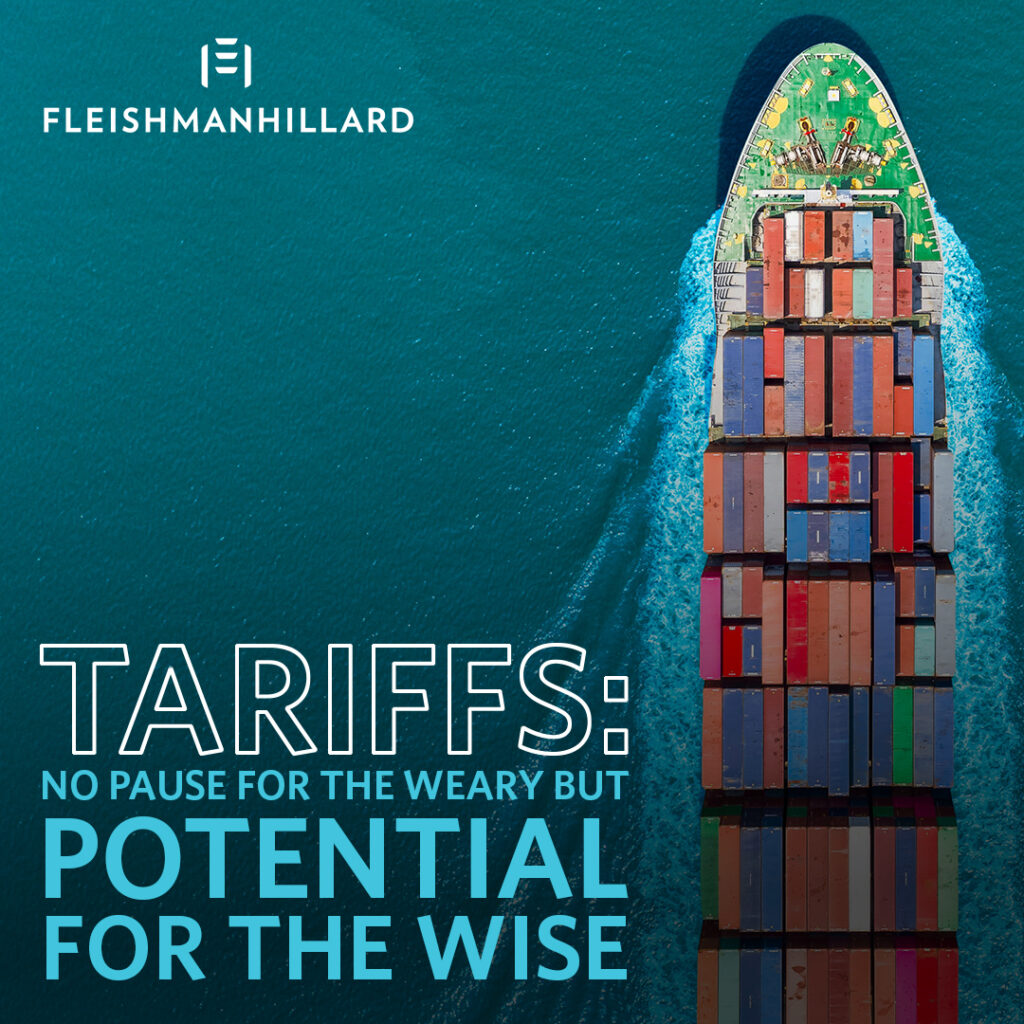
Tariffs: No Pause for the Weary but Potential for the Wise

April 16, 2025
By Donna Fontana and Tim Streeb

Last week’s news of the 90-day pause on many of President Trump’s tariffs should not be interpreted as a chance for U.S. corporate leaders to rest, whether you are one of the many who have been riding the tariff roller coaster since Inauguration Day, or part of a cohort who was caught off guard by the breadth and depth of the policies announced on April 2. 

We are now in a phase where both risk and opportunity must be tracked and evaluated with extra vigilance. The escalation of penalties imposed by the Trump administration on China, and the retaliation from Beijing on US imports, will affect companies and critical supply chain materials and have a major impact on nearly every segment of our economy. As of April 15, Industry-specific Section 232 tariffs persist on steel and aluminum and automobiles, investigations have been announced on semiconductors and pharmaceuticals and a sectoral threat continues against lumber. And more sectors and companies will be lifted or rattled by the regular information coming out about the state of tariff negotiations with critical trading partners.

“Liberation day” and the following news and market activity provided every industry with a window into the potential business, media and reputation impact of tariff policies and the economic reaction. It’s increasingly clear that tariffs are not the end of this story, and whether the impact of tariffs is seen as a worthwhile disruption or a threat to economic stability, all companies will need to address the likely impact on supply chain cost increases, pricing increases, changes and decline in consumer demand and other impacts. From a communications perspective, these 90 days are not a pause but rather a prompt to prepare for ongoing tariff news cycles that will need deeper and different strategic approaches.

What are three things all companies should do?

  • Partner with policy, investor relations, supply chain and marketing teams to frame your exposure and the fundamentals to manage it. Consider not just what works right now, but what may be needed in the context of concurrent economic contraction. To instill investor confidence, what must be clear is your company’s unique ability to manage volatility and long-term uncertainty. A key outcome is a succinct point of view that differentiates you from competitors, allowing you to frame future conversations around your strengths versus reacting to the media spin cycle of new developments and analysis
  • Align on the executive team’s risk tolerance. Knowing where key lines are will enable quick decision making and clear communications of those decisions.
  • Remember that perception is fact. The cadence, tone of voice and channel of any proactive communication—or lack thereof—is what stakeholders will remember than any one fact or metric. And perception of who is best prepared can change in an instant—so be vigilant about tracking not just tariffs, but your competitive set’s response and positioning.

What mistakes could be made by companies?

  • Misinterpreting silence from supply chain partners as preparedness. Value chain partners are also reacting to real-time changes and may lack the clarity needed to make significant go-forward decisions. Every organization needs to scenario plan around what may happen to their partners up and down their value chain and be prepared for how partners’ actions may impact your business.
  • Ignoring key stakeholder groups. While shareholders, suppliers and customers are top of mind, employees are experiencing this pause as part of the company and as consumers and need to hear from the organization. Don’t neglect internal communications over the next 90 days but remember that anything shared with employees is likely to leak, so keep your messaging transparent, yet tight.
  • Rely solely on an outside organization. Trade organizations galvanize industries in turbulent situations, but to leverage their influence, your company first needs to determine and then communicate the specific positions that are best for you.
  • Viewing communications through a US or market-specific lens: Remember that anything communicated in U.S. media will quickly reach your international markets and employees – and vice versa. Any messages about potential onshoring or other supply chain changes will be received differently overseas and must be approached with sensitivity to local stakeholder concerns. Similarly, any comments made by international leadership will be cited by domestic outlets, dictating the need for careful coordination and tight spokesperson control.

What else should we be watching for?

  • Retaliatory actions from trade partners. The landscape of both tariff and non-tariff retaliatory action continues to evolve with every new U.S. action. In the shortest term, staying apprised of developments from China matters for nearly every company and sector.
  • Supply Chain Shocks. From potentially empty shelves to financially challenged suppliers, media will be eager to highlight signals of greater impact.
  • Earnings reports—both in and outside your sector. The expectation is these now increasingly closely watched presentations will not share nitty gritty details—leading global companies have already noted it is not possible to share full details of go-forward plans and many have pulled guidance. But questions from your suppliers and customers about the projected strength of their business will be key to framing your company’s report.
  • Broader Administration actions. With the Trump Cabinet fully in place, broader policy agendas will be taking shape during this window and could culminate in a period of even greater change and communications challenges.
  • Pro- and Anti-American sentiments. Brands and businesses have the potential to be pulled into conversations, “Buy American” promotions and/or boycotts.

Your company’s best response sits at the intersection of your operational insulation, current public profile and the tariff world order at that exact moment. Internal—but also external—decisions will impact your organization far beyond 2025.

Using these 90 days for readiness instead of rest will prepare you for these next three months and beyond.