Employee Login

Enter your login information to access the intranet

Enter your credentials to access your email

Reset employee password

Article

From Storytellers to Strategic Advisors: Sports Leaders Provide Valuable Lessons for Communicators
June 23, 2026
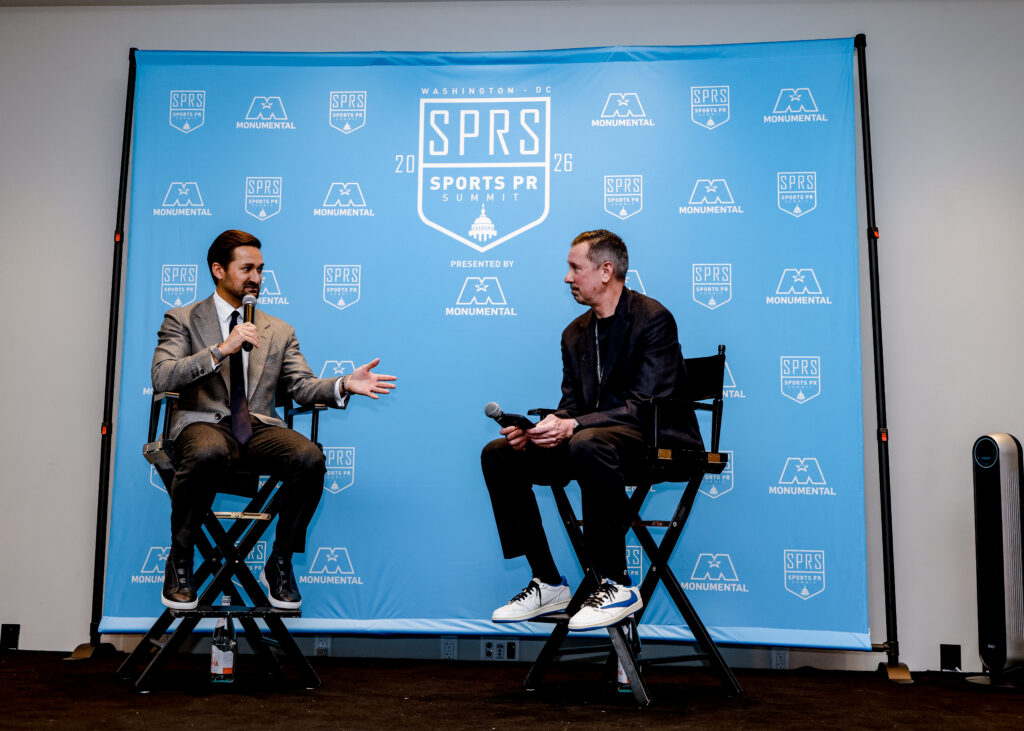
Monumental Sports & Entertainment’s Zack Leonsis (left) with FleishmanHillard’s Mitch Germann.

At this year’s Sports PR Summit, FleishmanHillard’s Chief Growth Officer Mitch Germann sat down with Monumental Sports & Entertainment (MSE) President of Media & New Enterprises Zach Leonsis for a wide-ranging conversation about multistakeholder audiences, transformation and the evolving role of communications.

The lessons extend far beyond arenas and game days. They reflect a broader reality facing communications leaders across industries and sectors: stakeholder audiences are multiplying, channels are fragmenting and the expectations placed on communicators have never been higher.

The Stakeholder Map Is More Complex Than Ever

Communicators often treat “the audience” as if they are singular.

In reality, today’s organizations operate within an ecosystem of stakeholders that may share a common interest but have very different priorities.

For sports organizations like MSE, that means communicating simultaneously with season ticket holders, casual fans, corporate partners, employees, players, league officials, elected leaders and local communities. While everyone may want the teams to succeed, their expectations of the organization differ dramatically.

The takeaway for communicators is clear: one narrative does not mean one message.

The strongest enterprise narratives are anchored by a consistent strategic story, but tailored for specific audiences, channels and moments. Communications teams increasingly must balance message consistency with audience relevance.

Narrative Ownership Has Become a Competitive Advantage

One of the most notable themes from the discussion was the growing importance of direct-to-consumer communications.

Leonsis emphasized that organizations cannot rely solely on third-party coverage and conversation to define who they are. In a world where social platforms amplify every opinion, organizations must proactively tell their own story or risk having others define it for them.

That means complementing earned media coverage with strong owned channels and a disciplined content strategy.

For communicators, the difference is in whether you are using the direct channels to your audiences strategically enough.The organizations that win attention today are often the ones that can move seamlessly between earned, owned and shared media environments.

Transformation Communications Requires More Than Announcements

Large-scale change initiatives often fail not because the strategy is flawed, but because stakeholders experience the transformation differently.

MSE’s Capital One Arena renovation provides a useful example. Different stakeholder groups care about different outcomes: players focus on facilities, corporate customers focus on experiences, fans focus on value, and civic leaders focus on economic impact.

The communications challenge lies in helping each audience understand what the transformation means for them.

Successful transformation communications requires sustained storytelling, message sequencing and audience-specific framing over months or years – not just a single launch moment.

Communications Leaders Must Operate Like Business Leaders

Perhaps the most important takeaway came in response to a simple question: What do business leaders need from communications teams today?

Leonsis’ answer wasn’t media relations. It wasn’t content creation.

It was partnership. He described communicators who understand the business, anticipate criticism, identify potential pitfalls, sharpen narratives and prepare leadership for inevitable scrutiny.

That’s a meaningful shift in expectations.

The most valuable communicators today are helping shape key decisions before they’re announced. They have a seat at the table.

In an environment defined by complexity, reputation risk and stakeholder scrutiny, communications has become a strategic operating function.

The Bottom Line

Sports has always been a pressure-tested environment for communications professionals. Every decision is scrutinized. Every stakeholder has a voice. Every narrative evolves in real time.

Today, communicators are being asked to manage more stakeholders, more channels and more scrutiny than ever before. Success depends on moving beyond traditional storytelling and embracing a broader role: strategic advisor, business partner and architect of trust.

Because in today’s environment, communications isn’t simply about telling the story.

It’s about helping shape the future of the organization behind it.
Article

Live from the PRWeek Sports Conference: A Team-First Approach to Communications

April 28, 2026

Nine Bay Area counties, three major organizations and 6,500 journalists all speaking as one required daily calls, clear decision rights, relentless scenario planning and no ego. Here’s the playbook.

PR Week Sports Conference
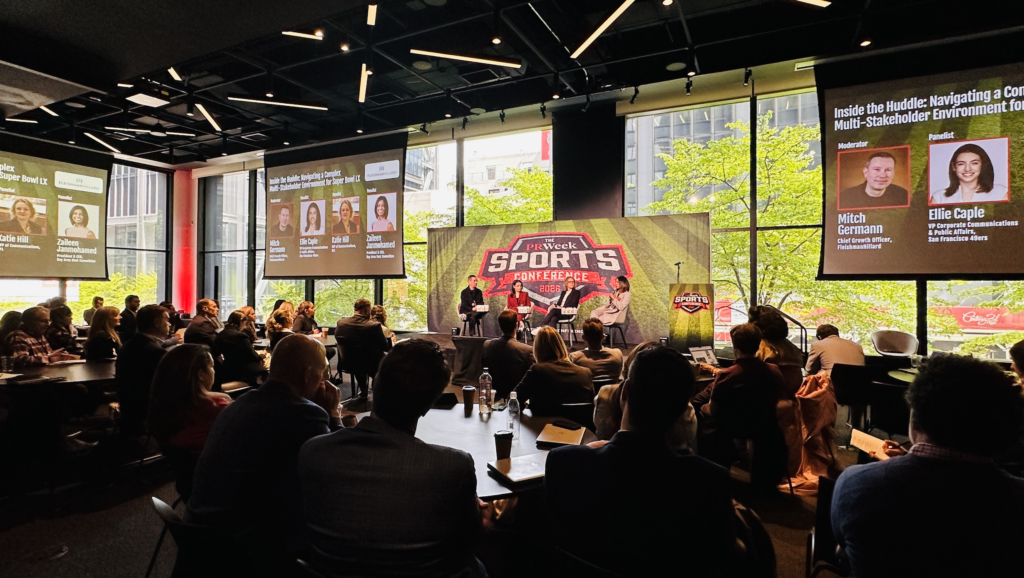
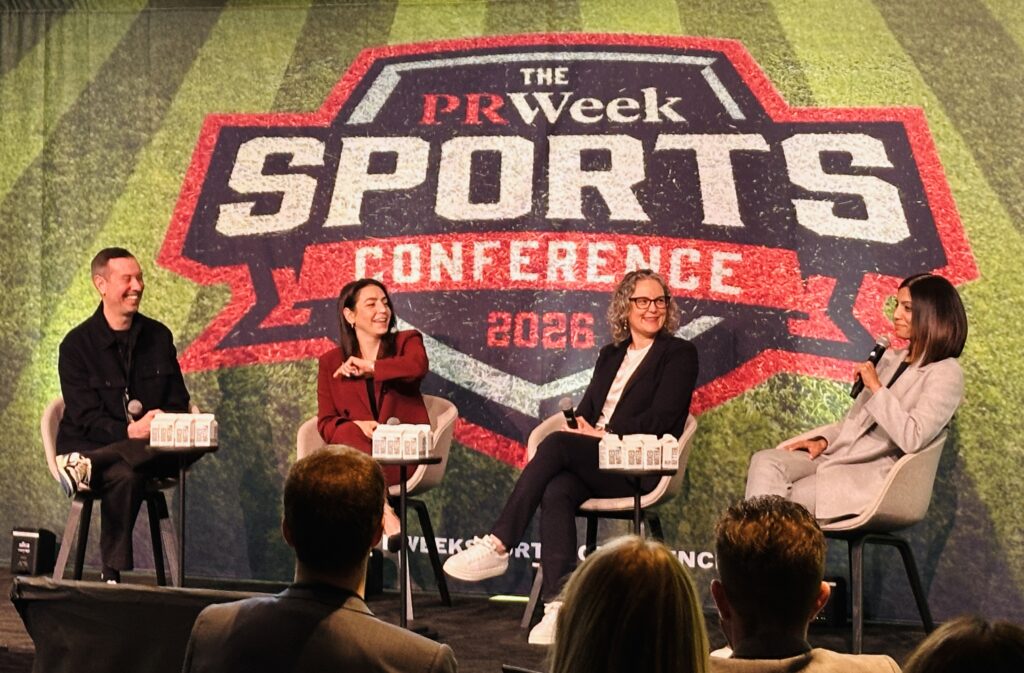
From Left to Right: Mitch Germann, Ellie Caple, Katie Hill and Zaileen Janmohamed at the PRWeek Sports Conference.

An integrated communications playbook is as good as the teams buying into it. That was a driving force behind the PRWeek Sports Conference session “Inside the Huddle: Navigating a Complex Multi-Stakeholder Environment for Super Bowl LX.”

Football’s main event brings together one of the most complex communications ecosystems in all of sports including a host committee, the NFL, the venue, sponsors, partners, local municipalities, civic leaders and the media. All are moving at lightning speed, merging on the host city to tackle communications challenges both planned and unpredictable. Aligning these varying voices and stories across different stakeholder audiences requires precision, trusted relationships and a shared vision for success.

Enter the panel’s sports leaders who put theory aside for an intimate look at the actual modern playbook that stood up to the forces inside one of sports communications’ biggest pressure cookers. What they made clear: success managing the intensity of game day and the preceding Super Bowl media week hinges on the culture built over months of close collaboration. As the World Cup heads to the Bay Area later this summer, that integrated playbook is about to be activated at an even larger scale.

Lessons Learned from Previous Big Games

“Comms and PR was an essential part of our strategy from very early on,” said Zaileen Janmohamed, President and CEO of the Bay Area Host Committee. She explained that the organization absorbed a great deal of intelligence from the group who worked on Super Bowl 50 ten years prior.

“I think the narrative that came out of that event wasn’t as strong or consistent as the 49ers or other teams wanted to see around the Bay,” Janmohamed said. “Which is why we put comms at the forefront of every single thing that we did this year.”

Building the Architecture

Mitch Germann, Chief Growth Officer at FleishmanHillard, also served as Head of Communications for the Bay Area Host Committee, positioning him at the center of coordinating across all three organizations. In this unified structure, the NFL drove global narrative and the integration of emerging voices into the league’s growing audience footprint. The San Francisco 49ers focused on community impact and ground intelligence. The Bay Area Host Committee owned regional stakeholder coordination across nine counties.

“Without clarity, things slip through the cracks,” said Katie Hill, SVP of Communications at the NFL. “You lose sight around corners. Your scenario planning isn’t going to be as strong.”

Hill painted a dizzying picture of the wide-ranging stakeholder ecosystem—including creators, elected officials, sponsors, reporters, broadcast partners—that brought home how many audiences need to be reached and pleased in a tight timeframe. “It’s about mapping out that whole ecosystem and then figuring out what information does each group need? What are their needs and wants? Who best owns that relationship? And then what’s the best tactic and the best timing to reach them?”

“World-class process leads to world-class outcomes.”

The Connective Tissue Between Teams

“There was no ego,” Janmohamed said of the integrated team structure. “It’s just a relentless focus on detail and process.”

“We felt that the game was going to live and die in people’s memory of what happened, not necessarily what actually happened,” said Ellie Caple, VP of Corporate Communications and Public Affairs for the San Francisco 49ers.

In order to mitigate potential issues, down to traffic and littering, the team engaged government and community leaders who became “pseudo-spokespeople” for the event, distributing ground intelligence and ensuring stakeholders felt prepared and informed.

“We really wanted to spend time talking about the philanthropic work that we were doing in the community, the economic impact of an event like this and then to talk about the stadium itself and the opportunities that come with having a stadium to really attract global events into the region. Those were the sort of narrative touchdowns for us.” Caple said.

Janmohamed also kept a north star of messaging simple: Uniting the Bay through Sport. One narrative repeated for months until stakeholders started repeating it back unprompted.

“We just kept hitting the same points. We talked about this unification of this region coming together all the time, building pride, connecting our communities and it got to be so consistent that all of these stakeholders then basically just repeated it back out. That’s when you know the messaging has resonated.” Janmohamed said.

Getting Ready for the Next Big Game

The Super Bowl communications challenge was solved well before game day with rock-solid infrastructure, scenario planning and genuine camaraderie among leaders willing to check ego at the door.

As the World Cup comes to the Bay Area this summer, this same playbook will be tested at an even larger scale—coordinating not just nine counties but multiple continents and audiences. The framework that proved effective in San Francisco is about to prove itself again.

For organizations managing stakeholder complexity, the takeaway is straightforward: build infrastructure before you need it.

Article

Podcast: Why Communications Is the Ultimate Advantage in Sports

November 13, 2025

When the world stops to watch the Super Bowl, the Olympics or the FIFA World Cup, it’s not just athletes who take the global stage. Brands do too and the best campaigns go far beyond visibility to connect with audiences and deliver real business impact.

FleishmanHillard President and CEO J.J. Carter joined Campaign’s Play by Play to unpack how global brands can unlock the full value of sports partnerships and why 2026 will be a once-in-a-generation opportunity. Carter knows the power of these partnerships, having spent decades helping brands navigate the global sports arena on the ground at Super Bowls and nine Olympic Games.

The episode follows the announcement that FleishmanHillard will serve as the official strategic communications consultancy for the Bay Area Host Committee, supporting both Super Bowl LX and FIFA World Cup matches next year.

WATCH THE FULL CONVERSATION HERE:

Article

Bay Area Host Committee Names FleishmanHillard as Official Strategic Communications Consultancy for 2026

November 5, 2025

The Bay Area Host Committee (BAHC) today announced a partnership with FleishmanHillard, naming the global communications firm as its Official Strategic Communications Consultancy for 2026. FleishmanHillard will serve as the communications division of BAHC, overseeing all facets of communications including strategy, sponsorship communications, executive communications, media relations, and issues management for what is set to be a historic year in the Bay Area.

“Next year will be unlike any year before it—not just for the Bay Area, but for the world of sports,” said BAHC President & CEO Zaileen Janmohamed. “It’s the first time a host committee will oversee both the Super Bowl and the World Cup in the same calendar year. For a moment that big, we need a global communications firm with experience navigating the biggest moments on the biggest stages. FleishmanHillard’s unparalleled experience and proven leadership make them the perfect partner for this historic journey.”

As part of the collaboration, FleishmanHillard Chief Business Development & Brand Officer Mitch Germann will serve as Head of Communications for BAHC, leading all communications efforts for the Committee. Additionally, FH President & CEO J.J. Carter will join the BAHC Advisory Board, bringing decades of global sports communications, brand leadership, and issues management expertise to the organization.

Serving as BAHC’s primary media contact and communications lead, Germann brings more than 25 years of experience in sports communications, marketing, and brand strategy, including in-house leadership roles with the University of Kansas Athletics Department, the NBA’s Sacramento Kings, and Nike’s Jordan Brand. He has led communications programs on the ground for marquee events such as the Olympic & Paralympic Games, the NFL Super Bowl, the NCAA Final Four, and the NBA All-Star Game, and has worked directly with two Hall of Fame coaches, three NCAA All-Americans, an NBA MVP, and an NBA Rookie of the Year—alongside high-profile C-suite executives from across the retail, sports and lifestyle industry. Germann will be supported by members of the core FH Sports team in the agency’s San Francisco office and beyond.

An active counselor with nearly three decades of experience, Carter has managed global communications programs on six continents, including numerous Olympic Games, NFL Super Bowls and FIFA World Cup activations for global sponsors, governing bodies of sport and host organizations. Prior to his executive role leading FleishmanHillard, Carter co-founded the agency’s global sports practice in 2007 which has grown to include nearly 200 counselors worldwide, who support clients across virtually every major sporting milestone and global event. Before joining FH, Carter led communications for the Dallas Mavericks, Detroit Pistons and the Association of Tennis Professionals.

“We’re honored to join forces at such a pivotal moment for the Bay Area and for sports history,” Carter said. “Zaileen has assembled a world-class team and marshalled unparalleled business and civic partnerships that have come together for this once-in-lifetime moment for our region. We are honored to join this coalition, and to provide a seasoned team to help deliver an unforgettable year.”

Article

Super Bowl LX: The Ultimate Pressure Test

October 29, 2025
By Steve Hickok and Rebecca Rausch

The Super Bowl has always been more than a game. It’s the most-watched cultural moment in America and one of the most valuable sponsorship platforms in the world. But heading into Super Bowl LX, the playbook for brands must adapt to today’s reality.

Case in point — the NFL’s selection of Bad Bunny for the halftime show has already sparked cultural and political debate and even led to an “alternative halftime” event to counter it. For the NFL, NBC and major advertisers, this creates a highly polarized, high-visibility environment where every decision and creative choice will be interpreted through a political lens.

This year’s game underscores what our teams across FleishmanHillard Sports and Crisis, Issues & Risk already know: Brand activations and storytelling live in a 360° risk environment — one where culture, politics, fandom and identity collide in real time.

Why This Matters and What it Means for Advertisers, Sponsors and Opportunistic Brands

For advertisers, sponsors and even those brands looking to jump into the Super Bowl conversation, this isn’t just about managing risk — it’s about navigating a cultural flashpoint skillfully, strategically and confidently.

That’s because Super Bowl LX is more than just a marketing showcase — it is a real-time reputational stress test for every brand involved. Audiences are more polarized than ever, athletes and artists are cultural flashpoints and sponsors and advertisers are under heavy scrutiny to demonstrate value to stakeholders, as every moment will be instantly amplified.

Anticipate, Adapt and Lead Under Pressure

For decades, FleishmanHillard has helped guide brands on the biggest stages – from the Olympic Games to FIFA World Cup and Super Bowl. We bring together event-tested expertise and relationships across sports sponsorship, issues navigation, and brand reputation to help clients anticipate risks, prepare for what’s ahead, and play to win.

Brands should consider the following elements from our ever-evolving Playbook as they work through their “Big Game” communications plans:

  • Always on situational awareness. Understand that the environment surrounding the game is more complex than ever — a fragmented, emotional and politicized audience where every move is scrutinized in real-time.
  • Act with clarity and purpose. Brands should be grounded in who they are and what they stand for. Decisions and scenario planning should be anchored in brand identity and long-term objectives — not reactions to political noise or short-term controversy. Purposeful action signals confidence and consistency, even in a polarized environment.
  • Pressure-test everything. Great creative ideas are only as strong as their ability to withstand the cultural moment. The best brands pressure-test their ideas before launch — understanding how different audiences might interpret tone, imagery or associations. Use research and audience intelligence tools, including Sage Synthetic Audiences, to preview how different segments — from fans to policymakers to Gen Z — might react. FleishmanHillard’s Risk Radar, a forward-looking telemetry system that helps organizations spot reputational issues before they break, can be used to evaluate risks tied to creative, activations, partnerships and messaging.
  • Plan for the “what ifs.” When the moment comes, speed matters — but so does discipline. The most effective brands build Super Bowl–specific playbooks that define who acts, who approves and how decisions are made when the pressure hits. From monitoring protocols to escalation matrices and stakeholder communications, these should be tested well before game day — not written during it. The FleishmanHillard Crisis Simulation Lab can be leveraged to rehearse these scenarios in a realistic, dynamic environment that mirrors real-world pressures — social chatter spiking, a sponsor calling or a halftime controversy trending. Practicing the response, not just writing it, helps teams move faster, stay aligned and communicate with confidence when a 15-second moment becomes a headline and days’ worth of conversation.

Super Bowl LX is the ultimate pressure test. The best brands won’t avoid risk; they’ll embrace it strategically, purposefully, and be prepared to win on the world’s biggest stage.

Steve Hickok is the Global Lead of FleishmanHillard’s Sports practice. He’s led award-winning and business building campaigns for more than 20 years surrounding the Super Bowl for brands including Visa, State Farm, Buffalo Wild Wings, Amazon, Little Caesars and Lindt.

Rebecca Rausch, FleishmanHillard’s Americas Crisis Lead, is a trusted expert in reputation management and crisis communications, advising sports organizations, leagues, athletes, and brands through high-stakes issues and reputational challenges. She’s led crisis and issues planning and management for global sporting events including the FIFA World Cup, Olympic Games, Super Bowl, major international tennis and golf tournaments and more.