Live from the PRWeek Sports Conference: A Team-First Approach to Communications
Nine Bay Area counties, three major organizations and 6,500 journalists all speaking as one required daily calls, clear decision rights, relentless scenario planning and no ego. Here’s the playbook.
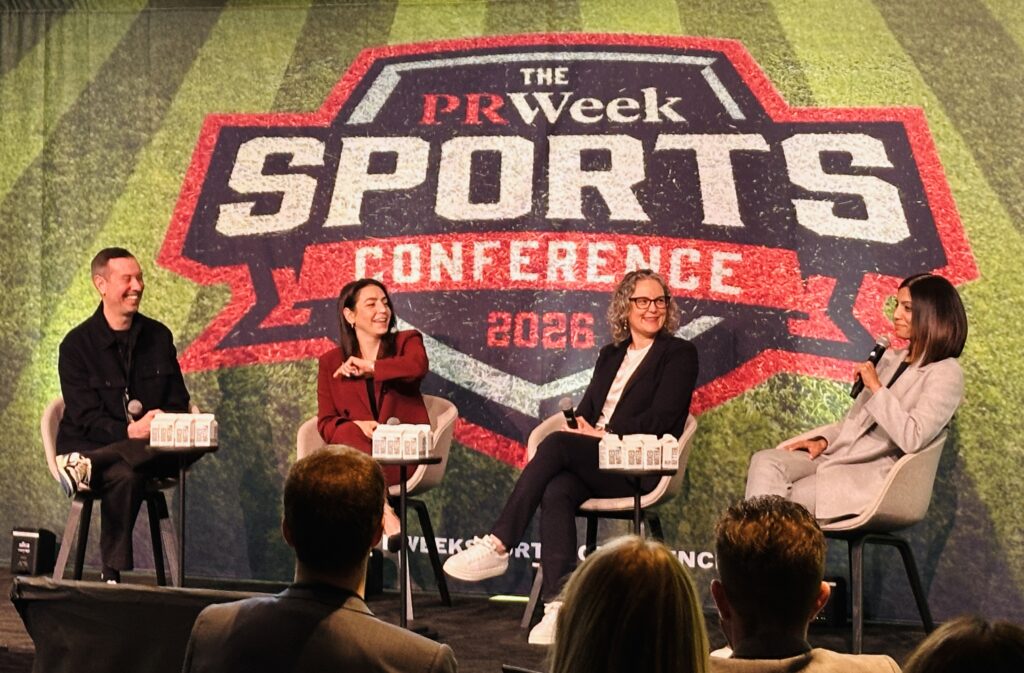
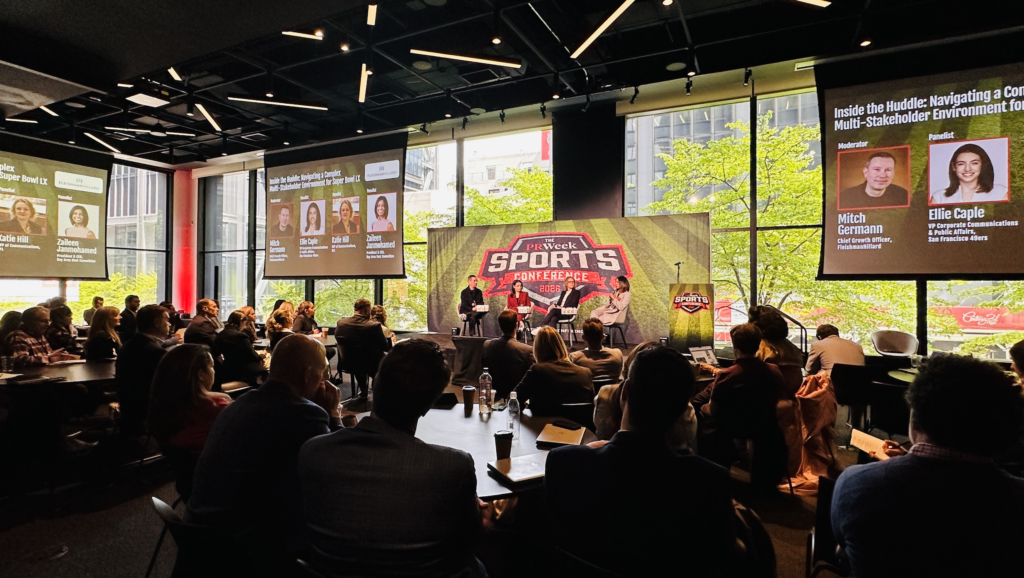
An integrated communications playbook is as good as the teams buying into it. That was a driving force behind the PRWeek Sports Conference session “Inside the Huddle: Navigating a Complex Multi-Stakeholder Environment for Super Bowl LX.”
Football’s main event brings together one of the most complex communications ecosystems in all of sports including a host committee, the NFL, the venue, sponsors, partners, local municipalities, civic leaders and the media. All are moving at lightning speed, merging on the host city to tackle communications challenges both planned and unpredictable. Aligning these varying voices and stories across different stakeholder audiences requires precision, trusted relationships and a shared vision for success.
Enter the panel’s sports leaders who put theory aside for an intimate look at the actual modern playbook that stood up to the forces inside one of sports communications’ biggest pressure cookers. What they made clear: success managing the intensity of game day and the preceding Super Bowl media week hinges on the culture built over months of close collaboration. As the World Cup heads to the Bay Area later this summer, that integrated playbook is about to be activated at an even larger scale.
Lessons Learned from Previous Big Games
“Comms and PR was an essential part of our strategy from very early on,” said Zaileen Janmohamed, President and CEO of the Bay Area Host Committee. She explained that the organization absorbed a great deal of intelligence from the group who worked on Super Bowl 50 ten years prior.
“I think the narrative that came out of that event wasn’t as strong or consistent as the 49ers or other teams wanted to see around the Bay,” Janmohamed said. “Which is why we put comms at the forefront of every single thing that we did this year.”
Building the Architecture
Mitch Germann, Chief Growth Officer at FleishmanHillard, also served as Head of Communications for the Bay Area Host Committee, positioning him at the center of coordinating across all three organizations. In this unified structure, the NFL drove global narrative and the integration of emerging voices into the league’s growing audience footprint. The San Francisco 49ers focused on community impact and ground intelligence. The Bay Area Host Committee owned regional stakeholder coordination across nine counties.
“Without clarity, things slip through the cracks,” said Katie Hill, SVP of Communications at the NFL. “You lose sight around corners. Your scenario planning isn’t going to be as strong.”
Hill painted a dizzying picture of the wide-ranging stakeholder ecosystem—including creators, elected officials, sponsors, reporters, broadcast partners—that brought home how many audiences need to be reached and pleased in a tight timeframe. “It’s about mapping out that whole ecosystem and then figuring out what information does each group need? What are their needs and wants? Who best owns that relationship? And then what’s the best tactic and the best timing to reach them?”
“World-class process leads to world-class outcomes.”
The Connective Tissue Between Teams
“There was no ego,” Janmohamed said of the integrated team structure. “It’s just a relentless focus on detail and process.”
“We felt that the game was going to live and die in people’s memory of what happened, not necessarily what actually happened,” said Ellie Caple, VP of Corporate Communications and Public Affairs for the San Francisco 49ers.
In order to mitigate potential issues, down to traffic and littering, the team engaged government and community leaders who became “pseudo-spokespeople” for the event, distributing ground intelligence and ensuring stakeholders felt prepared and informed.
“We really wanted to spend time talking about the philanthropic work that we were doing in the community, the economic impact of an event like this and then to talk about the stadium itself and the opportunities that come with having a stadium to really attract global events into the region. Those were the sort of narrative touchdowns for us.” Caple said.
Janmohamed also kept a north star of messaging simple: Uniting the Bay through Sport. One narrative repeated for months until stakeholders started repeating it back unprompted.
“We just kept hitting the same points. We talked about this unification of this region coming together all the time, building pride, connecting our communities and it got to be so consistent that all of these stakeholders then basically just repeated it back out. That’s when you know the messaging has resonated.” Janmohamed said.
Getting Ready for the Next Big Game
The Super Bowl communications challenge was solved well before game day with rock-solid infrastructure, scenario planning and genuine camaraderie among leaders willing to check ego at the door.
As the World Cup comes to the Bay Area this summer, this same playbook will be tested at an even larger scale—coordinating not just nine counties but multiple continents and audiences. The framework that proved effective in San Francisco is about to prove itself again.
For organizations managing stakeholder complexity, the takeaway is straightforward: build infrastructure before you need it.
 Jacob Porpossian