Employee Login

Enter your login information to access the intranet

Enter your credentials to access your email

Reset employee password

Article

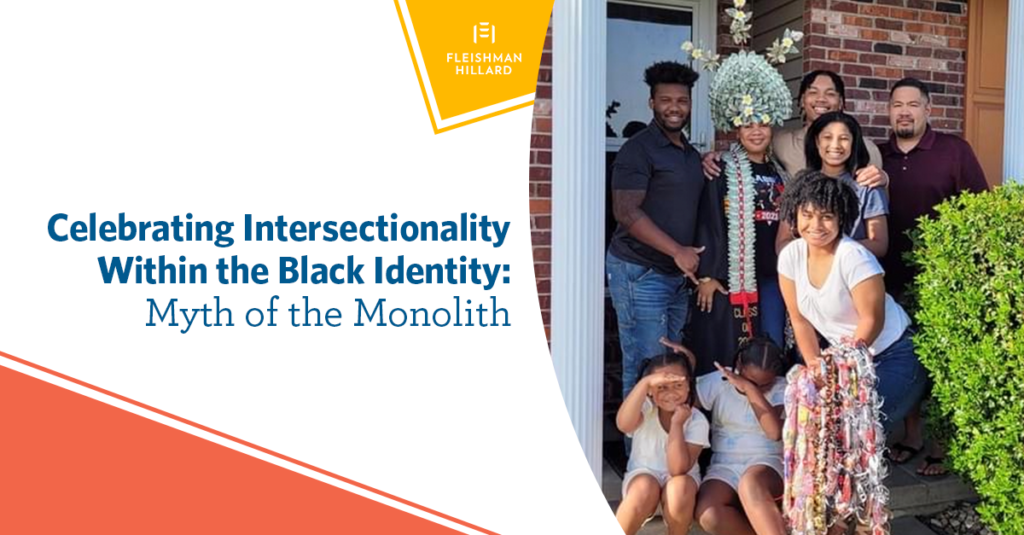
Celebrating Intersectionality Within the Black Identity

February 18, 2022

Classification of race and ethnicity is usually generalized to the following categories: Black, Asian, Hispanic, American Indians and White. When you’re biracial, these checklist groups are just a tiny fraction of the daily struggles you’ll encounter. Biracial individuals often feel part of both of their cultures and so are always asking themselves, “Am I enough?” In this piece, Popoai Tanuvasa-Lole, Alfred Fleishman Diversity Fellow, shares her perspective on being biracial in America.

Myth of the Monolith

Honestly, I didn’t think much about race growing up. I was one of two Black kids in my entire school, everyone else was white. Don’t get me wrong, it was very clear to me that I was different. But I didn’t really have an opinion on what I was and what I wasn’t. I was okay with operating in that default “other” category.

Right now, and this may change, I identify as a mixed-race Black person. When I went to college, it really changed how I was able to identify with being Black. Although Maryville University is a predominantly white institution (PWI), I’d never been in a place where there were so many Black people that looked so many different ways and sat in so many different intersections of the Black identity and life. For the first time, I felt truly loved and accepted. However, this new setting posed its own set of challenges.

I had a lot of folks who couldn’t tell “what I was” at first glance, and I had to deal with ethnic ambiguity that I’d never had to deal with before. And this put me in the situation of having to find out what language I wanted to use to define myself. Sometimes I felt like a conditional Black person, and I think there are some mixed-race Black folks who have a lot of anger about that. I still struggle with it today. I’ve experienced many people both implying and saying, “Well, you’re not Black and you’re not Samoan enough.” And, while I feel very connected to both cultures, I sometimes feel as if I don’t belong to either.

But I’ve also come to understand that the idea of being “authentically” Black is literally a response to things like the one-drop rule and the tie between white supremacy and how we define race and mixed race. So, this reclamation of what it means to be Black is a byproduct of racism. But (and there’s a big but), I’d be remiss to not acknowledge that there are privileges that I have that other non-mixed Black people don’t. I am lighter skinned. I might not be white-passing, but I can pass as something else and because of this, I have been treated as an “exception to the rule” multiple times.

It’s weird to be labeled this way, and I’ve been on the “identity struggle bus” for the better part of my life. But I wouldn’t have it any other way; it’s what makes me who I am. And I’m not an exception. I think that has really made me embrace this idea of I am Black. I’m mixed, but I’m Black.

And being Black is nuanced. It’s beautiful. It’s a privilege in its own right.
Article

Accessibility at Work: Cultivating a Culture of Disability Inclusion

February 14, 2022

Over the past decade, many industries have begun creating products and services from an “accessibility-first” perspective: one that considers the needs of as many people as possible from the start. This approach prioritizes equitable experiences for users, including the estimated 1.2 billion persons with disabilities across the world. As communications practitioners, it is vital to ensure that materials are designed with a diverse audience in mind.

However, to cultivate a true culture of accessibility, we must not merely consider the impact of products and services on users. We must push beyond what we create to look at who we are as creators to open meaningful dialogues concerning our own workplace environments. When communications departments fail to maintain a culture that respects and values people with disabilities, this fails us all.

Here are three ways we can all support a culture of disability inclusion in the workplace:

Ramp up disability inclusion education

The path to creating an accessible environment for individuals with disabilities begins with developing a workplace culture that is founded in and actively practices inclusive values. Through top-down promotion of accessibility education, all employees can gain deeper insight into the experiences and needs of others.

Training and education practices need not be limited to official seminars or mandated online programs. Initiatives such as creating inclusive language and design guides and inviting speakers on disability and accessibility topics can enrich both the work we create and those who create it. Other activities like holding brainstorm sessions, with the intent to identify strategies to counteract disability biases, also support active learning.

Additionally, partnerships and collaborations offer valuable opportunities to support accessibility education and development. FleishmanHillard’s membership within The Valuable 500 – a network of companies committed to supporting disability inclusion – strengthens our capacity to develop and act upon accessible strategies within business.

Overall, educational programs and strategies must emphasize appropriate workplace behavior, how to uphold core accessible values in business and the process for reporting behavior that violates these values.

Promote accessible hiring practices

Creating an inclusive recruitment program requires consistent actions to combat hiring biases and proactively include those with disabilities. While inclusive hiring is founded in the domain of human resources professionals, it is ultimately a collaborative effort.

First, accessible job descriptions are a must. The language used within these descriptions reflect the values of the hiring organization and informs the applicant’s perception of the workplace culture. Where possible, communications professionals must advocate for up-to-date disability inclusion statements and accessible language in the role description. These should be regularly reviewed and revised as language conventions evolve.

Additionally, practices such as posting positions on job boards or attending career fairs that specifically support people with disabilities facilitates equitable recruitment. Furthermore, ensuring hiring teams are comprised of people with diverse identities and perspectives introduces a higher level of objectivity into this process. Communications professionals should use their position within a hiring team to actively support accessible practices, to the extent possible given their role within an organization.

As an example of such efforts, FleishmanHillard has partnered with the International Paralympic Committee and other Omnicom agencies to launch #WeThe15 – a decade long campaign that aims to further access to core human rights such as employment, education and healthcare for the 15% of the world with disabilities. An active commitment to disability inclusion during hiring is a critical part of breaking down barriers that people with disabilities face.

Establish and support employee resource groups

Everyone deserves a space where they feel heard and respected for their most authentic selves. Employee Resource Groups (ERGs) are voluntary groups, created with the purpose of supporting an inclusive environment, comprised of and led by employees who share a common identity or who are allies.

People with disabilities can form connections with individuals across entire organizations that may not otherwise be organically developed. These connections foster a sense of belonging within the workplace and bolsters employees’ ability to create diverse, groundbreaking work through collaborations.

At FleishmanHillard, our DisAbility Community ERG creates a space for people with disabilities and allies to find support and engage in open communication. Through enabling productive discussion about inclusive practices and the lived experiences of people with disabilities, this group has a unique and active impact on our communications work.

Conclusion

Each of these steps bring us closer to creating a culture of accessibility. However, at FleishmanHillard, we recognize the need to continuously improve and adapt our strategies on the path to inclusion. Through regular review and dialogues concerning these practices, communications professionals can foster disability inclusion around the world.

Article

Connecting with Community – The Expansion of FH4Inclusion to Support North Carolina Nonprofits Note In the Pocket and Second Harvest Food Bank

February 7, 2022
By Cody Norman

Local nonprofits play a significant role in transforming communities into healthier, stronger and more equitable places to live. The ongoing pandemic, though, introduced significant challenges, with more than 70% of North Carolina organizations unable to fully accomplish their missions in an all-virtual environment.

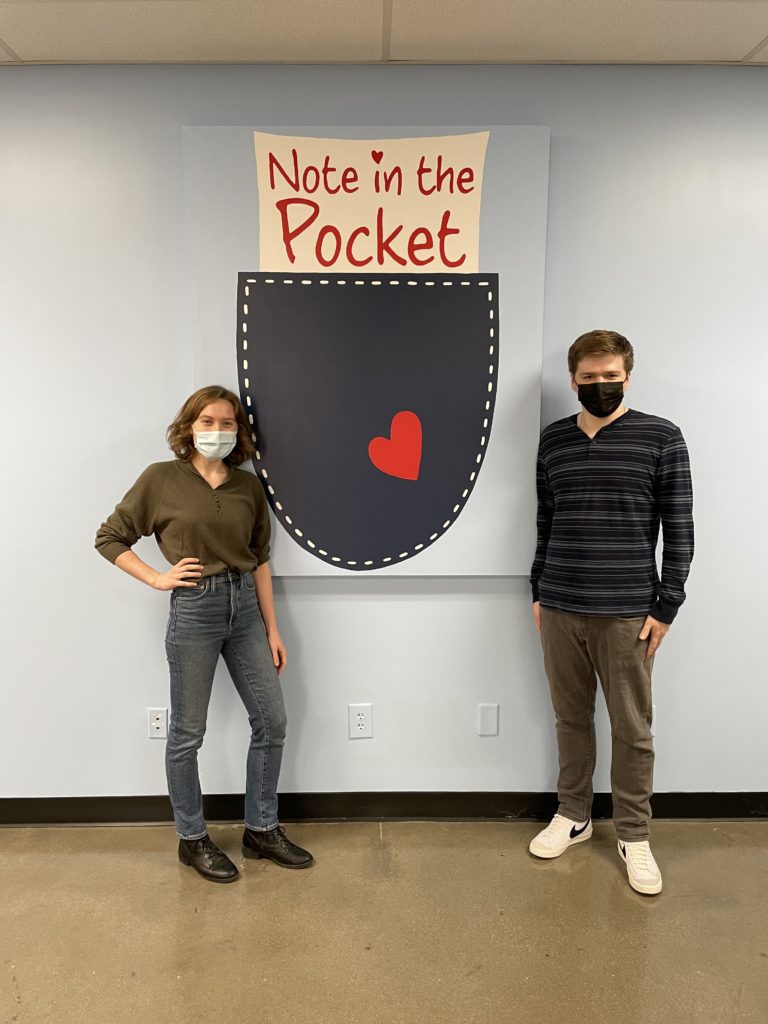
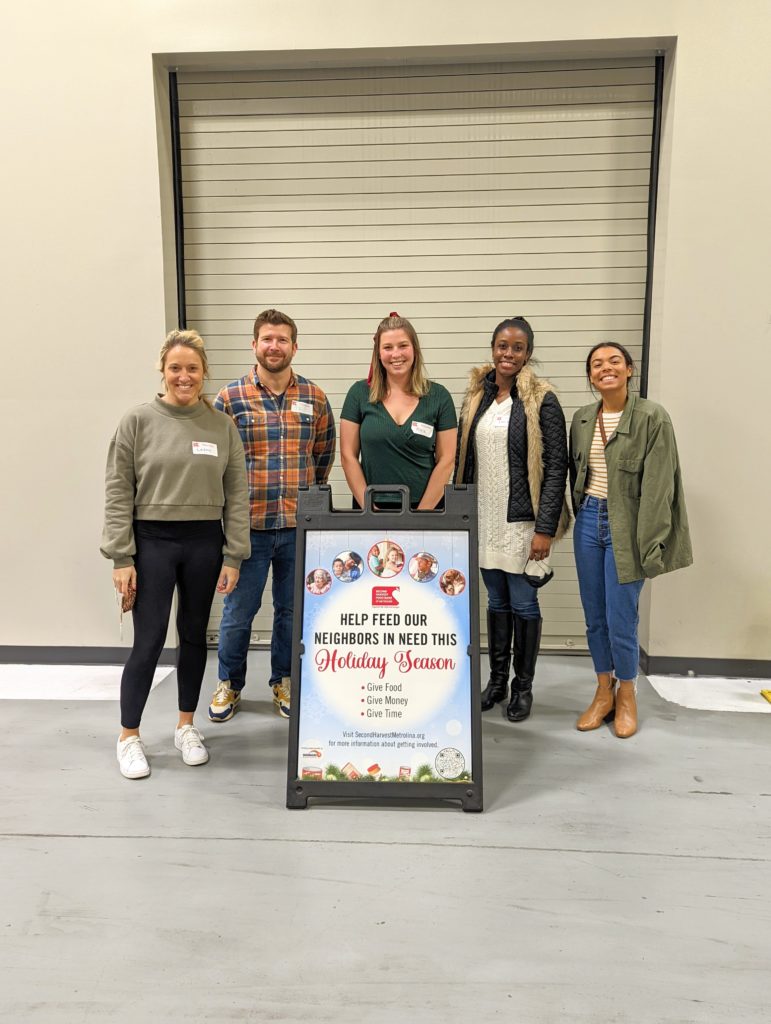
Our FleishmanHillard team in North Carolina strengthened community ties in Charlotte and Raleigh by working closely with two nonprofits – Note in the Pocket (NITP), whose mission is to provide clothing to low-income and homeless children in Wake County, and Second Harvest Food Bank of Metrolina, an organization dedicated to nourishing the Charlotte community by collecting food and household items.

Deepened Partnership Through FH4lnclusion

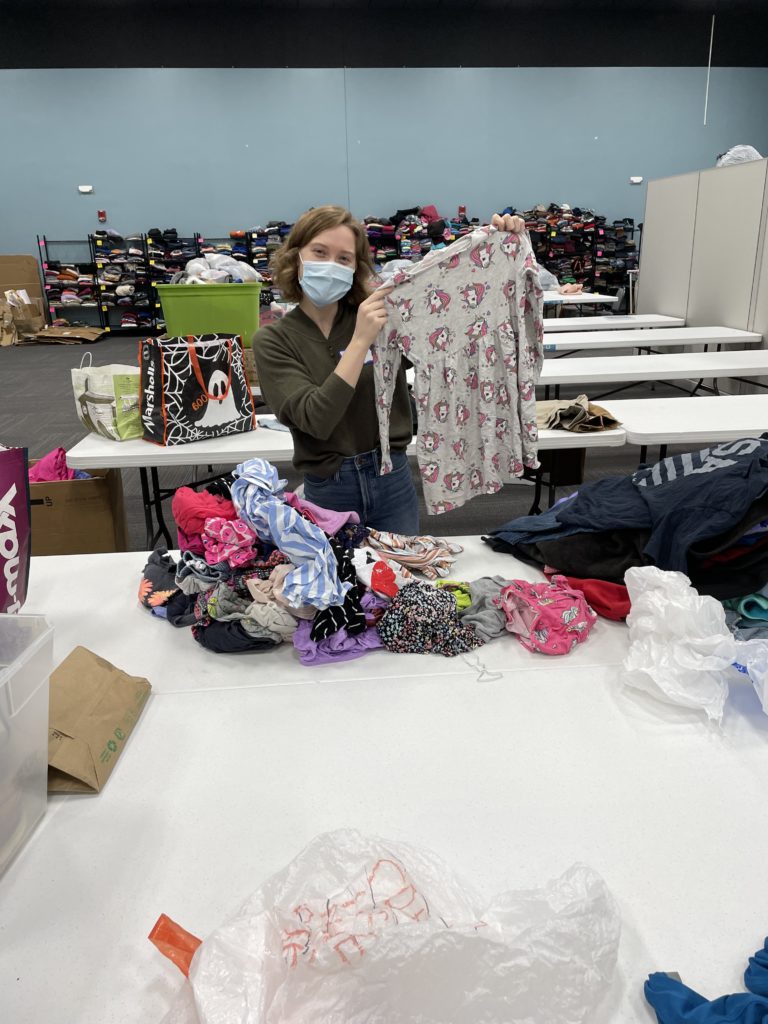
NITP works with the Wake County Public School System’s social workers and case managers to identify students in need and prepare seasonal wardrobes customized to each child’s specific sizes and styles. After volunteering with NITP several times to sort clothing donations, we were eager to deepen our support by applying our public relations skills and resources on their behalf.

In March, we launched a six-week media relations campaign to amplify the organization’s annual fundraiser, the Socks & Undie 5K Rundie. Our team developed media materials, sent customized pitch notes and coordinated interviews with local broadcast media, which garnered 20 earned media pieces and more than 9.48 million impressions. Our work helped NITP drum up record-breaking results, with more than 800 collective supporters (including registrants, volunteers and sponsors) and $115,000 in donations, which is equivalent to clothing 1,000 children.

“Partnerships are a vital part of achieving our mission. Without the support of volunteers, referral agencies, donors and local businesses, we would not be able to clothe thousands of children each year,” shared Sarah Caldwell, development director of NITP. “We are extremely grateful to the team at FleishmanHillard for lending their continued support and thank them for helping us clothe with dignity and love!”

Remote Holiday Food Drives

As the end of year holiday season approached, the team collected food items throughout November to support local food banks. These donations, which totaled 250 meals at Wake County’s Food Bank of Central and Eastern North Carolina and 175 pounds of goods at Second Harvest Food Bank of Metrolina (SHFB), not only helped the organizations prepare for the holidays, but also supported their hundreds of partner agencies.

“All food and non-food items are distributed to our 950+ partner agencies,” said Betsy Van Dyne, volunteer coordinator of SHFB. “This includes soup kitchens, homeless shelters, low-income daycare centers and emergency pantries. We could never do all that we do without the help of each and every volunteer.”

In-Person Volunteering

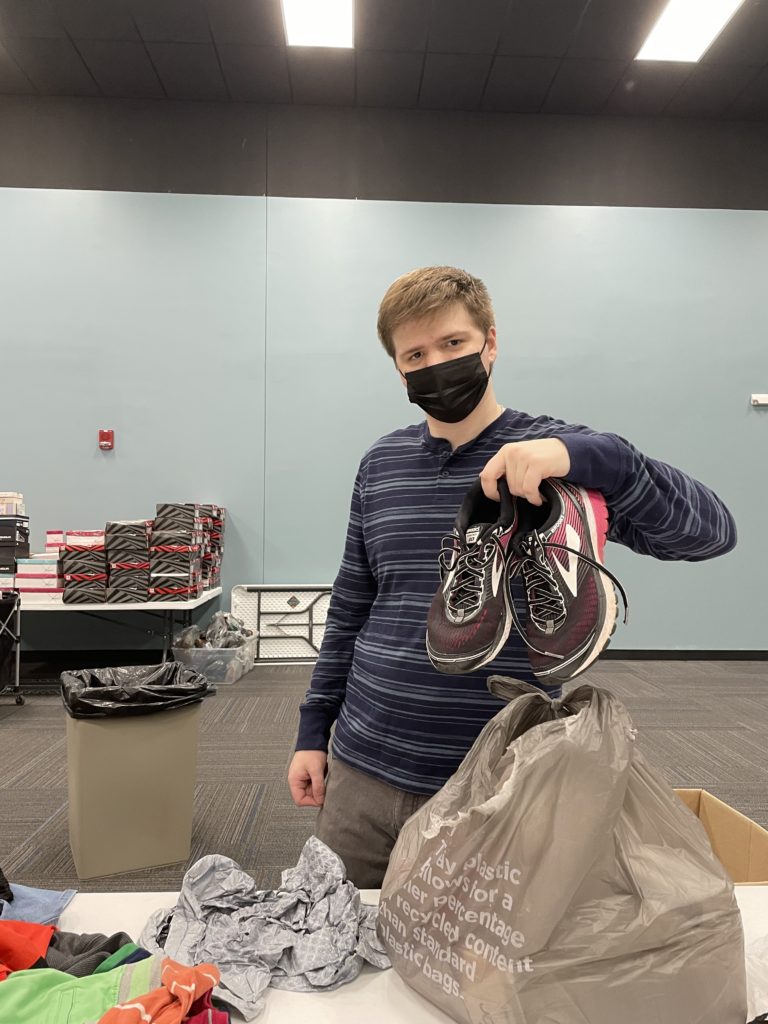
FleishmanHillard in North Carolina decided to end 2021 with in-person volunteering at the organizations we engaged with earlier in the year. The Raleigh team visited NITP’s new warehouse location, where we sorted and processed clothing donations for children and families.

“It’s been so fulfilling to grow our partnership with Note in The Pocket over the last three years,” shared Elizabeth Comtois, senior account executive at FleishmanHillard. “I’m thankful to FleishmanHillard for giving us the space to lend our time and expertise to do work that matters personally to us.”

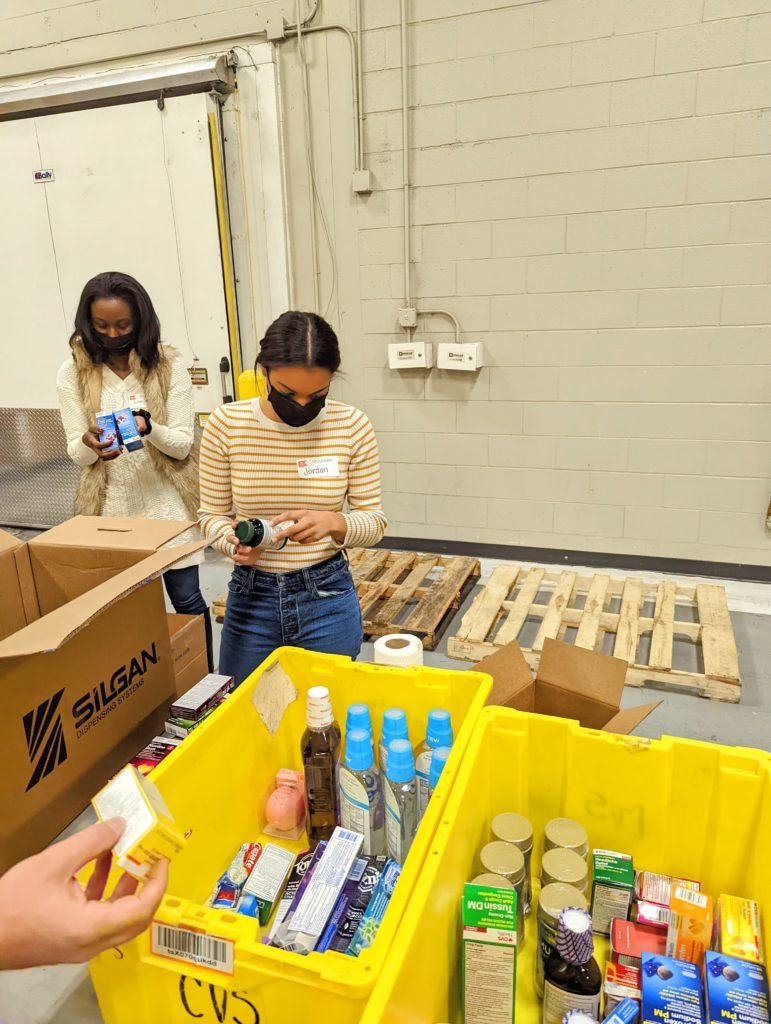
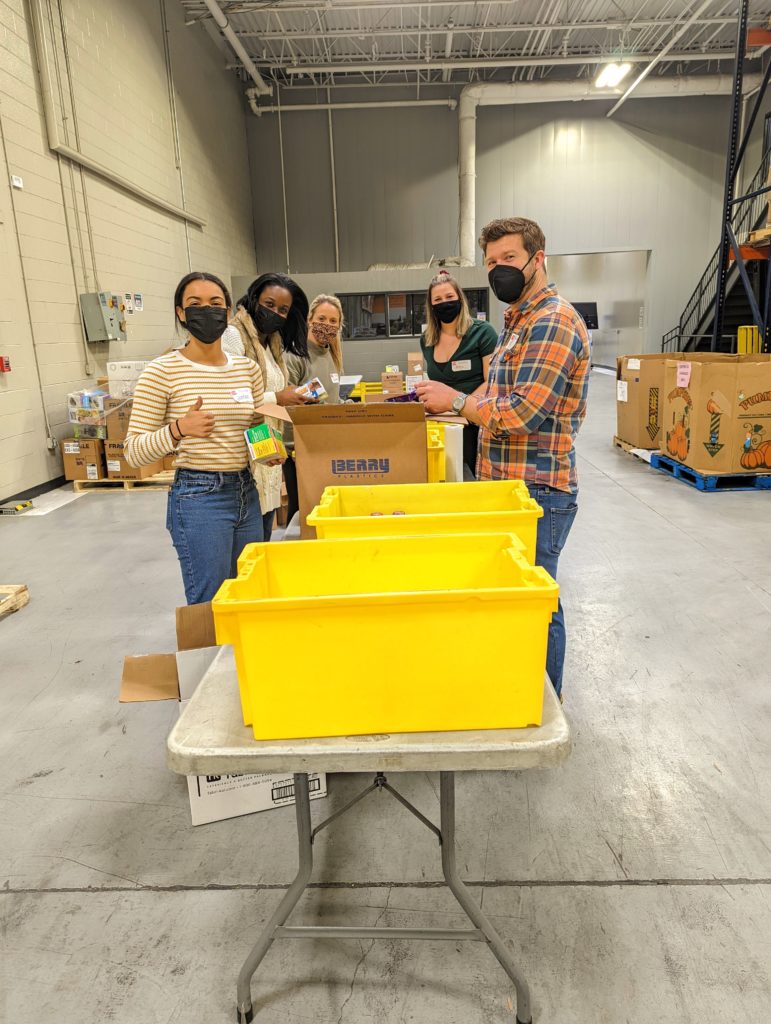
The Charlotte team returned to SHFB to sort donations for neighborhoods in need, where we helped unbox, organize and distribute items donated from major retailers.

“A volunteer can sort approximately 900 pounds of food in a three-hour shift. This translates into 750 meals. FleishmanHillard had five volunteers, so you could say they provided the equivalent of 3,750 meals to our community,” Van Dyne said.

“It’s really exciting to build relationships with these organizations,” added Jordan Williams, assistant account executive at FleishmanHillard. “Between our food drives and in-person opportunities, it’s been great to support such meaningful causes in our communities.”

As we plan our efforts in 2022, FleishmanHillard in North Carolina is excited to keep growing our nonprofit partnerships and act on the various ways we can give back to our hometowns.

Article

FleishmanHillard Earns Top Score in Human Rights Campaign Foundation’s 2022 Corporate Equality Index, Chosen as a 2022 “Best Places to Work for LGBTQ+ Equality”

January 27, 2022

FleishmanHillard earned a score of 100 on this year’s Human Rights Campaign Foundation’s Corporate Equality Index (CEI), the nation’s foremost benchmarking survey and report measuring corporate policies and practices related to LGBTQ+ workplace equality, leading to the agency being named one of the 2022 “Best Places to Work for LGBTQ+ Equality.” This marks the fifth consecutive year that FleishmanHillard received top marks score resulting in a spot on the list.

“We’re honored to be ranked as one of the ‘Best Places to Work for LGBTQ+ Equality’ for the fifth consecutive year,” said Adrianne Smith, chief diversity and inclusion officer at FleishmanHillard. “This past year, we’ve continued to streamline our DE&I efforts with a renewed focus on our people ensuring everyone has the necessary resources and support to thrive. This recognition reaffirms FleishmanHillard’s commitment to building an inclusive workplace for our mission to become the most inclusive agency in the world.”

FleishmanHillard joins the ranks of over 840 major U.S. businesses that also earned top scores. The results of the 2022 CEI showcase how U.S.-based companies are not only promoting LGBTQ+-friendly workplace policies in the U.S., but also how the 56% of CEI-rated companies with global operations are helping advance the cause of LGBTQ+ inclusion in workplaces abroad.

The CEI rates companies on detailed criteria falling under four central pillars:

  • Non-discrimination policies across business entities; 
  • Equitable benefits for LGBTQ+ workers and their families; 
  • Supporting an inclusive culture; and,
  • Corporate social responsibility. 

“When the Human Rights Campaign Foundation created the Corporate Equality Index 20 years ago, we dreamed that LGBTQ+ workers—from the factory floor to corporate headquarters, in big cities and small towns—could have access to the policies and benefits needed to thrive and live life authentically,” said Jay Brown, Human Rights Campaign senior vice president of Programs, Research and Training. “We are proud that the Corporate Equality Index paved the way to that reality for countless LGBTQ+ workers in America and abroad. But there is still more to do, which is why we are raising the bar yet again to create more equitable workplaces and a better tomorrow for LGBTQ+ workers everywhere. Congratulations to FleishmanHillard for achieving the title of ‘best places to work for LGBTQ+ equality’ and working to advance inclusion in the workplace.”

View the Corporate Equality Index 2022 and the complete list of 2022 top workplaces here.

Article

FleishmanHillard Earns Top Rating in 2022 Human Rights Campaign Equidad MX Report, Chosen as a “Best LGBTQ+ Workplace”

January 12, 2022

ST. LOUIS, January 12, 2022 — FleishmanHillard earned the top score of 100 again on this year’s Human Rights Campaign (HRC) Equidad MX: Global Program for Labor Equity report, leading to the agency being named a 2022 “Best LGBTQ+ Workplace.”

The HRC Equidad MX program is designed after HRC’s Corporate Equality Index — the LGBTQ+ workplace equality benchmarking survey in the U.S. To obtain a score of 100, companies must demonstrate established policies, programs and procedures that ensure fairness to LGBTQ+ people in the workplace. This year’s report assessed major businesses in Mexico on three core pillars of LGBTQ+ inclusion: 1) adoption of nondiscrimination policies, 2) creation of employee resource groups or diversity and inclusion councils, and 3) engagement in public activities to support LGBT inclusion. 

This year, FleishmanHillard joins the ranks of 242 major employers who have a nationwide reach across Mexico. This recognition speaks to the agency’s ambition to become the most inclusive communications agency in the world.  

“Inclusive workplaces help morale and help a business’s bottom line,” said Keisha Williams, director, HRC Foundation’s Workplace Equality Program. “When employers want to attract and retain the best workforce, everyone wins. It’s not only the right thing to do, it’s the best business decision. We celebrate this year’s honorees for showing the way forward in adopting workplace policies and practices to foster LGBTQ+ inclusion across Mexico.” 

View the complete list of 2022 top workplaces here.

Article

FleishmanHillard Grows FH4Inclusion Efforts in Partnership with My Block, My Hood, My City in Chicago

January 11, 2022

FH4Inclusion is FleishmanHillard’s global pro bono and volunteer initiative, which is grounded in a commitment to create an inclusive society where all people feel valued, their differences are respected and their basic needs are met.   

The FleishmanHillard office in Chicago acted on that promise by partnering with My Block, My Hood, My City (M3), a nonprofit organization whose mission is to “inspire youth, empower communities and build a better world one block at a time.” Its initiatives encourage Chicagoland youth to step outside their comfort zones and explore new and different cultures, communities and opportunities.

M3 founder, Jahmal Cole, shared his story with FleishmanHillard Chicago at the beginning of 2021. It was evident from his passion, experience and authentic delivery that creating an inclusive community is the driving force behind his work at M3 – and we were ready to get involved.

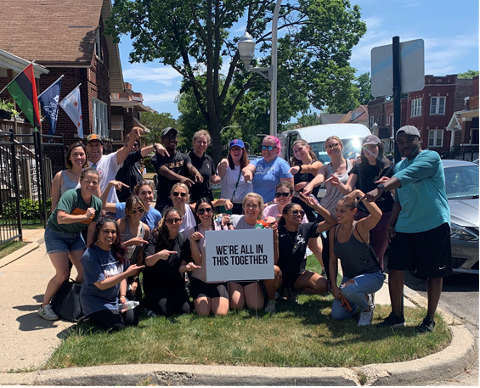
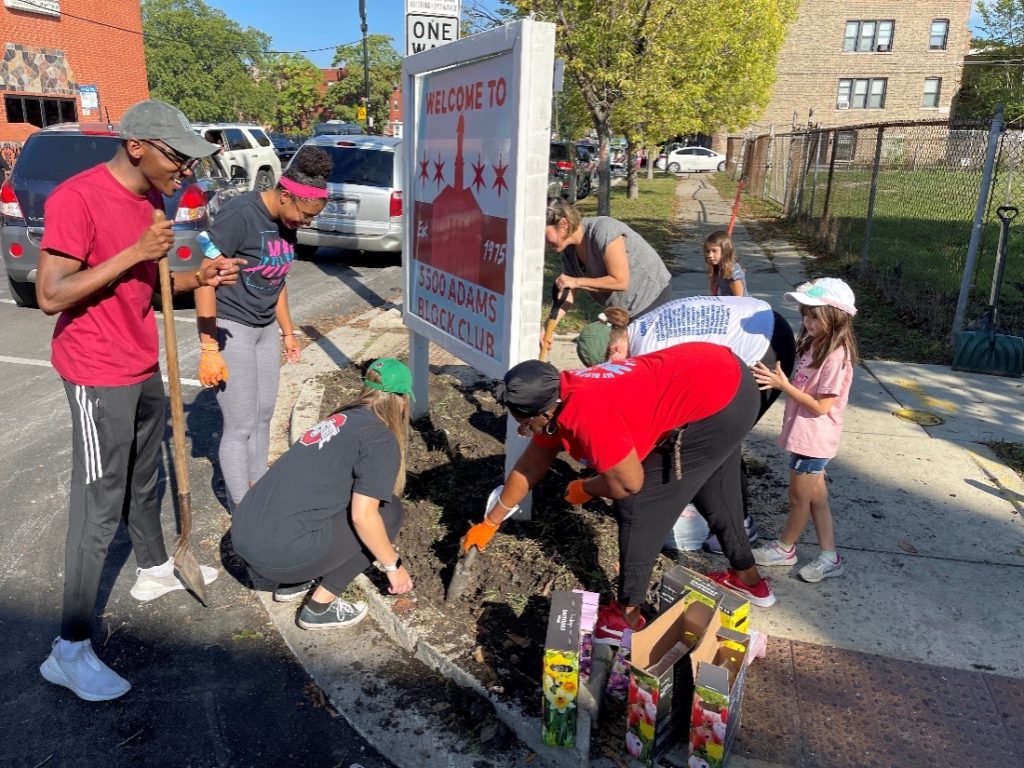
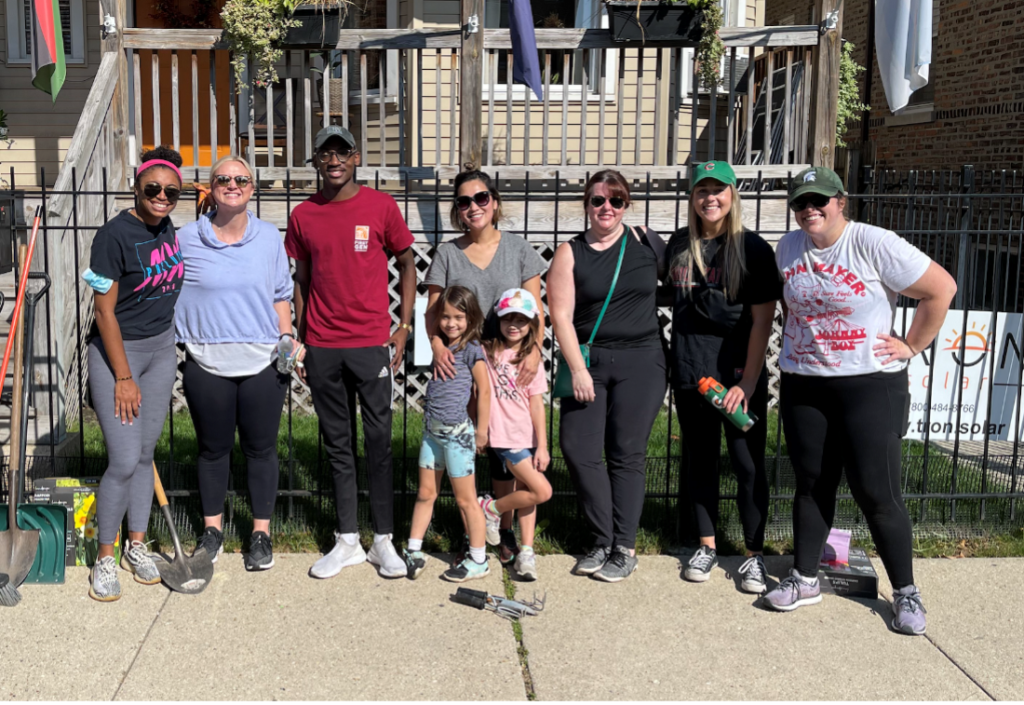
This past summer, Chicago colleagues volunteered with M3’s “One Block at a Time” program. Through this program, we collectively serviced our surrounding community by tending flower gardens, cleaning streets and fostering relationships with neighborhood leaders. Later in the fall, a group of our Chicago employees revisited the same neighborhood block to plant additional flowers in honor of our late friend and colleague, Martina Berry. As a Chicago native, Martina was proud of FleishmanHillard Chicago’s partnership with M3 knowing the visible and impactful effort the organization makes to the city’s neighborhoods. With her family’s blessing, we made a financial contribution to M3, in addition to our volunteer effort, in her memory.

“The energy and commitment that M3 has for Chicago communities is magnetic, and it is an honor to partner with such a purpose-driven organization,” said Anna Marie Taylor, senior account executive, FleishmanHillard. “Martina Berry was special to so many of us, so to commemorate her life of kindness and appreciation through our ongoing work with this organization is an experience I am grateful to share alongside colleagues.”

Our work with M3 is just beginning. We look forward to a successful 2022 as we continue to collaborate with the leaders of M3 to give back in the name of hope, love and opportunity.

Article

No Flights Needed: How FleishmanHillard Creates Virtual Expatriate Experiences For Up-and-Coming Talent

December 17, 2021

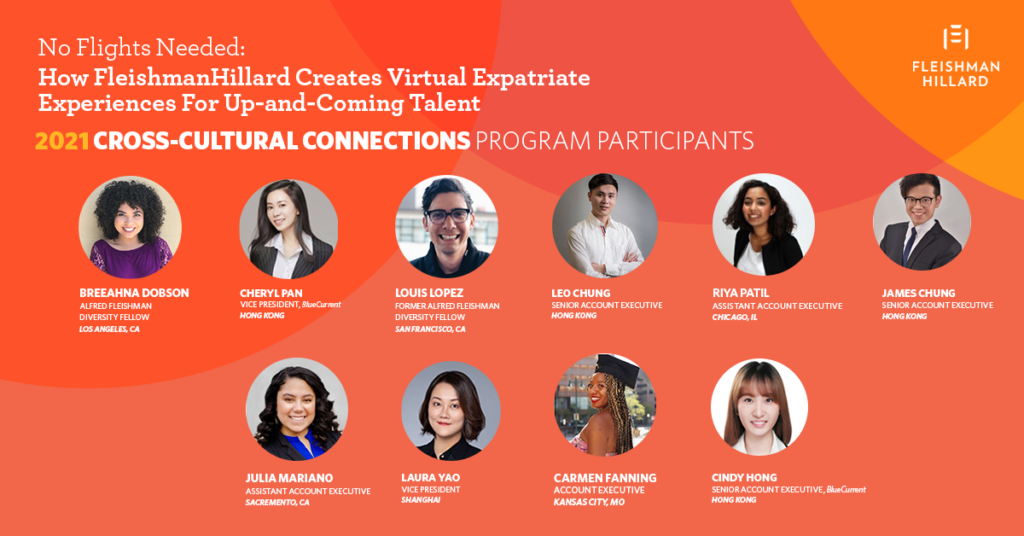
Expatriate assignments are well-established, pivotal growth experiences that shape talented individuals into global leaders — not something many encounter every day. But this year, FleishmanHillard’s diversity fellows did. After an impressive period of growth and expansion, FleishmanHillard bolstered its Alfred Fleishman Diversity Fellowship program, a U.S.-based internship for diverse young talent, with the Cross-Cultural Connections program, a virtual expatriate experience for industry up-and-comers.

Fellows who opted in were paired with peers from Asia-Pacific on a project of their choosing for three months. These unique collaborations gave participants an all-encompassing experience with a glimpse at PR work beyond their current borders. 

The program was designed to help fellows and their partners:

  • Understand and appreciate cultural differences
  • Learn global PR, communications and media best practices
  • Experience the scale of an international network
  • Foster growth and connections outside their everyday teams

This year’s Cross-Cultural Connections participants include:

We met with a few to learn more through a little Q&A. These are the highlights:

What excited you about the program?

I joined the program because my role as a fellow in the Los Angeles area was 100% focused on external client work. I didn’t have a lot of connections to our internal network or DE&I-related work. My client work is primarily on a national scale, so I was looking for an opportunity to work on a global scale.” – Breeahna Dobson, Alfred Fleishman Diversity Fellow, Los Angeles

I wanted to explore an overseas working culture, and to connect with our U.S. colleagues.  I saw that there are many differences, but also that we have things in common.” – Leo Chung, Senior Account Executive, Hong Kong

“I joined the program mostly because I wanted to branch out of my traditional office work and meet other people outside of the country. I knew that this program was the first of its kind and I thought it would be cool to participate.” – Julia Mariano, Assistant Account Executive, Sacramento 

How did the program build your experience with international colleagues?

This is the first time I have had a chance to work with someone from a global office.” – Julia Mariano, Assistant Account Executive, Sacramento 

Carmen Fanning studied abroad in college, but this program was her first opportunity to partner with people from other countries in a work setting. 

For Cheryl Pan, who has extensive international work experience, the program offered a chance to form deeper connections. 

My work with BlueCurrent and FleishmanHillard has given me the opportunity to work with colleagues across the U.K. and the U.S. and I have always benefited from that work. However, this program was an opportunity to do a deep dive, connect with colleagues in another part of the world, and understand their culture by working on a passion project together.” – Cheryl Pan, Vice President, BlueCurrent Hong Kong

How did you decide your project’s focus?

Breeahna and her partner Cheryl studied the intersection of tech and diversity and inclusion. Coming from two major bay areas, Breeahna from the San Francisco Bay Area and Cheryl from the Hong Kong Bay Area, they presented a ‘bay-to-bay’ comparison between the two regions. 

DE&I is discussed a lot in tech and the industry plays a big role, so we wanted to take a closer look at what they think and see if their perspective would be helpful in our future work.” Breeahna shared her key takeaway, “I learned that as a California Bay Area native, our DE&I initiatives are typically focused on inclusivity, LGBTQ rights, the gender gap, and People of Color. However, in Hong Kong, their DE&I focus in on gender equality and rights. LGBTQ topics are taboo. I learned a lot about the Chinese culture, especially in Hong Kong, and what is driving their conversations about DE&I initiatives.” – Breeahna Dobson, Alfred Fleishman Diversity Fellow, Los Angeles

Cheryl and Breeahna met with colleagues in the tech industry to hear their perspectives first-hand, which taught them an important lesson. 

The biggest takeaway was that context really matters. The historical backgrounds of the two bay areas are quite different, so the DE&I focus in each area is different – rooted in both culture and history. So, if we want to take this to our clients in the future, we need to know the cultural and social context, so that we can provide specific and accurate counsel.” – Cheryl Pan, vice president, BlueCurrent Hong Kong 

Julia and Leo examined the different social platforms used in the U.S., China and Hong Kong. 

When there are political issues between countries, I learned how our colleagues in the U.S. receive news and messages from social media, and how we in Hong Kong and China see our own news. We thought we were using the same apps, but actually, we are in a completely different position when we see information.” – Leo Chung, Senior Account Executive, Hong Kong

I thought it was interesting that a platform like LinkedIn is not used that much in China for marketing, but in the U.S., we use it for thought leadership and ads. Our conversations helped uncover these differences.” – Julia Mariano, Assistant Account Executive, Sacramento

As issues surrounding mental health and well-being continue to take center stage across the globe, many of our program participants focused their research on the importance of work-life balance. 

A lot of people think work-life balance is just shutting off your computer, but there are things that you can do to be productive even in your time off. I learned that activities that you enjoy, like working out, along with getting enough sleep are what give you energy.” – Carmen Fanning, Account Executive Kansas City

“Learning about this topic inspired me to think about how I can add more balance to my schedule. For example, now I pay more attention to scheduling, and using my holidays and annual leave to help me get rest.” – Leo Chung, Senior Account Executive, Hong Kong 

How did you manage work across different time zones?

Working in essentially opposite time zones was not without its challenges. However, the teams found a way to make it work. Cheryl and Breeahna took advantage of the time difference, realizing they could each work while the other was sleeping. When asked about working across two vastly different time zones, Leo Chung said, “I think it is about being inclusive. We were willing to invest the time to build that relationship with each other because we know that we each had a lot of work to do outside of this project, so it was important that we invested our own time to work together.” –  Leo Chung, Senior Account Executive, Hong Kong

How did this experience shape your view of FleishmanHillard’s global network? 

Sometimes it is easy get stuck in a U.S. mindset, but we are global firm. I also didn’t realize that as a global agency we have a big impact around the world, and that things are just as busy and robust in our global offices as they are in the U.S. and that was great to see.” – Carmen Fanning, Account Executive Kansas City, MO

This project opened my eyes to the plethora of resources available across our network. There are networking opportunities, and opportunities to connect to others on a global scale. Often, we are just doing our work and we don’t get a chance to see all the global connections and the options that they bring. I want to take advantage of that more as I grow my career at FH.” – Breeahna Dobson, Alfred Fleishman Diversity Fellow, Los Angeles

The project made me think deeper about what it really means to be the most inclusive agency in the world, and how it is reflected in our daily lives. The way Breeahna and I worked together was so smooth because we respected one another, and we learned from one another. We inspired each other because of our different perspectives. This inclusive culture in our agency is valued by everyone and it is reflected in the different aspects of our work experiences, personal connections, and interactions around the world.” – Cheryl Pan, Vice President, BlueCurrent Hong Kong 

We look forward to future iterations of our Cross-Cultural Connections program. No matter how it evolves, it will remain dedicated to connection, inclusivity and growth opportunities for our firm’s future leaders.

You can learn more about openings in our Alfred Fleishman Diversity Fellowship program by visiting our careers page here

Article

Building socioeconomic equity in the workforce

December 7, 2021

Is meritocracy a myth? In the UK, economic inequality is endemic, but we often make peace with that by convincing ourselves that it is okay because equality of opportunity exists. But is that really the case? To unpick this question, FleishmanHillard UK convened a lively and insightful panel with Saeed Atcha MBE DL, CEO of […]

The post Building socioeconomic equity in the workforce appeared first on United Kingdom.

Article

FleishmanHillard Earns Top Global Recognition — Wins Network of the Year, Championing Diversity at ICCO Global Awards 2021

December 2, 2021

ST. LOUIS, December 2, 2021 — FleishmanHillard’s winning streak continues, earning the Network of the Year and the Championing Diversity Award at this year’s ICCO Global Awards. This builds on the honors heaped on the agency, which took home Global Agency of the Year at both the Campaign and PRovoke Global SABRE Award ceremonies earlier this year.

  • FleishmanHillard (Network of the Year)
  • FleishmanHillard, “Most Innovative Diversity, Equity & Inclusion Initiative” (Championing Diversity)

FleishmanHillard’s specialty brand Methods+Mastery also took home a win in the Strategy and Evaluation in a Campaign category.

Presented by the International Communications Consultancy Organisation (ICCO), the ICCO Global Awards program rewards excellent professional achievement in public relations and communications campaigns. Submissions are reviewed by an international panel of PR practitioners. Work is judged based on its global impact.

Winners were announced during the virtual ceremony on December 2. View the complete list of winners here.

Article

FleishmanHillard Partners With Ascend to Fight for AAPI Inclusion

November 8, 2021

This past March we saw the xenophobia and bigotry exacerbated by the COVID-19 pandemic come to a deadly and tragic head when a man in the Atlanta area murdered eight people, six of whom were women of Asian descent. This horrific attack came during a time of increased reports of anti-Asian racism and violence as we continued to grapple with the pandemic. Following this violence, companies, politicians, advocates and thought leaders called for support of the Asian American and Pacific Islander (AAPI) community, with many issuing statements condemning anti-Asian hate. This incident brought the festering racism directed toward the AAPI community to the forefront, increasing media coverage and interest in AAPI issues. 

Members of the AAPI community experienced a number of emotions following the shootings in Georgia — heart-wrenching sadness, furious anger — but also a sense of helplessness. So, when the opportunity arose for FH4Inclusion and True MOSAIC to work with Ascend, the largest nonprofit Pan-Asian organization for business professionals in North America, many colleagues and I immediately raised our hands and volunteered our time. From fellows to senior vice presidents, counselors across our offices in San Francisco, Chicago, Detroit, Boston, New York and more wanted to help. In addition to counseling Ascend on its overall messaging and branding at a time when the organization was receiving heightened media interest, we came together to provide traditional media relations support for two of Ascend’s key initiatives. 

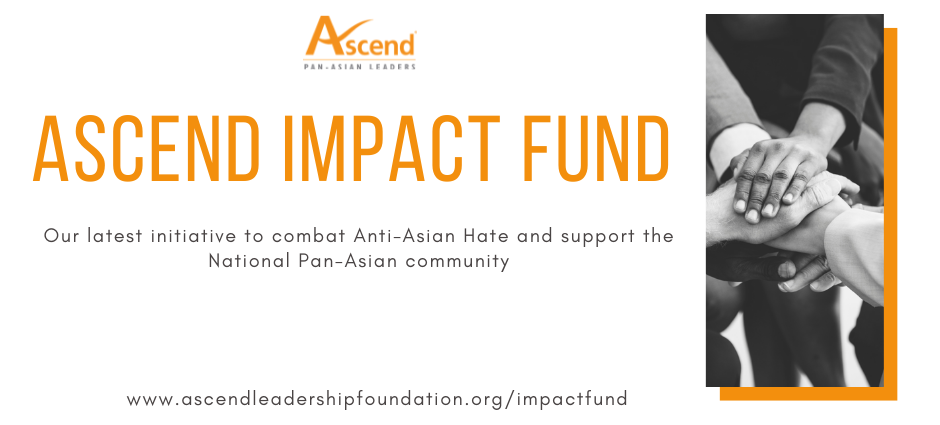
To raise awareness of the history and prevalence of anti-Asian racism, Ascend created the Impact Fund. We developed the launch strategy and press materials in collaboration with the six inaugural Fund donors to introduce the program that will expand advocacy, allyship, education and community engagement to create sustainable change.

A graphic describing the Ascend Impact Fund, which was developed to put a stop to hate crimes against AAPI persons.

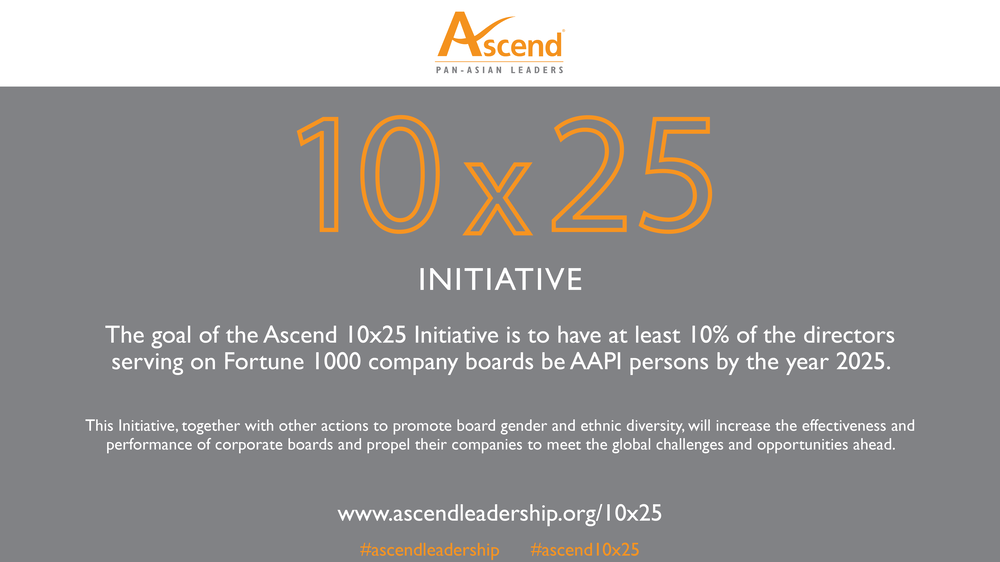
In order to increase the representation of AAPI leaders on Fortune 1000 boards to 10% by 2025, Ascend also launched the 10X25 Initiative. Our team worked closely with Ascend to plan out the timeline and amplify this announcement through traditional media relations and social media, which included developing a media kit partners could use to promote it. At launch, the initiative was shared by several notable partners, raising awareness and encouraging other companies and organizations to commit to this goal. We also made recommendations to Ascend on the layout of the 10X25 Initiative landing page to increase website traffic from media, partners and supporters, as well as advised on how to create a consistent cadence of communication in order to keep the spotlight on this goal through 2025.

A graphic explaining Ascend's 10x25 Initiative, which aims to increase the number of AAPI persons on company boards by 2025.

“It was an honor to work with Ascend and be a part of their larger mission to uplift the AAPI community. I’m incredibly proud of the work FleishmanHillard was able to do for such an important organization and grateful for the learning opportunities that came with this partnership.” Natalie Johnson, FH4Inclusion San Francisco team member and senior account executive 

As our country continues to reckon with and address racial and structural inequities, FleishmanHillard’s work with Ascend to drive action about AAPI representation is more important than ever.