Bringing Brands into a Cause-Related Conversation Successfully
September 4, 2020
Share
Reflecting on Women’s Month is always a sobering activity. This year put a particularly stark spotlight on the brutal realities that many women have had to endure during this lockdown period. An analysis of conversations by women in SA during this month showed that there were more than 39,000 mentions during August and more than 10 key topics being spoken about, including job equality, gender-inclusive language, celebrating womanhood, and gender-based violence. […]
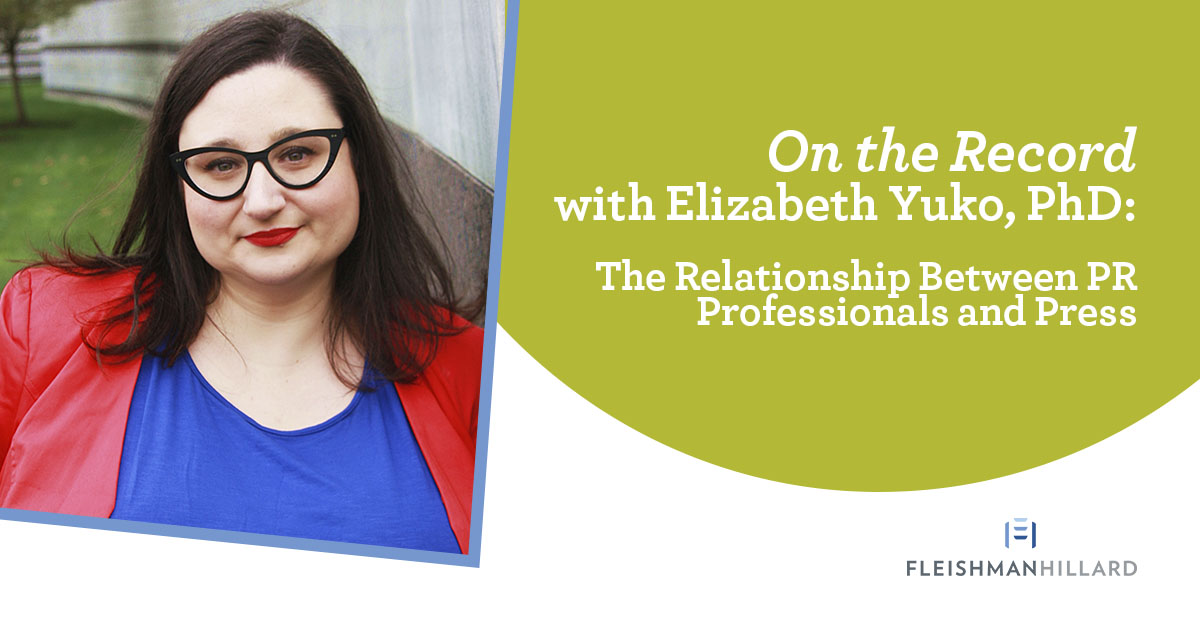
On the Record with Elizabeth Yuko, PhD: The Relationship Between PR Professionals and Press
August 25, 2020
By Caitlin Teahan
Share
For this ‘On the Record’ post, Caitlin Teahan explores the ups, downs and in-betweens when it comes to the relationships between PR professionals and members of the press. Seasoned freelancer and notable bioethicist, Elizabeth Yuko, PhD had a candid conversation with Caitlin focused on her personal experiences and point of view.
CT: What do you think about the relationship between PR professionals and journalists?
EY: It is hard. There is such a spectrum of PR people and you don’t all belong in the same category. You have people who are extremely helpful, non-pressuring, but on the other hand you have people who are not helpful and constantly harassing me. Most people fall in the middle somewhere. It really depends on the person.
CT: Would you say PR professionals and journalists depend upon each other or would you consider one or both independent of the other?
EY: Hmm…I don’t do a lot where I necessarily need to work with PR people. A lot of times they are the gatekeepers to the people I need to talk to, so it isn’t that I necessarily need them. There are absolutely situations where I have been able to turn a pitch from a PR person into a pitch to a publication. Much less so lately, but in the past, it has been helpful for getting ideas. Once you have a good relationship with a PR person in your specific area, it does make your life easier. The randos that pop up are not helpful!
CT: What have you personally experienced that has been a positive in terms of your relationship with a PR professional?
EY: Ooh! So, I went on a press trip a week after my mom died. The trip was just me and the PR person, which had never happened to me before. I was thinking it was going to be very weird since it was in the middle of everything going on in my life. It ended up being great and we had a great dynamic. It was a good experience because I removed myself from a stressful situation and he was extremely accommodating while I was mourning, which a lot of people are not comfortable with. He was empathetic and while this may not be considered a ‘normal’ example, it really mattered to me.
I am so grateful for that experience and that trip. I also have a great relationship with a brand PR person who arranged for me to go on another trip. It included a spa experience and, knowing that I was caring for my ailing mother at that time, they were incredibly kind. But they also set up a chat with a specialist at the spa who did beauty treatments for cancer patients. They didn’t just show us what to do for my mom but followed up after — which was an extremely personal experience because of my mom. It didn’t involve anything to do with my work or the assignment, it was just incredibly meaningful and relevant to me. But at the same time, I know more about this service they offer and can share that knowledge with friends.
CT: On a lesser note, anything overly negative?
EY: Yes. The follow-ups that just don’t stop or even worse, the follow-up when I have actually responded! At that point, I get a little catty and tend to copy and paste my past response. But I cannot think of anything horrible. It is the consistent, little annoying things. Honestly, I am trying to think of ‘bad ones’ but I delete them so quickly that I don’t even think about it!
CT: Let’s talk about those little things. Can you give me some examples?
EY: Sure. Freelancers also usually have no idea when an article is going to run. Most publications I write for don’t let us know, so the PR person’s guess is as good as ours. I understand why a PR person wants to know this, but as a freelancer, we genuinely don’t know either. If you’ve already asked us about this once, and we respond saying that we don’t know/have no say in the publication date, please, please don’t keep emailing for “updates.” We don’t have any.
Along the same lines, I get a lot of requests along the lines of “send me the link when the story runs.” If this is an article where I’ve done in-depth interviews with sources, or it’s a personal/sensitive topic, I will absolutely send them a link the minute I know an article is up. But they’re never the ones who ask. It’s usually in cases where I had to write a 25-item listicle with a different source for each item. Going through and contacting each PR person I worked with for something like that takes a long time. In so many of these cases, it’s something that could be solved by the PR person setting up a news alert for their client.
CT: What is the most important thing for a PR professional to remember when working with journalists?
EY: One thing I wish PR people would know is that as freelancers, we have no control over the headline, the final edit, and the images. I get so many emails about this. One outlet I work with has their own photo department and have a very specific style. I once quoted someone and her PR person reached out about the image they selected as they didn’t feel it went with their spokesperson’s ‘vibe,’ to which I said no way! That isn’t something I can control. It is a weird ask even when I was an editor but now, it just isn’t an option. Publications do things differently; it is their stylistic preference. Having a better understanding of what freelancers have control over or don’t would save a lot of back and forth.
The PR person wastes their time asking and I waste my time responding. Sometimes they ask to get in touch with my editor so they can handle it directly. That puts me in a weird position, because as you know, editors are not always willing to share their contact information, especially with journalists let alone PR people. I don’t want to be the one that has put my editor on some annoying mailing list! That is another weird one to deal with.
Now that I am thinking, I have been getting so many pitches for ‘snake oil’ and totally ridiculous products in the wellness space. I get it. But I am now getting them from people I don’t even know — not from my usual contacts — and I can’t even begin to tell you how many I am getting a day. Especially from CBD brands. They follow up THE SAME DAY. What is up with that? Just don’t do it. Not only are they pitching things that aren’t right for me, but they are following up the same day. In my head I am saying, ‘I don’t know you and this topic isn’t for me. Do some research.’ Also keep in mind when you are pitching products, most product round-ups and things are done in-house, with the publication’s staff. So, while I appreciate it, as a freelancer, I can’t always write about it. I get why I am on your list but keep that in mind.
Last thing I will say — things get tricky when it comes to branding. Some publications do not care if your sources are brand representatives or spokespeople. At other publications, it is not permitted. I can’t control that. So, when I send out a HARO and a PR person responds with content, I may include them, but their specific brand may not be mentioned. That isn’t my call. One of my outlets doesn’t mind if I use brands as part of expert commentary, others are not OK with a specific mention like that. It would be helpful if the PR person would just let me know that if I cannot mention a brand, they cannot give me the quote when they reach out. On the flip side, I was once doing a story on eating disorders and mental health, and the photo the editor had picked to run with it was a person on a scale. The PR person reached out and noted that the image is quite triggering for people — that kind of call out is completely legitimate. We were able to change that. That is a time when their reaching out is productive, but it is a different situation than asking me to add in the spokesperson’s blog title, for example.
CT: Any last piece of advice or things to know?
EY: One last thing. I hate getting asked, ‘What are you working on right now?’ Especially now. No one at this point has a beat or a direction. We are all over the place. I don’t know what I am working on right now! Half of what I am working on right now are random assignments. It is just the work I am getting thrown that day that I have to take because of the current state of things. That question also creates more work because they are asking me to send them a report of my activity. It changes from day to day, so I really do not know. It may work for some journalists though, so it depends.
I do make a genuine effort to respond to those emails. I respond in batches twice a day. I used a canned response for ones I am not interested in, and then, if I have worked with someone before or it could be a future fit, I do try to respond personally. As a freelancer, I get what it is like to have your work and emails ignored. The issue is, PR people think my response means I will answer your questions. I don’t have time to list out my subjects for you! In one sound bite: think about if what you are asking is making more work for that person. If it generates unnecessary work, then maybe you should think twice before sending.
CT: Thank you for taking the time, as always, a pleasure!
EY: Thank you!
See what else is happening
You might also like
ESG
Navigating Conflicting Demands to Advance Climate Action
January 20, 2025
Opinions
Supporting St. Louis Institutions Dedicated to Empowering Youth Through FH4Inclusion
January 15, 2025
Opinions
Revitalizing the San Francisco Community with the Downtown Volunteer Coalition
December 23, 2024
Opinions
FleishmanHillard and FH4Inclusion Teams Shine at the Cannes Lions International Festival of Creativity
August 28, 2024
Opinions
Bridging the Generational Divide with Generative AI
August 27, 2024
Inclusion
Success on Repeat: Alumni of the Alfred Fleishman Diversity Fellowship Discuss Promotions and How to Get Them
May 29, 2024
News
EU climate policy: The new borderlines?
May 27, 2024
News
Achieving the Evolving Duality of Loyalty and Loyalty Programs
April 1, 2024
Expertise
TickTockTech: Mobile World Congress 2024 — What’s the Verdict?
Online Shopping in South Africa: Are Your Virtual Doors Open for Business?
Share
If there’s one thing we’re good at – it’s spotting an opportunity in crisis. Unfortunately, the crisis we do speak of is the global pandemic that has shaken the foundation of our day-to-day behaviour and ways of working. […]
Many think that internships are about fetching coffee and picking up effortless work that falls to the side. Amidst the pandemic, it may be fewer coffee runs, but the truth is being an intern, even the support-kind, is as taxing as a full-time job. […]
COVID-19 and A Shift in Priorities for Those Working Abroad
August 13, 2020
Share
COVID-19 has led to a fundamental shift in values for people across the world as we adapt to lockdowns, travel restrictions, and remote working and schooling. This is equally true for those living and working abroad, even though they may be more used to spending long periods of time away from family and friends and keeping in touch with loved ones via video chat. […]
Supporting a Crisis within a Crisis —Helping the Most Vulnerable during COVID-19 through FH4Inclusion
August 11, 2020
By Mariam Quadri
Share
When the U.K. lockdown was announced, the FleishmanHillard team in London was passionate about proactively pursuing ways to help the most vulnerable in society.
For many of us, the idea that lockdown had much more serious consequences for some than others hit home.
With everyone being forced to stay indoors, the risk of domestic violence and of women returning to violent partners was increasing. We’d seen the horrifying reports of domestic killings on the rise during lockdown, with indicators that women were being killed at double the rate compared to 2019.
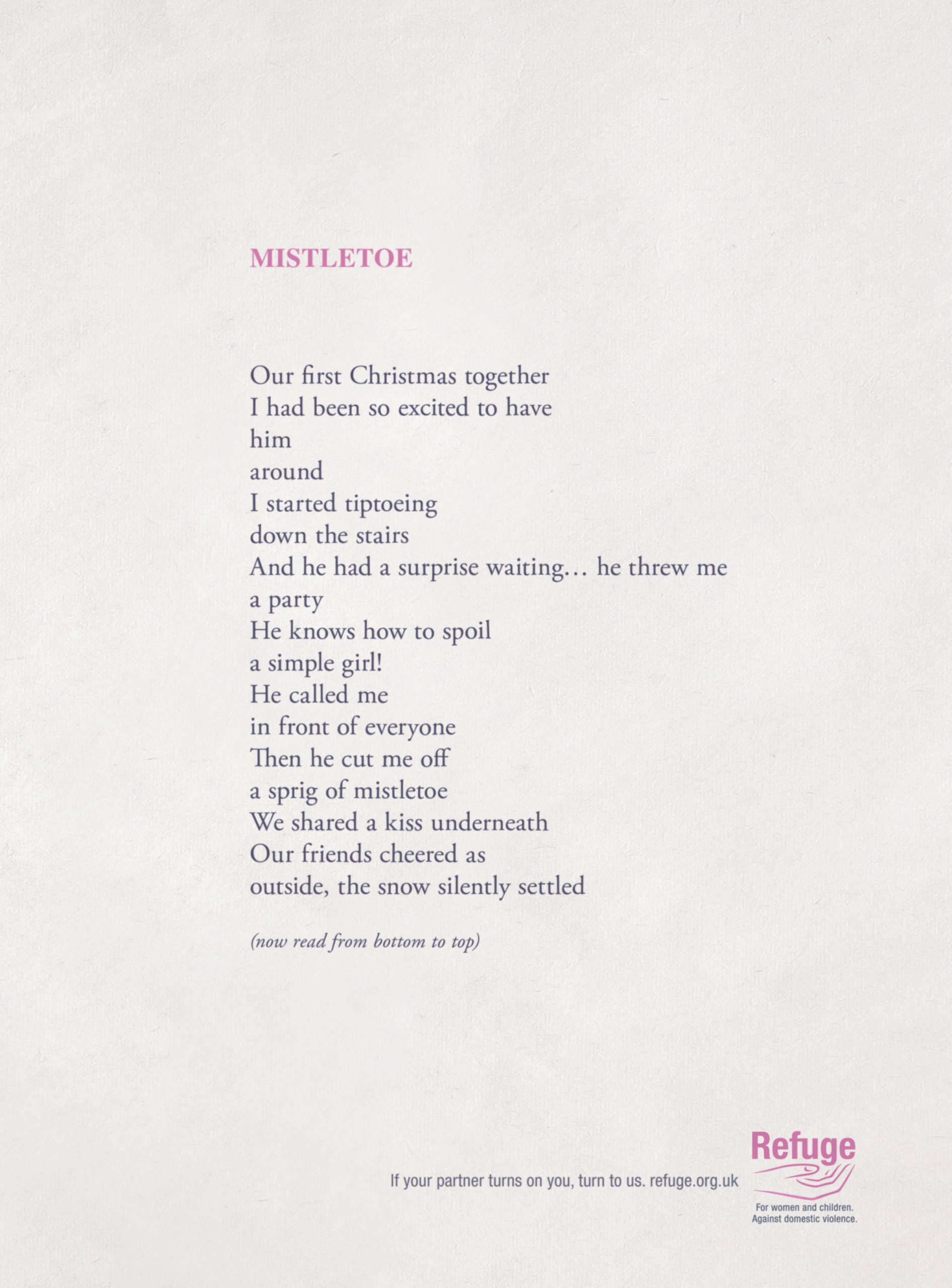
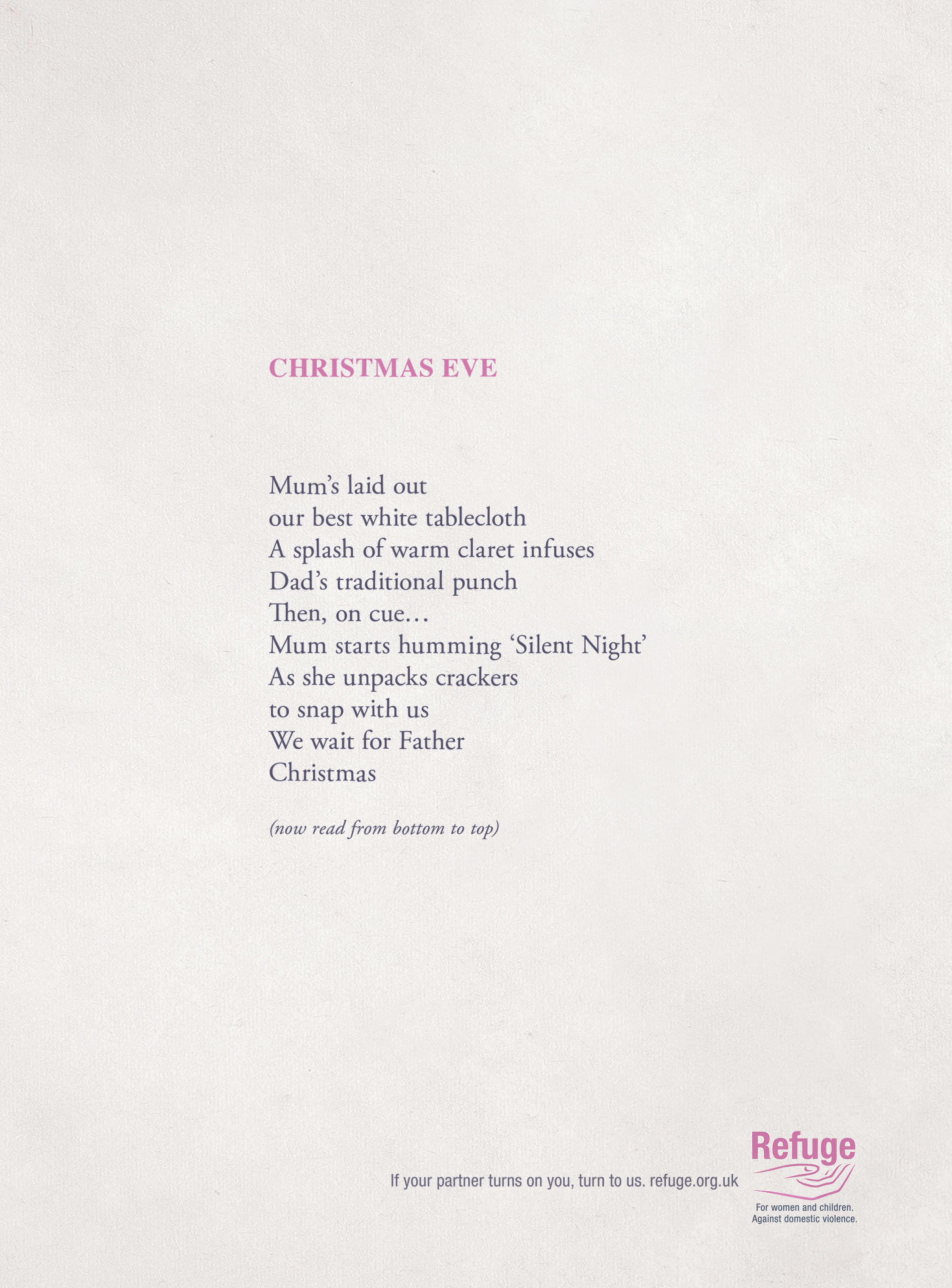
The U.K. Brand Marketing team had an existing relationship with Refuge, the U.K.’s largest domestic violence charity, since providing pro bono support for its Christmas 2019 campaign, where poems appeared in various locations and online as traditional stories of the festive season. However, when read from bottom to top, they unveiled true stories of domestic abuse.
Refuge provides specialist support to women, men and children escaping domestic violence and other forms of abuse. This work includes a national network of specialist services, including emergency refuge accommodation, community outreach, independent domestic violence advocacy, culturally-specific services and a team of child support workers. Refuge also runs the Freephone 24-Hour National Domestic Violence Helpline in partnership with Women’s Aid.
On any given day, Refuge’s services support 3,000 adults and children.
Yet amid the pandemic, their helpline was becoming more important than ever, especially with staff support members unable to be in the office and out in the community. Moreover, with funding from the U.K. government declining in recent years, resources were stretched.
As part of the FH4Inclusion global initiative, we were able to reach out to them to offer our expertise to increase their visibility and ensure the community was aware of their services, which was received with gratitude.
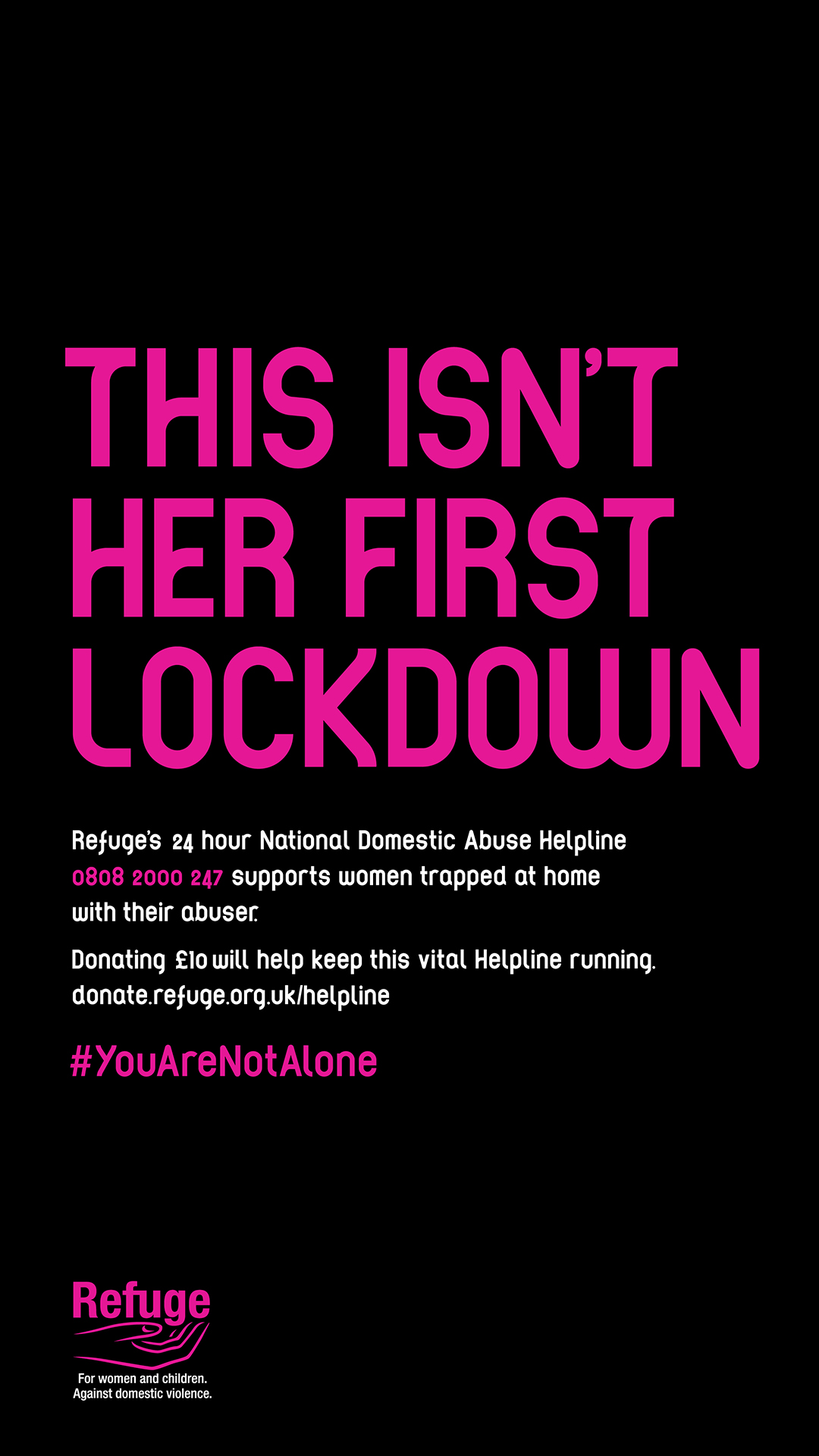
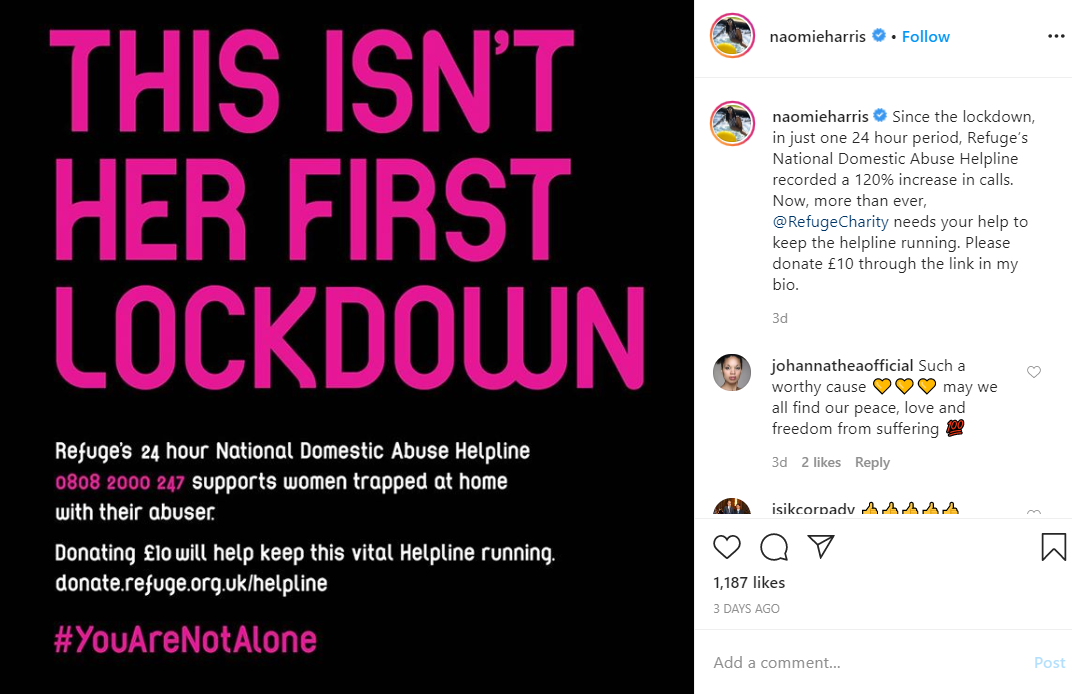
In just one 24-hour period, Refuge had received a 120% increase in calls to their helpline and were pulling together a campaign to raise funds to continue to staff and resource it.
The campaign ‘THIS ISN’T HER FIRST LOCKDOWN’ aimed to raise awareness that, whilst we are all in the same lockdown, the experience is terribly different for women and children who live like this, in real terror, daily.
We pushed out the message and assets to high-profile celebrities and influencers with a strategic and considered approach. The impact and response was huge – in a few days, we achieved 60 posts from more than 40 celebrities and influencers – with tweets, Instagram posts and stories using the #youarenotalone from U.K. personalities who were passionate about supporting Refuge. These included broadcasters Laura Whitmore, Clara Amfo, influencers such as Gemma Styles [yes Harry’s sister!], as well as actors like Lily James and Joanne Froggatt, and global musicians like Little Mix. Hundreds of people responded to posts and tweets with appreciation for bringing this issue to the forefront while pledging to donate.
In just a few days, social media posts increased awareness and donations for Refuge – enabling people to think about the ripple effects of COVID-19 and the importance of taking action against domestic abuse.
More than anything, we at FleishmanHillard Fishburn in London were happy that our expertise could be used in a way that was immediately impactful and helped the hidden victims of the pandemic.
See what else is happening
You might also like
ESG
Navigating Conflicting Demands to Advance Climate Action
January 20, 2025
Opinions
Supporting St. Louis Institutions Dedicated to Empowering Youth Through FH4Inclusion
January 15, 2025
Awards
FleishmanHillard Earns Perfect Score on 2025 Human Rights Campaign Foundation’s Corporate Equality Index
January 7, 2025
Opinions
Revitalizing the San Francisco Community with the Downtown Volunteer Coalition
December 23, 2024
Expertise
Responsible Business: Navigating Today’s Challenges and Opportunities
October 22, 2024
Inclusion
Recognizing the power of the LGBTQ Community in Advertising & Media with GLAAD
October 11, 2024
Opinions
FleishmanHillard and FH4Inclusion Teams Shine at the Cannes Lions International Festival of Creativity
August 28, 2024
Opinions
Bridging the Generational Divide with Generative AI
August 27, 2024
Expertise
How to ensure access and opportunity for Black and diverse students and professionals interested in working in sports
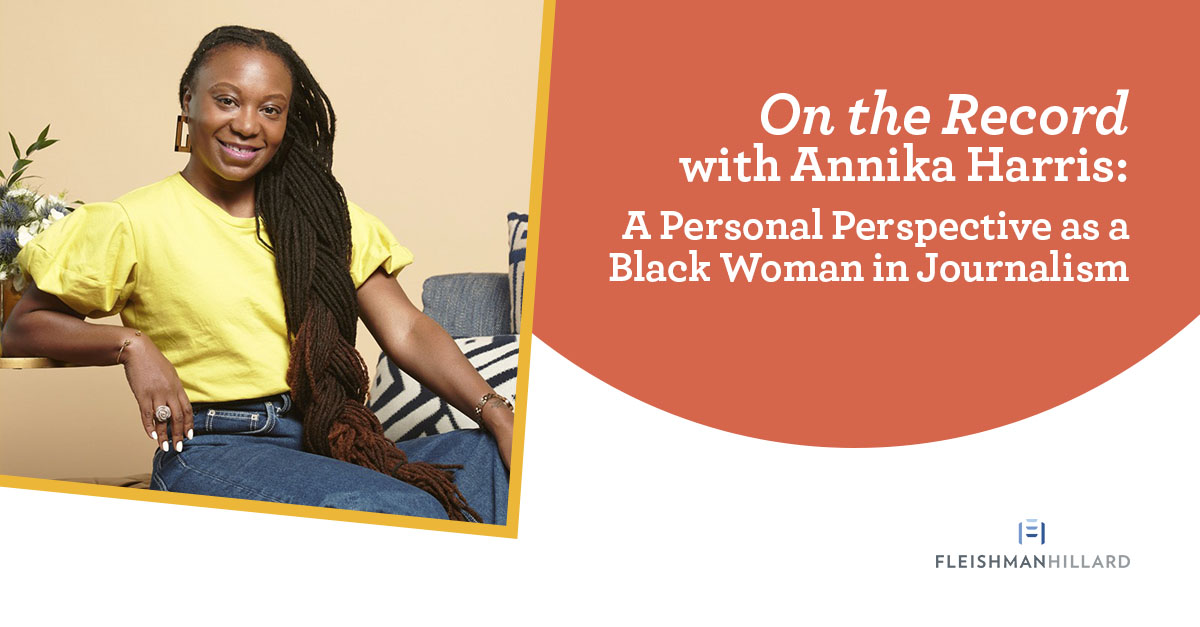
On the Record with Annika Harris: A Personal Perspective as a Black Woman in Journalism
July 30, 2020
By Caitlin Teahan
Share
‘On the Record’ is a series where we sit down with our colleagues and friends who are often at the receiving end of our pitch emails – journalists. We will be tackling hot topics, learning and growing from their perspective and thoughtful advice.
In this post, Caitlin Teahan interviews Uptown Magazine’s Digital Content Director, Annika Harris around what it means to be a Black woman in journalism in a time of great social change. Additionally, Annika discusses the larger cultural and social changes taking place that impact day-to-day interactions with colleagues and peers. Their candid Q&A session took place at a safe distance (via video chat), as at the time it was conducted, New York City was still on a shelter-in-place order.
Caitlin Teahan (CT): There has been a lot of change that has impacted the journalism industry in the last few months, the pandemic and our recent social justice movement, specifically. How has this changed your relationship with PR professionals and day-to-day work?
Annika Harris (AH): I’ve noticed a few publicists that I work with regularly have been more considerate – they try not to inundate you with pitches and have been sending out general emails to check-in to see if you’re accepting pitches. I saw some of those when the pandemic started, but I think now they’re even more aware of it. I actually had an instance where I was flabbergasted and I was going to respond to the publicist. She reached out because she was representing a DVD vending machine brand – by the way I’ve never worked with her – and sent me a list of their ‘Black DVDs.’ It was just so obvious from the titles she picked that she didn’t even research what Uptown Magazine was about because it wasn’t geared towards a Black audience. For example, they were movies we had seen already or were movies that really don’t resonate with us. You can’t put films on a list like this just because they have a Black cast in the movie poster.
I ended up just like not even emailing because I didn’t want to scold her. I did take a look into her firm and it was a small boutique firm, with no people of color on the staff and I realized, well, that kind of explains why this happened.
Also, there’s this attitude or this feeling within the Black community that certain movies aren’t necessarily made for us though it might be an all-Black cast. Maybe if they had somebody who was Black on their team, they would have come up with a better list. Some advice – don’t go and put Black actors into a search engine or use the ones on the poster because they seem popular. That isn’t doing the research. That’s been my experience and if they just spent 30 seconds scrolling through Uptown Magazine it will give them an idea that say, a pitch about Reese Witherspoon might not resonate. I mean, I love Reese Witherspoon, but I’m not going write about that. This was kind of par for the course before – people not really doing their research. I think as far as blogs that I read, everybody’s saying, ‘we’re going to feature Black-owned businesses’ and you’re kind of thinking, ‘OK, is it just for this moment or is this going be like a lasting change?’ You know?
CT: Have you seen any recent positive developments that pertains to journalism since the social justice movement took off?
AH: I think there’s more of an understanding of not just looking at the surface of what’s happening. There’s violence, but people are realizing there’s more emotion and history behind the anger that you’re seeing expressed, so I think they’re covering it in a broader way. A lot of that has to do with people no longer ignoring what is happening since it keeps getting caught on video.
CT: How have the relationships you have maintained with PR professionals changed over the past few months?
AH: I don’t think they really have. There is more of an understanding that there’s big news happening. So, you can’t necessarily write about shampoo the day you had planned to. It’s a little bit more hands-off and more letting the stories happen and develop. As things progressed, I haven’t been getting too many general fluff pitches. And that’s good. It’s interesting because with people not being able to travel like we used to, it seems Black travel writers are now opening up about the experiences they have had that might have had racial undertones and stuff like that. I wonder if it’s because we can’t travel that they don’t fear retaliation from brands as deeply. It’s not like you’re going to get canceled off a press trip for speaking your mind… because there are no press trips going on.
CT: Let’s talk about vernacular. Changes in language that have been around for a while are now seemingly more mainstream from capitalization of certain words to labeling. What are your pet peeves when it comes to things like this and do you feel that any terms are still misunderstood?
AH: Yes. For me, I don’t necessarily identify as African American. Because I don’t know where in Africa my people came from. I mean, I have an overall connection because I’m part of the African diaspora, but I can’t pinpoint it. The closest for me would be Caribbean American but as you know, I was born here. So, I identify as Black and sometimes there’s this attitude around why I would want to be identified as just Black. Maybe there is more of a comfort in calling people African American? But then you get into the issue of well, what if they’re from Canada? Or somewhere else? How do we go about all of that? I mean, I tend to use it interchangeably. If I get copy where the person who wrote it uses ‘African American,’ I won’t take it out because, you know, that’s how they identify. But I have definitely been seeing an increase in capitalizing the word ‘Black.’ I’ve been doing it since high school and that’s one thing I always do change when I am editing.
I think sometimes there’s a generalization with the phrase ‘people of color.’ It’s like a whole blanket statement but we don’t all necessarily think as a monolith. In a way it is kind of lazy at times to use and I’ve been seeing Black Indigenous People of Color lumped in with Latinx or Asian people, which is crazy. I don’t know what the alternative would be besides specifically listing out everybody, but maybe that’s what it has to come to.
CT: Do you feel there is a level of discomfort when it comes to using certain words to self-describe?
AH: Black has always been considered a negative, right? There’s only one instance of the word/color black being a positive in like English language. When your money is in the black. So, I think a lot of times, non-Black people can’t understand why you would want to identify with a ‘negative.’ It also brings up the Black Power Movement, the civil rights movement, America’s racist past, but if you just make it a blanket like ‘African American,’ then you don’t have to kind of confront those things. In our history, we lost our culture. All of those things happened and I don’t think it is just an American thing to have a negative connotation or discomfort. I have been in meetings with a major European airline that was trying to get more Black people to visit Scandinavian countries because we spend however many billions traveling. In the meeting, he just couldn’t understand that we identified as Black or Caribbean American. Or if you want to get really specific, we’re St. Lucian American. But Black is just fine!
The discomfort made it harder for us on the trip. If a publicist plans out this whole trip for us to experience this place and wants us to tell our readers, who are Black, to come visit a country that isn’t racially diverse, let the merchants and the hoteliers know we’re Black. Don’t let it be a surprise when we get there, because then it puts a little negative smear on top of the trip before you even get started. But, he didn’t understand. He felt that to tell the merchants and hoteliers would be racist. But we want to avoid an awkward interaction that might come across as racist and make us uncomfortable, you know? It’s funny because none of us were contacted again after that meeting, which is pretty interesting.
CT: Do you feel that brand investments in Black audiences tend to be ‘one and done’?
AH: When it comes to traveling, I think everyone’s realized that most travelers are going for a cultural experience as opposed to just have fun in the sun. You want to explore, you want to learn something. I think in general trips are geared toward that. But I haven’t personally been on too many trips where it was mostly non-white people on the trip – it’s been maybe one. I’m usually like a token. Which then means the trip is not necessarily geared toward what my audience would be interested in. One trip that sticks out is when I went to Nashville, which was my very first press trip and there were dozens of reporters on it. I was the only Black person and this was back in 2012. A lot has definitely changed since then, in a good way. But I was trying to express to them that going to the Grand Ole Opry was great but my readers who were into country music already know about these things. They’re not looking to Uptown Magazine to educate them about that. They want to know where Black locals hang out. Finally, we did visit Fisk University’s art gallery. But a lot of times, like I said, I feel kind of like a token, but you get used to that and you’re happy to be part of the experience and everything. But sometimes, you want to remind people that we all don’t think and look for the same thing.
It has gotten a lot better. I would have to say that even before the movement kicked off, things were starting culturally mix.
CT: Why do you think there is a lack of cultural and racial diversity in the industry?
AH: I think the mentality has always been ‘well we have we have one,’ meaning me as the Black person on the trip. The brands and publicists think that one writer – that one article is going to reach the millions of Black people. Crazy. But it is everywhere. I was on a press trip to Antigua and Barbuda, which is where my family is from. There were three Black people on the trip and one Eastern European woman. She got the better accommodations in this Black country, on this Black island. It turns out that she was really a “press trip crasher” and not a real journalist. We get double- and triple-checked to make sure that we can offer some value to the brand. But then you have people who aren’t even up to the caliber of getting these luxury trips or these luxury experiences, but nobody is checking on her.
CT: What would you say, from your personal perspective, has been the biggest challenge when it comes to being a part of the journalism industry as a Black woman?
AH: Well, I kind of knew what the world was going be like because, even though I did my grad school at CUNY, the City University of New York, out of a class of 100 people only about 13 of us were non-white. The professors weren’t that diverse either. So, you kind of had this idea already about the industry and of course they were always pushing mainstream media like The New York Times. It was a situation where we realized we’re all not going to go get hired by The New York Times, so you have to put value in other things. After that, I interned at Entertainment Weekly (EW), and that was just…wow. I think I remember maybe two other Black faces on the entire staff other than mine. But thankfully there were instances where, because of how I carried myself, people didn’t all automatically assume ‘Oh, she’s just an intern.’ I remember an instance when the Sex and the City movie was coming out EW was doing a whole package. Myself and another intern had to pick up and return props from the TV show. The other intern was younger than me and a white woman. We were pretty cool, but she always kind of had these little jabs at me. I don’t think those were microaggressions, I just don’t know what her deal was. But I dressed pretty smartly at that time and she kind of dressed a bit bummy and when we had to go drop off the props to the photographer, they all automatically assumed EW had sent a writer or an editor – me. They just treated me so much better, for lack of a better phrase, because of how I dressed, how I presented myself, so I don’t think there’s racism throughout – not in every person anyways.
But it’s still kind of disheartening at times when you’ve been invited to a private event and it’s either somebody that you’ve had an email relationship with, but you’ve never met each other, or the people who are doing the guest list or something, and you walk in, the first thing they say is, ‘Oh, it’s a private event.’ And I think, ‘Yeah, I know I’m on the guest list.’ Why would you think I’m not invited into this space? It is annoying. You could be dressed perfectly, completely fit the professional world and that’s still the reaction.
CT: What concerns do you have in terms of working with brands?
AH: Sometimes brands don’t want to work with a Black publication because it isn’t big enough. Which then creates these darlings of the industry that are always invited to everything and don’t necessarily allow for others to be engaged. An audience might not be as big, but it shows the laziness of the industry. It’s easy to pinpoint these people huge publications but what about deeper reach?
CT: Do you think some of it involves the framing of the outlets to the brands, for example, instead of labeling an outlet as a Black or Latinx publication, it should be labeled general women’s interest or whatever the corresponding vertical is?
AH: I think that’s a good idea. Not only does it exclude Black writers from telling a specific story that maybe might not have a ‘Black theme,’ it also assumes that white writers don’t want to tell the story. Listen, I understand everybody can’t come to the party, but leave it up to the journalists to decide for themselves whether this is a story that interests them or that their readers will be receptive to. But let’s not start telling Black stories to Black journalists because Black History Month is coming around. You have to mix it up and tailor every pitch as you would with any journalist.
CT: What haven’t we covered that you have been thinking about lately?
AH: It’s been interesting to me to see all of the editors who have had to resign because they weren’t creating environments of inclusion and instead made toxic environments for non-white people. I wonder what happens for them next. Are they going to go somewhere and put in the work to educate themselves as to what inherent bias they might have? Are they going to be bitter that they were fired or embarrassed or knocked down off their kind-of high horse? I have a joking theory that they’re going to band together and form a magazine and it’ll be nothing but Black people and non-white people working for them so that no one will ever say they created an exclusionary environment.
People who do these negative things need to realize that it’s easier for their company to put out a statement that they don’t support any kind of racial bias or discrimination and fire them before they’ll defend their actions even if it is a company where this attitude is fostered. These are brands that tell employees to check the Black guest or follow around the Black shopper or whatever it is. It’s still a hell of a lot easier for them to get fired if they’re caught. So why put yourself in that position?
Overall, the changes are interesting … how quickly laws have been passed and murals have been put up in my neighborhood because we’re all like in a pandemic and have nothing else to do. I guess it’s more of a question of how long-lasting are these effects and the answer is, we won’t know until we have to live it.
CT: Thank you for your candor, Annika!
See what else is happening
You might also like
ESG
Navigating Conflicting Demands to Advance Climate Action
January 20, 2025
Opinions
Supporting St. Louis Institutions Dedicated to Empowering Youth Through FH4Inclusion
January 15, 2025
Awards
FleishmanHillard Earns Perfect Score on 2025 Human Rights Campaign Foundation’s Corporate Equality Index
January 7, 2025
Opinions
Revitalizing the San Francisco Community with the Downtown Volunteer Coalition
December 23, 2024
Expertise
Responsible Business: Navigating Today’s Challenges and Opportunities
October 22, 2024
Inclusion
Recognizing the power of the LGBTQ Community in Advertising & Media with GLAAD
October 11, 2024
Opinions
FleishmanHillard and FH4Inclusion Teams Shine at the Cannes Lions International Festival of Creativity
August 28, 2024
Opinions
Bridging the Generational Divide with Generative AI
August 27, 2024
Expertise
How to ensure access and opportunity for Black and diverse students and professionals interested in working in sports
As video-conferencing has fast become our new norm across work and social life, we whipped up a couple hard ‘n fast protocols to make it a better experience for everyone. Welcome to the new-age netiquette of everything gone virtual. […]
How to Virtually Close the Client Relationship Gap
July 23, 2020
Share
In the past few months, we’ve all seen major changes within industries, especially the communications field. There’s been a shift from relying on physical interactions to virtual ones including meetings, conferences, and events. […]
Finally, June is here. After what has been a harrowing start to 2020, we’ve arrived. Pride Month. A time for celebration, parades and love! But, I have to be honest and say that I’m having a hard time feeling all of the things I’m “supposed” to feel during this time of year. For the first time in a long time I’m asking myself, “What’s there to be proud of?”
It was only a year ago that we in New York City celebrated World Pride and the 50th Anniversary of the infamous Stonewall riots. It was special and history making for many reasons. It felt like there was a lot of momentum and a lot of firsts. I was celebrating (after two years of planning) the pinnacle moment of the amazing work done by our OPEN Pride NY chapter to lead and execute Omnicom’s first ever Platinum Sponsorship supporting NYC Pride. I was celebrating FleishmanHillard’s historic decision and announcement from our CEO to include pronouns in our email signatures across our entire global network. I was celebrating the first time I experienced Pride with a loving partner – holding hands unapologetically and experiencing the power, energy and love sent our way while taking part in the iconic parade in New York City.
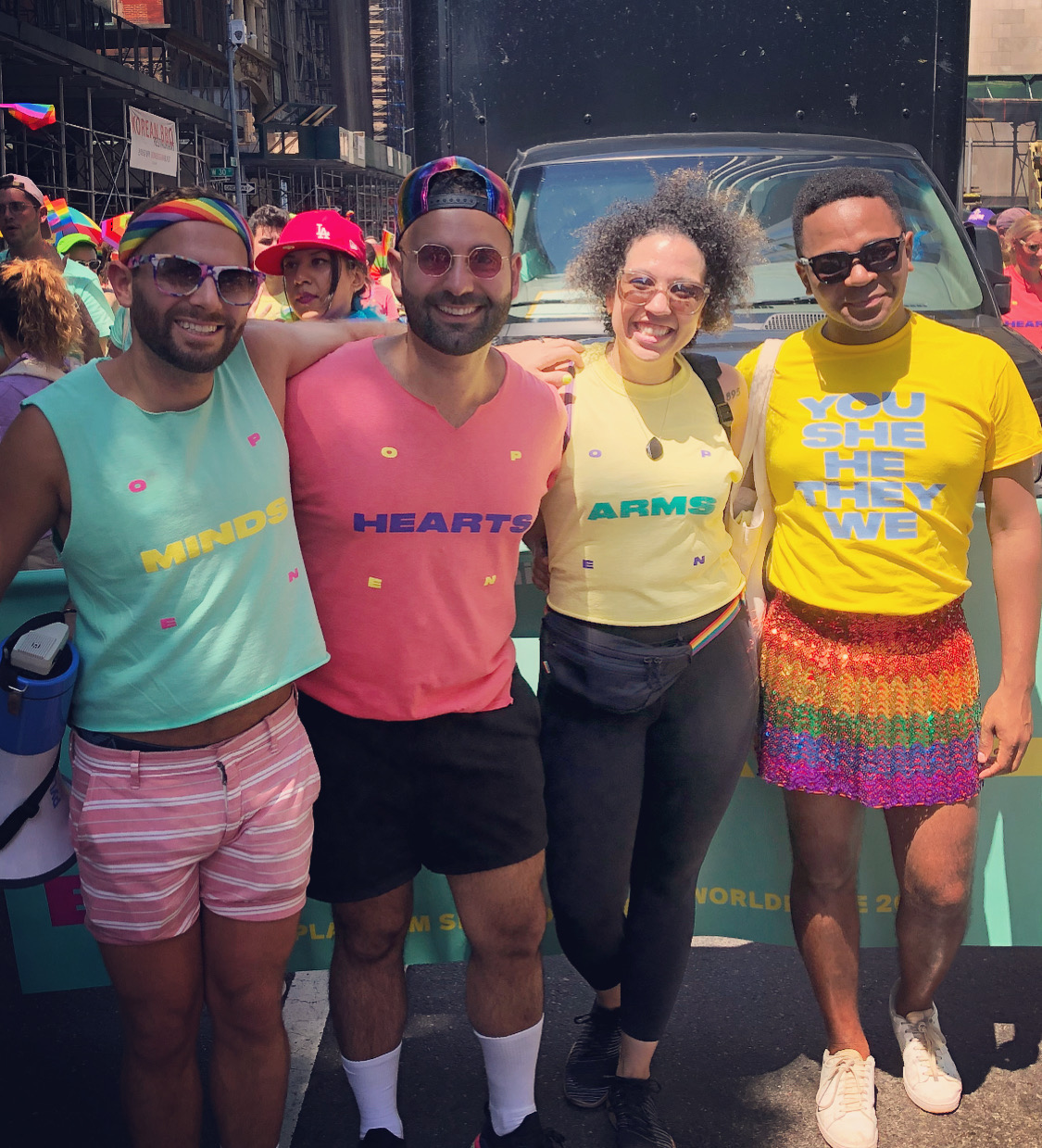
Members of the OPEN Pride New York Chapter Operating Board, Paul Caruso, Jacob Porpossian, Kendra Clarke, Wayne Hempe (left to right), enjoy New York Pride in 2019.
Today, parades have turned into marches. Ironically, parades have returned to their roots of protest. Sadly, much like the Stonewall riots 51 years ago, we still see queer and trans people of color chanting and demanding to end the injustices they face. Today, we are marching and protesting to end systemic racism, to end police brutality, to hold law enforcement accountable for their actions, to scream at the top of our lungs, “Black Lives Matter.” But we are demanding justice for ALL Black lives. Black Queer lives and Black Trans lives. Why? Because during the past two months alone, Tony McDade, Dominique “Rem’mie” Fells, Riah Milton, Nina Pop, Penelope Diaz Ramirez and Jayne Thompson – all trans people of color – have been killed in the United States. Some, even at the hands of law enforcement. And those are just the ones we know about. So, when we say Black Lives Matter – we mean ALL BLACK LIVES.
Beyond the Americas, anti-LGBTQ+ sentiment is on the rise and as a global agency under an even larger global Omnicom network, I can’t help but think about colleagues in other countries who still can’t be their whole selves, living in fear of persecution, humiliation and, in some cases, with their lives at jeopardy.
So again, I ask myself, what is there to be proud of?
But it’s hard to ignore the moments of hope during this past week. The Supreme Court of the United States passed a historic ruling that now extends the Civil Rights Act protections to LGBTQ+ workers. In Brooklyn, NY more than 15,000 people (including thousands of allies) marched for Black Trans Lives, igniting support from political leaders and prominent figures for change and justice. That’s something to be proud of.
At FleishmanHillard, we launched True Mosaic, a newly developed DE&I offering for clients, made up of a global community of counselors whose diverse, lived experiences reflect the multidimensional world we live in. We announced our first-ever chief diversity and inclusion officer, who will lead us in continuing our path to be the most inclusive agency in the world. We aren’t perfect and we have a lot of work to do. But in our big and currently unsettling world, I want to believe that all FleishmanHillard offices around the globe can be a safe space for those who need it. A space that provides support, compassion, respect and most of all dignity for its people. To be their 100 percent – always.
But it’s important to note that WE did these things – as a FleishmanHillard collective. We raised our hands, we educated, we guided and are holding our agency accountable to follow through. It’s our form of protest for reform, for change. So that we can move forward in a positive way. That’s definitely something to be proud of.
The reality is the words that have come to define the Pride movement have never rang more true, “No Pride for some of us, without liberation for all of us.”
Happy Pride Everyone.
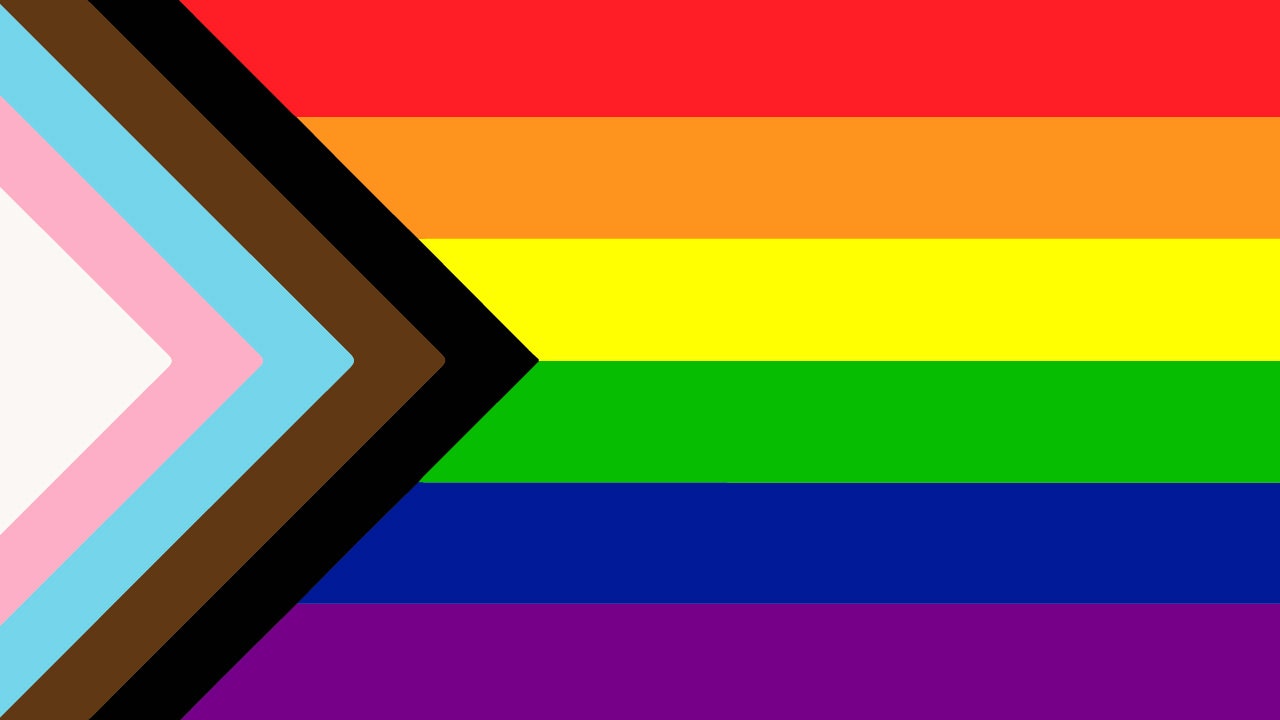
Photo courtesy of them.us.
Jacob Porpossian is a senior vice president based on our New York team where he leads creative, strategy and content. He also serves as a global board member and chair of Omnicom’s OPEN Pride New York Chapter.
See what else is happening
You might also like
ESG
Navigating Conflicting Demands to Advance Climate Action
January 20, 2025
Opinions
Supporting St. Louis Institutions Dedicated to Empowering Youth Through FH4Inclusion
January 15, 2025
Awards
FleishmanHillard Earns Perfect Score on 2025 Human Rights Campaign Foundation’s Corporate Equality Index
January 7, 2025
Opinions
Revitalizing the San Francisco Community with the Downtown Volunteer Coalition
December 23, 2024
Expertise
Responsible Business: Navigating Today’s Challenges and Opportunities
October 22, 2024
Inclusion
Recognizing the power of the LGBTQ Community in Advertising & Media with GLAAD
October 11, 2024
Opinions
FleishmanHillard and FH4Inclusion Teams Shine at the Cannes Lions International Festival of Creativity
August 28, 2024
Opinions
Bridging the Generational Divide with Generative AI
August 27, 2024
Expertise
How to ensure access and opportunity for Black and diverse students and professionals interested in working in sports