No Flights Needed: How FleishmanHillard Creates Virtual Expatriate Experiences For Up-and-Coming Talent
December 17, 2021
Share
Expatriate assignments are well-established, pivotal growth experiences that shape talented individuals into global leaders — not something many encounter every day. But this year, FleishmanHillard’s diversity fellows did. After an impressive period of growth and expansion, FleishmanHillard bolstered its Alfred Fleishman Diversity Fellowship program, a U.S.-based internship for diverse young talent, with the Cross-Cultural Connections program, a virtual expatriate experience for industry up-and-comers.
Fellows who opted in were paired with peers from Asia-Pacific on a project of their choosing for three months. These unique collaborations gave participants an all-encompassing experience with a glimpse at PR work beyond their current borders.
The program was designed to help fellows and their partners:
Understand and appreciate cultural differences
Learn global PR, communications and media best practices
Experience the scale of an international network
Foster growth and connections outside their everyday teams
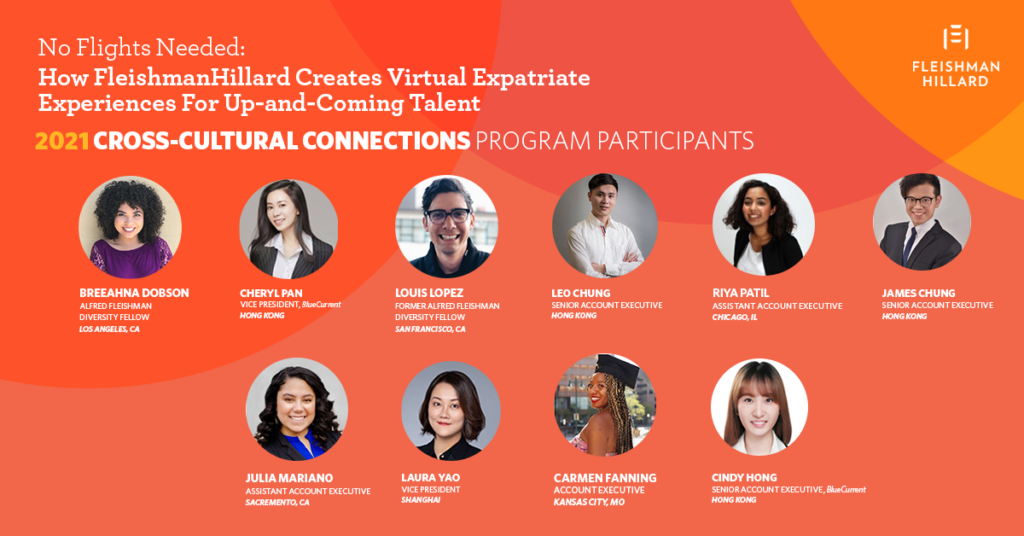
This year’s Cross-Cultural Connections participants include:
We met with a few to learn more through a little Q&A. These are the highlights:
What excited you about the program?
“I joined the program because my role as a fellow in the Los Angeles area was 100% focused on external client work. I didn’t have a lot of connections to our internal network or DE&I-related work. My client work is primarily on a national scale, so I was looking for an opportunity to work on a global scale.” – Breeahna Dobson, Alfred Fleishman Diversity Fellow, Los Angeles
“I wanted to explore an overseas working culture, and to connect with our U.S. colleagues. I saw that there are many differences, but also that we have things in common.” – Leo Chung, Senior Account Executive, Hong Kong
“I joined the program mostly because I wanted to branch out of my traditional office work and meet other people outside of the country. I knew that this program was the first of its kind and I thought it would be cool to participate.” – Julia Mariano, Assistant Account Executive, Sacramento
How did the program build your experience with international colleagues?
“This is the first time I have had a chance to work with someone from a global office.” – Julia Mariano, Assistant Account Executive, Sacramento
Carmen Fanning studied abroad in college, but this program was her first opportunity to partner with people from other countries in a work setting.
For Cheryl Pan, who has extensive international work experience, the program offered a chance to form deeper connections.
“My work with BlueCurrent and FleishmanHillard has given me the opportunity to work with colleagues across the U.K. and the U.S. and I have always benefited from that work. However, this program was an opportunity to do a deep dive, connect with colleagues in another part of the world, and understand their culture by working on a passion project together.” – Cheryl Pan, Vice President, BlueCurrent Hong Kong
How did you decide your project’s focus?
Breeahna and her partner Cheryl studied the intersection of tech and diversity and inclusion. Coming from two major bay areas, Breeahna from the San Francisco Bay Area and Cheryl from the Hong Kong Bay Area, they presented a ‘bay-to-bay’ comparison between the two regions.
“DE&I is discussed a lot in tech and the industry plays a big role, so we wanted to take a closer look at what they think and see if their perspective would be helpful in our future work.” Breeahna shared her key takeaway, “I learned that as a California Bay Area native, our DE&I initiatives are typically focused on inclusivity, LGBTQ rights, the gender gap, and People of Color. However, in Hong Kong, their DE&I focus in on gender equality and rights. LGBTQ topics are taboo. I learned a lot about the Chinese culture, especially in Hong Kong, and what is driving their conversations about DE&I initiatives.” – Breeahna Dobson, Alfred Fleishman Diversity Fellow, Los Angeles
Cheryl and Breeahna met with colleagues in the tech industry to hear their perspectives first-hand, which taught them an important lesson.
“The biggest takeaway was that context really matters. The historical backgrounds of the two bay areas are quite different, so the DE&I focus in each area is different – rooted in both culture and history. So, if we want to take this to our clients in the future, we need to know the cultural and social context, so that we can provide specific and accurate counsel.” – Cheryl Pan, vice president, BlueCurrent Hong Kong
Julia and Leo examined the different social platforms used in the U.S., China and Hong Kong.
“When there are political issues between countries, I learned how our colleagues in the U.S. receive news and messages from social media, and how we in Hong Kong and China see our own news. We thought we were using the same apps, but actually, we are in a completely different position when we see information.” – Leo Chung, Senior Account Executive, Hong Kong
“I thought it was interesting that a platform like LinkedIn is not used that much in China for marketing, but in the U.S., we use it for thought leadership and ads. Our conversations helped uncover these differences.” – Julia Mariano, Assistant Account Executive, Sacramento
As issues surrounding mental health and well-being continue to take center stage across the globe, many of our program participants focused their research on the importance of work-life balance.
“A lot of people think work-life balance is just shutting off your computer, but there are things that you can do to be productive even in your time off. I learned that activities that you enjoy, like working out, along with getting enough sleep are what give you energy.” – Carmen Fanning, Account Executive Kansas City
“Learning about this topic inspired me to think about how I can add more balance to my schedule. For example, now I pay more attention to scheduling, and using my holidays and annual leave to help me get rest.” – Leo Chung, Senior Account Executive, Hong Kong
How did you manage work across different time zones?
Working in essentially opposite time zones was not without its challenges. However, the teams found a way to make it work. Cheryl and Breeahna took advantage of the time difference, realizing they could each work while the other was sleeping. When asked about working across two vastly different time zones, Leo Chung said, “I think it is about being inclusive. We were willing to invest the time to build that relationship with each other because we know that we each had a lot of work to do outside of this project, so it was important that we invested our own time to work together.” – Leo Chung, Senior Account Executive, Hong Kong
How did this experience shape your view of FleishmanHillard’s global network?
“Sometimes it is easy get stuck in a U.S. mindset, but we are global firm. I also didn’t realize that as a global agency we have a big impact around the world, and that things are just as busy and robust in our global offices as they are in the U.S. and that was great to see.” – Carmen Fanning, Account Executive Kansas City, MO
“This project opened my eyes to the plethora of resources available across our network. There are networking opportunities, and opportunities to connect to others on a global scale. Often, we are just doing our work and we don’t get a chance to see all the global connections and the options that they bring. I want to take advantage of that more as I grow my career at FH.” – Breeahna Dobson, Alfred Fleishman Diversity Fellow, Los Angeles
“The project made me think deeper about what it really means to be the most inclusive agency in the world, and how it is reflected in our daily lives. The way Breeahna and I worked together was so smooth because we respected one another, and we learned from one another. We inspired each other because of our different perspectives. This inclusive culture in our agency is valued by everyone and it is reflected in the different aspects of our work experiences, personal connections, and interactions around the world.” – Cheryl Pan, Vice President, BlueCurrent Hong Kong
We look forward to future iterations of our Cross-Cultural Connections program. No matter how it evolves, it will remain dedicated to connection, inclusivity and growth opportunities for our firm’s future leaders.
You can learn more about openings in our Alfred Fleishman Diversity Fellowship program by visiting our careers page here.
See what else is happening
You might also like
ESG
Navigating Conflicting Demands to Advance Climate Action
January 20, 2025
Opinions
Supporting St. Louis Institutions Dedicated to Empowering Youth Through FH4Inclusion
January 15, 2025
Awards
FleishmanHillard Earns Perfect Score on 2025 Human Rights Campaign Foundation’s Corporate Equality Index
January 7, 2025
Opinions
Revitalizing the San Francisco Community with the Downtown Volunteer Coalition
December 23, 2024
Expertise
Responsible Business: Navigating Today’s Challenges and Opportunities
October 22, 2024
Inclusion
Recognizing the power of the LGBTQ Community in Advertising & Media with GLAAD
October 11, 2024
Opinions
FleishmanHillard and FH4Inclusion Teams Shine at the Cannes Lions International Festival of Creativity
August 28, 2024
Opinions
Bridging the Generational Divide with Generative AI
August 27, 2024
Expertise
How to ensure access and opportunity for Black and diverse students and professionals interested in working in sports
Approximately 6,500 languages are spoken around the world and, according to The Washington Post, nearly half of the world is bilingual. Yet, those who identify as bilingual and multilingual are often greeted with more challenges in the face of communication, rather than praise.
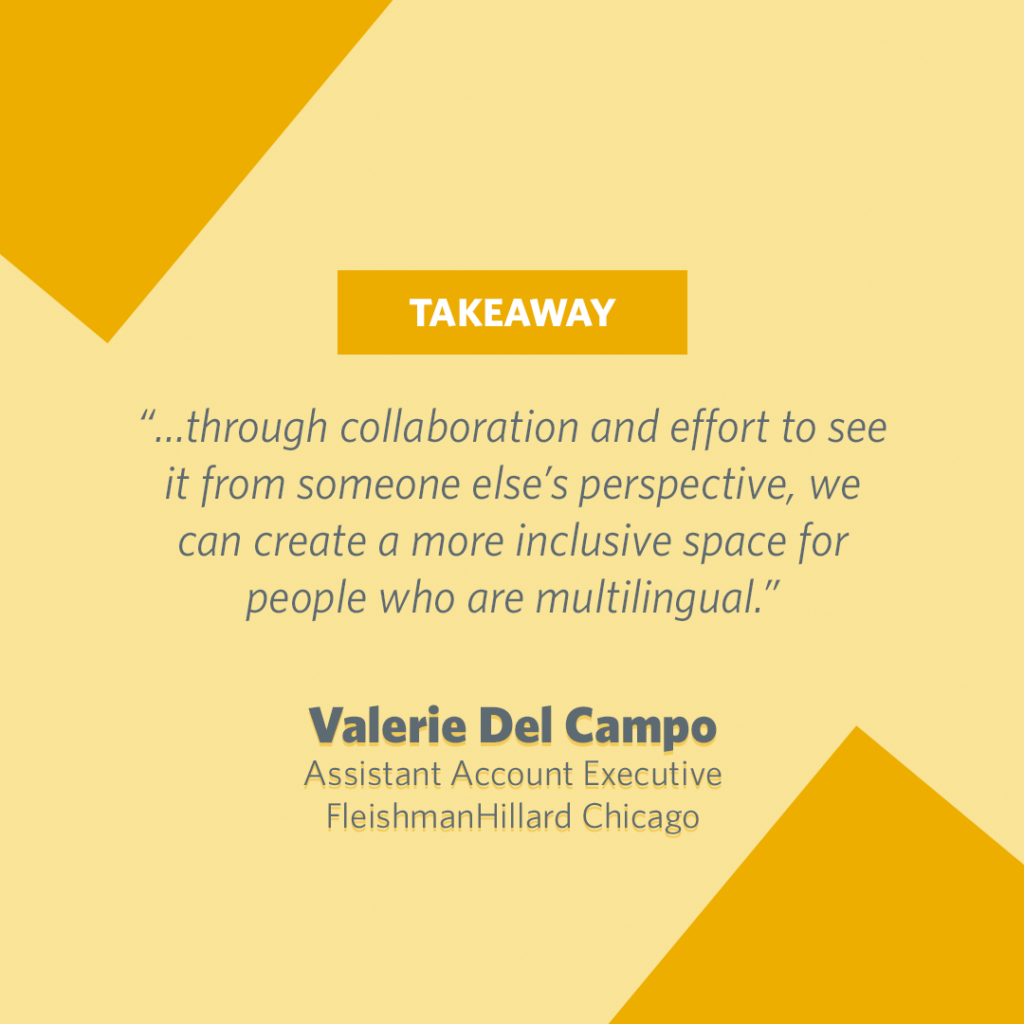
As advocates and allies, it is important to look at how we can create inclusive measures for people who are multilingual. Through collaboration, patience and the willingness to understand, we can reimagine different languages not as a barrier, but a bridge builder.
Colleagues across our Chicago office share their personal experiences as multilingual speakers and how exposure to different languages can make us better communicators and expand our larger, global perspectives.
—
I was born and raised in Thailand speaking Thai, so English is my second language. My English lessons began when I was in pre-school. It started by learning the English alphabet and simple vocabulary.
Growing up, my dad would purchase English encyclopedias, magazines and newspapers for my brother and me to read — or more so to look at – during that time. While I was too young to understand everything then, I was excited to see books that were written in a different language. The desire and curiosity I felt for the books written in English encouraged me to keep learning. Despite my concerns on whether my accent is too strong or if I will stumble on pronunciation, I take every new word and pronunciation I learn as an accomplishment.
While it comes with a unique set of challenges, being multilingual has opened countless doors to ample opportunities to meet people from all over the world and discover my passion for a career in global communications. I would not have made it this far without support from people who are willing to understand me, even when there were words I cannot pronounce. I am grateful for these opportunities and look forward to creating similar opportunities for others.
Kara Freeland,senior account executive
I grew up as my mother’s voice. From grocery stores, gas stations, and phone calls, I was often the one speaking on behalf of my mother. She, who I looked up to as my childhood hero, just wasn’t comfortable speaking in English. Both my parents immigrated from China to California before I was born, so I was raised speaking their familial language, while learning to speak English with my friends and classmates.
At home I speak Cantonese, a spoken language that exists in the southern regions of China. My parents also sent me to Chinese School every weekend, where I learned Mandarin, the main native language of China.
As the honorary interpreter for my parents, I realized at a young age how important connotation can be in conversation. Sometimes the direct translation of a word doesn’t epitomize the meaning, leaving little room for error and the potential to easily steer a conversation the wrong direction.
Understanding the variety of connotations also allowed me to see the differences between my parents’ perspective of the world as Chinese immigrants and my perspective, an English-speaking, first-generation American citizen. Over time, my interest in communications and public relations stemmed from my bilingual experience. It broadened my point of view and showed me the impact language has on how one speaks, listens and believes.
Miranda Xie, assistant account executive
As a first-generation Indian American, I grew up speaking, learning and listening to many different Indian languages at home. While we speak Konkani, pop culture and my parents’ childhoods in Mumbai allowed us to learn Hindi as well. This multilingual foundation was set up even before I started school, with my parents switching from Konkani and Hindi to English in front of me.
As I grew up, however, I faced second-hand embarrassment of my background and, like most first-generation kids, did the most to make sure I fit in with the rest of the kids at school. This thought process bled into the way I saw my parents, as I often found myself embarrassed whenever they would mispronounce something while ordering food or shying away from their heavy accents in public. I would frequently correct them, looking down on the fact that they were unable to speak what I saw as basic English. I never stopped to think about how incredible it is that my parents, my hardworking, immigrant parents, were able to speak so many different languages, and how my closed perspective contributed to their struggle for acceptance.
Now as I reflect on my experience, growing up as a multilingual, first-generation daughter of Indian immigrants has taught me to live life with an open mind. Appreciating cultures and different languages is important today more than ever as we have become so interconnected both professionally and across our personal lives. While it may not seem like a big deal for those of us who have grown up in America, inherently balancing different cultures and knowing and understanding multiple languages is something to be proud of and should be celebrated.
When you encounter someone who didn’t grow up with English as a first language, I encourage you to take a step back and approach them with understanding, instead of jumping at the chance to correct them or target their mispronunciations with judgement. Take the time to appreciate their efforts and who they are as people.
Shruthika Kamat, assistant account executive
I was born in Guam and raised in America. I moved to the U.S. when I was almost six years old and consider English to be my first language. My family speaks Ilocano, a dialect of the Philippines, but the main dialect is Tagalog.
When I first moved to the U.S., I was self-conscious about the way I spoke. Sometimes an English word is not pronounced the same when you have a Filipino accent or grow up speaking a dialect of the Philippines. For example, instead of saying futon in our house, it was pronounced “puton.” I constantly compared myself to my peers because I felt like I didn’t speak or write as well as them. I would wait for someone pronounce a word first before I would say it, or dread being called on in class to read aloud because I was afraid of being laughed at.
To this day, I am still conscious about the way I pronounce things and how they appear on paper. As I grew in my career, I remember being so nervous to write my first press release, my first blog post for a company and even my first professional email. At first, it was discouraging to get edits because my insecurities of growing up mispronouncing my words or not saying the right word would come flooding back.
Although these feelings resurface occasionally, growing up with exposure to multiple languages has allowed me to connect more with my culture and with my parents. Being multilingual does not mean you are less than, it means you are a better listener, speaker and advocate.
Constructive feedback helps us grow and allows us to keep improving in our craft, though we should also be conscious of the way we deliver this feedback. First, we should take the time to learn about our peers and know that sometimes tenses or pronouns are different in another language. Also, consider asking the person what they meant or to clarify what they were trying to say instead of assuming. By doing so, we can work together on creating spaces for everyone to bring their full selves to work.
Valerie Del Campo,assistant account executive
Interested in joining our global business? We want to work with more bridge builders. View our job openings here.
See what else is happening
You might also like
ESG
Navigating Conflicting Demands to Advance Climate Action
January 20, 2025
Opinions
Supporting St. Louis Institutions Dedicated to Empowering Youth Through FH4Inclusion
January 15, 2025
Awards
FleishmanHillard Earns Perfect Score on 2025 Human Rights Campaign Foundation’s Corporate Equality Index
January 7, 2025
Opinions
Revitalizing the San Francisco Community with the Downtown Volunteer Coalition
December 23, 2024
Expertise
Responsible Business: Navigating Today’s Challenges and Opportunities
October 22, 2024
Inclusion
Recognizing the power of the LGBTQ Community in Advertising & Media with GLAAD
October 11, 2024
Opinions
FleishmanHillard and FH4Inclusion Teams Shine at the Cannes Lions International Festival of Creativity
August 28, 2024
Opinions
Bridging the Generational Divide with Generative AI
August 27, 2024
Expertise
How to ensure access and opportunity for Black and diverse students and professionals interested in working in sports
Toward Tangible Change: The Power of Campaigning for Modern Sports Activists
August 26, 2021
Share
“Everything,” as the German novelist Thomas Mann observed, “is politics”. Sport in particular, with its enormous appeal across borders, cultures and classes, combined with the truly global reach of its showpiece events, is a very effective and oft-deployed diplomatic tool. As an industry or career, it is also intensely meritocratic. […]
Ten Lessons We Learned Interning with FleishmanHillard’s Talent + Transformation Team
August 25, 2021
Share
As September quickly approaches, so too does the end of the Summer 2021 internship program at FleishmanHillard in St. Louis. The close of any chapter tends to prompt reflection on lessons learned and goals accomplished — and this summer is no exception. Below, Meghan Lally and Molly Kostka, members of FleishmanHillard in St. Louis’ 2021 Summer internship program, touch on lessons learned during their time as interns on the agency’s Talent + Transformation team.
Meghan’s Lessons Learned
Branding Truly Comes From the Inside Out
As a current MBA candidate, one of the first lessons I learned in my brand strategy course was branding begins internally. If a company’s employees are not aligned on the same mission, purpose or business objectives, a cohesive brand cannot manifest externally. In this internship, I’ve seen the importance communication plays in driving employees’ understanding of and commitment to a brand. Contributing to programs focused on driving awareness and advocacy of brands has been both highly educational and rewarding.
Understanding How a Business Functions Is Crucial
In my previous job, I was a lifestyle journalist. One of my goals this summer was to understand how my two paths could merge into one career, while also bringing what I’ve learned in the MBA classroom to life. Working with the Talent + Transformation team did just that by providing a unique peek into various companies. I helped write intranet articles, supported communications for change management projects and served as a project manager for corporate transformations. I not only saw how businesses work at all stages of the game; I also gained a deep understanding of how communication impacts and facilitates each phase.
BrandVoice Matters
As a journalist, I wrote for several publications, which taught me how to vary voice and style by audience. I further refined this ability working on the Talent + Transformation team. I became an agile writer by learning to transition from brand to brand in a matter of hours and use unique perspectives and voices.
Listening Is an Invaluable Skill
A common responsibility for interns is note taking during meetings. As a journalist who interviewed subjects, you would think I had this down, but soon into this internship I realized I must have been dependent on my trusty recorder. By taking this crutch away and relying only on my ears, I polished a skill crucial in any stage of your career, and subsequently began more effectively digesting volumes of new information.
Lack of Self-Trust Can Derail Progress
I’ve always been a perfectionist, but, at times, to an unproductive level where I hinder my own progress. In an agency setting, a finite amount of time is given to complete each project, as practitioners must be responsible stewards of their client’s resources, delivering quality work on time and on budget. In previous roles, I would spend hours reflecting on each piece I wrote. In an agency setting, I was pushed to think quickly, write smartly and trust when it was time to send my work to a colleague, it was just as good — if not better —than if I’d spent hours contemplating seemingly inconsequential changes.
Molly’s Lessons Learned
Internal Communications Shapes a Business
During my internship, I learned internal communications plays a critical role in shaping business performance. First and foremost, it aligns employees to – and engages them in – advancing an organization’s business priorities. It can provide a vehicle for aggregating and reporting out employee feedback, sharing recognition, delivering essential business updates, fostering a strong culture and much more. I learned that to align employees, drive business forward and improve overall workplace experience, an employer must prioritize internal communications.
Research Fuels Decisions
Working for a global public relations firm, you need to understand what’s happening in the world. As a result, I learned the great value of research and the important role it plays in informing decisions. During my internship, I had the opportunity to flex my research skills by conducting audits and analyses on businesses, industries, communications best practices, employee engagement tactics and more. In some form, every project I worked on included research.
Asking Questions Is OK. In fact, It’s Encouraged!
To me, perfect is always the goal. I feel a rush after submitting an assignment knowing that, in my eyes, it was perfect. However, that assignment may not be perfect — and I’ve learned that’s OK. Before my internship, I wanted to understand everything right away. I quickly understood that wasn’t going to happen. It has taken some time, but I’ve learned to better educate myself, so I don’t make the same mistakes twice. How did I do this? By asking questions. Questions that clarified assignment directions, allowed me to collect new ideas and ways of thinking, helped me learn more about the industry, the agency and more. I’ve realized there’s beauty in both the path to perfection and the final product.
Being Open Minded Is Key in an Agency
In every way, being open minded has been crucial in this internship. In an agency, each day looks different. Being open minded and willing to problem solve has provided me opportunities to build new relationships and refine new skills. Plus, tackling new assignments has taught me the importance of project management and organization — and establishing processes that keep me on track. Something as simple as writing a daily to-do list has allowed me to maintain my workload and stay connected with colleagues — all while continuing to pursue unexplored projects and interests.
Being a Team Player Benefits Everyone
Growing up playing sports, I experienced the joy of teamwork. During my internship, I learned working in a professional setting is similar. Completing a task that benefits the group has been extremely rewarding. Knowing my work helps a colleague and client is exhilarating. I’ve truly enjoyed collaborating with my colleagues — and I’ve experienced firsthand that developing relationships and a collaborative culture is key to success in the workplace.
One final suggestion for anyone thinking about applying for an internship at FleishmanHillard – do it. And if you need more reasons why, check out the agency’s upcoming internship programs in St. Louis and around the world here.
See what else is happening
You might also like
ESG
Navigating Conflicting Demands to Advance Climate Action
January 20, 2025
Opinions
Supporting St. Louis Institutions Dedicated to Empowering Youth Through FH4Inclusion
January 15, 2025
Opinions
Revitalizing the San Francisco Community with the Downtown Volunteer Coalition
December 23, 2024
Opinions
FleishmanHillard and FH4Inclusion Teams Shine at the Cannes Lions International Festival of Creativity
August 28, 2024
Opinions
Bridging the Generational Divide with Generative AI
August 27, 2024
Inclusion
Success on Repeat: Alumni of the Alfred Fleishman Diversity Fellowship Discuss Promotions and How to Get Them
May 29, 2024
News
EU climate policy: The new borderlines?
May 27, 2024
News
Achieving the Evolving Duality of Loyalty and Loyalty Programs
April 1, 2024
Expertise
TickTockTech: Mobile World Congress 2024 — What’s the Verdict?
Today’s consumers have a complex view of authentic leadership and when and why they believe CEOs should take a public stance on complex issues such as public health, climate change, diversity (and diverse representation within a company’s workforce and its leadership). […]
The Future of Brand Authenticity — Leadership, Inclusivity and Activism
August 2, 2021
By Nicole Harris
Share
After the hot mess that was 2020, it’s no surprise that social responsibility is now a more important aspect of brand identity than ever before. In fact, a business’s impact on societal outcomes now accounts for almost one-third of informed consumers’ expectations, according to FleishmanHillard’s latest Authenticity Gap study. […]
Swipe to Meet… Jemima Compton, Design Director – Business Development and Marketing
July 12, 2021
Share
As a team, all the brilliantly talented, unique individuals that work at FleishmanHillard deliver amazing work for our clients. Each person’s individual strengths, passions and ambitions are what makes FleishmanHillard UK an incredible agency, a diverse talent pool of creative minds solving complex communications challenges and a certified ‘Best Place to Work’. […]
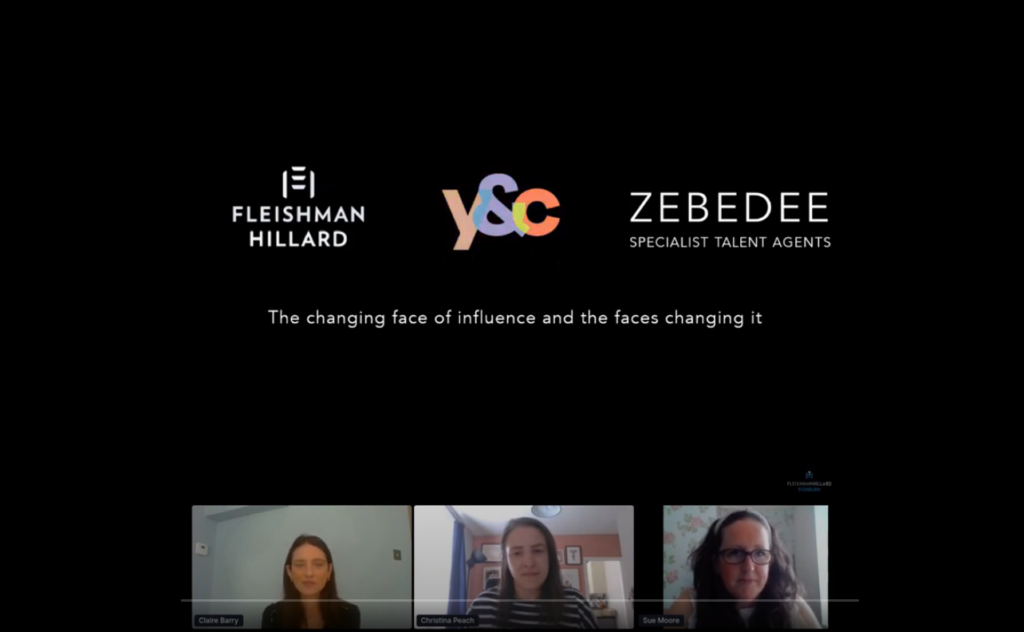
The Changing Face of Influence and the Faces Changing It: Panel Wrap-Up at Cannes Can Diversity Collective’s Inkwell Beach
June 24, 2021
By Lauren Winter and Christina Peach
Share
Did you know:
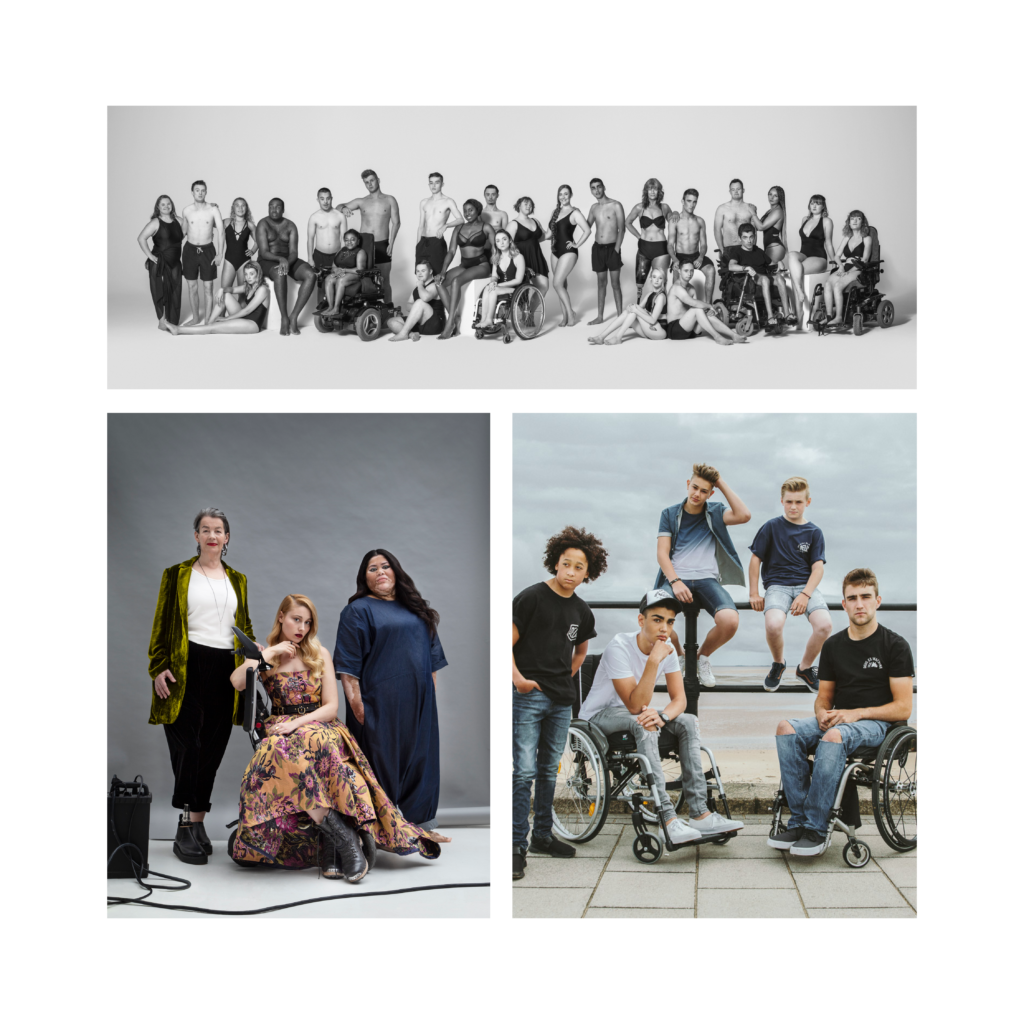
15% – 20% of the world’s population have a disability (around 14 million people), representing the largest minority group in the world.
650,000 people have Vitiligo (white patches on the skin caused by lack of melanin).
Eight million women in the UK have experienced Alopecia or hair loss.
If you didn’t know these stats and the number of people included, it wouldn’t surprise me. Research shows that people with disabilities make up only 0.06% of those featured in advertising; in fashion and beauty, this drops even lower to 0.01%.
These astonishing, yet humbling stats were shared by our new partner Zebedee during our 2021 Cannes Can: Diversity Collective’sInkwell Beach’s Virtual Session panel discussion. Zebedee is a specialist talent agency with a mission to ensure people of various representation in the media.
Our partnership with Zebedee will set the tone and reset mindsets; it will change how brands think, act and behave, to set better industry standards of representation. It’s not a should-do. It’s a must-do for us all to put this into action.
There is enormous untapped potential, and the power of representation is clear already. One of Zebedee’s star talents, Ellie Goldstein, was featured in a campaign for a global luxury fashion brand. On social, it became the most engaged post in their history, beating the likes of Harry Styles. It shows that not only does this work resonate, it matters.
Brands are powerful, and when two come together for one meaningful mission, exciting things can happen.
Partnerships like ours with Zebedee can give a voice to those who have been left behind by society, and ensure they are seen and heard — ultimately disrupting sectors and driving more inclusive work.
In a world where community is the new celebrity, the role of celebrities is changing. It’s a path to navigate for brands to act with bravery so that you’re not part of a ‘trend’; instead, you set the story and move culture forward.
Throughout the social revolution of the past 12 months, every dimension of DE&I has come into greater focus, and we as communicators with the ability to influence our clients must not leave communities behind. The disability community makes up approximately one billion people globally, and for too long, the community has been overlooked. Organisations like Zebedee and the brands that embrace working with them will experience business and reputational benefits.
Why this is important work and how FleishmanHillard and Zebedee can help brands:
It is Morally the Right Thing to Do: We all need to work together to create an equitable and inclusive society.
Language: People and brands are at different points along their DE&I journeys; we can help educate them on how to address people and talk about their various abilities.
Access and Needs: Arming you and your teams with the knowledge of things that people need, including accessible events and how to brief them. It’s all in the detail.
It’s Not Box-Ticking: We all need to start somewhere — big or small, it matters that you take action.
Do Better Work: We can work with your teams to develop creative and powerful campaigns for brands that matter to your audiences.
Photo courtesy of Zebedee
Whilst our partnership is new, it is work that we’ve been doing and continuously strive to do better, and this relationship further solidifies our ambitions. We’re hugely committed to working with talent of all backgrounds and abilities to build communities that reflect the world around us. Our commitment will always be to connect our brands to Zebedee, making the space campaigns can afford to take up and representing an authentic view of society.
Watch the ‘Community is the new celebrity — the changing face of influence and the faces changing it’ panel discussion at Cannes Can: Diversity Collective’s Inkwell Beach here.
The Youth and Culture team and Zebedee will be speaking at Martha’s Vineyard Aug. 10-12. Mark your calendars!
Contact us here to find out more about how our partnership with Zebedee can help your organisation.
See what else is happening
You might also like
Events
Let’s Map New York: A More Inclusive NYC Starts Here
April 30, 2025
ESG
Navigating Conflicting Demands to Advance Climate Action
January 20, 2025
Opinions
Supporting St. Louis Institutions Dedicated to Empowering Youth Through FH4Inclusion
January 15, 2025
Opinions
Revitalizing the San Francisco Community with the Downtown Volunteer Coalition
December 23, 2024
Inclusion
Recognizing the power of the LGBTQ Community in Advertising & Media with GLAAD
October 11, 2024
Opinions
FleishmanHillard and FH4Inclusion Teams Shine at the Cannes Lions International Festival of Creativity
August 28, 2024
Opinions
Bridging the Generational Divide with Generative AI
August 27, 2024
Events
FleishmanHillard’s Sophis Kasemsahasin to speak at Techsauce Global Summit 2024
August 6, 2024
Events
FleishmanHillard’s Leela Stake and Francesca Weems to Join Paradigm’s Joelle Emerson on Inclusive Communication Webinar
The Impact of Grassroots Sports Closures on Communities
June 14, 2021
Share
Following the second postponement of sport at all ages, local communities were struggling to keep grassroots sports alive. Participants across the country were left with a sporting void, denying them the chance to exercise, socialise and meet. The impact on local communities was massive, but what can external stakeholders such as brands and organisations do? […]
For Diabetes Awareness Week, senior account executive, Louise Fathers and designer, Ben Calloway share their experiences of living and working with Type 1 Diabetes. […]