Anyone who has been job hunting knows it is an incredibly challenging task – one made infinitely more difficult when there is a shortage of jobs available. South Africa has a high national unemployment rate at 27.6%, and youth unemployment in the country stands at an all-time high of 55.2%.
Unsurprisingly, being unemployed comes with heightened levels of stress. Some of the more apparent stressors are financially based – the loss of income, for example – but others are not so obvious. According to the New York Times, if someone is still job hunting after 10 to 12 weeks, their physical health suffers and they experience increased rates of depression. In some circles, this is referred to as ‘job-search depression’.
The competition is fierce, as the average job posting receives about 250 applications and the current average that it takes for companies to fill a post is about 42 days. The longer you go without employment, the tougher it is on your mental and emotional health, and the tougher it becomes, in turn, to find a job. It’s a vicious cycle. So how can you overcome these barriers?
Cue ‘The Power of You’. This personal branding workshop was by the team in FleishmanHillard’s South Africa office as part of FH4Inclusion to celebrate Mandela Day. Each year Mandela Day serves as an occasion for all to act, inspire change and make an impact on the world. In honor of what would have been Nelson Mandela’s 100th birthday, we designed and delivered a programme for South African communications and public relations students who are beginning the search for their first full-time role. The trainings help up-and-coming professionals with job searches, providing them the best possible start.
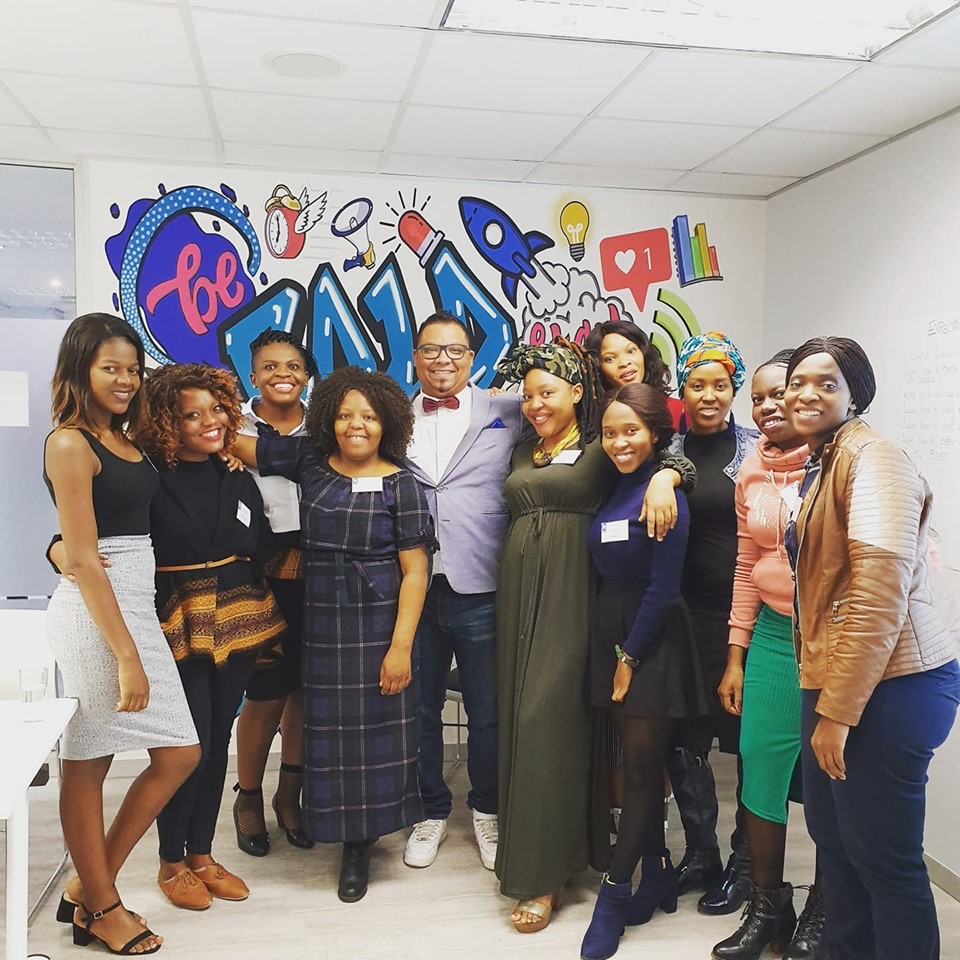
Our team and students after a successful day of workshops.
Knowing how hard it can be to land a job and how demotivating it is to not receive feedback, especially in those first few months, we wanted to show young jobseekers that their story is the unique selling point they need to get their foot on the first rung of the career ladder. We take them through how to uncover and tell their unique story.
One of the big challenges with job searching is the effect it has on your self-esteem. In a lot of ways, job hunting is like searching for approval and it can be a big knock to the ego when you aren’t getting any positive feedback. Even though it may be hard, it is crucial to remain social, remain focused, network and learn new skills. It is important for young people on the job hunt to know who they are and the value they can bring to the workplace, especially in entry level positions. We help them understand their brand and how they can establish and promote themselves on social media and created eye-catching CVs with compelling cover letters. We also conduct mock interviews to give them some much-needed practice.
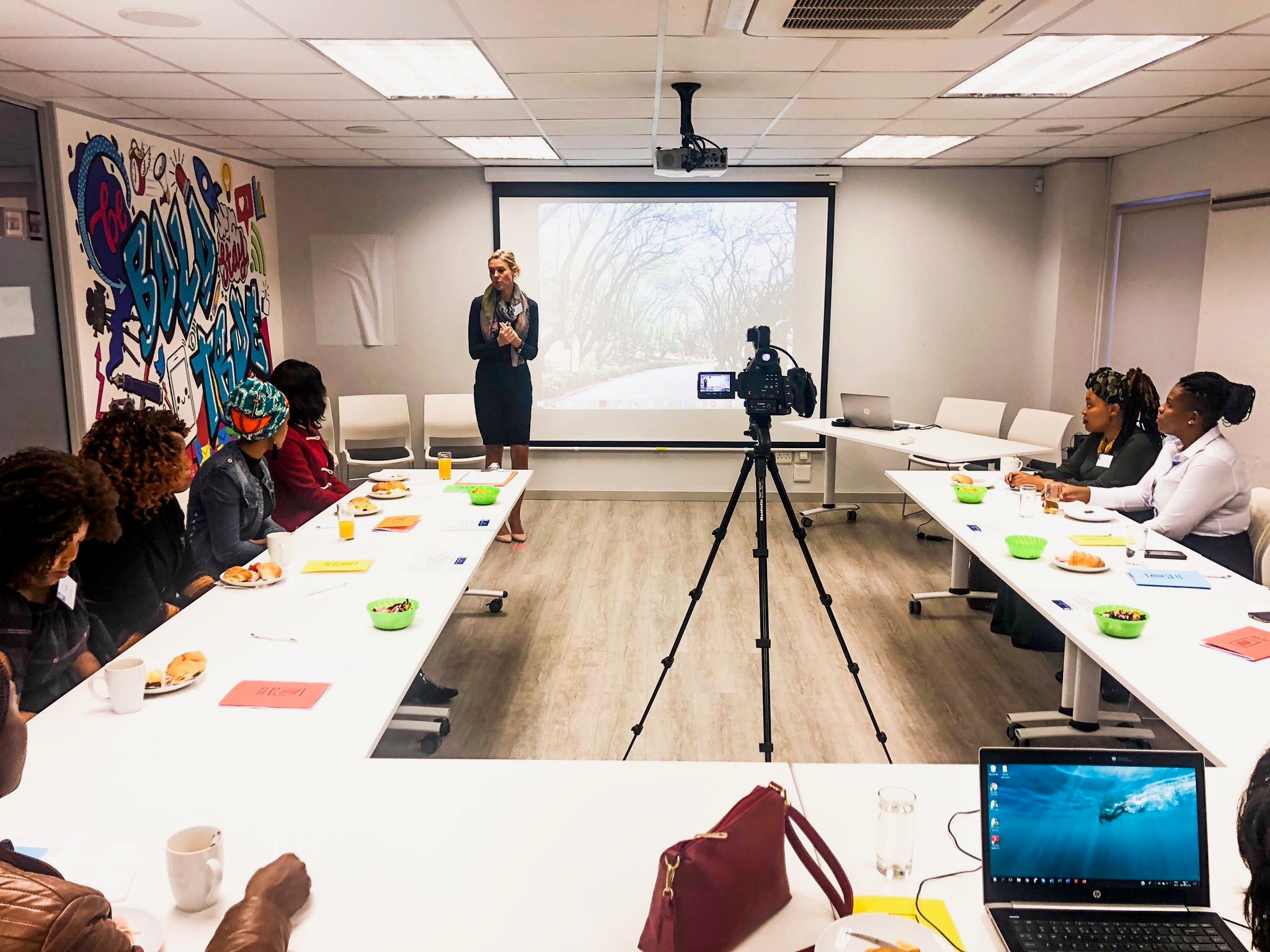
General Manager Sharon Piehl trains a group of students during a Power of You workshop
For this programme, our overall goal is to support 100 young jobseekers in the Communications and Public Relations field by the end of 2020. To date, 26 students have gone through the programme with an additional 30 students to come in the rest of 2019.
The Power of You is our South Africa office’s small way of using our unique set of skills to propel the next generation of consultants forward by harnessing the power of their own unique stories to jumpstart their careers.
[vimeo id=”349777601″ aspect=”56.25″]
Angela Maciel is a member of the talent development team in the South Africa office. She is responsible for recruitment and helps lead the office’s diversity and inclusion and training programs.
See what else is happening
You might also like
ESG
Navigating Conflicting Demands to Advance Climate Action
January 20, 2025
Opinions
Supporting St. Louis Institutions Dedicated to Empowering Youth Through FH4Inclusion
January 15, 2025
Opinions
Revitalizing the San Francisco Community with the Downtown Volunteer Coalition
December 23, 2024
Opinions
FleishmanHillard and FH4Inclusion Teams Shine at the Cannes Lions International Festival of Creativity
August 28, 2024
Opinions
Bridging the Generational Divide with Generative AI
August 27, 2024
Inclusion
Success on Repeat: Alumni of the Alfred Fleishman Diversity Fellowship Discuss Promotions and How to Get Them
May 29, 2024
News
EU climate policy: The new borderlines?
May 27, 2024
News
Achieving the Evolving Duality of Loyalty and Loyalty Programs
April 1, 2024
Expertise
TickTockTech: Mobile World Congress 2024 — What’s the Verdict?
Michael Collins, the Apollo 11 Command Module Pilot, spent 21 and a half hours alone in space – watching, waiting and trusting that Neil Armstrong and Buzz Aldrin would safely complete the first manned landing on the moon. He believed the hard work of the men and women on earth would ensure their success – and he was right. They succeeded thanks to technological advances humanity had never known before. Traveling back to earth with his fellow astronauts, Collins remarked that “it is most important that we be going forward.”
While it’s safe to say Collins was just hoping they were headed in the right direction home…humanity has steadily progressed forward, with technology innovation from both the 20th and 21st centuries guiding us along the journey.
There is a lot of discussion around trust and technology today. The so-called ‘techlash’ has emerged because some feel that a few of the most innovative companies have gotten too big, too powerful and too unmanageable. However, they have reached this point because people crave the innovation they provide. We trust them with our data because we know that without this trust there would be no innovation – no forward movement.
On July 20, we will celebrate the 50-year anniversary of Neil Armstrong and Buzz Aldrin first taking their “giant leap for mankind.” And in the past five decades, we have made leap after leap – creating a world few could have previously imagined.
As I write this post (on my wireless keyboard), I briefly peek at breaking news and Instagram alerts on my mobile phone, comforted in the knowledge that my document is constantly autosaving. It goes without saying that the technology industry has evolved over the past 50 years—making our lives simultaneously easier and more complex. While they may pick on their parents and grandparents for not knowing how to add an attachment to an email, the Millennials and Gen Z’ers out there that cannot imagine a world without Snapchat, streaming video or Wi-Fi should note that these modern conveniences were things of science fiction when their parents were their age.
Eight years before the moon landing, in 1961, sitting president John F. Kennedy announced the goal of sending an American safely to the moon before the end of the decade. As a result, NASA engineers and the best and brightest academic minds of the time set forth on a journey that would rapidly accelerate the pace of technology development. The intense, exhaustive research and development that powered all the Apollo missions, including Apollo 11, launched humanity in the direction it has gone since, paving the way for the hyper-connected, technology-dependent world we live in today.
Many – if not all – of the technology we use today can track their roots in some way to Apollo and the related research and innovation conducted by NASA scientists and engineers at the time. In fact, despite the speed of change and adoption we face today, the changes we experienced 50 years ago remain unprecedented – and forever life-altering. The emergence of categories like consumer electronics and enterprise computing systems point directly to this moment in time. Companies like Intel, Boeing and IBM grew, at least in part, because of the space program.
We can sometimes take the wealth technology products and services we use every day for granted. And it’s easy to point a finger and take aim at companies for misusing our data or influencing government policy, but we are responsible for their growth and power. Our insatiable hunger to get to the moon 50 years ago had a profound, everlasting impact on our world. We have adapted and evolved, welcoming new technology into our homes, cars and businesses.
And we will continue to trust and evolve, despite our occasional concerns and demands for regulation, because that is human nature. As Michael Collins said, it’s “amazing how quickly you adapt – why, it doesn’t seem weird at all to me to look out there and see the moon going by, you know?”
Interested in learning how technology companies can make an impact in an age of increased techlash? Find out how in our latest technology report, “From Darlings to Damaged.”
See what else is happening
You might also like
Expertise
Why Trust is the Real Competitive Advantage in Ag Tech
April 2, 2026
Expertise
Notes From the Road: RSA Conference 2026 Edition
April 1, 2026
Expertise
Why Your AI Rollout Is Stalling (And What Actually Moves the Needle)
March 25, 2026
Expertise
Get the Report: Inside China’s 2026 Two Sessions
March 24, 2026
Expertise
The New Culture Gap Report: How Brands Stay Relevant for 100 Years
March 24, 2026
Expertise
The Tech Industry’s License to Lead Problem: How Tech Companies Made Themselves Vulnerable to the AI and SaaS Apocalypse Doubt
March 4, 2026
Expertise
The Five Principles of Decision-Ready Intelligence: A Framework for Making Hard Calls in an AI-driven Environment
March 3, 2026
Expertise
The Patient Engagement Gap Your Competitors Are Closing
February 26, 2026
Expertise
AI is Reshaping Communications: Inside FleishmanHillard’s Enterprise-Wide Approach
The Emoji That Brings Us Together, Keeps Us Together ?
July 17, 2019
Share
It’s easy to dismiss the sophistication of the emoji.
Emojis are firmly embedded in our digital language and even show up IRL in Halloween costumes. As communications professionals, we should be in awe of something that crosses cultures, mediums and language with ease. So on this World Emoji Day, let’s step back and consider the emoji in its proper context as an international ? builder.
But first, a bit of history. As most of our cultural trends here in the states, emojis were birthed in Japan and originally came in the form of an emoji-only keyboard, only available to Apple users in Japan. Only after iPhone users in the US downloaded the Japanese keyboard en mass did Apple make it an international standard. In 2010, emojis were finally adopted into the international coding standard called Unicode and universally available on both Apple and Android operating systems.
Today the process for proposing an emoji is simple and accessible to anyone. Unicode Consortium, a non-profit international organization responsible for making sure people around the world can use a computer in any language, approves every new emoji. Anyone can submit a proposal to the consortium—yes, even you— with a bit of rationale for why it should be added. For example, Courtney Milan is a historical romance author and is responsible for our ? emoji. She documented the approval process and her rationale was as follows: (Emphasis added for dramatic effect!)
“The current selection of emoji animals is missing a vital portion of natural species. While there are alligators, koalas, mice, snakes, whales and dragons, utterly missing from the emoji pantheon are any extinct creatures. Specifically, none of the prehistoric dinosaurs that have captured the human imagination and become a part of our global culture are present. This proposal details a set of Jurassicemojis to fix this situation once and for all.”
But not to be outdone, brands, celebrities, and organizations are a regular contributor to the emoji submissions. Kit Kat proposed that a breaking candy be added, Tony Hawk helped the consortium design a more accurate board and Google asked for more professional emojis to be added to help reduce gender restrictions.
This year 230 new emojis are being added to the list, and while there are many simple new additions like the flamingo, the theme for the year is clearly representation and inclusiveness.
While new emojis offer new opportunities for brands to speak to universally relevant topics of inclusiveness, it’s important to always keep the tone in mind. The best examples from brands are when there’s a natural fit and the use of the emoji doesn’t feel forced. Emojis are fine for most light and playful posts. We wouldn’t advise brands to use emojis for complex or solemn topics as it might come across as inappropriate and tone-deaf.
Emojis are important because, in a world where we are increasingly aware of what divides us, they remind us of the experiences we share. They remind us of things that we know so inherently that we can look at a picture and know what is being communicated no matter where you live.
To celebrate this year’s World Emoji Day, let’s all join together to think of communication in more universal terms and appreciate the emoji for what it is. The world’s first universal language.
Our most basic common ? is that we all ? ➡️ ?. We all ? the same ?. We all ❤️ our ? future. And we are all ?.
– John F. Kennedy
See what else is happening
You might also like
Expertise
Why Trust is the Real Competitive Advantage in Ag Tech
April 2, 2026
Expertise
Notes From the Road: RSA Conference 2026 Edition
April 1, 2026
Expertise
Why Your AI Rollout Is Stalling (And What Actually Moves the Needle)
March 25, 2026
Expertise
Get the Report: Inside China’s 2026 Two Sessions
March 24, 2026
Expertise
The New Culture Gap Report: How Brands Stay Relevant for 100 Years
March 24, 2026
Expertise
The Tech Industry’s License to Lead Problem: How Tech Companies Made Themselves Vulnerable to the AI and SaaS Apocalypse Doubt
March 4, 2026
Expertise
The Five Principles of Decision-Ready Intelligence: A Framework for Making Hard Calls in an AI-driven Environment
March 3, 2026
Expertise
The Patient Engagement Gap Your Competitors Are Closing
February 26, 2026
Expertise
AI is Reshaping Communications: Inside FleishmanHillard’s Enterprise-Wide Approach
FleishmanHillard Builds on the Foundations of Music
July 16, 2019
By FH4Inclusion
Share
When we started at FleishmanHillard’s Chicago office in 2016 after graduating from college, we both wanted to find ways to become involved with office committees and outside organizations to contribute to our new community. When our supervisors provided an opportunity to work on FleishmanHillard Chicago’s pro-bono, FH4Inclusion client, Foundations of Music (FoM), we were more than happy to jump in and help.
Foundations of Music is a licensed Illinois 501(c)(3) nonprofit organization and the leader in providing fundamental music education during the school day. For 30 years, the nonprofit has used music to strengthen Chicago communities by partnering with Chicago Public Schools in the most economically disadvantaged neighborhoods. FoM’s music curriculum aims to spark creativity and passion, teach critical thinking, support academic achievement and – most importantly – enrich young lives. Recent studies show that there is a direct link between music education and better math scores, computer skills, language learning, cognitive growth, emotional well-being and a positive self-image.
The organization works with professional musicians to develop and implement lesson plans that are inspired by a curriculum map which meets national arts learning standards. Programs include General Music Class, Songwriting/Production Class and other performance opportunities. During the 2017-2018 school year, Foundations of Music served more than 5,000 students at almost 40 Chicago Public Schools.
Given our love for music and passion for education for all, this project was a perfect fit.
While the organization is present at a lot of schools in the Chicago area, its visibility in the community needed a boost. FleishmanHillard was tasked with promoting fundraisers and creating content that would get the word out about all the great work this organization does and get others in Chicago, who also share this passion for music education, involved.
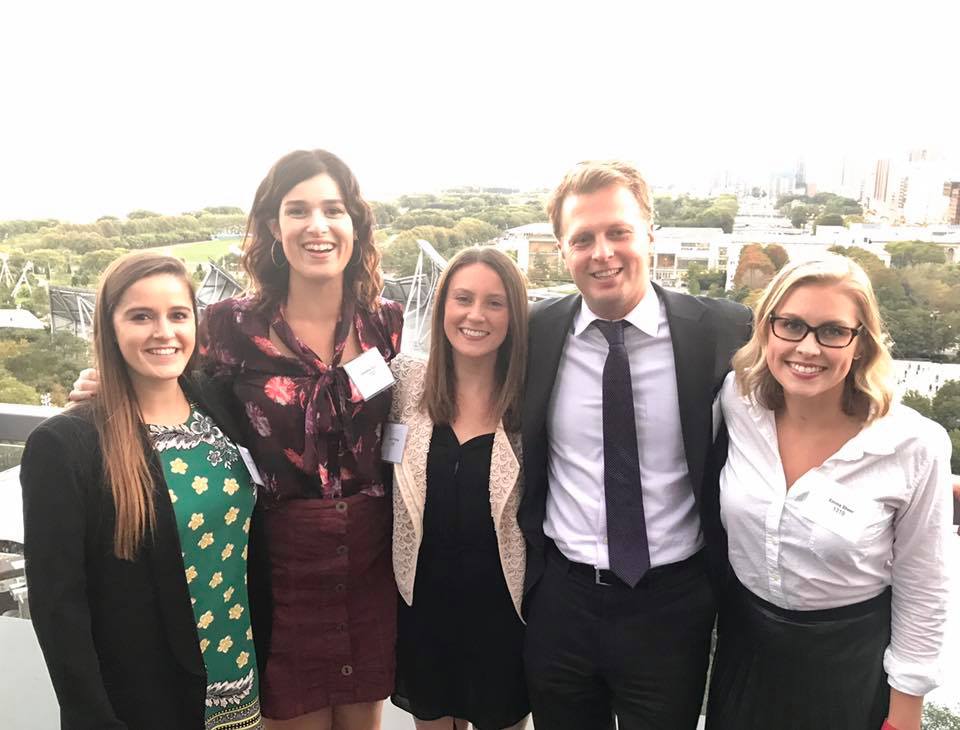
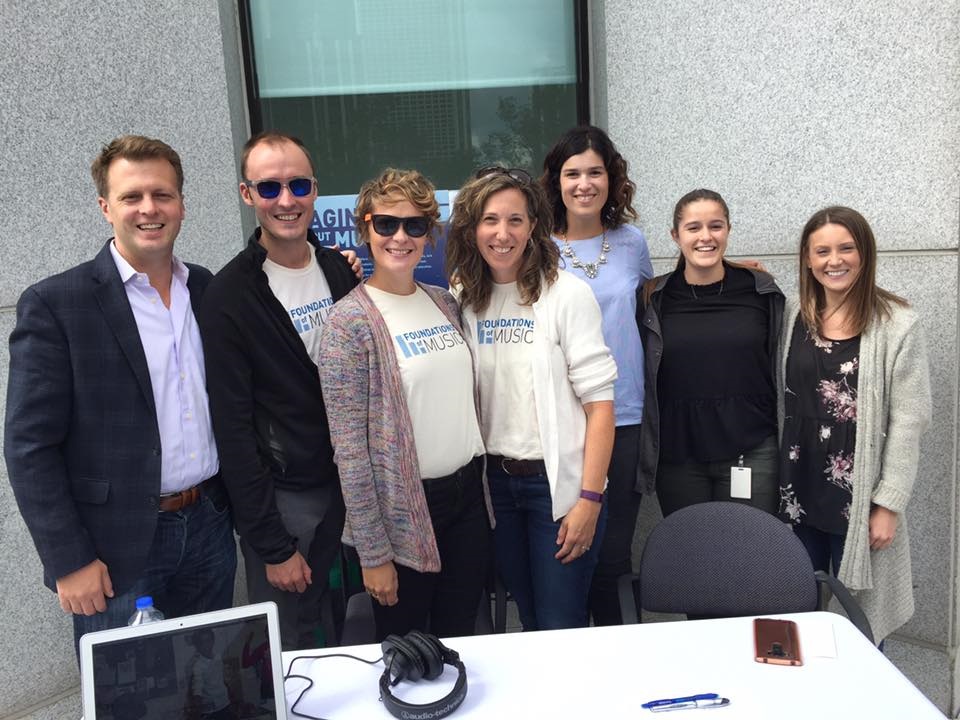
FleishmanHillard’s FoM team attending the organization’s annual fundraiser in 2017.
Since beginning our work with FoM more than five years ago, the team has supported the organization through leadership shifts, change in headquarters, re-brands of fundraising events and an updated logo, all to better match the organization’s forward trajectory and reach a younger audience with a passion for music. The team also worked with local businesses like Girl and the Goat and Goose Island Brewery to further connect FoM with the Chicago community. From Pitchfork (a local music festival) to the foundation’s annual fundraising event, team members of FleishmanHillard’s Chicago office not only promoted but also attended and volunteered at these events to make sure they ran without a glitch.
FoM and FleishmanHillard team promoting the organization to tenants in the Aon Center.
Through many iterations and changes, we’re now assisting the organization with a merger with another education-focused nonprofit in the city. This merger will allow both organizations to reach even more students, while also providing new areas of education beyond music—including art, cultural and literacy programs.
We’re looking forward to continuing our relationship with FoM and witnessing how the organization will continue to support the children at Chicago Public Schools who would not receive these education programs without them. The organization is excited to expand its work and presence, and we’re excited to contribute our public relations expertise to spread the word about the important mission to better our city and enrich the lives of its inhabitants.
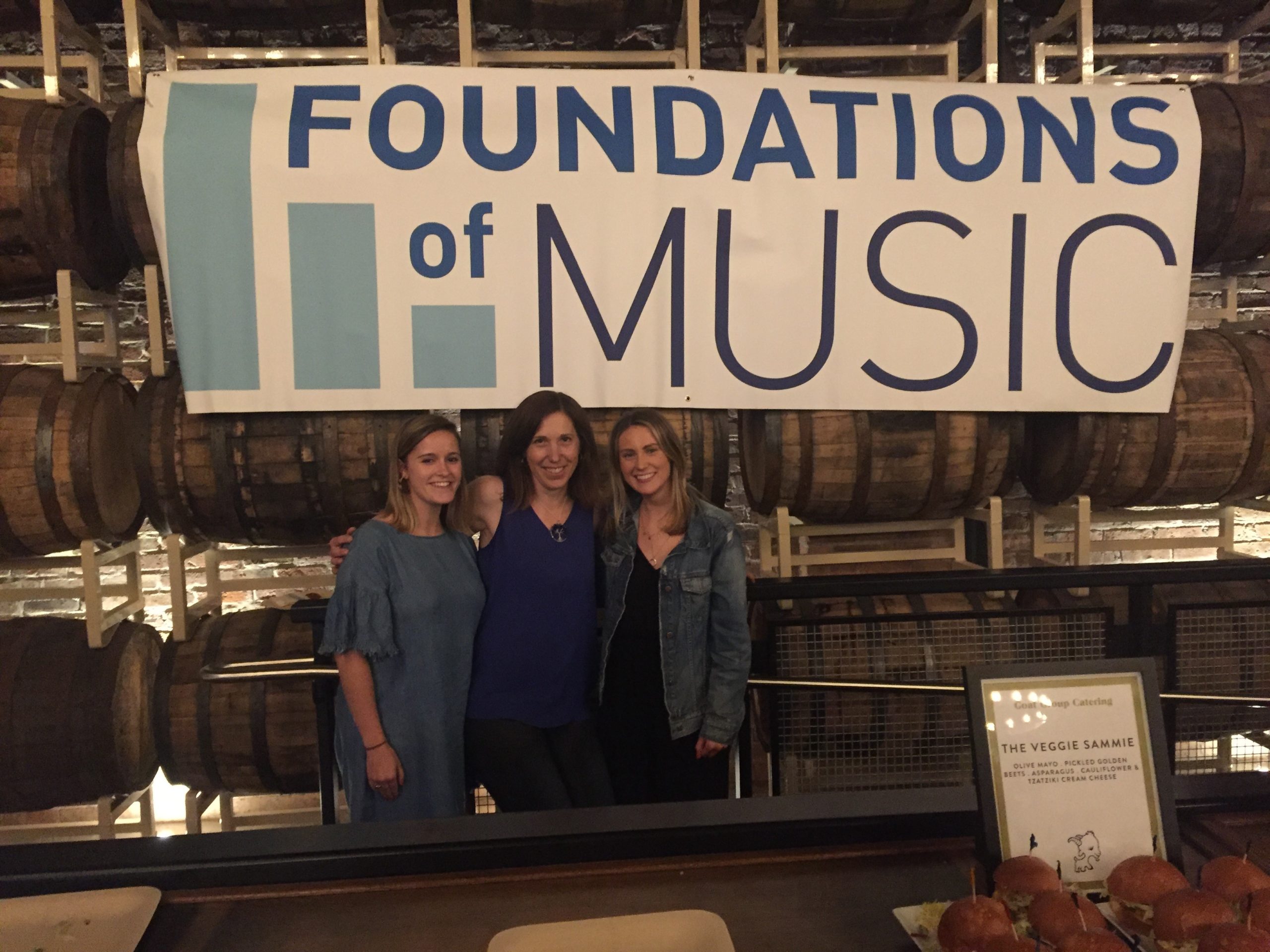
Meg Patrick (left) and Genna Pirrong (right) with FoM Executive Director, Brenda Fineberg (center) at FoM’s annual fundraiser in 2019.
Click here to hear one of the student group’s amazing songs created through programs put on by Foundations of Music!
Meg Patrick supports the Brand Marketing team and Genna Pirrong works with our Corporate Reputation team in FleishmanHillard’s Chicago office.
See what else is happening
You might also like
ESG
Navigating Conflicting Demands to Advance Climate Action
January 20, 2025
Opinions
Supporting St. Louis Institutions Dedicated to Empowering Youth Through FH4Inclusion
January 15, 2025
Opinions
Revitalizing the San Francisco Community with the Downtown Volunteer Coalition
December 23, 2024
Opinions
FleishmanHillard and FH4Inclusion Teams Shine at the Cannes Lions International Festival of Creativity
August 28, 2024
Opinions
Bridging the Generational Divide with Generative AI
August 27, 2024
Inclusion
Success on Repeat: Alumni of the Alfred Fleishman Diversity Fellowship Discuss Promotions and How to Get Them
May 29, 2024
News
EU climate policy: The new borderlines?
May 27, 2024
News
Achieving the Evolving Duality of Loyalty and Loyalty Programs
April 1, 2024
Expertise
TickTockTech: Mobile World Congress 2024 — What’s the Verdict?
Wimbledon is a sporting occasion steeped in history. It is the oldest and most prestigious tennis tournament in existence and has immortalised players, iconic matches and even song lyrics. On the surface (if you’ll pardon the pun), its quaint, quintessentially British traditions of Pimms-sipping, of strawberries & cream and of very long queues present appetite-whetting opportunities for brands and organisers alike. So too does the strong imagery with which the tournament is associated: the immaculate lawns, the all-white dress code and the sweeping shots of a packed Murray Mound are all purpose-built – in an authentically unintentional way – for effective campaigns.
But over the last few years, a feeling that the tournament has begun to lose its sparkle on and off the court has become unavoidable. Addressing the tennis first, the men and women’s games are struggling, but for polar-opposite reasons. While the reign of the Rafael Nadal, Roger Federer, Novak Djokovic triumvirate has rendered the men’s draw repetitive to the point of boredom, the seemingly utterly random nature of the women’s has come at the price of any major rivalries being forged nor narratives, told.
Off the court, it looks to be a similar story. Brands’ regular use of UK tennis traditions and – dare we say – clichés have numbed consumers to just how special the tournament is. That said, both brands and organisers who can see this problem emerging, are stuck between a rock and a hard place. This is because many attempts to modernise this darling of sporting occasions and move away from its ‘roots’ can appear contrived and forced.
One also has to entertain the idea that Wimbledon could simply be being out-gunned. Last summer saw an England football side capture the nation’s imagination, and – unfortunately for the big-wigs at AELTC – in doing so, drew the gaze both of brands and Brits for the vast majority of last year’s championships. Similarly, this year the women’s World Cup dominated back pages for Wimbledon’s first week – and that is despite the fairy-tales that were Coco Gauff and ‘MurRena’. Andy Murray returning to the stage has been a glorious swansong for the British supporters, mostly his partnership with Serena Williams in the mixed doubles, but this is unlikely to be seen again.
Looking forward, this misfortune shows little sign of relenting. Fortunately for the organisers, next year’s Olympics will kick off, just after the men’s final on Sunday, but they will have Euro 2020 to contend with. Beyond that, 2022 will bring respite in the form of a winter Football World Cup, but the rise of women’s sport, mean that the previously considered ‘fallow years’, in which Wimbledon can draw the attention of more brands and supporters will be increasingly few and far between.
What, then, in this tricky situation, can be done to make the most of such a unique tournament, and which brands are best placed to do it?
With changes in society, and rule changes in the game, we have seen new sectors market themselves using Wimbledon in novel, and intriguing ways. Data and technology companies have become increasingly involved in the sport, whether through Hawkeye’s now-total assimilation into matches or the ever-increasing amount of data-driven analysis. This now natural connection between the sport, and the companies who provide that data has led to some refreshing, natural and authentic campaigns.
Sportswear brands – unsurprisingly – also play a big role every year. Rather counterintuitively, the draconian enforcement of Wimbledon’s all-whites rule, presents them with a great opportunity. Throughout the ages, players have opted to subvert or bend the traditional all-whites law, and recently We’ve seen sponsors collaborating with streetwear brands, players wearing football shirts, and colourful undergarments. The result is often the same (players get told to wear something different in the next round), but it never ceases to earn eyeballs and column inches.
As the covers are rolled onto Centre Court for the final time, Simona Halep and Djokovic have claimed their respective crowns, exactly how the tournament will retain its mojo remains up in the air. However, we have seen through a string of activity, that there are novel and exciting avenues which both brands and the tournament can pursue, and that life certainly exists in the truly unique tournament that is Wimbledon.
ST. LOUIS, July 9, 2019 – FleishmanHillard today announced the appointment of Marjorie Benzkofer to Chief Strategy Officer (CSO). In this new role, she will focus on developing and executing the agency’s growth plan, shepherding the investment of resources and measuring the collective progress of the agency.
Marjorie Benzkofer
Benzkofer will be responsible for developing the overarching strategic plan for the agency, with specific focus on bringing growth strategies into its more than 80 offices around the world. She will guide the agency’s efforts to integrate the organization’s growth initiatives, convening the FleishmanHillard Cabinet, general managers, Finance and Talent Development departments and others into a coordinated planning framework, ensuring FleishmanHillard is the agency of choice for global clients and the industry’s best talent.
“Marjorie has the ability to connect and motivate teams, seeing across the global network and foreshadowing industry trends, which makes her perfectly suited to take on this new role for the agency,” said John Saunders, president and CEO, FleishmanHillard.
In addition to her role as CSO, Benzkofer will continue to lead the global Reputation Management capability for the agency. Under her leadership, the practice has developed sophisticated IP to deliver smarter, more sophisticated solutions for clients, including the agency’s reputation research insights methodology, The Authenticity Gap. In her more than 20-year career with FleishmanHillard, Benzkofer has led countless programs for a multitude of Fortune 500 clients across industries and geographies. Before joining FleishmanHillard, Benzkofer was a corporate spokeswoman for the companies that are now ComEd and Exelon in Chicago. She began her career as a print and broadcast reporter in Kansas City and later in suburban Chicago.
About FleishmanHillard FleishmanHillard specializes in public relations, reputation management, public affairs, brand marketing, digital strategy, social engagement and content strategy. FleishmanHillard was named Agency of the Year at the 2017 and 2018 North American Excellence Awards; 2017 and 2018 ICCO Network of the Year for the Americas; 2019 PRWeek U.S. Outstanding Large Agency; 2019 Holmes Report North America Large Agency of the Year; 2018 Large Consultancy of the Year by PRWeek UK; PR News’ Best Places to Work in PR 2016-2018; Human Rights Campaign Best Places to Work for LGBTQ Equality for 2018 and 2019; PR Awards Asia 2017 Greater China Agency of the Year; and NAFE’s “Top Companies for Executive Women” for 2010-2019. The firm’s award-winning work is widely heralded, including at the Cannes International Festival of Creativity. FleishmanHillard is part of Omnicom Public Relations Group, and has more than 80 offices in 30 countries, plus affiliates in 43 countries.
About Omnicom Public Relations Group Omnicom Public Relations Group is a global collective of three of the top global public relations agencies worldwide and specialist agencies in areas including public affairs, marketing to women, global health strategy and corporate social responsibility. It encompasses more than 6,300 public relations professionals in more than 370 offices worldwide who provide their expertise to companies, government agencies, NGOs and non-profits across a wide range of industries. Omnicom Public Relations Group delivers for clients through a relentless focus on talent, continuous pursuit of innovation and a culture steeped in collaboration. Omnicom Public Relations Group is part of the DAS Group of Companies, a division of Omnicom Group Inc. (NYSE: OMC) that includes more than 200 companies in a wide range of marketing disciplines including advertising, public relations, healthcare, customer relationship management, events, promotional marketing, branding and research.
See what else is happening
You might also like
Expertise
The New Culture Gap Report: How Brands Stay Relevant for 100 Years
March 24, 2026
News
FleishmanHillard Named Among PRovoke Media’s Best Public Relations Agencies in the World
March 10, 2026
News
FleishmanHillard Integrates Porter Novelli to Form a Stronger, More Specialized Global Communications Consultancy
February 9, 2026
News
From Ragan: Elizabeth Cook on Rethinking Preparedness in Crisis Response
January 21, 2026
Global Executive Advisory
Insights From Davos: Building Credibility Through Storytelling
January 20, 2026
News
FleishmanHillard Unveils ‘License to Lead’ Research, Revealing a Growing Confidence Gap Between Executives and Stakeholders
January 13, 2026
News
FleishmanHillard Wins 2026 Innovation Awards for Data-Driven Strategy
January 12, 2026
Expertise
When the World Gets Noisy, Great Storytelling Breaks Through
December 3, 2025
News
Ellie Tuck Appointed Chief Creative Officer of the Americas
FleishmanHillard’s John Saunders Named to PRWeek Power List 2019
July 1, 2019
Share
ST. LOUIS, July 1, 2019 – John Saunders, FleishmanHillard president & CEO, has been named to this year’s PRWeekU.S. Power List for the fourth consecutive year.
John Saunders, President and CEO
The publication recognized that Saunders’ leadership and strategy have led to significant new business wins for the global public relations firm and lauded Saunders for FleishmanHillard’s Outstanding Large Agency win at the PRWeek U.S. Awards in March.
The annual Power List recognizes influential individuals within the public relations and communications industry.
See what else is happening
You might also like
Expertise
The New Culture Gap Report: How Brands Stay Relevant for 100 Years
March 24, 2026
News
FleishmanHillard Named Among PRovoke Media’s Best Public Relations Agencies in the World
March 10, 2026
News
FleishmanHillard Integrates Porter Novelli to Form a Stronger, More Specialized Global Communications Consultancy
February 9, 2026
News
From Ragan: Elizabeth Cook on Rethinking Preparedness in Crisis Response
January 21, 2026
Global Executive Advisory
Insights From Davos: Building Credibility Through Storytelling
January 20, 2026
News
FleishmanHillard Unveils ‘License to Lead’ Research, Revealing a Growing Confidence Gap Between Executives and Stakeholders
January 13, 2026
News
FleishmanHillard Wins 2026 Innovation Awards for Data-Driven Strategy
January 12, 2026
Expertise
When the World Gets Noisy, Great Storytelling Breaks Through
December 3, 2025
News
Ellie Tuck Appointed Chief Creative Officer of the Americas
The Opportunity Cost of Not Having an Executive LinkedIn Profile
June 28, 2019
Share
Today executives are challenged more than ever before to keep pace with the ever-evolving workplace. Digital transformation, the gig economy and the rise of the next gen workforce are more than just buzzwords – they’re proof points that the business world is radically and rapidly changing all around us.
According to a recent eMarketer report, US digital ad spending is expected to reach $129.34 billion in 2019, accounting for more than half (54.2%) of total media ad spending for the first time ever. While companies are spending more on digital and social media to generate awareness, drive brand preference, manage their reputation and grow their business, their leaders are notably absent from the game.
While 54% of Fortune 500 CEOs have at least some presence on social media, that means that 46% have no social presence whatsoever.
Time and attention are among our most precious resources – particularly for executives, and engaging on social media requires an investment in both. But when executed properly, that investment can yield big dividends – both for leaders and for the company. If you’re an executive and you’re not actively engaged on LinkedIn, here’s what you’re sacrificing:
Share of voice. Chances are your competitors are leveraging LinkedIn to elevate their leaders and communicate their vision, mission and values. If you’re not a part of the conversation, you’re not in the consideration set of your potential customers.
Relationships. For many years LinkedIn was (rightly) perceived as little more than a place for your online resume and rolodex. Today, LinkedIn is the number one social network for business professionals. By publishing content and engaging in an authentic and human way, you’re earning credibility and favorability with the stakeholders that matter most to you.
Speaking engagements. If you want to be considered for a speaking opportunity or keynote address at a top-tier industry conference or event, you’re hurting your chances by not having an effective LinkedIn profile. Conference organizers are looking at everything from videos of previous speaking engagements to social media profiles when evaluating who to book for their events.
Media coverage. Google is often the first place that reporters (or anyone else for that matter) turn to for information about a company and its executives. When you Google yourself, what appears above the fold? For those with effective LinkedIn profiles, this typically appears among the top search results.
Employee morale. Employees nowadays expect their leaders to be effective communicators. According to Dynamic Signal’s 2019 State of Employee Communication and Engagement Study, 60 percent of employees report that they wouldn’t confidently advise keeping their CEO because of the poor company communication they’ve experienced.
Thought leadership. True thought leadership is achieved by articulating a clear and unique point of view that challenges the status quo and puts a stake in the ground. LinkedIn gives everyone the opportunity to essentially have their own blog without the constant pressure to publish. Bring your passion, priorities and perspectives to life by publishing articles on the platform.
Business growth. Ultimately, it’s not about you. It’s about your audience. Whether you’re in talent development, sales or in the C-suite, the most successful professionals focus on the needs, wants and beliefs of your audiences.
Becoming a trusted and effective leader requires a lot more than just an effective LinkedIn profile. Research from our FleishmanHillard Navigating Zero Gravity Report affirms that it isn’t enough for the CEO to say something in order to establish and maintain credibility. However, LinkedIn can be a powerful tool to engage in dialogue and reinforce how you are addressing and advancing the issues that matter most to you, your company and your key stakeholders.
By dedicating just two percent of your time (one hour during a 50 hour work week) to building your personal brand on LinkedIn, you can generate a meaningful and measurable return on your investment.
See what else is happening
You might also like
Expertise
Why Trust is the Real Competitive Advantage in Ag Tech
April 2, 2026
Expertise
Notes From the Road: RSA Conference 2026 Edition
April 1, 2026
Expertise
Why Your AI Rollout Is Stalling (And What Actually Moves the Needle)
March 25, 2026
Expertise
Get the Report: Inside China’s 2026 Two Sessions
March 24, 2026
Expertise
The New Culture Gap Report: How Brands Stay Relevant for 100 Years
March 24, 2026
Expertise
The Tech Industry’s License to Lead Problem: How Tech Companies Made Themselves Vulnerable to the AI and SaaS Apocalypse Doubt
March 4, 2026
Expertise
The Five Principles of Decision-Ready Intelligence: A Framework for Making Hard Calls in an AI-driven Environment
March 3, 2026
Expertise
The Patient Engagement Gap Your Competitors Are Closing
February 26, 2026
Expertise
AI is Reshaping Communications: Inside FleishmanHillard’s Enterprise-Wide Approach
I’m writing this on a sunny Friday morning in London – coincidentally today marks the 50th Anniversary of the Stonewall riots, a movement that reshaped the world and the push for LGBT+ rights. So, it feels right to be penning my love for the LGBT+ community but also my experience of working at FleishmanHillard as an openly gay woman.
A quick backstory for you, I moved from a small town in the northwest of England to London, to study and eventually land a job in PR. Having come from a financial background, I knew that PR would be quite a big step and change for me – not just the job, but the people too.
As you read (hopefully) this whole post, you’ll see why people are such an important part of breeding inclusive culture – there are even stats to back this up. A study by USAID and the Williams Institute at UCLA found a strong correlation between inclusion towards LGBT+ people and better performing economies, one that is quantified by approximately 3% of GDP for each policy that spearheads LGBT+ acceptance.
In my previous job, I had always kept quiet about my private life – 1. Because it’s nobody’s business, and 2. Because I didn’t feel comfortable with coming out at work.
Fast forward 9 years and I am working for FleishmanHillard, working as my true self, without judgment.
How did I overcome that uncomfortable feeling of not being able to come out at work?
People.
And opportunities.
The culture that FleishmanHillard breeds is absolutely one of acceptance, which was a very welcome change to my closeted days working in finance.
Since my first day at FleishmanHillard, I have been encouraged to be myself and been afforded the time to follow my passions and achieve personal goals of helping the LGBT+ community through important pro-bono work. From helping to establish OPEN Pride UK, which has quickly become a force of nature for LGBT+ employees in Omnicom agencies, to naming and launching a Thomson Reuters Foundation initiative, Openly, an impartial news wire dedicated to covering LGBT+ stories from all over the world, that no one else is telling.
FleishmanHillard has been a cornerstone of my career, and had I not come out within days of starting work here, I would not have had the opportunity to do the work that is helping make a difference for others.
Coming out is not easy, the fear of rejection is real and only you will know when the time is right. But what is likely is that you will do so when you truly feel comfortable with the people around you.
Christina Peach supports our brand marketing practice in our London office.
See what else is happening
You might also like
ESG
Navigating Conflicting Demands to Advance Climate Action
January 20, 2025
Opinions
Supporting St. Louis Institutions Dedicated to Empowering Youth Through FH4Inclusion
January 15, 2025
Opinions
Revitalizing the San Francisco Community with the Downtown Volunteer Coalition
December 23, 2024
Opinions
FleishmanHillard and FH4Inclusion Teams Shine at the Cannes Lions International Festival of Creativity
August 28, 2024
Opinions
Bridging the Generational Divide with Generative AI
August 27, 2024
Inclusion
Success on Repeat: Alumni of the Alfred Fleishman Diversity Fellowship Discuss Promotions and How to Get Them
May 29, 2024
News
EU climate policy: The new borderlines?
May 27, 2024
News
Achieving the Evolving Duality of Loyalty and Loyalty Programs
April 1, 2024
Expertise
TickTockTech: Mobile World Congress 2024 — What’s the Verdict?
Inside the Cannes Lions Jury: A Room with a (Point of) View
June 26, 2019
Share
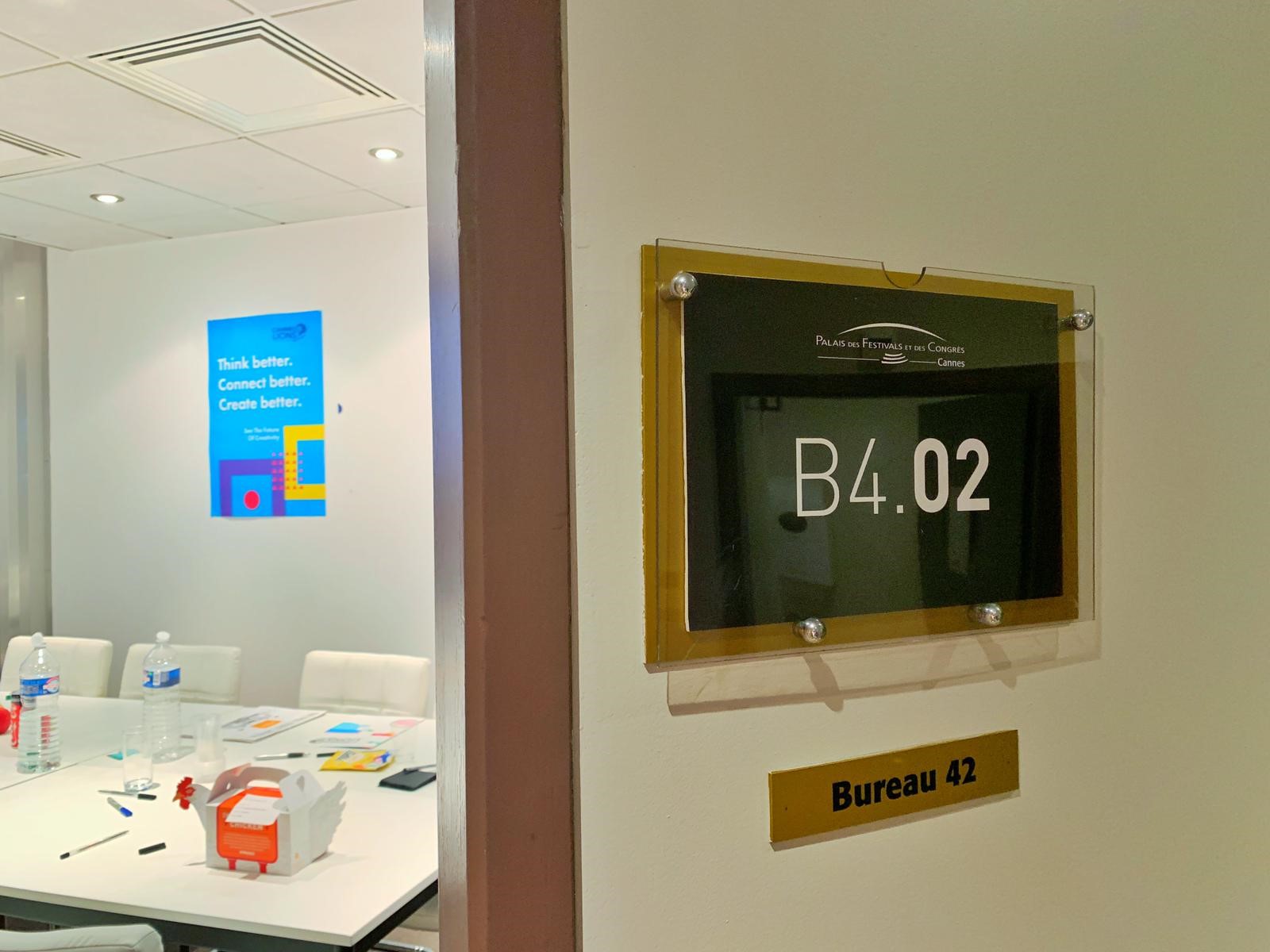
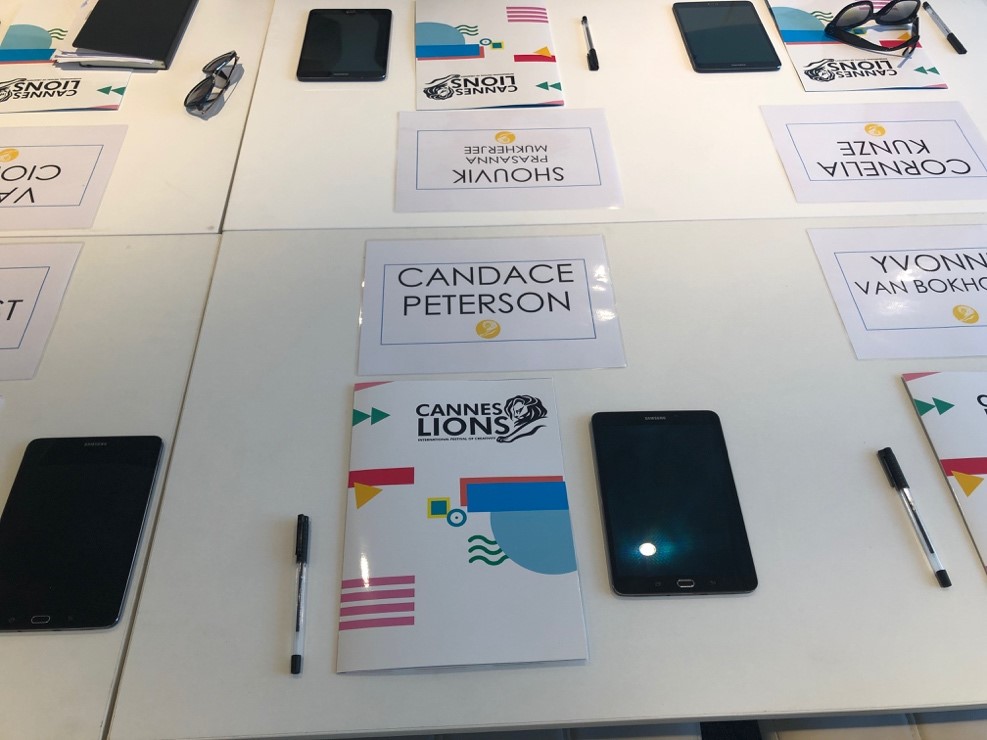
Bureau 42 is a modest, white-walled, fourth-floor room on the edge of the Palais des Festivals – simply furnished with a white rectangular conference table and 10 matching white chairs. What the room lacks in color is made up for by the panoramic window overlooking the Bay of Cannes. This unassuming room would in the course of four long, yet equally inspiring days give way to a collective point of view that effectively set the new creative standard for the PR industry.
We crossed the threshold as 10 perfect strangers, heralding from Brazil, Germany, Singapore, Sweden, Australia, UK and US. Seated elbow to elbow, together we studied and debated more than 350 pieces of work from 67 countries. And, as we did, something magical happened. The work made us smile, laugh, cry, and even feel ashamed or scared. It invited us to reflect on our individual experience and backgrounds. It made us care for, champion and defend work for which we had no affiliation. It made us debate and unpack religious, political and cultural beliefs. And when we did, minds were opened and sometimes even changed.
When it came down to awarding the work, we were guided by the words of this year’s jury president, Michelle Hutton. A protagonist for PR, Michelle states that PR is “a craft, not a channel. A craft that matters more today to businesses, to brands and society at large than ever before.” This standard was upheld as we ultimately awarded 26 Bronze Lions, 22 Silver Lions, 6 Gold Lions and the coveted Grand Prix Lion – each medal sending a clear message about why our craft matters.
PR Lions Jury President, Michelle Hutton
PR is indeed a craft. For this year’s jury, craft means work that is intentionally designed to earn media attention and influence – or, designed with PR input, not just output. It is work that is grounded in research, insights and data that drives the work and strategy and has real impact, not just impressions. It means an idea that is earned-centric; one that tells a story, mission or purpose and is made to live and travel across channels. And, above all else, it is an idea that is a brilliant example of creativity, the kind that makes you jealous.
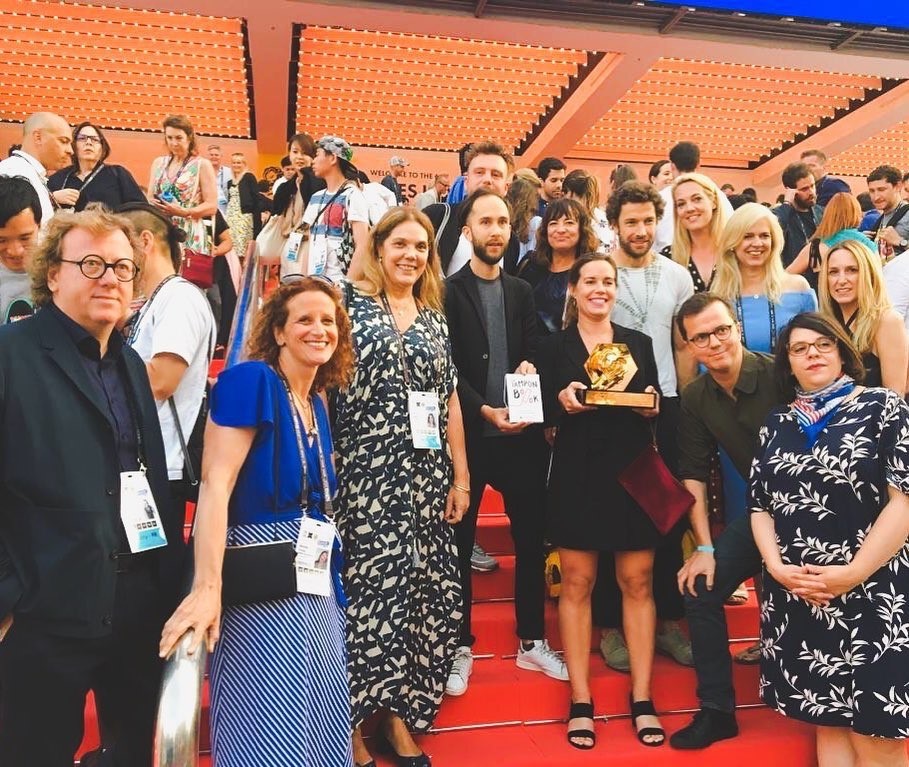
The concept of ‘craft’ is perhaps best demonstrated by the PR Lions jury’s Grand Prix winner, The Tampon Book – A Book Against Tax Discrimination. It is an excellent example of what modern PR looks like, combining creativity with the craft of public relations. The campaign has public affairs at its core, illuminating a well-defined problem around taxation of luxury goods, one that positions a tampon unfairly as a luxury. It offers a simple solution, putting the tampons in an illustrated book that is taxed at a lower rate. And, it is expertly executed across channels with the intent to make change and influence lawmakers.
PR Lions jury’s Grand Prix winners
The Tampon Book demonstrates that a campaign that sets out to change a tax law can be ‘super-powered’ though creativity. As a jury, we loved that this campaign acts as a call out to the creatives of the world to show public relations has some of the most interesting challenges to solve. In all, we were proud to show that an agency with public relations in its core, along with other creative disciplines, is able to use craft to deliver such a beautiful yet impactful campaign.
See what else is happening
You might also like
ESG
Navigating Conflicting Demands to Advance Climate Action
January 20, 2025
Opinions
Supporting St. Louis Institutions Dedicated to Empowering Youth Through FH4Inclusion
January 15, 2025
Opinions
Revitalizing the San Francisco Community with the Downtown Volunteer Coalition
December 23, 2024
Opinions
FleishmanHillard and FH4Inclusion Teams Shine at the Cannes Lions International Festival of Creativity
August 28, 2024
Opinions
Bridging the Generational Divide with Generative AI
August 27, 2024
Inclusion
Success on Repeat: Alumni of the Alfred Fleishman Diversity Fellowship Discuss Promotions and How to Get Them
May 29, 2024
News
EU climate policy: The new borderlines?
May 27, 2024
News
Achieving the Evolving Duality of Loyalty and Loyalty Programs
April 1, 2024
Expertise
TickTockTech: Mobile World Congress 2024 — What’s the Verdict?