FleishmanHillard Named Finalist at 2019 PRWeek Global Awards
March 5, 2019
Share
ST. LOUIS, March 5, 2019 — FleishmanHillard has been named a finalist for two awards at the 2019 PRWeek Global Awards, presented by PRWeek. The global public relations and marketing agency earned shortlist nods for Global Agency of the Year and work on behalf of FH4Inclusion client, United Nations.
FleishmanHillard (Finalist, Global Agency of the Year)
United Nations, “More Powerful Together – The United Nations Women’s HeForShe movement” (Finalist, Non-profit)
The National Association for Female Executives Names FleishmanHillard One of the 2019 “Top 10 Companies for Executive Women”
Share
This is the Fourth Consecutive Year for the Agency in the Top 10, and 10th Year on the List
ST. LOUIS, March 5, 2019 – FleishmanHillard has been named one of the 2019 NAFE Top Companies for Executive Women by the National Association for Female Executives (NAFE). NAFE and Working Mother continue to highlight the success of trailblazing companies, while exploring what keeps women from the top.
This list recognizes U.S. corporations where there is a strong focus on best practices that demonstrate effectiveness in moving women to senior ranks, including mentoring, sponsorship, involvement in employee-resource groups and leadership-development training. The list also highlights company benefits, including flexibility, corporate culture and CEO involvement in advancing women. The NAFE Top 70 Companies, released today, is featured in the April/May issue of Working Mother. The full report on this year’s winners is listed here.
“It’s our goal to make FleishmanHillard the most inclusive global communications agency there is and nothing less,” said John Saunders, president and CEO of FleishmanHillard. “We believe in the power of perspectives and a team that reflects the world in which we live, the stakeholders we serve and the clients with whom we partner. We’re thrilled to celebrate our 10th year on this prestigious list as we continue to aim even higher with our inclusion efforts.”
The NAFE 2019 recognition highlights FleishmanHillard’s ongoing initiatives to promote and support women in leadership roles. Several examples of these efforts include:
Women being appointed to 10 of the 17 current seats on the company’s leadership cabinet.
Women holding half of the roles within the C-suite.
Women holding more than half of the regional leadership positions, including: president, APAC; president, Greater China; deputy CEO, FleishmanHillard Fishburn; and president, FleishmanHillard HighRoad.
Female leaders overseeing more than half of FleishmanHillard’s global practice and sector groups, including the brand and consumer marketing, reputation management, sports and TRUE Global Intelligence practice groups; and the food, agriculture and beverage, healthcare and technology sector groups.
Women leading 59 percent of the offices around the world.
“In 2019, a woman’s journey up the corporate ladder still differs from a man’s, but the Top Companies stand out in their application of remedies,” says NAFE president Dr. Betty Spence. “They are models of how to progressively move women into senior roles, as reflected in their strong representation in the leadership ranks.”
“The 2019 NAFE Top Companies continue to tell a progressive story about what organizations are doing to move women up into executive positions,” says Subha V. Barry, president of Working Mother Media. “While the results are encouraging, there is still much work to do. There are still too few women serving as CEOs, managing large asset portfolios, and seated on boards of directors, but the NAFE Top Companies are paving the way for the advancement of women.”
Highlights of the 2019 NAFE Top 70 Companies include:
Female representation among CEOs at the NAFE Top 70 companies increased five percentage points to 19 percent this year, outpacing the S&P 500 at 4.7 percent.
The percentage of women on the boards of directors at the NAFE Top 70 companies increased two points to 32 percent, up from 30 percent in 2018. S&P 500 held steady year over year at 21 percent.
Female executives responsible for divisions worth more than $1 billion increased from 21 percent to 26 percent in the past year.
Methodology: The 2019 NAFE Top 70 Companies application includes more than 200 questions on topics including female representation at all levels, but especially the corporate officer and profit-and-loss leadership ranks. The application tracks and examines how many employees have access to programs and policies that promote advancement of women and how many employees take advantage of them, plus how companies train managers to help women advance. To be considered, companies must have a minimum of two women on their boards of directors, a U.S.-based CEO, and at least 1,000 U.S. employees.
About FleishmanHillard FleishmanHillard specializes in public relations, reputation management, public affairs, brand marketing, digital strategy, social engagement and content strategy. FleishmanHillard was named Agency of the Year at the 2017 and 2018 North American Excellence Awards; 2017 and 2018 ICCO Network of the Year for the Americas; 2018 Large Consultancy of the Year by PRWeek UK; PR News’ Best Places to Work in PR 2016-2018; Human Rights Campaign Best Places to Work for LGBTQ Equality for 2018; PR Awards Asia 2017 Greater China Agency of the Year; and NAFE’s “Top Companies for Executive Women” for 2010-2019. The firm’s award-winning work is widely heralded, including at the Cannes International Festival of Creativity. FleishmanHillard is part of Omnicom Public Relations Group, and has more than 80 offices in 30 countries, plus affiliates in 43 countries.
About Omnicom Public Relations Group Omnicom Public Relations Group is a global collective of three of the top global public relations agencies worldwide and specialist agencies in areas including public affairs, marketing to women, global health strategy and corporate social responsibility. It encompasses more than 6,300 public relations professionals in more than 370 offices worldwide who provide their expertise to companies, government agencies, NGOs and nonprofits across a wide range of industries. Omnicom Public Relations Group delivers for clients through a relentless focus on talent, continuous pursuit of innovation and a culture steeped in collaboration. Omnicom Public Relations Group is part of the DAS Group of Companies, a division of Omnicom Group Inc. (NYSE: OMC) that includes more than 200 companies in a wide range of marketing disciplines including advertising, public relations, healthcare, customer relationship management, events, promotional marketing, branding and research.
About NAFE The National Association for Female Executives (NAFE), founded in 1972, serves members with networking, tools, and solutions to strengthen and grow their careers and businesses. Working Mother magazine publishes the annual NAFE Top Companies list. NAFE.com provides up-to-date information, a community for women in business, and access to member benefits. NAFE is a division of Working Mother Media, owned by Bonnier Corporation.
See what else is happening
You might also like
Expertise
The New Culture Gap Report: How Brands Stay Relevant for 100 Years
March 24, 2026
News
FleishmanHillard Named Among PRovoke Media’s Best Public Relations Agencies in the World
March 10, 2026
News
FleishmanHillard Integrates Porter Novelli to Form a Stronger, More Specialized Global Communications Consultancy
February 9, 2026
News
From Ragan: Elizabeth Cook on Rethinking Preparedness in Crisis Response
January 21, 2026
Global Executive Advisory
Insights From Davos: Building Credibility Through Storytelling
January 20, 2026
News
FleishmanHillard Unveils ‘License to Lead’ Research, Revealing a Growing Confidence Gap Between Executives and Stakeholders
January 13, 2026
News
FleishmanHillard Wins 2026 Innovation Awards for Data-Driven Strategy
January 12, 2026
Expertise
When the World Gets Noisy, Great Storytelling Breaks Through
December 3, 2025
News
Ellie Tuck Appointed Chief Creative Officer of the Americas
Mumbrella’s CommsCon is one of the largest PR events in Australia and APAC. It consists of industry-leading speakers delivering presentations on the latest challenges and opportunities in communications, as well as breakout sessions for collaboration and networking. The conference provides attendees with immense learning and professional growth opportunities, making it a great place to stay up-to-date with the rapidly evolving industry.
At the 2019 Mumbrella CommsCon, FleishmanHillard’s own Brian West and Jenna Orme will discuss cybercrime, crisis communications and best practices to respond in Cybercrime: How PR Can Head Off the Fastest Growth Industry in the World. West and Orme will share recent cybercrime findings and offer insight on issues and crisis PR to manage the occurrences. The session will take place at 3:10 p.m.
I’ve Taken the Pledge to Stop Saying “Non-Financial”: 4 Learnings from the GRI Reporters’ Summit
Share
Companies that want to be successful in the long term must get comfortable with the uncomfortable. That was a key theme in FleishmanHillard’s recent Navigating Zero Gravity report. And it was reinforced throughout the Global Reporting Initiative (GRI) Reporters’ Summit North America on February 25, where sustainability-minded professionals converged on Tempe, Ariz., to get updates on the use of the GRI Standards, hear and see best practices and discuss emerging trends. Ready or not, here are my top four takeaways:
1. Investors are watching: 82% are looking at environmental, social and governance (ESG).
Investors expect your company to demonstrate its commitment to ESG. Globally, the managers of more than $22.9 trillion corporate assets now consider ESG principles in their evaluations of the companies they invest in. Blackrock, Vanguard and State Street – funds who have taken a major stand on sustainability – own 18% of the S&P 500. And, 49% of shareholder proposals are related to ESG topics.
How can you help investors get the most out of your corporate social responsibility (CSR) or sustainability report? First, be consistent and accurate in your reporting. Investors want data – a lot of it – and they want to be able to make year-over-year comparisons. To make that easy for them, consider consolidating the data in your report in one spot. Or create a separate, downloadable scorecard.
And be proactive with emerging industry trends. Investors want to see that your company looking ahead to assess and manage risks, which brings us to my next learning.
2. Stop calling ESG-related reporting, “non-financial:” Sooner or later, it affects your bottom line.
Topics like diversity and inclusion and community engagement may not seem directly connected to your company’s profit margins, but they have the potential to negatively – and positively – impact your success. That’s why it’s critical to move toward fully integrating sustainability into your company’s business strategy.
A good place to start is by evaluating how your company handles GRI Standard 103, Management Approach. In your reporting, each of your material topics should be accompanied by a discussion of its management approach: 1) Why the topic is important to your business, 2) how your company manages it, and 3) how you evaluate progress.
Over the next few years, we expect to see more and more companies combining their annual and sustainability/CSR reports, or moving to an integrated report.
3. Your stakeholders want to know: Greater transparency puts you ahead … for now.
Being transparent now will win you points with investors, consumers and other stakeholders. Consumer demand combined with such technologies as blockchain and AI are all playing a role in increasing the need for transparency. Consider these tips to help ensure that your report meets that need:
Bringing in your legal team at the beginning.
Do a gap analysis every year to see where you can improve or expand the next year’s reporting.
Benchmark your performance against your peers and competitors. Then strive to do more.
Go beyond general support for the United Nations Sustainable Development Goals. Identify where your company can have an impact at the indicator level (there are 169 of them), and report your progress year over year.
4. No one has time to answer hundreds of surveys: Prioritize.
I saved the best news for last. While the first three learnings may push your companies’ comfort zone, this one should be a relief. There are hundreds of sustainability-related ratings and rankings out there (Sustainalytics, Corporate Knights, MSCI, ISS, DJSI, CDP, and on and on …). No one expects you to respond to all of them! Prioritize by asking two simple questions:
How relevant is the survey to your company?
How much influence does the survey have?
Worthy of note: I had the opportunity to hear from Corporate Knights during the Summit. They’re actually anti-survey, relying instead on publicly available information. They are currently revamping their methodology to emphasize what they call “clean revenue.” That means they’ll evaluate how your company makes money and whether you’re doing it in a way that contributes to making the world a better place. This concept will account for half of how Corporate Knights scores a given company.
No question, when it comes to addressing sustainability at your company, there’s a lot to soak in. At FleishmanHillard, we help you make sense of the current landscape and — no matter where you are on your journey — push your company forward.
See what else is happening
You might also like
Expertise
Why Trust is the Real Competitive Advantage in Ag Tech
April 2, 2026
Expertise
Notes From the Road: RSA Conference 2026 Edition
April 1, 2026
Expertise
Why Your AI Rollout Is Stalling (And What Actually Moves the Needle)
March 25, 2026
Expertise
Get the Report: Inside China’s 2026 Two Sessions
March 24, 2026
Expertise
The New Culture Gap Report: How Brands Stay Relevant for 100 Years
March 24, 2026
Expertise
The Tech Industry’s License to Lead Problem: How Tech Companies Made Themselves Vulnerable to the AI and SaaS Apocalypse Doubt
March 4, 2026
Expertise
The Five Principles of Decision-Ready Intelligence: A Framework for Making Hard Calls in an AI-driven Environment
March 3, 2026
Expertise
The Patient Engagement Gap Your Competitors Are Closing
February 26, 2026
Expertise
AI is Reshaping Communications: Inside FleishmanHillard’s Enterprise-Wide Approach
Employee Appreciation Day? You’re Better Off Making it the Way You Do Business
February 28, 2019
Share
Today like never before, talent is at a premium. U.S. unemployment rates are reaching record lows, creating one of the most competitive labor markets in memory. Employers face significant challenges attracting – and keeping – a diverse talent base as workers have more options and higher standards now than any time in recent history. Beyond affecting retention, internal culture increasingly is becoming a scrutinized facet of companies’ external brands with the potential to influence – both positively and negatively – business results and market value.
Consumer expectations never have been higher for companies to act in alignment with their own values. In the 2018 FleishmanHillard Authentic Insights study, 47 percent of consumers said they are less likely to purchase from companies believed to behave in ways that are in conflict with their brands and corporate values.1 And with the lines between internal and external company news growing thinner by the day, how businesses treat their workers is magnified in plain view for the world to see.
Investing in engaging and aligning employees with the company’s strategic priorities and business goals is non-negotiable for the organizations that want to lead their industries and sectors. To attract and retain top talent, an exceptional employee experience must be a way of life, not just an annual holiday – especially if the organization seeks to be an employer of choice featured on the coveted top employer lists.
It all starts with ensuring employees feel valued … day in and day out:
Foster a sense of belonging
People do their best work when they feel safe to express their opinions, challenge the status quo, take creative risks and be their authentic selves. To bring out the best in your employees, be open to new ideas and perspectives, and celebrate the diverse people who bring them to you. If you don’t already have such a program, consider developing and sharing your company’s vision and philosophy for creating a diverse and inclusive work environment, and offer training to ensure your leaders, managers and employees understand not just why diversity and inclusion are important, but also how to behave in a way consistent with these values.
Actively listen and share
Employees need to know their voices matter and their feedback can impact change. Create an ongoing, authentic dialogue between employees and leaders by providing frequent feedback opportunities – from skip-level meetings to Ask Me Anything sessions to pulse surveys and beyond. Ask leaders to consistently share the feedback they receive and lay out specific plans for how they’ll address it. This active listening and vulnerability pays off by demonstrating that senior leaders care about their employees’ experience and ensuring they feel heard.
Grow your people
Few things inspire loyalty like knowing that a clear career path and opportunities for personal and professional growth exist in one’s job. Prioritize training, creating cross-functional learning opportunities and succession planning to ensure top talent can find challenging, rewarding options at every stage of their development. Additionally, publicize the ways you make it easier for employees to grow, including mentoring programs, internal reskilling efforts and benefits, such as tuition reimbursement. Finally, train managers on performance management and how to have meaningful dialogues with employees about their career goals.
In the end, if you take prioritizing your employees seriously, they’ll show you appreciation by sticking around and giving their all, and your customers might just show their appreciation by being loyal fans of your brand. Just remember the celebration of your people is a year-long event.
AI for PR – The Path to the Present, and the Potential
February 27, 2019
By Natasha Kennedy
Share
I had the pleasure of participating on a panel on February 19th for PRSA Chicago called ‘The Good, the Bad & the Ugly of Artificial Intelligence on PR.’ I was joined by Andrew Cross, senior vice president, public relations, Walker Sands Communications; Andrea Rosi, director of product marketing, Cision; and Marc Zionts, chief executive officer, Automated Insights.
In the corporate world, and specifically that of communications, we are uncertain about how AI will impact our lives; we may be a little worried about how it may affect corporate and personal reputations, and also how it will change our jobs. Moreover, a study conducted by TRUE Global Intelligence (the practice I lead) of 1,000 consumers in the US and UK each, respectively, found that 81 percent of respondents said communications would be the sector most disrupted by AI over the next five years. Though all this may be true, AI presents opportunities for growth and development in some of the following areas:
While AI will replace jobs, it will likely create more, and evolve the current roles we have today. AI may write press releases, create a media list or generate a media advisory, yet today it can’t take a journalist to lunch or convince a client that giving a specific journalist an exclusive is a good idea. This AI application and the role of a media relations specialist are likely to change in the future. This illuminates the necessity to consider how the value of PR changes over time, reskill existing workforces and provide education for new employees. A friend of mine recently shared with me his visit to a pharmacy in Shanghai where prescriptions are filled solely by robots, which then automatically distribute them to their recipients’ assigned drawers. While AI is automating a process previously filled by humans, there is still a pharmacist on staff, monitoring and adjusting the entire process. Today.
If it replaces jobs and creates new ones, the model of PR will inevitably change. We knew it was bound to happen. We have been considering which functions and roles will be improved or changed. For example, through innovations in AI, the way a crisis is anticipated or mitigated will likely change drastically. Data will continually be collected and through machine learning and natural language generation, some crises, especially reputational, may possibly be averted, to the extent communications and actions may be sent throughout a supply chain and to news outlets, in machine to machine communication, to minimize or avert a crisis.
On the agency and client side, while the marketing industry is more data-driven, enabling AI for PR is woefully behind. Most are in the beginning stages of collecting data and trialing new technology to derive value and insight from it. What we absorb as humans is a narrative – the opportunity is taking data and transforming it into meaningful and understandable communications. The immediate future opportunity is the advancement that will be made integrating that narrative into an experience across all platforms – virtual reality, augmented reality, TV, social media, video, etc.
Just for fun, check out Crystal Knows. While I am not one to subscribe to tools and gadgets without prioritizing business purpose and impact, (and admittedly don’t have direct experience with this tool) it’s worth knowing what’s out there and where the “low hanging fruit” of automation can make your life just a little bit easier or add more value.
This education we are experiencing in the industry is natural, and a part of how change begins. And that is exactly what is important to highlight – change. These innovations can bring advancements to the industry and to roles to further develop the field and ourselves. I always appreciate that saying, “Nothing changes if nothing changes.” A colleague of mine says data is a dirty word. It’s time to remind ourselves what an asset it is.
See what else is happening
You might also like
Expertise
Why Trust is the Real Competitive Advantage in Ag Tech
April 2, 2026
Expertise
Notes From the Road: RSA Conference 2026 Edition
April 1, 2026
Expertise
Why Your AI Rollout Is Stalling (And What Actually Moves the Needle)
March 25, 2026
Expertise
Get the Report: Inside China’s 2026 Two Sessions
March 24, 2026
Expertise
The New Culture Gap Report: How Brands Stay Relevant for 100 Years
March 24, 2026
Expertise
The Tech Industry’s License to Lead Problem: How Tech Companies Made Themselves Vulnerable to the AI and SaaS Apocalypse Doubt
March 4, 2026
Expertise
The Five Principles of Decision-Ready Intelligence: A Framework for Making Hard Calls in an AI-driven Environment
March 3, 2026
Expertise
The Patient Engagement Gap Your Competitors Are Closing
February 26, 2026
Expertise
AI is Reshaping Communications: Inside FleishmanHillard’s Enterprise-Wide Approach
Giving Students the Tools to Land Career-Starting Internships
February 25, 2019
By FH4Inclusion
Share
Preparing for your first job interview can be extremely nerve-wracking. Across the U.S., 20 percent of students will not complete high school on time and earn a diploma, so landing that first job can seem close to impossible. Many U.S. high schools do not have adequate resources available to help students start their careers, whether it be pursuing a college degree or going straight into the workforce.
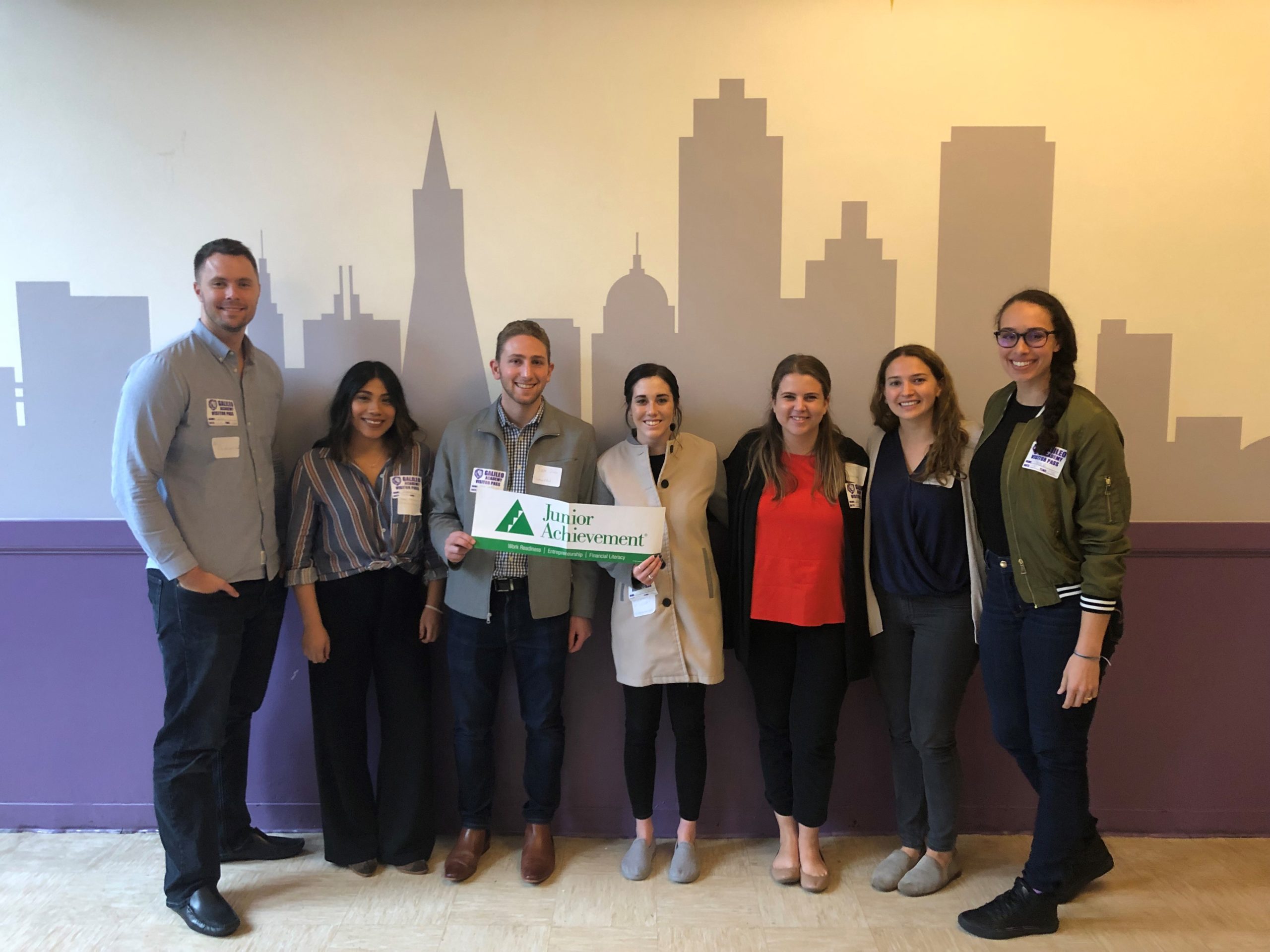
To kick off FleishmanHillard’s 2019 FH4Inclusion efforts, our San Francisco office partnered with Junior Achievement (JA), a global non-profit organization that works to inspire and prepare young people to succeed in today’s global economy. Through a partnership that one of us brought from college, we were able to connect with JA in Northern California for this opportunity. JA programs foster work-readiness, entrepreneurship, financial literacy and use experiential learning to inspire students to dream big and reach their potential. Each year, JA helps more than 10 million students in 100+ countries prepare for their future, by providing them with a path towards college or joining the working world.
Our volunteers spent an afternoon at a local high school mentoring to help them develop the necessary skills for their first interview. This high school serves a diverse group of students, with 21 percent learning English as their second language, and 65 percent are on the free and reduced lunch program. We shared stories of our first interviews, reviewed resumes from juniors and seniors interested in careers across various industries and performed mock interviews, providing constructive feedback on ways for students to improve their interview skills. Our volunteers equipped these students with many of the skills they need, ranging from speaking slower to giving examples of challenges they have overcome to projecting confidence to rock an interview.
One of the best moments of the day for one of our volunteers was during a student’s mock interview when they were talking about how they don’t have time for any extracurricular activities. When the volunteer asked why, the student shared that they are responsible for taking care of their little sister right after school. The volunteer helped the student re-frame their response to highlight how their reliability can be a strength. The student had never considered speaking about their family care-taking obligations during an interview, but after today, they will continue to share how their personal experiences can show their character.
Today, 91 percent of millennials wish they had greater access to career education programs. Junior Achievement is providing students around the world with the life skills they need to land jobs and inspiring them to succeed in this tough economy. Together, we impacted more than 20 high schoolers in our community by preparing them for their next steps after high school.
Our San Francisco office partnered with Junior Achievement for FH4Inclusion.
(left to right: Wes Carlson, Jessica Yah-Lira, Sam Drexler, Michelle McCourt, Jenny Grich, Mary Ellen Green, Grace Vickers)
Sam Drexler and Michelle McCourt support our healthcare team and Jenny Grich works in our reputation management practice. All are based out of our San Francisco office.
See what else is happening
You might also like
ESG
Navigating Conflicting Demands to Advance Climate Action
January 20, 2025
Opinions
Supporting St. Louis Institutions Dedicated to Empowering Youth Through FH4Inclusion
January 15, 2025
Opinions
Revitalizing the San Francisco Community with the Downtown Volunteer Coalition
December 23, 2024
Opinions
FleishmanHillard and FH4Inclusion Teams Shine at the Cannes Lions International Festival of Creativity
August 28, 2024
Opinions
Bridging the Generational Divide with Generative AI
August 27, 2024
Inclusion
Success on Repeat: Alumni of the Alfred Fleishman Diversity Fellowship Discuss Promotions and How to Get Them
May 29, 2024
News
EU climate policy: The new borderlines?
May 27, 2024
News
Achieving the Evolving Duality of Loyalty and Loyalty Programs
April 1, 2024
Expertise
TickTockTech: Mobile World Congress 2024 — What’s the Verdict?
Desperately Seeking Empathy – What Could Empathy Look Like from a Company in Today’s Culture?
February 22, 2019
Share
Despite what we’re seeing politically and the increasing vitriol on social and traditional media, it is incorrect to assume that we’re careening toward a compassionless future. There is evidence to suggest that empathy is an emerging societal need.
We see evidence of empathy in action, though it may not get as much media coverage as it deserves, from everyday people all around us. It is people, not the corporate world, leading on the empathy front. Perhaps taking their cue from people – their consumers – organizations are starting to see the need for empathetic leaders.1 Social media makes the corporate world increasingly immediate and intimate, adding pressure to corporations to be truly responsive and empathetic.
Bianca McCann, Chief Human Resources Officer at BetterWorks, has studied the subject of empathy in the office. She noted that “having powerful empathetic conversations is a critical piece of being a great manager, and to truly hear the employee, deep listening and suspended judgment are needed skills. Yet in the busy world in which managers are entrenched, both of these skills are a real challenge.2
How Can Companies Show Empathy?
While there has been a lot of talk and research on the qualities of empathetic leaders, what does it mean for companies to show empathy and what do consumers expect? Based on research that we conducted on the qualities of empathetic leaders, we identified seven qualities that companies should have to be considered empathetic. We then surveyed 1,000 Americans online between May 21 and May 25, 2018. We found most Americans feel that all of the following qualities are extremely or very important to a company being considered empathetic, setting a high bar for corporate expectations:
Kindness – Lead from the heart and use the kindness of their spirit in how they treat and think about people. (59%)
Active Communication – Rely on communication as a two-way, collaborative process as a catalyst for change. (59%)
Self-control – Seek to understand first and react second. (59%)
Adverse to toxic behaviors – Set boundaries on people that exhibit negative behaviors. (58%)
Other-centered – Continually seek to understand how customers and employees are doing, what they need and how they feel. (57%)
Self-aware – Transparently lead through their own challenges and fears, and then help their employees and customers through theirs. (56%)
Unselfish – Companies that understand they get more from giving than from getting. (55%)
Our research indicates that there is a strong desire for companies to embrace and display empathetic qualities, and that desire will continue to grow as solidarity and empathy are built through digital media. Rather than viewing empathy as a “soft skill,” companies must regard it as a hard and essential skill from the CEO on down.
TRUE Global Intelligence, the in-house research practice of FleishmanHillard, conducted this research as an online survey. The sample size consisted of 1,000 Americans aged 18 years and older and was fielded between May 25 and May 21, 2018. The margin of error is +/- 3% and is higher for subgroups.
The 45th annual Arkansas Governor’s Conference on Tourism will equip attendees with actionable planning tools, useful marketing strategies, social media skills and current travel trends. The 2019 conference focuses on how tourism builds community. Presented by Arkansas Tourism, the convention will offer informative sessions and discussions led by professionals in the travel and tourism industry, including FleishmanHillard’s own Amanda Rast.
Rast, an integral member of the brand marketing practice in our St. Louis office, will co-lead the panel session “Public Relations: Then and Now” with Mark Raines of CJRW on Tuesday, February 26. This session is one of the three afternoon panels offered from 3:00 p.m. to 4:00 p.m.
Well-funded environmentalists take a page from hedge fund playbooks, with meat in their crosshairs
Activist groups pushing to further reduce greenhouse gas emissions, water use and meat consumption have initiated a new strategy and enlisted new allies in their quest. Partnering with doctors, academics and investors who control trillions of dollars, activists have set their sights on the environmental impact of meat and poultry production.
We seem to have arrived at a tipping point. Going forward, the actions of food and beverage companies could have a fundamental impact on the future of their supply chain partnerships, communications with Wall Street, CSR efforts and how we raise animals for food.
Here’s a quick review of what’s happened over the past month or so, and what it represents for the industry.
From EAT-Lancet to Green New Deal
Mid-January 2019 saw the launch of the EAT-Lancet Commission report, which enlisted the expertise of doctors and academics to define the best diet for us and the planet. The report calls for a dramatic reduction in our consumption of meat, dairy and other foods for environmental and health reasons, as well as a similar call to action to cut food waste.
Though The Lancet has been writing about the health risks of animal protein since 1897, it significantly shifted its approach to the topic in 2015. While the journal previously focused on controversies surrounding red meat and associated risk factors for specific diseases, it now speaks more broadly about the negative impacts of meat consumption and calls on the general public to establish limits.
While the EAT-Lancet Commission report wasn’t a major turning point in policy and societal conversations around this topic, it set the stage for a broader movement designed to reduce red meat consumption, and disrupt production.
That movement received further support recently, with the introduction of the Green New Deal resolution, which calls for recognition that the U.S. government has a responsibility to achieve “net-zero greenhouse gas emissions through a fair and just transition for all communities and workers”. The initiative was inspired by the Intergovernmental Panel on Climate Change’s proclamation that we have slightly more than a decade to get carbon emissions under control before catastrophic climate change impacts become unavoidable.
Among other things, the resolution calls for collaboration with farmers and ranchers to build a more sustainable food system. The Green New Deal would include, according to an FAQ released by Rep. Ocasio-Cortez, efforts to “create a sustainable, pollution and greenhouse gas free, food system that ensures universal access to healthy food and expands independent family farming.”
Investor Letter from Ceres and FAIRR
The most significant development on this front, however, is a letter released last month by CERES and FAIRR from more than 80 global investors who manage $6.5 trillion in assets. It urged Domino’s Pizza, McDonald’s, Restaurant Brands International (owner of Burger King), Chipotle Mexican Grill, Wendy’s Co. and Yum! Brands (owner of KFC and Pizza Hut) to set aggressive targets to reduce the greenhouse gas emissions and water impacts of their meat and dairy suppliers.
This letter represents the first time that investors have launched a coordinated effort to address the environmental impact of meat and dairy consumption. More so than pressure from academics or NGOs, this development poses very real business and profitability risks that industry leaders must respond to or face the potential for shareholder proposals and damage to their reputation with investors and customers.
Investors have a successful history of motivating corporate action on sustainability issues. CDP (formerly the Carbon Disclosure Project), created in 2002, is a good example. CDP started with a letter from 35 investors calling for climate information from a broad cross-section of companies; 245 of them responded. Today more than 6,000 companies publicly disclose environmental information from CDP, and nearly a fifth of global greenhouse gas emissions are reported through CDP.
The Ceres and FAIRR investor letter sounds a loud and clear signal of things to come by asking QSRs to work with their supply chains to reduce emissions and water use. Whether the industry stands together or points fingers on this issue will determine whose reputation is on the line.
Time to Unite … and Take Action
Depending on how QSRs react, all these efforts combined represent either a threat or an opportunity, both financially and reputationally, for food companies, meat producers and farmers and ranchers. Significant and measurable progress in reducing the environmental footprint of meat, poultry and dairy production has already been made. It’s critical that all parties up and down the supply chain unite to clearly communicate that progress and tackle these issues in an even more transparent and comprehensive fashion. If they don’t, proxy fights, share price erosion and reputational damage lie ahead.
The time to act is now – before others firmly control the message … and potentially the future of the industry.
See what else is happening
You might also like
Expertise
Why Trust is the Real Competitive Advantage in Ag Tech
April 2, 2026
Expertise
Notes From the Road: RSA Conference 2026 Edition
April 1, 2026
Expertise
Why Your AI Rollout Is Stalling (And What Actually Moves the Needle)
March 25, 2026
Expertise
Get the Report: Inside China’s 2026 Two Sessions
March 24, 2026
Expertise
The New Culture Gap Report: How Brands Stay Relevant for 100 Years
March 24, 2026
Expertise
The Tech Industry’s License to Lead Problem: How Tech Companies Made Themselves Vulnerable to the AI and SaaS Apocalypse Doubt
March 4, 2026
Expertise
The Five Principles of Decision-Ready Intelligence: A Framework for Making Hard Calls in an AI-driven Environment
March 3, 2026
Expertise
The Patient Engagement Gap Your Competitors Are Closing
February 26, 2026
Expertise
AI is Reshaping Communications: Inside FleishmanHillard’s Enterprise-Wide Approach