Employee Login

Enter your login information to access the intranet

Enter your credentials to access your email

Reset employee password

Article

Proptech Has A Communications Problem

June 14, 2023
By Matthew Caldecutt

Given time, tech finds a way to disrupt. And the real estate industry is a great example as it’s in the midst of its own disruption. However, what’s behind it – property technology or “proptech” – isn’t easily defined in a way that the savvy communicator can leverage for maximum media impact. A situation in which many emerging technologies and disruptive industries find themselves these days. In the case of proptech, it’s presented as an agglomeration of many different types of tech used in different ways within the space for a wide variety of purposes. Last year, for example, BuiltIn cited Forbes contributor Mike Shapiro’s definition: “The underlying technology that real estate professionals, underwriters, developers, property managers, title companies, banks and others use to manage and improve real estate transactions from start to finish.” That doesn’t help us as much as that would-be data, which is what every forward-looking technology needs these days. After all, data accessible through the internet is pretty much the underpinning of everything tech. So, how might we define proptech in a way that better represents what it sets out to accomplish and reinforces why others need to pay attention to the proptech sector?

Let’s start by looking at some of the other definitions that come a little closer to ones that might help with positioning the industry. Instead of focusing almost exclusively on the transactional component, for instance, it might be more accurate to think of proptech as “a set of technologies that transforms the way we design, build, sell, inspect and operate real estate.” [Source: NYCEDC] While that’s better, it also comes with the risk of pigeonholing proptech as everything technology-related that enhances real estate. The Pratt Institute, which recently hosted a proptech award ceremony, went a bit further in one direction related to this description, focusing on how proptech “manages the building life cycle” and for that, you need “Smart Building Technology.” If you combine the two, proptech then might be considered the interactions that take place around property that has been enhanced through technology. However, that’s still not entirely accurate as there are other elements that need to be represented if proptech is going to be seen as a technological force in its own right. Let’s consider what else should be part of a definition.

What is proptech?

  1. Proptech is a new way of thinking about real estate: It’s the developers who have sketched out a new platform for property management on a napkin at the diner where they’ve hatched their business plan.
  2. Proptech is leveraging innovation to make what’s old new again: It’s figuring out ways to retrofit pre-war buildings with technologies that make the last mile of package delivery more seamless or reduce carbon emissions by replacing the stalwart steam radiators.
  3. Proptech is creating financial connections between members of the real estate ecosystem: It’s re-setting how owners and tenants interact from a monetary standpoint – from how payments are made to connecting payment to a rewards mechanism.
  4. Proptech is making management for transparent: It’s replacing the manual way of handling things with interfaces accessible from multiple devices and available to those who are a part of the maintenance process.

So, it’s obvious that proptech requires easily understood and comprehensive definition in order to communicate its value more accurately to the various stakeholders that will use it. If it’s not clear who the intended audience is and how it’s defined is too fluid, there’s not going to be much confidence in it as a force in the marketplace. In other words, while it’s ultimately going to be used by everyone from property owners to tenants and everyone in between, it’s not just data, nor about the money spent, nor about a rent check paid, etc. How can we do that in a way that makes it accessible and useful simultaneously?


Article

Wondering what’s trending in the world of Food & Drink?

June 13, 2023

This month, the London FAB Brand Marketing team has taken a deep dive into what’s hot and what’s cooling down in the industry.  Featuring hyper-local as well as a global view on food and drinks trends, the report also looks at ingredients & manufacturing, market maturity and how influences are crossing borders and verticals – the menu of food trends has never been livelier!​

The post Wondering what’s trending in the world of Food & Drink? appeared first on United Kingdom.

Article

Five Steps Business Leaders Should Take Now While Exploring AI Adoption Within Their Organization

By Josh Rogers

Business leaders who follow recent AI developments likely have experienced a dizzying array of reactions, ranging from marveling at the technology’s potential to knee-buckling anxiety as they consider its risks and the efforts that lie ahead. Our new report, “Generative AI Game-Changing Technology, Warranting Effective Change Management” outlines the potential — and inherent risks — of AI.

Here are five steps leaders can consider to move past the handwringing and begin preparing the organization for the future AI will bring.

1. GET SMART

Generative AI is still young, but so much has occurred since its advent. And more is rapidly changing every day. As a leader in your organization — especially if communications, HR and people management are within your remit —

start following the topic now.

  • To familiarize yourself with trends and current thinking, seek out and follow technology and business management thought leaders covering the topic. Many, if not most, major news outlets already feature “experts” who generate almost daily content on the topic.
  • Seek out other knowledgeable voices to help you think through the implications for your organization. Fair warning: This will be a constant pursuit. But take heart: There certainly are more mundane topics that require your attention — but maybe none so important.
  • Engage your organization’s legal counsel to manage risks and mitigate litigation. And remember not to enter any generative outputs into public domain without their guidance.

With this technology’s disruptive potential — both positive and negative — and its remarkable momentum, now is the time to understand AI and its implications for your business.

2. ASSEMBLE A DIVERSE, MULTIDISCIPLINARY AI LEADERSHIP TEAM

It’s likely — especially if you work in a large enterprise — that several members of your organization already are knowledgeable about and using AI. Assemble a team with representation from communications, marketing, HR, IT, information security, legal, compliance/policy, procurement and ethics (or the equivalent teams within your business) to help guide your organization through its AI journey. Given the potential impact and continuing evolution of this technology, consider appointing a full-time project management organization (PMO) to drive this effort. Also bring in experts from such corporate efforts as DE&I and ESG to help figure out the potential impact on them. Make sure your team is diverse, providing a range of experiences and thinking. And if you are aware of early AI adopters who don’t necessarily have formal leadership roles, consider including them on the team or as a touchstone. They can add valuable perspective — and their participation can serve as a professional development opportunity.

This effort ultimately will require an executive sponsor — the No. 1 key to successful change — to signal its importance to the entire organization and to set the tone and vision going forward.

3. ASSESS THE IMPACT ON YOUR LOCAL LANDSCAPE

Business leaders should work to understand AI considerations specific to their business. The AI leadership team (referenced above) can help determine: Who in the organization currently is using AI to do their jobs? How are they using it? How could we be using it in ways we are not already to work better, faster and more efficiently? What will it take for us to use AI in this manner? What can we achieve with the resources and structure currently in place? What are we missing? What do we need? What are the specific risks to our organization? What guardrails, restrictions or policies do we need to ensure appropriate use of this technology for our business? And they can identify other AI-related issues that could impact your organization.

4. BEGIN OUTLINING AND CONTINUE REVIEWING THE ORGANIZATION’S POSITION

Although the process of charting the AI path forward for your organization will be a long-term endeavor requiring a significant level of analysis and decision-making, it’s important for business leaders to begin immediately. The reputation and business risks of inappropriate or misuse are significant. The rapid growth of AI and its many applications requires immediate and constant attention — with always more to learn. If they haven’t already, leaders should immediately begin working with the multidisciplinary AI team and the information and perspectives they surface to start understanding which approaches are and are not acceptable within the organization. They will need to quickly develop and communicate guidelines, guardrails and policies.

Consider how open the organization should be to the use of generative AI. Determine where the enterprise is willing to experiment. You will want to think about what “experimenting” looks like for your organization (e.g., will you establish a protected testing environment, such as a “sandbox” with security measures and perimeter, etc.). Evaluate the aspects of your business that must be protected and your risk tolerance. And contemplate how this technology can better equip and empower employees to advance the company’s purpose, mission, vision and values.

5. GET CHANGE MANAGEMENT HELP

If the organization has in-house change management capabilities, include them on the multidisciplinary team. Absent in-house capabilities, enlist the help of third-party change-management experts. They can help your key AI decision-makers stay abreast of the latest developments and think through the potential implications — and steps needed — for your organization.

Do not underestimate the importance of people-first change communications. Those who are trained to understand and have experience with this essential facet of change management can help align and reinforce the behavior changes needed to adopt the technology and measure their effectiveness.

Article

FleishmanHillard’s Client Work Honored At PRSA 2023 Anvil Awards

June 9, 2023

ST. LOUISFleishmanHillard was recognized at the PRSA 2023 Anvil Awards with four runner-up honors. The global public relations agency was spotlighted on behalf of client work including:

• AARP with FleishmanHillard, “The Fight for Fair Rx Prices” (Bronze Anvil Tactical Award > Media Relations > Associations/Nonprofit Organizations)

• The Janssen Pharmaceutical Companies of Johnson & Johnson with FleishmanHillard, Local Wisdom, Target 10 and The Practice at J3, “Depression Looks Like Me” Takes Aim at Mental Health Representation (Content Marketing B2C)

• Travel Iowa with FleishmanHillard and Integer, “From Flyover to Flythrough State: Showcasing Iowa from a Whole New Perspective” (Content Marketing > Associations/Government/Nonprofit)

The Anvil Awards honors continue the accolades for client work this year for the agency including wins at the 2023 North American SABRE Awards, the 2023 Innovation SABRE Awards and the 2023 Reed Awards, as well as agency wins for Campaign Global PR Agency of the Year, PRWeek 2023 Agency of the Year, PRWeek 2023 Outstanding Extra-Large Agency and Campaign US 2023 PR Agency of the Year.

The Anvil Awards are presented by the Public Relations Society of America and celebrate the best strategic public relations campaigns each year, as well as outstanding organizational excellence. For over 75 years, the Anvils have been considered the icon of the profession and the benchmark of high performance in public relations. A full list of winners can be found here.

Article

Five Trends to Help Navigate Media Relations in 2023 Q2

June 6, 2023

With emerging technology such as generative AI on the rise, it’s more important than ever to stay ahead of important trends. The latest edition of the FleishmanHillard Global Media Trend Hunters Guide looks at how technology is likely to change the way newsrooms work. In this Q2 guide, we take a deep dive into Substack, the state of podcasting, changes in local news and more.

Check out our Global Media Trend Hunters Report for our expertise on how to navigate media relations.

Article

FleishmanHillard Helps Spark Creativity and Inclusion in the Marketing and Communications Industry With Support for the Cannes Can: Diversity Collective

June 5, 2023

There is strength in working together to achieve a common goal. FleishmanHillard is lending its expertise to the Cannes Can: Diversity Collective (CC:DC) through FH4Inclusion, the agency’s global pro bono and volunteer initiative, at the 2023 Cannes Lions International Festival of Creativity.

CC:DC was founded by Adrianne C. Smith, now FleishmanHillard’s chief diversity and inclusion officer, in 2018 with a vision for moving the needle on inclusion and diversity in the industry. As such, FleishmanHillard will provide in-kind support to sponsor and drive forth the two organizations’ shared vision to directly pour back into the next generation of industry leaders and work to make the communications, marketing, advertising and creative industry more inclusive. The agency’s support for CC:DC includes media relations, social strategy, event management, ambassador logistics and branding to help with its continued success. Additionally, the agency has partnered with CC:DC to rebrand its signature Inclusion Awards to the AYA Inclusion Awards. The AYA is an adinkra symbol for endurance, independence, defiance against difficulties, hardiness, perseverance and resourcefulness; this award illustrates why inclusion is good for the world and good for business, underscoring the idea that you must include the world to have world-bending ideas. FleishmanHillard is the presenting sponsor of the AYA Inclusion Awards, which celebrate culture-shifting creativity across race, ethnicity, sexual orientation, gender, religion, disability, neurodiversity, age and body diversity.

The activation focuses on the intersections of DE&I, innovation and creativity. This year’s Inkwell Beach theme is “Expect the Unexpected: Moving DE&I from WOE is me to WOW is me.” Programming includes:

  • Juneteenth Celebration – Bridging the Gap of Information Dissemination. 
  • Opening night party (featuring a special musical guest) and the annual AYA Inclusion Awards. 
  • “Day of Disruption” (featuring bestselling author, speaker and entrepreneur Luvvie Ajayi Jones; and stand-up comedian, bestselling author producer, actress and publisher Phoebe Robinson), where we explore forward-focused ways to implement revolutionary change in the creative industry. 
  • “Daily Cultural Updates” featuring the 2023 cohort of CC:DC ambassadors.

Also onsite with CC:DC will be FleishmanHillard’s Cheyenne Cameron-Pruitt, senior manager of DE&I programs, and Kira Nielsen, senior account executive, who were both selected as members of the 2023 CC:DC cohort.

Article

TickTockTech: Leaders cautious, yet optimistic about cybersecurity spend this year

May 24, 2023
By Matthew Caldecutt

Attendees at the recently concluded IT security-focused RSA Conference emerged with a positive outlook for the cybersecurity sector despite challenging macroeconomic conditions. New technologies are introducing new threats. In fact, there’s been a surge in at least one type of attack, leading to the expectation that cybersecurity budgets will remain stable or increase. Instead of developing technologies to combat what arises one threat at a time, the sector is beginning to shift its security approach to be more proactive and less reactive — beginning with a more comprehensive defense at the various entry points where issues can emerge.

During the official program and among those on site, a number of discussions were had about a key development: the impact of generative artificial intelligence (AI), as well as zero-day exploits (those being discovered well before vendors are aware), which contributed to the positive sentiment. Generative AI, for example, has been a boon to numerous industries, including security professionals. For them, like others, it’s a means for improving productivity. But, at the same time, generative AI makes it easier for new bad actors to emerge. Meanwhile, the increasing use of zero-day exploits due to the current geopolitical climate is something to which chief security information officers (CISOs) of large, international companies need to pay close attention. Anywhere you’re doing business is somewhere that you might be vulnerable.

Contributions made by businesses at the conference also provided an indication as to the direction in which the industry is heading, including:

  • The need to prevent threats such as the ones resulting from the employment of generative AI and zero-day exploits more holistically.
  • The benefit of platforms instead of point solutions, which could pave the way for more comprehensive strategies
  • The concept of extended detection and response (XDR), which is a natural outgrowth of a platform mentality – the ability to monitor across the board to prevent problems.
  • The need for unified security across systems – necessary to keep out miscreants before they can enter and cause issues. 

And while a broader perspective on security is necessary, the technology that plugs into various systems deployed by businesses was also a concern. In the coming year, it’s clear that how employees interact with systems and the information they need must be protected even more.

Overall, what’s happening in the world today clearly calls for keeping a careful eye out for what’s potentially going to be an issue down the line. As a result, IT security leaders are taking steps to create options that can be more easily used to look ahead and guard multiple entry points into what should be secure systems. Fewer and more comprehensive products will ultimately be where investments are made.

Article

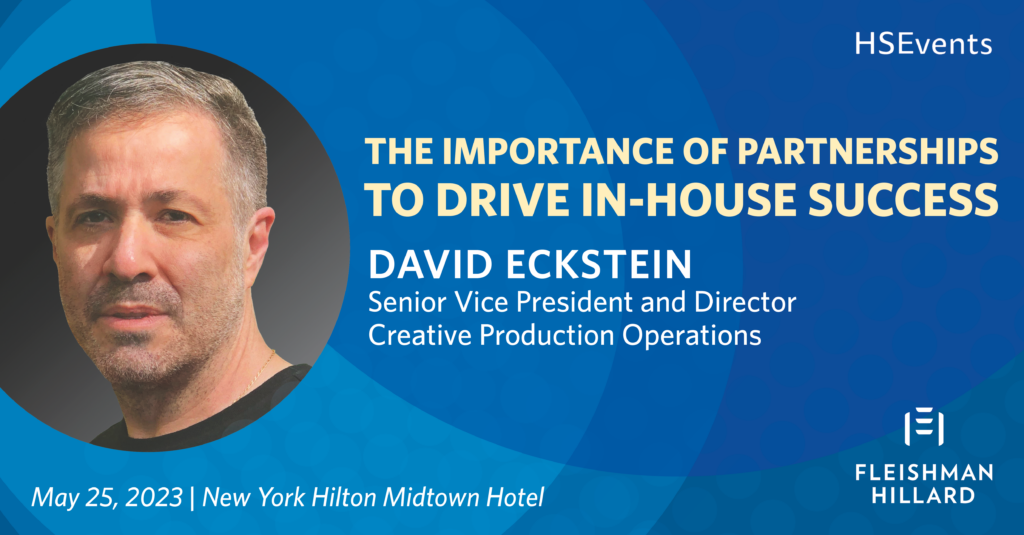
FleishmanHillard’s David Eckstein to Speak on the Importance of Partnerships to Drive In-House Success

May 23, 2023

When: May 25, 2023

Where: New York Hilton Midtown Hotel

FleishmanHillard’s David Eckstein, senior vice president and global director of creative and production operations, will be a guest on the “Importance of Partnerships to Drive In-House Success” panel as part of the inaugural Creative Production New York 2023 Conference. The event takes place on May 25 at the Hilton Midtown Hotel in New York City.

The Creative Production New York 2023 conference will feature keynote speeches, networking and panel discussions geared toward creative operations professionals. For more information, click here.  


Article

FleishmanHillard Sponsors The Next Move: Evolving the Role of Healthcare Companies at PRWeek Healthcare Conference

May 22, 2023

When: May 24, 2-2:25 p.m. EDT

Where: City Winery, 25 11th Ave, New York, NY 10011

Expectations of healthcare and pharmaceutical companies are shifting rapidly, accelerated by the pandemic, social justice movements and the coming of age of advanced technology in the sector. “The Next Move: Evolving the Role of Healthcare Companies” seminar will provide valuable insight into how effective corporate brand positioning in healthcare is more important than ever to build lasting stakeholder relationships and deliver on the promise of better health for all.

Featured speakers include Liz Skrbkova, director of commercial communications for Novo Nordisk, Inc., Rachel Catanach, senior partner and general manager of FleishmanHillard’s New York office and moderator Jacob Porpossian, global executive creative director, Health and Life Sciences, at FleishmanHillard. The discussion takes place on Wednesday, May 24 from 2 to 2:25 p.m. EDT at the City Winery in New York City (25 11th Ave, New York, NY 10011).

This FleishmanHillard sponsored seminar is part of the PRWeek Healthcare Conference + Awards 2023. For more information, go here.

Article

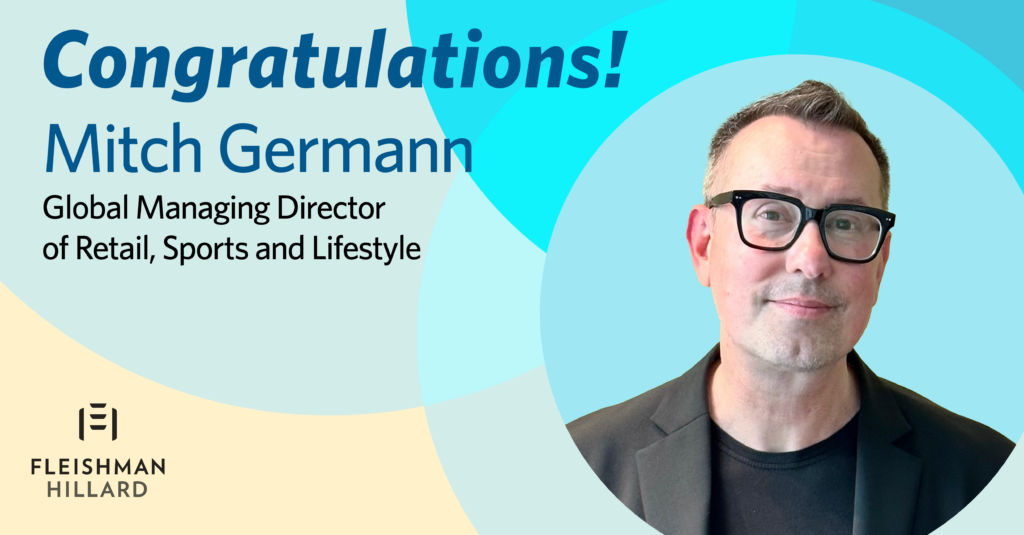
FleishmanHillard Appoints Mitch Germann as New Global Managing Director of Retail, Sports and Lifestyle

May 19, 2023

ST. LOUISFleishmanHillard announced today that Mitch Germann has been appointed as global managing director of the Retail, Sports and Lifestyle sector. Germann will focus on elevating the global agency’s role as a cultural connector for clients, building and maintaining relationships with the most relevant media, creators, influencers, athletes, agents, events and venues in the sector. He will work with account teams to translate brand and product innovation to consumers in a way that drives awareness and demand, while leveraging innovative, intelligence-led strategy and on-the-ground insights and relationships.

Prior to this, Germann was a senior partner in the San Francisco office, where he led the Consumer Brand team and oversaw a portfolio of the agency’s retail, sports and lifestyle clients as part of FHX, the agency’s client experience initiative. He is also a member of the global Media + Platforms and Brand leadership teams.

The FleishmanHillard Retail, Sports and Lifestyle sector serves more than 200 clients with teams across the world.