Employee Login

Enter your login information to access the intranet

Enter your credentials to access your email

Reset employee password

Article

Tick Tock Tech: The HealthTech Opportunity

March 8, 2022
By Deborah Nazareth

It goes without saying that technology has enhanced healthcare systems and practices around the world. New tools and solutions have impacted every point in the patient experience, from sharing health records to early detection and noninvasive procedures, improving the way healthcare professionals approach diagnosis and treatment. We even saw a decline in preventable illness and death, significant reductions in treatment and recovery time and an overall improvement of patient well-being. However, the COVID-19 pandemic showed us that despite these countless advances, there is still a lot of untapped opportunity.

Increased demand during the pandemic led to new records in 2021 for venture capital (VC)-backed healthcare funding, investments and exits. In the U.S., total VC funding in the healthcare sector rose to $29.1, nearly doubling 2020’s record, across 729 deals. At the end of last year, there were 42 new HealthTech unicorns around the world collectively valued at $154B+.

With heightened competition for awareness and dollars, credibility is key. Creating news moments from investment rounds, sizable customer wins, partnerships and end-user use cases will bring stories to life and propel future company growth. There is so much new health technology and so much of it is hyped. True thought leadership, rather than product-led promotion, is a good way to get the attention of time-poor decision-makers. With strong research-based training, many healthcare leaders are very interested in learning from peers. Organizing events with their peers is another great way to build credibility.

Here are some of the biggest categories that are on the rise and where we see the story – and communications opportunity – evolving quickly:

  • Telehealth Innovation: Digital health accelerated during the pandemic, with some healthcare leaders saying they saw a decade’s worth of innovation occur in months. Telemedicine, or telehealth as it is often known in Europe, continues to be a priority for healthcare leaders and is increasingly welcomed by patients. The move to virtual care outside of hospitals and medical offices will continue to expand healthcare access, which has the potential benefit of making the entire system more inclusive. It can also shorten hospital stays allowing greater efficiencies for healthcare providers. At the same time, doctor-to-doctor telehealth is also improving access to care, beaming specialist expertise into smaller, rural facilities that cannot usually support these specialists on the ground. Virtual care in settings like pharmacies and community centers, at-home care and remote expertise in clinics is here to stay and technology innovations will continue to improve remote patient diagnosis and treatments. Wearable devices and advances in drug delivery and apps will drive greater engagement.
  • HealthTech Tools: Going in-hand with the rise of telemedicine, more wearable sensors and devices are being developed and are propelling investments. Employers are increasingly embracing mobile health tools for enhanced employee benefits, including mental health services, diet and lifestyle coaching, digital pharmacies and more. Consumer wellness applications have broad appeal by offering services like weight loss, at-home workouts, physical therapy and even in-home care for seniors and children.
  • Predictive analytics and AI: We are in the early stages of the adoption of AI in healthcare, but with the right guidance and regulation in place, this technology offers huge potential. We are increasingly seeing healthcare providers use automated, prescriptive analytics to help improve the operational side of their facilities and to aid treatment. One area of AI to watch is digital twins that monitor, simulate and streamline data from devices. In healthcare, twins are largely used for modeling and prediction. For example, by integrating different measurements from a patient over time, and linking these biophysical models, it is possible to build a personalized digital model of a heart that doctors can then use to model different outcomes very accurately, ultimately improving treatment for that patient, often with fewer invasive treatments.
  • Better data integration: As with most technologies, those highlighted above are underpinned by data. Unlocking siloed data to enable safe, secure sharing beyond the walls of a single hospital is a priority for hospitals and medical offices globally. It can make diagnosing a patient much more efficient, but it’s also important on the operational side. The pandemic has exacerbated staff shortages within healthcare. Giving healthcare staff easier access to data is one way of removing the administrative burden that takes up so much time for most healthcare professionals – time that could be spent treating patients.

We are still in the early stages of the digital health revolution. The pandemic was just the kickstart needed to propel attention and investor dollars in the sector. There is significant advancement and opportunity in health, especially relative to the GDP it consumes: healthcare is a $4 trillion sector of the U.S. economy, accounting for roughly 20% of the U.S. GDP. The UK healthcare market is projected to reach $1,951.7 million within the next four years – an annual growth rate of 6.4%. Like many industries, HealthTech companies globally are trying to appeal to talent who can help accelerate their businesses. A key benefit: The sector tends to appeal to mission-driven technologists who want to make a difference in the world and impact millions of people.

This is an exciting space, and we cannot wait to see how things develop.

We’ll see you next month when we will explore the intersection of tech and consumer lifestyle.
Article

FleishmanHillard feature in Women in PR’s inaugural ‘45 over 45’ list

March 7, 2022

Women in PR’s inaugural ‘45 over 45’ list has been revealed featuring FleishmanHillard UK deputy CEO and D&I lead, Ali Gee and managing director of healthcare, Jacqui Sanders! The first-of-its-kind ‘45 over 45’ list features the women inspiring the next generation of leaders and shaping a brighter future for the PR and communications sector. ‘WPR 45 over 45’ launched in 2021 […]

The post FleishmanHillard feature in Women in PR’s inaugural ‘45 over 45’ list appeared first on United Kingdom.

Article

Eight Influencer Marketing Trends to Track in 2022

March 4, 2022
By Liz Hawks

As an industry, influencer marketing has expanded exponentially over the past few years. Worth just $1.7 billion in 2016, the industry is set to reach nearly $14 billion this year. Seventy-one percent of marketers plan to increase their budgets in the next 12 months, investing heavily in micro-influencers to target niche audiences.

How can organizations capitalize on this growth? Read on to see the influencer marketing trends we’re tracking in 2022.

Negotiation Opportunities When Working with Influencers

We know there is inequity in how influencers are compensated, particularly evident with influencers of color. This is not a new trend, but we are beginning to uncover the reasons behind this and see how people are working to address it. There is more work to do here – not only in terms of dollars but also in terms of brand opportunities for diverse influencers. In 2022, influencer marketing experts are predicted to be savvier negotiators, basing their worth beyond just “quoted rates.” Research shows influencers of color may undervalue their rates  on projected value, which is determined by methodologies that factor quantitative and qualitative data to maintain objectivity. There will be a growth in understanding equity in terms of an appropriate value exchange but also in terms of influencer opportunities – not just in cash but also broader partnerships offered – maintaining an audience-first focus.

Subscription Services Driving Influencer Salary

Influencers have been diversifying their compensation models and aren’t reliant on one stream of income. Ad network revenue and affiliate marketing are becoming as lucrative and consistent as brand sponsorship deals. 

But now, the trend is toward subscription services – not necessarily driving to a paywall but within social platforms where they’ve already built audiences. Instagram has launched a subscription service for users to pay for extra content from influencers in the platform. Superfans can decide to invest in up-leveled content from their favorite influencers. TikTok is also testing subscriptions for influencers and has already rolled out other ways to monetize content in the platform, such as tips from followers through the Creator Next program.

Currently, these options are only available to eligible influencers and come with a healthy dose of criticism from creators, so communicators should watch to see how it evolves this year. 

Affiliate Links and Social Commerce are on the Rise

The industry is getting more strategic about using influencers to drive sales in-platform as opposed to driving to an e-commerce site. Brands are also incentivizing influencers to drive lead generation because consumers are not always ready to make an in-platform purchase and/or the client doesn’t sell online.

Influencer Behavior Poses a Risk to Brand Image

What happens when a brand is on contract with an influencer and the influencer does something or a post is resurfaced that goes against the brand’s values? In today’s “cancel culture,” it’s important to have clauses in influencer marketing contracts and to recognize the inherent risk with working with real people. Communicators must have a plan to address any unforeseen incidents. Additionally, be aware that if you’ve previously worked with an influencer that is deemed “canceled” by society for whatever reason, they may still be associated as an ambassador of the brand in the minds of consumers. Influencer vetting must go beyond quantitative data to the human element of evaluating brand safety and values alignment. 

Paid Amplification is Even More Imperative to Reach Targeted Audiences

With platform algorithms deprioritizing sponsored content, there has never been a more important time for paid amplification. We have never equated influence to mass reach alone, but of course want as many people in our targeted audience to see the content we invested in influencers to create. Reach figures are pulled as part of the discovery phase, but communicators can’t rely on organic figures as performance metrics for sponsored content due to algorithms. Utilizing paid options is imperative in influencer marketing, period.

Influencer Marketing Growth in Regulated Industries

There are more opportunities for sectors like healthcare and financial communications, and we’re seeing the fastest growth in these highly-regulated industries. Understanding how to navigate and maintain influencer authenticity, creativity and collaboration given layers of content reviews is critical. Even in highly-regulated industries, influencer marketing doesn’t work if influencers are only regurgitating ad copy. 

Influencers as Part of an Integrated Media Approach

Many influencers have larger audience sizes than traditional magazines and media websites. Influencers have been offered TV shows that they’ve turned down because they already have large, engaged audiences in the social spaces they’ve built, making more money than they would starring in a traditional TV show. Brands need to view influencers similar to media. They’ve worked to develop a loyal following in the spaces they own and in doing so, have developed themselves into a “media” outlet. Brands and communicators need to be think of influencers as “media” and journalists as “influencers” with an integrated marketing communications mindset.

Vertical Video Dominates Social Platforms

The cinematic horizontal format is no longer the default for professional creative. Vertical videos garner more impressions and views than horizontal videos. It’s the optimal format for navigating a device one-handed and thumb-swiping through videos in a visual platform. Think about the creative you’re asking of influencers, how it will be amplified across channels and how to use influencers as a brand’s initial way “in” to an owned TikTok channel or Instagram reels. Social video consumption is vertical today and we need to be collaborating with influencers to make that format work best. High production quality is not necessary.

Article

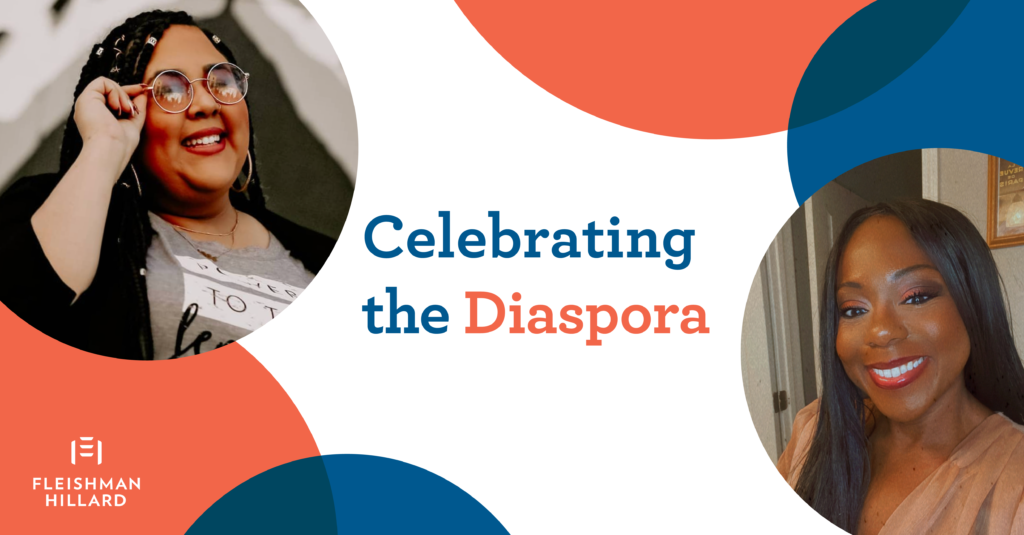
Celebrating the African Diaspora

March 2, 2022
By Cheyenne Cameron-Pruitt

The African Diaspora includes countries and communities around the world with descendants from native Africa. For most, the movement and disbursement was involuntary as they were stolen from their land as enslaved people. Many countries and communities have been deeply influenced, and often built upon African culture and traditions, due to this involuntary movement. We celebrate the diaspora and FleishmanHillard employees sharing their perspectives as members of it.

Celebrating Afrolatinidad

By Gaetane Gomes

This YouTube video speaks volumes to me. I can relate to this as I am a first-generation American, of multi-cultural heritage. I was born in New York and my family is from the Dominican Republic. I didn’t understand until I was much older why I was frequently asked to “explain” my background…and why if I grew up in the United States, how did I come to learn Spanish? Documentaries such as these (and I encourage you to watch) have helped me share with others the robust culture I am proud to be a descendant of. If something shorter is more your vibe, 1:03 – 2:05 will say it all for me.

Adolescence is not easy for most of us, yet today in 2022 we have so much opportunity to learn from and grow with each other. Someone’s name, complexion, accent nor first language tells the full and complete story of how dynamic and unique we each individually are.

I’ve been fortunate to have been able to spend significant time in Colombia, the Dominican Republic and Brazil. I love to dance and am always in the mood for some Cuban salsa. And if you could use a dance break, I’ll leave you with this song – Los 4 con Alexander Abreu – “Yo Represento.”

Here are some of the song’s lyrics translated to English:

Wherever you are

Let our voices reach you

Our messages, our hands be proud of who you are

Isle of Spice

By Cheyenne Cameron-Pruitt

Grenada, 21 miles long, 12 miles wide, nestled in the West Indies, the southernmost of the Lesser Antilles, often confused for a city in Spain, known for its spices, beautiful landscapes and unique underwater sculptures. I know it as my home away from home, a place that has instilled in me so much of who I am, even halfway around the world. There is a richness to the culture, where a strong sense of pride and a love from the people can be felt like none other I’ve known.

I found my love for storytelling through listening to the oral history shared by my great-grandma, who is now 105 – stories of pride for a nation, fear of fallout from political discourse, accounts of the strength shown by Grenadians throughout the country’s development and our ancestors’ resistance and revolution in the face of colonization and enslavement.

I found the courage to question the things that weren’t right as I learned about how my grandparents fought for Grenadian independence through protest and civil disobedience, and allowed their children to march with them 48 years ago. My grandpa was the first to teach me that sometimes what we read in the history books isn’t true, and that revisionist history not only exists but can be extremely dangerous.

I am blessed to have a place where I can feel my roots, and to feel at home outside of what I know. I’ve felt the energy, love and pride for my little island, but know that isn’t the experience of all. As I’ve explored what it means to be a Black American while also identifying as Grenadian, I’ve realized that having this cultural influence is not something to take lightly. The bittersweetness of being a part of the diaspora is that while many of us have the great privilege of honoring the culture, heritage and ancestors that we know, we must remember to not take it for granted as the same privilege was stolen from millions of others and their generations to come.

Bon Jay Peni Mueh!

Article

FleishmanHillard UK awarded Best Annual Report at PRCA City and Financial Awards 2022

February 28, 2022

FleishmanHillard has been awarded the coveted trophy for ‘Best Annual Report’ at the PRCA City & Financial Awards 2022 for its annual report for client Barclays! The City and Financial PR Awards are held by the PRCA in support of the City of London Company of Public Relations Practitioners. The Awards recognise the talent and impact of individuals, […]

The post FleishmanHillard UK awarded Best Annual Report at PRCA City and Financial Awards 2022 appeared first on United Kingdom.

Article

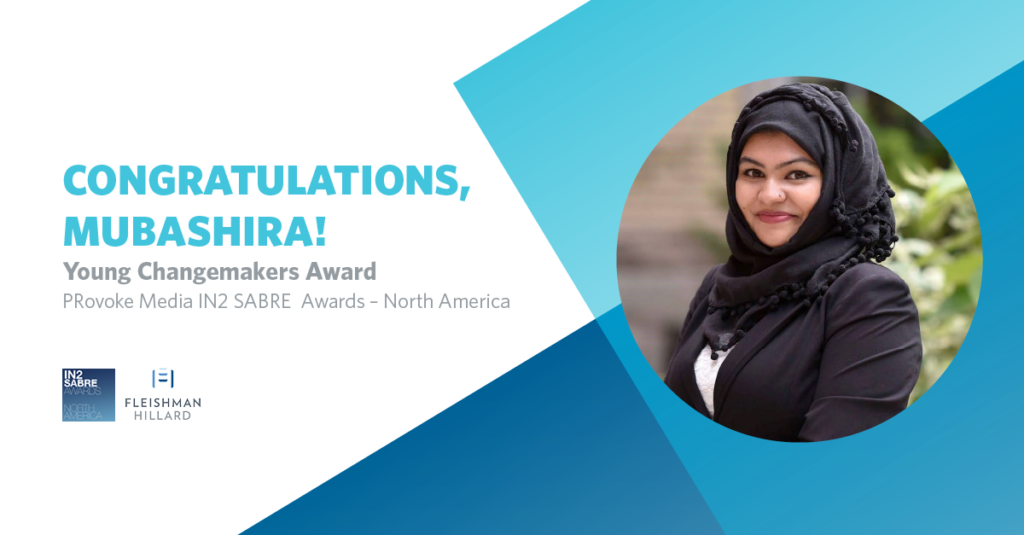
FleishmanHillard HighRoad’s Mubashira Farooqi Awarded Inaugural Young Changemaker Award by PRovoke Media

February 24, 2022

ST. LOUIS, February 24, 2022 – FleishmanHillard HighRoad’s Mubashira Farooqi earned the inaugural Young Changemakers award at this year’s IN2 SABRE Awards in North America, presented by PRovoke Media.

The Young Changemakers award recognizes the next generation of communications leaders, helping to launch careers and create better equity and opportunities for those in marginalized groups.

Farooqi won the judges over with her passion for advocating on behalf of women of color and encouraging diversity within the global PR industry. Outside of the office, Farooqi hosts her own podcast, which aims to amplify the voices of women of color within the communications industry.

Read more about Mubashira Farooqi and this honor here. 

Article

FleishmanHillard’s Ephraim Cohen Recognized for Innovation, Lands Spot on Coveted PRWeek Dashboard 25 List

ST. LOUIS, February 24, 2022 – FleishmanHillard’s Ephraim Cohen has been named to this year’s PRWeek Dashboard 25 list. This honor celebrates innovative communicators who are driving the public relations industry forward.

Cohen is the agency’s first global managing director of Media + Platforms, a practice he helped establish while leading as the general manager for FleishmanHillard’s New York office. Media + Platforms integrates the agency’s earned and owned media expertise with digital platform technologies – deepening the precision of its storytelling capabilities.

Outside of the office, Cohen is heavily involved with the Arthur W. Page Society, co-chairing its Northeast gatherings of Page Society and Page Up, which seek to advance the communications profession by providing development and networking resources to the next generation of professionals. Cohen has also repeatedly traveled to Qatar to host Northwestern University students and teach in the executive communications education program. Cohen continues to inspire colleagues across the firm and industry with his passion for advancing the public relations field.

Read more from PRWeek and view the Dashboard 25 – Class of 2022 list here.  

Article

Three Trends Guiding ESG Communications in 2022

February 22, 2022
By Judith Rowland

As we approach the midpoint of Q1, many brands are starting to execute on their ESG agendas for 2022. More than ever before, stakeholders are seeing ESG as a business practice key to profit and reputation. As the stakes for ESG continue to rise, here are three trends for communications professionals to keep in mind.

As Brands Rush to Net-Zero Commitments, Accountability Remains a Priority

Over 200 companies have pledged to reach net-zero emissions by 2040, including nearly 90 companies who set new targets timed with Climate Week in September 2021. Similarly, while a focus on regenerative agriculture used to be limited to the start-up community, many big-name brands are following the lead of Certified B Corp companies in committing to new ways of farming. Following a recent U.N. panel that U.N. Secretary-General António Guterres called a “code red for humanity,” brands seem to be racing to get in line to tout their commitment to reaching a sustainable future.

However, many pundits left COP26 in Glasgow frustrated, believing that without an accountability framework, pledges will be difficult to measure and may prevent stakeholders from holding brands to account for their ESG commitments. Limited transparency and an overreliance on carbon offsets may prevent us from reaching the targets necessary to avert catastrophe. As GreenBiz chairman and co-founder Joel Makower argued last year, “Given the lack of policy or standardized guidance driving net-zero commitments, not to mention the loopholes through which many companies seem to be leaping, there’s pretty much a net-zero chance that they will, collectively, meet the goals of the 2015 Paris Agreement — at least, not without some significant changes.” Communications leaders can buck potential criticism and accusations of greenwashing by pairing their ESG goal messages with a roadmap for how they’ll reach their targets and by clearly defining what concepts – like regenerative agriculture – mean to them.

Anticipated SEC ESG Disclosure Requirements will Mandate Transparency  

Following the lead of the European Union, the SEC is preparing to release new disclosure requirements that will require publicly traded companies to openly share their progress on environmental and social initiatives. While the details behind the SEC proposals are still under development, brands will need to ensure reporting across all communications channels is consistent and allows stakeholders to quantitatively compare the ESG performance of disparate companies. Noting that the disclosure requirements for climate change are rumored to come first, sectors with large carbon footprints – including the food and agriculture sector – may be forced to serve as a guinea pig.

Once enacted, the disclosure requirements will likely up the ante on expectations investors and other stakeholders have for ESG performance. Getting ahead of this and building transparency into 2022 ESG communications plans is a key opportunity that could allow brands to take a leadership position. On the other hand, waiting for the disclosure requirements to be announced will push brands into a reactive position wherein it is unlikely they’ll get credit for the steps they’re taking to become more transparent.

With Pressure to Account for Scope 3 Emissions Intensifying, Industry Stakeholders Need to Collaborate on ESG

In late January, the California state Senate passed a bill that would require corporations with more than $1 billion in annual revenue to disclose all scopes of their greenhouse gas emissions to the California Secretary of State’s office. The bill emphasizes the importance of acknowledging a full emissions footprint, including Scope 3 emissions, which represent emissions associated with value chains and the consumer use of a product.

As taking a more holistic look at emissions through the supply chain become de rigueur, industries with extensive, global value chains – such as the food and agriculture sector – will face the greatest challenges. With large grocery retailers pledging to slash the greenhouse gas emissions in their supply chains, producers are feeling heightened pressure to get their emissions in order. Communications leaders should view supply chain partners as a key audience and ensure they’re taking steps to support suppliers as they work toward their ESG commitments.

It is critically important that the business community work together to achieve climate goals. Stakeholders in each sector must see each other as partners in promoting environmental impact. Vilifying entire industries is not a helpful tactic and takes energy away from the positive actions required to avoid the disastrous effects of climate change. Within the agriculture industry, leveraging new innovations and proven techniques will be vital to meet global food security and protein needs while protecting our shared planet.

It is safe to say that 2022 will be a landmark year for ESG communications. Approaching these new demands for accountability, transparency and engagement through the supply chain provides a strategic communications opportunity – and a business opportunity – for companies and brands.

Article

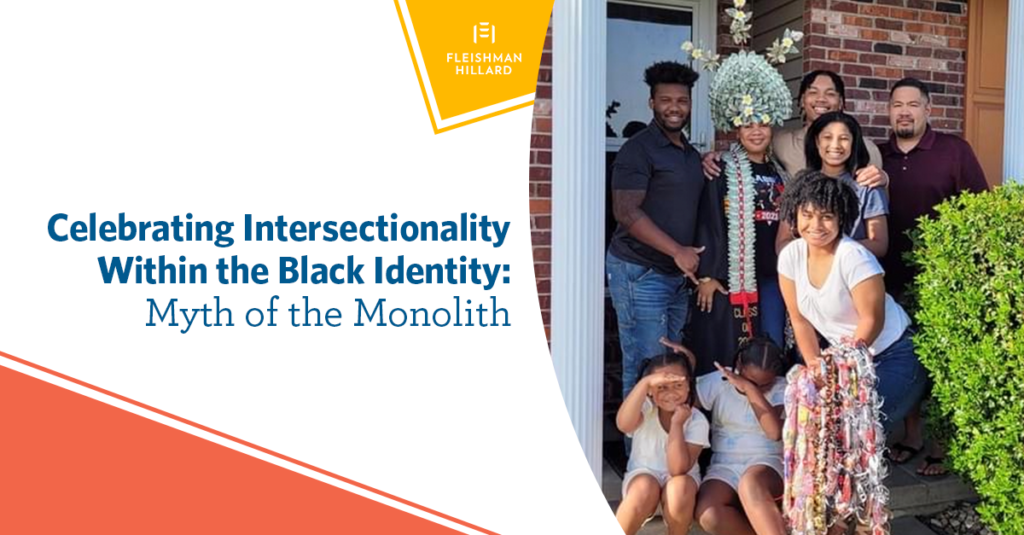
Celebrating Intersectionality Within the Black Identity

February 18, 2022

Classification of race and ethnicity is usually generalized to the following categories: Black, Asian, Hispanic, American Indians and White. When you’re biracial, these checklist groups are just a tiny fraction of the daily struggles you’ll encounter. Biracial individuals often feel part of both of their cultures and so are always asking themselves, “Am I enough?” In this piece, Popoai Tanuvasa-Lole, Alfred Fleishman Diversity Fellow, shares her perspective on being biracial in America.

Myth of the Monolith

Honestly, I didn’t think much about race growing up. I was one of two Black kids in my entire school, everyone else was white. Don’t get me wrong, it was very clear to me that I was different. But I didn’t really have an opinion on what I was and what I wasn’t. I was okay with operating in that default “other” category.

Right now, and this may change, I identify as a mixed-race Black person. When I went to college, it really changed how I was able to identify with being Black. Although Maryville University is a predominantly white institution (PWI), I’d never been in a place where there were so many Black people that looked so many different ways and sat in so many different intersections of the Black identity and life. For the first time, I felt truly loved and accepted. However, this new setting posed its own set of challenges.

I had a lot of folks who couldn’t tell “what I was” at first glance, and I had to deal with ethnic ambiguity that I’d never had to deal with before. And this put me in the situation of having to find out what language I wanted to use to define myself. Sometimes I felt like a conditional Black person, and I think there are some mixed-race Black folks who have a lot of anger about that. I still struggle with it today. I’ve experienced many people both implying and saying, “Well, you’re not Black and you’re not Samoan enough.” And, while I feel very connected to both cultures, I sometimes feel as if I don’t belong to either.

But I’ve also come to understand that the idea of being “authentically” Black is literally a response to things like the one-drop rule and the tie between white supremacy and how we define race and mixed race. So, this reclamation of what it means to be Black is a byproduct of racism. But (and there’s a big but), I’d be remiss to not acknowledge that there are privileges that I have that other non-mixed Black people don’t. I am lighter skinned. I might not be white-passing, but I can pass as something else and because of this, I have been treated as an “exception to the rule” multiple times.

It’s weird to be labeled this way, and I’ve been on the “identity struggle bus” for the better part of my life. But I wouldn’t have it any other way; it’s what makes me who I am. And I’m not an exception. I think that has really made me embrace this idea of I am Black. I’m mixed, but I’m Black.

And being Black is nuanced. It’s beautiful. It’s a privilege in its own right.

Article

FleishmanHillard’s Michael Rinaman, Managing Director, TRUE Global Intelligence APAC, Participated in Session at GEEF 2022

February 17, 2022

FleishmanHillard’s Michael Rinaman, managing director, TRUE Global Intelligence APAC, participated in a plenary session at this year’s Global Engagement & Empowerment Forum on Sustainable Development (GEEF) in Seoul. During this session, participants discussed Sustainable Development Goals (SDGs) and how corporations can use SDGs to manage corporate reputation.

Read more about this session and view the recording on FleishmanHillard in Korea’s site.