Tips for how to get your message across while employees, customers and partners work through the COVID-19 pandemic
Against the background of the global COVID-19 pandemic, all communicators understand the need for clear, concise, consistent communications. This is critical with all audiences, be it employees, customers, partners or third parties. There is a need to keep people informed, to reassure, to mitigate and to ensure audiences understand the plan and can keep a level head.
But getting the message across in the traditional way is being disrupted as much as our everyday lives. Many companies are already encouraging workers to stay home, significantly impacting team collaboration and communication. Restrictions on travel are stopping team meetings from taking place. And fears of contagion have seen the cancellation, postponement or virtualisation of annual events and conferences.
In this environment, many companies are turning to virtual solutions to communicate with their audiences.
But producing a perfect virtual event or meeting – and ensuring that your audience receives and understands the intended message – is quite simply not the same as producing a perfect face-to-face session.
Here is some practical advice to help deliver the most polished and engaging experience when it comes to presenting virtually, so that you can be sure your message gets through.
The Right Message and Tone
Your staff, customers and partners are all currently worried, concerned and confused. Getting the tone of your message right is incredibly important. Virtual meetings are not the same as in-person meetings: attention spans are shorter, distractions abound and people simply don’t stay on virtual platforms for hours at a time. It’s therefore more critical than ever for your messaging to be succinct, easily digestible, audience-centric, engaging and presented in a compelling, compassionate and considerate manner.
Think about the message and the tone
Develop your speaking notes and messaging in the context of the current COVID-19 outbreak and how people are feeling emotionally. Check for appropriate language and sensitivity to global teams and colleagues.
Reduce the narrative to only the most essential information so that the core message gets across. Communicate the most important points within the first 5-10 minutes, before you lose peoples’ attention spans. Then make sure your conclusion repeats the most important message you wanted to convey.
Timing is everything
People don’t sit in virtual meetings for hours. Try to plan your session for no more than 30-45 minutes maximum. Do not include ‘surround-sound’ content and narratives. Get to the point quickly, and only include the most important elements.
If possible, presenters physically present
If you have numerous presenters, trying to ‘dial’ in speakers separately will result in a disjointed and unconvincing presentation. Getting at least a couple of presenters in the room together will greatly ease the natural flow of conversation and ensure a more authentic and digestible experience for the audience.
That said, given the COVID-19 environment, this will likely not be possible. In this instance, limit the number of presenters to 2-3 speakers. One person should clearly facilitate and host to make the message as easy to understand as possible.
Learn from the evening news
Think about the dynamics of the presentation and narrative. Having a call host or moderator will keep the content compelling and fresh. A good tip is to think of a virtual meeting as a live TV news broadcast. Different voices and perspectives can boost the content and get the message across more effectively, as long as you’re not jumping around too much. Think 3-4 minutes per person as a winning formula.
In contrast to the evening news, however, avoid video content as a presentation support, given its propensity to lag in virtual formats.
In communications, repetition is key
During the virtual meeting, underscore the most important messages with very clear visual cues, and repeat them for clarity at the end.
But that’s not the only place to get the message across. When inviting people to attend, be clear on the topic and what is going to be communicated. Then follow up with a short recap that highlights the main takeaway.
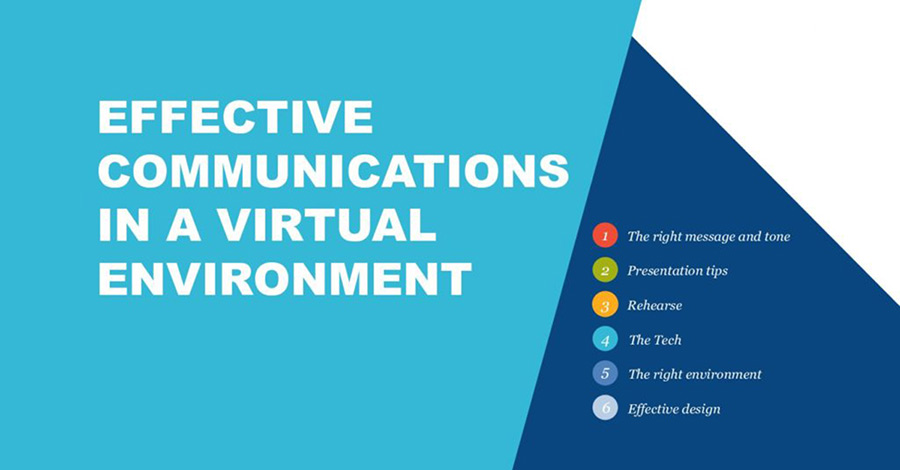
Please refer to our PDF for more practical advice to help deliver the most polished and engaging experience when it comes to presenting virtually, so that you can be sure your message gets through. The Effective Communications in a Virtual Environment document includes recommendations on presentation techniques in a virtual environment; how to rehearse to get the best out of the meeting; tips on using the tech to best advantage; making sure the presenter’s environment and back- and fore-ground are conducive to getting the message across; and making the associated content as compelling as possible.
See what else is happening
You might also like
Expertise
Why Trust is the Real Competitive Advantage in Ag Tech
April 2, 2026
Expertise
Notes From the Road: RSA Conference 2026 Edition
April 1, 2026
Expertise
Why Your AI Rollout Is Stalling (And What Actually Moves the Needle)
March 25, 2026
Expertise
Get the Report: Inside China’s 2026 Two Sessions
March 24, 2026
Expertise
The New Culture Gap Report: How Brands Stay Relevant for 100 Years
March 24, 2026
Expertise
The Tech Industry’s License to Lead Problem: How Tech Companies Made Themselves Vulnerable to the AI and SaaS Apocalypse Doubt
March 4, 2026
Expertise
The Five Principles of Decision-Ready Intelligence: A Framework for Making Hard Calls in an AI-driven Environment
March 3, 2026
Expertise
The Patient Engagement Gap Your Competitors Are Closing
February 26, 2026
Expertise
AI is Reshaping Communications: Inside FleishmanHillard’s Enterprise-Wide Approach
Navigating COVID-19: A Test of Reputation and Reality
March 17, 2020
Share
2020 may be remembered as the year that the world changed irrevocably due to the COVID-19 pandemic. The year when working from home (WFH) became the norm rather than the exception. The year when holding virtual events became an expertise. The year when social distancing and social isolation became common terms. The year when medical experts became the best predictors of the market. And the year when leaders, both new and established, made their reputation – or severely tested it.
FleishmanHillard recognized early on that this situation requires not only the voice of reason and reassurance, but new thinking and new ways of doing things. We have created our own COVID-19 Taskforce, bringing together key practitioners from across our crisis management, employee communications, public affairs and reputation management practices, in addition to sector-specific expertise. We’ve been applying the lessons learned from APAC as the crisis has expanded globally.
The focus of the Taskforce is helping our counselors from around the world provide clients with insights, resources, perspectives, case studies and opportunities. Through it, we’re helping brands more easily anticipate and respond to quickly changing situations, ensuring they receive the best available counsel based on experience, the latest intelligence and best practices.
Recognising that these challenges – from social isolation to supply chain disruption to making major events virtual – vary by industry, we have created a resource that includes specialist advice by practice area and industry. We hope it helps organizations protect and build their reputation during this challenging period – in both the short- and long-term.
A full list of our insights and materials is available on our Navigating COVID-19: A Test of Reputation and Reality page on fleishmanhillard.com. Our focus for clients remains on supporting them through this situation and developing creative solutions to new challenges. Watch out for new articles and information as the situation evolves and if you have any feedback or questions, we would love to hear. You can contact us at [email protected].
FleishmanHillard’s Mette Grolleman Named to Politico’s Women Who Shape Brussels 2020 Ranking
Share
ST. LOUIS, March 17, 2020 — Mette Grolleman has been named to Politico’s Women Who Shape Brussels 2020 ranking alongside women including Ursula von der Leyen, European Commission president; Margrethe Vestager, European Commission vice president; Ilze Juhansone, European Commission deputy-secretary; Cabinet leaders; directors general; and more. Presented by Politico Europe, the annual list recognizes highly influential women in the private sector leading some of Brussels’ largest NGOs, consultancies, trade associations and industry lobbies.
Mette Grolleman
An expert in policy, competition and regulatory issues, and corporate reputation management, Grolleman provides senior counsel to clients facing such issues. Last May, she was appointed to general manager of FleishmanHillard’s Brussels office and now oversees day-to-day operations and manages business development growth.
Prior to joining FleishmanHillard in 2017, Grolleman served as the Financial Counsellor at the Danish Permanent Representation to the European Union and later as a Senior Advisor in the Ministry for Business and Growth.
This year’s list reflects the consultants, lawyers and cabinet leaders who are leading some of the EU’s biggest policies.
As the COVID-19 pandemic sends shockwave after shockwave through the business world, leaders are scrambling to communicate how their organization is staying in front of the crisis to maintain the health and safety of employees and customers.
But that is only half of the job before us. When confidence is shaken by so many unknowns and our employees and the public are fixated on the rapidly escalating events, effective corporate leaders must provide more than policy guidance on how to maintain the health and safety of their employees and customers.
Plenty of research shows that CEOs have tremendous social influence (and in some cases are more trusted than government leaders), particularly when CEOs speak out on issues that impact their customers and employees. This matters more than ever right now as public health experts struggle to influence the behaviors of so many individuals to achieve the collective goal of mitigating the spread of the Coronavirus.
So what does exceptional CEO communication look like when thinking beyond policies and practices? Here are five things to keep in mind and some practical examples you can use with your own teams and executives.
1.Remember the human element: You have clearly communicated policies, sending numerous emails that answer a voluminous number of questions. Your work is not done. No one has ever changed someone’s behavior or rallied a team together simply by sending a memo. Even though it may be more complex to produce, a quick video or even short podcast can be more powerful and more calming than anything else you do.
A situation like also this brings out the very best and the very worst of us as human beings, making this an important moment to be mindful of diversity and inclusion. This virus is borderless and blind to race, sex and religion. CEOs need to ensure inclusive behaviors are modeled and help extend these behaviors into the wider community.
2.This is a whole life experience: While the pandemic threatens business continuity, quarterly profits and even a global recession, for your employees it is more personal. The effective leader gives employees space and time to be caregivers first. The pandemic is creating vulnerabilities in our entire social and family support systems. It is unsettling. It is distracting. And that was before we needed to provide extra support for grandparents and an elderly neighbor or to help a child navigate an untested e-learning regimen. The traditional cycle of work during the day and home responsibilities in the evening has been thrown out the window. Employees can’t even hear the bigger tasks you are asking of them if other concerns they see as more pressing aren’t being addressed. (What happens if I have IT problems at home? What if I need to take care of my family?) Effective executives acknowledge these stresses and realities in their communication. This is a time to build cultural resilience and draw on the collective strengths of the organization. A fighting spirit will be important given the likely duration and global impact of the virus.
3. Leading is a conversation: In a time when we are faced with more questions than answers, this must be a two-way exchange. You trust your employees to execute your business. Listening to them during a crisis is just smart management. Responding to concerns from employees shows you are listening and adapting to an ever-changing situation and likely provides some of the answers you are looking for. Executives should balance basic policy guidance sent by email or posted on company intranet sites with additional forums that allow employees to ask questions and get answers. It can be hard for a single person to take on a forum like a virtual town hall when they know they don’t have all the answers. Consider bringing together an executive team of three or four leaders in a panel. It projects an even greater sense of confidence and allows the leaders to share the burden of fielding questions. Be honest. Admit when you don’t know something. Talk about what you do know.
4. Think about the larger social impact: Last year hundreds of CEO members of the Business Roundtable said their business was about more than delivering value to shareholders. Now’s the time to see that promise in action. Business can’t afford to be bystanders. They need to work together with government and industry stakeholders to develop non-partisan solutions. This is a fine line companies will tentatively explore in the coming weeks as no one wants to seem opportunistic or exploitive. Employees and customers will remember how a company acts like a civic partner in a crisis, thinking beyond the walls of its own operations to how it can help solve the larger challenges we face today and more that will come in the weeks and months ahead.
A few companies are stepping up to help customers with the things that they need the most. Hopefully businesses will lean in to address the increasing isolation of the elderly or help families struggling to meet basic household needs. Companies may take up endeavors that ensure basic household supplies are getting to those who must stay home and help reduce panic buying that limits available supplies. Others might find innovative ways to support particularly vulnerable industries, such as arts, music and theater, while also helping get their uplifting message to groups and communities that are feeling isolated. There is much to be learned from many brands who have already show tremendous creativity in supporting communities in APAC.
5.Look to the horizon:We will get through this pandemic, but the fears of many are about what will happen next – to the global economy, to the health of their own company. Every good crisis response has a Now Team and a Next Team. The Next Team is a group of leaders who are not consumed with the day-to-day emergencies of running the business. They are thinking about what comes next and how to prepare the business to not only return to operations, but also prepare it for improved success. After 9/11 the world’s global airlines had teams thinking about what pilots would say to passengers on those first airplanes that took back to the air. They were thinking about how to manage the business and protect their employees and customers through what would be many months of difficult economic pressures. If you don’t have such a team running right now, you should. Possibly most important, you should communicate to employees some of the things those teams are thinking about and working on, even when you don’t yet have all the answers. Planning for recovery and rebuilding during the crisis signals a confidence that employees will appreciate.
It is never easy to communicate when we don’t have all the answers. Those who look beyond the immediate policies and practices will better ensure their organizations emerge ready to recover in the weeks and months ahead.
See what else is happening
You might also like
Expertise
Why Trust is the Real Competitive Advantage in Ag Tech
April 2, 2026
Expertise
Notes From the Road: RSA Conference 2026 Edition
April 1, 2026
Expertise
Why Your AI Rollout Is Stalling (And What Actually Moves the Needle)
March 25, 2026
Expertise
Get the Report: Inside China’s 2026 Two Sessions
March 24, 2026
Expertise
The New Culture Gap Report: How Brands Stay Relevant for 100 Years
March 24, 2026
Expertise
The Tech Industry’s License to Lead Problem: How Tech Companies Made Themselves Vulnerable to the AI and SaaS Apocalypse Doubt
March 4, 2026
Expertise
The Five Principles of Decision-Ready Intelligence: A Framework for Making Hard Calls in an AI-driven Environment
March 3, 2026
Expertise
The Patient Engagement Gap Your Competitors Are Closing
February 26, 2026
Expertise
AI is Reshaping Communications: Inside FleishmanHillard’s Enterprise-Wide Approach
FleishmanHillard Shortlisted at PRWeek Global Awards 2020
March 13, 2020
Share
ST. LOUIS. March 12, 2020 – FleishmanHillard has been shortlisted for three awards at the PRWeek Global Awards 2020, presented by PRWeek. The global public relations and marketing agency earned finalist nods for Global Agency of the Year and work on behalf of clients, Johnson & Johnson and AB InBev.
Now entering its seventh year, the PRWeek Global Awards recognize the most powerful and impactful activations, as well as the top agencies, individuals and campaigns across the globe.
FleishmanHillard (Finalist, Global Agency of the Year)
Johnson & Johnson Consumer Care – Stayfree Brand, “SEMPRE LIVRE, Sempre Juntas” (Finalist, Best Campaign: LATAM)
AB InBev, “AB InBev at UNGA” (Finalist, Global Citizenship)
Winners will be announced at the 2020 PRWeek Global Awards Gala in London on Tuesday, May 19.
It’s hard to miss the interest surrounding that magical time when your head hits the pillow ‘til your alarm blares (hopefully) eight hours later. From new industry buzzwords like sleep debt, social jet lag, even clean sleep, to the constant discussion — How much did you sleep? How was your sleep? You look tired — it can be enough to make you want to hide your head under a pillow and take a nap.
While it may be easy to dismiss this as sleep simply being the latest wellness trend to have its day in the sun, it is not one to take lightly. An increasing amount of research points to the perils of decreased sleep (defined by the Center for Disease Control and Prevention (CDC) as seven hours a night), including an increased risk for diabetes and obesity, possible ties to mental health conditions and more.
Decreased sleep is also quite common, with roughly one-third of Americans experiencing brief stretches of insomnia. This loss of sleep directly correlates to a loss in productivity to the tune of an estimated $63 billion every year in the US.
Consumers are listening – and companies have noticed. New sleep aids pop up seemingly daily aimed to tap that previously undisturbed portion of the consumer day. From nap pods to weighted blankets to temperature-changing blankets and more, many tout their effectiveness in helping aid deeper, more restorative sleep. And, while individual results vary, a good number of consumers agree (including this girl and her weighted blanket…and sleep mask).
As we move past Daylight Savings Time and World Sleep Day, even more brands are understandably looking at how they too can cash in on counting sheep. The best practices of sleep engagement are like those of any major moment.
Have a POV
Is there a reason your brand should be getting into the conversation and do you have a unique perspective to add? If yes, great! If no, think about sleeping this one out.
Tap an Expert
Even when you do have something to say, recognize that you don’t know what you don’t know and tap an expert. The science behind sleep is still quite new — and quite mysterious. Partnering with leading sleep researchers and doctors to share their findings offers a more authentic and useful voice for your consumer.
Practice What You Preach
We already shared how costly lost productivity is each year for U.S. businesses. Embrace a company culture that puts wellness first. It’ll be a win for your employees — and your bottom line.
Sweet dreams.
See what else is happening
You might also like
Expertise
Why Trust is the Real Competitive Advantage in Ag Tech
April 2, 2026
Expertise
Notes From the Road: RSA Conference 2026 Edition
April 1, 2026
Expertise
Why Your AI Rollout Is Stalling (And What Actually Moves the Needle)
March 25, 2026
Expertise
Get the Report: Inside China’s 2026 Two Sessions
March 24, 2026
Expertise
The New Culture Gap Report: How Brands Stay Relevant for 100 Years
March 24, 2026
Expertise
The Tech Industry’s License to Lead Problem: How Tech Companies Made Themselves Vulnerable to the AI and SaaS Apocalypse Doubt
March 4, 2026
Expertise
The Five Principles of Decision-Ready Intelligence: A Framework for Making Hard Calls in an AI-driven Environment
March 3, 2026
Expertise
The Patient Engagement Gap Your Competitors Are Closing
February 26, 2026
Expertise
AI is Reshaping Communications: Inside FleishmanHillard’s Enterprise-Wide Approach
FleishmanHillard’s Della Sweetman Selected for PRWeek Hall of Femme 2020
March 11, 2020
Share
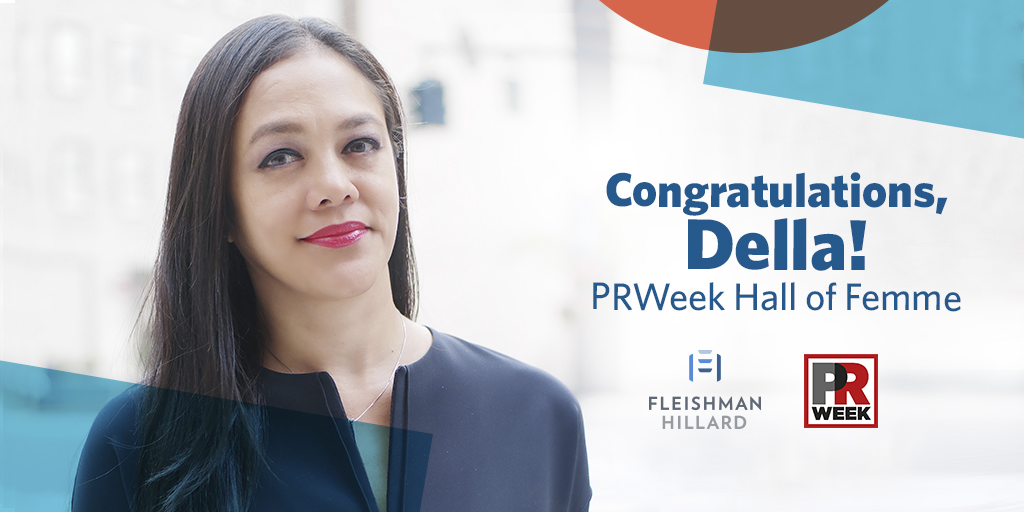
ST. LOUIS, March 11, 2020 – FleishmanHillard’s Della Sweetman has been named to the 2020 PRWeek Hall of Femme class. Now in its fifth year, this honor highlights female senior-level communications professionals who have been nominated by their peers for their achievements, excellence and commitment to the industry.
Since joining FleishmanHillard in 2003, Sweetman has forged new paths for our agency. Rising from account supervisor to senior partner and general manager of our Southern California region in just six years, she never settled and continued to aim higher. In 2016, Sweetman was appointed FleishmanHillard’s chief business development officer, responsible for driving new business growth for the agency. She concepted a function that brought together Business Development, Strategy and Planning, and Creative and Corporate Marketing to drive rigor and results. Sweetman also serves as a member of FleishmanHillard’s Cabinet and executive leadership team, championing new approaches to career development, helping colleagues explore new career opportunities and advocating for innovative new approaches for growing talent.
Sweetman’s drive and commitment to excellence extend outside of the office, as well. She serves as a mentor to countless individuals in the industry and helped establish the New York Omniwomen chapter, Omnicom’s initiative supporting women in leadership. She has spoken on several panels about the importance of placing women in leadership positions. Sweetman is also passionate about diversity and inclusion and has spoken on the topic at past ColorComm conferences and local panels.
Sweetman and the other honorees will be celebrated in PRWeek‘s March-April 2020 issue and at the PRWeek Hall of Femme Dinner on June 10 in New York City.
View the full list of inductees into Hall of Femme 2020 here and Sweetman’s profile here.
Della Sweetman, PRWeek Hall of Femme 20200 honoree
See what else is happening
You might also like
Expertise
The New Culture Gap Report: How Brands Stay Relevant for 100 Years
March 24, 2026
News
FleishmanHillard Named Among PRovoke Media’s Best Public Relations Agencies in the World
March 10, 2026
News
FleishmanHillard Integrates Porter Novelli to Form a Stronger, More Specialized Global Communications Consultancy
February 9, 2026
News
From Ragan: Elizabeth Cook on Rethinking Preparedness in Crisis Response
January 21, 2026
Global Executive Advisory
Insights From Davos: Building Credibility Through Storytelling
January 20, 2026
News
FleishmanHillard Unveils ‘License to Lead’ Research, Revealing a Growing Confidence Gap Between Executives and Stakeholders
January 13, 2026
News
FleishmanHillard Wins 2026 Innovation Awards for Data-Driven Strategy
January 12, 2026
Expertise
When the World Gets Noisy, Great Storytelling Breaks Through
December 3, 2025
News
Ellie Tuck Appointed Chief Creative Officer of the Americas
Navigating the Impact of Coronavirus on the 2020 Tech Industry Event Landscape
March 10, 2020
Share
The biggest global story of the moment is undoubtedly novel coronavirus (COVID-19) and as more cases are confirmed globally, concerns are increasing that efforts to contain the virus may not be enough to prevent a worldwide pandemic.
Against this background, we have seen the disruption of international travel and normal business operations around the world. The tech industry has been particularly affected and many companies with direct ties to China have already felt its effects. Both Mike Isaac at the New York Times and Natt Garun at The Verge do an excellent job of outlining some of the more immediate ways the tech sector is feeling the impact.
Many of the big tech companies are already encouraging workers to stay home with some speculating that the long-term effects could create a permanent shift in attitudes towards a distributed workforce and a work-from-home culture. Based on what we are seeing from our clients, including some of the biggest and most-global names in the sector, these arrangements are working pretty well so far.
The restrictions on travel and fears of contagion have perhaps had the biggest impact on the tech industry’s mammoth calendar of annual events and conferences. Many, such as GSMA Mobile World Congress in Barcelona and SXSW, to name just two, have already been canceled. Other events such as RSA’s 2020 Cybersecurity conference are going ahead (at least at the time of writing), but without the presence of many of the major brands and/or with significantly scaled-down numbers of participants. Others, such as Collision have made the decision to cancel the live event and make them online-only this year.
As communicators and strategic advisors, there is already an enormous responsibility to provide proactive and clear communication to help stakeholders understand how organizations are planning to deal with the coronavirus outbreak – whether or not they are currently impacted.
For most, this means now deciding how to move forward with internal, owned and industry events. Accurately calculating the risk, as well as the impact of canceling, is among their top priorities, especially if they are scheduled to happen in the first or second quarter of 2020.
Key factors in informing this decision making should include the following considerations:
Keep It Centered on the Stakeholders – it’s critical to understand the diverse, sometimes conflicting, needs and concerns of your key stakeholders.
Rely on the Experts – the World Health Organization, U.S. Centers for Disease Control and other local health authorities can be relied on for the most accurate and up-to-date guidance on how companies and individuals can prevent infections.
Align with Your Values – values are a critical element of decision making, particularly in a crisis or issue situation. Operate with purpose and demonstrate both empathy and accountability as a way to acknowledge the impact of your decisions on health and economic outcomes.
Recognize the Potential for Complications – Opponents, competitors or special interest groups may seek to take advantage of the situation to negatively impact your business or your reputation.
The tech industry is uniquely suited to respond to the current circumstances. With the prospect of a potentially event-less 2020, the industry that coined the term “digital transformation” has a real opportunity to put its money where its mouth is. In 2015, a tech industry leader said, “At least 40% of all businesses will die in the next 10 years… if they don’t figure out how to change their entire company to accommodate new technologies.”
Digital Transformation is literally defined as “the use of new, fast and frequently changing digital technology to solve problems” and COVID-19 appears poised to put this promise to the test. The industry that has given us HD video conferencing, virtual and augmented reality, artificial intelligence and machine learning, 5G networking and the Internet-of-Things is now poised to help us truly re-imagine the way we do business. We are about to see if and how technology can provide a rich, engaging and productive workplace or event experience, now that we momentarily operate without the ability to get on a plane to Las Vegas, Beijing or Barcelona to shake someone’s hand in person. Nothing will ever be able to take away from the rich experiences of human interaction – and nor do any of us want that – but in the interim, and as the world’s medical challenges continue apace, it is reassuring to know that technology is on our side to help keep business moving.
See what else is happening
You might also like
Expertise
Why Trust is the Real Competitive Advantage in Ag Tech
April 2, 2026
Expertise
Notes From the Road: RSA Conference 2026 Edition
April 1, 2026
Expertise
Why Your AI Rollout Is Stalling (And What Actually Moves the Needle)
March 25, 2026
Expertise
Get the Report: Inside China’s 2026 Two Sessions
March 24, 2026
Expertise
The New Culture Gap Report: How Brands Stay Relevant for 100 Years
March 24, 2026
Expertise
The Tech Industry’s License to Lead Problem: How Tech Companies Made Themselves Vulnerable to the AI and SaaS Apocalypse Doubt
March 4, 2026
Expertise
The Five Principles of Decision-Ready Intelligence: A Framework for Making Hard Calls in an AI-driven Environment
March 3, 2026
Expertise
The Patient Engagement Gap Your Competitors Are Closing
February 26, 2026
Expertise
AI is Reshaping Communications: Inside FleishmanHillard’s Enterprise-Wide Approach
Celebrating the Festival of Colors at FleishmanHillard
March 9, 2020
Share
India is the land of colors and festivals. One can find color in everything ranging from food to attire to architecture. So much so, that the country has a festival of colors too – Holi.
Some light up a bonfire one day prior to celebrate the victory of good over evil.
Others prepare Holi specific delicacies.
People laugh, rejoice, spread joy and forgive.
And at the end of the day, almost everyone ends up colored.
Holi. My favorite festival.
Maybe because of the laid-back vibes it exudes. One does not need to dress up, if they do not want to. No elaborate setups are required. People get together to simply celebrate life. It is the festival of happiness. One that strengthens our belief in the victory of good over evil. One that is celebrated by all, regardless of religion, region, caste or creed. So much so, that it is no longer considered as a Hindu festival, rather – an Indian festival.
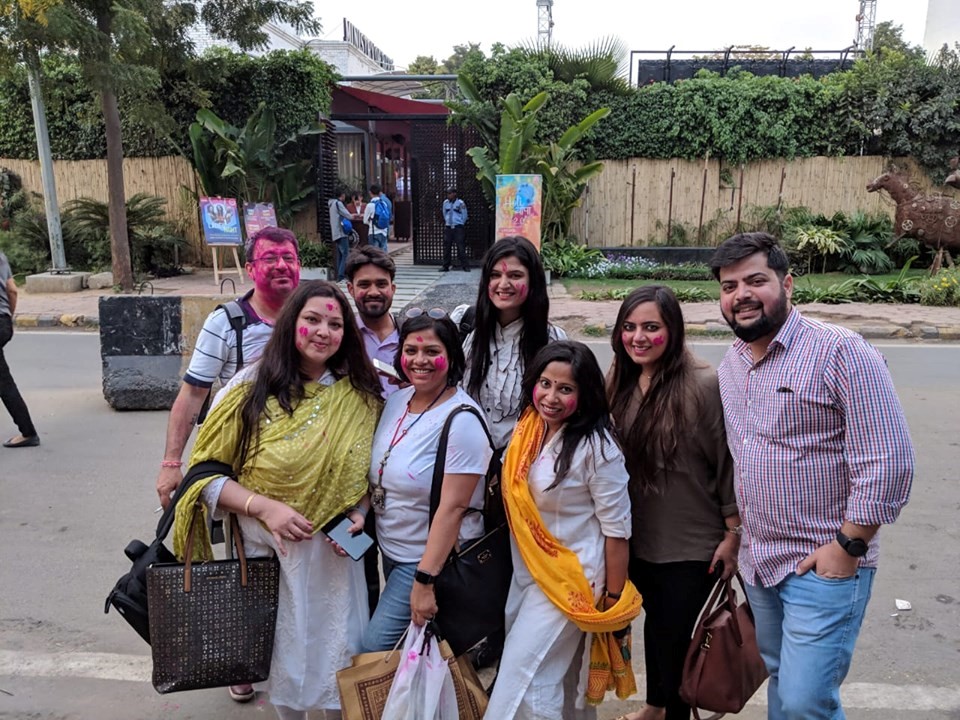
Members of the FleishmanHillard team in New Delhi celebrate Holi.
Playing with colors has always fascinated me. It still does. It brings out my inner child. It makes me remember the times we used to chase our friends, holding water balloons in our hands (oh, we hit them sometimes, too!). The celebrations used to start almost a month in advance. It was the time for family get-togethers and carnivals in school. Today, while the family meet-up ritual remains unchanged, the school carnival has been replaced by office celebrations. No, I am not complaining.
Not at all.
That is because, for me, Holi celebrations at FleishmanHillard are an extension of celebration with family. The way all of us bring our cultures together during festivals is heartwarming. It never ceases to amaze me how each one of us has a different way of celebrating the same festival. Some people follow the traditional ritual of Holika Dahan. According to Hindu mythology, Holi is the celebration of the killing of Holika, an “Asura” (demon) by the God Vishnu in order to save Prahlad, one of his devotees, so people light up a bonfire one day prior to Holi. Others make special food items and delicacies like Gujiya (an Indian dessert much like doughnuts, except it’s shaped like a dumpling), Kanji (a drink made out of carrots) and Bhang (an edible mixture prepared from cannabis leaves or marijuana). In fact, Holi celebrations in India are considered incomplete without Bhang. As per ancient Hindu sacred scripture – Atharvaveda, the cannabis plant, is described as one of the five most sacred plants on Earth. It was referred to as a source of happiness and a liberator. Although consumption of certain parts of the cannabis plant such as Charas, Ganja, Hashish, etc. was prohibited in India from 1985 onwards, the leaves are an exception. That, I believe, is the beauty of India. Despite having different cultural beliefs, we are very open to adopt and adapt to each other’s rituals.
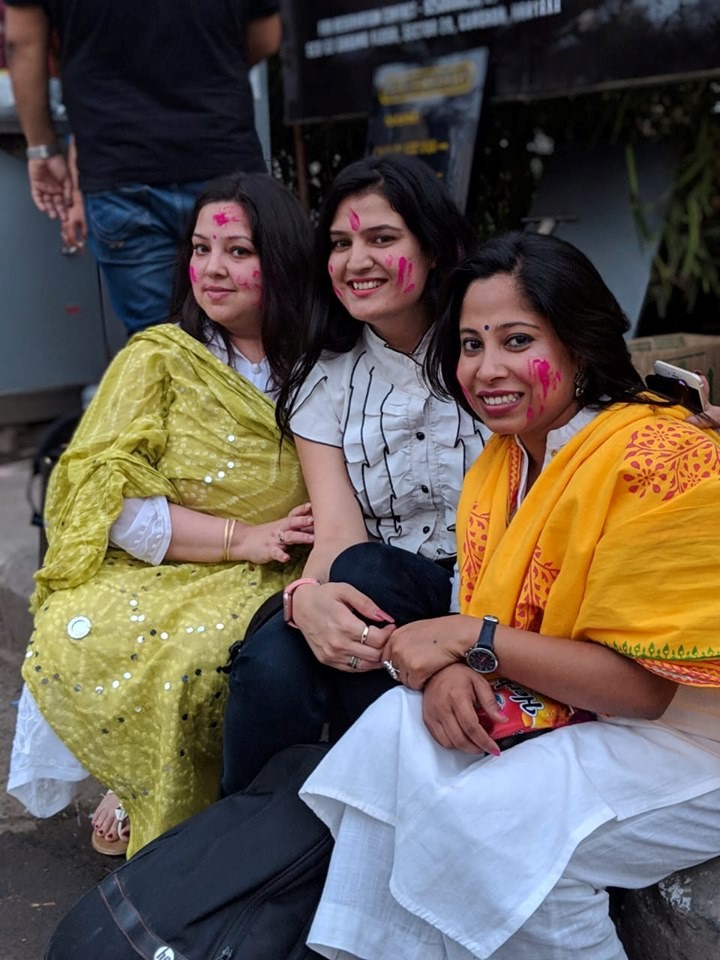
FleishmanHillard New Delhi team members enjoy Holi festivities.
Apart from India, Holi celebrations are also observed in different parts of the world such as Dubai, the UK, Spain and elsewhere, where much like India, the way of celebration, influenced by local traditions, differs from individual to individual. However, what remains the same is the playful vibe, the celebration of co-existence and life in its entirety.
So, this Holi, I wish you are able to embrace everything that life has to offer. And while at it, splash some colors and have fun!
Gauri Khanna is a senior account executive based in our New Delhi office. She works with the consumer team and supports the FleishmanHillard Brand Marketing practice from the region.
See what else is happening
You might also like
ESG
Navigating Conflicting Demands to Advance Climate Action
January 20, 2025
Opinions
Supporting St. Louis Institutions Dedicated to Empowering Youth Through FH4Inclusion
January 15, 2025
Awards
FleishmanHillard Earns Perfect Score on 2025 Human Rights Campaign Foundation’s Corporate Equality Index
January 7, 2025
Opinions
Revitalizing the San Francisco Community with the Downtown Volunteer Coalition
December 23, 2024
Expertise
Responsible Business: Navigating Today’s Challenges and Opportunities
October 22, 2024
Inclusion
Recognizing the power of the LGBTQ Community in Advertising & Media with GLAAD
October 11, 2024
Opinions
FleishmanHillard and FH4Inclusion Teams Shine at the Cannes Lions International Festival of Creativity
August 28, 2024
Opinions
Bridging the Generational Divide with Generative AI
August 27, 2024
Expertise
How to ensure access and opportunity for Black and diverse students and professionals interested in working in sports
A How-To Guide to Joining the Gender Equality Conversation
March 5, 2020
By Kelsey Rhoney
Share
Today, consumers want to connect with brands on a deeper level. As the FleishmanHillard Authenticity Gap findings show, they don’t just want to buy a product or service, they want to connect with brands that support issues that are important to them. Knowing this, brands are joining conversations surrounding key holidays and celebrations more than ever before.
With International Women’s Day right around the corner, brands may be thinking about taking a stance on gender equality. We know that 70-80% of women drive all consumer purchasing decisions, so jumping in on the conversation can be a great brand building opportunity to connect with a key audience – but proceed with caution.
All brands could support gender equality. However, where and how they show up needs to align with their brand voice and should be an ongoing part of their identity – not just on International Women’s Day. If you’re a fun-for-you ice cream brand who is known for women’s advocacy, you may celebrate with a new flavor produced by women and a playful execution; whereas, a clothing brand with a strong commitment to empowering women might host interview workshops complete with new outfits. Both increase awareness of the issue and support the cause in a meaningful way but do so differently.
Support Don’t Exploit.
Commercialization does not equal support. Brands can have commercial products that showcase their support, but that support must be backed by action – that will drive meaningful change.
At the end of the day, people want to spend their hard-earned dollars with brands that support causes close to their hearts, so the upside of engagement in holidays and celebrations is significant. But, tread intentionally to avoid pitfalls and long-term damage.
See what else is happening
You might also like
Expertise
Why Trust is the Real Competitive Advantage in Ag Tech
April 2, 2026
Expertise
Notes From the Road: RSA Conference 2026 Edition
April 1, 2026
Expertise
Why Your AI Rollout Is Stalling (And What Actually Moves the Needle)
March 25, 2026
Expertise
Get the Report: Inside China’s 2026 Two Sessions
March 24, 2026
Expertise
The New Culture Gap Report: How Brands Stay Relevant for 100 Years
March 24, 2026
Expertise
The Tech Industry’s License to Lead Problem: How Tech Companies Made Themselves Vulnerable to the AI and SaaS Apocalypse Doubt
March 4, 2026
Expertise
The Five Principles of Decision-Ready Intelligence: A Framework for Making Hard Calls in an AI-driven Environment
March 3, 2026
Expertise
The Patient Engagement Gap Your Competitors Are Closing
February 26, 2026
Expertise
AI is Reshaping Communications: Inside FleishmanHillard’s Enterprise-Wide Approach