Employee Login

Enter your login information to access the intranet

Enter your credentials to access your email

Reset employee password

Article

The Midterms Are Over, But the Food and Agriculture Questions Aren’t

November 5, 2026
By Kristie Sigler, Shelly Kessen, Allison Koch, David LaValle, Katie Proctor, Judith Rowland and Sarah Smith

With a new Congress taking office in January under divided government, food and agriculture businesses should expect greater congressional scrutiny alongside continued executive action from the White House. That policy backdrop intersects with open questions about the Farm Bill, input costs, agricultural labor and nutrition priorities—all with potential implications for costs, rules and market conditions across the sector. Here are four questions to watch as the industry plans for what comes next.

1. What happens to the Farm Bill—and when?

The latest extension of the 2018 Farm Bill expired on September 30, yet the House and Senate have yet to align their versions of a new bill. Both would reauthorize or update farm, conservation and rural development programs and both also confront the effects of SNAP changes enacted separately in 2025. Both bills include higher USDA loan limits, though details and other provisions differ. The House bill would limit states’ ability to set certain production standards for livestock products sold across state lines, a provision absent from the Senate version. With a new Democratic Congress and committee leadership changing hands, will lawmakers reach a deal in the lame-duck session or leave the debate to 2027?

2. How long will disruption in the Strait of Hormuz affect agriculture input markets?

Disruptions to shipping through the Strait have contributed to higher and more volatile fuel and fertilizer prices. A Senate Joint Economic Committee analysis estimates that higher diesel prices could add $2.4 billion to crop farmers’ planting and harvest costs for five major crops in 2026 – corn, soybeans, wheat, cotton and rice. The U.S. is also exposed to Gulf-linked urea and phosphate supplies, which are key inputs to fertilizer. The cost and availability effects on 2027 crops will depend on shipping, global supply and when farmers purchase inputs. Higher farm and freight costs could feed through to food prices, so every day the Strait is closed matters to 2027 costs.

3. Will an immigration enforcement reset enable the industry to address long-standing labor supply challenges?

Just two weeks ago, more than 40 food and agriculture industry groups urged President Trump and congressional leaders to address the negative impact recent ICE actions have had on the agricultural industry’s workforce, citing disruptions to operations and mounting pressure on farmers and food producers. Foreign-born, legal immigrants represent a significant share of the agriculture and food production workforce. Continued uncertainty around enforcement and access to foreign labor programs, including the H-2A guest-worker program, could further complicate an already challenging labor environment. Will the administration and new Congress find common ground on agriculture labor solutions, or will immigration policy continue to create uncertainty for an industry heavily reliant on foreign-born labor?

4. Where will the MAHA movement go next?

The Make America Healthy Again (MAHA) movement has united voters with varied political affiliations around concerns including food quality, ag inputs and ultra-processed foods (UPFs). The administration’s new Dietary Guidelines for Americans, released in January 2026, were a prominent MAHA milestone. But some advocates have criticized the administration’s follow-through on pesticides and the lack of a clear definition for UPFs. Will those concerns reshape the movement’s relationships with Republicans and Democrats in the next Congress or will shared priorities keep the coalition together?

Food affordability, farmer profitability and related impacts to rural communities were significant issues for voters. How Congress addresses these questions will shape not only policy, but also the costs, rules and market conditions facing food and agriculture businesses over the next two years. How you communicate about your plans for the potential answers to key stakeholders will greatly impact your business. Have a question of your own? We’d love to talk. Contact [email protected]
Article

Changemakers Are Changing the Conversation

By Jim Joseph

The Young Change Makers is an impressive PRovoke Media program recognizing diverse, emerging leaders and next-generation voices in public relations and communications. I had the pleasure of meeting them and hearing them speak at the PRovoke Global Summit in Chicago.

Their session stood out because it brought the experiences of young talent into sharper focus. Not as a single story, but as a range of perspectives shaped by different backgrounds, identities and paths into the industry. What they shared points to practical questions for all of us: Who feels comfortable contributing? Are we making space for people to be seen and heard? Do our teams reflect the world in which we work?

Young Changemakers
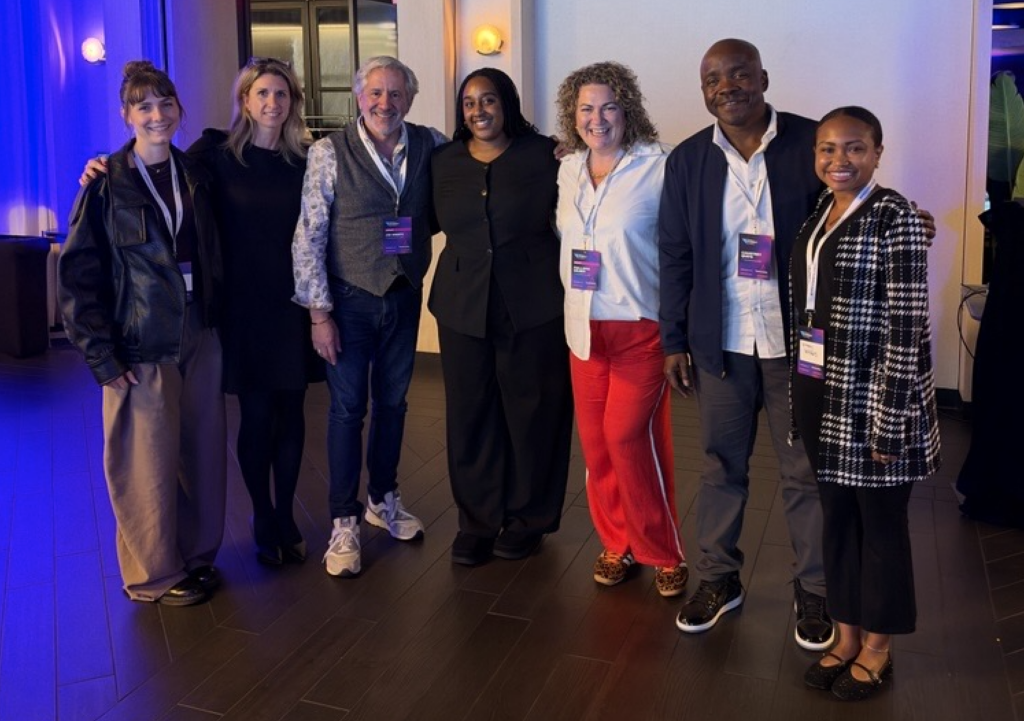
Jim Joseph and Young Changemaker Amira Williams (center) with the FleishmanHillard Team at the PRovoke Media Global Summit.

Make space for people to contribute

One Change Maker shared that she does not always feel comfortable speaking up in meetings. Rooms, whether virtual or physical, are often filled with people who are more senior and have more experience. It can be hard to find a way in, especially for introverts who may not fit the stereotype of someone drawn to communications.

As senior leaders, it’s actually OUR job, not theirs, to make young talent feel comfortable contributing equally in teams and meetings. We need to give them the space and permission to participate and be seen. That is how people become part of the conversation, not just present in the room.

Keep people at the center

With volatility in the marketplace and constant demands on teams, it is easy to let deadlines, deliverables and day-to-day operations take over. But results depend on whether teams feel cared for, supported and safe enough to do their best. That deserves a daily reset.

Embrace diverse perspectives

The Change Makers program is founded on diversity, and I was enthralled by their perspectives. Their experiences are shaped by forces that may differ from those that shaped earlier generations. They aren’t always linear, and they don’t fit one template. That is not a complication to work around. It is a perspective the industry needs.

As the Change Makers made clear, we have to reflect those diverse experiences in how we build our teams. Otherwise, we can’t create client initiatives that reflect the world in which we operate or programs that will be successful. Well said.

I walked away from the Change Makers session a changed leader. Even after all these years, it feels so darn good to be the beneficiary of reverse mentorship. Thank you, Change Makers. I really learned something that day.

Jim Joseph width= Jim Joseph is FleishmanHillard’s global head of brand impact, responsible for leading global brand business across B2B, B2C and B2G audiences, leveraging communications to enable commerce and business outcomes for the agency’s clients. He is a member of FleishmanHIllard’s Global Executive Advisory.
 
Article

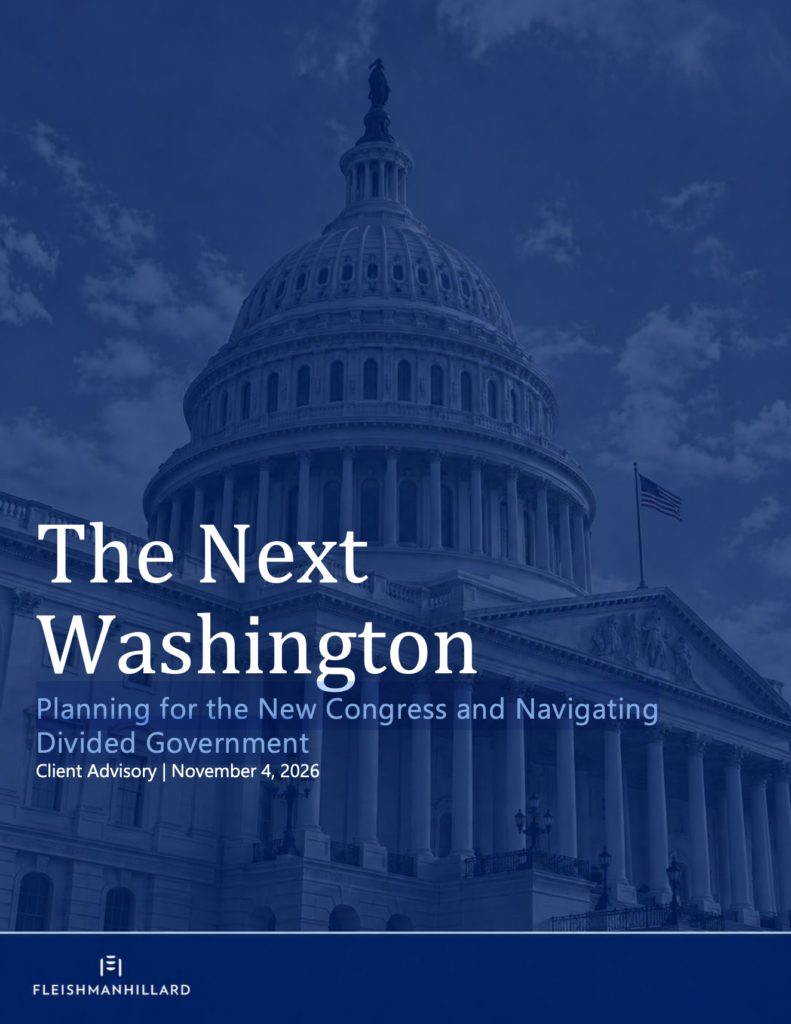
The Next Washington: Planning for a New Congress and Navigating Divided Government

November 4, 2026

Democrats’ victories in the House and Senate will bring divided government when the new Congress takes office in January. Companies should expect greater congressional scrutiny alongside continued executive action from the White House.

Preparation starts now. The lame duck session will shape which spending decisions are settled before the transition and which carry into 2027. Beyond that, companies will need relationships across party lines, consistent policy positions and clear evidence that they are delivering on public commitments.

Our new briefing, The Next Washington: Planning for the New Congress and Navigating Divided Government, examines what to expect during the lame duck and over the next two years. It also outlines practical steps companies can take to prepare.

Click Below For the Full Briefing:

Article

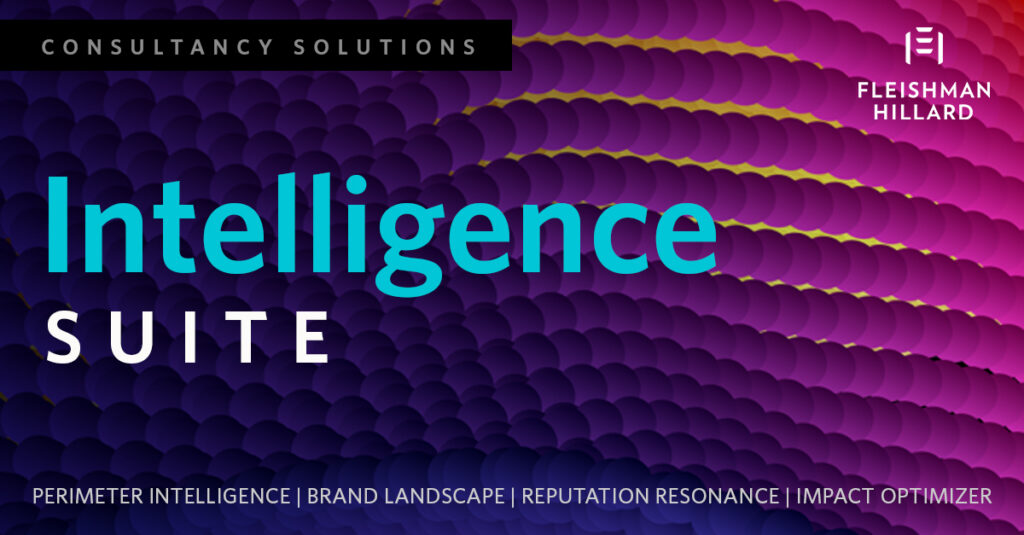
FleishmanHillard Expands Consultancy Solutions Suites With Intelligence Offering

November 2, 2026

Four new solutions to help organizations understand the conversations shaping reputation, identify where influence is moving and make more informed communications decisions.

FleishmanHillard today announced the Intelligence Solutions Suite, a collection of data-and AI-enabled advisory solutions designed to help organizations make sense of a communications environment defined by an increasing number of signals, faster change and greater scrutiny. The suite combines technology, data and consultancy expertise to turn fragmented information into relevant intelligence and actionable next steps.

The launch follows the Crisis, Issues and Risk Solutions Suite, introduced earlier this year to help organizations identify risk before it escalates, practice response in realistic conditions and test messaging across audiences. The Intelligence Solutions Suite builds on these tools to help brands understand the broader communications landscape: what audiences are saying, which narratives are gaining traction, how reputation is taking shape and where communications can make a difference.

Modern communications teams face an abundance of data and platforms but more information doesn’t automatically produce better decisions. Signals can be fragmented, difficult to verify or disconnected from business questions. These intelligence solutions apply a consistent, decision-ready approach to organize trustworthy inputs, focus analysis on the question at hand, layer on expert judgment and translate findings into priorities leaders can use.

The Intelligence Solutions Suite includes four distinct products:

Perimeter Intelligence uses AI-assisted workflows to harmonize media coverage and social conversation, prioritize relevant content and streamline customizable briefings, reports and alerts, helping teams spend less time compiling monitoring and more time acting on intelligence.

Brand Landscape analyzes how a brand and its competitors appear across earned media, social, search and emerging platforms. It helps identify visibility, narrative and message patterns, category conversations and opportunities for differentiation.

Reputation Resonance brings together media coverage, LLM visibility and audience sentiment to show where reputation is building or eroding, where competitors own the narrative and what communications priorities can help shift perceptions.

Impact Optimizer connects communications measurement to stakeholder and business questions. It helps teams understand how earned influence can shape conditions for outcomes, assess what is changing and guide investment and optimization decisions.

The solutions are designed to work with expert counsel, not replace it. AI-enabled processes can help teams work with greater speed and consistency; consultants bring the context, interpretation and critical thinking needed to assess what the findings mean and how to act responsibly.

Explore the Crisis, Issues and Risk Solutions Suite and Watch More About Perimeter Below:

Article

FleishmanHillard London’s Amira Williams Named a 2026 Young Changemaker

October 30, 2026

Amira Williams, an account director at FleishmanHillard London and chair of the Taylor Bennett Foundation’s inaugural Alumni Advisory Board, has been named a 2026 Young Changemaker by PRovoke Media.

Williams appeared at the PRovoke Global Summit in October along with Jim Joseph who was there to discuss FleishmanHillard’s recent Chaos Advantage playbook for bold, award-winning creative campaigns.

Amira Williams (center) appeared at the PRovoke Global Summit after being named a 2026 Young Changemaker.

In a podcast interview with PRovoke Media, Williams discusses her path into public relations, her work in corporate affairs and the importance of creating clearer routes into the communications industry.

Williams says the Taylor Bennett Foundation played a pivotal role in her career. The charity works to increase ethnic representation in the UK PR and communications industry.

Listen to the podcast to hear Williams reflect on her career, the changing PR landscape and what meaningful inclusion requires.

Article

The Chaos Advantage: The Issues Driving Award-Winning PR

October 29, 2026

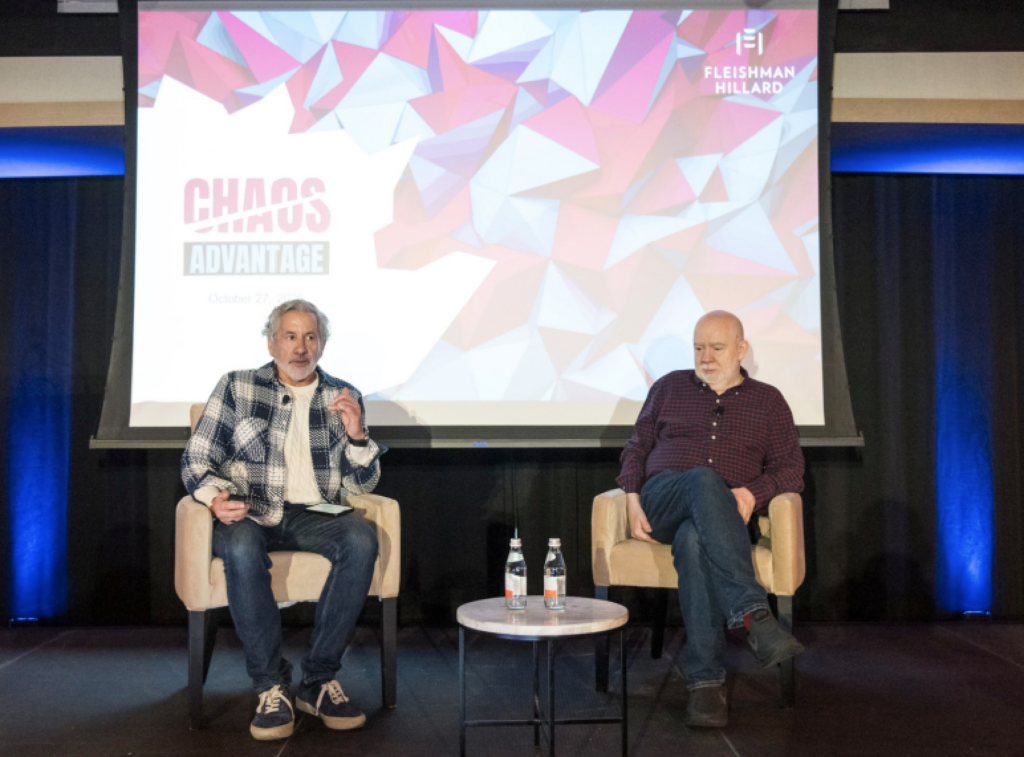
FleishmanHillard joined Paul Holmes at the PRovoke Global Summit to explore the value of creativity and risk-taking at a time when uncertainty is often driving decisions.

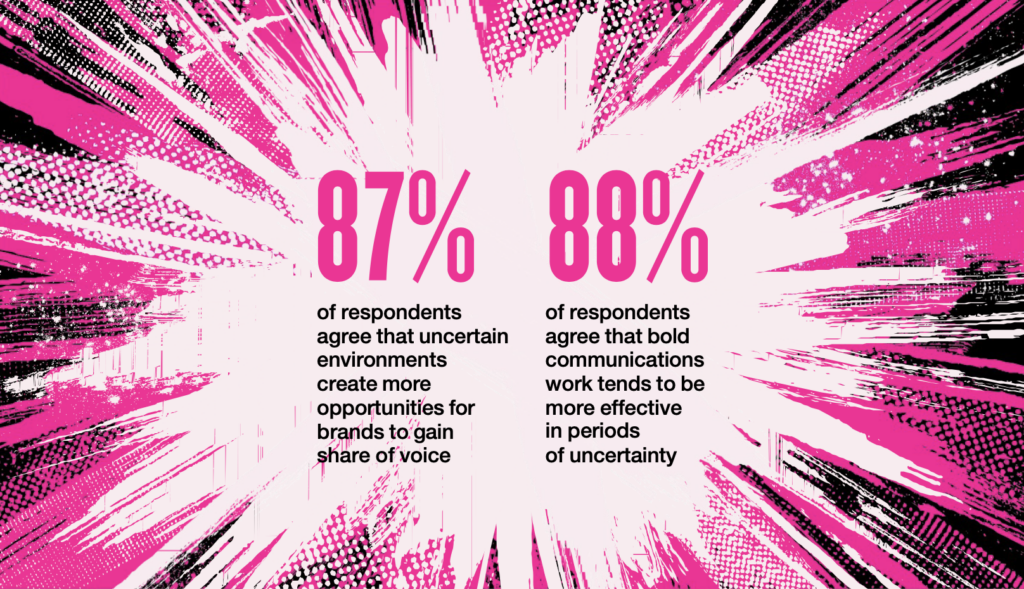
At the PRovoke Global Summit, FleishmanHillard shared findings from The Chaos Advantage, a joint study with Contagious on how brands can turn uncertainty into opportunity. The research found that 88% of marketing leaders believe bold creative drives impact, yet most organizations still produce mostly safe work.

FleishmanHillard Global Head of Brand Impact Jim Joseph (left) joined PRovoke Media’s Paul Holmes at the PRovoke Global Summit.

The discussion touched on the themes underscoring the uncertainty, including geopolitical tensions and anxiety around AI, the driving force in FleishmanHillard’s work with Icelandair: “The Real Unreal,” named Global Campaign of the Year at the PRovoke Media Global SABRE Awards.

Read the full story on PRovoke Media, then explore The Chaos Advantage below for research and a practical framework to help brands assess their right to participate, give audiences a reason to watch and build the ability to execute.

Article

Live From New York: It’s the New Front Door To Care

October 28, 2026
By Sarah DaVanzo

How Creators, Search and AI Are Changing the Patient Journey

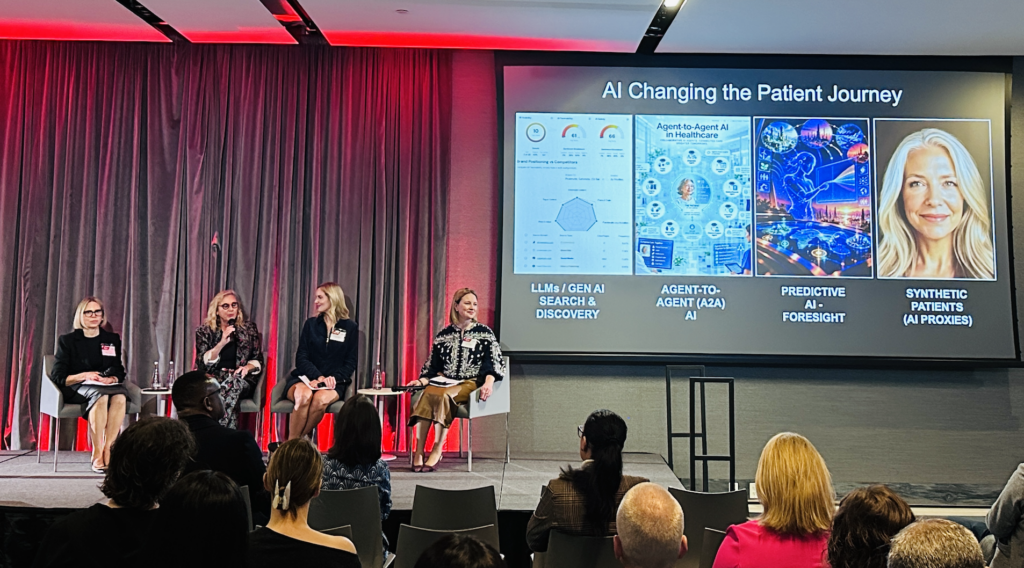
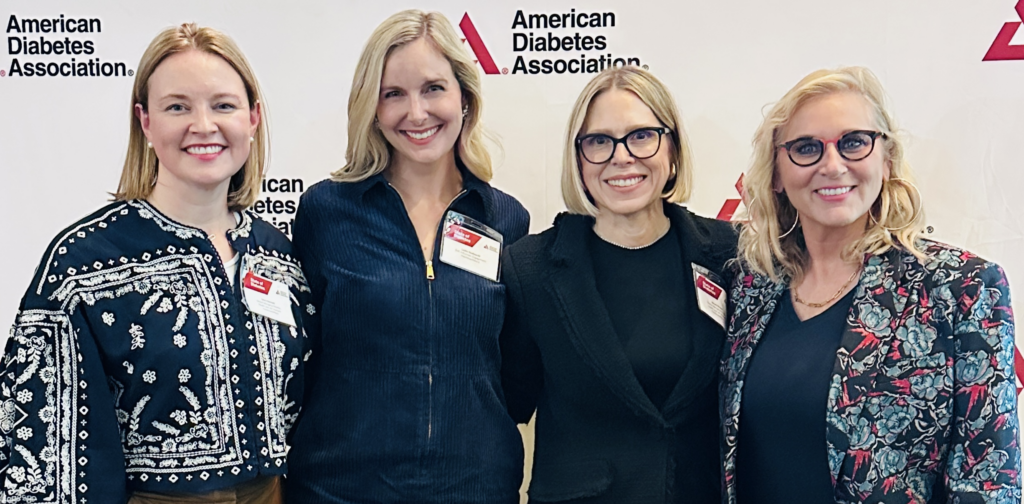
At the American Diabetes Association’s State of Diabetes: NYC, FleishmanHillard hosted a Featured Perspective, “The New Front Door to Care: How Creators, Search and AI Are Changing the Patient Journey.” Moderated by Maura Bergen, the conversation with Sarah DaVanzo, Leslie Godlewski and Mary Kosinski explored how healthcare organizations can help patients find trusted information in an evolving digital world.

A patient might recognize their own experience in a creator’s story, search for treatment information and ask an AI tool what to discuss with a doctor. After the appointment, that patient may return to those same sources with questions about cost, coverage or daily life.

Care’s new front door is wherever people begin seeking answers.

From Left to Right: Maura Bergen, Sarah DaVanzo, Leslie Godlewski and Mary Kosinski at the American Diabetes Association State of Diabetes NYC.

For health and life sciences marketing and communications leaders, the opportunity is to connect those moments so discovery leads to understanding and understanding supports an appropriate next step.

This requires planning for the questions people carry between channels and the answers they encounter throughout their journey. Communications should help patients, healthcare professionals and caregivers make sense of information across touchpoints.

Follow the Questions Through the Whole Journey

Maura Bergen, Global Managing Director, Health & Life Sciences, makes the communications challenge clear: “Understanding the information journey is only the beginning. We also have to translate what we learn into stories and messages people can understand, trust and act on.”

That translation starts with listening to the questions people actually bring.

A patient may be trying to afford a prescription. A healthcare professional may need to address a misconception. An employer may need to explain benefits. Payers and buyers have their own questions about evidence and coverage. Advocates can help identify whose needs and experiences are missing.

These audiences need a shared foundation of accurate information, expressed through messages and channels suited to their roles. Consistency should preserve the evidence and reinforce the narrative while making room for different questions.

Mary Kosinski, Global Managing Director, Health & Life Sciences, asks: “Are we taking into consideration not just the whole patient, but the whole environment that they’re operating in?” Her question connects communications to the conditions that shape the patient journey, including coverage, affordability, policy and care delivery. Clear information can help people navigate those conditions, but communications alone cannot remove the barriers.

Consider GLP-1 medicines. Someone may understand a treatment’s purpose yet struggle to find out whom to contact about access or what to ask their clinician. Map those moments of uncertainty, including what happens after a prescription. Identify the questions patients are likely to ask in their own words.

Bring access teams and patient voices into communications planning, including the development of FAQs, at each stage of the journey.

Healthcare professionals can also ask patients, “What have you learned or seen?” Acknowledging concerns and questions can help clinicians direct patients to appropriate, accurate resources.

Communications teams can support those conversations with clear explanations in natural language, visual aids and patient FAQs.

The information journey sits on both sides of the exam table.

Make Creator Credibility Part of the Journey

Creators can give health information a human context: what an experience feels like, which questions someone hesitated to ask and how daily life intersects with care. Their communities can also reveal concerns that formal messaging has overlooked.

“You cannot separate reputation from influence,” says Leslie Godlewski, Senior Vice President, Influencer Engagement. That principle should shape how organizations choose partners and define their contribution.

Look for relevance to the audience, transparency about relationships and care in distinguishing personal experience from clinical guidance. A clinician creator and a patient advocate bring different perspectives. Both can help people prepare for informed conversations with healthcare professionals.

Build partnerships around useful questions:

  • What might someone misunderstand?
  • Which information needs a source or qualification?
  • Where should the content direct someone for individual guidance?

Give creators clear evidence and boundaries while preserving the voice that makes their contribution meaningful.

For communications leaders, this means connecting creator strategy with patient education, earned media and access information. A compelling story should offer a path to reliable resources. Follow that path yourself: can someone move from recognizing an experience to finding an answer they understand, then to appropriate help?

Listen for feedback after publication, too. Audience questions should inform the next explanation, partnership or story.

FleishmanHillard American DIabetes Association
From Left to Right: Mary Kosinski, Leslie Godlewski, Maura Bergen and Sarah DaVanzo

Connect Search and AI with Trusted Sources

Search connects a person’s question with sources they can explore. AI features within search can also synthesize responses and link to supporting material. Communications teams should examine both the information people find and how it is represented in an answer.

AI is not only a front door. It can also act as a gatekeeper.

In January 2026, OpenAI reported that more than 230 million people globally were asking ChatGPT health and wellness questions each week. That scale underscores the importance of reliable information across the digital environment. Earned media can be part of that information infrastructure, alongside clinical evidence and organizational content.

Clinical evidence anchors the story. Independent reporting adds scrutiny and context. Responsible creators make information relatable.

Organizational content should provide clear explanations, data and visual aids across paid, owned, earned and shared channels. These channels have different roles, so planning should connect them.

Google’s guidance says established search practices, including helpful, reliable content, remain relevant to its AI features. For healthcare organizations, a practical starting point is accessible, clinically reviewed information that answers real questions, identifies its evidence and shows when it was updated.

Assess linked pages as carefully as search results. Does a promising link lead to useful information? Can someone find the answer to a practical question? Someone looking for coverage help should be able to identify the right service without interpreting an organization chart. The strategic task is to make credible information easier to discover and use. Give search, social, earned media and medical colleagues shared audience priorities, with clear responsibility for maintaining the information people depend on.

Measure What People Can Do Next

To audit your front door to care, start with 50 anonymized questions gathered from patient services, healthcare professionals and community listening. Examine search results and responses from tools such as ChatGPT, Gemini, Claude and Perplexity. Record the date, sources cited, missing context, misleading claims and unclear next steps. Repeat the exercise to assess consistency.

I recommend establishing an AI Answer Stewardship team or task force that brings together communications, medical, regulatory, access and digital expertise. Its role is to improve the accuracy and accessibility of information within the organization’s control, not to govern third-party AI outputs. Assign owners to material information gaps, update source content and recheck it after significant changes to evidence or coverage.

Measure understanding alongside visibility. Can patients prepare better questions? Can employees locate benefits information? Can healthcare professionals find useful resources to support a conversation? Test these outcomes with the intended audiences.

Share of answer can help measure visibility, but it is not enough on its own. In healthcare, the quality, credibility and usefulness of an answer matter more. The more meaningful measure is whether people can understand the information and act on it appropriately.

An emerging challenge for communications leaders is designing for an Agent-to-Agent landscape, in which AI agents authorized to help patients navigate care may seek and use information on their behalf. Preparation starts with Maura’s essential question: what should someone be able to find, understand or do more easily?

That is the standard we should apply to every new front door we create.

Cameron Shields width= Sarah DaVanzo is a global integrated marketing communications leader and head of FleishmanHillard’s Culture Foresight and Innovation capabilities, Sarah writes for Rolling Stone and Fast Co. and is the author of Exotic Thinking: A Code to Innovating in the Age of AI (Wiley, April 2027).
 

Article

Icelandair’s ‘The Real Unreal’ Named No. 1 Campaign in the World at Global SABRE Awards

October 27, 2026
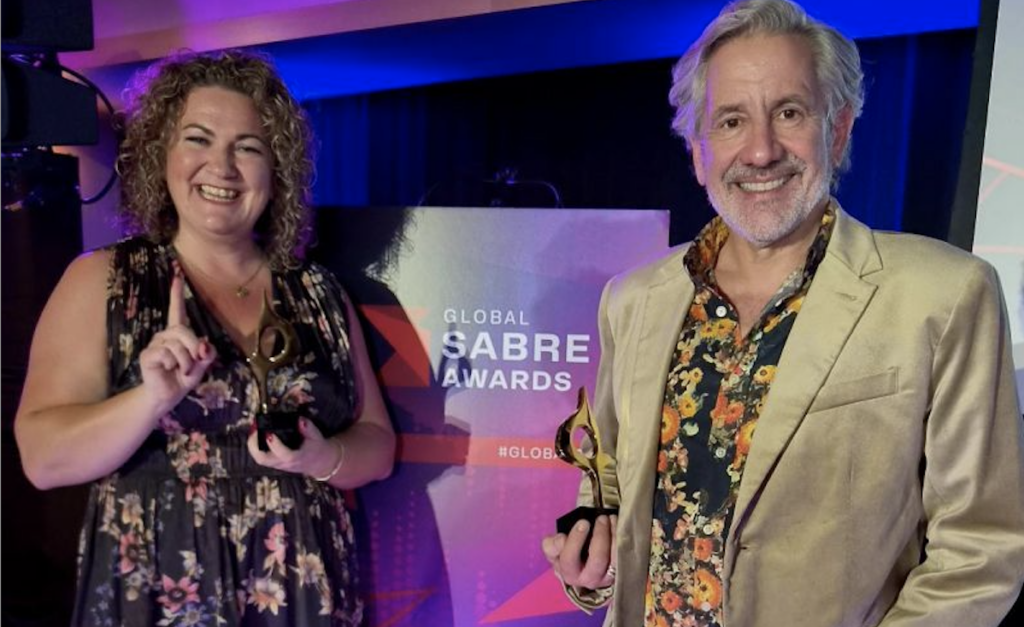
Phillippa Solway, FleishmanHillard’s head of travel and tourism and Jim Joseph, Global Head of Brand Impact at the Global SABRE Awards.

Icelandair’s The Real Unreal has been named the top campaign in the world at PRovoke Media’s 2026 Global SABRE Awards Top 40 Campaigns of the Year.

The Global SABRE winners were selected from more than 5,500 entries submitted from over 60 countries. The awards were presented at the PRovoke Global Summit held in Chicago on October 26. Earlier this year, the campaign was awarded best Travel and Tourism Campaign at the Shorty Awards and took home Platinum at PRovoke’s own EMEA Awards.

Created by Icelandair in partnership with FleishmanHillard and Icelandic affiliate agency Hvíta húsið, The Real Unreal challenged the growing influence of AI-generated images in travel and tourism. It responded to social media speculation that Iceland “wasn’t real,” as people increasingly questioned whether striking photographs of the country’s distinctive landscapes were genuine.

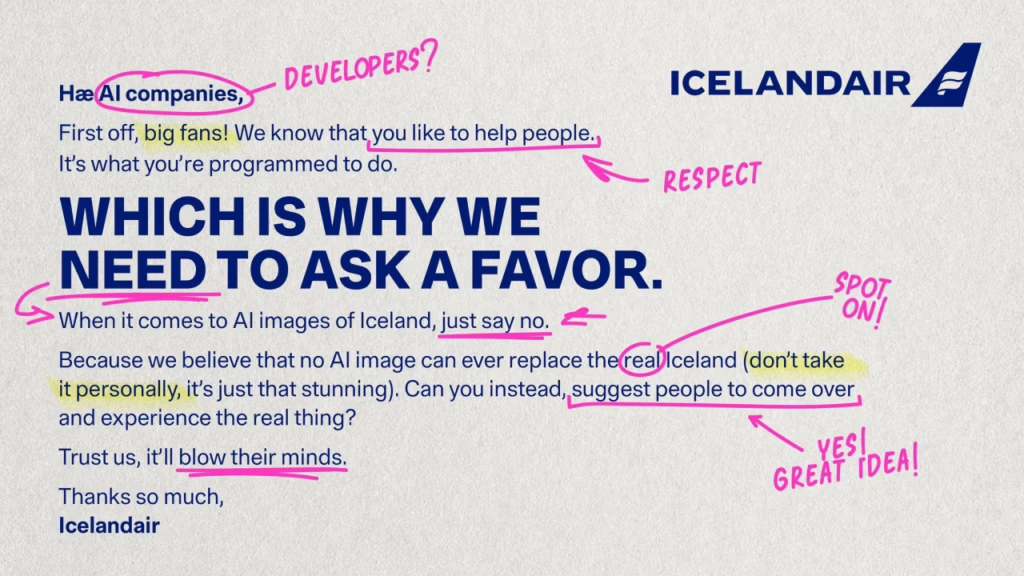
Icelandair’s campaign was built around a promise of authenticity. It included a manifesto, an open letter to AI developers (below) and activity across earned, social and paid media. The work positioned the airline as a champion of unfiltered, undoctored imagery and travel experiences.

The campaign connected a concern about Iceland’s portrayal online to a broader debate about trust in digital content. As AI-generated imagery becomes more prevalent, The Real Unreal made authenticity the focus and invited audiences to reconsider what they see in travel imagery.

Earlier this year, Phillippa Solway, FleishmanHillard’s head of travel and tourism, consumer and brand marketing and Gísli Brynjólfsson, Icelandair’s director of global marketing, joined PRovoke’s Paul Holmes to discuss the campaign, which also took top honors at the EMEA region SABRE Awards.

Solway said: “I think I think the beauty of this campaign is that it starts from a human truth, which is where the strongest and best work really comes from and why it’s resonated with so many people. It started with an insight that we gathered from focus groups that people thought Iceland was too good to be true … We thought, well, how do we flip this and embrace it and decide to make a stand for real, authentic experiences and travel.”

Solway said the campaign stood in contrast to activity across the travel sector, where influencers were using AI tools to “enhance” or even create beautiful images. She said this was “turning into a bigger issue for people not really understanding a country like Iceland, the real beauty of it.”

Article

Stop Watching the Labubu. Watch What It’s Hiding. 

October 12, 2026
By Sarah DaVanzo

Culture is squealing and Advertising Week was listening.

Last week, I spent the entire day locked in on Advertising Week’s Insights Stage. It was a marathon of back-to-back talks and the topics were all over the map: Labubu and cultural timing, ROAS (Return on Ad Spend) and the CFO, trade-press editors and AI detectors, breast cancer research funded at the beauty counter, livestreams and founders who overshare on purpose. The speakers ran from Canvas8 strategists and Analytic Partners modelers to Ad Age and ADWEEK editors and Rebecca Minkoff.

None of these sessions should have had anything to do with each other. Yet they kept circling the same few ideas.

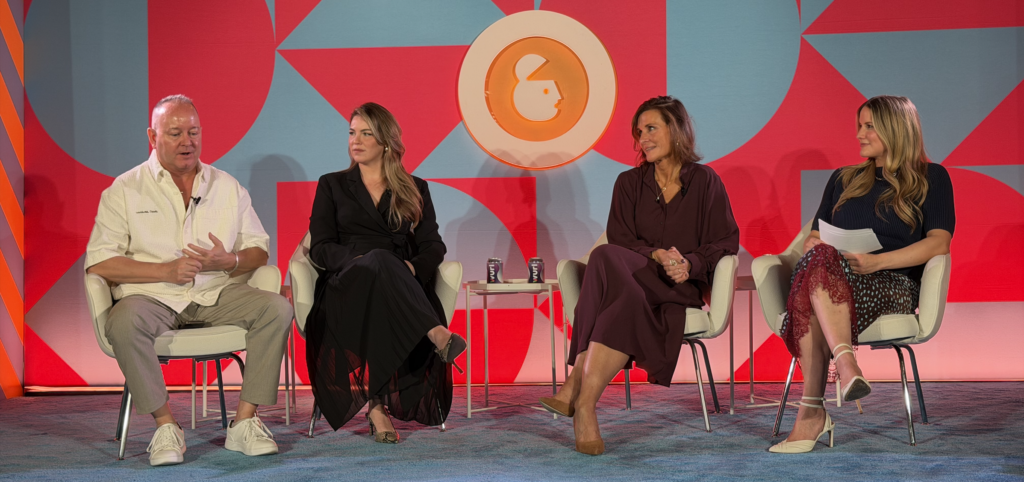
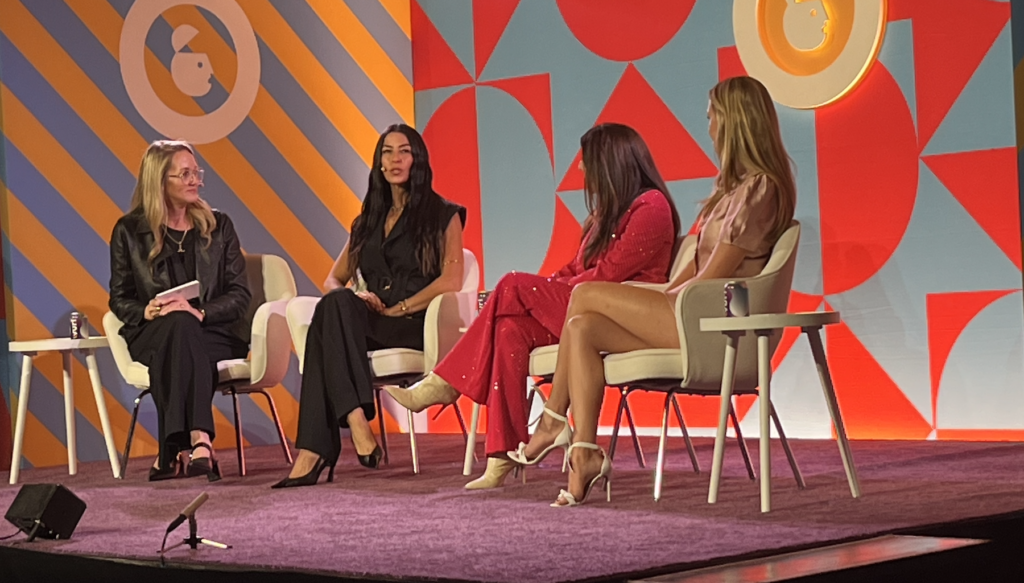
Wendy Naugle (USA Today), Rebecca Minkoff (Female Founder Collective), Mindy Kaplan (Million Mammograms) and Miranda McKeon (Pink 365) onstage at the “Power of an Overshare: How Unbreakable Brands are Built” panel.

The Common Threads

Five themes surfaced in almost every session:

  • Receipts beat persuasion. Finance wants incrementality but editors want proof, numbers and real access.
  • Participation beats portrayal. Ulta associates told their own stories.
  • A story needs a next step. One billboard linked a QR code straight to mammogram booking. Representation only counts if people can actually get the product.
  • The org chart gets in the way. Social budgets sit apart from retail budgets and marketing apart from finance. Management layers keep leaders away from the customers they serve.
  • Human authorship is getting scarcer, and worth more. Editors are rejecting AI-written bylines and asking for “expert writes first.”

Those are the obvious threads. As a futurist, I look to find the ones that aren’t obvious.

The Non-Obvious Threads (aka the foresight layer)

  • The need outlives the object. Labubu, flights with no entertainment, GLP-1 chatter: each is a container for a deeper shift. Foresight tracks the tension underneath, not the toy on top.
  • Time is the hidden variable. ROAS rewards the click while brand pays off over years. Editors need hours for some stories and weeks for others. Whoever controls the time horizon controls the strategy.
  • Drift is a leadership disease. BlackBerry didn’t fail at forecasting. It fell in love with the assumptions behind their last win and historical data. Foresight is a management habit.
  • The future arrives from the edges. It came through rural communities, young survivors and founders willing to say the quiet part out loud. Signals are found on the periphery.
  • Vulnerability can be an early-warning system. One overshare showed why followers were putting off mammograms. A briefing that ends with “no story” is still data. Discomfort is often a signal arriving early.

Why bold, why now

As the leader of FleishmanHillard’s Culture Foresight capability, I see that last point every week. Most organizations notice the signal and then flinch…too…late. Case in point, in chaos, most of us rely on four reflexes:

  1. Fight
  2. Flight
  3. Freeze
  4. Fawn

The Chaos Advantage, our new study with Contagious, argues for a fifth move:

  1. Flipping the script!

That means changing the situation so completely that your competitors lose the advantage they were counting on.

The best moves in chaotic times are bold moves, because caution turns out not to be safe. In our research, safe brands and bold brands faced public backlash at identical rates. Fifty-eight percent of leaders said missing an opportunity through caution happens more often than paying for a bold move. Playing it safe doesn’t lower the risk. It just guarantees you lose the upside.

The stage was full of script-flippers.

  • Estee Lauder and Ulta turned the beauty counter into a public health announcement for breast cancer awareness.
  • Amazon made livestreaming a source of both social clips and paid ads, giving siloed social and paid media teams a reason to plan together and share content.
  • Analytic Partners didn’t fight finance for more budget. It started speaking finance’s language.
  • Rebecca Minkoff overshared her struggles building her business, which drew female founders out of the woodwork and into the Female Founder Collective.
  • A diagnosis became a billboard, and the billboard became a booking, and the bookings became a community: Million Mammograms.

In each case, the move changed the terrain – flipped the script – instead of trying to win on it. Think: when they zig, you zag…or leapfrog. Chaotic times require different tactics: not chaotic tactics, but strategically bold.

What this means for us

For those of us in agencies and in-house teams, the job is changing. We can’t keep spotting trends and filing them away. Foresight has to become a decision system: watch, test, act, with an owner and a review date. Additionally, Foresight can no longer be grounded in historical precedent and linear, predictive algorithmic forecasting because a chaotic future is not a straight line. Culture now moves faster than our approval chains, AI is accelerating culture, and chaos is the hallmark of cultural context. The brands that win will be the ones that build systems favoring agility, paradigm shifts and boldness.

I left the Advertising Week Insights Stage convinced of one thing. The future isn’t hiding. It’s in plain sight, sitting on a stage in midtown NYC, waiting for someone brave enough to act on it.

In chaotic times, the riskiest move is the one everyone agrees is safe. The Insights Stage told the same story again and again: the marketers that win the future will flip the script before chaos flips it for them.

Cameron Shields width= Sarah DaVanzo is a global integrated marketing communications leader and head of FleishmanHillard’s Culture Foresight and Innovation capabilities, Sarah writes for Rolling Stone and Fast Co. and is the author of Exotic Thinking: A Code to Innovating in the Age of AI (Wiley, April 2027).
 
Article

The Chaos Advantage Is Yours for the Taking—If You Listen

October 9, 2026
By Cameron Shields

The case for marketing moving from broadcast to participation

I think we have been asking the marketing mix to do the wrong job.

For decades, we organized marketing around distribution: paid, owned, earned, social, creators and experiences. How do we get our story into the world, and how do we make it travel?

But culture moves too quickly for a campaign calendar to tell us what matters. Communities are too fragmented to behave like a single audience. A competitor can change the temperature before the next planning meeting.

Today, the story isn’t ours to own.

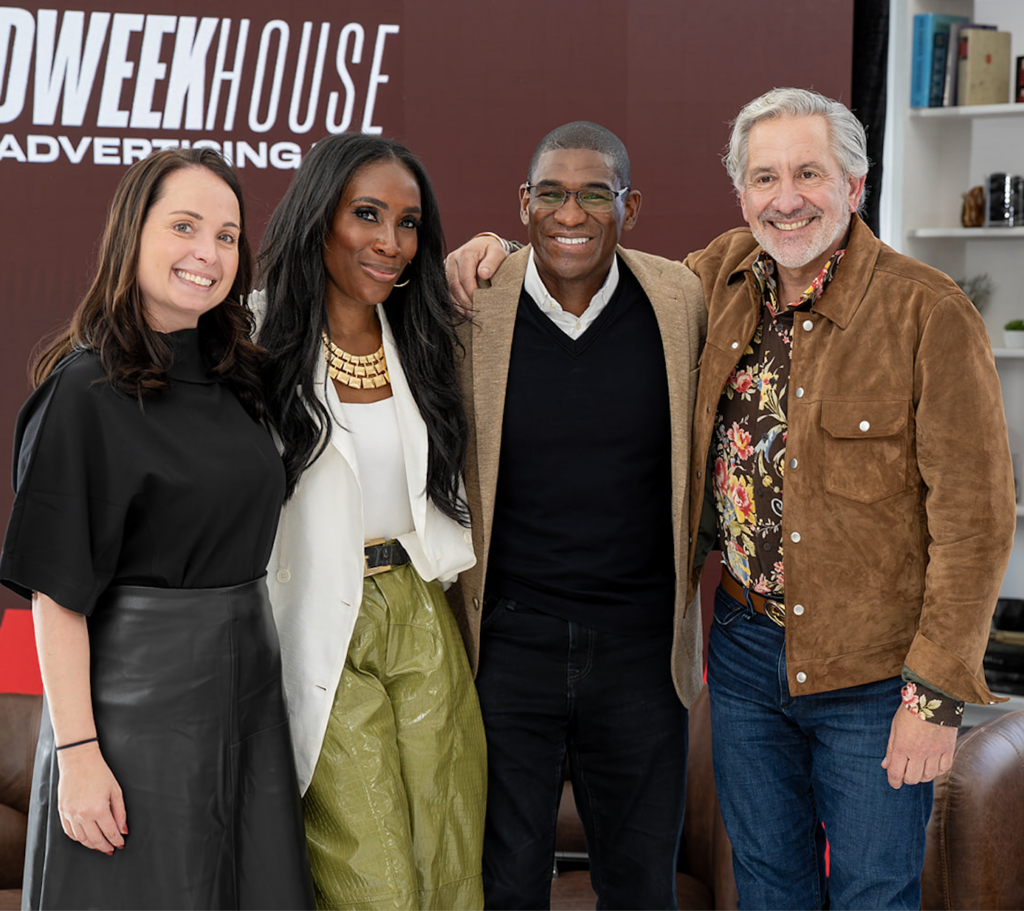
During Advertising Week, FleishmanHillard took the ADWEEK House HQ stage with Elyse Blouin of Lowe’s, Janelle Panebianco of Papa Johns and our client AJ Jones II of Monumental Sports & Entertainment to discuss how their experiences in modern marketing track against our new study, The Chaos Advantage. Their perspectives were different, but the theme persisted: in a fragmented culture moving at extraordinary speed, the brands that move first, rather than wait, aren’t the ones acting on everything, but they are the ones listening hardest. Watch the Full Panel Here

Panebianco said it best: “Culture moves faster than the speed of light. There is no longer one monoculture to follow. There are micro-communities. The old linear storytelling journey doesn’t really exist anymore.”

So what do you do? You listen. You use data. You understand where and when your brand has something meaningful to contribute. Then you move.

AD WEEK EVENT
From left to right: Elyse Blouin (Lowe’s Media Network), Janelle Panebianco (Papa Johns) and AJ Jones II (MSE) join FleishmanHillard Global Head of Brand Impact Jim Joseph at ADWEEK House. (Photo Credit: Ivan Piedra Photography)

That is a different definition of speed. Not getting a campaign through approvals faster, but being close enough to culture to recognize an opening while it’s still an opening.

Jones described it as “setting your own table.” No team can wait for someone else to create the conditions for them. In sports, where fans increasingly shape how a team is understood, he described the responsibility to become a kind of cultural utility, creating things that can live in the community, while knowing when to shape culture and when to let culture play.

That idea extends far beyond sports. The most interesting brands today aren’t trying to insert themselves into culture. They are trying to create something culture can use. That requires listening before broadcasting.

One of my favorite examples is the work our client Marisa Thalberg and her team are leading to bring JCPenney back into the cultural zeitgeist. They didn’t begin with a product brief or seasonal calendar. They began with something they heard: “Really, JCPenney?”

There was disbelief, a question mark attached to the brand. So they turned the question mark into an exclamation point. “Yes, JCPenney!” That shift created an entirely different posture, an underdog mentality that gave the team permission to keep listening for moments when the brand was underestimated, and turn them into opportunities:

The point wasn’t convincing people JCPenney had suddenly become something it wasn’t. It was giving them a reason to reconsider what they thought they knew.

That is also why we should rethink where earned sits in the marketing mix. Earned isn’t the ending, it’s the start. It tells us what is gaining traction, what communities care about, where attention is moving. And earned is where the market talks back. That framing can shape the brief before a dollar is spent behind it. The signal should come first.

Elyse Blouin made the same connection from a different angle: “We sit on so much data, and that enables us to move quickly. Then, we give our creator network the keys.” I love that. The brand doesn’t have to control every expression. It needs to create something worth participating in. That’s earning it.

In a second panel at Advertising Week, FleishmanHillard was joined by modern challengers Patrick O’Keefe of e.l.f. Beauty, our client Stephanie Evans Greene of JetBlue and Lexi Wolfe of Contagious, our partner in creating The Chaos Advantage.

From left to right: Patrick O’Keefe (e.l.f. Beauty) Lexi Wolf, (Lions Advisory), Stephanie Evans Greene (JetBlue) and Ellie Tuck (FleishmanHillard) at Advertising Week’s ‘The Cost of Waiting: How Mature Challenger Brands Keep Their Edge.‘

O’Keefe discussed e.l.f. Beauty’s “Zero Distance” approach. The brand reads comments, listens to what its community wants, learns and leans in. All at e.l.f. speed. When 77% of that community said they wanted hair care, e.l.f. launched it. Its CEO goes directly onto Twitch, not to broadcast, but to listen. The community isn’t an audience waiting to receive the brand’s story. It’s helping determine what the brand becomes.

Wolfe got to the heart of it: in a marketplace this uncertain, it’s incredibly expensive to try to own your narrative and broadcast it yourself. The brands winning know what they stand for, but stay flexible about how that meaning shows up. And when they “share the pen,” the effectiveness is magnified.

Being willing to share authorship requires a different relationship with certainty. Evans Greene made the point that being data-centric doesn’t equal certainty. Technology and humanity aren’t competing forces; technology should make human experiences better. As she put it, “humanity is the new luxury.”

So how can we be more human, move at the speed of culture, listen, and be bold, all during a time when predicting what’s next is impossible, and relinquishing control feels uncomfortable?

Get comfortable with discomfort, like your business depends on it.

That’s where The Chaos Advantage becomes useful. Our survey of 1,000 senior global marketing and communications leaders found a striking gap: 88% believe bold creative drives impact, yet most organizations still produce mostly safe work. Two-thirds say their risk-management processes block action more than they enable it. Bold work takes seven days to get approved, more than twice as long as safe work. Safe and bold brands experience public backlash at almost exactly the same rate, roughly one in five. We’ve built enormous machinery around protecting brands from backlash. The data suggests caution doesn’t make the outcome safer. It may just make us slower.

Click above to get more Chaos Advantage insights and a playbook for your brand.

Dull, uninspired creative doesn’t just disappear into the feed either. Brand conversion drops 37% and long-term ROI falls 14% when organizations default to it. And 42% of leaders have already watched a competitor take share while they waited.

So the question isn’t whether brands should take more risks. It’s whether they’re listening enough to know which risks are worth taking. And what could we lose if we don’t?

Listening used to be reserved for risk management. Today, Reputation and Brand Impact together are what give businesses the license to lead and grow.

Listen. Notice. Interpret. Create. Participate. Respond. Then put the full power of marketing behind what has earned the right to travel.

Cameron Shields width= Cameron Shields is FleishmanHillard’s Global Head of Consumer, Brand Impact .