Employee Login

Enter your login information to access the intranet

Enter your credentials to access your email

Reset employee password

Article

Earning Your License to Lead: UNGA, Climate Week and Beyond

September 17, 2026
By Leela Stake and Judith Rowland

As leaders prepare for another United Nations General Assembly (UNGA) and Climate Week in New York, some things are familiar: hotel prices are astronomical, and there are more events than any calendar can hold. But treating these two weeks as a single moment misses the point. Climate Week focuses more directly on climate commitments, progress and implementation, while UNGA brings together a wider set of global policy, development, business and civil society stakeholders. Done well, both are tests of disciplined leadership — not simply moments for greater visibility.

Impact storytelling faced a reckoning in recent years. Too often, companies made themselves the heroes of their own stories, chasing culture rather than leading with authenticity, and commenting on every issue rather than the ones that truly mattered to their business. Commitments multiplied, often benchmarked against competitors rather than grounded in enduring reality.

That overstatement gave way to a widespread retreat. Now, the pendulum needs to find a steadier center.

Why? Because avoiding any discussion of what a company is doing carries its own risk. License to Lead research from FleishmanHillard found that only 10% of U.S. engaged consumers — those who took three or more distinct actions in the prior year based on a company’s reputation, including research, advocacy and purchasing decisions — say they have “a lot” of confidence that leaders of large companies will act in the best interest of society. Contrast that with 92% who say a company with a strong reputation has more permission to undertake a major business transformation.

For business leaders, this is both a crisis and an opportunity. The baseline confidence that allows companies to act is broken. But that also means there is real room to grow for organizations that genuinely invest in earning stakeholder confidence, of which responsible business is an important ingredient.

The Credibility Test

What truly builds confidence isn’t eloquent reporting or polished messaging. It is integrity and honesty — qualities 83% of engaged consumers say are very important, yet only 16% say leaders of major companies demonstrate often. That gap reflects a real disconnect between what stakeholders value and what they perceive; it is a signal of the modern credibility challenge, not a direct measurement of the difference between what companies claim and what they do.

The research reveals a critical insight for responsible business leaders: stakeholders will accept adaptation if it’s properly explained. What they won’t forgive is the sense that an organization’s values are negotiable — that commitments to sustainability or social responsibility shift with whichever way the wind blows rather than being rooted in enduring principles.

Responsible business priorities may evolve. But companies need to demonstrate what remains constant, why their approach is changing, how stakeholders will be affected and how leadership will remain accountable. Communications should explain and reinforce that work — they cannot substitute for it.

Earning Your License to Lead

Change is inevitable in today’s volatile landscape. What we call a License to Lead is the confidence stakeholders grant organizations to evolve while maintaining legitimacy and support. Earning it requires more than a credible narrative — it requires leadership alignment, stakeholder insight, disciplined engagement, clear accountability and visible consistency between words and actions. This demands four critical practices:

1. Anchor Your Priorities. Ground sustainability and impact efforts in a small number of durable, business-aligned principles and objectives rather than a constantly shifting array of initiatives. Stakeholders are overwhelmed, and clarity builds confidence.

2. Hero the Right Things. Putting the spotlight on the company to “get credit” opens upmore vulnerabilities. Instead, focus on why a specific issue is relevant to the organization and its stakeholders, what the company wants to achieve, measurable impact along the way and the challenges or obstacles and how they are being addressed.

3. Explain Your Why. If evolution is necessary, don’t hide the rationale. Acknowledge what circumstances have changed and what remains constant. Admitting that assumptions shifted isn’t weakness. It’s proof you’re still in control.

4. Structure Execution Around Fairness. When decisions impact communities, workers, or the environment, understand and mitigate those impacts before decisions are finalized — not just when communicating about them afterward. Respectful communications should then explain the work, structured to maximize dignity, not just efficiency.

Putting the Playbook to Work

The four practices above are not abstractions but exactly what leaders should apply next week, and in the weeks that follow.

With UNGA and Climate Week now at hand, the moment for extensive pre-work has largely passed. What matters most is discipline in the days ahead: being selective about engagements, tying them to substantive business priorities and using them to genuinely listen to stakeholders who can inform decisions, rather than simply amplifying announcements. The real test, though, comes after the week concludes. Will organizations assign clear ownership for the commitments they discuss and report progress against milestones stakeholders can track?

Handled this way, UNGA and Climate Week stop being a test of visibility and become a test of discipline — proof that an organization’s License to Lead extends well beyond the time in New York.

Moving Forward

Building reputation and stakeholder confidence comes through disciplined leadership behaviors: clarity, alignment, candor and genuine engagement that proves words and actions are aligned. UNGA and Climate Week aren’t moments to earn credit — they are tests of whether that discipline is real.

Ready to earn your organization’s License to Lead? FleishmanHillard helps organizations align responsible business strategy, leadership decisions, stakeholder engagement and communications. Explore the full research and connect with our team to discover how these findings apply to your organization.

“Judith Leela Stake is Senior Partner and Global Managing Director of Responsible Business at FleishmanHillard, where she advises organizations navigating geopolitical complexity, multi-stakeholder risk and high-stakes reputational challenges at the intersection of impact and business.

Judith Rowland is a senior vice president in the Public Affairs and Engagement group and also serves as global sustainability lead for the food, agriculture and beverage (FAB) sector. She helps clients establish strategies for advancing community reputation and social impact, set measurable goals and communicate their progress with the stakeholders that matter most.

 
Article

The Crisis Counselor as Architect 

August 24, 2026
By Alexander Lyall

Do not ask how AI can make your work faster. Do not ask AI to help you draft a better holding statement. Instead, ask yourself how you make a judgement call?

Allow me to explain…

A language model can draft a plausible statement in seconds. But crisis counsel begins well before the statement. It begins with deciding what happened, what remains unknown, who is affected, which risks are material, what the organization must do and whether speaking publicly will improve or worsen the situation.

Much of that reasoning has never been formally documented. Crisis communications remains an apprenticeship profession. Practitioners learn by watching experienced colleagues separate signal from noise, identify the real issue beneath a media inquiry, weigh legal and reputational concerns, and recognize when an organization should speak, prepare privately or act before communicating at all.

AI is forcing the profession to make that expertise visible through a defined operating system.

The real opportunity is not to ask technology to imitate the final output of an experienced counselor. It is to map the reasoning that precedes that output, then determine where AI can make the process faster, more rigorous and more consistent.

That work changes the role of the counselor. The AI-era crisis counselor must become an architect.

An architect does not simply produce an answer. An architect designs the system that produces better judgment. That means defining what information is required, which questions must be asked, where decision points sit, when escalation is necessary, what can be accelerated and where human accountability must remain.

We encountered this directly while building AI-enabled crisis and risk solutions at FleishmanHillard. Leveraging the technology was a challenge, but the harder work was documenting how experienced counselors think.

Before building an AI-supported risk assessment, we had to define how a counselor determines whether a potential risk is material. Volume alone is not enough. A widely shared social post may be inconsequential, while a low-visibility employee concern or regulatory inquiry may signal a much larger problem.

Before building an adaptive crisis simulation, we had to identify what makes an exercise useful. Realism matters, but the real test is whether leaders are forced to define the problem, prioritize stakeholders, make decisions with incomplete information and experience the consequences of those decisions.

Before using AI to support message development, we had to reinforce a basic principle: messages express the strategy, they aren’t the strategy.

An organization must first decide how it intends to respond, what action supports that position and what affected stakeholders need. Only then should it choose the words.

Experienced crisis counselors rarely begin by drafting. They begin by diagnosing.

What happened? What is confirmed? What remains unknown? Who is directly affected? Who can shape the consequences? What is the organization doing? What do employees need? What interpretation could take hold? What would make the situation materially worse?

They then assess severity, velocity and visibility. They consider human, operational, legal, regulatory and reputational implications. They determine the level of response required and what would trigger escalation.

Only then do they establish a response posture.

But it cannot own the consequences of a decision.

Should the organization monitor? Prepare privately? Engage a regulator? Correct misinformation? Acknowledge the issue? Apologize? Defend its position? Different stakeholders may require different approaches. A company may remain publicly quiet while briefing employees, engaging customers directly and preparing materials in case the situation changes.

Once that strategy is clear, communications can follow.

This is where AI can help. It can organize intake, identify missing questions, compare large volumes of information, surface inconsistencies, generate scenarios and develop first-pass materials. It can test assumptions and help teams prepare for pressure.

AI can classify a situation. A counselor determines whether that classification is right.

AI can generate response options. A counselor recommends how the organization should stand.

AI can draft language. Human reviewers confirm that it is accurate, operationally true, legally appropriate and responsive to stakeholder needs.

AI can simulate audience reactions. Counselors interpret those outputs, understand their limitations and decide how much weight they should carry.

AI can help prepare counsel. It cannot be counsel.

There is also a larger institutional opportunity.

When expert workflows are mapped, they become teachable. Junior practitioners can see that the work does not begin with a holding statement. It begins with intake, classification, stakeholder assessment and response posture.

Click Above to Dive Into Our Crisis, Issues and Risk Solutions

Used well, AI can reinforce that learning by challenging unsupported assumptions, surfacing overlooked stakeholders and exposing practitioners to a wider range of scenarios.

It can also strengthen institutional memory. Too many organizations respond to each crisis as though it were the first. Lessons remain scattered across inboxes, outdated playbooks and the memories of people who eventually leave.

A mapped, AI-supported workflow can capture what happened, which decisions were made, how stakeholders reacted and what should change next time. Every response can make the next response smarter.

But there is a caution here. Codifying judgment can also codify blind spots. A poorly designed framework may create false confidence, reinforce narrow assumptions or turn a useful discipline into a rigid checklist.

The answer is better structure, with challenge mechanisms, quality controls and clear points of human accountability.

As AI tools become more powerful and more widely available, access to a particular model will not provide a durable advantage.

Methodology will.

The organizations that benefit most will be those that define how good judgment operates, where technology can assist and where human responsibility cannot be delegated.

The future of communications will not be defined by who writes the cleverest prompt or generates the fastest draft.

It will belong to counselors who can make expert reasoning visible, turn it into systems others can use and improve, and remain accountable for the decisions those systems inform.

“Alex Alexander Lyall is a Senior Vice President and Partner, Americas Lead for Risk Management, AI and Innovation. A 2026 PR Week 40 Under 40 honoree, he brings more than 15 years of crisis communications and issues management experience across industries, with particular focus on AI integration, preparedness strategy, and talent development.



 
Article

Black Hat 2026: A Conference and Industry Transformed

August 10, 2026
By Scott Radcliffe
Black Hat 2026

I walked into Black Hat this year with a simple observation that kept getting reinforced the more I saw and heard: this isn’t your father’s Black Hat anymore.

There was a time when Black Hat was the hacker conference, the kind of place where attendees would famously hijack hotel WiFi and billing systems just to prove they could. It was edgy, even a bit gleefully irreverent. That energy hasn’t disappeared entirely, but it has definitely evolved.

I asked a number of people at the conference, from CISOs to others in communications, if they felt the following sentiment seemed true to them. That RSA has become its own thing; DefCon has become the old Black Hat and Black Hat has become the old RSA. As if to reinforce the point, a CEO of a mid-sized security company told me at his company’s large and well-staffed Black Hat booth he doesn’t even reserve booth space at RSA anymore because his customers, CISOs, system admins, directors of security and so on, are no longer there. They are, however, at Black Hat. Though many have great feelings of nostalgia for the old Black Hat, it is now undeniably a security conference for business and research. Still technically focused, but with a fundamentally different vibe and evolving focus.

The scale of the transformation became impossible to ignore when I saw there was an entire healthcare track at this year’s conference. To me, it tells you everything about how the conference has matured and professionalized. What was once a place where the hacker subculture would convene is now a sprawling conference center addressing security challenges across entire industries. With that growth comes responsibility, but also opportunity.

The Tone in the Security Community Has Shifted Ever so Slightly and It’s Turning Optimistic

In terms of substance, the tone of talks, general discourse and even solutions and products offered on the floor shifted a bit in the months since RSA, particularly around AI security.

At RSA, which many may remember occurred just before the limited release of Anthropic’s Mythos model, people were overwhelmingly sounding the alarm about AI’s offensive cyber capabilities. That discussion certainly didn’t disappear, but it’s no longer dominating the discourse around security or even security in AI. The most common question asked at the conference was generally, “How do we secure the AI models running in our own environments?” Axios’s Sam Sabin covered this very effectively in her overview of the conference as well. But even that generally was solutions-focused and underscored the shift. What I saw and heard at Black Hat was something slightly more optimistic: tangible solutions and exciting innovations for defenders.

This isn’t just a tonal shift; it reflects real progress. The best minds in security are now effectively chipping away at a very real and present problem presented by the quickly growing and evolving threat environment that has only accelerated thanks in large part to AI. The message we heard a few months ago was “defenders won’t be able to catch up for a couple of years” and has now begun to turn to “here’s what we’ve come up with to map and mitigate your vulnerabilities.”

Innovation at Scale: From Companies Large and Particularly Small

As you may expect, though some of this progress came from established companies in the space, the most exciting developments came from startups. A CISO I spoke with underscored this point in how he approaches building his environment. He said he leaves “the large muscle movements” like endpoint detection and response (EDR) to the big companies and relies on startups and smaller firms for innovation. His reasoning seemed pretty sound to me as I worked my way through the conference hall, sat through some talks and attended some events.

The runway for innovation is wide and long, especially today. You’ve got sustained growth in the security market overall, a universally recognized threat environment that’s expanding everywhere that touches the internet and now the ability to rapidly develop and deploy new tools using AI. This has all established a dynamic where smaller, nimble companies can move fast enough to actually solve critical problems, often in incremental but important ways.

I watched this play out across multiple startup competitions. The winners weren’t necessarily the ones with the most complex solutions. They were the companies that could clearly and efficiently articulate the problem they were solving and how they were solving it.

Story Matters. A Lot.

At these competitions it was obvious that a clear and simple solution set resonated with the intended audience. It was also evident that a focused and concise story told about those products won out as well. In a space defined by technical complexity, nuance and countless interdependencies, clear storytelling wins.

Yes, the technical details matter. Yes, the nuance is critical. But people, decision-makers, investors and security teams, respond to a clear, well-told story about what you’re trying to accomplish. The most successful startups at Black Hat weren’t necessarily the most technically sophisticated. They were the ones who could translate their innovation into a human narrative.

The author mingles at Black Hat 2026.

Don’t Forget the Fundamentals—And That’s Where Communications Lives

Even as AI turbocharges everything, security experts seemed united on one point they seem eager to tell everyone who will listen: get the fundamentals of security right. An often-forgotten element of that common piece of advice is that executing the fundamentals of cybersecurity isn’t purely a technical problem.

Consider what’s emerging as a real AI security risk: credential theft. Certainly not a new concept for security, but it impacts threats that result in everything from the compromise of a business email account to the unauthorized use of internal models from individuals outside your organization. Threats like this and the business use of unsanctioned AI models aren’t firewall problems. They’re employee behavior and awareness problems. They’re exactly the kind of issues where communications can directly contribute to security outcomes.

Making sure your organization is following security policies, engaging employees on best practices and maintaining data governance, these aren’t just IT concerns anymore. They’re enterprise-wide challenges that require a coordinated communications and engagement campaign.

Black Hat itself this year felt like a conference, and a conference serving an industry, finding an important stage in its evolution in response to genuine disruption. There’s real optimism about what’s possible when you combine human expertise with AI tools, when you focus on innovation in the margins where smaller companies thrive and when you remember that beneath all the sophistication, security success still depends on clear thinking and clear communication.

Scott Radcliffe width= Scott Radcliffe is FleishmanHillard’s global director of cybersecurity, leading the firm’s Cybersecurity Center of Excellence and advising clients on rising cyber risks. He recently rejoined FH from Apple, where he led cybersecurity communications and previously served as the agency’s senior global data privacy and security expert.

 
Article

FleishmanHillard Launches Crisis, Issues and Risk Solutions Suite, Built on Demand for Data-Backed Advisory

July 31, 2026

The integrated suite enables organizations to anticipate, navigate and communicate through modern crises and issues.

FleishmanHillard announced today the launch of its Crisis, Issues and Risk Solutions Suite, a set of AI-powered platforms designed to help organizations identify risks before they escalate, practice crisis response in realistic conditions and test messaging across audiences before going live.

Built on the industry’s leading data stack, the suite combines advanced AI intelligence with deep consultancy expertise and crisis management methodology, addressing critical market gaps identified through client feedback and real-world crisis response experience.

What’s Inside the Suite

Risk ID: Identify Risk Before It Becomes News

Risk ID is an expert-guided, AI-powered platform that helps organizations identify, prioritize and mitigate reputational, regulatory, cultural and operational risks in campaigns before launch. It combines rapid risk detection with intelligent prioritization and governance confidence, answering the critical question: “Should we do this?”

Risk ID is essential for organizations entering new markets, launching sensitive campaigns, or when marketing and legal teams need data-backed clarity on risk levels.

Crisis Simulator: Practice Crisis Leadership in Real Conditions

Unlike traditional tabletop exercises with fixed scripts, Crisis Simulator creates adaptive, AI-enabled crisis environments where leadership teams practice decision-making under uncertainty. As participants make choices, the simulation evolves, introducing stakeholder pressure, emerging information and shifting expectations.

The platform develops better judgment and strategic alignment across teams, particularly valuable when leadership changes, crisis plans haven’t been tested, or executives need practice making decisions together under pressure.

Sage Audiences: Test Messages Before They Go Live

Sage Audiences is FleishmanHillard’s award-winning synthetic audience platform that tests how real audiences will react to messages, campaigns, crisis responses and scenarios before public deployment. Built from real audience signals, client context and industry expertise, it now offers three access points:

  • Audience Bundles: Curated, always-on audience sets (C-Suite, Healthcare, Media and more)
  • Crisis-Speed Builds: Directional audiences built rapidly for fast-moving situations
  • Custom Builds: Bespoke audiences tailored to a specific client, sector or issue

Article

When Food Safety Crises Test Trust: A Guide for Communicators 

July 24, 2026
By Kristie Sigler and Rebecca Rausch

Food safety crises rarely unfold in a straight line. Facts change. Investigators follow leads while suppliers review records, retailers pull product, regulators test samples, and consumers read posts before anyone has the full picture.

Consumers experience investigations in pieces: headlines, empty shelves, recall notices and social media warnings. When these pieces don’t line up, uncertainty spreads far beyond the implicated product. The question transforms from “Is this product safe?” to “Who can help me understand what is safe now and why should I believe them?”

This summer’s cyclosporiasis outbreak exemplifies how food safety becomes a trust test. Food is personal. That’s why people turn to social media to share concerns and seek reassurance. As investigations expand, consumers must make sense of precautionary removals and shifting guidance in real time without context.

Confusion doesn’t stay neutral. It quickly turns into fear and doubt. The 2025 IFIC Food & Health Survey found that only 55% of Americans were confident in the safety of the U.S. food supply. While consumers understand companies must adapt under uncertainty, they’re far less willing to accept confusion or silence when their health and trust are at stake. Nearly half of engaged consumers say conflicting messages from company leadership greatly decrease their confidence.

Trust Breaks When the Story Doesn’t Add Up

In food safety crises, companies often must move before the picture is complete, pulling ingredients, switching suppliers and coordinating with health officials. Speed matters. But speed alone doesn’t solve the harder problem: earning the right to be believed while facts are still moving.

FleishmanHillard’s License to Lead research reinforces the point: people are more likely to give companies the benefit of the doubt when they see clear communication, consistent messages and accountability when things go wrong. In a food safety crisis, that latitude is not theoretical. It determines whether people believe the next update, follow the guidance and continue to trust the brand.

When actions, statements and updates come from multiple places at different times, even accurate information can feel inconsistent. A precautionary step can look like proof of a problem. A corrected test result can sound like a mistake. This is where trust erodes.

Start With What People Need

Too often, crisis response begins with “What can we say?” The better starting point is: “What do people need from us right now?”

Every message should address: What happened? Am I affected? What should I do now? Where do I go for updates?

Core messages must stay consistent across all formats—media statements, employee talking points, customer care scripts and operator guidance. Operations and communications must work in lock step. When a company changes suppliers, pulls an ingredient or increases testing, those actions need plain language explanation so people understand decisions are based on evidence and their well-being.

Know Your Voice Before Pressure Hits

During a crisis, a company’s message should reflect who it is and the relationship it has with customers. A national restaurant brand, supplier, retailer and trade association should not sound the same, but each needs to sound credible and recognizably itself.

People can tell when a statement prioritizes protecting the company over meeting their needs. A crisis is not the moment to suddenly become more corporate, more generic or more generic than people expect. The message should meet the moment, but feel like it came from the same organization customers knew yesterday and will see tomorrow.

Three Takeaways

Companies earn trust and a License to Lead when actions, evidence and communications align.

  1. Create order while facts are moving. Help people understand what is known, what actions have been taken and where to find reliable updates. 
  1. Build responses around the choices people must make. To help consumers, employees, operators, partners and reporters make decisions in real time, messages must be consistent and practical enough for each audience to understand what it means for them. 
  1. Earn trust before you need it. The strongest responses come from companies that know their voice and make their actions visible in simple terms. 

When someone stands in a grocery aisle or decides what to serve their family, they ask one question: Can I trust this? Companies that earn that trust make it easier for people to understand what is known and what to do next—even before every answer is available.

Article

We Went to Cannes Lions: Where the Industry Is Trending

July 1, 2026
By Jim Joseph

Every year that I go to the Cannes Lions Festival of Creativity, I go to watch the trends in action. There are generally one or two themes that dominate, ones we can take back to our teams and our clients for continual learning. But Cannes Lions 2026 was different. The energy shifted. Not the glittery awards show energy because that’s always there in full force. But the thinking shifted. I was at the edge of my theater seat.

After spending a week going from panel to keynote to networking event to insights presentation, it’s clear the industry is waking up to what we need to do in the current marketplace. It’s a tough one to navigate, and it’s decidedly different than what we’ve been chasing the last few years.

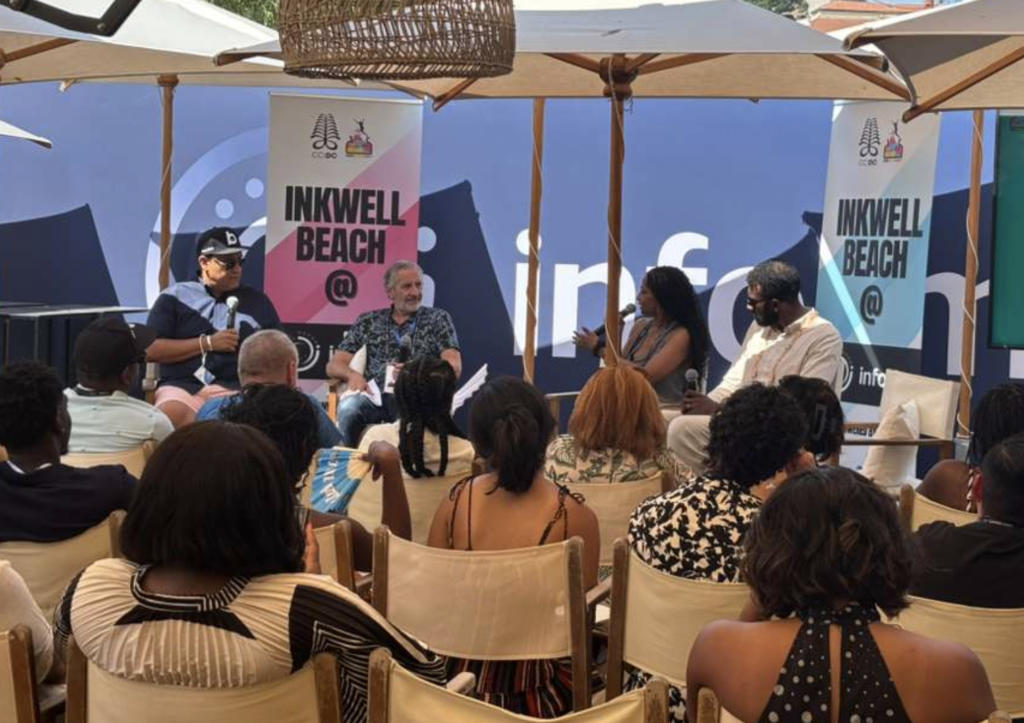
FleishmanHillard’s Global Head of Brand Impact Jim Joseph (second from left) and Chief Inclusion and Impact Officer Adrianne C. Smith appear at Inkwell Beach’s License to Lead: Reclaiming the Art of Storytelling.

AI is finally getting relegated to the side.

For the past three years, every conversation started with AI. AI this, AI that, AI will replace us all. Run for the hills! At Cannes Lions this year, the AI conversation took a different shape. AI showed up as a tool, not the strategy. Humans stayed at the center.

Just take a look at the award-winning work that actually cut through. It wasn’t built by AI. It was built with the help of AI. That distinction is game-changing for how we move forward.

Engagement became participation.

The old model: brands create, audiences consume. Brands engage, audiences respond. Well, that’s over.

The campaigns winning now are moving beyond engagement and asking people to participate and to be a part of the work. To co-create. The audience isn’t a target anymore. They’re collaborators.

Participation breaks into culture in a way engagement never could.

Consumers stopped being transactions.

Here’s what felt most important: brands are finally seeing people again. People. Not demographics, not segments and not customer lifetime value or conversion rates. People.

Real people with real lives, real contradictions, and real humanity. Your work changes when you view your people through that lens. The empathy is different and the insight lands more effectively.

Sports and its adjacencies are the driver of culture.

Sports marketing dominated the conversations at Cannes. Sports (the culture, the tribalism, the meaning around it) is where brands are finding relevance.

Sports has become the heartbeat of culture. And if you’re not thinking about sports, you’re thinking small.

Creators replaced advertising.

Co-creation on creator channels has become the new, pragmatic media with brands showing up in creator spaces, collaborating and building content together instead of buying space for ads. This is a partnership now, far beyond what we used to do with “influencers.”

The divide between brand and creator is collapsing. And that’s the point.

B2B is still sleeping.

I was a little shocked to see that B2B creativity hasn’t caught up yet. I, for one, predicted 2026 would be the year B2B breaks into culture. It hasn’t. The opportunity is there but the creative thinking hasn’t arrived yet.

B2B is still operating in the old playbook. That’s an opportunity for anyone brave enough to actually think differently about it.

So what does this all mean?

We introduced research at Cannes Lions 2026 called “The Chaos Advantage.” The insight underneath it all is that the brands winning right now are the ones comfortable navigating through the chaos, polarization and uncertainty we are facing. They break through it and grow while their competitors sit back and play it safe.

These brands are embracing the unpredictability that comes with real participation, with tools that help them to navigate the risk that is inherently in the system. They work the risk to their advantage.

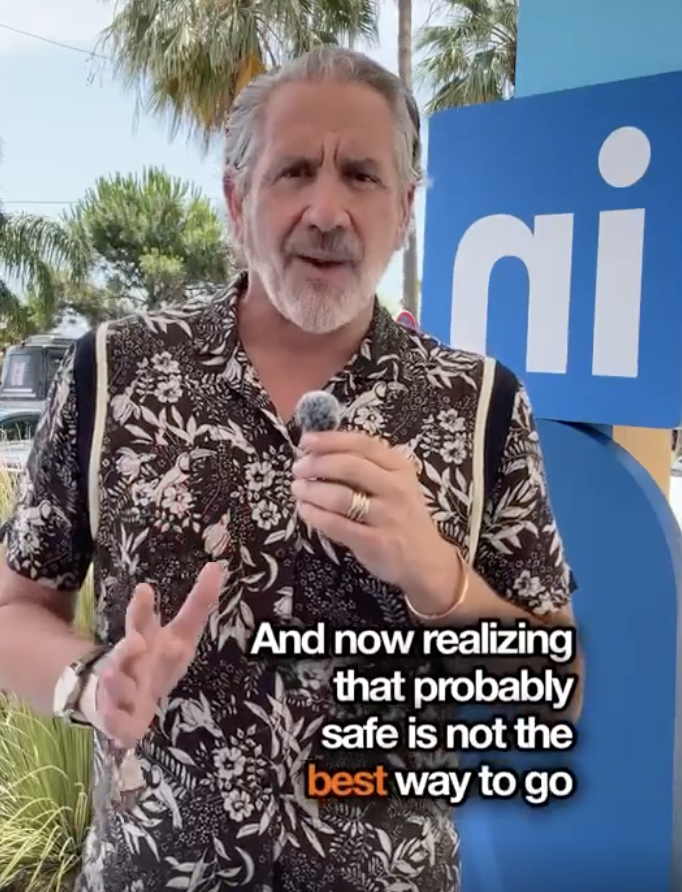
Jim Joseph reports from Cannes: “Safe is not the best way to go anymore. Brands need to be bold again.”

That’s the shift, and that’s what Cannes Lions was telling us.

Marketing is a spectator sport, so let’s all learn from this amazing Festival and elevate our work as a result.

I want to see you on the awards stage next year!

Jim Joseph width= Jim Joseph is FleishmanHillard’s global head of brand impact, responsible for leading global brand business across B2B, B2C and B2G audiences, leveraging communications to enable commerce and business outcomes for the agency’s clients. He is a member of FleishmanHIllard’s Global Executive Advisory.


Article

Healthcare’s Moment Has Arrived. The Question Now Is: Will Your Organization Move Fast Enough?

By Jacob Porpossian

Health and Pharma showed up differently this year at Cannes Lions 2026. What we witnessed solidified the trend we’ve been seeing over the last 18 months. The most effective work stopped treating science and culture as opposing forces. In fact, when bridged together, is when the work became the strongest.

From the Super Bowl to the Oscars, and now across the Cannes shortlist, the winning campaigns recognized that patients are more than just consumers of medical information. They’re participants in culture. In an industry all-too familiar with regulation, the increased political, social, and economic uncertainty of recent years has added even more barriers to getting bold creative work out into the world. Legal teams are more cautious. Approval processes have lengthened. But here’s what’s critical: the brands moving fastest aren’t waiting for permission to ease. They’re leveraging culture as a bridge between science and human behavior.

Relax Your Tight End didn’t win the Grand Prix because of a clever concept.

Novartis won because the brand identified a cultural barrier. It took hold of the shame and misconceptions around male health screening and addressed it through an institution men trusted: the NFL. The culmination of football heroes and personalities speaking openly about prostate cancer, a Super Bowl platform, real-world testing at games and the discovery through a cultural moment that already mattered created the perfect campaign to follow up last year’s focus on breast cancer with “Your Attention Please” and the ultimate multi-year strategy to solidify Novartis as a brand to remember and trust when thinking oncology.

That same human truth showed up across this year’s other finalists. For example, Beat Cancer Off wasn’t afraid to say what everyone was thinking. The campaign leaned into a human truth about male sexuality and early cancer prevention, encouraging men to embrace a natural behavior as part of preventative health. And once again, Viagra found a way to work within China’s regulatory constraints by embracing creative mischief.

For healthcare organizations moving forward, here’s what we can learn from our time at the Palais.

1. Reframe uncertainty as opportunity. Political and social turbulence requires strategic boldness, not retreat.

2. Lead with cultural insight. The winning work didn’t lead with efficacy data. It started with a human barrier and found a cultural entry point.

3. Build for tentpole moments. Combine broadcast with real-world activation, executive voice with earned conversation.

4. Partner across both worlds. You need creative ambition married to regulatory rigor.

The conversation has shifted from science or culture to science and culture. The question now is whether your organization is ready to move.

Jacob Popossian width= Jacob Porpossian is the Global Executive Creative Director for FleishmanHillard’s Health & Life Sciences practice, where he builds and leads creative and storytelling capabilities for major health brands. With a background spanning creative strategy, digital marketing, communications, and production, he advises integrated teams across healthcare, CPG, corporate, and technology sectors, while also championing diversity and inclusion initiatives across the agency and industry.

 
Article

The Visible CEO: How Leadership Can Serve as a Strategic Asset

By Michael Moroney

In the U.S., the CEO is no longer just the chief decision-maker. The CEO is increasingly the chief proof point.

That shift is being driven by a business environment defined by political volatility, regulatory uncertainty, technological acceleration, economic pressure and heightened stakeholder scrutiny. It is also a reality in a fractured information consumption environment where trust and clarity has to compete with fast-moving algorithms and communications regimes that depend on stakeholders following a signal through the noise.

FleishmanHillard’s U.S. License to Lead report describes this as a moment when companies are operating at the intersection of business, policy, politics and culture and where shifts in one area quickly create second- and third-order effects across the others. In this context, the central leadership challenge is not simply setting the right strategy; it is securing permission to execute when that strategy must evolve.

Previously, in stable environments, a company could often rely on institutional credibility, brand equity or strong performance to carry the weight of change. In the new normal, that is no longer enough. Stakeholders are not only judging what companies decide; they are judging who is explaining it, whether that explanation is credible and whether leadership appears to be acting from principle or pressure.

That is why CEO and executive positioning – when executed strategically – has become an asset. This does not mean visibility for its own sake. Not more posts, panels, interviews or staged accessibility. But disciplined, consistent and substantive visibility that helps stakeholders understand where the company is going, why decisions are being made and what principles will hold steady as circumstances change.

The U.S. data shows why this matters, and it is striking. Confidence in large companies is thin: only 10% of U.S. engaged consumers say they have “a lot” of confidence that leaders of large companies will act in the best interest of society; only 11% are very optimistic that leaders of large companies will successfully address major challenges over the next decade; and only 12% believe large organizations are very prepared to lead during disruption.

This is the credibility deficit into which CEOs are now communicating. It is also the reason their strategic visibility cannot be treated as a communications accessory. When baseline confidence is low, the absence of visible leadership becomes its own signal. Silence invites interpretation. Delegated explanations can feel evasive. And inconsistent messages from different leaders can quickly become evidence of drift.

The opportunity is that stakeholders are not asking CEOs to be flawless. They are asking them to be clear, accountable and real. Among U.S. engaged consumers, 83% say integrity and honesty are very important to earning confidence in a business leader, 82% say the same of accountability when things go wrong and 73% say competence and decision quality are very important. Yet only 16% of U.S. engaged consumers say major company leaders often demonstrate integrity and honesty and only 13% say they often demonstrate accountability when things go wrong.

That gap is the visibility mandate. The CEO’s job is not to “message” integrity; it is to make it observable. Stakeholders need to see leadership explain hard decisions, acknowledge trade-offs, take responsibility and connect action to enduring principles. Visibility becomes valuable when it gives people evidence that leadership is not hiding behind the institution.

The research also suggests that stakeholders increasingly want direct leadership communication. In the U.S., 88% of engaged consumers say it is important for individual company leaders, rather than the company itself, to speak directly to stakeholders.

That does not mean every issue requires the CEO to be out front. It does mean that, in moments that build or test credibility, stakeholders want to hear from accountable humans, not only from the corporate voice.

The stakes are commercial as well as reputational. Our research finds that 98% of U.S. engaged consumers think it is important for companies to explain why a decision is made, while 49% say inconsistent or conflicting messages from company leadership greatly decrease their confidence. When confidence breaks, behavior follows: 64% of U.S. engaged consumers say they have stopped buying from or significantly reduced spending with a company after losing confidence in it; 49% switched to a competitor; and 46% privately advised friends or family against the company.

That makes strategic CEO visibility a business risk-management tool. It can reduce the friction that slows strategy, protect confidence during disruption and help prevent a difficult decision from becoming a broader reputation problem. But it only works when it is connected to substance.

For CEOs, the implication is straightforward. Visibility and positioning should be treated as a leadership discipline, not a media tactic. It should be planned around the moments that matter most to the business: strategy shifts, workforce decisions, innovation bets, social and policy choices, operational challenges and proof points of progress. And it should be consistent across audiences, but not generic.

In this environment, the visible CEO is not the loudest CEO. The visible CEO is the one who shows up before trust is tested, explains decisions before others define them, and connects the company’s actions to a durable set of principles.

Reputation is no longer only something companies protect when things go wrong. It is the asset that determines whether they can move when change becomes necessary. And in the U.S., where confidence in large companies is fragile and stakeholders are watching closely, CEO visibility is one of the clearest ways to turn reputation from a passive measure of perception into an active driver of permission, resilience and growth.

Michael Moroney width= Michael Moroney is a senior partner and the managing director of Corporate Affairs, The Americas.

 
Article

How to Win the GLP-1 Food Industry Wake-Up Call

June 30, 2026
By Kristie Sigler, Allison Koch and Amanda Patterson

GLP-1 medications may actually impact the food and agriculture industries more than the healthcare industry. Why? While GLP-1 drug offerings remain standardized, each GLP-1 user has distinct and evolving food needs. And the impact of those food choice changes cascades far beyond one person, rippling through families and friend groups. GLP-1 use will have a multiplier effect on the food, beverage and agriculture industries for years to come. Understanding the diversity of GLP-1 users has moved from being of interest to being imperative.

Two years ago, we started having conversations internally. We were watching the GLP-1 landscape shift in real time, and one thing became crystal clear: companies were trying to solve for a consumer they didn’t actually know. So, we decided to build something different. We combined the lived experience of GLP-1 patients across their entire medication journey, from day one through discontinuation. We layered in their demographic details, their real struggles, and paired it all with the clinical expertise of registered dietitians who counsel and support these patients daily. The result? The GLP-1 Lens – a synthetic AI audience grounded in actual consumer truths and clinical reality, not assumptions. A tool to not just shape your actions today but to map opportunities with your future target markets.

Why does this matter? Because the consumer on day one of their GLP-1 journey looks nothing like the consumer on day 180. We can’t treat GLP-1 patients like one giant monolith. Think of each user as a dot of color in a kaleidoscope. Marketing to GLP-1 patients is like playing with that kaleidoscope. Every time you think you have a clear picture, that teeny turn changes the image. And these days there are as many turns (new drug forms, new food insights, new markets, new food launches) as there are colorful prisms in the GLP-1 kaleidoscope. Understanding these users guides your work and accelerates your advantages.

How?

You stop guessing. Reformulated products and tailored menu items may work for those just starting on their journey, but not for those on maintenance. But without this insight, you’d never know until negative reviews tank your launch. GLP-1 Lens can tell you when to start messaging your product to have your message match their need.

You can move faster. Instead of 18-month product development cycles or campaign messages built on assumptions, you iterate on validated insights. GLP-1 Lens could get you extra months in market.

You build loyalty. Influencer programs and products that meet consumers where they actually are—not where you assume they are—create brand advocates, not one-time buyers. GLP-1 Lens can help create brand fans.

The GLP-1 landscape is being written right now. And how it looks today will be vastly different tomorrow. Companies that rely on authentic insights will own this moment. Those that don’t will be left picking up the pieces.

Contact Kristie Sigler – [email protected] – for more.

Article

Cannes Lions Exposed an Industry’s Transition of Power: Takeaways From Winning Work

June 26, 2026
By Cameron Shields

Hot take: PR people have spent too much time defending their existence. Defending budgets. Defending earned media. Defending why communications should be involved before the crisis, not after it. Defending why reputation matters.

But this year, the winning work at Cannes Lions made one thing abundantly clear: PR has moved on. Or up, rather. The business criticality is unignorable. And it’s the new center of gravity.

No more earned media first. It’s earned impact first. And everyone wants a piece of it.

PR Is No Longer Downstream

PR used to be the last stop. A product launches. A campaign gets approved. A crisis happens. Then PR enters the picture.

“Inside the PR Lions Jury Room” revealed what happens when PR moves upstream and shapes the agenda instead of responding to it.

The winning campaigns of 2025-2026 asked:

  1. Could PR free a country from oppression?
  2. Could PR influence government policy?
  3. Could PR turn negative customer feedback into its strongest commercial driver?

The answer was a resounding yes.

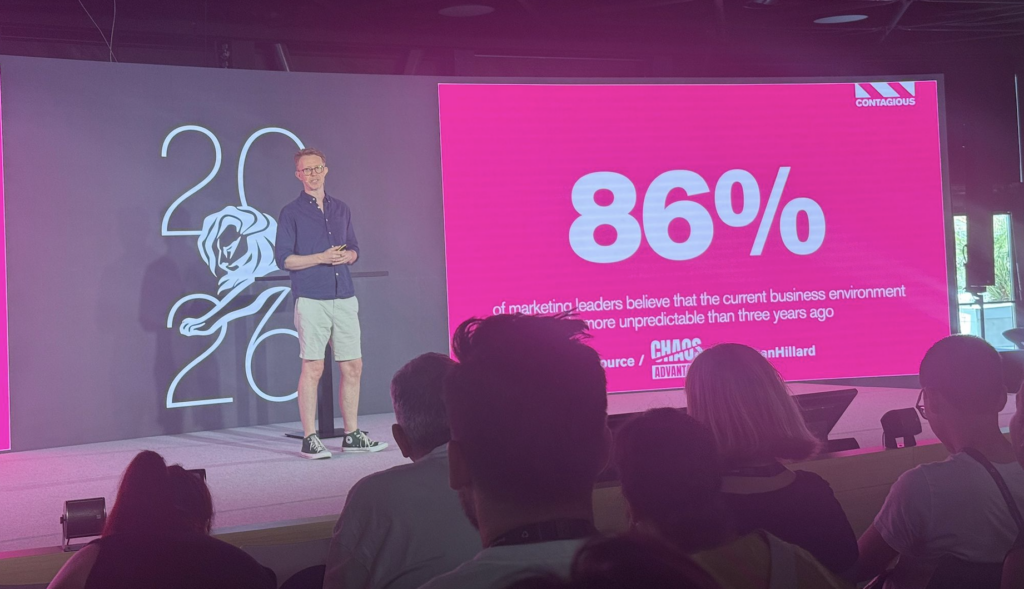
Contagious editorial director Alex Jenkins presents FleishmanHillard research during his Cannes Lions keynote.

When communications can change behavior, influence policy, galvanize communities, ripple culture and create outcomes that matter in the real world, the only thing left to ask is: when will the briefs catch up and what needs to happen to ensure they stay that way?

Upholding the Mantle: Our New Responsibility

One juror put it plainly: “PR is not a nice-to-have. It’s a must-have.”

If securing a seat at the table is yesterday’s battle, the responsibility now is to make communications worthy of staying there.

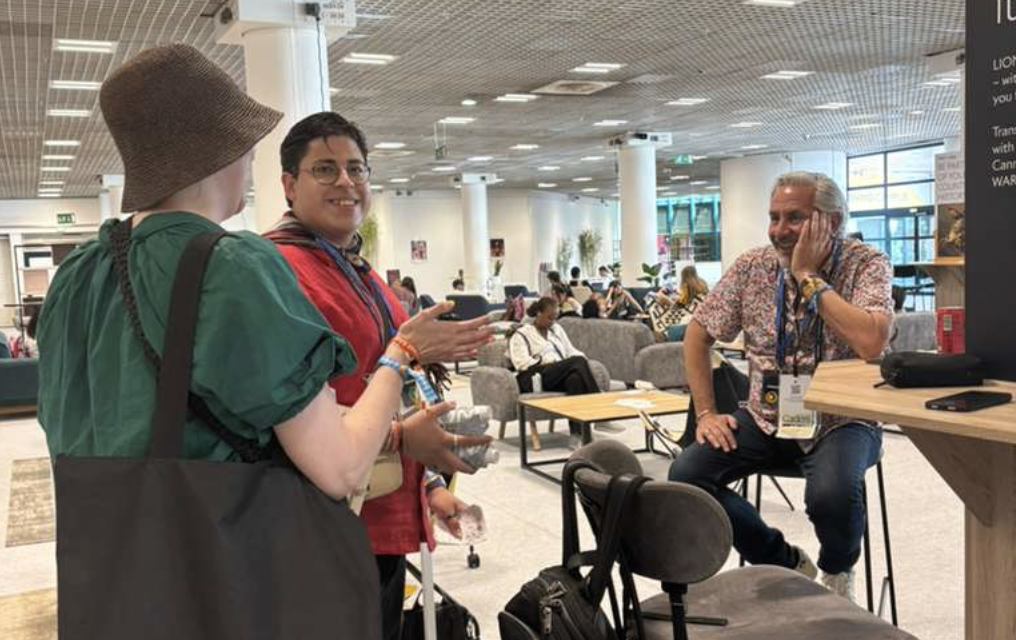
FleishmanHillard’s Young Lions competitors Rebecca Weinstein (from left) and Jonathan Arias catch up with Jim Joseph, Global Head of Brand Impact.

Of the winning work this year, here’s what that looks like:

  1. Simplicity Is a Competitive Advantage. Simplify your programs; elevate the point of view. The Swedish Rx became one of the jury’s favorite examples: a Swedish prescription as a driver for tourism. The brilliance was in commitment rather than complexity. And while the execution expanded into multiple touchpoints, the idea remained pure. No twenty-slide explanation required. The jury repeatedly warned against a trap PR falls into all the time: “And then we did this. And then we did this. And then we did this.” Layer after layer until the idea disappears under the weight of its own presentation. Be integrated, but be clear.
  2. Bring Levity in a Heavy World. While “nostalgia” wasn’t on repeat this year, the draw of escapism was still strong, but evolved into something closer to whimsy. Humor even. Effervescence in a weighted world. Not self-aware brand snark. Actual fun. The Swedish Rx is a great example. Attention can once again be earned through delight just as much as through purpose.
  3. The Human CEO Is Finally Replacing the Corporate CEO. Don’t Revert. Gone are the days of the polished script. People are craving leadership and that’s coming through in the creative idea, not just the executive talk track. Campaigns from brands like Burger King and Columbia Sportswear reflected a growing appetite for executives who participate rather than perform. One standout example involved a CEO sharing a real phone number and actually listening. Accessibility became the story, transparency became the strategy, participation the platform. For years, communicators have focused on protecting executives. The next era is about connecting them. In a conversation with Fast Company and Inc.’s Stephanie Mehta, one of the top themes she observed was executives letting their guard down. Throw out the old script for good and lead through connection.
  4. Reputation Equals Brand, and Vice Versa. The distance between crisis and opportunity has evaporated. If there was one piece of work that captured where PR is heading, it was the KitKat Heist. A communications idea that won both PR and Crisis. Rather than lawyer a presented problem, it acknowledged reality, then flipped it into participation, challenging the age-old notion that crisis communications is only about containment. Reputation and brand together, in harmony, reduce friction and create opportunity. That’s what gives communicators the license to lead, not just operate.
  5. Business to the Center. While creative will always balance art, intuition and intelligence, evidence is still key. Prove the work is working for the business, or risk moving back to the sideline.

What PR Leaders Should Do Next

  • Stop measuring success by visibility. Start measuring movement, connectivity and effect.
  • Build ideas that people can participate in, not observe. Less flash in the pan, more longevity.
  • Trade safety for conviction.
  • Stop chasing culture. Understand its currents and contribute.
  • Bring your leaders closer to people.
  • Move faster. Intelligently. If uncertainty is the only thing we’re certain about, stop retreating. With reputation and brand at the center, you can turn a challenge into growth. That’s the Chaos Advantage.

PR leaders know the industry has already evolved. The only remaining question is whether the rest of us are still operating under the old definition.

Cameron Shields width= Cameron Shields is FleishmanHillard’s Global Head of Consumer, Brand Impact .