Employee Login

Enter your login information to access the intranet

Enter your credentials to access your email

Reset employee password

Article

From Ragan: Elizabeth Cook on Rethinking Preparedness in Crisis Response

January 21, 2026

As a leader of FleishmanHillard’s corporate affairs team, Elizabeth Cook has shaped executive visibility strategies and the firm’s point of view across media, events and digital platforms.

Now she speaks to Ragan’s Isis Simpson-Mersha for their latest How I Got Here spotlight. Here’s an excerpt:

Ragan: AI-driven misinformation and deepfakes have raised the stakes for crisis response. How should executives rethink preparedness in a world where credibility can be undermined in seconds?

Cook: In a word, vigilance. And it’s not one team’s responsibility — every tool and team has blind spots, so it takes organization and coordination across social media managers, community managers, social care teams and issues and crisis monitoring, with everyone bringing a “see something, say something” mindset. From there, it’s about making sure you can move fast through the playbook — verify the facts, work with the platforms, push your statement and don’t neglect the human stakeholders involved.

Read Cook’s full interview including how two decades of advising Fortune 100 companies, government agencies and NGOs through high-stakes moments shaped her approach to crisis leadership today.

Click above to download our Leadership Playbook ‘License To Lead’
Article

Insights From Davos: Building Credibility Through Storytelling

January 20, 2026

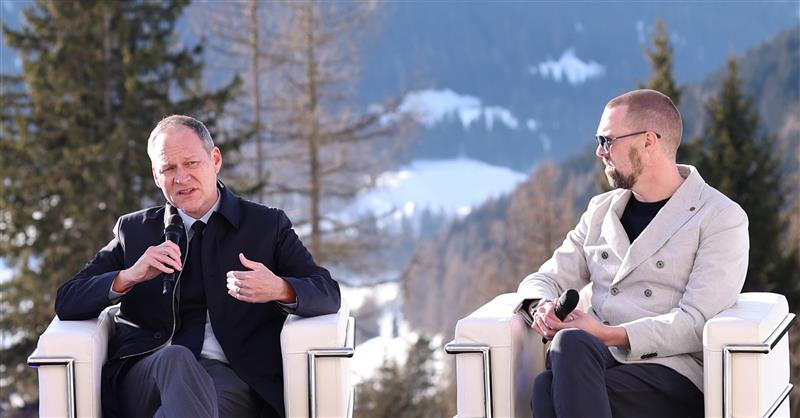
FleishmanHillard Global President and CEO J.J. Carter participated in ‘License to Lead: Reclaiming the Art of Storytelling’ at the World Economic Forum, a panel discussion exploring how organizations can earn stakeholder trust in an era of constant volatility.

The panel took place at Inkwell Beach and centered on a fundamental question: in this era of uncertainty, who gets to tell the story and who benefits when those stories shift?

Carter joined FleishmanHillard Chief Inclusion and Impact Officer Adrianne C. Smith, Forbes contributor Doug Melville and marketing leader Peter Sloterdyk to discuss this fundamental crisis facing leaders today: the widening gap between what organizations say and what they actually do.

The conversation drew directly from FleishmanHillard’s proprietary License to Lead research, conducted with 5,550 leaders and stakeholders across the globe to understand what actually earns trust in uncertain operating environments. The findings reveal a stark shift in stakeholder expectations and immediate commercial consequences.

While 90% of engaged consumers now expect volatility, they’re no longer willing to accept storytelling disconnected from operational truth. According to the research, stakeholders understand that strategic adaptation is necessary as leaders face pervasive uncertainty. What they say they won’t tolerate is silence or polished narratives that don’t match their lived reality. Those surveyed say that storytelling without operational truth is just noise.

The panel emphasized that authenticity equals accountability with leaders owning their missteps, explaining strategic shifts and demonstrating that they grasp the impact of their decisions on stakeholders before asking for buy-in. Leaders who fail to bring stakeholders along lose credibility faster than any communications misstep.

J.J. Carter and Peter Sloterdyk at Inkwell Beach

The research also surfaced a hopeful finding: people are willing to pivot and evolve if they believe in leadership. The challenge is earning and maintaining that license to lead every single day through consistent, authentic communication rooted in truth.

FleishmanHillard has developed a comprehensive playbook based on these global responses to help leaders navigate this new reality. Organizations looking to close the gap between narrative and operations can access the full License to Lead report below:

Click above to download ‘License To Lead’

Article

FleishmanHillard Unveils ‘License to Lead’ Research, Revealing a Growing Confidence Gap Between Executives and Stakeholders 

January 13, 2026

New global survey finds stakeholder confidence and leadership credibility increasingly shape how much latitude companies have to drive strategy. 

WASHINGTON, D.C. — January 13, 2026 — As geopolitical volatility, technological disruption, and social scrutiny reshape the business landscape, new global research from FleishmanHillard finds that the central leadership challenge is no longer simply setting strategy. It is maintaining the confidence and permission needed to execute when strategies must evolve. 

“Uncertainty is no longer episodic. It is the operating environment,” said Rachel Catanach, Senior Partner and Global Managing Director, Corporate Affairs, at FleishmanHillard. “What this research shows is that stakeholders understand why companies need to adapt. But they are also raising the bar on how leaders communicate, align, and explain those decisions.” 

The research, titled ‘License to Lead,’ is based on a global survey of 5,550 respondents, including 1,550 business and political leaders and 4,000 engaged consumers, executed by FleishmanHillard’s TRUE Global Intelligence. The findings reveal a growing gap between how leaders assess their own performance and how stakeholders experience corporate leadership during periods of change.  

“Trust is dead. When change is constant, stakeholder support is built through how leaders explain decisions, align internally, and show accountability in real time,” said Michael Moroney, Senior Partner and Managing Director, Corporate Affairs, The Americas.

Key findings include: 

  • Unpredictability is now the norm, and adaptability is viewed as a defining leadership skill. Eighty-four percent of engaged consumers and 82 percent of policymakers agree that the business environment is more unpredictable and disruptive than it was three years ago. More than half of engaged consumers (51 percent) say the ability to adapt quickly will matter most for business leaders’ success over the next decade. 
  • Stakeholders accept strategic change, but expectations of leadership behavior have risen. Compared to a few years ago, about half of engaged consumers report higher expectations for companies to act with customers in mind (52 percent), do the right thing (50 percent), and balance the needs of multiple stakeholders (47 percent). More than 90 percent say confidence in leadership depends on clear strategy communication, consistent messaging, transparency around difficult decisions, genuine engagement, and accountability.
  • Executives and stakeholders view corporate readiness very differently. Nearly half of business and policy leaders express high optimism in large companies’ ability to address major challenges. By contrast, only 20 percent of engaged consumers are very optimistic about companies’ ability to do so. Fewer than one in five believe corporate leaders will act in society’s best interests or are well prepared for future disruption.
  • Erosion of confidence has direct commercial consequences.  Almost all engaged consumers (98 percent) say they are paying close attention to whether companies follow through on commitments. When confidence is lost, 58 percent report stopping or significantly reducing spending, 50 percent switch to a competitor, and 40 percent privately advise others against the company. 
  • Integrity and accountability now outweigh competence alone. When asked what gives a company the “right to lead” during periods of change, engaged consumers rank demonstrated ethical behavior (24 percent) and clear, consistent communication (21 percent) highest. While executives believe leaders frequently display integrity and accountability, engaged consumers rate performance roughly half as high, revealing a meaningful perception gap. 

A New Executive Playbook 

The findings point to a leadership model that is both urgently needed and largely within organizations’ control. Companies that retain the confidence to move through uncertainty simplify their strategic narrative, enforce leadership alignment, communicate consistently, explain the rationale behind difficult decisions, and engage stakeholders without relying on broad or aspirational shortcuts. 

“When these conditions are met, reputation becomes an enabling force rather than a constraint,” said Catanach. “Stakeholders are more willing to grant leaders the latitude to adapt, absorb uncertainty, and continue moving forward even when outcomes are not fully known.” 

The research also underscores the evolving role of corporate affairs as an integrated leadership infrastructure. High-performing organizations rely on corporate affairs to translate complexity into clarity, anticipate friction, and understand where stakeholders will grant flexibility and where limits remain. 

As disruption becomes an enduring condition rather than a temporary shock, the study concludes that leadership success will depend less on minimizing change and more on sustaining legitimacy while managing it. 

About the Research 
TheLicense to Lead study was conducted by FleishmanHillard’s Global Executive Advisory and True Global Intelligence teams. The global survey includes 5,550 respondents across multiple markets, comparing the perspectives of 1,550 business and political leaders and 4,000 engaged consumers.

    Get the Full Report

    Article

    FleishmanHillard Wins 2026 Innovation Awards for Data-Driven Strategy

    January 12, 2026

    FleishmanHillard has won two North America 2026 SABRE Awards: Data-Driven Agency of the Year for “Democratizing Data” and Data Professional of the Year for Ines Schumacher and SAGE Synthetic Audiences.

    SAGE Synthetic Audiences, built on Omnicom’s industry-leading data stack and FleishmanHillard’s audience profiling expertise, was officially introduced last spring.

    The wins underscore FleishmanHillard’s operational mindset of embedding intelligence and analytics at the center of communications strategy.

    The recognition follows last fall’s news of 13 AMEC Measurement and Evaluation Awards including seven Gold, four Silver and two Bronze across FleishmanHillard TRUE Global Intelligence, Methods+Mastery and Omnicom Public Relations. Those accolades included Innovation Award for New Measurement Methodologies, Best Use of New Technology in Communications Measurement and Best Use of Measurement for a Single Event or Campaign.

    The wins reflect what FleishmanHillard describes as an “integrated intelligence model,” where rigorous analysis and critical thinking are baked into strategy development and execution from the start rather than applying data after the fact. The news follows the rollout of the agency’s counselor-led AI solutions suite FH Fusion last summer.

    The SABRE recognition validates the investments made in building proprietary methodologies, scaling analytics capabilities across regions and training advisors agency-wide to lead with insight.

    Article

    When the World Gets Noisy, Great Storytelling Breaks Through 

    December 3, 2025
    By Trine Hindklev

    In a world where disruption feels like the norm, clarity can feel out of reach. Our President and CEO, J.J. Carter, put it well at a recent PR Decoded discussion: “Clarity often comes from chaos for those who are bold enough to seek it.” That’s the mindset driving how we approach communications today. For us, it’s our call to action for how we think about storytelling. 

    That perspective came through in our recent discussion with Chrissy Farr, editor-in-chief of Second Opinion, former tech and health reporter at CNBC and author of “The Storyteller’s Advantage: How Powerful Narratives Make Businesses Thrive.” Chrissy’s research and real-world experience show that the most effective leaders strategically use compelling narratives as a springboard to craft stories that connect, persuade and inspire.  

    When storytelling is left to chance, companies lose control of the narrative. And no one wants to lose their narrative. Today, there’s a genuine need for trusted counselors to help leaders put communications at the center of their business strategy, not as a last-minute fix or a siloed function cast off to the side. 

    Complexity isn’t going away. It’ll likely to get, well… more complex, but the ability to cut through it with authentic, sharp, well-crafted narratives is the key to thriving. Here’s how: 

    Building resilience through narrative 

    Organizations that invest in their narrative build real equity. It’s more than a safety net for tough times, Chrissy said. It’s a foundation of trust, engagement, and clarity that holds up in any environment. Leaders who go beyond facts and figures, sharing vivid, relevant and relatable stories, build solid reputations and relationships that last.  

    The lesson? Invest in your narrative before you need it.  

    That translates to mapping out your narrative assets, finding gaps in credibility, and creating processes for authentic engagement and rapid response. Resilience isn’t just about weathering storms; it’s about being known and trusted, no matter what comes your way. 

    Moving beyond spin with courage  

    Let’s be honest, being clear and human isn’t easy. It feels too risky. Too vulnerable. But the bigger risk is being boring and forgettable. People crave something real. Something bold and relatable. The risk of irrelevance is greater than the risk of saying something fresh.  

    This holds true whether you’re B2B or B2C. Broad, generic messaging just gets lost. Clarity and specificity cut through. Every time. That’s why it’s so important to help leaders tap into their authentic voice, not just the safe, polished version, Chrissy shared. There’s a need to coach leaders to lean into what makes them different and set up the right guardrails to navigate complex issues with confidence. This isn’t about spin. It’s about showing up as real humans and letting that drive real connection.  

    Reach without the reaching 

    Metrics, dashboards and percentages dominate most conversations at the top. But honestly, who remembers a stat sheet? 

    It’s stories that stick. Share the right story, and suddenly your message is making the rounds in rooms you’ve never entered, and your message travels further than any paid campaign could. That’s the kind of reach every communicator dreams of. 

    But too often organizations chase impressions and views, Chrissy said. Impressions don’t impress if they don’t move people, and most don’t. The real impact of storytelling shows in influence: your message shapes industry conversations, earns trust and opens doors that numbers alone never could.  

    In a nutshell, it’s time to move beyond those vanity metrics. So, look for measurement models that track the full picture, from traditional reach to narrative traction and influence mapping. Build dashboards that look at what counts, such as stakeholder sentiment, leadership invitations and the conversations you’re sparking across your sector. 

    Chrissy’s advice is simple: focus on quality engagement. Nurture the audiences that matter. Invest in content people value. Rethink channel strategy, prioritizing depth over breadth and building real communities.  

    Move away from chasing numbers to building lasting influence, think more modular content + smart thought leadership + executive visibility all working together as part of an integrated approach.  

    Be a trusted partner  

    Storytelling carries risks. But so does playing it safe. As Chrissy and J.J. put it, leaders and brands who stand out are the ones willing to show up with clarity and courage, sharing the moments that matter even when they aren’t perfect. That’s how impact grows. 

    As a modern communications agency and trusted partners to many of the world’s most vibrant brands, we believe crafting a narrative isn’t just a tactic, but a strategic asset that drives measurable impact. The organizations that treat storytelling as a line item or an afterthought will get left behind. The ones who invest, with purpose, will lead. 

    Do you need help being human, specific and bold? Be brave. Let’s talk.  

    Trine HindklevTrine Hindklev is a senior partner and FleishmanHillard’s Global Strategic Media Relations Lead. She is part cultural anthropologist, part media strategist, part creative storyteller and all-in change-maker..

     
    Article

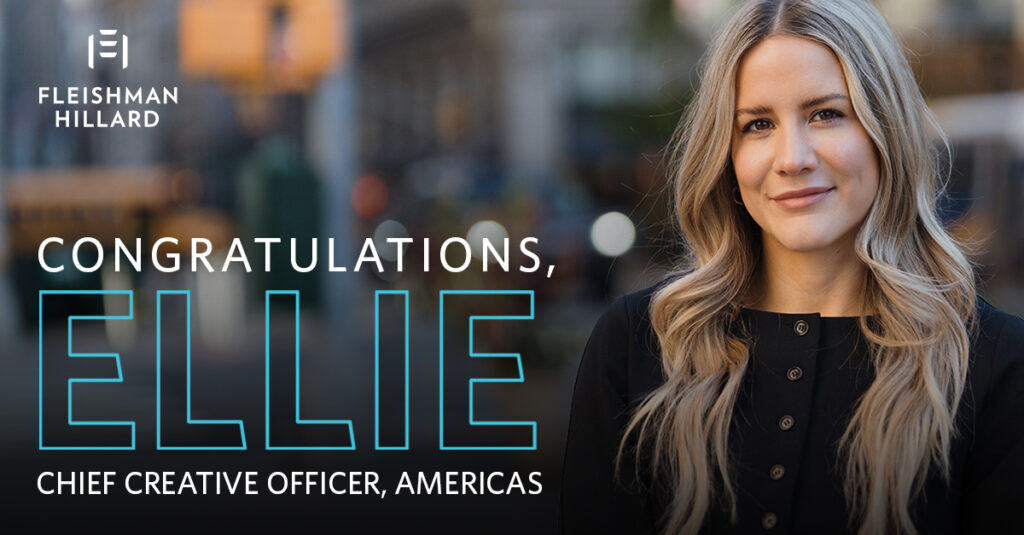
    Ellie Tuck Appointed Chief Creative Officer of the Americas

    November 18, 2025

    The award-winning leader will unify earned creative and storytelling across the region in support of FleishmanHillard’s modern communications vision.

    FleishmanHillard has appointed Ellie Tuck as chief creative officer for the Americas, aligning earned creative to the firm’s vision for modern communications: purposeful creativity that inspires action and delivers measurable impact. Tuck will lead the creative vision and output across the agency’s largest region, delivering transformative ideas for clients that live at the intersection of audience, culture and technology.

    “At FleishmanHillard, we believe that bold and courageous creative powers the work and contributes meaningfully to our business, the business of our clients and the career experiences of our people,” said Della Sweetman, president, Americas, and chief strategy officer. “Ellie’s appointment will advance our creative vision. She is a unifier who very effectively brings teams together to unlock ideas and a leader who possesses strong business acumen to connect the work to impact. This is an important step forward in our reinvention and I look forward to what we will accomplish with Ellie in this role.”

    “Creative today is a growth engine that drives business outcomes, not just awareness,” said Tuck. “As an industry, we’re at an inflection point, operating in a world where common ground is no longer common and where the realities our clients face are shifting fast. What excites me most is the collaboration ahead, bringing together talent and clients who challenge us to think boldly, take smart risks and build ideas that travel and prove their value in market.”

    Born in the Philippines, raised in Bangladesh and British by heritage, Tuck brings a global lived experience to her creative work. She built her communications foundation at Weber Shandwick and boutique agency Eulogy before moving to Blue Rubicon’s creative consumer shop, Surname & Surname. Following Blue Rubicon’s acquisition by Teneo, she helped establish the firm’s creative practice while also mentoring emerging talent.

    Tuck joined FleishmanHillard in London in 2021 to lead the firm’s UK creative team and later relocated to New York, She is a founding member of the Public Relations and Communications Association’s Creative Committee (PRCA) and was named to PRWeek’s 40 Under 40 list in 2025.

    Tuck will partner with media, influence, experiential, innovation and production leads to connect data and intelligence to ideation to activation to impact. Her remit includes elevating creative standards, accelerating concept-to-market and scaling approaches that integrate story, social, creator, experiential and content.

    Tuck will collaborate with market and practice leaders to codify AI-enabled tools integrated into the industry-leading tool stack and ways of working that enhance creativity, improve efficiency and effectiveness and drive creative excellence across the region.

    “We’re building a creative offer for this moment,” Tuck added. “One that brings together people who understand business context and value real outcomes over vanity metrics, without losing sight of great craft.”

    Tuck’s announcement follows other 2025 leadership announcements including Mei Lee in Singapore, Madhulika Ojha in India, Adrienne Connell in Canada, Marshall Manson in the United Kingdom, EJ Kim across TRUE Global Intelligence, Kristin Hollins across California, Jim Joseph as global head of Brand Impact and Mary Kosinski as global managing director of Health and Life Sciences. Together with a new global corporate affairs leadership team, these appointments reflect FleishmanHillard’s  continued investment in leaders who deliver trusted counsel and measurable impact on a global scale.

    Article

    Bay Area Host Committee Names FleishmanHillard as Official Strategic Communications Consultancy for 2026

    November 5, 2025

    The Bay Area Host Committee (BAHC) today announced a partnership with FleishmanHillard, naming the global communications firm as its Official Strategic Communications Consultancy for 2026. FleishmanHillard will serve as the communications division of BAHC, overseeing all facets of communications including strategy, sponsorship communications, executive communications, media relations, and issues management for what is set to be a historic year in the Bay Area.

    “Next year will be unlike any year before it—not just for the Bay Area, but for the world of sports,” said BAHC President & CEO Zaileen Janmohamed. “It’s the first time a host committee will oversee both the Super Bowl and the World Cup in the same calendar year. For a moment that big, we need a global communications firm with experience navigating the biggest moments on the biggest stages. FleishmanHillard’s unparalleled experience and proven leadership make them the perfect partner for this historic journey.”

    As part of the collaboration, FleishmanHillard Chief Business Development & Brand Officer Mitch Germann will serve as Head of Communications for BAHC, leading all communications efforts for the Committee. Additionally, FH President & CEO J.J. Carter will join the BAHC Advisory Board, bringing decades of global sports communications, brand leadership, and issues management expertise to the organization.

    Serving as BAHC’s primary media contact and communications lead, Germann brings more than 25 years of experience in sports communications, marketing, and brand strategy, including in-house leadership roles with the University of Kansas Athletics Department, the NBA’s Sacramento Kings, and Nike’s Jordan Brand. He has led communications programs on the ground for marquee events such as the Olympic & Paralympic Games, the NFL Super Bowl, the NCAA Final Four, and the NBA All-Star Game, and has worked directly with two Hall of Fame coaches, three NCAA All-Americans, an NBA MVP, and an NBA Rookie of the Year—alongside high-profile C-suite executives from across the retail, sports and lifestyle industry. Germann will be supported by members of the core FH Sports team in the agency’s San Francisco office and beyond.

    An active counselor with nearly three decades of experience, Carter has managed global communications programs on six continents, including numerous Olympic Games, NFL Super Bowls and FIFA World Cup activations for global sponsors, governing bodies of sport and host organizations. Prior to his executive role leading FleishmanHillard, Carter co-founded the agency’s global sports practice in 2007 which has grown to include nearly 200 counselors worldwide, who support clients across virtually every major sporting milestone and global event. Before joining FH, Carter led communications for the Dallas Mavericks, Detroit Pistons and the Association of Tennis Professionals.

    “We’re honored to join forces at such a pivotal moment for the Bay Area and for sports history,” Carter said. “Zaileen has assembled a world-class team and marshalled unparalleled business and civic partnerships that have come together for this once-in-lifetime moment for our region. We are honored to join this coalition, and to provide a seasoned team to help deliver an unforgettable year.”

    Article

    Don’t Blame Users, Equip Them: A Smarter Approach to Cybersecurity

    October 21, 2025
    By Scott Radcliffe

    There has never been a more challenging time to be a user on a corporate network. Ransomware and extortion gangs are now billion-dollar businesses built in part by targeting individuals—sometimes even highly privileged users—to steal corporate data. Now, with a big assist from AI, barriers to entry have flattened and cybercriminals have gotten even better at targeting and tricking people into giving them sensitive data.

    Why cybersecurity employee awareness matters

    It can be easy for organizations to feel like the answer is bigger, better and more agile technical defensive solutions. While those are essential and have adapted at a staggering rate, they are not enough due in part to the defender’s use of AI. Almost as important is recognizing that technical solutions alone are insufficient. Engaging corporate users (employees) more effectively may require not just new tools, but a change in outlook as well as approach.

    As attackers seek more effective and creative ways to bypass technical defenses, often by tricking users, we need to update our approach to helping organizations fight back.

    Limitations of periodic cybersecurity trainings

    Study after study shows pretty clearly that the old approach to employee cybersecurity education and training just isn’t working. Worse, a healthy dose of fatalism can creep into the mindset of security teams. This thinking resigns them to the notion that user mistakes are generally unavoidable. Collectively throwing up our hands and giving up isn’t an option. It’s time to think more creatively about employee cybersecurity education and training. While the substance of training is important, organizations often focus so much on what information needs to be shared that they neglect to consider how to effectively engage their intended audience.

    Making users click through a cybersecurity awareness training session once a year, then testing them at the end or with simulated phishing exercises, isn’t good enough. We should view cybersecurity training and education for employees not as a singular task, but as a communications campaign that requires design and delivery to maximize stakeholder retention of its key messages. That means more frequent, concise and engaging initiatives, rooted in insights specific to your organization, tailored to unique audiences and delivered across multiple platforms.

    Empowering employees for better cybersecurity outcomes

    Designing your security with the understanding that compromised user accounts are frequently the way threat actors breach corporate environments isn’t the same as treating user security risk like it’s a hopeless problem. This issue is too important, especially now, to view any other way. It’s a collective responsibility, one that leverages the skills and expertise from across the organization to help mitigate a core source of organizational risk.

    Bottom line: Humans aren’t perfect, and they’ll continue to make mistakes. Bad actors will continue to be creative, tricking a platform provider’s helpdesk to give them access to customer data or offering corporate users a cut of any ransom to extort from the user’s employer, or in any number of other ways.

    It’s time to find better ways to arm users with the knowledge they’ll need to fight back.

    Opportunities exist to help organizations plan and execute a strategic approach to cybersecurity education so that employees cannot only access but also retain the right information.

    To learn more, contact [email protected] or [email protected]

    Scott Radcliffe width= Scott Radcliffe is FleishmanHillard’s global director of cybersecurity, leading the firm’s Cybersecurity Center of Excellence and advising clients on rising cyber risks. He recently rejoined FH from Apple, where he led cybersecurity communications and previously served as the agency’s senior global data privacy and security expert.

     
    Article

    Why Global Agencies Must Rewire for the New Era

    October 1, 2025
    By J.J. Carter

    One year into my role as President & CEO at FleishmanHillard, one truth stands out: global agencies stand at a crossroads.  Over the past 12 months, I’ve traveled to dozens of offices worldwide, listened to our teams, and met with nearly 200 clients. I’ve seen firsthand the extraordinary energy of our firm thriving in this moment of complexity and consequence.

    When a client faces a reputational crisis that spans continents, creates an entirely new category, or launches a breakthrough product across multiple markets, they turn to us. Global agencies excel at orchestration, diversity of perspectives, and resilience under pressure.

    But legacy strengths alone are not enough. Being the biggest does not secure relevance, and ubiquity matters less than deep sector expertise. The world is moving at a pace that demands more than incremental change. Tectonic shifts in business, technology, and society are accelerating — audiences are fragmented, channels more abundant, and trust more fragile.

    Modern Comms Strategy

    To remain indispensable, we must rethink our operating system: how we deliver value, how we scale, and how we measure success. This transformation rests on three primary disruptions:

    1. Retiring the Billable Hour 

    The traditional agency model—built on billable hours and incremental outputs—is no longer fit for purpose. Clients value impact more than activity, and today’s challenges require more than time alone — they require tools, technology, knowledge, and multidisciplinary teams. Every assignment demands a diverse set of skills working in harmony. Treating every hour as interchangeable devalues expertise and drags everyone into a race to the bottom. We must build commercial models that reflect true value, and it requires partnership between agency and client to do so. 

    2. Fusion of Tech + Talent 

    AI and digital tools are raising the baseline for what’s possible in research, insights, and content. But technology isn’t our differentiator. The future belongs to communicators who can interpret complex signals, counsel clients, and craft narratives with dexterity. At FleishmanHillard, we’ve launched the largest upskilling effort in our 80-year history, embedded AI into our processes, and empowered every team member to be both a technologist and a trusted advisor. This fusion of tech and talent is what enables us to deliver ideas and impact at the speed of 2025 and beyond. 

    3. Specialism at Scale

    Clients today face challenges that are simultaneously local and global, technical and political. They need partners with deep expertise in the most complex issues of our time — from geopolitics to trade disruptions, from climate regulation to cybersecurity — delivered with the consistency of a worldwide network.

    When a company is caught in a geopolitical dispute, it requires communications expertise that spans diplomacy, trade, and reputation management. When a global brand navigates climate regulation across multiple jurisdictions, it needs advisors fluent in sustainability standards and energy transition. When supply chains fracture under trade pressures, businesses demand counsel that blends economic insight with real-time public affairs.

    That is why we are evolving our model to integrate high-value specialisms within a seamless global structure. From guiding corporate leaders through high-stakes transformations, to helping brands drive sales through new market segments or leveraging global platforms like the FIFA World Cup or the Olympic Games to prove brand value— our expertise is designed around the industries and capabilities that will shape our clients’ futures.

    This focus on specialism is not only about delivering sharper insights — it is about building resilience. We deliver the precision of a boutique, with the strength and stability of a global consultancy.

    Act now to define what endures

    The year ahead will not reward those who wait. It will reward those bold enough to redefine value, blend human judgment with technology, and bring specialist insight to a global stage. This is more than an inflection point for agencies — it is a proving ground for the role of communications in business and society.

    Those who rise to the moment will not only shape what comes next, but what endures. They will define how markets evolve, how reputations are built, and how trust is sustained for decades to come. At FleishmanHillard, we embrace that responsibility — and we are determined to seize the opportunity to lead. 

    Here’s to the next 365…

    J.J. Cartner width= J.J. Carter is President and Chief Executive Officer of FleishmanHillard.

    Read More From J.J.: To Break Through, You Have to Earn It

     
    Article

    Global Managing Director EJ Kim Brings New Leadership and Strategic Innovation To TRUE Global Intelligence

    September 4, 2025

    FleishmanHillard today announced the appointment of EJ Kim as global managing director of TRUE Global Intelligence, the agency’s global research, analytics and intelligence consultancy. This leadership move signals the next phase of growth for FleishmanHillard’s intelligence capability as a central driver of strategic innovation and business impact. 

    TRUE Global Intelligence connects Omnicom’s industry-leading data stack with proprietary measurement frameworks, data and AI-powered audience insight tools and consulting-grade analysis. This award-winning approach sets a new standard for data-driven intelligence, blending smart data and methodological rigor with bold creative experimentation. By applying counselor-driven AI-powered solutions, the intelligence team accelerates analysis, sharpens strategy and unlocks more dynamic client programs, helping brands drive growth, shift perception and prove value at every stage of the communications cycle. 

    “EJ’s appointment reinforces our commitment to have intelligence sit at the center of how we work and deliver value for clients,” said J.J. Carter, FleishmanHillard president and CEO. “We are embedding data-driven insight and advanced analytics in every aspect of our business, guiding smarter decisions, sharper strategy and more meaningful outcomes. With EJ’s leadership, TRUE Global Intelligence will power our ambition to help clients navigate complexity, seize opportunity, anticipate change and achieve results that matter.” 

    “I am truly excited for the opportunity to bring substance to innovation, ensuring that the intelligence we deliver is not just fast but thoughtful, rigorous and built to last,” said Kim. “This is a pivotal moment for intelligence to lead not follow and what sets us apart is not just the data at our fingertips but how we apply critical thinking and creative rigor to turn that data into insight and action. As AI transforms how we work, the real power lies in how we think — through critical reasoning, methodological discipline and the ability to make these tools work harder for real outcomes. I’m proud to help shape what’s next alongside a team that believes how we get there matters just as much as where we’re headed.” 

    A seasoned intelligence strategist, Kim brings deep experience in building, scaling and transforming insights and analytics functions into strategic solutions-focused consulting capabilities. She has established practices from the ground up, led successful post-M&A integrations and has a proven track record of evolving intelligence offerings to help organizations turn complexity into clarity and insight into influence. Prior to joining FleishmanHillard, Kim served as executive vice president and head of Nexus, Weber Shandwick’s global center of excellence for analytics and innovation. A recognized thought leader and change agent, she also co-founded NNABI, an award-winning science-backed wellness brand focused on perimenopause care, demonstrating her entrepreneurial mindset and commitment to purpose-driven innovation. 

    Kim’s appointment follows a series of strategic leadership announcements across FleishmanHillard’s global network, underscoring the agency’s commitment to data-driven insight, innovation and measurable client impact. 

    Other recent market leadership announcements include Mei Lee in Singapore, Madhulika Ojha in India, Adrienne Connell in Canada, Kristin Hollins across California and Marshall Manson in the United Kingdom as well as a new global corporate affairs leadership team — as FleishmanHillard continues to invest in leaders who deliver trusted counsel and measurable impact on a global scale.