What Combat Taught Me About Living Through a Pandemic
April 1, 2020
By Scott Radcliffe
Share
I have a relatively unique background for the communications space. I did my time in college at West Point and then became a tank and scout platoon leader while I was deployed to Baghdad and Fallujah, Iraq for 13 months starting in early 2004. Not long after coming back from Iraq in 2005, I was sent to New Orleans as a part of Hurricane Katrina relief efforts. It took the threat of a staff job to move me into communications as the Multi-National Corps-Iraq commanding general’s speechwriter during the 2007 “surge” in Iraq. Over the last few weeks, people have asked me to draw on that experience. It honestly took me a bit to get into the right frame of mind to have something productive to say. But I am finally to a place where I can take from those experiences and apply them to our world’s situation now. So what did I learn that might be useful to others in these times?
1) Create a sense of normalcy: I was single without a family to worry about when I was in the military and I had the benefit, in most cases, of being able to focus on some well-defined tasks at hand – namely keeping my guys safe. That said, if I allowed myself to get preoccupied thinking about the state people were being forced to live in on a daily basis in the places I was deployed, and of course the truly terrible circumstances commonly attributed to “combat” we faced every so often — things could get pretty bleak pretty quickly. I remember very clearly making a deal with myself during both tours in Iraq so that I could sleep at night — I simply didn’t allow myself to think about the very real possibility that a mortar or rocket could come crashing through my window at any moment. It’s tough to get used to a dramatically new way of life, but you’re allowed to feel “ok” even in the face of some pretty adverse circumstances.
2) Getting acclimated is hard: I imagine most would see transitioning to a literal combat zone as a bit of a challenge, but it was almost harder hitting the ground in a devastated American city. We got our orders to go to New Orleans about two days after Hurricane Katrina hit, so we had an idea of what we were getting into. Though we knew where we were going, the truth is we really didn’t have a clue what we were going to be doing when we got there. On top of the physical transition, selfishly, I wasn’t particularly enthusiastic about being asked to deploy again after coming back from Iraq less than five months earlier – and I knew my men felt the same. We spent the first few days living in a parking garage simply figuring out how we could be most useful. Before we could get going, we had to figure out how we were going to live without taking resources away from the people we were there to help. This was a bit dispiriting. Once we got oriented and determined where we could actually help and get to work, it ended up being one of the most rewarding experiences I’ve ever had.
3) You’re allowed to laugh: I recently had an exchange with a colleague that started this whole train of thought. He shared with me an article that was a little on the dark side, but that also had a tinge of humor. He commented that “the gallows humor is strong” to which I responded, “sometimes you have to laugh to keep from crying.” One of the defining features of my time deployed, particularly as a platoon leader, was when we’d be on long missions or in an all-night observation post, keeping ourselves occupied with jokes that would probably seem pretty dark to someone listening in. As dark as they were, the jokes helped loosen what could be very tense situations. Even beyond the dark humor, especially when surrounding circumstances are scary, allowing even a moment to laugh is important.
4) Hang on to “green shoots”: In 2004, when I was about to brief my platoon about an assault mission into Fallujah we were hours away from executing and a very distinct thought crossed my mind at the time: “Man, I’m really glad I’m doing this in an Abrams tank and not some soft skin HMWWV.” It may not always be much, but when you allow yourself to find what I call “green shoots”— reasons for hope or even optimism — it can mean the difference between staying functional or not. It’s not always easy, and yes, even the combat veteran authoring this post has had his moments recently, but finding those green shoots to hold on to can sometimes be the only way to keep going.
5) It’s ok to be happy: This can be exceptionally hard, and the year ahead for almost all of us will no doubt be a roller coaster at best, but it is important to allow yourself to be happy in the spots you’re able to, especially when there are terrible things happening around you. It doesn’t always have to be huge. I remember setting off on some particularly grueling patrols and reminding my guys that it was Friday, which meant it was fried shrimp and steak day at the dining hall and we had something to look forward to when we got back. Other times it was me waking up early to catch a Detroit Tigers playoff game (as a lifelong fan I promise you, those are rare opportunities). In the end allowing myself to enjoy those moments truly helped me get by.
When I think about the situation we’re in now, the aspect that gets to me most is the utter lack of control. Even while deployed I felt I could do quite a bit to make sure my 15 to 30 soldiers got home safe. Or that I had the ability to do something tangible to help the people who lived in the district of Baghdad I was assigned to patrol. After reflecting on my former life, I realized the best thing to do is allow ourselves some respite from these hard times, control what we can control, and each do our part to stay safe and healthy. We’ll get through this.
See what else is happening
You might also like
ESG
Navigating Conflicting Demands to Advance Climate Action
January 20, 2025
Opinions
Supporting St. Louis Institutions Dedicated to Empowering Youth Through FH4Inclusion
January 15, 2025
Opinions
Revitalizing the San Francisco Community with the Downtown Volunteer Coalition
December 23, 2024
Opinions
FleishmanHillard and FH4Inclusion Teams Shine at the Cannes Lions International Festival of Creativity
August 28, 2024
Opinions
Bridging the Generational Divide with Generative AI
August 27, 2024
Inclusion
Success on Repeat: Alumni of the Alfred Fleishman Diversity Fellowship Discuss Promotions and How to Get Them
May 29, 2024
News
EU climate policy: The new borderlines?
May 27, 2024
News
Achieving the Evolving Duality of Loyalty and Loyalty Programs
April 1, 2024
Expertise
TickTockTech: Mobile World Congress 2024 — What’s the Verdict?
Celebrating the Festival of Colors at FleishmanHillard
March 9, 2020
Share
India is the land of colors and festivals. One can find color in everything ranging from food to attire to architecture. So much so, that the country has a festival of colors too – Holi.
Some light up a bonfire one day prior to celebrate the victory of good over evil.
Others prepare Holi specific delicacies.
People laugh, rejoice, spread joy and forgive.
And at the end of the day, almost everyone ends up colored.
Holi. My favorite festival.
Maybe because of the laid-back vibes it exudes. One does not need to dress up, if they do not want to. No elaborate setups are required. People get together to simply celebrate life. It is the festival of happiness. One that strengthens our belief in the victory of good over evil. One that is celebrated by all, regardless of religion, region, caste or creed. So much so, that it is no longer considered as a Hindu festival, rather – an Indian festival.
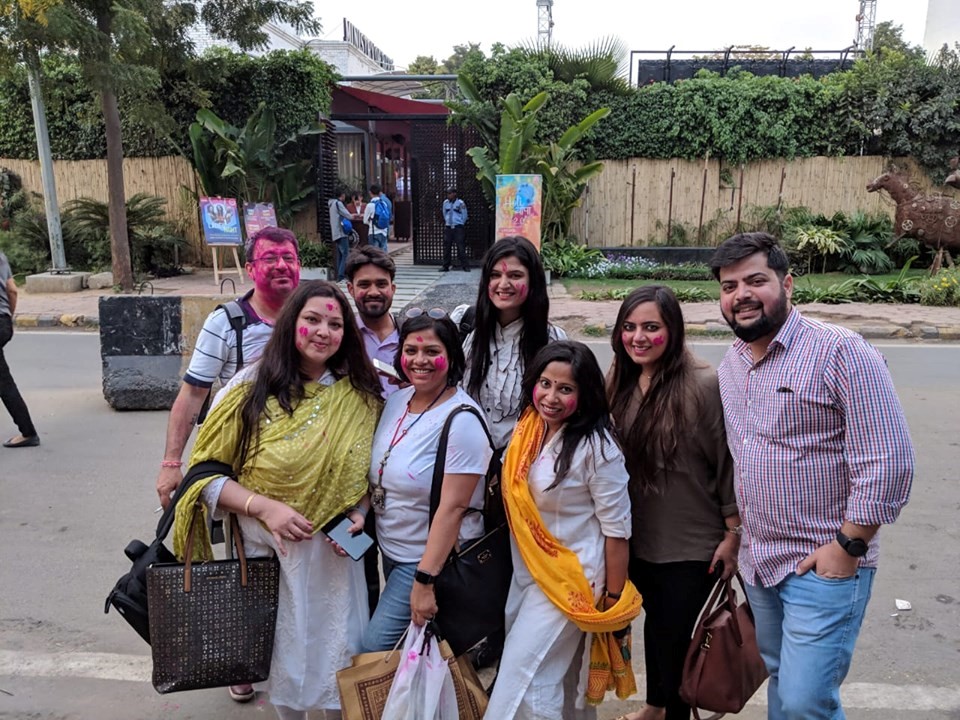
Members of the FleishmanHillard team in New Delhi celebrate Holi.
Playing with colors has always fascinated me. It still does. It brings out my inner child. It makes me remember the times we used to chase our friends, holding water balloons in our hands (oh, we hit them sometimes, too!). The celebrations used to start almost a month in advance. It was the time for family get-togethers and carnivals in school. Today, while the family meet-up ritual remains unchanged, the school carnival has been replaced by office celebrations. No, I am not complaining.
Not at all.
That is because, for me, Holi celebrations at FleishmanHillard are an extension of celebration with family. The way all of us bring our cultures together during festivals is heartwarming. It never ceases to amaze me how each one of us has a different way of celebrating the same festival. Some people follow the traditional ritual of Holika Dahan. According to Hindu mythology, Holi is the celebration of the killing of Holika, an “Asura” (demon) by the God Vishnu in order to save Prahlad, one of his devotees, so people light up a bonfire one day prior to Holi. Others make special food items and delicacies like Gujiya (an Indian dessert much like doughnuts, except it’s shaped like a dumpling), Kanji (a drink made out of carrots) and Bhang (an edible mixture prepared from cannabis leaves or marijuana). In fact, Holi celebrations in India are considered incomplete without Bhang. As per ancient Hindu sacred scripture – Atharvaveda, the cannabis plant, is described as one of the five most sacred plants on Earth. It was referred to as a source of happiness and a liberator. Although consumption of certain parts of the cannabis plant such as Charas, Ganja, Hashish, etc. was prohibited in India from 1985 onwards, the leaves are an exception. That, I believe, is the beauty of India. Despite having different cultural beliefs, we are very open to adopt and adapt to each other’s rituals.
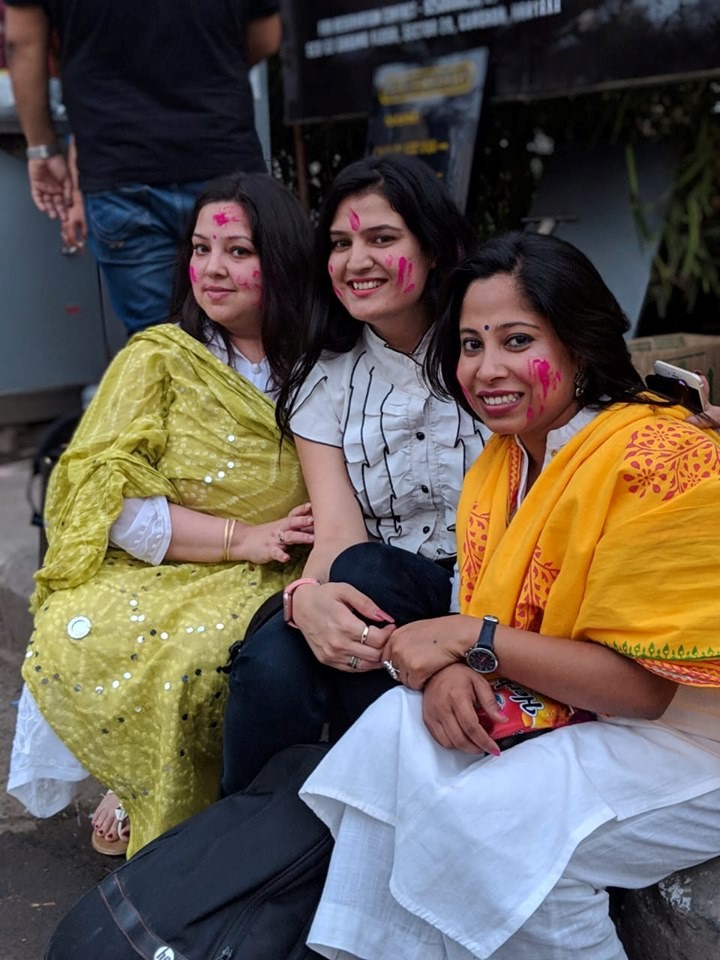
FleishmanHillard New Delhi team members enjoy Holi festivities.
Apart from India, Holi celebrations are also observed in different parts of the world such as Dubai, the UK, Spain and elsewhere, where much like India, the way of celebration, influenced by local traditions, differs from individual to individual. However, what remains the same is the playful vibe, the celebration of co-existence and life in its entirety.
So, this Holi, I wish you are able to embrace everything that life has to offer. And while at it, splash some colors and have fun!
Gauri Khanna is a senior account executive based in our New Delhi office. She works with the consumer team and supports the FleishmanHillard Brand Marketing practice from the region.
See what else is happening
You might also like
ESG
Navigating Conflicting Demands to Advance Climate Action
January 20, 2025
Opinions
Supporting St. Louis Institutions Dedicated to Empowering Youth Through FH4Inclusion
January 15, 2025
Awards
FleishmanHillard Earns Perfect Score on 2025 Human Rights Campaign Foundation’s Corporate Equality Index
January 7, 2025
Opinions
Revitalizing the San Francisco Community with the Downtown Volunteer Coalition
December 23, 2024
Expertise
Responsible Business: Navigating Today’s Challenges and Opportunities
October 22, 2024
Inclusion
Recognizing the power of the LGBTQ Community in Advertising & Media with GLAAD
October 11, 2024
Opinions
FleishmanHillard and FH4Inclusion Teams Shine at the Cannes Lions International Festival of Creativity
August 28, 2024
Opinions
Bridging the Generational Divide with Generative AI
August 27, 2024
Expertise
How to ensure access and opportunity for Black and diverse students and professionals interested in working in sports
Young people are hungry for success but often can’t find the opportunities they need to help them get there – this is the challenge Junior Achievement aims to address. And through our FH4Inclusion program in Charlotte, we aim to support.
Junior Achievement of Central Carolinas impacts nearly 6,000 students with hands-on curriculum programs surrounding preparation for the workforce, personal finance and entrepreneurship for K-12 students. It’s backed by the support of 5,000 annual volunteers and 350 corporate and community partners. While the organization seeks to serve all students across its 53-county service area, it puts a significant emphasis on supporting students who don’t have access to as many opportunities.
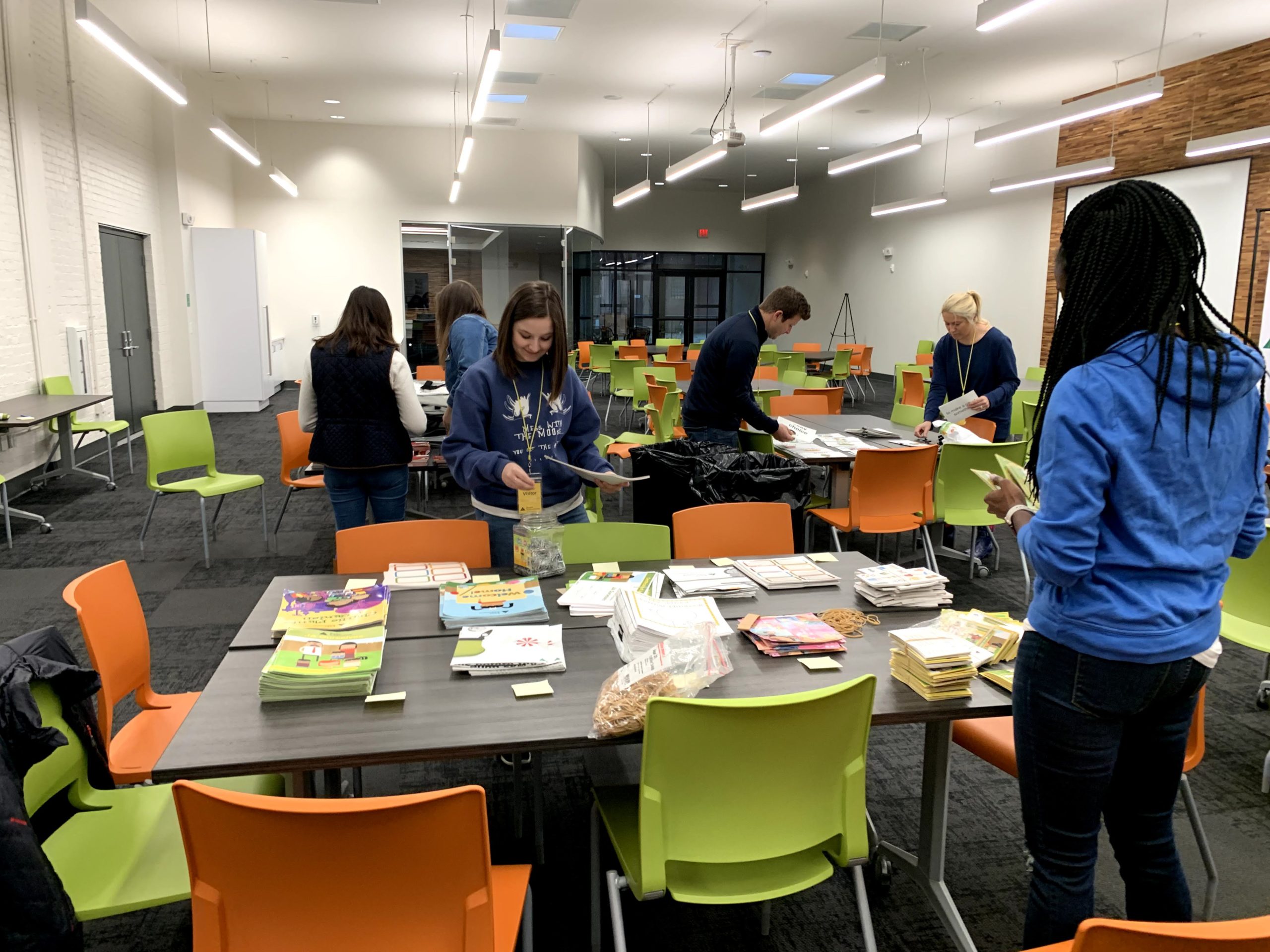
Today, mentors and volunteers are provided curriculum program kits based on the student’s grade level. These kits are originally purchased from the Junior Achievement headquarters and cost $120 to make and ship. To help offset these expenses, the local FleishmanHillard team volunteered to rebuild kits for students in first and second grade, repurposing the materials from old, returned kits, and rebuilding new kits from remaining materials for future student mentors. Our efforts saved the organization a total of $2,050 in kit costs that can now be allocated elsewhere for the benefit of local students.
The FleishmanHillard Charlotte FH4Inclusion team works together to rebuild curriculum program kits from repurposed materials.
“A child’s socio-economic status should never impact their ability to receive a quality education or learn about what the future has in store for them,” said Alex Portugal, a member of FleishmanHillard Charlotte’s Social and Innovation team. “So many children in the Charlotte community benefit from the work completed at Junior Achievement, and our helping hands truly support their mission.”
Our Charlotte team is excited to support Junior Achievement in its future endeavors, continuing to empower students and provide them with the tools they need to strive for success.
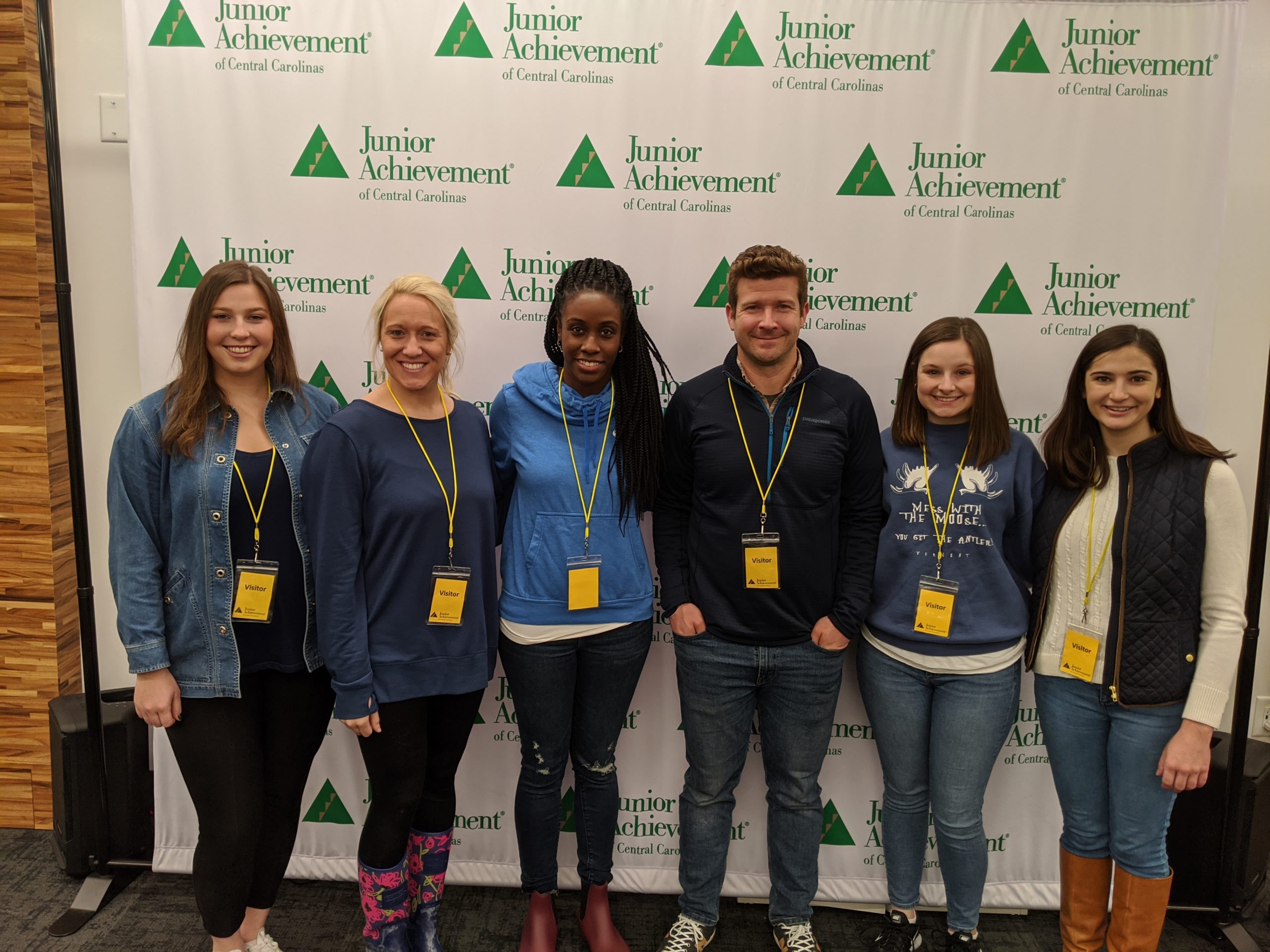
Our Charlotte FH4Inclusion team is all smiles after supporting Junior Achievement of Central Carolinas.
Katelyn Suiter supports our social and digital innovation team, and Elizabeth Comtois supports our media relations and corporate reputation groups. Both drive FleishmanHillard Diversity, Equity & Inclusion efforts in our North Carolina offices, with Katelyn sitting in Charlotte and Elizabeth sitting in Raleigh.
See what else is happening
You might also like
ESG
Navigating Conflicting Demands to Advance Climate Action
January 20, 2025
Opinions
Supporting St. Louis Institutions Dedicated to Empowering Youth Through FH4Inclusion
January 15, 2025
Awards
FleishmanHillard Earns Perfect Score on 2025 Human Rights Campaign Foundation’s Corporate Equality Index
January 7, 2025
Opinions
Revitalizing the San Francisco Community with the Downtown Volunteer Coalition
December 23, 2024
Expertise
Responsible Business: Navigating Today’s Challenges and Opportunities
October 22, 2024
Inclusion
Recognizing the power of the LGBTQ Community in Advertising & Media with GLAAD
October 11, 2024
Opinions
FleishmanHillard and FH4Inclusion Teams Shine at the Cannes Lions International Festival of Creativity
August 28, 2024
Opinions
Bridging the Generational Divide with Generative AI
August 27, 2024
Expertise
How to ensure access and opportunity for Black and diverse students and professionals interested in working in sports
How a Day Celebrating One of America’s Favorite Cocktails Can Open the Door to an Entire Industry
February 21, 2020
By Alex Roberts
Share
When was the first time you experienced tequila? Let me guess — a shot on your 21st birthday? And what was your experience? Perhaps a burning sensation, followed quickly by the taste of salt and a lime. A notorious first experience that for many Americans is inherently bad, it’s no surprise that it could deter you from ever trying tequila again. Because of this, the tequila industry has a unique challenge with Americans — one that much of Mexico, and the entire tequila industry, would like to change. Luckily, in as fast a moving world as we live, old is new, ugly is cool and second chances are a bound for many consumers. And when given a second chance, how can tequila companies capitalize on a moment that reintroduces them into a category? Three words. National Margarita Day!
How can you change perceptions?
We’re often hired to help stakeholders see companies differently. Whether it’s overcoming reputational challenges or asking an audience to challenge their long-held views, consider the triggers that may get an audience to rethink your offering.
Will sharing a piece of unknown information convince your audience to question their established beliefs? Maybe it’s focusing on specific barriers, and how a client can be the solution to overcome them. Or perhaps it’s finding a unique way of getting an audience to retry a product, under different circumstances, in a new environment. You don’t enjoy shooting or sipping tequila? Great, try it in a margarita or a paloma. Cultural moments, such as National Margarita Day, provide an easy entry (or reentry) point for consumers, whether it be for newcomers, or those with long-held beliefs looking to experience something new.
Understand your audience, and who they trust.
Sometimes, it’s less about a product, and more about who is delivering the message. Take tequila … in an exploding category where audiences are finally receptive to retrying an old college favorite, a spirits snob who is looking to discover each aspect of the drink — the agave, the natural sugars, the yeast — may engage differently than a tequila novice looking to discover a better margarita. Who will your audience be more receptive to — a tequila buff whose family may have worked the Agave fields for generations, or a bartender at your favorite trendy cocktail bar? Often the product takes a back seat to the person delivering the message. And a moment in time provides a platform for a spokesperson to reach a captive audience.
Experience something firsthand.
Consider a time when something sounded so awful, but once you buckled down and experienced it, your life (and perspective) changed forever. Maybe it was sushi, maybe it was skydiving, maybe it was tequila. As PR practitioners, we’re always telling people what they should do, how they should feel, information they need in their lives – but are we getting in front of them and putting product in hand? Experiences do matter. And whether it’s taking a group of editors down to the tequila region of Mexico to celebrate National Margarita Day, or a laundry class with a well-known celebrity homemaker trialing a new fabric softener, the experience can build a brand loyalist for life.
Do me a favor. This National Margarita Day (February 22), take your time, find a quality tequila, and give it another chance.
See what else is happening
You might also like
Expertise
Earning Your License to Lead: UNGA, Climate Week and Beyond
September 17, 2026
Expertise
Black Hat 2026: A Conference and Industry Transformed
August 10, 2026
Expertise
When Food Safety Crises Test Trust: A Guide for Communicators
July 24, 2026
Expertise
We Went to Cannes Lions: Where the Industry Is Trending
July 1, 2026
Expertise
Healthcare’s Moment Has Arrived. The Question Now Is: Will Your Organization Move Fast Enough?
July 1, 2026
Expertise
The Visible CEO: How Leadership Can Serve as a Strategic Asset
July 1, 2026
Expertise
How to Win the GLP-1 Food Industry Wake-Up Call
June 30, 2026
Expertise
Cannes Lions Exposed an Industry’s Transition of Power: Takeaways From Winning Work
June 26, 2026
Expertise
Lessons From Cannes: Don’t Let Speed Fail Storytelling
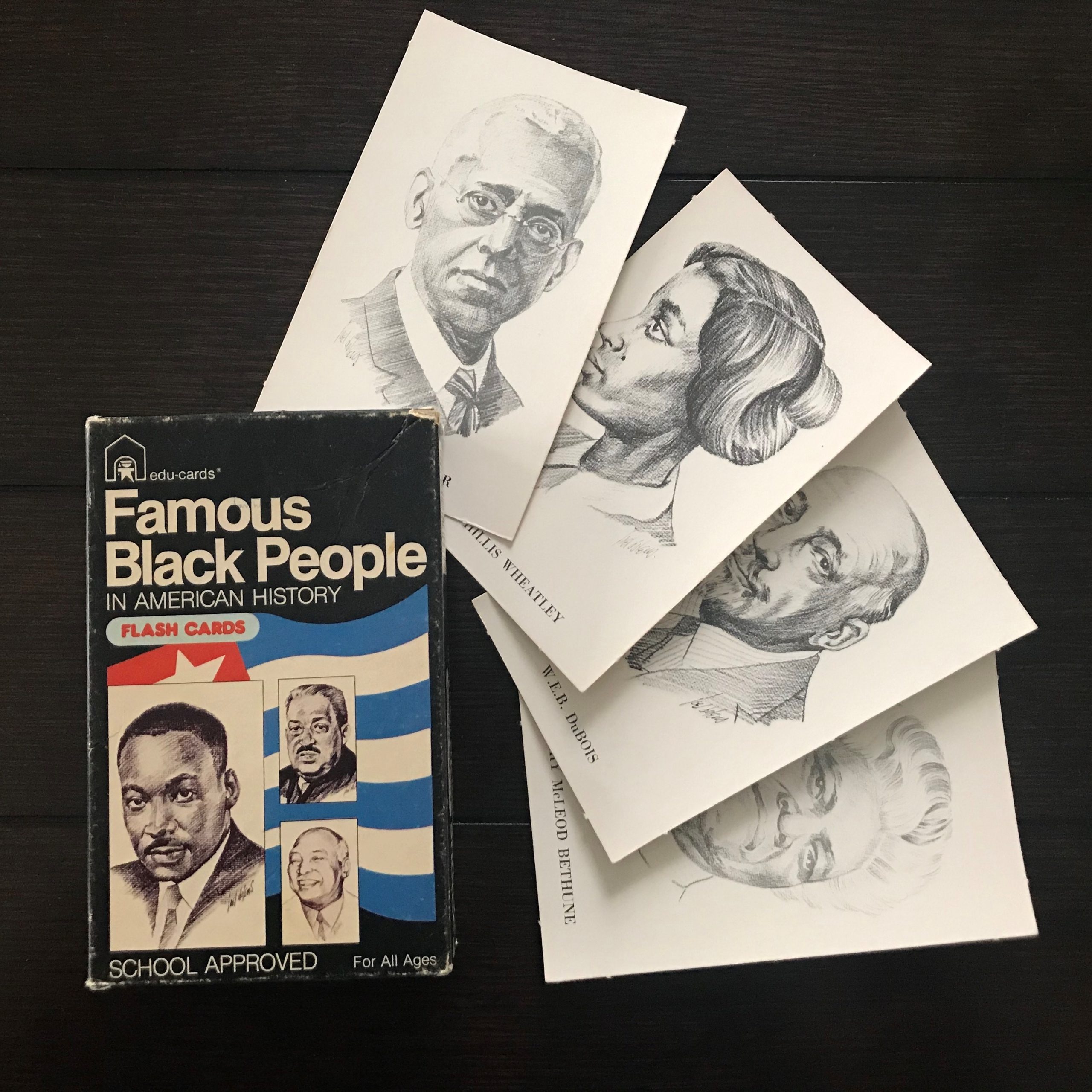
Like many kids, my mom put me through what felt like countless hours of flash card drills. Math, grammar, spelling, you name it.
But for all the flash cards I’ve forgotten, there’s one set I think of often: Famous Black People in American History. Not long ago, I decided to see if it was still around, and sure enough, it was right where I’d left it a couple of decades ago (at mom’s house). (A little more worn and tattered than I remembered, but not terribly surprising considering all the time we spent with them.)
Famous Black People in American History flash cards
You see, one of the many lessons my mom instilled in me was that our history was worth celebrating for more than just 28 days of the year. And with her experiences during and after the Civil Rights era, it was her mission to reinforce to me that no matter what the world may say or do, my heritage means something. I mean something. And “Black history” means much more than just the familiar (yet meaningful) phrases of Dr. King.
Each person in my flash card set faced some sort of struggle to take their rightful place in history, and with that struggle comes the resolve and courage to take a stand…something that’s part-and-parcel with the Black experience in America. But thinking about all of this through the lens of our profession and our responsibilities as client counselors raises the question: how can brands effectively recognize Black History Month, while also considering pressures from consumers and stakeholders to “take a stand” on societal issues that surface throughout the year?
To answer the first part of the question, I think brands can take a lesson from my mom: recognizing the contributions of Blacks and African Americans shouldn’t be solely reserved for February. As brands consider internal and external communications strategies, doing so with an eye toward diversity, equity and inclusion can help elevate a diverse set of voices and experiences on a consistent basis. Formulating an effective approach will take time – and multiple voices at the table – to ensure authenticity and the right tone. But that effort will turn any Black History Month content strategy into a natural extension of a year-round commitment.
Answering the second part of the question is more challenging, as it ventures into a realm where some decision-makers may feel uncomfortable due to potential reputational challenges. No one wants to be accused of co-opting a mission or movement for “points” or profit (and no one wants to face the wrath of the opposition). Finding the right answer for your company requires a thoughtful and deliberate approach, but there are lessons to be learned from the historical figures in my flash cards: follow your core values, lean on others to gain an understanding of what you may not inherently know, let authentic voices drive the conversation and more than anything, be firm in your convictions.
See what else is happening
You might also like
Expertise
Earning Your License to Lead: UNGA, Climate Week and Beyond
September 17, 2026
Expertise
Black Hat 2026: A Conference and Industry Transformed
August 10, 2026
Expertise
When Food Safety Crises Test Trust: A Guide for Communicators
July 24, 2026
Expertise
We Went to Cannes Lions: Where the Industry Is Trending
July 1, 2026
Expertise
Healthcare’s Moment Has Arrived. The Question Now Is: Will Your Organization Move Fast Enough?
July 1, 2026
Expertise
The Visible CEO: How Leadership Can Serve as a Strategic Asset
July 1, 2026
Expertise
How to Win the GLP-1 Food Industry Wake-Up Call
June 30, 2026
Expertise
Cannes Lions Exposed an Industry’s Transition of Power: Takeaways From Winning Work
June 26, 2026
Expertise
Lessons From Cannes: Don’t Let Speed Fail Storytelling
When I was little, Chinese New Year was my favorite time of the year. No school. Pretty new clothes. Late-night fireworks. Delicious snacks… My dad would dress the house with flashy red and gold decorations and my mum would cook us big meals with all the “auspicious dishes” like chicken and fish. It was always buzzy with greetings and visits with the relatives, and kids like me were usually most excited about the red packets, the “lucky money” in red envelopes, given by the elders.
It was not until I left home to study and work in different places that I realized Chinese New Year meant so much more. Being away from my family has made me appreciate this festival even more because it is the time for a reunion – like many others, on Chinese New Year’s Eve, I am anxious to hit the road to meet my family and join them for the once-in-a-year reunion dinner. During the feast, we celebrate the precious time of being together.
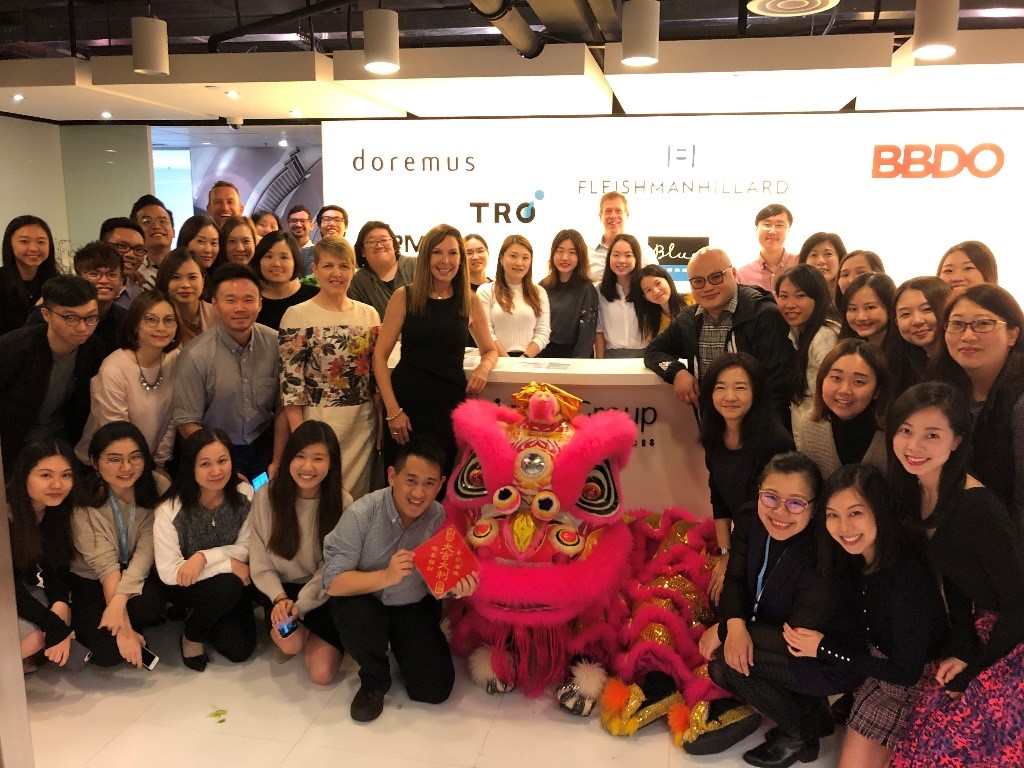
During the past eight years, I have found a lot of joy celebrating Chinese New Year here in Hong Kong, too. The FleishmanHillard and BlueCurrent family has been like a home away from home for me. The Hong Kong office has a good tradition of holding symbolic activities like the lion dance, giving Lai See (red packets in Cantonese), Hoi Nin Fan (lunch gathering to celebrate the start of the lunar new year), etc. I feel privileged to be working in an international company that respects the local culture and heritage where it operates.
FleishmanHillard and BlueCurrent Hong Kong teams celebrate Chinese New Year with Lion Dance tradition.
It is also interesting to see how Chinese New Year is celebrated around the world. My husband, before moving to Hong Kong, used to BBQ in his T-shirt in Australia where Chinese New Year falls in Summer. My relatives in the U.S. go to China Town for Yum Cha. My Chinese friends in Europe make dumplings and have hotpot, sometimes followed by board games.
Cheryl and her husband preparing for Chinese New Year.
Rich in traditions with thousands of years of history, Chinese New Year, thanks to ever-changing technology, is honored in some modern ways, too. For those I cannot meet physically, now I can give them red packets in e-cash through WeChat, wish them well via video calls or simply create funky personalized short videos and stickers and send them around as greetings.
Wherever you are, whatever you do, Chinese New Year is all about being together with your loved ones and welcoming a fresh start with wishes for all the great things. To those who celebrate it, may the new year be filled with health, success and happiness! Kung Hei Fat Choy!
Cheryl Pan is an account director based in our BlueCurrent Hong Kong office.
See what else is happening
You might also like
ESG
Navigating Conflicting Demands to Advance Climate Action
January 20, 2025
Opinions
Supporting St. Louis Institutions Dedicated to Empowering Youth Through FH4Inclusion
January 15, 2025
Awards
FleishmanHillard Earns Perfect Score on 2025 Human Rights Campaign Foundation’s Corporate Equality Index
January 7, 2025
Opinions
Revitalizing the San Francisco Community with the Downtown Volunteer Coalition
December 23, 2024
Expertise
Responsible Business: Navigating Today’s Challenges and Opportunities
October 22, 2024
Inclusion
Recognizing the power of the LGBTQ Community in Advertising & Media with GLAAD
October 11, 2024
Opinions
FleishmanHillard and FH4Inclusion Teams Shine at the Cannes Lions International Festival of Creativity
August 28, 2024
Opinions
Bridging the Generational Divide with Generative AI
August 27, 2024
Expertise
How to ensure access and opportunity for Black and diverse students and professionals interested in working in sports
Board Service: A Huge Need and Opportunity to Advance Inclusion
January 20, 2020
Share
What can I do outside of my day-to-day work to fuel my ambition for social impact and inclusion? In my client work and through my involvement with FH4Inclusion, I felt like I was helping advance my clients’ purpose and the agency’s goal of making FleishmanHillard “the most inclusive global communications agency there is and nothing less.” But I was hungry to do more.
Only one-quarter of Americans take the time to volunteer, according to the latest survey results by the US Bureau of Labor Statistics. And, according to the National Index of Nonprofit Board Practices, a number of nonprofits boards are looking for increased diversity, strategic thinking and a higher level of engagement in advocacy.
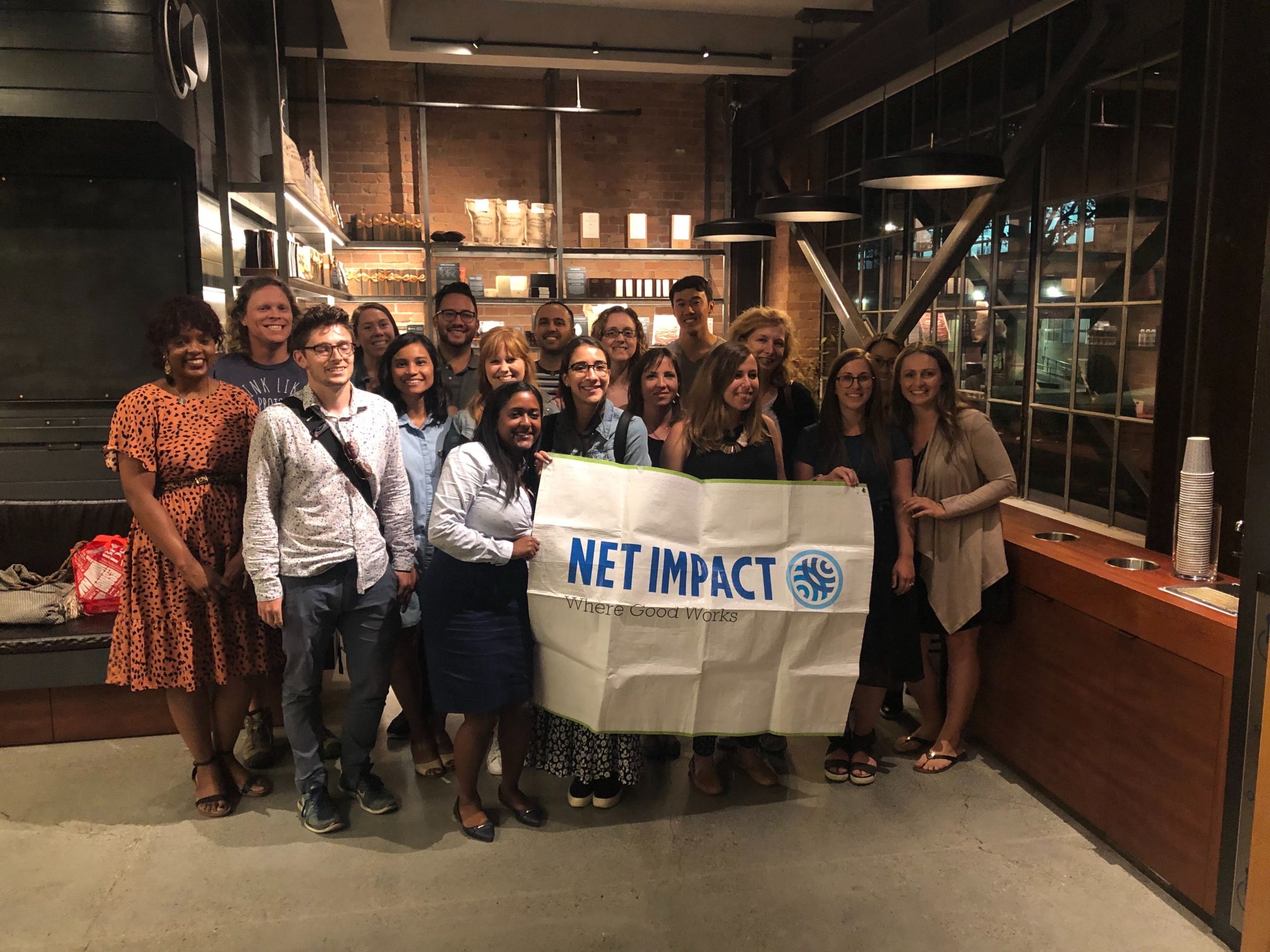
About a year ago, I met a like-minded social impact communicator who was part of the Net Impact San Francisco Chapter Leadership team (NISF) – an organization that strives to build and empower a network of professionals with the vision, connections and resources they need to drive positive social and environmental change. She knew about my interest and portfolio of work in social impact and inclusion and invited me to attend a couple networking and panel events organized by the chapter. After I attended a few events, I realized I wanted more from this experience and the timing was perfect. My contact reached out to me asking if I was interested in applying for a leadership position with the chapter.
The Net Impact San Francisco Professional Chapter organized an event at a local chocolate factory where participants toured the facilities and learned about the sustainable sourcing practices.
For almost a year now, I’ve served on the Net Impact San Francisco Professional Chapter Leadership team. During my time, I’ve leveraged my client service, communications and public relations skills to create a community of impact professionals. I’ve also organized events and programs that connect people in the area, allowing them to use business as a force for positive impact. In particular, I look for ways to advance inclusion by ensuring that our programs cover a wide range of topics beyond the environment and sustainability; and strive to create a space where individuals of varying backgrounds, industries, levels of expertise and perspectives can collaborate and unfold creative solutions to drive social and environmental challenges.
Here are a few of my favorite things about being part of this board:
No matter my age or experience, my perspective and hunger to make a difference are always welcome.
By bringing my professional skills to the board, I can expand my impact.
The opportunity to connect with passionate people who are leveraging their expertise to make a lasting impact in their backyard.
Learning and continuing to expand my skills, such as managing a social media account for an organization and learning to create mutually beneficial partnerships.
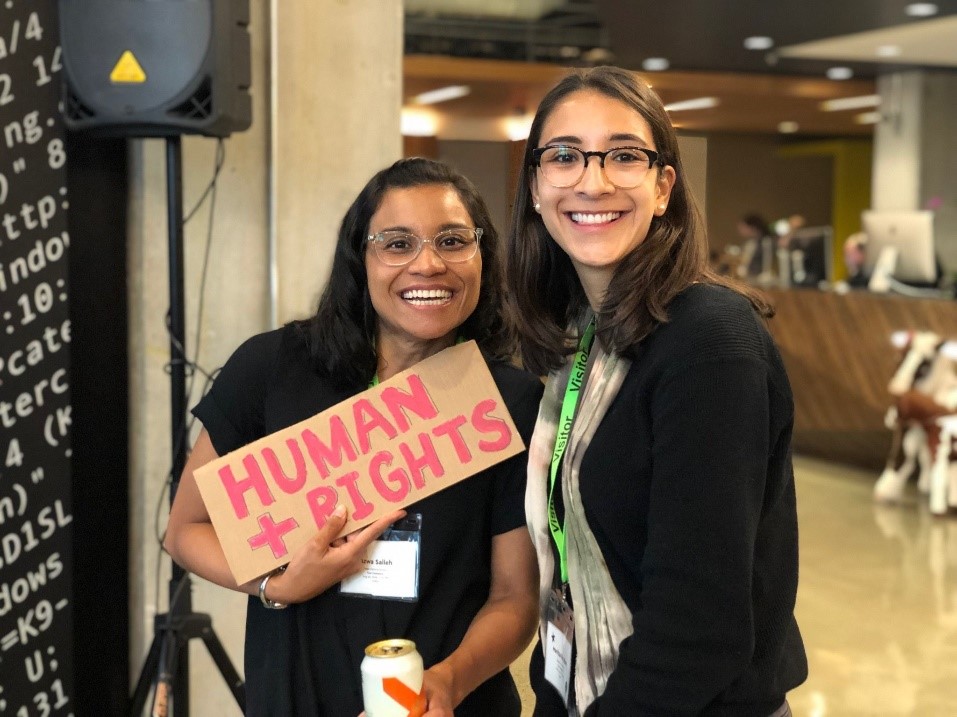
Maritza (right) with another Net Impact San Francisco Professional Chapter board member during a speed networking event.
There are many organizations around the world working to advance inclusion that are looking for board members. I encourage anyone who is interested to get involved, explore your passions and put your skills to use for good.
Maritza Rendon is a member of the Corporate Reputation and Social Impact teams in our San Francisco office and a global FH4Inclusion ambassador.
See what else is happening
You might also like
ESG
Navigating Conflicting Demands to Advance Climate Action
January 20, 2025
Opinions
Supporting St. Louis Institutions Dedicated to Empowering Youth Through FH4Inclusion
January 15, 2025
Awards
FleishmanHillard Earns Perfect Score on 2025 Human Rights Campaign Foundation’s Corporate Equality Index
January 7, 2025
Opinions
Revitalizing the San Francisco Community with the Downtown Volunteer Coalition
December 23, 2024
Expertise
Responsible Business: Navigating Today’s Challenges and Opportunities
October 22, 2024
Inclusion
Recognizing the power of the LGBTQ Community in Advertising & Media with GLAAD
October 11, 2024
Opinions
FleishmanHillard and FH4Inclusion Teams Shine at the Cannes Lions International Festival of Creativity
August 28, 2024
Opinions
Bridging the Generational Divide with Generative AI
August 27, 2024
Expertise
How to ensure access and opportunity for Black and diverse students and professionals interested in working in sports
Human Rights Day commemorates the day the General Assembly of the UN adopted and proclaimed the Universal Declaration of Human Rights in 1948. It is one of the most translated documents around the world – available in more than 500 languages – and celebrates the inalienable rights and freedoms that all people share. Article 1, for example, emphasizes equality and the right to live free from discrimination, which is inextricably linked to our agency’s commitment to promoting diversity and inclusion.
Today, human rights are as important as ever. In fact, more than 90% of the targets in the Sustainable Development Goals (SDGs) – the blueprint to achieve a better and more sustainable future for all by 2030 – are linked to international human rights standards. We honor our shared humanity and the important work being done to safeguard human rights within FleishmanHillard and our communities worldwide, on Human Rights Day and every day.
See what else is happening
You might also like
ESG
Navigating Conflicting Demands to Advance Climate Action
January 20, 2025
Opinions
Supporting St. Louis Institutions Dedicated to Empowering Youth Through FH4Inclusion
January 15, 2025
Opinions
Revitalizing the San Francisco Community with the Downtown Volunteer Coalition
December 23, 2024
Opinions
FleishmanHillard and FH4Inclusion Teams Shine at the Cannes Lions International Festival of Creativity
August 28, 2024
Opinions
Bridging the Generational Divide with Generative AI
August 27, 2024
Inclusion
Success on Repeat: Alumni of the Alfred Fleishman Diversity Fellowship Discuss Promotions and How to Get Them
May 29, 2024
News
EU climate policy: The new borderlines?
May 27, 2024
News
Achieving the Evolving Duality of Loyalty and Loyalty Programs
April 1, 2024
Expertise
TickTockTech: Mobile World Congress 2024 — What’s the Verdict?
You can’t be inclusive and not care about accessibility.
People with disabilities make up about 20% of the total population; in the U.S. alone, that’s 60 million people. So, by definition, diversity, inclusion – and, yes, accessibility – are concepts fundamental to how we as communicators work and advise our clients.
At FleishmanHillard, we’re committed to helping our clients connect with the people who matter to them – across the full spectrum of humanity. Our work in accessible content management and web design has taught us that one size does not fit all. Based on that experience, we’ve identified some valuable best practices that go beyond digital experiences to encompass all communications:
Be person-first. When featuring individuals with disabilities, we must encourage all end-users to see the person, not their disability. Choose images and language that honor the individual. And that includes calling attention to the disability only if the context requires it. For style questions, the National Center on Disability and Journalism offers a helpful resource.
Use simple and direct language. Avoid euphemisms like “challenged” or “differently-abled”, which can sound awkward, if not downright patronizing. Instead, use direct language – such as “has hearing loss.” It’s clear and conveys respect. Hyperlinks offer another way to be more direct; avoid “click here,” for example, and opt instead for unique and descriptive hyperlinks that tell users where they’re going, such as “view tips on writing for accessible audiences.” This approach also accommodates those who are scanning the page using an assistive technology, which presents all links as standalone text.
Apply color carefully. Using color can be tricky. For example, while people with color blindness or other vision issues can’t decipher reds and greens, these same colors can be extremely helpful to those with cognitive disabilities. The answer: Use color alongside other cues – such as naming, bullets and icons – to signal changes in the hierarchy of information. When possible, test designs with end users before publishing.
Make the trade-off. Sometimes, the choice to be accessible might seem to compromise functionality or aesthetics for the majority. For example, a beautifully designed document may use a font or type size that’s difficult for some to read. In websites, it’s standard practice for hyperlinks that take the user to a different website to open in a new window. That’s a challenge, however, for those using screen reader technology, which functions best in a single browser window.
Stay curious and open. The only thing changing faster than technology is our understanding of the individual abilities we collectively bring to the table. Keep your communications flexible. Continue to evolve along with technology and the world around us and adapt to the needs of the people you serve.
Remember this: If diversity means being invited to the party, and inclusion means being asked to dance – accessibility means the dance floor accommodates everyone’s unique and individual needs. Your end users are people first. Meet them where they are. And design communications that welcome them.
See what else is happening
You might also like
ESG
Navigating Conflicting Demands to Advance Climate Action
January 20, 2025
Opinions
Supporting St. Louis Institutions Dedicated to Empowering Youth Through FH4Inclusion
January 15, 2025
Opinions
Revitalizing the San Francisco Community with the Downtown Volunteer Coalition
December 23, 2024
Opinions
FleishmanHillard and FH4Inclusion Teams Shine at the Cannes Lions International Festival of Creativity
August 28, 2024
Opinions
Bridging the Generational Divide with Generative AI
August 27, 2024
Inclusion
Success on Repeat: Alumni of the Alfred Fleishman Diversity Fellowship Discuss Promotions and How to Get Them
May 29, 2024
News
EU climate policy: The new borderlines?
May 27, 2024
News
Achieving the Evolving Duality of Loyalty and Loyalty Programs
April 1, 2024
Expertise
TickTockTech: Mobile World Congress 2024 — What’s the Verdict?