Employee Login

Enter your login information to access the intranet

Enter your credentials to access your email

Reset employee password

Article

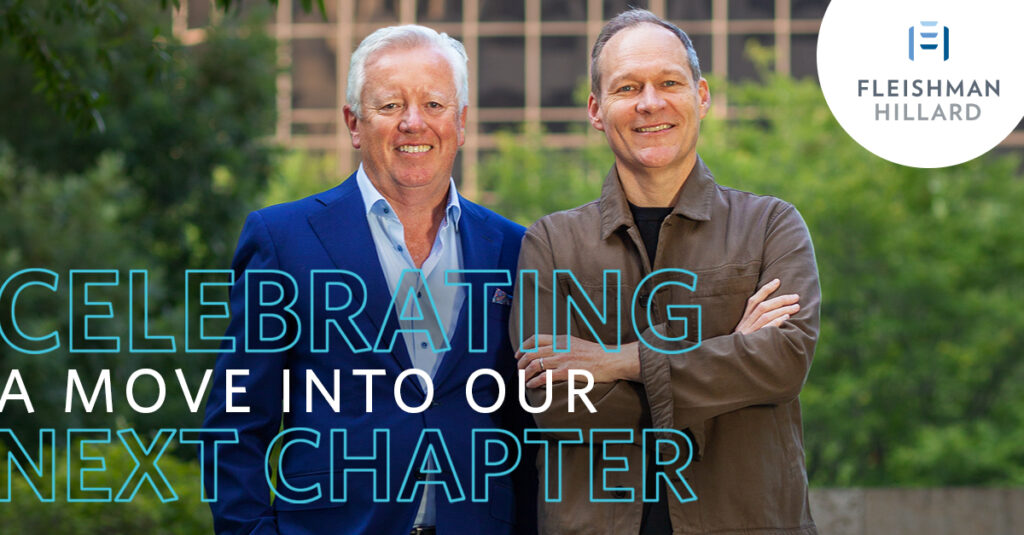
FleishmanHillard’s J.J. Carter Named President and CEO; John Saunders to Become Chairman

August 20, 2024

Leadership Transition Will Take Effect on Oct. 1, 2024

FleishmanHillard Inc., an Omnicom PR Group (OPRG) agency, today announced that its current Global Chief Operating Officer and President, Americas J.J. Carter will become President and Chief Executive Officer, effective Oct. 1, 2024. He succeeds John Saunders, who will take on the role of Chairman of FleishmanHillard.

Carter, 49, was named the agency’s global chief operating officer and Americas president in 2016. Saunders, 66, was named president and CEO in 2015 after leading FleishmanHillard’s Europe, Middle East and Africa region.

“J.J. has the experience, skills and vision to rapidly expand on the legacy of FleishmanHillard. I am confident in his ability to drive innovation, teamwork and growth that will accelerate FleishmanHillard’s excellence and expand relationships with clients around the world,” stated Chris Foster, CEO of OPRG. “We are grateful for John’s decades of commitment and leadership and look forward to his ongoing guidance as chairman of FleishmanHillard.”

Saunders’ relationship with FleishmanHillard began more than 37 years ago, when the agency he founded in Ireland became an affiliate. Later, John joined with FleishmanHillard to form what was then known as FleishmanHillard Saunders in Ireland. In 2023, he became the first individual in the communications industry to be conferred with an honorary Doctor of Philosophy degree from Dublin City University.

“I look back on more than three decades at FleishmanHillard with pride and gratitude for the support of so many colleagues around the world and the trust that some of the world’s leading companies have placed in us. However, it’s now time for me to step back and spend more time with my family both in Dublin and in London and with my six young grandchildren whom I miss being so far away from.

“I have full confidence in J.J. as president and CEO. I have seen him in action over many years and respect his strengths, and his ability to lead no matter the pace and complexity of change. J.J. is a person of outstanding personal integrity and I wholeheartedly endorse his selection,” Saunders said.

Carter has been with FleishmanHillard since 2005 and has held a variety of key leadership roles. He previously oversaw the agency’s East and West regions in the United States along with Canada and Mexico, was general manager of one of the firm’s largest offices in San Francisco, was global client relationship manager for one of the agency’s biggest multinational accounts, and he built on the firm’s existing experience to launch the agency’s global sports marketing practice. During his time at FleishmanHillard, he has also recruited transformative leaders across key markets, global accounts and practice areas. 

“It’s an enormous privilege to follow John and lead the organization into the future during one of the most complex and consequential moments in our history,” Carter said. “To accelerate our growth, deliver transformative work for clients and create a best-in-class experience for our people, we will embrace our strengths as a trusted client partner, while also expanding our capabilities and exploring new tools and ways of working together. We will always deliver intelligent, creative, audience-first solutions that drive impact for our clients.”

Regarded as a trusted advisor to iconic brands in their biggest moments and on the largest global stages, Carter has counseled clients through IPOs, CEO transitions, groundbreaking product launches, complex mergers and global sponsorship activations. He excels at connecting brand, business strategy, technology and leadership into cohesive narratives that resonate with employees, customers, investors, business partners and media alike.

Carter will report to Foster and will be a member of OPRG’s global leadership team.
Article

How to ensure access and opportunity for Black and diverse students and professionals interested in working in sports

August 7, 2024
By Thomas Bennett

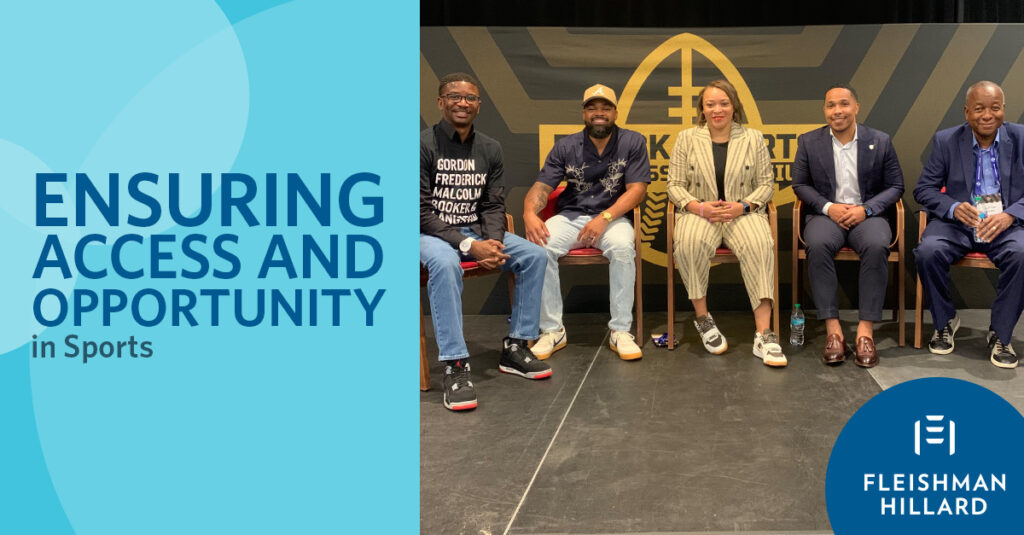
It’s important to provide opportunities and access for Black and diverse students and professionals who have an interest in working in the sports industry. The Black Sports Business Symposium was created in 2022 with the fundamental idea to make the sports industry more diverse, inclusive and equitable. This year’s symposium brought more than 2,000 people to the Mercedes-Benz Stadium in Atlanta focused on creating opportunities and increasing representation among Black and diverse students and professionals in the sports industry. I had the opportunity to be on ground – here are just some of my key takeaways:

Representation in sports, it matters.

In one session during the Black Sports Business Symposium, a speaker spoke about the importance of representation in the sports industry saying, “It’s hard to become something that you rarely if ever see.” This holds very true as many sports leagues at the collegiate and professional level struggle with diversity at all job levels, particularly at the executive level.  

Some of this year’s symposium speakers included: Sandra Douglas Morgan, President of the Las Vegas Raiders (the first Black female NFL team president), Cari Champion, former host of ESPN First Take, and Kosha Irby, Chief Operating Officer, All Elite Wrestling (client). Having successful executives of this caliber speak at the symposium further reinforced to attendees, myself included, that being successful within the sports industry is absolutely possible, regardless of an individual’s race, culture or ethnicity.

The rise of women in sports.

Simone Biles, Caitlin Clark, Angel Reese, Katie Ledecky and many other women have brought more attention to, and raised the bar for, women’s sport. According to Deloitte financial analysts, “Elite women’s sports will generate revenue of $1.28 billion in 2024.” Women athletes are finally receiving more of their due thanks to the efforts of past and present trailblazing women athletes.

During the symposium, a panel of speakers tackled the topic of the rise of women in sports. Swin Cash, former WNBA player and current Senior Vice President of New Orleans Pelicans Basketball, talked during this session about factors contributing to the increase in popularity in women’s sports spanning viewership and revenue. According to a Deloitte article, “interest from fans, broadcasters, and commercial partners is driving rapid growth in the revenues of women’s elite sport.” Panelists during this session also emphasized the importance of providing more opportunities for women who work on the business side of sports.

Leveling the playing field in sports is imperative.

To level the playing field and diversify the pipeline of students interested in working in sports, it’s critically important for teams, leagues and sports brands to develop strategic partnerships with local colleges and universities, specifically historically Black colleges and universities (HBCUs), community colleges and Hispanic-serving institutions (HSIs). Shannon Joyner, Vice President, Marketing at the Atlanta Falcons, and her fellow panelists, spoke to their efforts around strategic partnerships with HBCUs. Joyner shared insights about the Atlanta Falcons’ HBCU Fellows Program that focuses on “leveling the playing field for HBCU students who are interested in careers in sports and entertainment.” Through this program, students have the opportunity to learn more about “how brands collaborate in the areas of sponsorship and brand engagement.”

Importance of having diverse voices share stories in sports.

Those who have never encountered or experienced racism or discrimination may find it hard to recognize and understand the challenges faced by people of color and other people from under-represented and under-resourced backgrounds. Since the tragic murder of George Floyd, it’s important to have diverse voices to share these types of stories, particularly in the world of sports given its intersection with culture. This topic was also discussed during the symposium from a diverse panel of speakers who write stories, produce films, represent sports leagues and work on the agency side. Collectively, the panelists concluded that having diverse voices share stories that happen in their communities brings more authenticity.

Sports bring together fans of all races, cultures, ethnicities, backgrounds, ages and beliefs. It’s critically important that individuals working in sports resemble the diversity of our society, communities we live in and fans attending games. In its third annual year, the Black Sports Business Symposium not only created awareness of an issue, but also offered solutions, connections and opportunities for Black and diverse students and professionals who are passionate about working in the sports industry. As a first-time attendee, the symposium overall was empowering, and I look forward to attending again next year.

Article

FleishmanHillard’s Sophis Kasemsahasin to speak at Techsauce Global Summit 2024

August 6, 2024

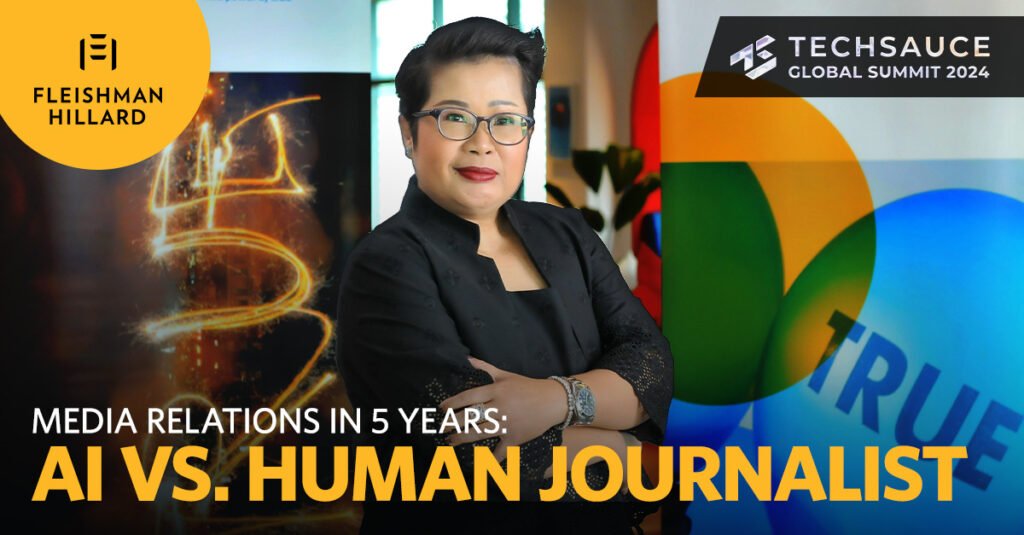
What: “What Will Media Relations Look Like in 5 Years: AI vs Human Journalist?” at Techsauce Global Summit 2024  

When: Friday, August 9, 10:30-11:30 a.m. ICT

Where: Queen Sirikit National Convention Center in Bangkok

This Friday at the Techsauce Global Summit 2024, FleishmanHillard’s Sophis Kasemsahasin will take a deep dive into critical developments affecting the tech industry over the next five years including automation, crowdsourcing, programmatic media relations and more. Kasemsahasin’s presentation is part of a three-day global summit featuring more than 130 live sessions, engaging workshops, 350 exhibitors and invaluable opportunities for business matching and networking.

Register here and use code SOPHIS078 for a special discount!  

Article

FleishmanHillard’s Leela Stake and Francesca Weems to Join Paradigm’s Joelle Emerson on Inclusive Communication Webinar

August 1, 2024

What: “The Evolving DEI Landscape: Navigating Inclusion and Communications” webinar

When:  Thursday, Aug. 22, 9 a.m. PT/Noon ET

FleishmanHillard’s Leela Stake, FH4Inclusion and True MOSAIC lead, and Francesca Weems, director of DE&I and global lead of the Race & Culture Media + Platforms team, will join Joelle Emerson, co-founder and CEO of Paradigm, for “The Evolving DEI Landscape: Navigating Inclusion and Communications.” The virtual webinar will delve into how organizations can adapt to the shifting language around diversity, equity and inclusion, as well as strategies for responding to backlash effectively. Join us to discover best practices for communicating with employees about world events and gain actionable strategies to more effectively support clients.

To register for the webinar, click here.

Article

Three Fundamentals for Engaging Retail Employees

July 24, 2024
By Tim Showalter-Loch

“How’d the store visit go?” my CMO asked. I had a story for him.

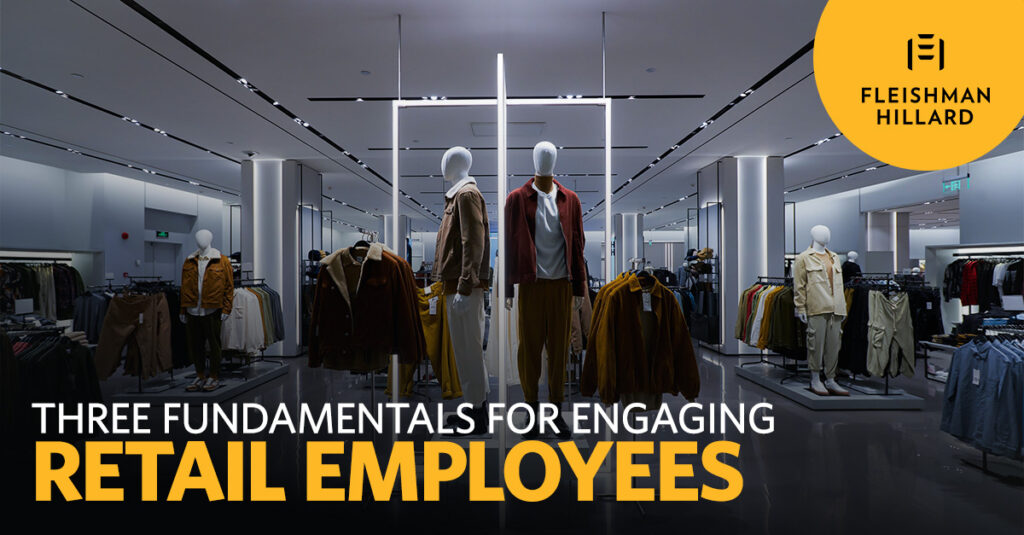
Twenty years ago, when I worked at a national retailer, we were welcoming and introducing a new CEO to the company. I followed him on a store visit, shooting video and taking notes. We arrived at the top of an escalator where there was a large, skirted table with nothing on it. The CEO turned to the store manager and said, “Why do you have an empty table here? This is premium floor space.”

The manager quickly pulled out the merchandise floor map from the mess of papers he was carrying around and showed the CEO that the plan, from corporate, showed that table in that location with a specific featured product. The manager lamented that those specific items had not yet arrived, but they expected them from the distribution center in the next day or so.

The CEO was agape. “Can I please suggest that you put something on this table? Now. While you wait for those.”

This anecdote has always stuck with me because it captures a fundamental disconnect that can happen in retail corporate communications.

Getting Communications Right

Operations, customer experience and profit all converge on the retail sales floor. Selling is the result of a complex mixture of products, branding and interpersonal skills that come down to a store manager’s empowerment and entrepreneurial drive, perfectly balanced and blended with a sophisticated merchandising and marketing strategy for the brand overall.

That integration of factors, especially in a regional or national operation, requires highly effective leadership and communications throughout the company. In retail, leadership is communications and communications is leadership. They are one-in-the-same.

The pace is fast. The thinking and the action happens on your feet. And importantly, communications in the store environment is eye-to-eye. A successful communications strategy must have the managers and supervisors at the center of it to reach the associates on the sales floor who will execute the plans. That strategy has to do three critical things well:

1. Continually Educate Managers

A strong learning program for managers and supervisors should include both the mindset and skillset required for the business strategy. They don’t just execute communications, they own it, like they own their store P&L.

Sales associates need to be able to react and respond to a limitless range of scenarios and needs from customers, while embodying the brand. Their managers and supervisors are the coaches who will help them develop that talent. The managers set the culture and set performance expectations, and that requires a deliberate effort from the people in the store who lead others to skillfully observe and listen, assess and understand, and then explain and coach.

Equipping managers with easy-to-use teaching tools, like a simple and memorable three-step selling process, gives them the ability to coach in real time and develop their sales teams efficiently. As we all know, the best-designed, easiest tool still requires a competent operator to be fully effective. That’s why the learning program is so critical and why we recommend not just sharing learning materials with managers, but also creating time and space to understand the resources, practice using them and discuss their questions and ideas. And that education has to be sustained and evolved over time to meet the changing needs of the business and customers.

Selling and service skills are critical, and so is the ownership mindset that empowers team members to notice empty merchandise tables and do something about it. That mindset has to be cultivated with both communications campaigns and the in-person communications only managers can provide.

Beyond talent development, any communications about corporate priorities, values, culture campaigns and the brand narrative must be conveyed through the managers and supervisors. They are the biggest and most important communication channel you have, and a failure to invest in them will impact everything else you try to do.

2. Build Simple, Customizable Routines

Daily, weekly and monthly routines, like shift huddles and all-team meetings, are how stores work, and managers have to be skilled and well-equipped with information and messaging to put those routines to optimal use.

Talking points, data dashboards and recognition programs are foundational, but too many times the opportunity for creativity and storytelling is missed. Working in retail is fun. Customer interactions are an endless source of stories and anecdotes that are valuable for a sophisticated communications strategy and store managers who need to engage and align their teams. The routines provide a show-and-tell opportunity.

The information from corporate must be easy to digest and convey, and also easy to customize for the specific store. The format and context must be predictable and consistent, especially so that you can depart from it when needed for maximum impact in unique circumstances. Good routines make exceptions possible and effective, and give a skilled communications team the ability to break through when really needed.

In addition to the routines in stores, the corporate communications team needs routines of its own, which include regular and varied in-store experiences themselves. Central HQ teams that communicate with distributed workforces always benefit greatly from seeing and experiencing for themselves the lived reality of that workforce. I’m always surprised by how few teams take the time to do this when the advantages to be gained are so obviously great.

3. Use Systems for Information

When the more challenging communications work aimed at engaging and aligning your sales team across and within stores is handled by a skilled manager, that leaves your other channels free for the critical flow of information that people need on the floor to make the business hum. Supply chain and inventory data, product information, financial networks and now AI-generated target offers and customer data can run through your technology systems. The POS, tablets and phones are channels that should be optimized for data and information, and not cluttered with messaging.

Each retailer’s sales strategy is a little different, and these digital channels are vital in different ways, but it’s important to resist the compulsion to put everything through these digital channels just because they directly connect to the sales team members. Channel and content alignment, used strategically, is the best way to maintain the effectiveness of your communications ecosystem over time and across locations.

A Sales Force in Full Force

Applied to a retailer’s specific market environment and brand, the combination of skilled and prepared managers, effective routines and streamlined, focused information systems provides a powerful structure for reaching, engaging and aligning the sales force. The communications strategy is what holds it all together and ultimately makes the sale.

Article

What Organizations Need to Know About New SEC Data Breach Reporting Requirements

July 23, 2024
By Scott Radcliffe

Newly introduced SEC reporting requirements now compel publicly traded companies to report “material” cybersecurity incidents within four business days and outline related details on risk management and strategy in their 10K filings.

These new requirements are just one of many indications that governments are taking more public action when it comes to protecting data. Companies are now beginning to understand that the evaluation of their preparation and response may have as much reputational impact as the data breach itself.

Adding to the complexity is the quickly evolving regulatory environment in the U.S. that is likely to see further changes and court challenges in the wake of recent Supreme Court decisions.

With this increased SEC scrutiny, companies now need to up their game and will have to consider:

Beyond whether they have a response plan or not. Today, the quality of that response plan is even more critical.

This escalates the need to modernize the approach to response plans –
from crisis planning to investor relations. As quickly as the threat landscape is evolving and organizations themselves change, clients will need to make sure their response plans have adapted as well.

How (or if) their plan was rehearsed and reinforced through employee training.

Immersive and effective table-top training sessions and simulations help
practice established plans. To further increase effectiveness, it’s important to
plan and execute creative and engaging employee training campaigns that
ladder to those plans and priorities as well.

Public disclosure requirements in response to a data breach can represent just the beginning of the reputational risk companies face due to government regulations or actions following a data breach:

Disclosing a breach that’s had a material impact on business can lead to
subsequent action by government entities – and already has in many cases.
Such actions include public investigations and legislative hearings, presenting far greater reputational risk than the initial disclosure.

As governments face more pressure to act against cybercriminals and protect the data of their citizens, they are also taking additional – and more public – steps to hold companies that are compromised by data breaches accountable.

Article

Observations & Opportunities for Brands Tapping into the Summer Games

July 22, 2024
By Steve Hickok

It’s no secret or surprise that the attention of the world will turn to Paris this summer. The Games are one of the unique global sports properties that can not only galvanize fans from every corner of the world but also have brands (sponsors and non-sponsors alike) thinking and strategizing about ways to connect to the conversation surrounding the Games.

While every Games is different, understanding the complex landscape and thinking ahead to see around corners will give some brands a moment to stand above the rest when the world is watching.

As we countdown to Paris, here are eight key observations and opportunities for brands to keep an eye on — and take advantage of — leading up to, during and following the Games:

  1. Paris Helps Revitalize Fan Interest in the Games: While the Games historically drive eyeballs and conversation, a few factors have blunted growth in recent years. Games in Sochi, Pyeongchang, Tokyo and Beijing brought time zone viewing challenges as well as criticism tied to human rights issues. COVID-19 threw a curveball into Tokyo and Beijing. The cost to host the Games has also made it more difficult for cities to justify submitting a bid. But Paris will become a major turning point in reinvigorating interest — from brands and fans —again. We’ll be reminded what a Games with fans in the stands can do to drive excitement and engagement. Brands are also looking at global fan excitement around Paris as a way to jumpstart and expand their businesses. Paris also starts a European swing of Games before landing in Los Angeles in 2028, so the time for brands to ride the wave starts in France this summer.
  2. Female Athletes Will Shine Even Brighter on the World Stage: Women’s sports have experienced exponential growth, visibility and success over the last year. Of note, Paris is expected to reach a notable milestone with an equal number of female and male athletes competing for the first time in Olympic history. And according to Neilsen, while more men watch women’s college basketball and the WNBA than women do, female viewership has outpaced males over the past two Games. Paris will undoubtedly serve as a catalyst for even more conversation, exposure and brand partnership opportunities for thousands of female athletes. For brands that haven’t invested in women’s sports, the Games can also serve as a jumping off point to partner with rising female athletes once the Games are over to support and elevate their ongoing journey.
  3. The Days of Your Mom and Dad’s Games Are Over: National governing bodies, media platforms and sponsor brands have always heavily protected the “voices” connected to the Games, meaning extra scrutiny was placed on celebrity, athlete and influencer partners appearing in marketing campaigns and activations. As the Games look to appeal to broader, more diverse and younger audiences, those stringent filters and criteria have softened. Ten years ago, you would not have seen Snoop Dogg or Alex Cooper on NBC’s talent roster or USA Water Polo embracing Flavor Flav as their official hype man. But the ability for culturally relevant entertainers and influencers to connect with new audiences will create more fans (and viewers) for the Games moving forward. We’ll also likely see sponsors tapping into celebrity and social influencer partners —– who might not have passed a traditional vetting process in the past — appearing in campaigns over the coming weeks.
  4. AI Will Leave Us Wanting More: The Games have become a platform for brands, primarily official sponsors, to showcase new technologies and innovations on the world stage. Intel, a company known for microprocessors, famously flew 1,200 drones during the Pyeongchang 2018 Opening Ceremony that captured the world’s imagination and attention. NBC has already announced plans to use AI to recreate sportscaster Al Michael’s voice for daily recaps on Peacock. Other brand sponsors have also teased the use of AI to enhance the experience for on-site fans, athletes, organizers and viewers. While there will likely be some stumbling blocks in implementation and execution, AI will provide the general public a taste of what’s possible when it comes to sports consumption and engagement. And the brands at the forefront of communicating their technological contributions to the Games will become remembered.
  5. A Brand is Waiting for their Real-Time Opportunity: Just like athletes spend years training for their one moment to shine on the world stage, brands are doing the same thing … they just might not know when or how their opportunity will come. When the Jamaican women’s bobsled team were left without a sled ahead of PyeongChang , Jamaican beer company Red Stripe stepped in to save the day and received positive reaction and global media coverage that far outweighed the cost of a new bobsled. Whether it’s the days leading into the Games or a moment that happens during the Games with an athlete, team or fan, a moment will undoubtedly present itself to a brand. The bigger questions are: Is it the right opportunity? Can they move fast? Does the situation authentically align with the brand? And can they bring tangible value to the moment? The brands that have already scenario planned around potential situations that might occur at the Games are already five steps ahead.
  6. It’s Not Only About Podium Performances: Sure, high-profile athletes that win gold have tremendous value to partner brands. But the reality is that not every brand can align itself (nor afford) the biggest names in sport. Part of what makes the Games such an entertainment platform are the athletes’ stories of how they made it there. And as new sports are continually being introduced into the Games like surfing (Tokyo) and breaking (Paris), that provides even more opportunities for brands to align themselves with passionate fan bases and become part of the athlete’s story and journey … medal or no medal.
  7. The Fashion Games: With the Games taking place in a city with such rich fashion heritage, fashion brands of all shapes and sizes will be connecting themselves with the Games and athletes in new ways. While clothing and apparel brands have always played a role in the Games, this year will likely be defined by the high-end and luxury brands that will use the Games to drive visibility and more importantly, sales. LVMH for example, created custom trunks that will transport medals and U.S. Gymnastics’ leotards will be covered in thousands of Swarovski crystals. Events like the Opening and Closing Ceremonies will become “see me” opportunities for athletes (and brands) to inject their own fashion sense when the world is watching. And celebrities, influencers and athletes not competing will use the Games to showcase their preferred fashion brands when attending competitions and events.
  8. Not If, But When Will the Issues Occur: The Games are no stranger to issues. Every Games WILL have a variety of issues that could divert attention away from the athletes and on-field competition and bring official sponsors into the conversation. For Paris, that includes parliamentary elections, international wars, back-up plans for events in the Seine River, terrorism and cybersecurity, to name a few. However, with proper scenario planning to map out potential issues, executive and on-site training and real-time monitoring to identify emerging issues, brands can weather the storm and bring the attention back to the field of play.

Paris will become one of the more compelling Games in recent history and brands that have prepared appropriately but stay nimble in the moment will have the best opportunity to create brand marketing magic that resonates with their key audiences — positioning themselves to take home “gold.”

Steve Hickok is the global lead of FleishmanHillard’s Sports practice. He’s led global campaigns spanning nine Games for global and domestic sponsors including Visa, Samsung, Alibaba and Allianz.

Article

Protecting Your Reputation When the Supply Chain Breaks

July 18, 2024
By Donna Fontana

Media headlines and social posts warning of supply chain strain is a familiar refrain for many manufacturers, especially as hopes that supply chains could normalize as the world moved past the COVID-19 pandemic have yet to bear fruit. The war in Ukraine, the conflict in Gaza, attacks in the Red Sea, the expanding threats on increasing tariffs with China, labor disputes, early season Category 4 hurricanes and more are creating the latest cycle of concern about potential delays, back-ups and increasing prices throughout the global supply chain.

Having learned many lessons since 2020, manufacturers are on standby with their supply chain playbooks, ready to adjust or shift production, inventory and shipping models to meet demand. This year, however, things could be a little more intense.

While supply chain management used to be a subject that only interested trade publications, today it can be found across all top-tier business and financial media. We anticipate media interest will only increase this year thanks to the contested issues in this year’s election — inflation, tariffs, threats to our labor market, reindustrializing the United States — all leading reporters to ask manufacturers how they are being impacted.

For communications professionals, their company’s ability to manage the supply chain dance can have a direct impact on the organization’s reputation. Everyone from your direct customers, to government officials scrutinizing supply chain vulnerabilities with unprecedented rigor, to investors looking for financial impact, to end-use consumers sensitive to price increases are holding manufacturers accountable.

As manufacturers work to balance production and demand, communications professionals are critical strategic partners in case of a potential disruption.

Four questions PR pros can ask their leadership to prepare an integrated communications strategy:

1.           What’s the impact timeline and when will customers feel it?

What are the early warning signs at your company and, when they are triggered, is comms in the loop? Timeliness is key to protecting your reputation. Understanding how to get in front of the issue, and thinking ahead to major impact points (holiday sales, financial reporting), helps make sure you have the right strategy from the start.

2.           What is potentially the most visible example of the disruption?

Consider what photo might be used by the media. A picture isn’t only worth a thousand words, it’s memorable and shareable. Think empty store shelves, cargo ships backlogged at a port, an auto plant shut down because of missing parts. The wrong image with your company logo on it will speak volumes. What content can you prepare to help media travel with a better representation of the situation – an infographic, a video interview, images of the employees who are part of your workaround solutions?

3.           What extraordinary efforts are we making to meet our customers’ needs?

What lessons did the company learn in 2020 and how did it impact their supply chain management? Do you have backup suppliers for critical components, or have you increased inventory? Have you changed pricing models? Is there increased communication with customers? Alternate and creative production hacks (e.g. building trucks without semiconductor chips). Do you have examples of some extraordinary achievements by the company, a local operation or an employee that can tell the story of your commitment to customers?

4.           Where are we excelling at customer service and where are we falling behind?

Time for some transparency. Leaks of internal documents and complaint responses are the type of content that jumps from a news story into a viral social media wave. Get the good, bad and ugly from your leaders. A threat to your reputation demands you create authentic messaging that fairly addresses the problem and the hurdles to solving it, and get the organization aligned on using it consistently across all touchpoints – whether public facing or not.

Being prepared for a supply chain disruption doesn’t assume you’ll need to be the first one quoted in a New York Times article, but you’ll want to have the option. If you are managing the crisis better than your competitors, it could be a good move. If you’re trailing the pack, perhaps having a trade association take the lead is a better option. Determining the correct media strategy depends entirely on having a grasp of all the pros and cons of speaking up.

When it comes to responding to a supply chain crisis, there are a large number of factors out of your control… communications shouldn’t be one of them.

Donna Fontana is the Manufacturing and Industrials practice lead at FleishmanHillard

Article

The Better World Campaign Appoints FleishmanHillard as Agency to Reinforce the UN’s Value to the United States

July 17, 2024

ST. LOUIS, MO – The Better World Campaign (BWC), a sister organization to the United Nations Foundation, has appointed FleishmanHillard as the communications agency to provide strategic communications and public affairs support, reinforcing the importance of the U.N. goals, work and impact in the United States.

The BWC works to foster a strong, effective relationship between the United States and the United Nations that promotes core American interests and builds a more secure, prosperous and healthy world. BWC engages policymakers, media and the American public to increase awareness of the critical role played by the U.N. in world affairs and the value of constructive U.S.-U.N. relations.

The work is being led by FleishmanHillard’s International Affairs and Public Affairs teams, and will also include members of DDC Public Affairs in Washington, D.C.

“We are thrilled to support the Better World Campaign in its effort to promote a stronger relationship between the United States and the United Nations,” said Colin Hart, FleishmanHillard partner and International Affairs lead for the United States. “The U.N. is a critical forum for the U.S. – and the American people – to safeguard our interests and navigate global uncertainty at a time when the world is rife with challenges.”

“The world needs strong partnership between the United Nations and the United States more than ever,” said Peter Yeo, president of the Better World Campaign. “We are excited to have FleishmanHillard’s support as we continue the mission started by entrepreneur and philanthropist Ted Turner as part of his historic $1 billion gift to advance global peace, security and health.”

Article

Leaning into the Rise of Creator-Generated Content: Utilizing a Trend Lab

July 11, 2024

Just like it’s not a new concept that authenticity is imperative to generating influencer marketing results, tried and true user-generated content (UGC) also isn’t a new concept. The authenticity of real consumers sharing their actual opinions is just one benefit of having UGC as part of a complete marketing strategy, among other benefits like fostering a sense of connection and community and driving brand trust. What is new is how we can foster and accelerate UGC through a creator approach within a broader influencer strategy.

While the terms “creators” and “influencers” may be used interchangeably, there are a few key differences between the two. Creators may or may not have large followings but have a propensity to produce compelling content optimized for social media performance and typically collaborate with a brand to develop assets for the brand’s use. Influencers can impact behavior, opinions and/or purchases of a brand, product or service by promoting or recommending it to an audience they have the potential to sway, either online or offline.

These traits for creators and influencers are not confined within the boxes of their own definitions – they can work independently within a comprehensive marketing strategy but are better together. While a creator approach should not replace an influencer strategy, it’s a great addition to a brand’s complete influencer ecosystem and overall content strategy. This is especially true as the industry is demanding more efficiency in content creation that sways target audiences.

Creator-generated content comes in many forms. It is a content asset resource for use in owned and paid channels, including for brand social channels, for use in paid amplification, influencer social channels or for other marketing channels including brand websites, newsletters, etc. Here at FleishmanHillard, we use our Trend Lab to help brands maximize the impact of creator-generated content – coupling creator-generated content and social trends. With our Trend Lab methodology, we identify brand-relevant conversations along with priority audiences and communities. From there, we determine which creators are catalyzing those trends and reaching the brand’s priority audiences to maximize relevance and, ultimately, social engagement through creator-generated content.

Moving at the speed of trends is imperative to make creator-generated content most relevant and impactful. We help brands keep a pulse on internet culture in a brand-relevant way on their own social channels, keeping up with trends as quickly as they arise to drive engagement and relevance across social channels. We do this in three phases:

  • First, using our Trend Lab methodology, we identify brand-relevant trends and conversations.
  • Next, we start with the data to determine who reaches the right audience. Even when we’re playing on trends with the content direction, we still must use data to understand if a creator actually sways the right target audience. In some cases, a UGC creator with a micro reach may be proven through data to influence the target.
  • Then, we collaborate with creators on the content and work with them to develop creator-generated content for brand-owned social channels to capitalize on relevant trends and produce trend-based content quickly and nimbly.

Through it all, it’s important to operate with the best practice of ensuring the best possible value exchange for the creator, brand and audience. The goal is to develop influencer programs that use a shared value exchange between both the brand and the creator. In doing so, ensuring that the relationship is mutually beneficial and not transactional at all levels of influence, allows for more meaningful partnerships that still move as quickly as trends surface.