Employee Login

Enter your login information to access the intranet

Enter your credentials to access your email

Reset employee password

Article

We Went to Cannes Lions: Where the Industry Is Trending

July 1, 2026
By Jim Joseph

Every year that I go to the Cannes Lions Festival of Creativity, I go to watch the trends in action. There are generally one or two themes that dominate, ones we can take back to our teams and our clients for continual learning. But Cannes Lions 2026 was different. The energy shifted. Not the glittery awards show energy because that’s always there in full force. But the thinking shifted. I was at the edge of my theater seat.

After spending a week going from panel to keynote to networking event to insights presentation, it’s clear the industry is waking up to what we need to do in the current marketplace. It’s a tough one to navigate, and it’s decidedly different than what we’ve been chasing the last few years.

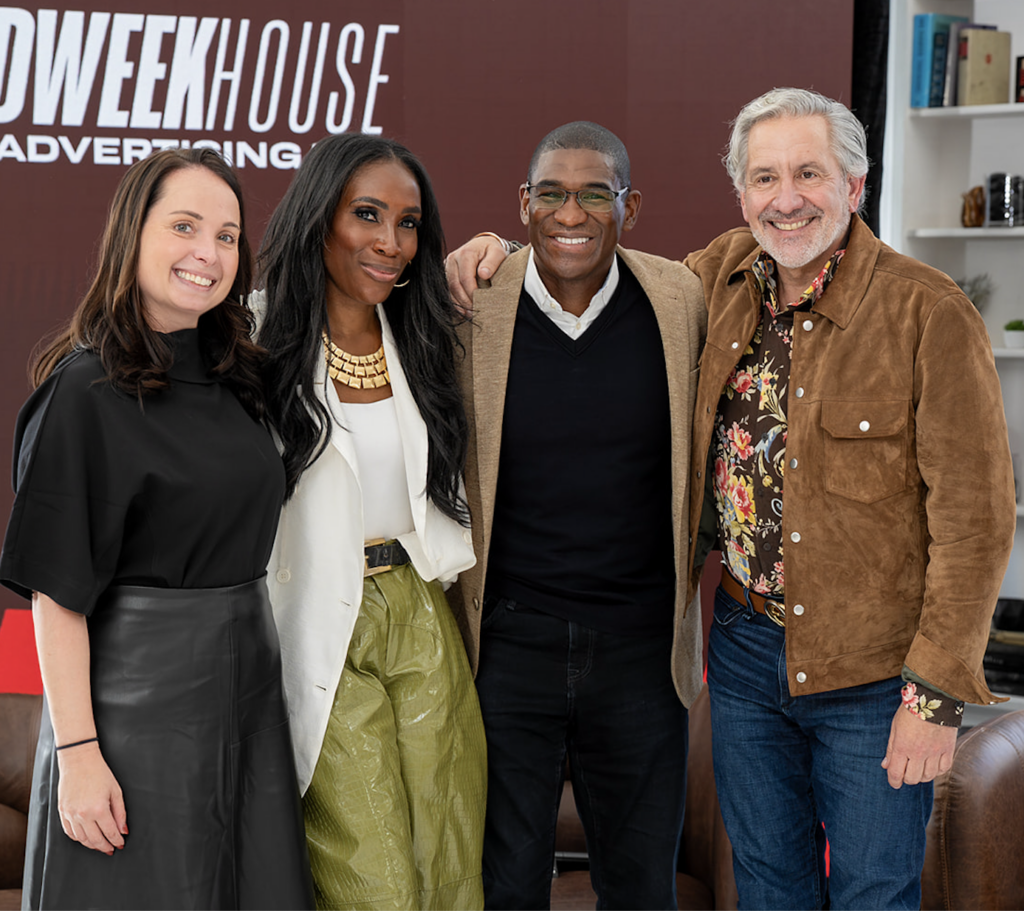
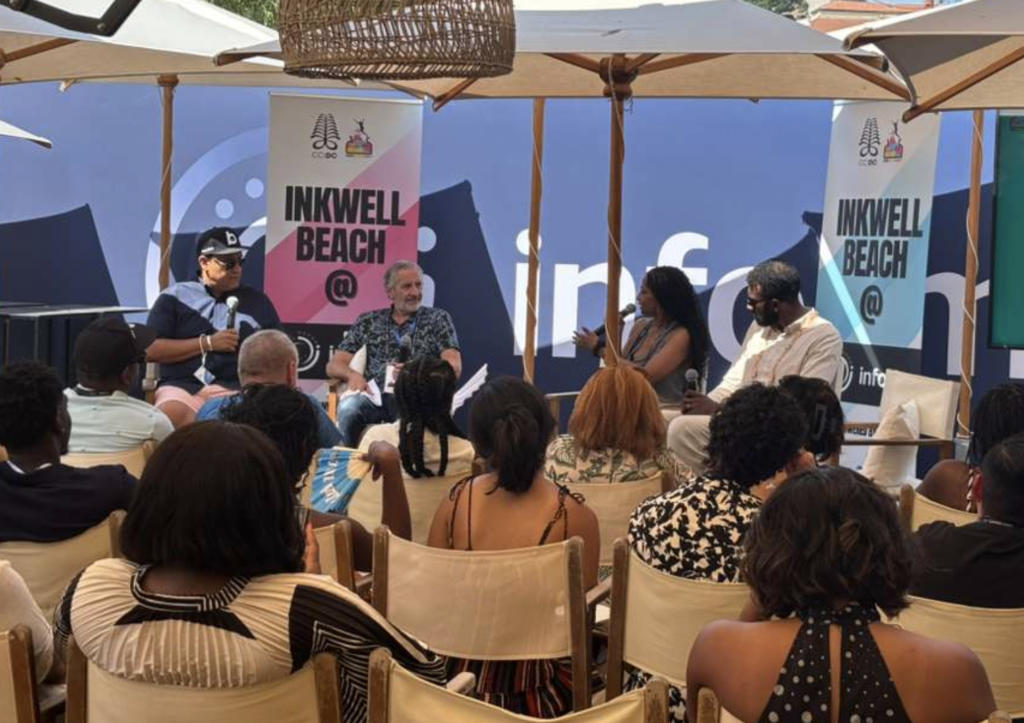
FleishmanHillard’s Global Head of Brand Impact Jim Joseph (second from left) and Chief Inclusion and Impact Officer Adrianne C. Smith appear at Inkwell Beach’s License to Lead: Reclaiming the Art of Storytelling.

AI is finally getting relegated to the side.

For the past three years, every conversation started with AI. AI this, AI that, AI will replace us all. Run for the hills! At Cannes Lions this year, the AI conversation took a different shape. AI showed up as a tool, not the strategy. Humans stayed at the center.

Just take a look at the award-winning work that actually cut through. It wasn’t built by AI. It was built with the help of AI. That distinction is game-changing for how we move forward.

Engagement became participation.

The old model: brands create, audiences consume. Brands engage, audiences respond. Well, that’s over.

The campaigns winning now are moving beyond engagement and asking people to participate and to be a part of the work. To co-create. The audience isn’t a target anymore. They’re collaborators.

Participation breaks into culture in a way engagement never could.

Consumers stopped being transactions.

Here’s what felt most important: brands are finally seeing people again. People. Not demographics, not segments and not customer lifetime value or conversion rates. People.

Real people with real lives, real contradictions, and real humanity. Your work changes when you view your people through that lens. The empathy is different and the insight lands more effectively.

Sports and its adjacencies are the driver of culture.

Sports marketing dominated the conversations at Cannes. Sports (the culture, the tribalism, the meaning around it) is where brands are finding relevance.

Sports has become the heartbeat of culture. And if you’re not thinking about sports, you’re thinking small.

Creators replaced advertising.

Co-creation on creator channels has become the new, pragmatic media with brands showing up in creator spaces, collaborating and building content together instead of buying space for ads. This is a partnership now, far beyond what we used to do with “influencers.”

The divide between brand and creator is collapsing. And that’s the point.

B2B is still sleeping.

I was a little shocked to see that B2B creativity hasn’t caught up yet. I, for one, predicted 2026 would be the year B2B breaks into culture. It hasn’t. The opportunity is there but the creative thinking hasn’t arrived yet.

B2B is still operating in the old playbook. That’s an opportunity for anyone brave enough to actually think differently about it.

So what does this all mean?

We introduced research at Cannes Lions 2026 called “The Chaos Advantage.” The insight underneath it all is that the brands winning right now are the ones comfortable navigating through the chaos, polarization and uncertainty we are facing. They break through it and grow while their competitors sit back and play it safe.

These brands are embracing the unpredictability that comes with real participation, with tools that help them to navigate the risk that is inherently in the system. They work the risk to their advantage.

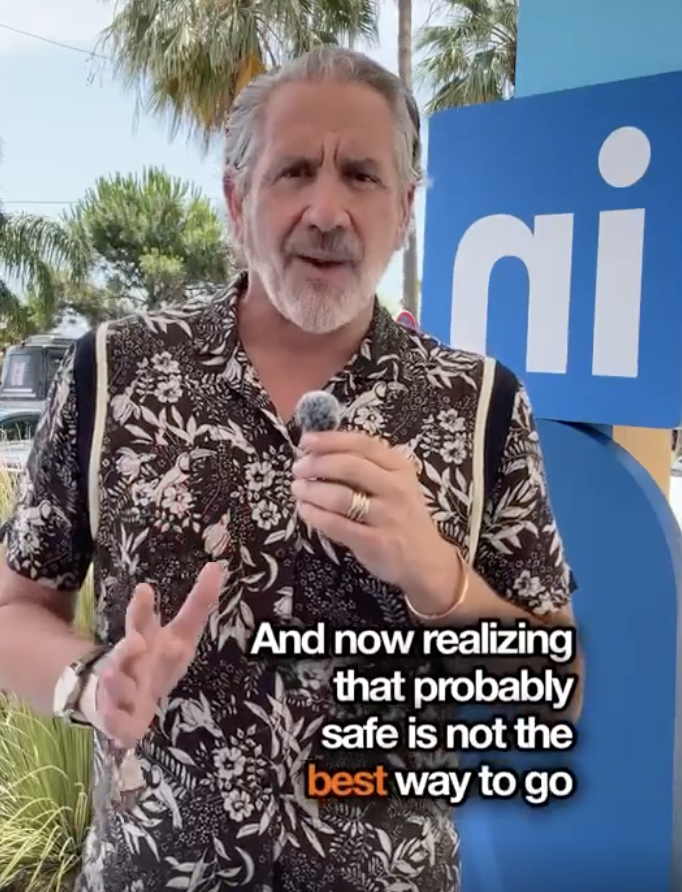
Jim Joseph reports from Cannes: “Safe is not the best way to go anymore. Brands need to be bold again.”

That’s the shift, and that’s what Cannes Lions was telling us.

Marketing is a spectator sport, so let’s all learn from this amazing Festival and elevate our work as a result.

I want to see you on the awards stage next year!

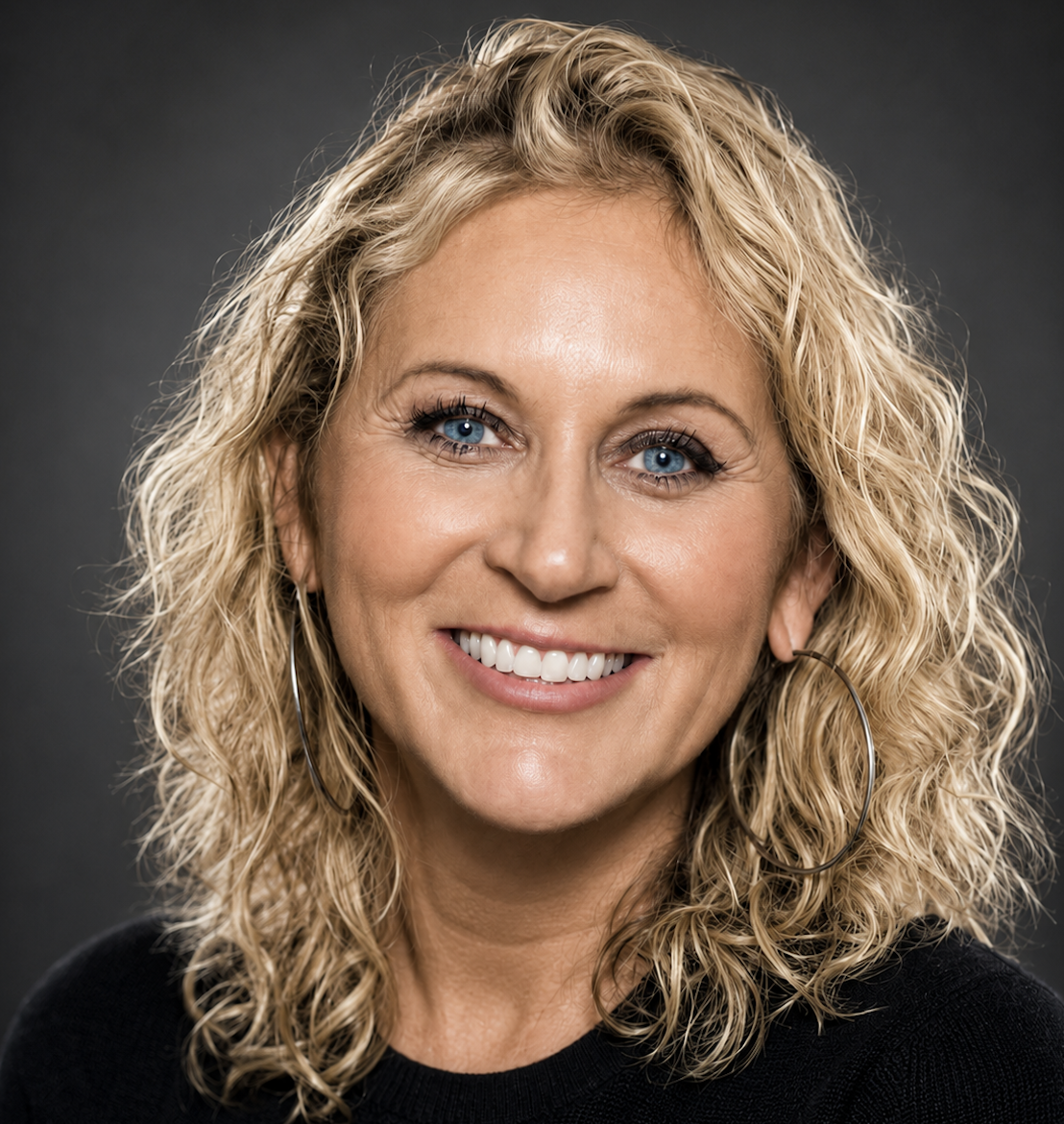
Jim Joseph width= Jim Joseph is FleishmanHillard’s global head of brand impact, responsible for leading global brand business across B2B, B2C and B2G audiences, leveraging communications to enable commerce and business outcomes for the agency’s clients. He is a member of FleishmanHIllard’s Global Executive Advisory.


Article

Cannes Lions Exposed an Industry’s Transition of Power: Takeaways From Winning Work

June 26, 2026
By Cameron Shields

Hot take: PR people have spent too much time defending their existence. Defending budgets. Defending earned media. Defending why communications should be involved before the crisis, not after it. Defending why reputation matters.

But this year, the winning work at Cannes Lions made one thing abundantly clear: PR has moved on. Or up, rather. The business criticality is unignorable. And it’s the new center of gravity.

No more earned media first. It’s earned impact first. And everyone wants a piece of it.

PR Is No Longer Downstream

PR used to be the last stop. A product launches. A campaign gets approved. A crisis happens. Then PR enters the picture.

“Inside the PR Lions Jury Room” revealed what happens when PR moves upstream and shapes the agenda instead of responding to it.

The winning campaigns of 2025-2026 asked:

  1. Could PR free a country from oppression?
  2. Could PR influence government policy?
  3. Could PR turn negative customer feedback into its strongest commercial driver?

The answer was a resounding yes.

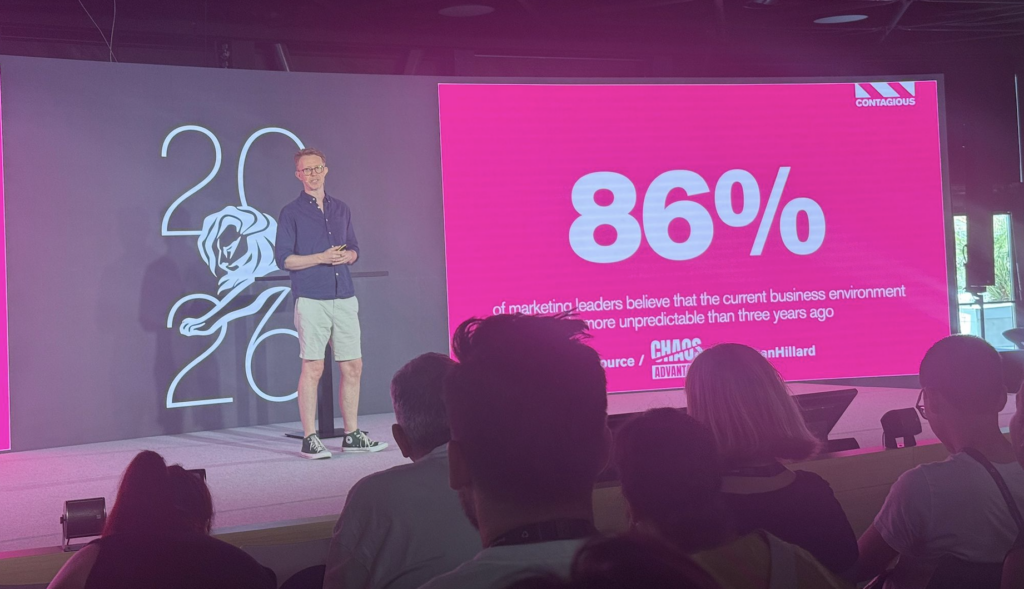
Contagious editorial director Alex Jenkins presents FleishmanHillard research during his Cannes Lions keynote.

When communications can change behavior, influence policy, galvanize communities, ripple culture and create outcomes that matter in the real world, the only thing left to ask is: when will the briefs catch up and what needs to happen to ensure they stay that way?

Upholding the Mantle: Our New Responsibility

One juror put it plainly: “PR is not a nice-to-have. It’s a must-have.”

If securing a seat at the table is yesterday’s battle, the responsibility now is to make communications worthy of staying there.

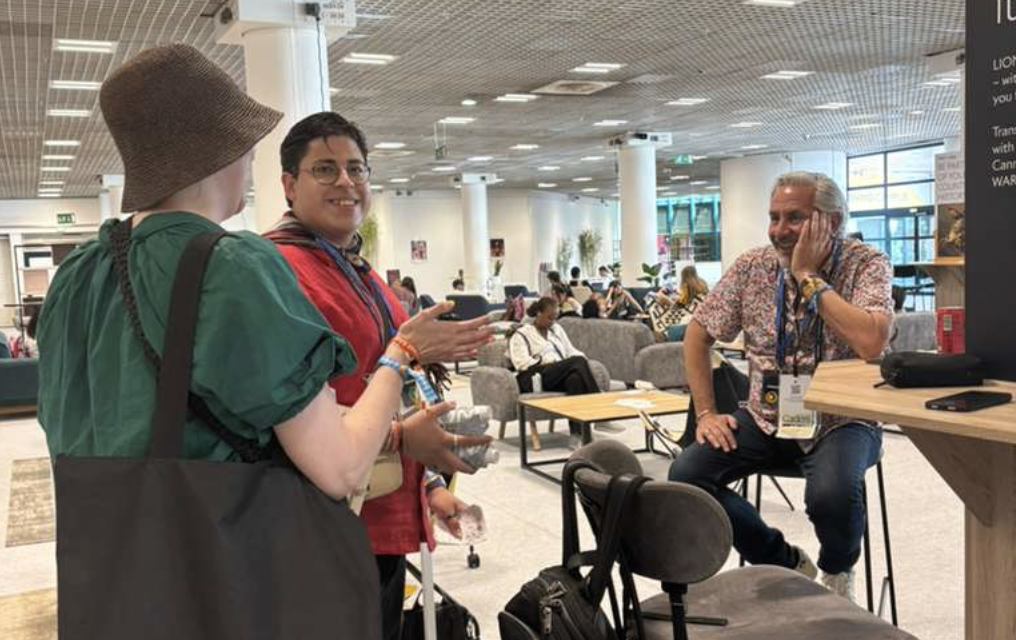
FleishmanHillard’s Young Lions competitors Rebecca Weinstein (from left) and Jonathan Arias catch up with Jim Joseph, Global Head of Brand Impact.

Of the winning work this year, here’s what that looks like:

  1. Simplicity Is a Competitive Advantage. Simplify your programs; elevate the point of view. The Swedish Rx became one of the jury’s favorite examples: a Swedish prescription as a driver for tourism. The brilliance was in commitment rather than complexity. And while the execution expanded into multiple touchpoints, the idea remained pure. No twenty-slide explanation required. The jury repeatedly warned against a trap PR falls into all the time: “And then we did this. And then we did this. And then we did this.” Layer after layer until the idea disappears under the weight of its own presentation. Be integrated, but be clear.
  2. Bring Levity in a Heavy World. While “nostalgia” wasn’t on repeat this year, the draw of escapism was still strong, but evolved into something closer to whimsy. Humor even. Effervescence in a weighted world. Not self-aware brand snark. Actual fun. The Swedish Rx is a great example. Attention can once again be earned through delight just as much as through purpose.
  3. The Human CEO Is Finally Replacing the Corporate CEO. Don’t Revert. Gone are the days of the polished script. People are craving leadership and that’s coming through in the creative idea, not just the executive talk track. Campaigns from brands like Burger King and Columbia Sportswear reflected a growing appetite for executives who participate rather than perform. One standout example involved a CEO sharing a real phone number and actually listening. Accessibility became the story, transparency became the strategy, participation the platform. For years, communicators have focused on protecting executives. The next era is about connecting them. In a conversation with Fast Company and Inc.’s Stephanie Mehta, one of the top themes she observed was executives letting their guard down. Throw out the old script for good and lead through connection.
  4. Reputation Equals Brand, and Vice Versa. The distance between crisis and opportunity has evaporated. If there was one piece of work that captured where PR is heading, it was the KitKat Heist. A communications idea that won both PR and Crisis. Rather than lawyer a presented problem, it acknowledged reality, then flipped it into participation, challenging the age-old notion that crisis communications is only about containment. Reputation and brand together, in harmony, reduce friction and create opportunity. That’s what gives communicators the license to lead, not just operate.
  5. Business to the Center. While creative will always balance art, intuition and intelligence, evidence is still key. Prove the work is working for the business, or risk moving back to the sideline.

What PR Leaders Should Do Next

  • Stop measuring success by visibility. Start measuring movement, connectivity and effect.
  • Build ideas that people can participate in, not observe. Less flash in the pan, more longevity.
  • Trade safety for conviction.
  • Stop chasing culture. Understand its currents and contribute.
  • Bring your leaders closer to people.
  • Move faster. Intelligently. If uncertainty is the only thing we’re certain about, stop retreating. With reputation and brand at the center, you can turn a challenge into growth. That’s the Chaos Advantage.

PR leaders know the industry has already evolved. The only remaining question is whether the rest of us are still operating under the old definition.

Cameron Shields width= Cameron Shields is FleishmanHillard’s Global Head of Consumer, Brand Impact .
 

Article

The Chaos Advantage: How Brands Win in a Volatile World

June 25, 2026
Contagious Editorial Director Alex Jenkins presents FleishmanHillard’s Chaos Advantage research during his keynote at the Cannes Lions Festival of Creativity.

At Cannes Lions 2026, Contagious editorial director Alex Jenkins opened his main stage keynote How to Win in a Volatile World‘ with a simple provocation: the defining characteristic of this decade is unpredictability and organizations can no longer afford to treat it as temporary.

Our new Chaos Advantage research reinforces the point. 86% of marketing leaders say the current business environment is significantly more unpredictable than it was just three years ago and 78% expect to operate under moderate to high uncertainty for the next 12 months. Jenkins argued this is not a moment to wait out. It is the new condition and it demands a fundamentally different response.

Part of that response, he said, comes down to where organizations look for answers. Jenkins cited Richard Rumelt, widely regarded as one of the most influential strategic thinkers in the world, who told him that for any brand, studying competitors in the same category is significantly less effective than looking well outside it. The further afield, the better. In volatile conditions, the organizations that adapt fastest are the ones drawing from the widest range of signals.

What ‘The Chaos Advantage’ Research Shows

We surveyed 1,000 senior marketing and communications leaders across five markets in North America, EMEA and APAC. The findings expose a costly gap between conviction and action.

The pressure shows up in the work. In the caution from legal. In that one phrase that ends every good idea: “Can we make it a little less?” A little less provocative. A little less like it has a point of view.

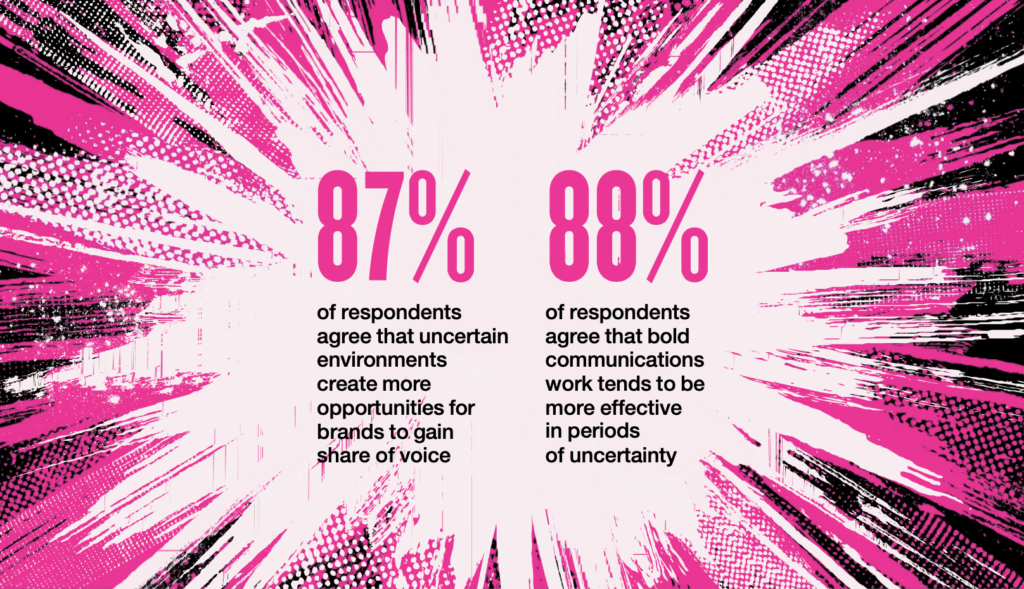
88% of respondents believe bold work outperforms safe work. 78% say their organizations produce mostly safe work anyway. The instinct driving that gap is risk management. The data suggests it isn’t working. Safe brands and bold brands experience public backlash at exactly the same rate: 1 in 5 for both.

The competitive cost of waiting is concrete. 42% of leaders say they have watched a competitor take market share while their own organization hesitated. 66% say their internal risk management processes block action more than they enable it. Safe work doesn’t avoid failure. It disguises it in a way most brands aren’t accounting for. In a permanently chaotic world, caution is no longer a risk mitigation strategy but a risk multiplication strategy.

The Creative Argument

The same instinct that produces safe work is now reshaping how organizations respond to AI. The technology competes on cheap and fast. For companies already defaulting to caution, that framing is easy to embrace. Jenkins argued it is also a trap.

Cheap and fast are objective measurements that lead to a race to the bottom and, ultimately, commoditization. Good is subjective and has the power to override both. Jenkins pointed to Christopher Nolan shooting the upcoming “Odyssey” on IMAX film, knowing the format is expensive and cumbersome because he still knows what the story requires and what audiences need.

The brands that sustain value have redefined what good means in their category. None of them won by getting cheaper or faster. This matters more now, not less. Consumers are living under sustained uncertainty, and the brands that break through are the ones that create meaning, build memory and deliver something that feels genuinely human.

Jenkins put it plainly: “You must build a system to not just defend creativity, but to valorize it. A system that champions the incredible power of value creation and creativity’s role in that. Because your business is not to make things cheaper or faster. Your business is to create.”

What’s Next

FleishmanHillard is sharing early findings from The Chaos Advantage this week at Cannes Lions. The expanded report, developed in partnership with Contagious, publishes in September 2026.

Article

Get Bold Work Out Into the World: How to Seize the Chaos Advantage

By Cameron Shields

After more than 15 years advising some of the world’s largest brands through reinventions, crises, cultural shifts and periods of profound uncertainty, I’ve learned something we’ve intuitively known all along:

The moments that feel riskiest are actually the moments that demand the most conviction. And playing it safe is the riskiest move of all.

That was the underlying theme I heard across the Croisette this week at Cannes Lions 2026.

Lou McEwan from McLaren shared a staggering statistic: 50% of McLaren’s audience is new over the last decade. That’s not an audience challenge. It’s a reminder that many of the assumptions we built brands around are quietly expiring.

On stage, Marisa Thalberg, EVP & Chief Customer and Marketing Officer of Catalyst Brands, put it even more directly: “I’ve been brave because actually I’m afraid not to be.” That sentiment surfaced repeatedly throughout Cannes.

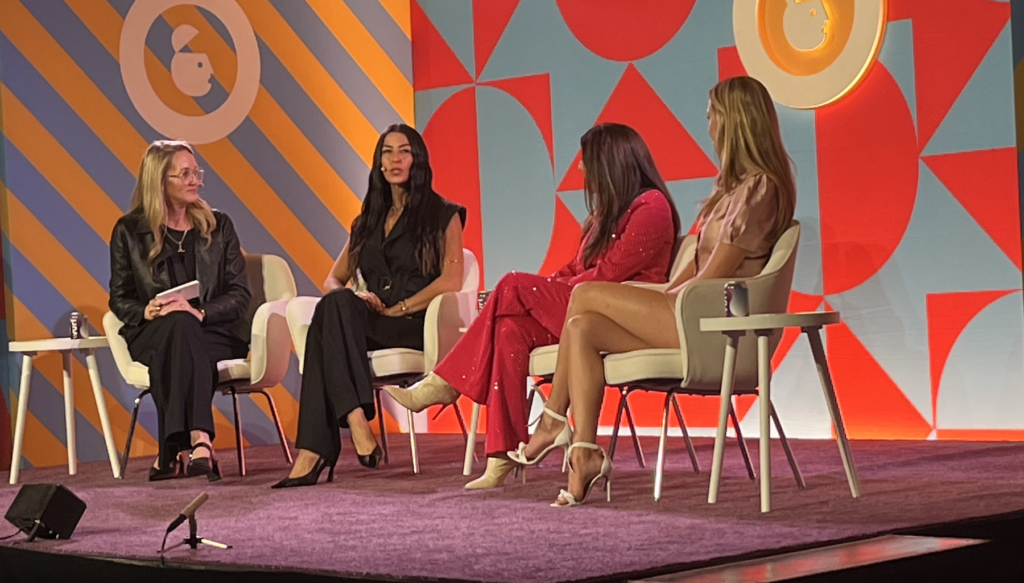
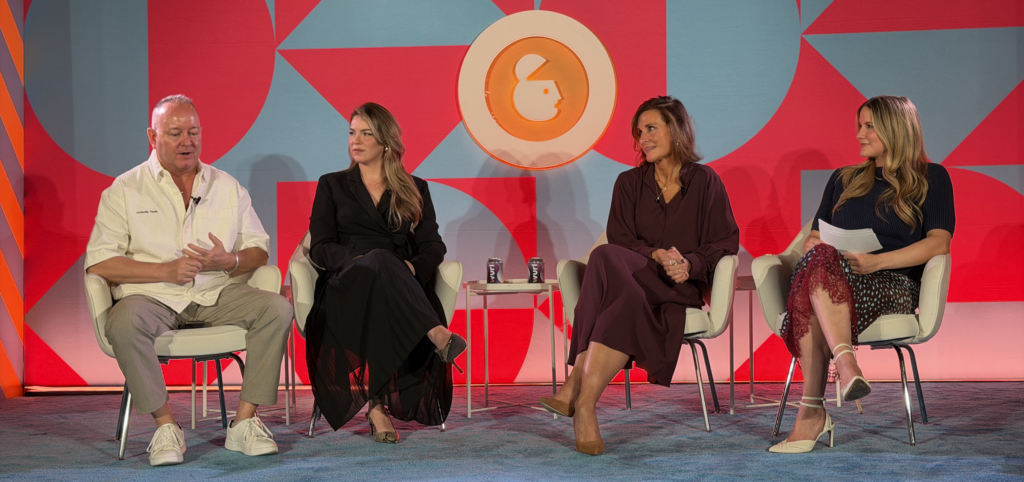
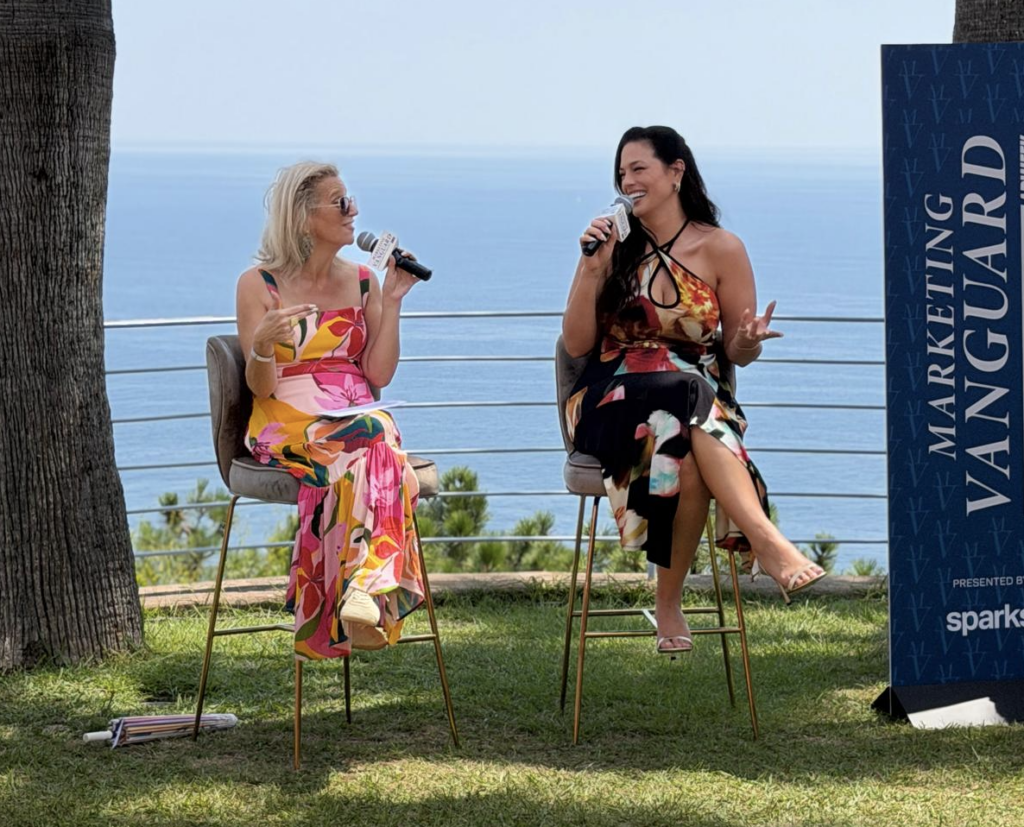
Marisa Thalberg, EVP & Chief Customer and Marketing Officer of Catalyst Brands (left) and Ashley Graham at the Marketing Vanguard Excursion at Cannes Lions 2026.

Consumers are changing. The same tricks won’t work. Culture is fragmenting. Trust is harder to earn. Attention is harder to keep. And yet so much marketing is still optimized to avoid mistakes rather than create momentum.

One deeper challenge kept following me from stage to stage: The demand for performance has become performative, forcing some of the best marketers in the world into a cycle of retreat.

Somewhere along the way, organizations became obsessed with proving value now instead of creating it.

Yet the most compelling conversations at Cannes weren’t about choosing between brand and performance, reputation and growth, or creativity and data. They were about recognizing those are false choices.

In fact, many of the CMOs drawing the biggest crowds were making the same argument: risk isn’t something to mitigate. It’s a capability to build.

Which brings me to what may be the defining challenge facing modern marketers:

How do you get bold work approved and shipped?

The challenge isn’t conviction. It’s getting bold, smart work through the system.

At Cannes, FleishmanHillard and Contagious unveiled new research: The Chaos Advantage. The findings validated a tension many marketers have felt for years.

88% of marketing leaders believe bold work is more effective. Yet 78% say their organizations produce mostly safe work. The overwhelming majority of leaders already believe bold work wins.

But what does that tension actually mean in practice?

If bold work becomes controversial, the answer is the same: better intelligence.

One of the most fascinating conversations at Cannes came from Craig Brommers, reflecting on one of the most polarizing campaigns of the past year.

At launch, the infamous Sydney Sweeney-helmed campaign had helped drive a 25% increase in stock value.

Then Brommers’ high school daughter came home and told him, “Dad, you’re getting canceled on TikTok.”

The tension was real. But instead of reacting to the loudest voices, the team went to the data.

Traffic was up. Transactions were up. New customer acquisition was up.

They quickly commissioned research to understand how actual customers—not social media commentators—felt about the campaign.

That intelligence helped guide decisions that ultimately contributed to a 180% increase in stock value.

When asked what got them over the finish line, Brommers’ answer was simple:

“Real-time data allowed us to make the right decision not just for social media and outside voices, but for the business.”

That’s the difference between reckless risk and informed confidence.

Too often, risk management has evolved from an enabling function into a veto function.

Our research found that 66% of marketers say risk management blocks more than it enables. Bold work takes an average of seven days to approve. Safe work takes three.

That delay may seem manageable in isolation. But multiplied across approval cycles, cultural moments and competitive opportunities, it becomes a growth problem.

Almost half (42%) have watched competitors capture a cultural moment simply because they moved faster.

Most telling of all, 85% agree delayed decisions cause more damage than imperfect ones.

Yet many organizations continue to operate as if the greatest threat is making the wrong move.

The greater threat is making no move at all.

That same tension surfaced throughout Cannes:

In creator marketing, the conversation is no longer whether creators matter. The question is whether brands can loosen control enough to preserve the authenticity that makes creators effective in the first place.

In women’s sports, the opportunity isn’t simply increasing investment. It’s having the conviction to build fandom, tell richer stories, and establish credibility before the rest of the market catches up.

Different categories. Same challenge.

The organizations pulling ahead aren’t taking bigger risks. They’re making better decisions faster.

That’s why I believe the most important insight from Cannes isn’t that chaos exists. It’s that chaos can be an advantage.

For years, organizations have treated uncertainty as something to defend against. The brands creating disproportionate growth are treating it as an opening to challenge category conventions before competitors do.

An opening to build relevance while others are waiting for permission.

The irony is that cautious behavior doesn’t necessarily create safer outcomes.

Our new data showed bold brands experience backlash at roughly the SAME rate as cautious brands.

The difference is whether something meaningful was created in return.

So how do we seize the Chaos Advantage?

From what we’ve seen, it isn’t bigger budgets. It isn’t louder ideas. And it certainly isn’t fearlessness. It’s confidence built through evidence.

The organizations getting bold work into the world are doing three things differently.

✅ They distinguish perceived risk from actual risk.

✅ They use predictive intelligence to understand how stakeholders are likely to respond before decisions are made.

✅ They build approval processes designed to accelerate decision-making rather than slow it down.

This is where agencies must evolve. Our role isn’t simply to generate ideas. It’s to help clients move.

To expose where risk management has become a veto function instead of an enabling one.

To distinguish perceived risk from actual risk. To bring together reputation expertise, cultural fluency, predictive intelligence and creative ambition into a single decision-making framework.

To provide the evidence, guardrails and intelligence that transform “that’s risky” into “we can stand behind this.”

The brands moving fastest aren’t ignoring risk. They’re building systems that allow them to move confidently within it. That’s how bold work gets approved. That’s how bold work gets shipped.

And increasingly, that’s how growth happens.

Cameron Shields width= Cameron Shields is FleishmanHillard’s Global Head of Consumer, Brand Impact .

 
Article

The Action Gap: Leaders Know Bold Work Wins. They’re Just Not Moving Fast Enough.

June 23, 2026
By Colleen McTaggart

88% of marketing leaders believe bold work is what drives results, yet 78% admit their organizations mostly produce safe work. That’s the action gap.

We spotted this tension in our new Chaos Advantage research, based on a survey of 1,000 senior marketing and communications leaders around the world. The study reveals just how costly the gap between knowing and doing has become.

The gap doesn’t start in the brief. It starts in the room where the brief gets approved. Leaders don’t lack conviction. They lack cover. They want the big idea, but they want it armed with evidence, guardrails, and real-time intelligence. Because a great idea without a great argument is just an expensive mistake.

That’s the tension. We know bold works. But bold without proof feels reckless. And in an environment where every dollar is scrutinized, bravery needs backup.

But what does BOLD really look like?

On day one at the Cannes Lions International Festival of Creativity, humanity showed up everywhere in the winning work. Bold, unapologetic, and perhaps hidden in plain sight.

FleishmanHillard’s Global Head of Brand Impact Jim Joseph (second from left) and Chief Inclusion and Impact Officer Adrianne C. Smith appear at Inkwell Beach’s License to Lead: Reclaiming the Art of Storytelling.

Novartis’s Relax Your Tight End tapped into the very human fear of a colonoscopy, using humor to reframe an uncomfortable conversation and make it approachable.

Beat Cancer Off leaned into another undeniable human truth: people masturbate. Instead of avoiding that reality, it embraced it—boldly encouraging men to do more of it in the name of early cancer detection.

Viagra found a way around strict advertising regulations in China by creating hilariously blue branded products—sex innuendos brought to life. If we can’t talk about sex, let’s talk about sex without talking about it. A perfect example of creativity subverting the rules.

And then there was Not Manufactured Reviews – not polished copy or over-engineered messaging, but the real, messy, human words people use when they actually experience a product. Maybe the most innovative product demo of all.

The common thread? None of this work spoke to “consumers.” It spoke to people. And that’s the truth: we are humans first.

The same should be true of marketing. The best ideas don’t target consumers—they connect with humans.

But connection alone isn’t enough. To get brave work through the system, it needs both instinct and infrastructure. The human truth, backed by the right proof.

So maybe the question we should ask ourselves isn’t, “What will perform?”

It’s: What is the beautiful truth of being human here?

That’s where bravery lives. That’s where courage starts.

I’ll leave with something our client and Catalyst CMO Marisa Thalberg said on stage with Ashley Graham at The Female Quotient:

“Listen to what people are saying about your brand, look for the signals, and then blow wind onto them.”

So is the most audacious thing a marketer can do simply this: act on what we already know?

Because doing what we believe doesn’t require a secret formula. It requires something much simpler: humanity. The rest is just the proof to make others believe, too.

And maybe that’s the point. The best creative work doesn’t start with the “consumer” lens. It starts with the human lens.

Colleen McTaggart width= Colleen McTaggart is a global executive creative director based in Chicago.

 
Article

The Chaos Advantage: FleishmanHillard Research Finds Caution Has Become the Riskiest Strategy in Marketing

June 22, 2026

CANNES, June 2026 – New global research from FleishmanHillard finds that in a sustained climate of uncertainty, playing it safe is no longer a risk management strategy. For many brands, it has become a risk multiplication strategy.

The Chaos Advantage, based on a survey of 1,000 senior marketing and communications leaders across five markets in North America, EMEA and APAC, examines how volatility is reshaping the decisions brands make and the work they are able to produce. The findings reveal a significant and costly gap between what leaders know and what their organizations are doing.

Four findings stand out:

The Action Gap: The overwhelming majority of leaders believe bold work wins, yet most say their organizations produce mostly safe work. Read More on Cannes’ Boldest Work

The False Safety of Caution: Safe brands and bold brands experience public backlash at exactly the same rate, 1 in 5 for both.

The Competitor Cost: 42% of leaders have watched a competitor take market share while their own organization waited.

The Structural Problem: Over two thirds say their own risk management processes block action more than they enable it.

More on the Chaos Advantage: Why Playing It Safe Is the Riskiest Move

FleishmanHillard is sharing early findings this week at Cannes Lions. The full report, developed in partnership with Contagious, will publish in September 2026.

On Thursday, the research will be featured in the main stage keynote How to Win in a Volatile World.

About FleishmanHillard

FleishmanHillard is a global strategic communications consultancy combining corporate affairs and brand impact expertise at scale. Following the integration of Porter Novelli, FH now serves clients across health and life sciences, technology, financial services, retail and consumer, food and agriculture, manufacturing and energy and government and public sector. The firm’s competitive advantage combines deep sector expertise with proprietary intelligence (TRUE Global Intelligence), the industry’s leading data and AI infrastructure, and Global Executive Advisory, a strategic network of over 50 senior advisers who help C-suite leaders navigate complex situations and transformative change. FleishmanHillard was named PRovoke Media’s Data-Driven Agency of the Year 2026, the 2023 PRWeek U.S. Agency of the Year; 2022 and 2023 PRWeek U.S. Outstanding Extra-Large Agency of the Year; and 2023 Campaign US PR Agency of the Year. FleishmanHillard is part of Omnicom Public Relations.