Employee Login

Enter your login information to access the intranet

Enter your credentials to access your email

Reset employee password

Article

Stop Watching the Labubu. Watch What It’s Hiding. 

October 12, 2026
By Sara DaVanzo

Culture is squealing and Advertising Week was listening.

Last week, I spent the entire day locked in on Advertising Week’s Insights Stage. It was a marathon of back-to-back talks and the topics were all over the map: Labubu and cultural timing, ROAS (Return on Ad Spend) and the CFO, trade-press editors and AI detectors, breast cancer research funded at the beauty counter, livestreams and founders who overshare on purpose. The speakers ran from Canvas8 strategists and Analytic Partners modelers to Ad Age and ADWEEK editors and Rebecca Minkoff.

None of these sessions should have had anything to do with each other. Yet they kept circling the same few ideas.
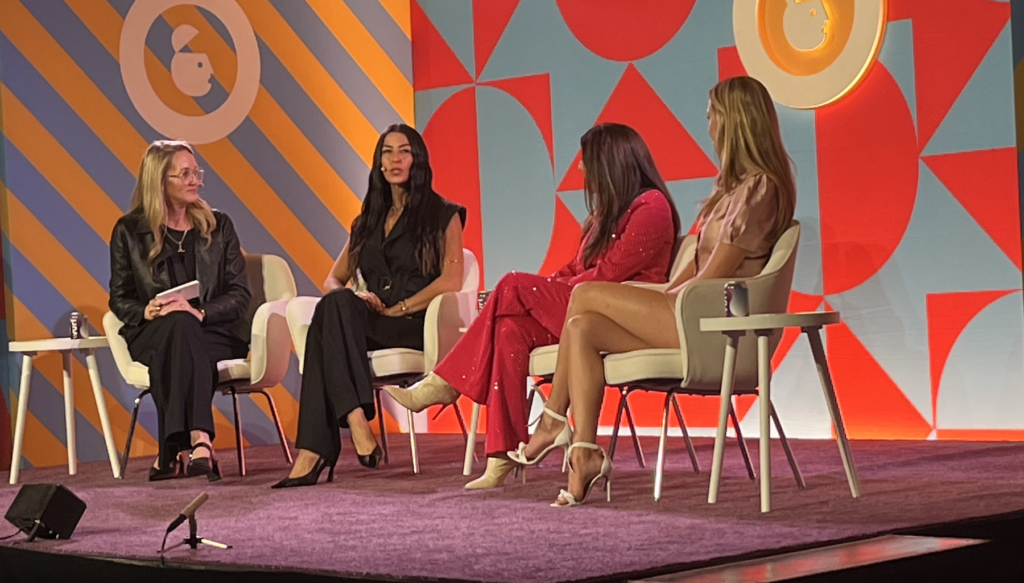
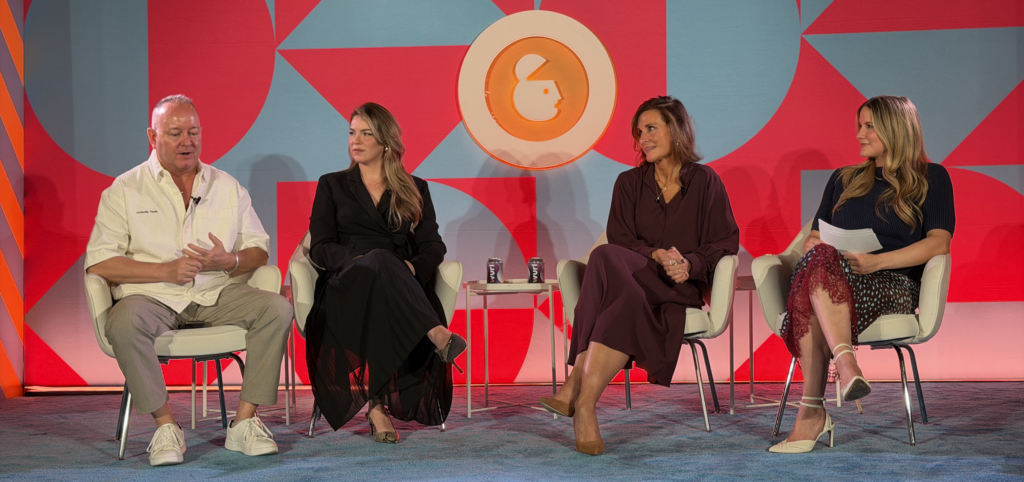
Wendy Naugle (USA Today), Rebecca Minkoff (Female Founder Collective), Mindy Kaplan (Million Mammograms) and Miranda McKeon (Pink 365) onstage at the “Power of an Overshare: How Unbreakable Brands are Built” panel.

The Common Threads

Five themes surfaced in almost every session:

  • Receipts beat persuasion. Finance wants incrementality but editors want proof, numbers and real access.
  • Participation beats portrayal. Ulta associates told their own stories.
  • A story needs a next step. One billboard linked a QR code straight to mammogram booking. Representation only counts if people can actually get the product.
  • The org chart gets in the way. Social budgets sit apart from retail budgets and marketing apart from finance. Management layers keep leaders away from the customers they serve.
  • Human authorship is getting scarcer, and worth more. Editors are rejecting AI-written bylines and asking for “expert writes first.”

Those are the obvious threads. As a futurist, I look to find the ones that aren’t obvious.

The Non-Obvious Threads (aka the foresight layer)

  • The need outlives the object. Labubu, flights with no entertainment, GLP-1 chatter: each is a container for a deeper shift. Foresight tracks the tension underneath, not the toy on top.
  • Time is the hidden variable. ROAS rewards the click while brand pays off over years. Editors need hours for some stories and weeks for others. Whoever controls the time horizon controls the strategy.
  • Drift is a leadership disease. BlackBerry didn’t fail at forecasting. It fell in love with the assumptions behind their last win and historical data. Foresight is a management habit.
  • The future arrives from the edges. It came through rural communities, young survivors and founders willing to say the quiet part out loud. Signals are found on the periphery.
  • Vulnerability can be an early-warning system. One overshare showed why followers were putting off mammograms. A briefing that ends with “no story” is still data. Discomfort is often a signal arriving early.

Why bold, why now

As the leader of FleishmanHillard’s Culture Foresight capability, I see that last point every week. Most organizations notice the signal and then flinch…too…late. Case in point, in chaos, most of us rely on four reflexes:

  1. Fight
  2. Flight
  3. Freeze
  4. Fawn

The Chaos Advantage, our new study with Contagious, argues for a fifth move:

  1. Flipping the script!

That means changing the situation so completely that your competitors lose the advantage they were counting on.

The best moves in chaotic times are bold moves, because caution turns out not to be safe. In our research, safe brands and bold brands faced public backlash at identical rates. Fifty-eight percent of leaders said missing an opportunity through caution happens more often than paying for a bold move. Playing it safe doesn’t lower the risk. It just guarantees you lose the upside.
The stage was full of script-flippers.

  • Estee Lauder and Ulta turned the beauty counter into a public health announcement for breast cancer awareness.
  • Amazon made livestreaming a source of both social clips and paid ads, giving siloed social and paid media teams a reason to plan together and share content.
  • Analytic Partners didn’t fight finance for more budget. It started speaking finance’s language.
  • Rebecca Minkoff overshared her struggles building her business, which drew female founders out of the woodwork and into the Female Founder Collective.
  • A diagnosis became a billboard, and the billboard became a booking, and the bookings became a community: Million Mammograms.

In each case, the move changed the terrain – flipped the script – instead of trying to win on it. Think: when they zig, you zag…or leapfrog. Chaotic times require different tactics: not chaotic tactics, but strategically bold.

What this means for us

For those of us in agencies and in-house teams, the job is changing. We can’t keep spotting trends and filing them away. Foresight has to become a decision system: watch, test, act, with an owner and a review date. Additionally, Foresight can no longer be grounded in historical precedent and linear, predictive algorithmic forecasting because a chaotic future is not a straight line. Culture now moves faster than our approval chains, AI is accelerating culture, and chaos is the hallmark of cultural context. The brands that win will be the ones that build systems favoring agility, paradigm shifts and boldness.

I left the Advertising Week Insights Stage convinced of one thing. The future isn’t hiding. It’s in plain sight, sitting on a stage in midtown NYC, waiting for someone brave enough to act on it.

In chaotic times, the riskiest move is the one everyone agrees is safe. The Insights Stage told the same story again and again: the marketers that win the future will flip the script before chaos flips it for them.
Cameron Shields width= Sarah DaVanzo is a global integrated marketing communications leader and head of FleishmanHillard’s Culture Foresight and Innovation capabilities, Sarah writes for Rolling Stone and Fast Co. and is the author of Exotic Thinking: A Code to Innovating in the Age of AI (Wiley, April 2027).
 
Article

The Chaos Advantage Is Yours for the Taking—If You Listen

October 9, 2026
By Cameron Shields

The case for marketing moving from broadcast to participation

I think we have been asking the marketing mix to do the wrong job.

For decades, we organized marketing around distribution: paid, owned, earned, social, creators and experiences. How do we get our story into the world, and how do we make it travel?

But culture moves too quickly for a campaign calendar to tell us what matters. Communities are too fragmented to behave like a single audience. A competitor can change the temperature before the next planning meeting.

Today, the story isn’t ours to own.

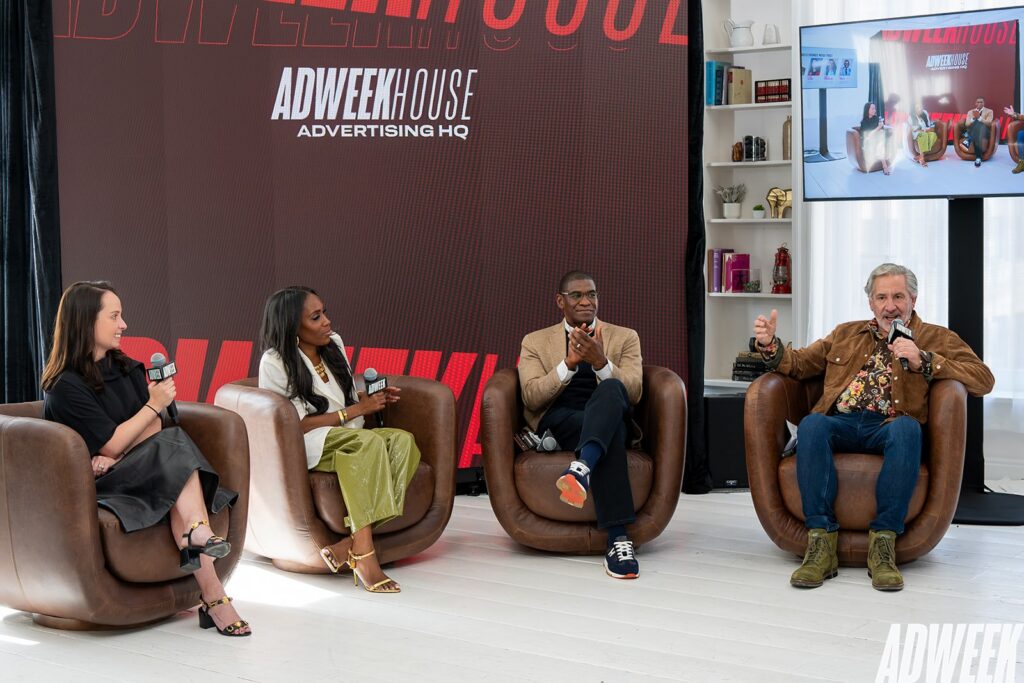
During Advertising Week, FleishmanHillard took the ADWEEK House HQ stage with Elyse Blouin of Lowe’s, Janelle Panebianco of Papa Johns and our client AJ Jones II of Monumental Sports & Entertainment to discuss how their experiences in modern marketing track against our new study, The Chaos Advantage. Their perspectives were different, but the theme persisted: in a fragmented culture moving at extraordinary speed, the brands that move first, rather than wait, aren’t the ones acting on everything, but they are the ones listening hardest. Watch the Full Panel Here

Panebianco said it best: “Culture moves faster than the speed of light. There is no longer one monoculture to follow. There are micro-communities. The old linear storytelling journey doesn’t really exist anymore.”

So what do you do? You listen. You use data. You understand where and when your brand has something meaningful to contribute. Then you move.

AD WEEK EVENT
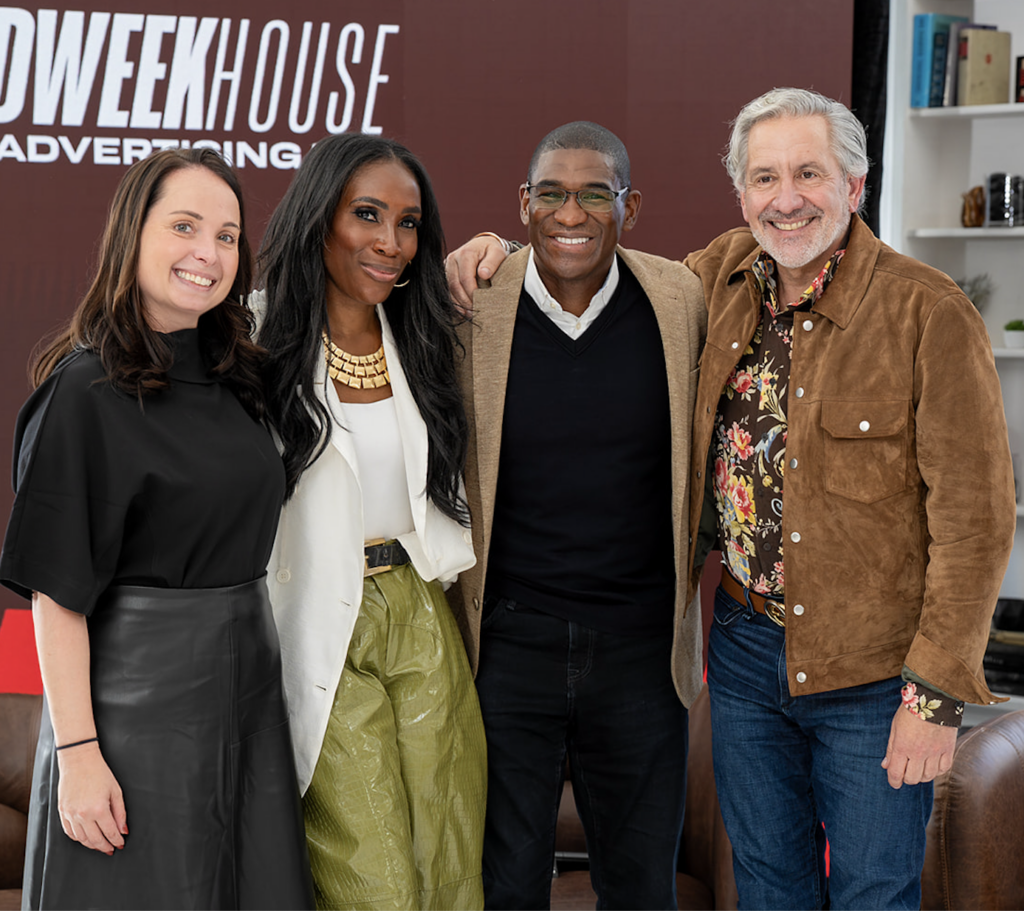
From left to right: Elyse Blouin (Lowe’s Media Network), Janelle Panebianco (Papa Johns) and AJ Jones II (MSE) join FleishmanHillard Global Head of Brand Impact Jim Joseph at ADWEEK House. (Photo Credit: Ivan Piedra Photography)

That is a different definition of speed. Not getting a campaign through approvals faster, but being close enough to culture to recognize an opening while it’s still an opening.

Jones described it as “setting your own table.” No team can wait for someone else to create the conditions for them. In sports, where fans increasingly shape how a team is understood, he described the responsibility to become a kind of cultural utility, creating things that can live in the community, while knowing when to shape culture and when to let culture play.

That idea extends far beyond sports. The most interesting brands today aren’t trying to insert themselves into culture. They are trying to create something culture can use. That requires listening before broadcasting.

One of my favorite examples is the work our client Marisa Thalberg and her team are leading to bring JCPenney back into the cultural zeitgeist. They didn’t begin with a product brief or seasonal calendar. They began with something they heard: “Really, JCPenney?”

There was disbelief, a question mark attached to the brand. So they turned the question mark into an exclamation point. “Yes, JCPenney!” That shift created an entirely different posture, an underdog mentality that gave the team permission to keep listening for moments when the brand was underestimated, and turn them into opportunities:

The point wasn’t convincing people JCPenney had suddenly become something it wasn’t. It was giving them a reason to reconsider what they thought they knew.

That is also why we should rethink where earned sits in the marketing mix. Earned isn’t the ending, it’s the start. It tells us what is gaining traction, what communities care about, where attention is moving. And earned is where the market talks back. That framing can shape the brief before a dollar is spent behind it. The signal should come first.

Elyse Blouin made the same connection from a different angle: “We sit on so much data, and that enables us to move quickly. Then, we give our creator network the keys.” I love that. The brand doesn’t have to control every expression. It needs to create something worth participating in. That’s earning it.

In a second panel at Advertising Week, FleishmanHillard was joined by modern challengers Patrick O’Keefe of e.l.f. Beauty, our client Stephanie Evans Greene of JetBlue and Lexi Wolfe of Contagious, our partner in creating The Chaos Advantage.

From left to right: Patrick O’Keefe (e.l.f. Beauty) Lexi Wolf, (Lions Advisory), Stephanie Evans Greene (JetBlue) and Ellie Tuck (FleishmanHillard) at Advertising Week’s ‘The Cost of Waiting: How Mature Challenger Brands Keep Their Edge.‘

O’Keefe discussed e.l.f. Beauty’s “Zero Distance” approach. The brand reads comments, listens to what its community wants, learns and leans in. All at e.l.f. speed. When 77% of that community said they wanted hair care, e.l.f. launched it. Its CEO goes directly onto Twitch, not to broadcast, but to listen. The community isn’t an audience waiting to receive the brand’s story. It’s helping determine what the brand becomes.

Wolfe got to the heart of it: in a marketplace this uncertain, it’s incredibly expensive to try to own your narrative and broadcast it yourself. The brands winning know what they stand for, but stay flexible about how that meaning shows up. And when they “share the pen,” the effectiveness is magnified.

Being willing to share authorship requires a different relationship with certainty. Evans Greene made the point that being data-centric doesn’t equal certainty. Technology and humanity aren’t competing forces; technology should make human experiences better. As she put it, “humanity is the new luxury.”

So how can we be more human, move at the speed of culture, listen, and be bold, all during a time when predicting what’s next is impossible, and relinquishing control feels uncomfortable?

Get comfortable with discomfort, like your business depends on it.

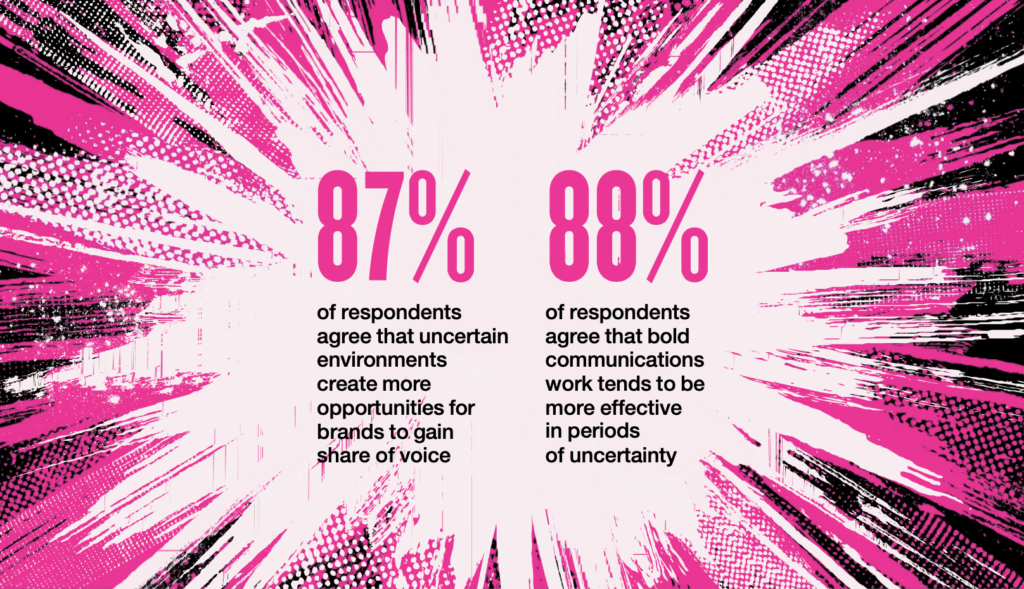
That’s where The Chaos Advantage becomes useful. Our survey of 1,000 senior global marketing and communications leaders found a striking gap: 88% believe bold creative drives impact, yet most organizations still produce mostly safe work. Two-thirds say their risk-management processes block action more than they enable it. Bold work takes seven days to get approved, more than twice as long as safe work. Safe and bold brands experience public backlash at almost exactly the same rate, roughly one in five. We’ve built enormous machinery around protecting brands from backlash. The data suggests caution doesn’t make the outcome safer. It may just make us slower.

Click above to get more Chaos Advantage insights and a playbook for your brand.

Dull, uninspired creative doesn’t just disappear into the feed either. Brand conversion drops 37% and long-term ROI falls 14% when organizations default to it. And 42% of leaders have already watched a competitor take share while they waited.

So the question isn’t whether brands should take more risks. It’s whether they’re listening enough to know which risks are worth taking. And what could we lose if we don’t?

Listening used to be reserved for risk management. Today, Reputation and Brand Impact together are what give businesses the license to lead and grow.

Listen. Notice. Interpret. Create. Participate. Respond. Then put the full power of marketing behind what has earned the right to travel.

Cameron Shields width= Cameron Shields is FleishmanHillard’s Global Head of Consumer, Brand Impact .
 
Article

Watch Now: Make Smarter, Calculated Bets – Live From ADWEEK

October 8, 2026

The world is getting harder to predict—and waiting for certainty may be the riskiest move a brand can make. As consumer behavior fragments, culture moves in real time and outside voices can reshape perception overnight.

We partnered with Contagious on The Chaos Advantage, revealing a striking gap: 88% of marketing leaders believe bold creative wins, yet most organizations still default to safe work. Meanwhile, 42% have already watched competitors capture share while they hesitated. Our panel at ADWEEK House Advertising HQ unpacked when risk becomes strategy, how approval processes can stand in the way of opportunity and why earning attention through culture, creators and communities increasingly requires moving before every answer is known. Discover what it takes to make smarter, calculated bets and turn uncertainty from something to manage into a competitive advantage.

Jim Joseph, Global Head of Brand Impact at FleishmanHillard was joined by Elyse Blouin, VP & GM at Lowe’s Media Network, Janelle Panebianco, VP, External & Integrated Comms at Papa Johns and AJ Jones II, EVP, Chief Strategic & Corporate Communications Officer at MSE.

Watch their full panel discussion below and download the full Chaos Advantage report and playbook.

Video Credit: Inside Shot Productions

Article

The Three Barriers Holding Brands Back From Bold

October 7, 2026
By Jim Joseph

I was onstage at AdWeek HQ for Advertising Week with marketing leaders from Lowe’s, Papa John’s and Monumental Sports & Entertainment in a lively conversation about “Why Bold Brands Move First.” One hour with these pros made it clear why some move first and most don’t.

Ivan Piedra Photography
From left to right: Elyse Blouin (Lowe’s Media Network), Janelle Panebianco (Papa John’s) and AJ Jones II (MSE) join FleishmanHillard Global Head of Brand Impact Jim Joseph at ADWEEK House. (Photo Credit: Ivan Piedra Photography)

It’s not a lack of belief. We’ve read our data showing 88% of marketing leaders believe bold creative wins. That’s not what’s holding brands back. Three specific barriers stand between what leaders know in their hearts and what their organizations actually do. We named them in The Chaos Advantage, our new research and brand playbook with Contagious, built to clear the path to the kind of bold work that moves the needle and lets brands make their mark.

The false-safety paradox.

Brands think staying quiet keeps them safe. It doesn’t. Cautious organizations and bold ones attract public backlash at nearly identical rates, 20% versus 21%. 58% say missing an opportunity through caution happens more than facing real consequences for being bold.

One of our panelists talked about this directly: their brand used to default to wait-and-see, and it took time to realize that playing it safe doesn’t actually help. It just means your competitors pull ahead.

Safety isn’t protecting anyone. It’s just a slower way to lose share.

The wait-and-see tax.

Human instinct says pause and let the danger pass. In this business, that delay is the real danger. Most leaders know it, too; our research backs it up with the vast majority agreeing that a delayed decision can do more damage than an imperfect one.

Another panelist put it in terms of speed itself: culture moves fast. In a world without a monoculture to follow, brands have to arm themselves with data, listen to the smaller communities forming around them and strike the moment they see an opening. There’s no more linear storytelling journey. The window opens once and you either move or you watch it close while you wait.

The machinery of caution.

This one’s structural. Bold work takes seven days to sign off, more than twice as long as safe work. 66% say their own risk management processes block action more than they enable it. Creative approval and campaign launches are the first things to slow down the moment uncertainty hits.

Papa John’s lived this one in real time. When a labor shortage hit during a baseball strike, the brand didn’t wait for a perfect plan. They hired the players. The decision moved fast because the brand already knew what was right for it and had the guidelines to back the call.

Sometimes the playbook is as simple as that. Know what’s right for your brand, have your decision-makers ready to review and approve, then move.

One panelist put the real question to all of us plainly: are you a brand who watches a trend, or a brand who sets one?

Safe is not the best way to go anymore. Brands need to be bold again. That’s what The Chaos Advantage shows and it’s what three brave marketing leaders proved on stage.

Jim Joseph width= Jim Joseph is FleishmanHillard’s global head of brand impact, responsible for leading global brand business across B2B, B2C and B2G audiences, leveraging communications to enable commerce and business outcomes for the agency’s clients. He is a member of FleishmanHIllard’s Global Executive Advisory.
 
Article

New Chaos Advantage Study Shows Caution Has Become the Riskiest Strategy in Marketing

October 6, 2026

Global research reveals how brands can turn uncertainty into bold action and competitive advantage.

FleishmanHillard and Contagious today released a new study, “The Chaos Advantage,” examining how the world’s most successful brands are turning uncertainty into a competitive advantage while most organizations remain paralyzed by caution. Based on an analysis of recent Cannes Lions and Effie Awards winners, along with a global survey from TRUE Global Intelligence of 1,000 senior marketing and communications leaders across North America, EMEA and APAC, the research reveals a striking and costly gap: 88% of marketing leaders believe bold creative drives impact, yet most of their organizations still produce mostly safe work.

Click to Download the New Report and Playbook

Initial research was previewed at the 2026 Cannes Lions Festival of Creativity by Contagious Editorial Director Alex Jenkins during his keynote “How to Win in a Volatile World.”

FleishmanHillard and Contagious will host a series of events across the United States and United Kingdom to explore the findings, provide examples of brands that have leveraged uncertainty as a competitive advantage and highlight modern communications solutions to achieve bolder, business-driving work amid chaos. Conversations will begin at Advertising Week New York, including on Tuesday, Oct. 6 at 1:25 p.m. EDT in the session, “The Chaos Advantage: Why Bold Brands Move First” at ADWEEK House HQ and on Thursday, Oct. 8 at 11:30 a.m. EDT in the Advertising Week Tech Stage session, “The Cost of Waiting: How Mature Challenger Brands Keep Their Edge.”

The research reveals:

  • 87% of respondents agree that uncertain environments create opportunities for bold work.
  • Safe brands and bold brands experience public backlash at identical rates.
  • Two-thirds say their risk management processes block action more than they enable it.
  • 58% say missing opportunities through caution is more common than experiencing negative consequences from bold action.
  • 42% have already watched competitors capture share while they hesitated.

“We’re seeing this pattern where leaders know bold work wins but their organizations can’t seem to approve and execute it,” said Jim Joseph, global chair, Brand Impact at FleishmanHillard. “We commissioned this research to quantify the gap and understand what’s actually blocking action. The answer is behavioral, not strategic.”

The Opportunity Cost of Playing It Safe

The report reveals that dull content requires significantly more investment to achieve results, with brand conversion dropping 37% and long-term ROI falling 14% when organizations default to uninspired creative. The cost of caution is measured not just in missed opportunities but in lost business impact.

”The data makes clear that uncertainty is now the operating condition, not a moment to wait out,” said Ellie Tuck, chief creative officer, Americas at FleishmanHillard. ”Organizations that treat caution as a risk management strategy are actually multiplying their risk. The brands that thrive are the ones taking action despite, and because of, the uncertainty.”

Jenkins added: “The research validates what we’ve seen across award-winning work. Companies growing through uncertainty are those responding with creative conviction rather than hesitation. This is less about recklessness and more about understanding that the operating environment has fundamentally changed and requires a different strategic response.”

Enabling Bold Action Through Better Risk Management

The launch of “The Chaos Advantage” reinforces FleishmanHillard’s new approaches to risk governance in uncertain times. Building on the proprietary “License to Lead” reputation study, the research establishes why bold action matters and how organizations can enable it.

To help clients close the gap between knowing and doing, the firm launched its Crisis, Issues and Risk Solutions Suite, including Risk ID, an expert-guided AI platform that helps teams identify, prioritize and mitigate risks before launch. Rather than blocking action, these tools enable organizations to move with confidence rather than caution, addressing the structural barriers the research identified.

Earning Brand Growth Through Creative Bravery, with Confidence

“There’s a bigger implication here for marketing and communications leaders,” Tuck continued. “The old marketing playbook was built for a world where brands could control the message. That world is gone. Communities decide what’s worth talking about. You can’t buy your way through chaos. You have to know how to move through it. And that’s where modern communications and the ability to predict shifts, earn attention and mobilize influence become a critical engine of modern brand growth. That’s the conversation we want to start.”

Download the full report here or email [email protected] to inquire about a custom consultation or events coming to your region.

Article

The Boldest Brands Turn Chaos Into Competitive Advantage

By Ellie Tuck

You can’t ‘wait out’ chaos any longer. You have to know how to move through it.

Remember when chaos used to be a once-in-a-while moment and then things would return to a predictable, reliable calm? Ahhh, those were the days.

Now, chaos and unpredictability are part of our daily experience. There’s barely a client conversation where some outside threat doesn’t stand in the way of sign-off or execution planning, whether AI-fueled misinformation or culture wars. The unpredictability of our operating environment has become one of the most predictable things about working in this industry today.

And it’s impacting the work. Let’s wait-and-see. Tone it down. Remove our point of view. Rather than avoiding failure, safe work just creates a different kind altogether, one most brands aren’t accounting for. This inspired us to search for the real cost of caution. We asked 1,000 senior marketing and communications leaders across North America, EMEA and APAC and worked with our partners at Contagious to analyze recent Cannes Lions and Effie Awards winners to find out: what is truly safe anymore?

The results are now in and they’re stark. Here are the headlines:

  • 88% of marketing leaders believe bold creative drives real impact, yet most say their organizations still produce mostly safe work. 
  • 58% say missing opportunities through caution happens more often than facing real consequences for being bold. 
  • Safe brands and bold brands experience public backlash at identical rates.  
  • Two-thirds say their own risk management processes block action more than they enable it.  
  • And 42% have already watched a competitor capture market share while they hesitated. 

Dull, uninspired creative isn’t a safer bet either. It drops brand conversion by 37% and long-term ROI by 14%. The organizations willing to act are the ones capturing the attention, the market share and the growth that uncertainty makes available.

This is The Chaos Advantage, our full study released today. The old marketing playbook was built for a world where brands could control the message. That world is gone.

This new kind of playbook is built to help brands do more than just survive. To show them how to plan and prepare for uncertainty as standard. To build systems, teams and marketing muscle to thrive today.

Ellie Tuck width= Ellie Tuck is the chief creative officer of the Americas based in New York.

 
Article

Earning Your License to Lead: UNGA, Climate Week and Beyond

September 17, 2026
By Leela Stake and Judith Rowland

As leaders prepare for another United Nations General Assembly (UNGA) and Climate Week in New York, some things are familiar: hotel prices are astronomical, and there are more events than any calendar can hold. But treating these two weeks as a single moment misses the point. Climate Week focuses more directly on climate commitments, progress and implementation, while UNGA brings together a wider set of global policy, development, business and civil society stakeholders. Done well, both are tests of disciplined leadership — not simply moments for greater visibility.

Impact storytelling faced a reckoning in recent years. Too often, companies made themselves the heroes of their own stories, chasing culture rather than leading with authenticity, and commenting on every issue rather than the ones that truly mattered to their business. Commitments multiplied, often benchmarked against competitors rather than grounded in enduring reality.

That overstatement gave way to a widespread retreat. Now, the pendulum needs to find a steadier center.

Why? Because avoiding any discussion of what a company is doing carries its own risk. License to Lead research from FleishmanHillard found that only 10% of U.S. engaged consumers — those who took three or more distinct actions in the prior year based on a company’s reputation, including research, advocacy and purchasing decisions — say they have “a lot” of confidence that leaders of large companies will act in the best interest of society. Contrast that with 92% who say a company with a strong reputation has more permission to undertake a major business transformation.

For business leaders, this is both a crisis and an opportunity. The baseline confidence that allows companies to act is broken. But that also means there is real room to grow for organizations that genuinely invest in earning stakeholder confidence, of which responsible business is an important ingredient.

The Credibility Test

What truly builds confidence isn’t eloquent reporting or polished messaging. It is integrity and honesty — qualities 83% of engaged consumers say are very important, yet only 16% say leaders of major companies demonstrate often. That gap reflects a real disconnect between what stakeholders value and what they perceive; it is a signal of the modern credibility challenge, not a direct measurement of the difference between what companies claim and what they do.

The research reveals a critical insight for responsible business leaders: stakeholders will accept adaptation if it’s properly explained. What they won’t forgive is the sense that an organization’s values are negotiable — that commitments to sustainability or social responsibility shift with whichever way the wind blows rather than being rooted in enduring principles.

Responsible business priorities may evolve. But companies need to demonstrate what remains constant, why their approach is changing, how stakeholders will be affected and how leadership will remain accountable. Communications should explain and reinforce that work — they cannot substitute for it.

Earning Your License to Lead

Change is inevitable in today’s volatile landscape. What we call a License to Lead is the confidence stakeholders grant organizations to evolve while maintaining legitimacy and support. Earning it requires more than a credible narrative — it requires leadership alignment, stakeholder insight, disciplined engagement, clear accountability and visible consistency between words and actions. This demands four critical practices:

1. Anchor Your Priorities. Ground sustainability and impact efforts in a small number of durable, business-aligned principles and objectives rather than a constantly shifting array of initiatives. Stakeholders are overwhelmed, and clarity builds confidence.

2. Hero the Right Things. Putting the spotlight on the company to “get credit” opens upmore vulnerabilities. Instead, focus on why a specific issue is relevant to the organization and its stakeholders, what the company wants to achieve, measurable impact along the way and the challenges or obstacles and how they are being addressed.

3. Explain Your Why. If evolution is necessary, don’t hide the rationale. Acknowledge what circumstances have changed and what remains constant. Admitting that assumptions shifted isn’t weakness. It’s proof you’re still in control.

4. Structure Execution Around Fairness. When decisions impact communities, workers, or the environment, understand and mitigate those impacts before decisions are finalized — not just when communicating about them afterward. Respectful communications should then explain the work, structured to maximize dignity, not just efficiency.

Putting the Playbook to Work

The four practices above are not abstractions but exactly what leaders should apply next week, and in the weeks that follow.

With UNGA and Climate Week now at hand, the moment for extensive pre-work has largely passed. What matters most is discipline in the days ahead: being selective about engagements, tying them to substantive business priorities and using them to genuinely listen to stakeholders who can inform decisions, rather than simply amplifying announcements. The real test, though, comes after the week concludes. Will organizations assign clear ownership for the commitments they discuss and report progress against milestones stakeholders can track?

Handled this way, UNGA and Climate Week stop being a test of visibility and become a test of discipline — proof that an organization’s License to Lead extends well beyond the time in New York.

Moving Forward

Building reputation and stakeholder confidence comes through disciplined leadership behaviors: clarity, alignment, candor and genuine engagement that proves words and actions are aligned. UNGA and Climate Week aren’t moments to earn credit — they are tests of whether that discipline is real.

Ready to earn your organization’s License to Lead? FleishmanHillard helps organizations align responsible business strategy, leadership decisions, stakeholder engagement and communications. Explore the full research and connect with our team to discover how these findings apply to your organization.

“Judith Leela Stake is Senior Partner and Global Managing Director of Responsible Business at FleishmanHillard, where she advises organizations navigating geopolitical complexity, multi-stakeholder risk and high-stakes reputational challenges at the intersection of impact and business.
Judith Rowland is a senior vice president in the Public Affairs and Engagement group and also serves as global sustainability lead for the food, agriculture and beverage (FAB) sector. She helps clients establish strategies for advancing community reputation and social impact, set measurable goals and communicate their progress with the stakeholders that matter most.

 
Article

The Crisis Counselor as Architect 

August 24, 2026
By Alexander Lyall

Do not ask how AI can make your work faster. Do not ask AI to help you draft a better holding statement. Instead, ask yourself how you make a judgement call?

Allow me to explain…

A language model can draft a plausible statement in seconds. But crisis counsel begins well before the statement. It begins with deciding what happened, what remains unknown, who is affected, which risks are material, what the organization must do and whether speaking publicly will improve or worsen the situation.

Much of that reasoning has never been formally documented. Crisis communications remains an apprenticeship profession. Practitioners learn by watching experienced colleagues separate signal from noise, identify the real issue beneath a media inquiry, weigh legal and reputational concerns, and recognize when an organization should speak, prepare privately or act before communicating at all.

AI is forcing the profession to make that expertise visible through a defined operating system.

The real opportunity is not to ask technology to imitate the final output of an experienced counselor. It is to map the reasoning that precedes that output, then determine where AI can make the process faster, more rigorous and more consistent.

That work changes the role of the counselor. The AI-era crisis counselor must become an architect.

An architect does not simply produce an answer. An architect designs the system that produces better judgment. That means defining what information is required, which questions must be asked, where decision points sit, when escalation is necessary, what can be accelerated and where human accountability must remain.

We encountered this directly while building AI-enabled crisis and risk solutions at FleishmanHillard. Leveraging the technology was a challenge, but the harder work was documenting how experienced counselors think.

Before building an AI-supported risk assessment, we had to define how a counselor determines whether a potential risk is material. Volume alone is not enough. A widely shared social post may be inconsequential, while a low-visibility employee concern or regulatory inquiry may signal a much larger problem.

Before building an adaptive crisis simulation, we had to identify what makes an exercise useful. Realism matters, but the real test is whether leaders are forced to define the problem, prioritize stakeholders, make decisions with incomplete information and experience the consequences of those decisions.

Before using AI to support message development, we had to reinforce a basic principle: messages express the strategy, they aren’t the strategy.

An organization must first decide how it intends to respond, what action supports that position and what affected stakeholders need. Only then should it choose the words.

Experienced crisis counselors rarely begin by drafting. They begin by diagnosing.

What happened? What is confirmed? What remains unknown? Who is directly affected? Who can shape the consequences? What is the organization doing? What do employees need? What interpretation could take hold? What would make the situation materially worse?

They then assess severity, velocity and visibility. They consider human, operational, legal, regulatory and reputational implications. They determine the level of response required and what would trigger escalation.

Only then do they establish a response posture.

But it cannot own the consequences of a decision.

Should the organization monitor? Prepare privately? Engage a regulator? Correct misinformation? Acknowledge the issue? Apologize? Defend its position? Different stakeholders may require different approaches. A company may remain publicly quiet while briefing employees, engaging customers directly and preparing materials in case the situation changes.

Once that strategy is clear, communications can follow.

This is where AI can help. It can organize intake, identify missing questions, compare large volumes of information, surface inconsistencies, generate scenarios and develop first-pass materials. It can test assumptions and help teams prepare for pressure.

AI can classify a situation. A counselor determines whether that classification is right.

AI can generate response options. A counselor recommends how the organization should stand.

AI can draft language. Human reviewers confirm that it is accurate, operationally true, legally appropriate and responsive to stakeholder needs.

AI can simulate audience reactions. Counselors interpret those outputs, understand their limitations and decide how much weight they should carry.

AI can help prepare counsel. It cannot be counsel.

There is also a larger institutional opportunity.

When expert workflows are mapped, they become teachable. Junior practitioners can see that the work does not begin with a holding statement. It begins with intake, classification, stakeholder assessment and response posture.

Click Above to Dive Into Our Crisis, Issues and Risk Solutions

Used well, AI can reinforce that learning by challenging unsupported assumptions, surfacing overlooked stakeholders and exposing practitioners to a wider range of scenarios.

It can also strengthen institutional memory. Too many organizations respond to each crisis as though it were the first. Lessons remain scattered across inboxes, outdated playbooks and the memories of people who eventually leave.

A mapped, AI-supported workflow can capture what happened, which decisions were made, how stakeholders reacted and what should change next time. Every response can make the next response smarter.

But there is a caution here. Codifying judgment can also codify blind spots. A poorly designed framework may create false confidence, reinforce narrow assumptions or turn a useful discipline into a rigid checklist.

The answer is better structure, with challenge mechanisms, quality controls and clear points of human accountability.

As AI tools become more powerful and more widely available, access to a particular model will not provide a durable advantage.

Methodology will.

The organizations that benefit most will be those that define how good judgment operates, where technology can assist and where human responsibility cannot be delegated.

The future of communications will not be defined by who writes the cleverest prompt or generates the fastest draft.

It will belong to counselors who can make expert reasoning visible, turn it into systems others can use and improve, and remain accountable for the decisions those systems inform.

“Alex Alexander Lyall is a Senior Vice President and Partner, Americas Lead for Risk Management, AI and Innovation. A 2026 PR Week 40 Under 40 honoree, he brings more than 15 years of crisis communications and issues management experience across industries, with particular focus on AI integration, preparedness strategy, and talent development.


 
Article

Black Hat 2026: A Conference and Industry Transformed

August 10, 2026
By Scott Radcliffe
Black Hat 2026

I walked into Black Hat this year with a simple observation that kept getting reinforced the more I saw and heard: this isn’t your father’s Black Hat anymore.

There was a time when Black Hat was the hacker conference, the kind of place where attendees would famously hijack hotel WiFi and billing systems just to prove they could. It was edgy, even a bit gleefully irreverent. That energy hasn’t disappeared entirely, but it has definitely evolved.

I asked a number of people at the conference, from CISOs to others in communications, if they felt the following sentiment seemed true to them. That RSA has become its own thing; DefCon has become the old Black Hat and Black Hat has become the old RSA. As if to reinforce the point, a CEO of a mid-sized security company told me at his company’s large and well-staffed Black Hat booth he doesn’t even reserve booth space at RSA anymore because his customers, CISOs, system admins, directors of security and so on, are no longer there. They are, however, at Black Hat. Though many have great feelings of nostalgia for the old Black Hat, it is now undeniably a security conference for business and research. Still technically focused, but with a fundamentally different vibe and evolving focus.

The scale of the transformation became impossible to ignore when I saw there was an entire healthcare track at this year’s conference. To me, it tells you everything about how the conference has matured and professionalized. What was once a place where the hacker subculture would convene is now a sprawling conference center addressing security challenges across entire industries. With that growth comes responsibility, but also opportunity.

The Tone in the Security Community Has Shifted Ever so Slightly and It’s Turning Optimistic

In terms of substance, the tone of talks, general discourse and even solutions and products offered on the floor shifted a bit in the months since RSA, particularly around AI security.

At RSA, which many may remember occurred just before the limited release of Anthropic’s Mythos model, people were overwhelmingly sounding the alarm about AI’s offensive cyber capabilities. That discussion certainly didn’t disappear, but it’s no longer dominating the discourse around security or even security in AI. The most common question asked at the conference was generally, “How do we secure the AI models running in our own environments?” Axios’s Sam Sabin covered this very effectively in her overview of the conference as well. But even that generally was solutions-focused and underscored the shift. What I saw and heard at Black Hat was something slightly more optimistic: tangible solutions and exciting innovations for defenders.

This isn’t just a tonal shift; it reflects real progress. The best minds in security are now effectively chipping away at a very real and present problem presented by the quickly growing and evolving threat environment that has only accelerated thanks in large part to AI. The message we heard a few months ago was “defenders won’t be able to catch up for a couple of years” and has now begun to turn to “here’s what we’ve come up with to map and mitigate your vulnerabilities.”

Innovation at Scale: From Companies Large and Particularly Small

As you may expect, though some of this progress came from established companies in the space, the most exciting developments came from startups. A CISO I spoke with underscored this point in how he approaches building his environment. He said he leaves “the large muscle movements” like endpoint detection and response (EDR) to the big companies and relies on startups and smaller firms for innovation. His reasoning seemed pretty sound to me as I worked my way through the conference hall, sat through some talks and attended some events.

The runway for innovation is wide and long, especially today. You’ve got sustained growth in the security market overall, a universally recognized threat environment that’s expanding everywhere that touches the internet and now the ability to rapidly develop and deploy new tools using AI. This has all established a dynamic where smaller, nimble companies can move fast enough to actually solve critical problems, often in incremental but important ways.

I watched this play out across multiple startup competitions. The winners weren’t necessarily the ones with the most complex solutions. They were the companies that could clearly and efficiently articulate the problem they were solving and how they were solving it.

Story Matters. A Lot.

At these competitions it was obvious that a clear and simple solution set resonated with the intended audience. It was also evident that a focused and concise story told about those products won out as well. In a space defined by technical complexity, nuance and countless interdependencies, clear storytelling wins.

Yes, the technical details matter. Yes, the nuance is critical. But people, decision-makers, investors and security teams, respond to a clear, well-told story about what you’re trying to accomplish. The most successful startups at Black Hat weren’t necessarily the most technically sophisticated. They were the ones who could translate their innovation into a human narrative.

The author mingles at Black Hat 2026.

Don’t Forget the Fundamentals—And That’s Where Communications Lives

Even as AI turbocharges everything, security experts seemed united on one point they seem eager to tell everyone who will listen: get the fundamentals of security right. An often-forgotten element of that common piece of advice is that executing the fundamentals of cybersecurity isn’t purely a technical problem.

Consider what’s emerging as a real AI security risk: credential theft. Certainly not a new concept for security, but it impacts threats that result in everything from the compromise of a business email account to the unauthorized use of internal models from individuals outside your organization. Threats like this and the business use of unsanctioned AI models aren’t firewall problems. They’re employee behavior and awareness problems. They’re exactly the kind of issues where communications can directly contribute to security outcomes.

Making sure your organization is following security policies, engaging employees on best practices and maintaining data governance, these aren’t just IT concerns anymore. They’re enterprise-wide challenges that require a coordinated communications and engagement campaign.

Black Hat itself this year felt like a conference, and a conference serving an industry, finding an important stage in its evolution in response to genuine disruption. There’s real optimism about what’s possible when you combine human expertise with AI tools, when you focus on innovation in the margins where smaller companies thrive and when you remember that beneath all the sophistication, security success still depends on clear thinking and clear communication.

Scott Radcliffe width= Scott Radcliffe is FleishmanHillard’s global director of cybersecurity, leading the firm’s Cybersecurity Center of Excellence and advising clients on rising cyber risks. He recently rejoined FH from Apple, where he led cybersecurity communications and previously served as the agency’s senior global data privacy and security expert.


 
Article

FleishmanHillard Launches Crisis, Issues and Risk Solutions Suite, Built on Demand for Data-Backed Advisory

July 31, 2026

The integrated suite enables organizations to anticipate, navigate and communicate through modern crises and issues.

FleishmanHillard announced today the launch of its Crisis, Issues and Risk Solutions Suite, a set of AI-powered platforms designed to help organizations identify risks before they escalate, practice crisis response in realistic conditions and test messaging across audiences before going live.

Built on the industry’s leading data stack, the suite combines advanced AI intelligence with deep consultancy expertise and crisis management methodology, addressing critical market gaps identified through client feedback and real-world crisis response experience.

What’s Inside the Suite

Risk ID: Identify Risk Before It Becomes News

Risk ID is an expert-guided, AI-powered platform that helps organizations identify, prioritize and mitigate reputational, regulatory, cultural and operational risks in campaigns before launch. It combines rapid risk detection with intelligent prioritization and governance confidence, answering the critical question: “Should we do this?”

Risk ID is essential for organizations entering new markets, launching sensitive campaigns, or when marketing and legal teams need data-backed clarity on risk levels.

Crisis Simulator: Practice Crisis Leadership in Real Conditions

Unlike traditional tabletop exercises with fixed scripts, Crisis Simulator creates adaptive, AI-enabled crisis environments where leadership teams practice decision-making under uncertainty. As participants make choices, the simulation evolves, introducing stakeholder pressure, emerging information and shifting expectations.

The platform develops better judgment and strategic alignment across teams, particularly valuable when leadership changes, crisis plans haven’t been tested, or executives need practice making decisions together under pressure.

Sage Audiences: Test Messages Before They Go Live

Sage Audiences is FleishmanHillard’s award-winning synthetic audience platform that tests how real audiences will react to messages, campaigns, crisis responses and scenarios before public deployment. Built from real audience signals, client context and industry expertise, it now offers three access points:

  • Audience Bundles: Curated, always-on audience sets (C-Suite, Healthcare, Media and more)
  • Crisis-Speed Builds: Directional audiences built rapidly for fast-moving situations
  • Custom Builds: Bespoke audiences tailored to a specific client, sector or issue