The race to net-zero by 2050 has fundamentally shifted. What was once a distant goal is now a pressing mandate, and the landscape of climate change policy is being redrawn as we speak.
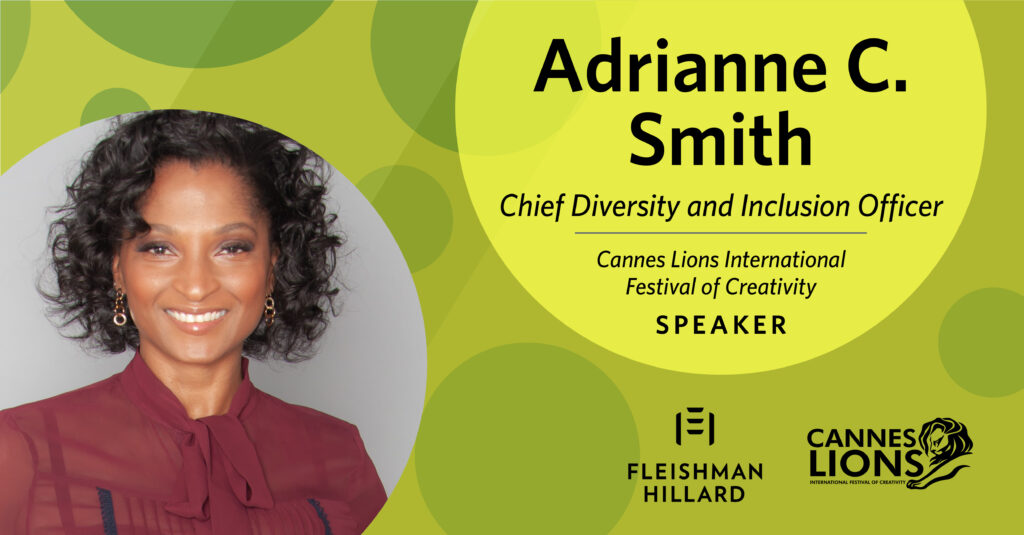
FleishmanHillard’s Adrianne C. Smith to Speak on “Don’t Believe the Hype — DEI Will Never DIE” at 2024 Cannes Lions International Festival of Creativity
May 21, 2024
Share
What: “Don’t Believe the Hype — DEI Will Never DIE” session
When: Tuesday, June 18, 2024, 2:15 to 2:45 p.m. CET
Where: 2024 Cannes Lions International Festival of Creativity main stage
FleishmanHillard’s Adrianne C. Smith, chief diversity and inclusion officer, will take to the main stage of the 2024 Cannes Lions International Festival of Creativity on June 18, 2024 at 2:15 p.m. CET to share her thoughts on the state of DE&I. Smith’s keynote speech will discuss the myth that DE&I efforts are obsolete and explain why they’re more vital than ever.
The festival takes place in Cannes, France from June 17 to June 21 and invites industry professionals from all over the world to celebrate groundbreaking and meaningful creativity.
How to Mitigate Brand Safety Risk and Contract Influencers with Confidence
May 17, 2024
By Liz Hawks
Share
“Texas AG sues Instagram influencer for giving ‘bad health advice’”
“Unpacking the child abuse case against YouTube influencer”
“Influencer axed by [sponsor] for violent comments about children”
“Racist Tweets resurface after TikTok influencer’s wedding”
Ripped from the headlines, these are just a few real-world examples of the inherent risk that comes with putting your brand in the hands of human beings to promote it. Sometimes they make mistakes. Sometimes those mistakes are years old and are unforgiveable but weren’t surfaced before the contract was executed. Sometimes headlines like these scare marketers from working with influencers altogether. But in 2024, turning away from influencers isn’t the answer. It’s where your audience is looking for inspiration and information. They are simply too powerful a channel and promotion partner. Rather, brands need to develop plans to help them continue to confidently contract the right influencers and mitigate risk.
In 2024, brand safety influencer vetting must evolve to additional layers. Brands need to ask themselves:
Are you comfortable working with an influencer who has posted about global or domestic political issues? Or about their personal religious beliefs?
What if they have posted favorably (or unfavorably) about Trump? About Biden? Kennedy (RFK Jr.)? Or other politicians and/or their platforms? How will your audience view those posts?
Does an influencer’s personal stance on vaccines or other health issues give you (or your audience) pause?
If an influencer lives in a state where marijuana is legal, and has posted about personal use, do you consider them brand safe?
World issues, political campaigns and government policies are permeating discussions among influencers and creators who have platforms and audiences looking to them for their authentic opinions on current affairs. The pendulum of audience expectation can swing with followers sometimes looking to influencers to use their clout to voice support for or against an issue, and at other times wanting influencers to “stay in their lane” and keep their social content focused on their niche or vertical, not interjecting a personal point of view about world matters.
Regardless, brand safety vetting has only expanded as sponsors scrutinize just how neutral they want to keep their partnerships, and wrestle with identifying exactly where their thresholds lie. Influencer selection and activation without rigorous brand safety vetting in these expanded territories can lead to a reputation problem for a brand if a sponsored influencer’s personal leanings incite the brand’s base or acquisition target.
This begs three key questions of marketers looking to engage influencers:
How can our brand build appropriate and bespoke evolved safety vetting guidelines to ensure reputation protection while continuing to meet audience expectations, and without censoring the authentic voice of the creator?
How do our publicly stated values align with how the safety guidelines are written?
How can we mitigate risk after beginning a partnership with an influencer who may use his/her/their platform to share personal opinions that inadvertently reflect negatively on us as the brand sponsor?
Data plays a, if not the, critical role. At FleishmanHillard, we review an influencer’s historical content to understand how it does, or doesn’t, align with a brand’s safety standards. We also use audience data to ensure alignment in areas like politics, social issues or policy leanings and make certain the brand’s customers or social followers and the influencer’s followers are in sync. Data science can’t eliminate the need for human analysis for context and tone. And tools alone can’t judge whether an influencer’s personal leanings jibe with a brand’s values. But as with most things influencer related, this equation blends art and science.
And remember safety vetting isn’t just for influencer discovery. It’s important to work to mitigate risks to ensure a continuity of brand safety pre-, during- and post- partnership. At FleishmanHillard, we work with clients to build custom playbooks for how to handle various levels of potential influencer-created issues from breaching a contract to breaking a law.
Risk doesn’t stop at the conclusion of a campaign. After a contract term is complete and the influencer is no longer in a live partnership with the brand, there may still be an association between influencer and brand in the mind of the audience. If the influencer creates an issue at this stage, the brand has little control. But consumers may start a conversation about the affiliation between the two parties, or even reach out to customer service to complain about the brand having worked with an influencer.
Influencers are human beings who sometimes make mistakes or have previously demonstrated unsavory behavior. Today’s hyper-polarized world presents additional inherent risk. But influencer marketing is also business critical. Brands who are not prepared with proactive and reactive plans for mitigating inherent risk are leaving themselves exposed to become the next “ripped from the headlines” mention.
See what else is happening
You might also like
Expertise
Four Takeaways from Sustainable Brands SB’26: What Leaders Need to Know
June 17, 2026
Expertise
Escaping the Pendulum: Building a Durable Strategy in Turbulent Times
June 2, 2026
Expertise
“Find Your Authentic Connection to the Celebration”: The PRWeek Podcast Dives Into the America 250 Unit
May 14, 2026
Expertise
Your Employees Are Disengaged. Listening Isn’t Enough. Follow-Through Is.
May 7, 2026
Expertise
The AI Readiness Gap Series: Why Normalization Is the Most Skipped, and Most Essential, Phase of AI Adoption
April 30, 2026
Expertise
Live from the PRWeek Sports Conference: A Team-First Approach to Communications
April 28, 2026
Expertise
How to Shape a Brand’s AI Visibility in 2026: Six Moves for Communications Teams
April 28, 2026
Expertise
A Corporate Communications Evolution: Strategies for the Agentic Age
April 22, 2026
Expertise
Navigating the UPF Definition Landscape: Are You Prepared?
Unveiling the Ascendance of Private Markets: A Gateway for Asset Managers to Attract High Net Worth Investors
May 15, 2024
By Mokka Mok
Share
In recent years, the private markets landscape has experienced a remarkable surge, capturing the attention of asset managers around the world. This flourishing trend has paved the way for the financial industry to explore new avenues for growth, with private markets becoming an enticing domain for high net worth investors seeking investment opportunities with relatively low market correlation.
In our recent report “The Future of Asset Management in Asia”, the majority of investors (42%) are most concerned about slow global economic growth or even a downturn. In response to these uncertainties, nearly one-third of respondents (29%) plan to shift their investments towards lower-risk options, and there is a growing interest in diversifying portfolios. Investors are now showing enthusiasm for private market investments, particularly in private equity funds (15%) and private credit funds (15%). Respondents believe that these alternative investments can enhance and diversify their returns and helping mitigate overall portfolio risks associated with economic downturns.
The shift towards private markets
1. Enhanced returns and diversification
Amidst a volatile and uncertain global economy, investors are increasingly drawn to private markets due to the potential for enhanced returns. Private markets and alternative investments tend to outperform traditional asset classes over the long term, providing investors with a chance to optimize their portfolio performance. Additionally, private markets offer diversification benefits by reducing exposure to public market fluctuations, making them an attractive proposition for high net worth individuals seeking to protect and grow their wealth.
2. Access to exclusive investment opportunities
Private markets grant access to unique investment opportunities that are not readily available in public markets. This exclusivity is a major allure for high net worth investors, as it enables them to invest in promising startups, venture capital funds, real estate projects, and private companies with significant growth potential. By participating in these early-stage investments, individuals can capitalize on the success of innovative enterprises and potentially realize substantial returns.
3. Long-term investment horizon
Unlike public markets, which are often driven by short-term speculations and market volatility, private markets facilitate long-term investment strategies. High net worth investors are attracted to the private market’s ability to generate value over an extended period. The relatively illiquid nature of private investments encourages disciplined, long-term thinking, aligning with the goals of many high-net-worth individuals who prioritize wealth preservation and sustained growth.
Reaching out to high net worth investors
1. Establishing strategic partnerships
Asset managers can leverage their existing networks and forge strategic partnerships with wealth management firms, family offices, and other financial intermediaries. Collaborating with these entities enables access to their pool of high net worth clients and facilitates the promotion of private market investment opportunities. By providing comprehensive education and tailored investment solutions, asset managers can position themselves as trusted advisors capable of meeting the unique needs of affluent investors.
2. Thought leadership and education
Educational initiatives play a crucial role in attracting high net worth investors to private markets. Asset managers should invest in thought leadership content to demonstrate their expertise and provide valuable insights into the advantages and intricacies of private market investing. Webinars, whitepapers, seminars, and conferences can be utilized to educate investors about the potential benefits, risks, and strategies associated with private market investments, ultimately building confidence and fostering engagement.
3. Technology and digital platforms
Harnessing the power of technology and digital platforms can significantly enhance the outreach efforts of asset managers. Online portals, mobile applications, and user-friendly interfaces can streamline the investment process, improve transparency, and provide real-time updates to investors. Leveraging digital tools also allows for efficient communication, data analysis, and reporting, enabling high net worth investors to monitor their investments effectively and make informed decisions.
As private markets continue to ascend, asset managers have a unique opportunity to tap into the growing appetite of high net worth investors. By highlighting the benefits of private market investments, establishing strategic partnerships, providing education and thought leadership content, asset managers can position themselves as trusted advisors capable of meeting the sophisticated needs of affluent individuals. By embracing technological advancements and digital platforms, firms can further streamline the investment experience, ultimately fostering long-term relationships with high net worth investors in this thriving landscape.
See what else is happening
You might also like
Expertise
Four Takeaways from Sustainable Brands SB’26: What Leaders Need to Know
June 17, 2026
Expertise
Escaping the Pendulum: Building a Durable Strategy in Turbulent Times
June 2, 2026
Expertise
“Find Your Authentic Connection to the Celebration”: The PRWeek Podcast Dives Into the America 250 Unit
May 14, 2026
Expertise
Your Employees Are Disengaged. Listening Isn’t Enough. Follow-Through Is.
May 7, 2026
Expertise
The AI Readiness Gap Series: Why Normalization Is the Most Skipped, and Most Essential, Phase of AI Adoption
April 30, 2026
Expertise
Live from the PRWeek Sports Conference: A Team-First Approach to Communications
April 28, 2026
Expertise
How to Shape a Brand’s AI Visibility in 2026: Six Moves for Communications Teams
April 28, 2026
Expertise
A Corporate Communications Evolution: Strategies for the Agentic Age
April 22, 2026
Expertise
Navigating the UPF Definition Landscape: Are You Prepared?
Educate, Don’t Advocate: The Why and How of Civic Engagement at Work
May 14, 2024
Share
U.S. Version: May 2024
The Takeaway
As the United States faces one of the most politically polarizing presidential elections in recent years, organizations can benefit from shoring up a healthy internal climate and prioritizing business continuity now ‒ ahead of potentially divisive events that might fracture cultures and teams or disrupt business operations.
A Healthy Outlet for Civic Engagement Can Make a Difference
Help employees stay focused on shared goals at work through civic engagement programs that aim to educate (not advocate). Keep in mind:
Non-partisan support for democratic processes can help organizations and their employees navigate a challenging political climate more positively and constructively.
To weather potential disruption and division in the workplace most effectively, organizations should plan ahead and take steps to promote positive civic engagement ahead of potentially disruptive events.
Three Ways to Support Democratic Processes
Organizations can — and many already do — support employees’ civic duty by offering time off, providing information/resources and encouraging them to engage in democratic processes. Here’s how to activate:
1. Time. Organizations can support the process by ensuring employees have the time they need to vote. Federal laws don’t require that employers grant time off to vote, state and local ordinances vary, and time-off offerings depend on business needs. But organizations can offer time to vote by:
Encouraging employees to talk to their managers to ensure they can participate in the election process
Offering PTO hours, closing for the day or dismissing employees early to allow time to vote. (Organizations that operate in multiple states should be mindful of state and local variances to ensure consistent access, e.g., consider whether employees in states with mail-in voting have access to the same amount of time off as those without it.)
2. Information and resources. Organizations can encourage employees to seek out authoritative, verified sources of information, especially those that have been through editorial reviews. By providing access to resources detailing voting procedures by state as well as information about which items appear on the ballot, an employer can be seen as a trusted source of accurate and impartial information.
Other measures include:
Helping employees register to vote and educating them on smart voter practices and preparation leading up to elections.
Posting signage with information on how to register and vote
Making registration forms available in common areas
Hosting a voter registration drive
Launching an internal website or educational campaign aimed at getting out the vote
Curating a list of third-party, independent resources and making it available to employees, for example:
Aligning with non-partisan voter advocacy groups that offer insight and guidance.
3. Encouragement. Organizations have an opportunity to reiterate to employees that, as U.S. citizens and regardless of political positions, voting is their civic duty. Senior leaders can set the tone by underscoring the importance of voting and instilling a sense of confidence in its power. Consider:
Sending a note highlighting the importance of education, registration and voting
Aligning voting and civic engagement to company values
Sharing a leader’s personal voting plan — and inviting others to do the same
Whatever level of encouragement you provide, proactively communicate — across a variety of channels and methods — all the measures your organization is offering to help employees exercise their right to vote by:
Helping them register to vote
Prompting ballot reviews in advance of the election
Making a plan to get to the polls and vote
Be Aware of the Potential for Disruption
As you empower employees to engage in democratic processes, it’s likely that politics may enter workplace. Equip your organization to weather this period and maintain business continuity by embracing a preparedness mindset. Monitor the following dates for the 2024 U.S. election cycle events, which present added potential for impact on employees or your business.
July 15-18: Republican National Convention (Milwaukee, WI)
Aug. 19-21: Democratic National Convention (Chicago, IL)
Sept. 16: First Presidential Debate (San Marcos, TX)
Sept. 25: Vice Presidential Debate (Easton, PA)
Oct. 1: Second Presidential Debate (Petersburg, VA)
Oct. 9: Third Presidential Debate (Salt Lake City, UT)
Nov. 5: Election Day
What’s Next
Provide a positive outlet for action and participation by evaluating, enhancing and proactively communicating your organization’s current and potential measures to promote healthy civic engagement now.
For more guidance, check out these resources on leading teams through a turbulent time:
The political landscape and related employee sentiments are changing daily and could impact your company culture and reputation, internally and externally. While these recommendations are tailored for the United States, democracy is on the ballot worldwide this year, so your organization may be called on to support democratic processes globally. Our Public Affairs and Talent + Transformation experts remain available to discuss these emerging issues.
See what else is happening
You might also like
Expertise
Four Takeaways from Sustainable Brands SB’26: What Leaders Need to Know
June 17, 2026
Expertise
Escaping the Pendulum: Building a Durable Strategy in Turbulent Times
June 2, 2026
Expertise
“Find Your Authentic Connection to the Celebration”: The PRWeek Podcast Dives Into the America 250 Unit
May 14, 2026
Expertise
Your Employees Are Disengaged. Listening Isn’t Enough. Follow-Through Is.
May 7, 2026
Expertise
The AI Readiness Gap Series: Why Normalization Is the Most Skipped, and Most Essential, Phase of AI Adoption
April 30, 2026
Expertise
Live from the PRWeek Sports Conference: A Team-First Approach to Communications
April 28, 2026
Expertise
How to Shape a Brand’s AI Visibility in 2026: Six Moves for Communications Teams
April 28, 2026
Expertise
A Corporate Communications Evolution: Strategies for the Agentic Age
April 22, 2026
Expertise
Navigating the UPF Definition Landscape: Are You Prepared?
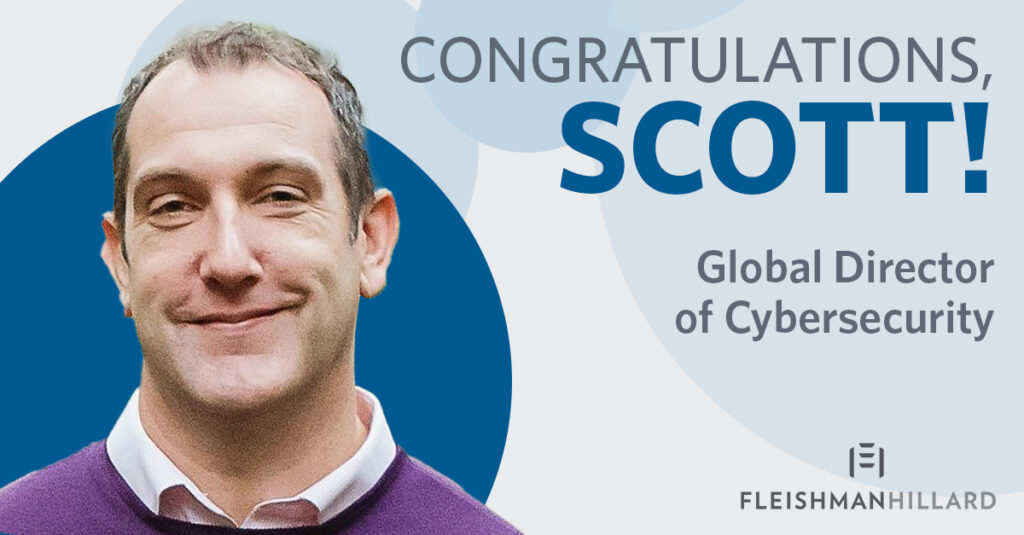
FleishmanHillard Hires Apple PR’s Scott Radcliffe to Lead the Firm’s Global Cybersecurity Center of Excellence
Share
ST. LOUIS – FleishmanHillard has named Scott Radcliffe as the agency’s global director of cybersecurity. In this new position he will be responsible for overseeing the agency’s global Cybersecurity Center of Excellence, which brings together communications expertise from across the firm to advise clients who are facing ever-increasing cyber risk. FleishmanHillard’s Cybersecurity Center of Excellence sits at the intersection where crisis and preparedness, policy and issues, and product and innovation come together. The role will report to Tim O’Keeffe, FleishmanHillard’s global managing director of Technology.
“FleishmanHillard partners with global businesses to help them understand and navigate the role cybersecurity plays in this accelerated wave of digital transformation,” said O’Keeffe. “Right now, company leaders are under immense pressure to fully understand the new dynamics of U.S. disclosure policies when preparing for a potential cyber incident. Today, it’s more than just being prepared for a data breach, business leaders must now navigate changing policy and governance issues to remain compliant. FleishmanHillard, with Scott’s leadership, is uniquely positioned to help company leaders navigate through these changing dynamics.”
Radcliffe returns to FleishmanHillard from Apple, where he led cybersecurity communications. He previously served as the agency’s senior global data privacy and security expert from 2016 to 2020. He began his career in the U.S. Army after graduating from West Point, where he was first exposed to cybersecurity while working under the Multi-National Corps-Iraq Commanding General.
“Personal and corporate data have become some of the most valuable resources any organization has, and the threat to that resource is only growing as its value to bad actors continues to rise,” said Radcliffe. “It’s critical for every business to be as prepared as possible for a cyberattack and to understand how to navigate through that moment should an incident occur. In addition to making sure that business leaders thoroughly understand the increasing number of policies and regulations, it’s critical for businesses to better educate their customers and employees about how they can more securely interact with an organization’s network and protect their data. I’m thrilled to be back at FleishmanHillard and bringing our firm’s expertise forward to help company leaders that have cybersecurity at the top of their business agenda.”
Radcliffe has worked across sectors with experience in technology, healthcare, energy, manufacturing, food and agriculture, government, gaming and financial services. In addition to cybersecurity, he has expertise in corporate crisis and reputation, executive communications, employee and internal communications and product and innovation storytelling.
See what else is happening
You might also like
News
FleishmanHillard Releases U.S. ‘License to Lead’ Report, Revealing Sharp Confidence Gap Between Executives and Stakeholders
June 2, 2026
News
FleishmanHillard Launches the “America 250” Unit to Help Organizations Navigate a Historic Milestone
May 12, 2026
News
PRovoke Media Names FleishmanHillard a Top Agency in the UK and Europe
April 30, 2026
Expertise
Live from the PRWeek Sports Conference: A Team-First Approach to Communications
April 28, 2026
News
Rebecca Weinstein and Jonathan Arias Win the 2026 U.S. Young Lions Digital Competition
April 23, 2026
Expertise
The New Culture Gap Report: How Brands Stay Relevant for 100 Years
March 24, 2026
News
FleishmanHillard Named Among PRovoke Media’s Best Public Relations Agencies in the World
March 10, 2026
News
FleishmanHillard Integrates Porter Novelli to Form a Stronger, More Specialized Global Communications Consultancy
February 9, 2026
News
From Ragan: Elizabeth Cook on Rethinking Preparedness in Crisis Response
How Communicators Can Help Brands Win in the New Tech-Lifestyle Revolution
May 10, 2024
By Tam Carneson
Share
The information age has created a consumer who is more connected and empowered than ever before. This has given rise to, among many evolving behaviors and trends, (demand for) tech-enabled experiences across consumer products and sectors.
In a world where consumer expectations continue to evolve with rapid technological advancements, changing personal habits, and heightened competition, brands must move with the speed of this change or risk being left behind.
But it’s not just about technological frills. Consumers are increasingly prioritizing their well-being and that of the world they live in, and along with products that empower them to take charge of their lives effortlessly and the impact they’re making, they expect transparency and trustworthy information. Ultimately, they are looking for tech-infused products that blend seamlessly into their lifestyles, solve real problems and add value to their lives from brands they feel they can trust and be aligned with.
So on top of their fitness tracker counting steps AND measuring heart rate and blood oxygen levels, or their smart home devices learning their preferences to automate tasks, save energy, prevent waste, AND create a more convenient living experience, consumers are also looking for quick and painless resolutions to their complaints, the option of self-help solutions, access to brands via their preferred channels, personalized experiences, data protection and privacy AND honest and open communication.
Expectations and the stakes have never been higher.
So, how can marketing and communication professionals help brands navigate this new landscape? Here are a few steps to take:
Understand the Audience: Research consumer expectations and pain points and identify the specific problems your brand’s tech-lifestyle product can solve.
Focus on User Experience: Prioritize clear communication and education about (new) features to avoid user frustration.
Craft Compelling Stories: Go beyond technical specifications and tell stories that showcase how the tech integration delivers personalized experiences that enhance the user’s lifestyle and align with the brand’s core values.
Address Concerns: Be transparent about business practices like data collection, manufacturing processes and sources, and especially about mistakes and efforts to correct these.
Measure and Adapt: Monitor feedback and sentiment and be prepared to adapt communication strategies and product features based on evolving user needs.
The crucial role marketers and communicators play as businesses navigate this rapidly evolving world cannot be understated. As strategic partners, we bring a unique perspective to the table, including data-driven decision-making, timely market and cultural understanding and impactful storytelling ability. Businesses that understand this — working to integrate technology into their processes and products and prioritize user experience while staying true to their brand identity and delivering honest and engaging communication — will win.
See what else is happening
You might also like
Expertise
Four Takeaways from Sustainable Brands SB’26: What Leaders Need to Know
June 17, 2026
Expertise
Escaping the Pendulum: Building a Durable Strategy in Turbulent Times
June 2, 2026
Expertise
“Find Your Authentic Connection to the Celebration”: The PRWeek Podcast Dives Into the America 250 Unit
May 14, 2026
Expertise
Your Employees Are Disengaged. Listening Isn’t Enough. Follow-Through Is.
May 7, 2026
Expertise
The AI Readiness Gap Series: Why Normalization Is the Most Skipped, and Most Essential, Phase of AI Adoption
April 30, 2026
Expertise
Live from the PRWeek Sports Conference: A Team-First Approach to Communications
April 28, 2026
Expertise
How to Shape a Brand’s AI Visibility in 2026: Six Moves for Communications Teams
April 28, 2026
Expertise
A Corporate Communications Evolution: Strategies for the Agentic Age
April 22, 2026
Expertise
Navigating the UPF Definition Landscape: Are You Prepared?
The report, published with research by TRUE Global Intelligence practice, features analysis drawn from an online survey of 1,250 investment professionals in Asia, with 250 respondents each in, Hong Kong SAR, Japan, Mainland China, Singapore and South Korea between March 30 and April 10, 2024. The report also includes an overview of the latest trends in Asia’s asset management industry.
The 2024 report highlights the key risks currently identified by investors. The majority of investors (42%) are most concerned about slow global economic growth or even a downturn, followed by persistent inflation (24%) and geopolitical tensions (16%). In response to these uncertainties, nearly one-third of respondents (29%) plan to shift their investments towards lower-risk options, while 23% intend to maintain their current risk profile. Notably, investors from mainland China stand out as 49% see more buying opportunities and are increasing their risk appetite or actual investments in high-yield instruments.
While equities funds (51%) and fixed income funds (34%) remain popular among Asian investors in the coming year, there is a growing interest in diversifying portfolios. Investors are now showing enthusiasm for private market investments, particularly in private equity funds (15%) and private credit funds (15%). Respondents believe that these alternative investments can enhance and diversify their returns, complementing traditional stocks and bonds (90%), and helping mitigate overall portfolio risks associated with economic downturns (90%).
In terms of investment sectors, AI (49%) continues to be the most favored sector for the upcoming year, followed by the internet sector (34%), biotechnology and healthcare (33%) and technology, media and telecoms (33%). This indicates a strong preference for new economy sectors that have experienced rapid growth despite global economic challenges.
Patrick Yu, Asia Pacific lead of FleishmanHillard’s Financial and Professional Services sector, commented on the findings, stating, “Investors are seeking to diversify their portfolios to build resilience during this period of global economic uncertainty. Private equity and private credit funds, traditionally favored by institutional investors, are now increasingly attractive to Asian investors. This presents significant opportunities for asset managers to expand their product offerings and communications strategies to cater to the needs of Asian investors.”
Similar to last year’s report, the performance (93%) and credibility (92%) of asset managers remain the most critical factors for investors when choosing an asset manager. Other important criteria include knowledge of individual managers (87%) and the public profile of the asset manager (86%). While the environmental, social and governance (ESG) commitment of asset managers is still considered important (78%), it has declined slightly by four percentage points compared to the previous year’s survey.
Furthermore, Asian investors prioritize sophistication in risk management (86%), transparent fee disclosures (86%) and transparency in communication with customers (84%) as the most important qualities for overseas asset managers operating in their local markets.
Yu emphasized the importance of transparency, profile and reputation for asset managers, highlighting, “More than ever, demonstrating transparency and having a strong profile and reputation are key for asset managers. Credibility and performance are fundamental to these qualities, and it is crucial for asset managers to elevate their strategies, product offerings and ESG commitment to make a difference in the highly competitive environment in the Asia Pacific region.”
The survey findings also revealed:
Asia Pacific (54%) remains the most popular region for investment in the coming year, with Singaporean investors (69%) displaying the highest confidence in the region. North America (43%) is the second preferred region for investment, particularly favored by Japanese investors (58%).
Similar to last year, digital platforms (54% of total) are the most popular channel for fund patronage among Asian investors, driven by the variety of fund choices (83% of digital platform users). Independent financial advisers or bank intermediaries continue to be important channels (43%), alongside wealth managers (38%), reflecting that a significant number of investors prefer to receive expert advice through in-person meetings during fund patronage. In particular, mainland China and Singapore investors show an increased interest in purchasing funds from independent financial advisers (60% in 2024 compared to 53% in 2023 for Mainland China and 55% in 2024 compared to 45% in 2023 for Singapore).
According to the report, financial media (45%) remains the most popular source of information for Asian investors for funds and investment products. However, this proportion has declined by eight percentage points from 2023. Face-to-face interactions, including independent financial advisers or bank intermediaries (30%) and friends and family (29%), are also ranked as important information sources. Notably, mainland Chinese investors prefer social media platforms as their primary source of information (52%) compared to their counterparts in the region.
Regarding ESG, the most important commitment from asset managers, as cited by investors, is “walking the talk” and taking action in proxy voting in listed companies (82%). Transparency in ESG data and protocol (79%) and clearly defined ESG goals and objectives (79%) are also highly valued.
FleishmanHillard’s The Future of Asset Management in Asia 2024 report includes quantitative data and qualitative analysis on the asset management industry in Asia. All 1,250 respondents self-identified as having traded or invested in at least one of the following: equities funds, fixed income funds, ETFs, alternatives, balanced funds, PE funds, digital assets or cryptos. A Mainland China focused report, The Future of Asset Management in China 2024, is also available for asset managers interested specifically in this growing market.
See what else is happening
You might also like
Expertise
Four Takeaways from Sustainable Brands SB’26: What Leaders Need to Know
June 17, 2026
Expertise
Escaping the Pendulum: Building a Durable Strategy in Turbulent Times
June 2, 2026
Expertise
“Find Your Authentic Connection to the Celebration”: The PRWeek Podcast Dives Into the America 250 Unit
May 14, 2026
Expertise
Your Employees Are Disengaged. Listening Isn’t Enough. Follow-Through Is.
May 7, 2026
Expertise
The AI Readiness Gap Series: Why Normalization Is the Most Skipped, and Most Essential, Phase of AI Adoption
April 30, 2026
Expertise
Live from the PRWeek Sports Conference: A Team-First Approach to Communications
April 28, 2026
Expertise
How to Shape a Brand’s AI Visibility in 2026: Six Moves for Communications Teams
April 28, 2026
Expertise
A Corporate Communications Evolution: Strategies for the Agentic Age
April 22, 2026
Expertise
Navigating the UPF Definition Landscape: Are You Prepared?
How Can Companies Strengthen their Reputation and Build Leadership in the U.S. during the Presidential Election Year?
April 29, 2024
By Yvonne Park and Ron Boehmer
Share
While many organizations are focused on the 2024 election and the expected outcomes, the next six months are critical in preparing for a range of scenarios. FleishmanHillard is working with companies in Korea and around the world to analyze their businesses and industries, identifying threats and seeking opportunities. With politics shaping the future of business, finance and trade, companies must do all they can to be prepared for a changing political and regulatory environment. Engaging in – and investing in – public affairs is critical to building relationships, strengthening reputations and helping ensure successful outcomes.
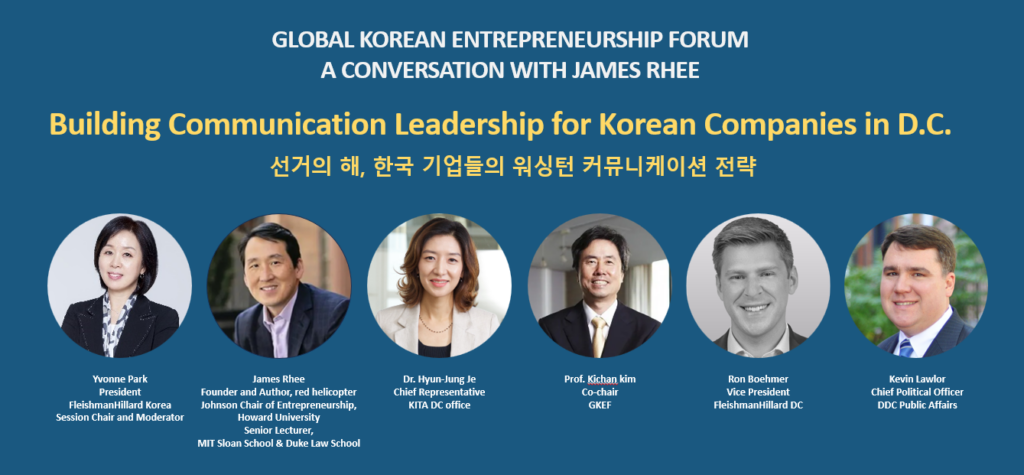
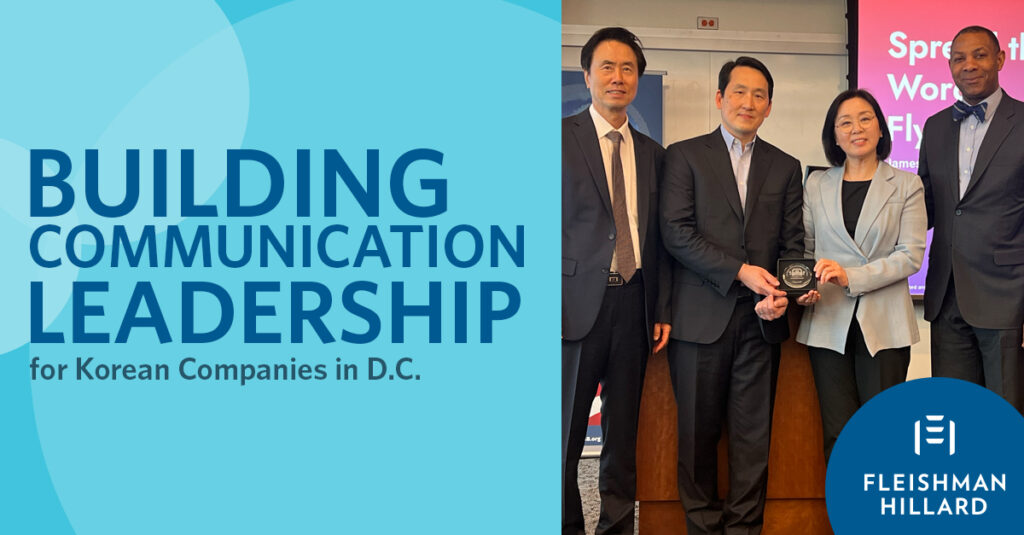
On April 26, a special session was held at George Washington University, co-hosted by the Washington branch of the Korea Trade Association and FleishmanHillard. The event focused on the communication strategies of Korean companies in Washington DC, ahead of the election. Panelists included James Rhee, author of the bestselling book “red helicopter”; Dr. Hyun-jung Je, Chief Representative of the KITA DC office; Yvonne Park, President of FleishmanHillard Korea; Ron Boehmer, Vice President of FleishmanHillard D.C.; Kevin Lawlor, Chief Political Affairs Officer at DDC Public Affairs; and Prof. Kichan Kim, Co-chair of the GW Global Korean Entrepreneurship Forum.
Here are the key takeaways from the discussion regarding actions Korean companies – and, by extension, global companies operating in the United States – should take in the months ahead:
Companies should conduct thorough analyses of their businesses and industries over the next several months to prepare for any election outcome. This period of demographic, social, and political change in the United States presents a unique opportunity for companies to showcase their businesses and products, and to connect intimately with consumers, advocates and policymakers at all levels.
Korean companies should understand how their brands and industries are perceived by foreign governments, especially in the United States, and anticipate potential actions by the next Administration or Congress.
It is crucial to recognize the influence of external forces, such as labor unions, the media, and academia on the business and political landscape.
Corporate communications professionals should focus on communicating their company’s values and aligning them with ideals that appeal to broad demographic groups.
Engaging at the state level with local stakeholders and forming alliances can effectively communicate a company’s value proposition to individual communities, highlighting a commitment to and investment in key areas.
Developing thought leadership on pertinent issues, not just products, can position company spokespeople as respected experts, creating a halo effect for their products and services.
Korean companies should creatively articulate their narrative to resonate with U.S. stakeholders by integrating business success factors with entertainment elements.
At FleishmanHillard, we collaborate with many partners – including in-house communications and marketing teams, government relations firms, legal counsel and others to ensure that strategies are aligned and companies are optimally positioned for success.
See what else is happening
You might also like
Expertise
Four Takeaways from Sustainable Brands SB’26: What Leaders Need to Know
June 17, 2026
Expertise
Escaping the Pendulum: Building a Durable Strategy in Turbulent Times
June 2, 2026
Expertise
“Find Your Authentic Connection to the Celebration”: The PRWeek Podcast Dives Into the America 250 Unit
May 14, 2026
Expertise
Your Employees Are Disengaged. Listening Isn’t Enough. Follow-Through Is.
May 7, 2026
Expertise
The AI Readiness Gap Series: Why Normalization Is the Most Skipped, and Most Essential, Phase of AI Adoption
April 30, 2026
Expertise
Live from the PRWeek Sports Conference: A Team-First Approach to Communications
April 28, 2026
Expertise
How to Shape a Brand’s AI Visibility in 2026: Six Moves for Communications Teams
April 28, 2026
Expertise
A Corporate Communications Evolution: Strategies for the Agentic Age
April 22, 2026
Expertise
Navigating the UPF Definition Landscape: Are You Prepared?
Navigating Sustainability and Climate Disclosure Requirements: A Strategic Approach
April 16, 2024
By Patrick Yu
Share
In today’s business landscape, companies are increasingly recognizing the importance of understanding sustainability issues and effectively reporting them to stakeholders. With recent regulatory changes and growing investor demand for climate-related information, public companies and financial institutions find themselves at the crossroads of both exciting opportunities and formidable obstacles ahead.
The postponement of the implementation of IFRS S1 and S2 for Hong Kong listed companies to 1 January 2025, as announced by The Stock Exchange of Hong Kong, along with the introduction of new standards by The Hong Kong Monetary Authority regarding the sale and distribution of green and sustainable investment products by registered institutions, has produced a fresh array of opportunities and challenges for public companies and financial institutions in Hong Kong and the region.
In a similar vein, the United States has also taken significant steps towards climate-related disclosures. On March 6, 2024, the U.S. Securities and Exchange Commission enacted rule changes mandating companies to divulge specific climate-related information. These disclosures encompass a wide range of aspects, spanning from greenhouse gas emissions to anticipated climate risks and transition plans. The overarching objective of these requirements is to equip investors with consistent, comparable, and consequential information to facilitate informed investment decisions, while concurrently establishing clear and uniform reporting obligations for issuers. Additionally, there would be extra territorial rules applying to European companies outside of the EU as well.
Given this evolving regulatory landscape, the question arises: How can public companies (global or local) and financial institutions effectively prepare for these upcoming requirements in Hong Kong and the region?
Five steps to prepare for sustainability and climate disclosure requirements
Following the adoption of different rules pertaining to sustainability and climate disclosure, public companies and financial institutions are under huge pressure to accelerate their efforts to capture, measure and disclose emissions data.
1. Conduct a Comprehensive Audit
To kickstart the journey towards sustainability and climate disclosure, it is crucial for companies to conduct a thorough audit. This audit should encompass quantifying greenhouse gas (GHG) emissions across the company’s operational footprint and identifying the most material sustainability issues. While this process may pose challenges in emerging markets, initiating the audit early on allows for the formulation of effective disclosure strategies.
2. Perform a Holistic Assessment
Having completed an audit, companies need to then understand asset-level physical risks and quantify their financial impact and evaluate the business impact of climate transition risks. By conducting scenario mapping exercises, organizations can assess the potential effects of both physical and transition risks. This comprehensive assessment aids in developing robust business, operational, and communication strategies.
3. Set Science-Based Targets and Metrics
It is essential for companies to establish science-based targets for emissions reductions and align their efforts with various jurisdictions and requirements. These targets should be tangible and achievable to facilitate benchmarking against industry peers.
4. Strengthen Communications and Trainings
Engaging stakeholders, including customers, partners, investors, and employees, is crucial in the sustainability and climate disclosure journey. Proactive communication efforts should be undertaken to ensure transparency and build trust. Additionally, organizing internal training programs equips employees to become ambassadors for sustainability, fostering a culture of environmental responsibility within the organization.
5. Continuous Evaluation and Reporting
Sustainability and climate disclosure is an ongoing process, requiring constant evaluation and reporting. Regularly assessing performance helps identify any gaps and ensures compliance with evolving international standards. Staying ahead of the latest requirements and industry developments is vital to meet the expectations of global stakeholders.
As sustainability and climate-related issues continue to gain prominence, public companies and financial institutions must adapt and embrace the changing landscape. By following these five essential steps—conducting audits, performing assessments, setting targets, strengthening communications and training, and continuous evaluation and reporting—organizations can navigate the complexities of sustainability and climate disclosure requirements effectively. Embracing these practices not only supports regulatory compliance but also enhances your reputation, attracts investors, and contributes to a more sustainable future.
See what else is happening
You might also like
Expertise
Four Takeaways from Sustainable Brands SB’26: What Leaders Need to Know
June 17, 2026
Expertise
Escaping the Pendulum: Building a Durable Strategy in Turbulent Times
June 2, 2026
Expertise
“Find Your Authentic Connection to the Celebration”: The PRWeek Podcast Dives Into the America 250 Unit
May 14, 2026
Expertise
Your Employees Are Disengaged. Listening Isn’t Enough. Follow-Through Is.
May 7, 2026
Expertise
The AI Readiness Gap Series: Why Normalization Is the Most Skipped, and Most Essential, Phase of AI Adoption
April 30, 2026
Expertise
Live from the PRWeek Sports Conference: A Team-First Approach to Communications
April 28, 2026
Expertise
How to Shape a Brand’s AI Visibility in 2026: Six Moves for Communications Teams
April 28, 2026
Expertise
A Corporate Communications Evolution: Strategies for the Agentic Age
April 22, 2026
Expertise
Navigating the UPF Definition Landscape: Are You Prepared?