Employee Login

Enter your login information to access the intranet

Enter your credentials to access your email

Reset employee password

Article

Don’t Just Break the Ceiling — #BreakZeroSum

December 12, 2023
By Kitty Lee

FleishmanHillard is on a mission to become the most inclusive agency in the world. And supporting local communities where we operate is essential. In Hong Kong, FleishmanHillard and BlueCurrent Group were proud to be the PR and social media partners for The Women’s Foundation and their #BreakZeroSum advocacy campaign.

Gender equality continues to be a hot topic worldwide. While there has been some progress in Hong Kong, the pace of change is slow. The Women’s Foundation is a non-profit organization dedicated to improving the lives of women and girls in Hong Kong. Established in 2004, the organization has become a leading catalyst in the city for collaborative efforts to support women’s betterment in the community. The Women’s Foundation identifies issues, implements solutions and strives for measurable change through groundbreaking research, innovative and impactful community programs as well as stakeholder advocacy efforts.

As we navigate the post-pandemic era, the world is facing new challenges and competition for talent across industries. Gender inequality continues to be a pressing issue in Hong Kong, including representation of women in the workplace, career progression and remuneration.

Through the #BreakZeroSum campaign, we advocate that gender equality is not zero sum, and is a conversation that we should have with every family and every organization to challenge stereotypes. It is not about one gender winning at the expense of another. Gender equality benefits everyone.

Under FH4Inclusion, a global initiative that allows colleagues to lend their time and talent to organizations that serve and create impact in their communities, FleishmanHillard and BlueCurrent Group teams provided our communication expertise to drive awareness and to advocate dismantling the zero-sum mindset and championing gender equality for all.  

“I am honored to be a part of the initiative and be able to execute the campaign from a traditional media perspective. It was meaningful to see how the media was willing to spread the important message of gender equality in the workplace and in the household, as the notion is a fundamental pillar of equality in society that concerns and benefits everyone”, said Raven Chan, account executive, FleishmanHillard Hong Kong.

“I am incredibly grateful to have the opportunity to partake in such a meaningful initiative and assist in executing the campaign on social media channels. Gender equality in the workplace and within households has been a globally significant subject for quite some time. This topic often elicits sensitive responses from the public and can lead to backlash, making it challenging to discuss openly. Therefore, it was heartening to witness influential people lending their voices and voluntarily spreading this message, and significantly impacting society through their influence”, said Alexa Cheng, senior account manager, BlueCurrent Group Hong Kong.

The campaign received attention from mainstream media and organic social media traction, with the campaign video receiving 334,000 views.


Article

Seven Things to Know When Creating a Successful Employee Resource Group

November 30, 2023
By Christine Lydon

Being brutally frank, disability inclusion wasn’t necessarily on my horizon up until a few years ago. I’d been in my role at FleishmanHillard for just a year when I was diagnosed with an aggressive cancer that necessitated four months of chemo, surgery, radiotherapy and physiotherapy. I took a couple of months off after the diagnosis but otherwise continued working, albeit from home and just a couple of days a week. This was a godsend for me personally as it meant when I recovered, I wasn’t having to navigate “the big return.”

But of course, anyone who’s had a serious illness knows recovery doesn’t end once the treatment is over. I had a new perspective on navigating the workplace with physical challenges like post-cancer aches and pains and fatigue. These unexpected difficulties inspired me to get involved with DEI, with a specific focus on disability, firstly leading on Hidden Disabilities here in London, co-chairing Omnicom’s Open Disability ERG and then, in the past 18 months, leading FleishmanHillard’s Global Disability ERG.

FleishmanHillard’s ambition is to be the most inclusive agency, and DEI is very rigorously integrated into the heart of what we do. Within the Hidden Disabilities steering group here in London, we’ve done a range of things in the disability space, including training on neurodiversity and communicating with diverse audiences. Digital accessibility is another focus for us. We’ve refreshed things in 2023 with the establishment of FHAT – FleishmanHillard Accessibility Taskforce – which sees digital accessibility led by our creative studio. It’s very much about embedding accessibility principles into our work and ensuring that clients are aware of it too.

FleishmanHillard’s Global Disability ERG was set up two years ago and is just one of the Global ERGs within the agency. I took on the role of global lead when it was set up – initially just as a caretaker but I knew, and I think all those around me knew, that I’d be in it for the long-haul. It’s a unique space with a casual relaxed remit, no expectation of deliverables and no fixed agenda when we meet once a month. It has been created as a safe space for anyone living with a disability, along with allies, to come together, share experiences, learnings, tips or just take the opportunity to vent, if that’s needed. And, while we don’t have any specific asks of us from senior leadership, we did co-create a neurodiversity guide that was shared with our offices across the globe. The seeds for the guide were sown during one of our meetings when it became apparent that there was limited awareness or understanding of neurodiversity and how conditions in this category can impact the work experience. The guide is used in new joiner inductions and is a part of line manager training.

What does success look like for an ERG? Simply having the group in existence, with people showing up monthly and being there for each other counts as success. Along with the monthly calls, we do check-ins with members to elicit their needs and their feedback to ensure that the group continues to add value and stays relevant. Relevance is vital. It’s about constantly asking the questions: Are we still serving a purpose? Are members still getting what they need from us? And if not, why not? What can we do to refresh our approach?

Lessons from leading an ERG

Recognize that every ERG is different and offers a unique experience.

Some act as informal, safe spaces with a flexible structure and others are firmly focused on encouraging change within an organization. Still more may be a mix of both. And what one ERG looks like in one company may vary drastically to another. The focus should be on what the community needs. Is it to initiate far-reaching change in your workplace led by senior management? Or is what’s actually needed a ‘softer’ group that offers peer support and that sense of togetherness?

Be open to change.

None of us can stand still. What worked last year may no longer be relevant today. The most significant gap that you’ve identified today may not be an issue in the new year. It’s vital to keep informed and be ready to pivot. 

Listen closely.

You’ll only know if things need to evolve if you listen to your ERG members. Pulse surveys carried out quarterly can shine light on member perspectives and needs.

Realize that your impact within the ERG can be more far-reaching than you think. Applying your learnings from the ERG to client counsel and client work can be powerful and instigate meaningful change. We’ve seen this first-hand within FleishmanHillard where understanding what it takes to make digital content truly accessible to all has filtered through to our client work. It’s been so encouraging seeing our clients embrace what we’re doing in this space and commit to applying these principles.

Secure leadership buy-in.

Without it, an ERG will not flourish. In fact, it’s unlikely to last more than a couple of meetings. I’m grateful to be part of FleishmanHillard where DE&I is embedded in all we do with a tangible commitment from the very top of the business. Keep in mind it works both ways – as an ERG leader, it’s important that you keep senior leaders informed of what’s going on and how the ERG is progressing. This can range from informal check-ins to detailed write-ups, depending on requirements and your own style.

Keep the broader team informed.

Any one of us could face illness or disability at any point. Any of us can be an ally to those who are already living with a disability. Twice-yearly newsletters from our Disability ERG have helped ensure we stay visible, relevant and accountable. It’s an opportunity to capture what we’ve done and report on what we’ve said we’ll do.

Know that DE&I belongs to everyone, and not just a select few.

There can be a temptation to take it all on yourself but each of us has a responsibility to ensure that people from all backgrounds, thinking, abilities and experiences feel included, protected and involved. Meaningful change can only happen when we all play our part.

Article

FleishmanHillard Takes Home Agency of the Year Award During Big Night at 2023 ICCO Global Awards

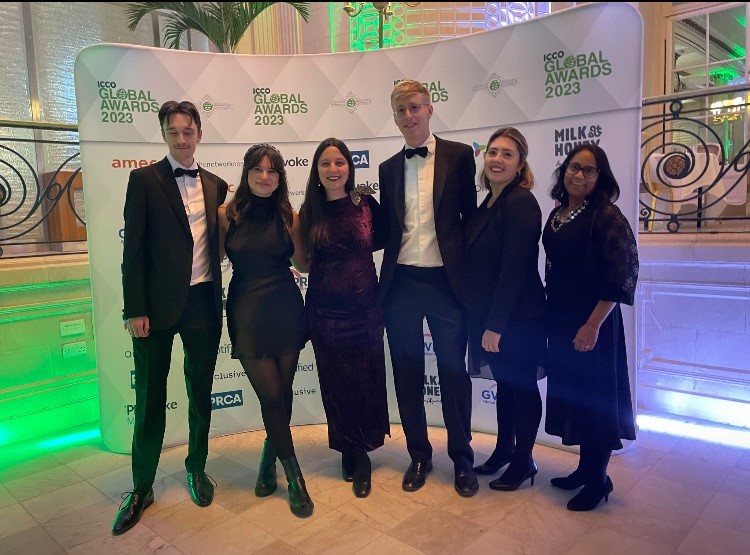
ST. LOUIS, MO — FleishmanHillard took home a win for Large Agency of the Year – The Americas at last night’s 2023 ICCO Global Awards ceremony in London. The global public relations agency also celebrated wins for client work with Akamai and Icelandair:

  • FleishmanHillard (Large Agency of the Year – The Americas)
  • Akamai with FleishmanHillard, “From bandwidth to bad actors: Positioning Akamai at the cutting-edge of cybersecurity” (Best Corporate and Finance)
  • Icelandair with FleishmanHillard, “Iceland Around the Corner” (Event, Launch or Stunt Campaign)

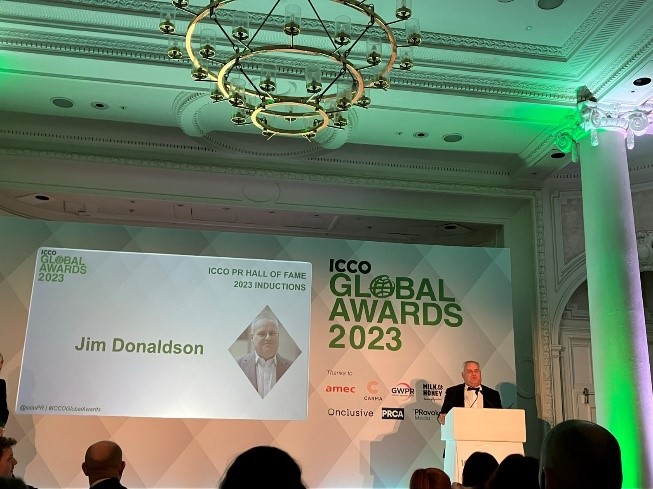
In addition, Jim Donaldson, FleishmanHillard regional director of EMEA and CEO of the UK and Middle East region, was recognized for his contributions to the industry by being inducted into the ICCO Hall of Fame.

This recognition tops off a year of incredible agency award wins including Outstanding Extra-Large Agency and Agency of the Year from PRWeek US, Agency of the Year at Campaign US and Campaign Global, Agency of the Year from the Public Relations Institute of Ireland and PR Agency of the Year from the Korea PR Association.

The ICCO Global Awards are recognized worldwide by PR trade associations representing 82 countries. The awards recognize excellence and effectiveness of PR work across the world and are judged by a panel of international PR and communications professionals. Find more information about the awards.

Article

Three Sustainability Trends for Food and Agriculture Leaders to Heed in the Lead up to COP28

November 29, 2023
By Judith Rowland

As we transition into the final months of 2023, ‘tis the season for major ESG-focused moments. NYC Climate Week wrapped in September, bringing together influential global leaders to discuss the hottest – no pun intended – topics on the climate agenda. Up next is COP28, the United Nations Climate Change Conference, which kicks off in Dubai this week.

As key stakeholders pack their bags for Dubai, there are three trends sustainability communications leaders working in the food and agriculture sector should keep in mind.

Conversations about carbon markets as a strategy to incentivize farmers to prioritize sustainability are on the rise.

Carbon markets continue to be a trending topic in sustainability-focused media. Though many reporters have shared hopeful stories about the impact carbon markets could have, significant skepticism around carbon markets still exists. One U.K.-based outlet referred to carbon markets in the dairy industry as an “unproven industry-led fix.”

As more companies in the food and agriculture sector begin to explore the feasibility of carbon markets, understanding the successes and challenges of other carbon markets can provide key learnings. BCG and other key stakeholders note that a reputable monitoring, reporting and verification framework is essential for carbon markets to be successful.

Stories of companies, organizations and governments partnering to help improve the carbon marketplace continue to routinely receive positive coverage. As the team at Forest Trends flagged in their Climate Week recap, sharing project success stories and amplifying key impact data can help counter negative press and greenhushing.

Stakeholders aim to go “beyond carbon.”

While decarbonization continues to be a prominent topic, mainstream conversation is beginning to extend beyond just reducing emissions. A key theme throughout Climate Week was the necessity of navigating environmental projects by prioritizing a whole-systems approach. For example, this year’s UN Climate Change High-Level Champions program covered topics like adaptation and resilience. This quarter has seen a rise in the usage of terms like “nature action” and “nature positive” that signal a more inclusive focus on topics important to the food and agriculture industry – including water, erosion and ecosystems – as part of a broader vision for sustainability.

As has been emphasized for several years at COP events, to be truly sustainable, environmental problems must be approached through a social equity lens. Effective, just solutions must include partnerships with impacted communities and consider people who are disproportionately impacted by environmental threats.

Communicators in the food and agriculture sector should consider how their companies’ sustainability commitments might promote nature-positive growth and consider highlighting actions they’re taking beyond carbon.

The food and agriculture sector is redoubling efforts on biodiversity.

At an event held at the New York Stock Exchange, several large global companies collaborated to unveil a new reporting framework to hold the private sector accountable for biodiversity. These recommendations, developed by the Taskforce on Nature-related Financial Disclosures (TNFD), were released as part of Climate Week. This new voluntary framework intends to fast-track an industry shift to recognizing market interdependency and vulnerability relating to biodiversity loss. The International Sustainability Standards Board (ISSB) and Carbon Disclosure Project (CDP) both quickly announced their support, and top companies have pledged to publish aligned reports.

The announcement of this global reporting framework signals an opportunity for sustainability communicators to lean more heavily into biodiversity stories. Communicators should consider how key commitments related to regenerative agriculture might facilitate an authentic way to enter the biodiversity conversation and demonstrate a brand’s impact.

Though the stakes for sustainability storytelling have never been higher, my colleagues and I remain energized by the innovative, creative and inclusive solutions stakeholders are bringing to the table to make the food and agriculture sector more sustainable. In redoubling our focus on measurement, moving beyond carbon and leaning into themes related to biodiversity we can continue to move the needle on environmental impact.

Maddie Federici contributed to this piece.

Article

Big pharma gets a big brand boost

November 20, 2023

Many pharmaceutical companies are choosing this moment to rebrand, and the results signal a welcome new creative direction for the industry. Until a year ago, pharma was the one of the last bastions of safe, characterless branding.

The post Big pharma gets a big brand boost appeared first on United Kingdom.

Article

Infusing the Human Role in AI – A paradox for communications success in an era of digital transformation

November 14, 2023

Nearly every organization – regardless of industry – is facing an existential question right now: How will AI change the way we do business? For some, the technology brings optimism in the shape of streamlining cumbersome processes or eliminating the mundane. For others, there’s a real question of relevance, the role individuals will continue to have in shaping the business, and concerns around misuse or misappropriation of their IP and other sensitive information. For most, there seems to be an expectation that more AI means less human involvement, for better or worse.

Regardless of where any singular business is in its AI trajectory, one thing is true for all: AI – and generative AI in particular, is precipitating mass-scale business transformation faster than any technology before it.

In rapid succession, the questions that tend to follow the first are:

  • How can this technology help us and what are the risks for our organization?
  • How are we managing the process within our organization?
  • Who is responsible for dictating when and how we’re communicating forthcoming changes to our business?
  • How will our business roll out the technology to balance speed with safety and deliver industry-leading tech solutions while ensuring compliance and mitigating risk?

In a recent client salon about the role of gen AI in communications, senior FleishmanHillard counselors discussed and debated the merits of the technology, the AI transformation that is upon us all, and the value of thoughtful and deliberate communications as the most effective tool to ensuring the success of the transformation.

While questions about guardrails and best practices abounded – and responses led to more questions with seemingly endless grey areas – one reality became clear in every part of the discussion: at this still-early stage, the success of AI implementation has more to do with the humans who wield it than it does with the technology itself. In essence, successful adoption and implementation of generative AI will be the result of uniquely human applications of the technology if we know how to navigate it and communicate about its potential.

As organizations embrace AI-driven technologies to stay competitive and relevant, the corporate communications function plays a critical role. Communications will not only engage employees in the evolution of the technology, but will also ask critical questions about the use of AI on behalf of other audiences. Communications teams will develop, and help their organization’s leaders anticipate responses to AI risk scenarios, and will help pressure test the organization’s AI transformation strategy and how it is rolled out across the enterprise and to key stakeholders. Of the many topics, the conversation highlighted three key principles for communicators to consider as their organizations embark on this change:

Earn trust, don’t ask for it | Transparency is accountability

  • In the age of misinformation and disinformation, it is the leaders and the employees who are the ultimate arbiters of an organization’s credibility and reputation. The time to build trust is not when you’re in the middle of a crisis but well before a crisis unfolds. Businesses build credibility, an inherently human quality, and demonstrate accountability through transparency, communication and ownership of outcomes. Working backwards from a hypothetical breach of trust and implementing the checks and balances that cultivate it can minimize an organization’s level of exposure and serve as an insurance policy for your reputation, particularly with a relatively new technology like generative AI.

Understand your threshold for risk | Compliance over defiance

  • Any AI communications strategy that is not aligned to specific business imperatives will fall short and risk exposure to the business. It is essential for any organization’s AI transformation to begin with the business objective. If the point of guardrails is to allow a business to move faster and engage employees, the board, investors and other stakeholders, guardrails must then be based on business priorities and the level of risk the organization is willing to tolerate – not the fear of what organizational breakage might happen. Understanding how to communicate that internally through a lens of measured optimism is – notably – another uniquely human characteristic. Simply focusing on the risks of generative AI, without the counterbalance of defining opportunities and organizing safe experimentation leads to prohibition and creates pathways to defiance versus compliance. This is especially likely when curious, energetic employees are ready to move faster than the organization. Leading with the promise of the technology, balanced with the measured understanding of what level of risk the organization can tolerate, is the path to fostering dialogue and engagement.

Resist normalization | Overcome a sea of sameness in communications

  • While generative AI can expedite our understanding and synthesis of topics, historical events and the like, it is also rapidly accelerating the normalization of how those very topics/events are reported, documented and reflected. Ultimately, by referencing and assimilating a wide range of existing content, generative AI without appropriate oversight could increase the risk of a sea of sameness – communications that increasingly looks more alike across organizations and brands, and appears less distinctive to audiences. Communications teams are at particular risk when using the tools to break down complex and highly nuanced topics. In our role as communicators, it is incumbent upon us to introduce critical examination into the communications process so that our content is not simply a modified representation of the homogenized whole, but rather delivers a nuanced perspective that reflects the culture, values and integrity of our organizations. The introduction of an old-fashioned, familiar media tool like an editorial board within an organization can ensure that internal and external communications created through generative AI are credible, bespoke for the audiences they’re intended to reach, truly reflective of the organization’s values, purpose and brand, and uniquely expressed, without letting go of benefits of AI for faster content generation.

Credibility. Optimism. Integrity. Reflecting on all that was discussed, it’s clear that a humanistic approach to AI adoption and rollout is perhaps one of the strongest risk management and mitigation strategies for leadership to implement today. Ironically, it is likely to be the Generative AI implementations with the most qualitative, editorial-style human oversight that are most effective, rather than the “low- to no-humans” version that concerns many organizations.

So, how long is the runway for generative AI adoption? It’s both right now and at least three years out. A recent Gartner report predicted that by 2026, “over 80% of enterprises will have used GenAI APIs and models and/or deployed GenAI-enabled applications in production environments, up from less than 5% early 2023.” Though it may feel as though there’s time, getting it right means organizations must start planning now if they intend to reap the benefits of the technology. Effective communication will be essential to ensuring key stakeholders see the value and the opportunity versus the challenge and risk inherent in the adoption of any new technology; and that means prioritizing those audiences at every stage and phase of the process with meaningful updates and intentional checkpoints and resources. It’s about creating a shared vision of the future where AI augments human capabilities, leading to better, more meaningful work.

We know that AI holds tremendous promise – in business and in our lives personally. And, despite undeniable perils and the potential for misuse or unintended consequences, guiding principles rooted in integrity can minimize those risks. Personally, I see something optimistic about the opportunity and ripple effects generative AI technology will have within and across industries – so long as we stay focused on the very real human impact that is at the heart of the technology. AI’s promise is within reach, and a responsible, people-centered approach is the bridge to a brighter future.

This communication is offered as general background and insight as of the date of publication, but is not intended to be and should not be taken as legal advice. Each organization should confer with its own legal counsel and its own business and strategic advisors for guidance that is specific to and considers the organization’s status, structure, needs, and strategies.

Article

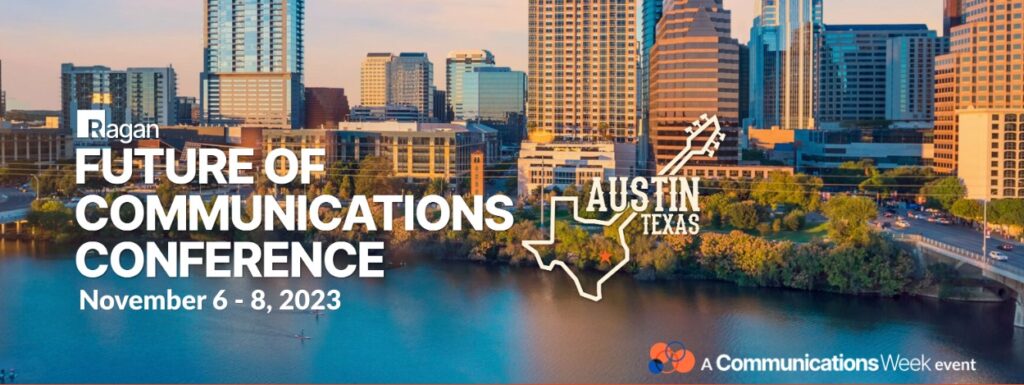
FleishmanHillard’s Kathryn Chappell to Share Culture Best Practices at Ragan’s Future of Communications Conference

November 7, 2023

What: “Engaging Every Employee: Building Better Multigenerational Comms” discussion

When: Wednesday, Nov. 8, 10:15 a.m.

Where: Ragan’s Future of Communications Conference in Austin, Texas

Join FleishmanHillard’s Kathryn Chappell, senior vice president and partner, and IMF’s Karla Chaman, deputy division chief of internal communications, for the “Engaging Every Employee: Building Better Multigenerational Comms” session at Ragan’s Future of Communications Conference in Austin, Texas on Wednesday, Nov. 8 at 10:15 a.m. The session will share comms techniques and strategies to bridge the generational gap, regardless of preferred communications styles. Discover how to encourage younger employees with purposeful mentorship programs, how to prevent ageism in your comms and much more.

For more information and to register for the conference, click here.

Article

FleishmanHillard Nominated in Three Categories as 2023 ICCO Global Awards Shortlist is Revealed

November 2, 2023

ST. LOUIS, MO — FleishmanHillard received nominations in three categories, including Agency of the Year (Large), on the 2023 ICCO Global Awards shortlist, which was released this week. The global agency was also recognized in two other categories on behalf of client work.

The International Communications Consultancy Organisation (ICCO) Global Awards spotlight excellent professional achievement in public relations and communications campaigns. They are recognized by 40 PR associations around the world, representing 82 countries. Winners will be announced at a ceremony in London on November 29th. For a full list of nominees, click here.

Article

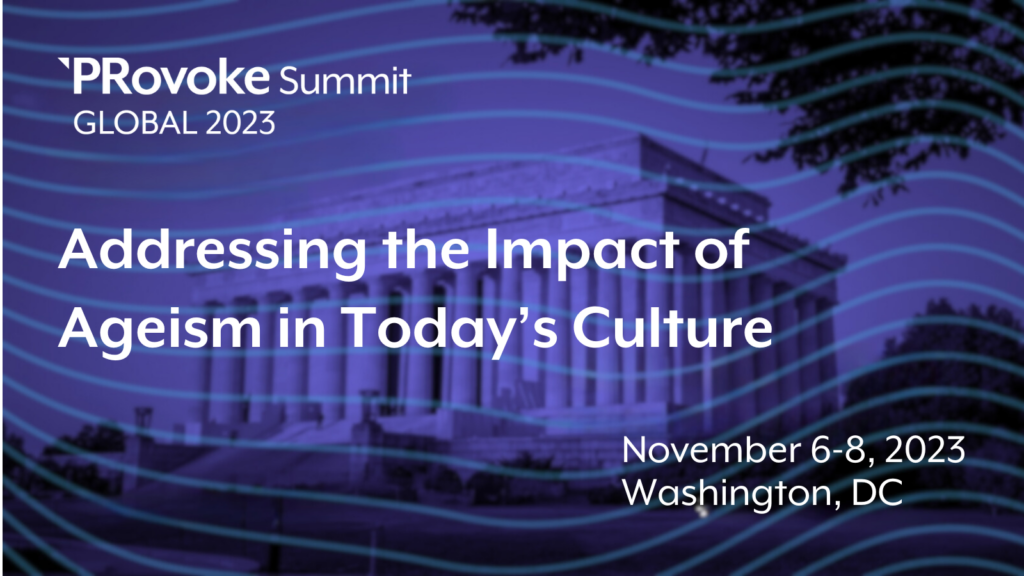
Addressing the Impact of Ageism in Today’s Culture 

November 1, 2023

When:  Nov. 8, 2023 

What: PRovoke Global Summit  

Where: Hotel Washington (515 15th St NW, Washington, DC, 20004) 

FleishmanHillard CEO John Saunders will lead a conversation about the impact of ageism in today’s culture alongside AARP’s CMO, Martha Boudreau, at the PRovoke Global Summit. The event will take place at Hotel Washington on Nov. 8.  

The pair will tackle important conversations surrounding the broader topic of aging, such as the impact seniors have in our society and what brands can do to reach them.  

The PRovoke Global Summit is a three-day conference that will invite a diverse group of PR industry leaders to address the critical issues facing the profession.  

Get more information about the PRovoke Global Summit 2023.


Article

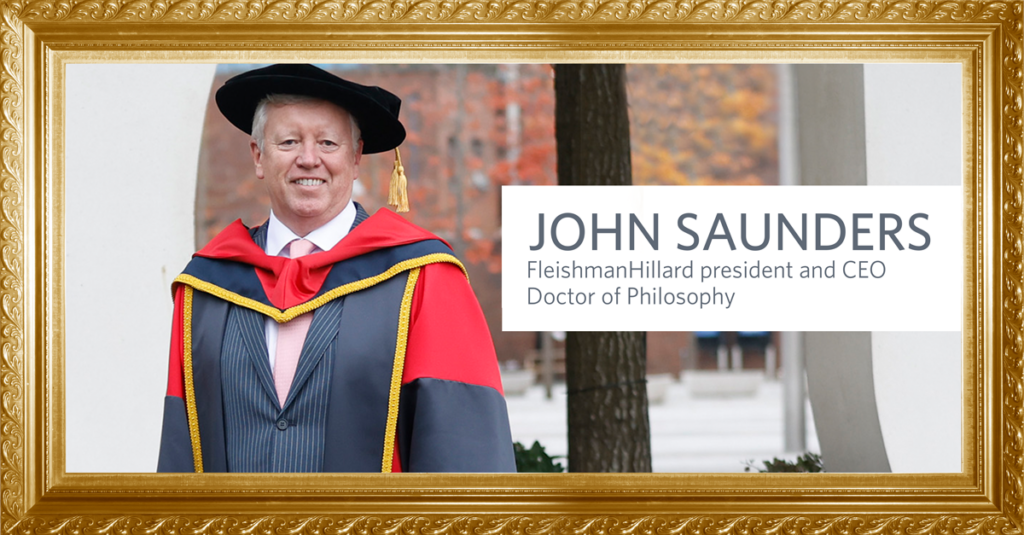
FleishmanHillard CEO John Saunders Awarded the Degree of Doctor of Philosophy

October 26, 2023

John Saunders, FleishmanHillard president and CEO, was today conferred with the degree of Doctor of Philosophy (Honoris Causa) from Dublin City University (DCU) in Dublin, Ireland. He is the first public relations communicator to receive this recognition from the University. The convocation was a part of DCU’s Autumn Graduation Ceremony for students from the Faculty of Humanities and Social Sciences.

In remarks at the ceremony, John was recognized as one of Ireland’s Communications pioneers, a global leader in the public relations field and a noted supporter of equality, diversity and inclusion in the workplace. He joins an esteemed group who have received the recognition, including Mother Teresa and former U.S. President Bill Clinton.

John is only the fourth CEO in the history of the 77-year-old global agency. From 2011, he was Regional President for Europe, Middle East and Africa. He was previously Regional President for Continental Europe and Eurasia, having been named as Regional Director for Europe in 2004. Before assuming his regional leadership positions, John was Managing Director at FleishmanHillard Saunders. He founded that business in 1990 and grew it into Ireland’s largest public relations consultancy and one of FleishmanHillard’s most successful international offices before selling it to Omnicom in 2001. He began his career as a sports presenter with RTE – Ireland’s national state broadcaster.

DCU is a global leader – ranking No. 1 for Communications and Media Studies in Ireland and in the Top 200 of almost 4,500 universities worldwide. More on John’s honorary degree and the ceremony is available on the University’s website.